How to Propagate Plants: Cuttings, Water and Division

The finished result: How to Propagate Plants: Cuttings, Water and Division

By ShowMeStepByStepPublished Updated

Based on a video by S&K Greenhouse.

Almost any plant can be turned into more plants for free. Cut a soft stem below a node, keep it moist, and in three weeks it has roots. Plants that will not root from a stem get split down the middle instead. That is propagation, and it is the single most useful skill in gardening.

This walkthrough follows Justin, who has run his family's garden centre, S&K Greenhouse, for a decade and roots thousands of cuttings a season. He takes cuttings from five different plants in a row to show that the method is the same every time, then roots a pothos in a water bottle and saws a clump of grass in half.

Which method for which plant?

MethodWorks forHow long
Stem cuttings in soilMost shrubs, herbs, perennials and annuals: lantana, salvia, catmint, boxwood, lavender, hydrangea, rosemary2 to 4 weeks
Stem cuttings in waterSoft houseplants: pothos, philodendron, monstera, spider plant, string of pearls1 to 2 weeks to first roots
Leaf cuttingsSucculents, snake plant, African violet, jade3 to 8 weeks
DivisionClumping plants: ornamental grasses, hostas, daylilies, aloe pups, creeping jennyImmediate, settles in 2 weeks

Do you need rooting hormone?

No, but it helps. Rooting hormone is a synthetic version of the auxin plants make themselves, and dipping the cut end in it makes cuttings root faster and more reliably, especially anything slightly woody. Soft herbs and houseplants root fine without it. If you buy one, powder is cheapest and keeps longest. Always tip a little into a separate cup rather than dipping into the tub.

When is the best time to propagate?

Late spring through summer, while the plant is putting out soft new growth. That growth roots fastest. Avoid stems that are flowering, because the bloom pulls energy away from root-making. Divide clumping plants in spring or early autumn, when it is cool enough that the halves will not dry out before they recover. Indoors, houseplants can be propagated any time the plant is actively growing.

Why cuttings fail

  • They dried out. The number one cause. A cutting has no roots and drinks only through its leaves. The mix must stay moist every single day.
  • Full sun. Cuttings cook, especially under a dome. Bright shade.
  • Woody stems. Old growth roots slowly or not at all. Take the soft green tips.
  • A flower on the stem. Pinch it off or choose another stem.
  • Dirty blades. Rot gets in through the cut. Wipe with alcohol.
  • Only one cutting. Take ten. Some always fail.

Plant-by-plant guides

The steps below are the general method. These pages cover the quirks of one plant each: pothos, monstera, spider plant, snake plant, fiddle leaf fig, rubber plant, jade plant, string of pearls, succulents, African violet, aloe, hydrangeas and lavender. Once a cutting has rooted, how to repot a plant covers moving it into a proper pot.

Step-by-Step Guide

10 steps · about 13 minutes.Check off each step as you go and your progress saves automatically.

1

Sterilize Your Pruners and Pick the Right Stem

0:56
Step 1: Sterilize Your Pruners and Pick the Right Stem - How to Propagate Plants: Cuttings, Water and Division

Wipe the blades of your pruners or scissors with rubbing alcohol before you cut anything. A dirty blade spreads bacteria straight into the fresh cut, and a cutting that rots never gets a chance to root.

Then look at the plant. You want soft, new growth coming off the base, not the old woody stem. Follow that soft stem and find the nodes, the points where leaves join it. A good cutting has two or three sets of nodes, because the nodes are where roots will grow.

This works on almost anything: the video takes cuttings from a lantana, Swedish ivy, salvia, boxwood, a native shrub and catmint, one after another.

Tip

Skip any stem with a flower on it. The bloom takes all the energy and moisture the cutting needs for roots.

2

Cut Just Below a Node

2:26
Step 2: Cut Just Below a Node - How to Propagate Plants: Cuttings, Water and Division

Make one clean cut a little below a set of nodes. That bottom cut, plus the nodes above it, is where the new roots come from, so cutting right under a node gives the plant the most places to root.

Aim for a cutting a few inches long with two or three sets of nodes on it. Two is fine. Three is better.

Tip

Soft green stems root far more readily than woody ones. If the stem snaps rather than bends, go further up to the newer growth.

3

Strip the Lower Leaves and Take Plenty

2:40
Step 3: Strip the Lower Leaves and Take Plenty - How to Propagate Plants: Cuttings, Water and Division

Pinch or cut off every leaf below the top set, so you have a clean bare stem with one or two leaves left at the top. Those two leaves are all the cutting needs for photosynthesis. Everything you stripped off would have rotted under the soil.

If the top leaves are large, cut them in half. A big leaf loses water faster than a rootless stem can replace it.

Then take more. Never try to root one cutting. Take a whole handful from the same plant, because some will fail and you lose nothing by trying ten.

Tip

Keep the cuttings out of the sun and work quickly. A cutting starts wilting the moment it leaves the plant.

4

Dip the Cut End in Rooting Hormone

6:00
Step 4: Dip the Cut End in Rooting Hormone - How to Propagate Plants: Cuttings, Water and Division

Pour a little rooting hormone powder into a separate cup. Never dip cuttings into the original tub, or you contaminate the whole thing.

Toss the bottom of the cutting in the powder until the cut end and the bare nodes are coated, then tap off the excess.

Rooting hormone is optional. It is a hormone that speeds up root formation, and cuttings will root without it, just more slowly and with more failures. Powder, gel and liquid all work.

Tip

Wear gloves if you have them. The powder is harmless on skin but it is easier to keep clean.

5

Stick the Cuttings in a Cell Pack

6:06
Step 5: Stick the Cuttings in a Cell Pack - How to Propagate Plants: Cuttings, Water and Division

Push each cutting down into a cell of seed-starting mix or potting soil, all the way up to the top leaves, so every bare node is under the surface.

A plastic cell pack from any garden centre is ideal because each cutting gets its own plug and pops out cleanly when it has rooted. Small pots or a cup work too.

Firm the mix gently around each stem so it stands up and the nodes are in contact with the soil.

Tip

Make a hole with a pencil first if the mix is packed. Forcing a soft stem into firm soil scrapes the hormone off and can snap it.

6

Water In and Keep It Moist

6:26
Step 6: Water In and Keep It Moist - How to Propagate Plants: Cuttings, Water and Division

Soak the tray straight away, going back and forth with the hose or a watering can until water runs out of the bottom and the mix is wet all the way down.

From here the rule is simple: never let the cuttings dry out. A cutting has no roots yet and can only take in water through its leaves, so the mix around it has to stay consistently moist, not soaking, until roots form.

The easy way to do that is a saucer. Stand the tray in a saucer, fill the saucer, and let the mix drink from the bottom for fifteen or twenty minutes. Tip out what is left and refill when the surface starts to dry.

Tip

Bottom watering also keeps the leaves dry, which cuts down on rot.

7

Cover With a Humidity Dome, Out of the Sun

8:08
Step 7: Cover With a Humidity Dome, Out of the Sun - How to Propagate Plants: Cuttings, Water and Division

Put a clear dome over the tray, or a clear cup or a zip bag over a single pot. It traps moisture and warmth around the leaves and noticeably speeds up rooting. It is not essential, but it helps.

Keep the covered tray out of full sun. Direct sun through a dome will cook the cuttings in an afternoon. A bright windowsill or a shaded spot outside is right.

Lift the dome for a minute each day to let fresh air in and check the mix is still damp.

Tip

If you see fuzzy mould on the soil, the air is too still. Prop the dome open a crack.

8

Check for Roots After Three Weeks

8:54
Step 8: Check for Roots After Three Weeks - How to Propagate Plants: Cuttings, Water and Division

Give the cuttings about three weeks, then gently pop one out of its cell. You are looking for white, hairy roots running through the plug.

The catmint in the video rooted in a plain plug tray in three weeks with no dome and no saucer, nothing but consistent moisture. Once the roots fill the plug, the cutting is a plant and can go into a pot of its own.

If a cutting pulls out with no roots but is still green, push it back in and give it another two weeks. If it is brown and soft, bin it.

Tip

A rooted cutting can be cut again. Take the top off it and you have another cutting and a bushier plant.

9

Root Soft Houseplant Cuttings in Water

10:03
Step 9: Root Soft Houseplant Cuttings in Water - How to Propagate Plants: Cuttings, Water and Division

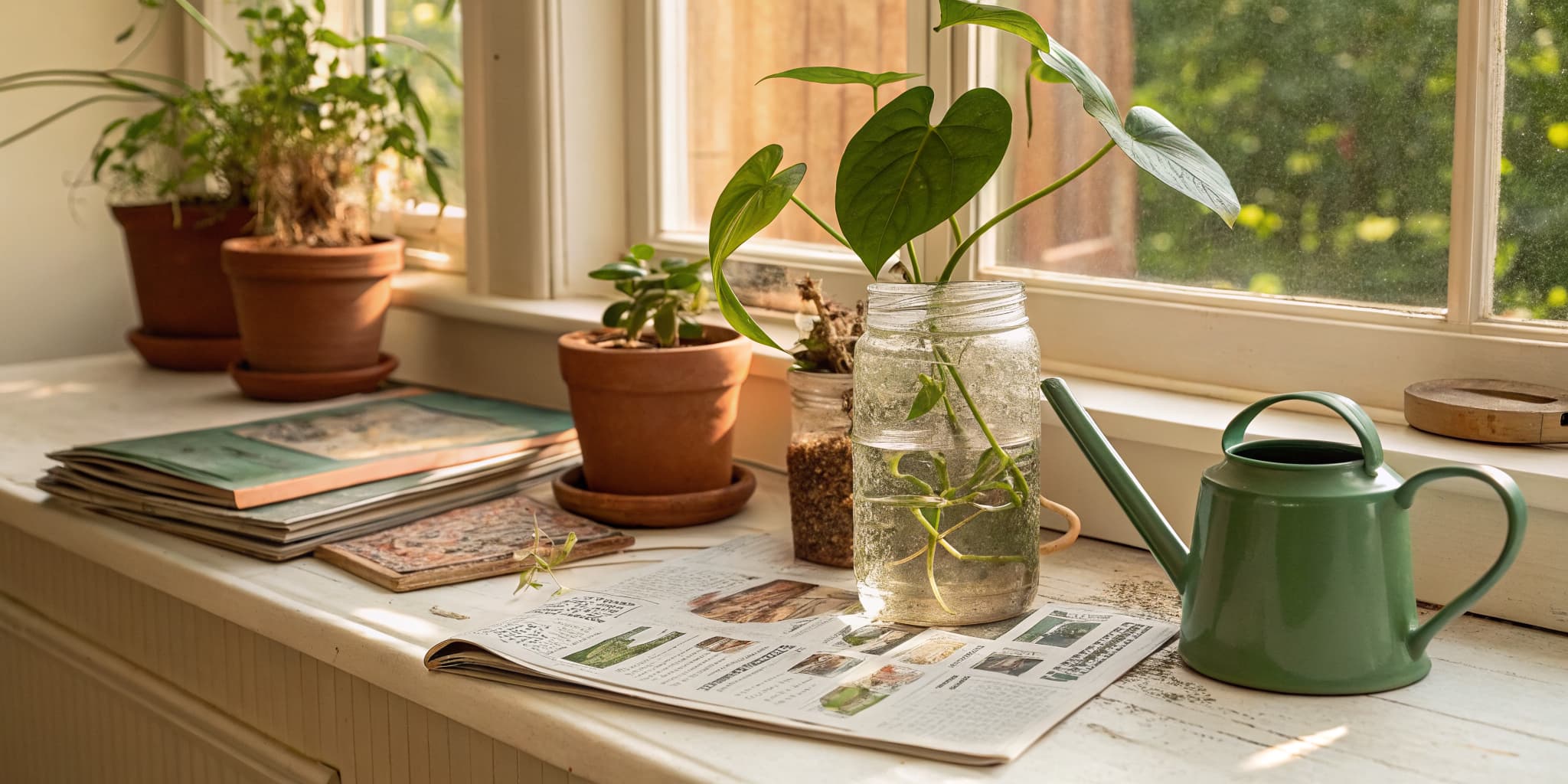
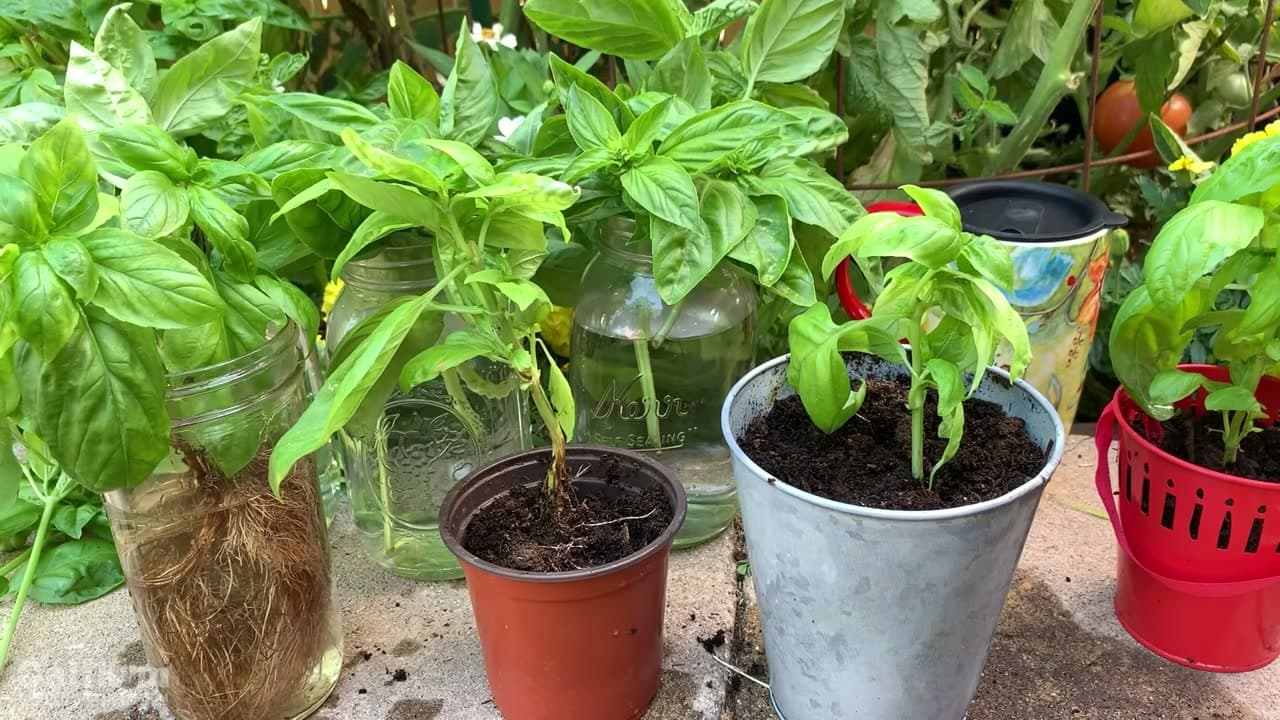
Not everything wants soil. Pothos, philodendron, monstera and the other aroids root beautifully standing in plain water, and you get to watch it happen.

Find the small brown bumps on the vine, the nodes. Cut just below one, strip the lower leaves, and stand the cutting in a jar or bottle with at least two nodes under the water. Roots start showing in about a week. Change the water every few days.

Skip water for woody cuttings. Shrubs and trees rot in water and want the soil method above.

Plant-specific water guides: pothos, monstera, spider plant.

Tip

Pot the cutting up once the roots are an inch or two long. Water roots that grow too long struggle to adjust to soil.

10

Divide Plants That Will Not Root From Cuttings

11:06
Step 10: Divide Plants That Will Not Root From Cuttings - How to Propagate Plants: Cuttings, Water and Division

Clumping plants, like ornamental grasses, hostas and many perennials, cannot be grown from a stem cutting. They get split instead.

Slide the plant out of its pot, or dig it up. Cut straight down through the root ball with a garden saw or a sharp knife, working along the line where the clump naturally wants to separate. A blade tears fewer roots than pulling by hand. One established plant will give you several.

Pot each piece up, pack potting soil firmly around it, water it and keep it in the shade until it settles in. A freshly split plant is fragile for a couple of weeks and must not dry out.

Softer clumps, like creeping jenny, split by hand. Massage the roots apart until rooted pieces come away, and pot each one.

Tip

Split in spring or early autumn when the plant is growing but not flowering. A flowering plant resents being cut.

Keep going

How to Propagate a Monstera (Water Propagation, Step by Step)

7 steps · about 11 minutes

Products Used

Tools we recommend

Your Guide

S&K Greenhouse

As an Amazon Associate we earn from qualifying purchases. Links on this page may be affiliate links - clicking them and buying doesn't change your price, but helps support ShowMeStepByStep.

Tags

Sunday How-To

New gardening tutorials, every Sunday

One short email with the week's best step-by-step guides. Free, no spam, unsubscribe anytime.

Test your knowledge

Did the lesson stick? Start with this one.

5 questions covering what you just read. No signup, no score saved, and you can stop after this one.

Question 1 of 5

Where should you cut when taking a stem cutting?

Quick reference

Key takeaways from How to Propagate Plants: Cuttings, Water and Division

5 questions, answers, and one-line explanations. Tap to expand.

  1. 1.Where should you cut when taking a stem cutting?

    Answer: Just below a node

    Roots form at the nodes and the cut end, so cutting under a node gives the most rooting points.

  2. 2.Why strip the leaves off the lower part of a cutting?

    Answer: They would rot once buried

    Any leaf that ends up below the soil line rots instead of helping.

  3. 3.Why pour rooting hormone into a separate cup?

    Answer: Dipping contaminates the whole tub

    One dirty cutting dipped in the tub spoils every future batch.

  4. 4.Why keep a covered tray of cuttings out of direct sun?

    Answer: Sun through a dome will cook them

    A clear dome in full sun becomes a hot box and kills the cuttings in an afternoon.

  5. 5.You want more hostas and ornamental grasses. What do you do?

    Answer: Split the root ball with a blade

    Clumping plants will not grow from a stem cutting, so they get divided instead.

Did this work for you?

What's next

Related collections

Curated theme pages that include this tutorial.

Weekly Digest

Liked this gardening tutorial?

Pick the categories you want to hear about. Weekly digest of new step-by-step tutorials. No spam, easy unsubscribe.

Send me tutorials about

We only email about new tutorials. Easy unsubscribe anytime.