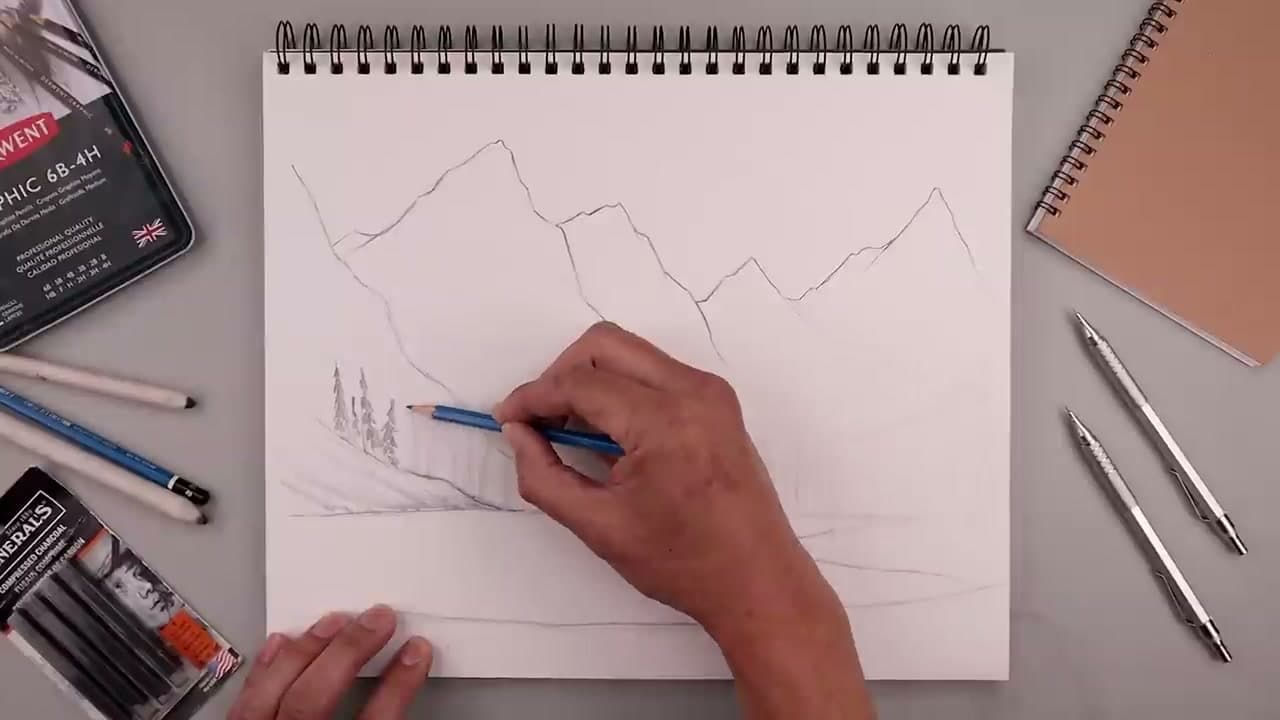
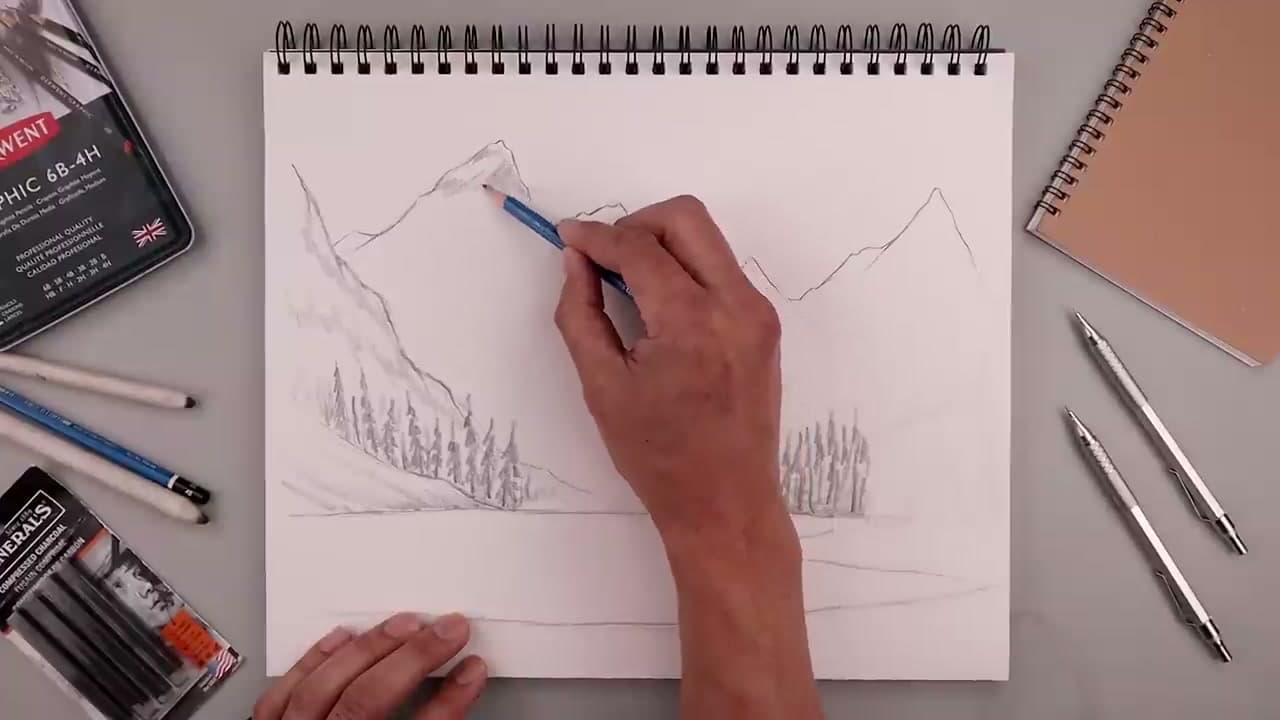
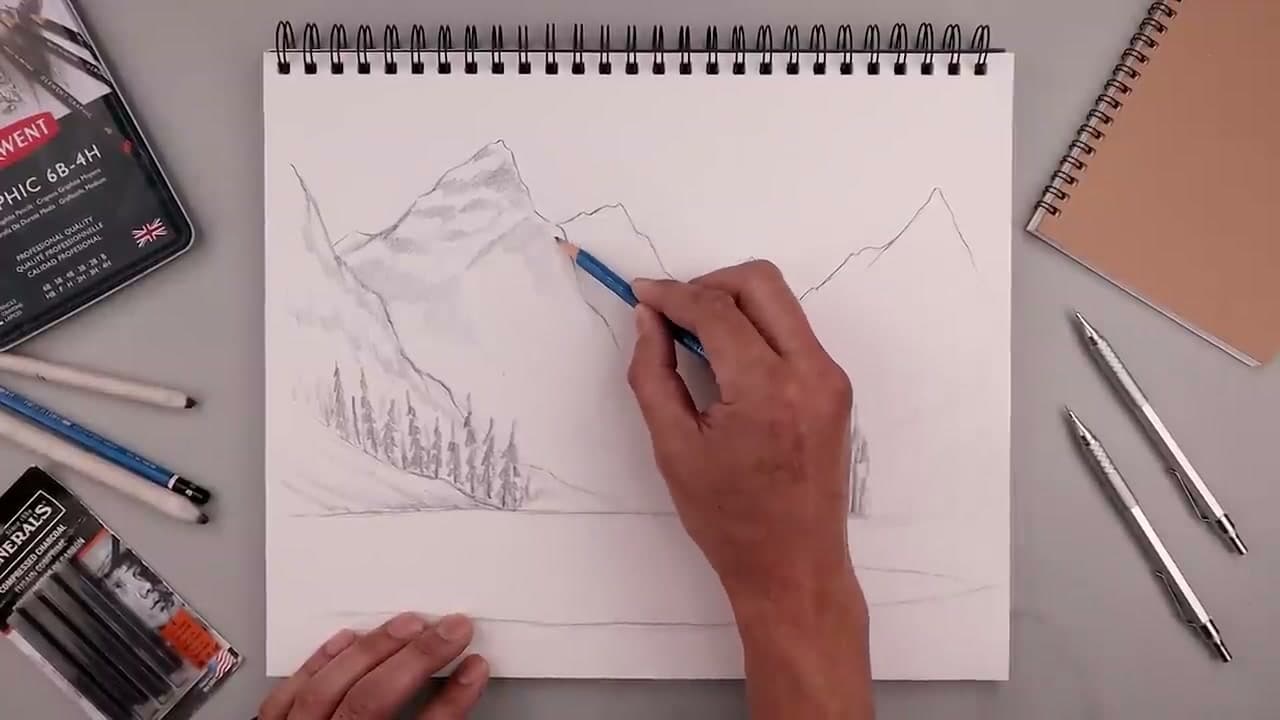
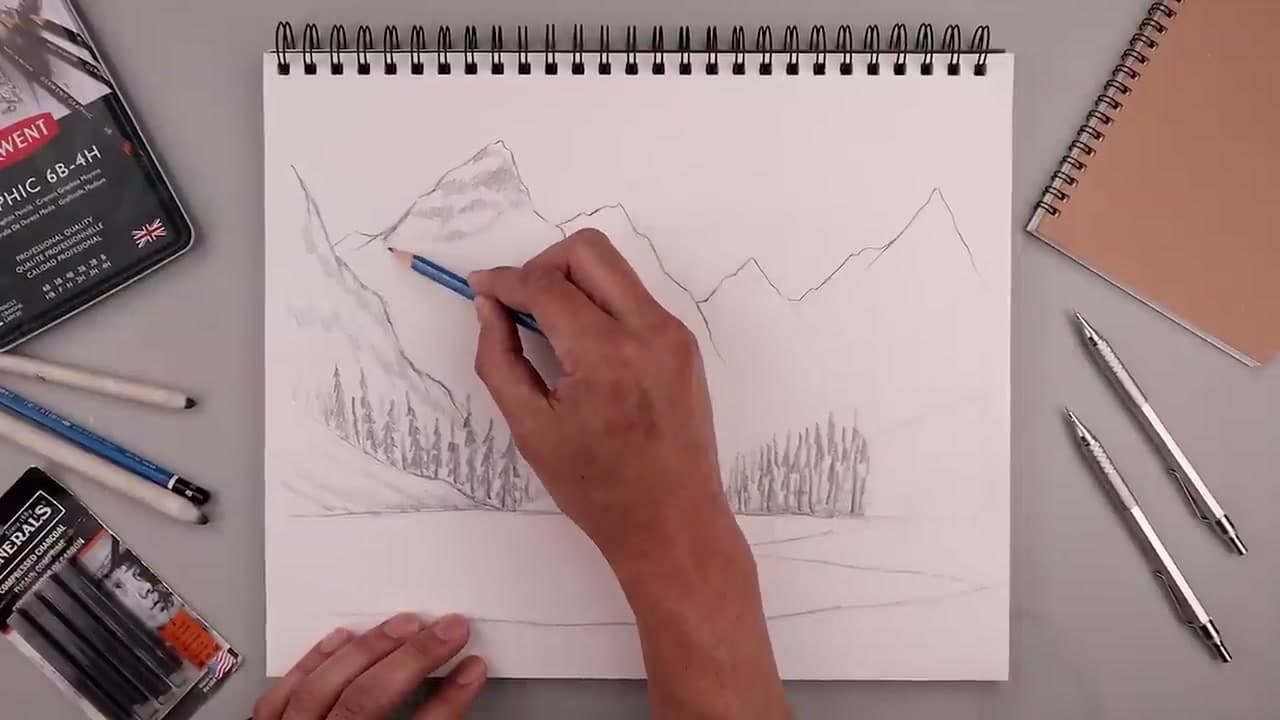
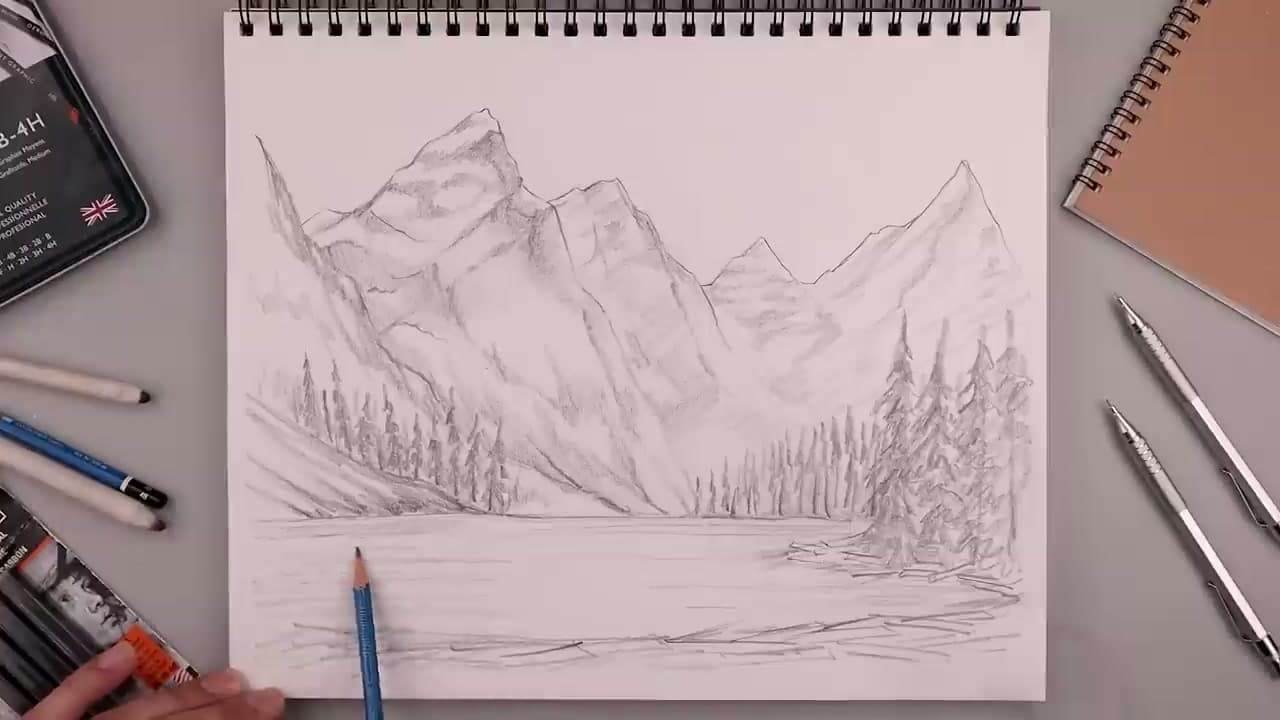
Mountains look intimidating until you see how they are actually drawn. They are stacked shapes. Big triangle in front, smaller ones behind, a jagged ridge on top, a pencil-shaded shadow side, and a few snow caps near the peaks. That is the whole trick.
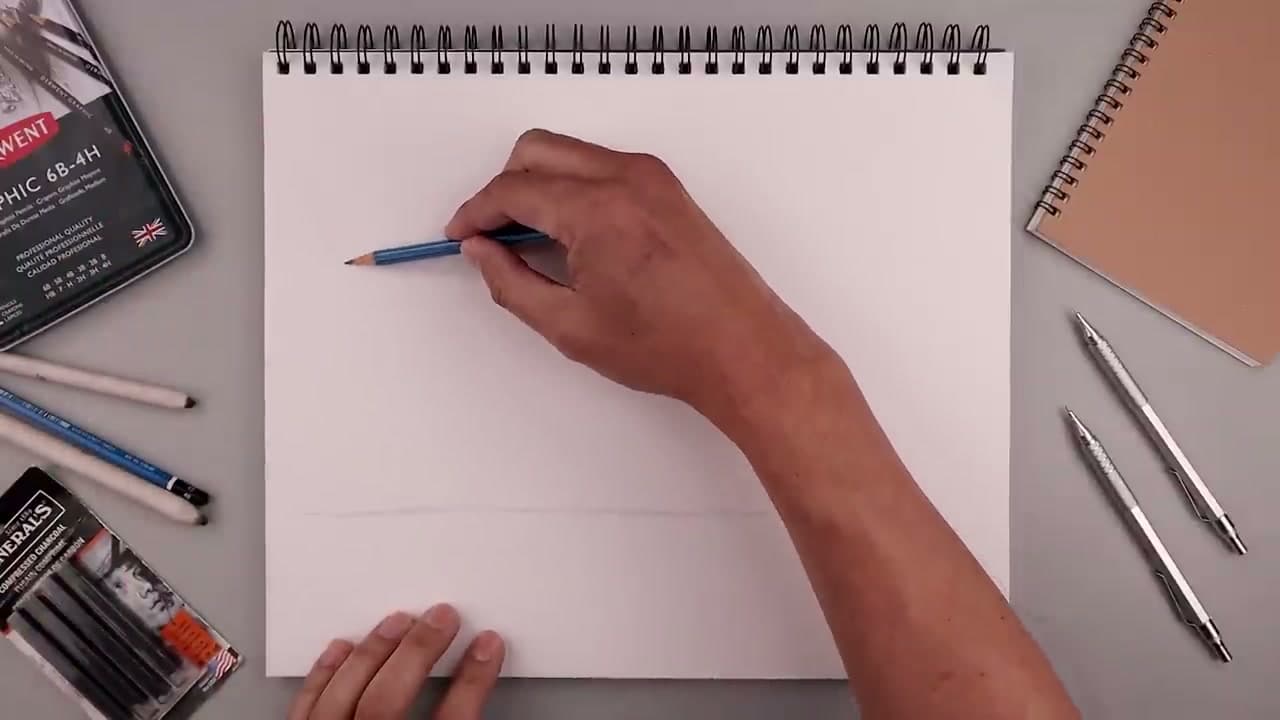
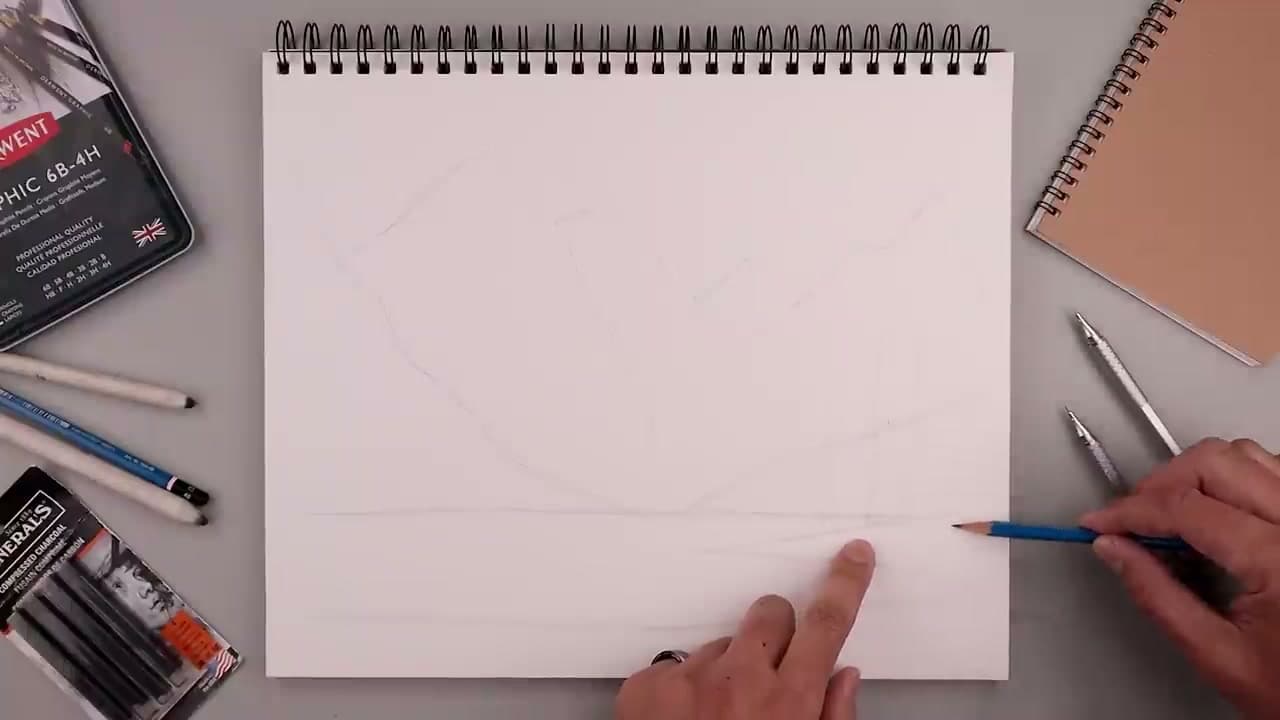
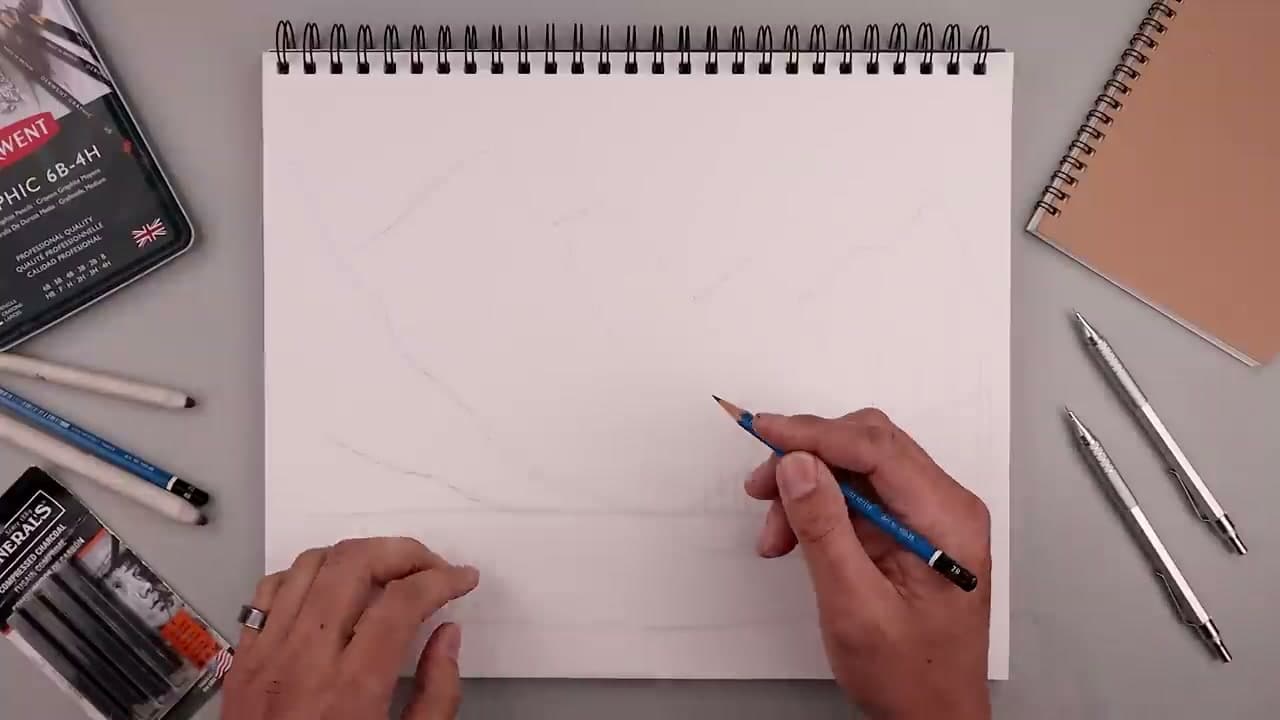
This walkthrough follows MRTY, the verified Cartooning Club Z creator with over six million subscribers, as he builds a full sketchpad scene with a 2B pencil. You will start with a soft horizon line, block in the main mountain, stack a few smaller peaks behind it, sketch trees along the shore, and finish with a quiet lake and a reflection. No fancy tools. One pencil, one sheet of paper.
Layering ranges for depth
Distance changes how things look. Air has haze in it, so the further back a mountain sits, the lighter it gets and the less detail you can see. Artists call this atmospheric perspective, and it is the biggest reason one pencil drawing looks deep and another looks flat.
In pencil that comes down to three rules. The back range gets the lightest pressure and almost no texture. The middle range gets some ridgelines and a soft shadow side. The front mountain gets your darkest darks, the sharpest edges and all the cracks and rock detail. Keep each range a little shorter than the one in front of it, and overlap them so no two peaks line up.
Light side and shadow side
Every mountain has at least two faces. Decide where the sun is before you shade anything and stick to it for every peak on the page. Light from the left means every left face stays pale and every right face gets tone. Switching direction from one peak to the next is what makes a range look like cut-out paper.
The ridgeline is where those two faces meet. Keep that edge crisp near the top and let it soften as it runs down toward the trees.
Snow caps
You do not draw snow. You draw the rock around it and leave the paper white. Snow collects in the high parts and down the gullies, so let it reach down in ragged fingers rather than sitting on top like a flat lid. On the shadow side, give the snow a light grey tone so it still reads as part of the same shape.
Pencil, ink or colour
| Medium | Good for | Watch out for |
|---|
| Graphite (2B-6B) | Soft gradients, easy fixes | Smudging with your hand |
| Ink pens | Bold sketchbook style, hatching | No erasing, so plan in pencil first |
| Colour pencil or paint | Blue haze, sunset light | Mud if the back range goes too dark |
The same layering works in paint. Painting mountains with acrylics uses the same light-to-dark order.
Adding a landscape
A mountain on its own floats. Pine trees along the base and a lake in front give it scale and somewhere to stand. The reflection in the water is always darker and softer than the mountain it mirrors, and it sits straight below it. How to draw water covers ripples and reflections in more depth, and how to draw clouds and how to draw a tree fill out the rest of the scene.
Mountain drawing ideas to try next
- A simple range for kids. Three overlapping triangles, a zigzag snow line on the tallest one and a sun peeking out behind. Ten minutes with a marker.
- Sunset silhouette. Fill each range in solid tone, darkest in front and palest at the back, against a bright sky. No ridge detail needed.
- A single big peak. One lopsided mountain filling the page, with deep cracks and gullies on the shadow side. Good practice for rock texture.
- Mountains by the sea. Drop the lake and run a coastline under the foothills, then add rolling waves in the foreground.
Common mistakes
- Symmetrical triangle peaks. Real mountains lean, with one long slope and one steep one.
- Same-size ranges. If every range is the same height, there is no depth.
- Outlining everything. Let tone make the edges in the back.
- Dark back mountains. Distance means light. Save the dark for the front.
Want some color? Try how to paint a sunset next. The same composition skills cross over to acrylics.