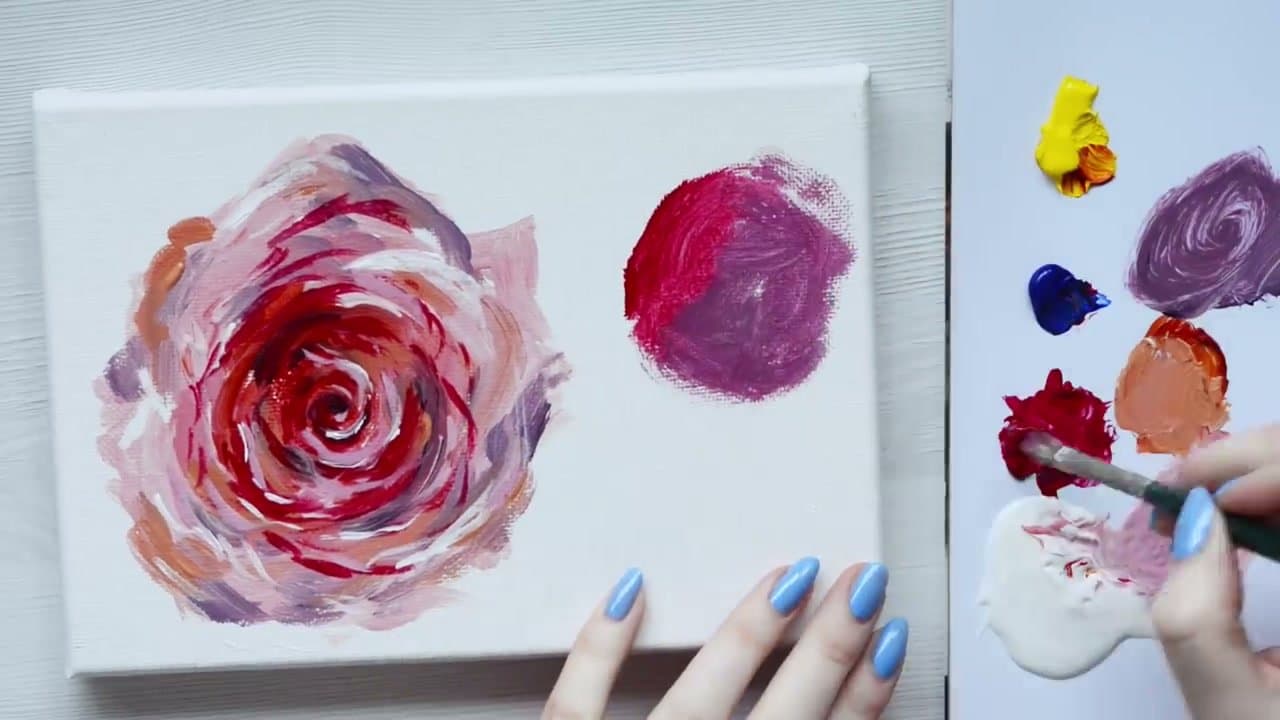
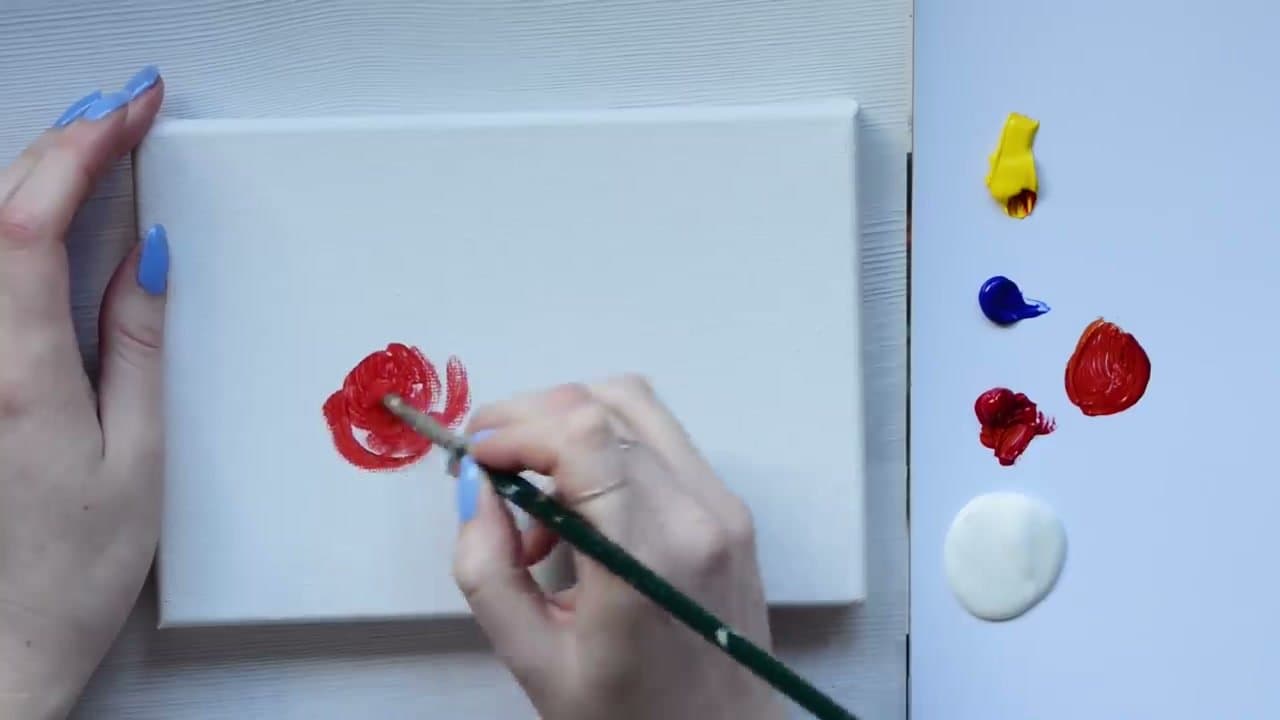
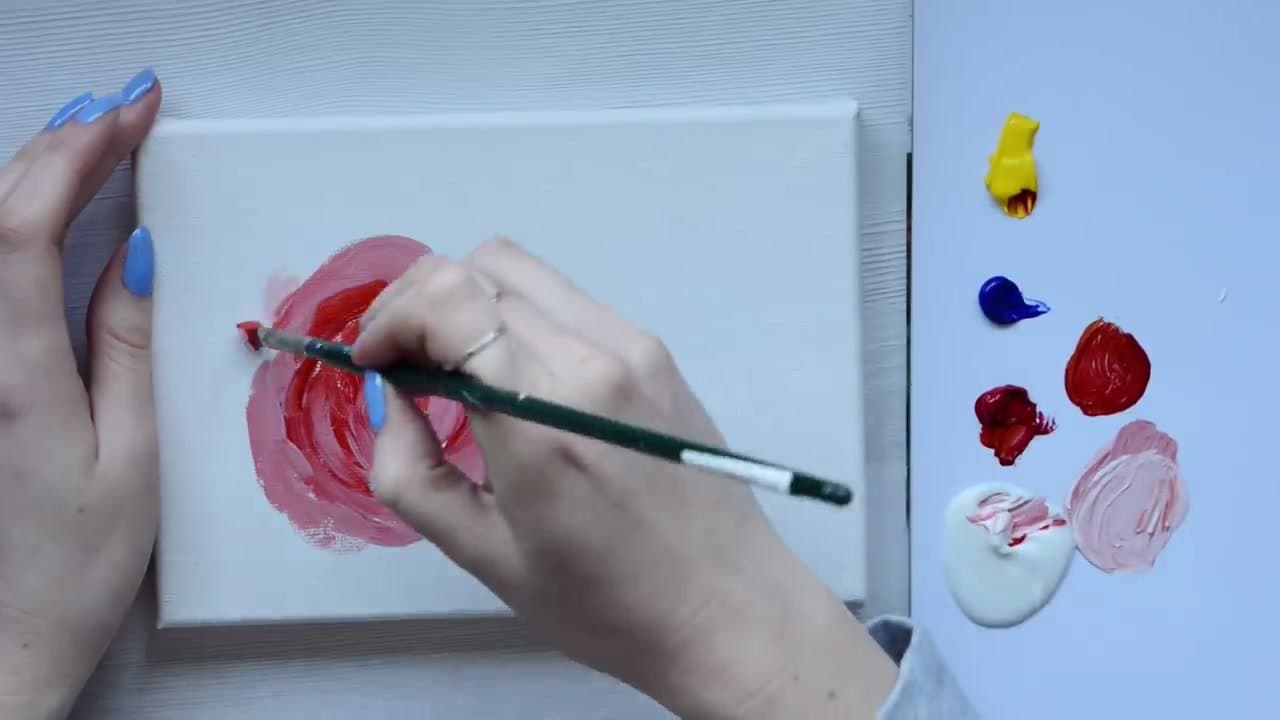
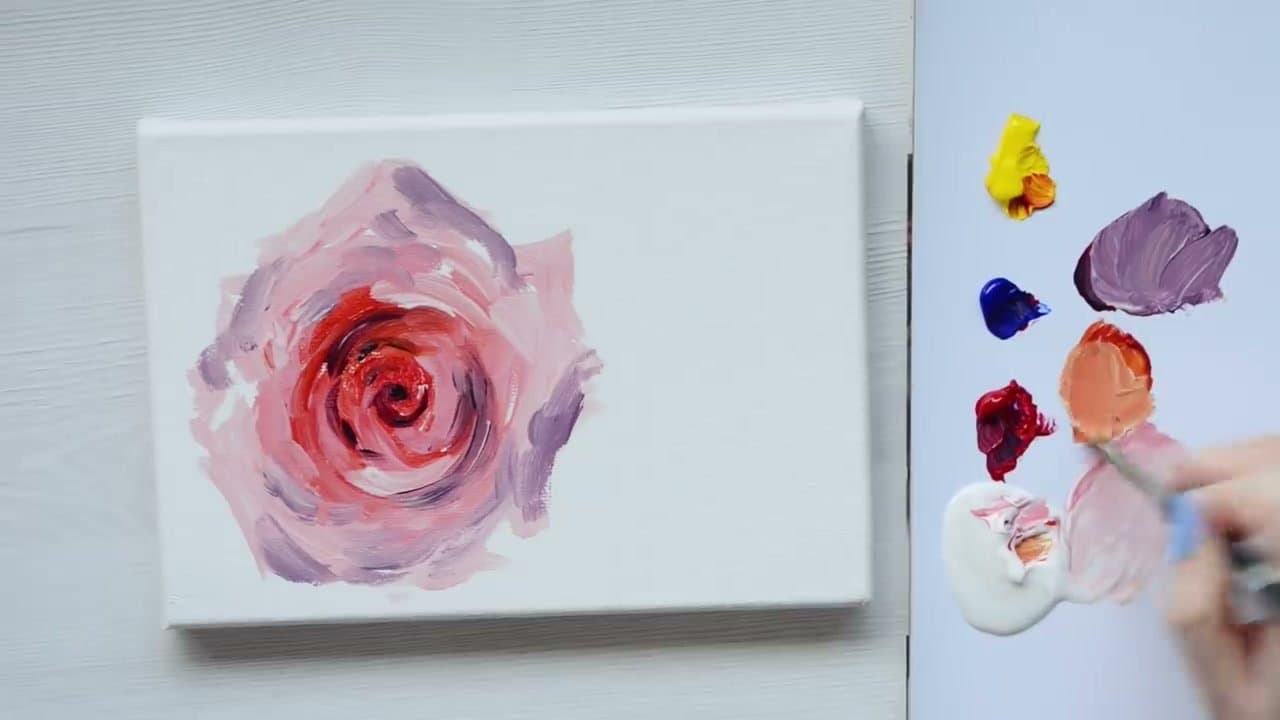
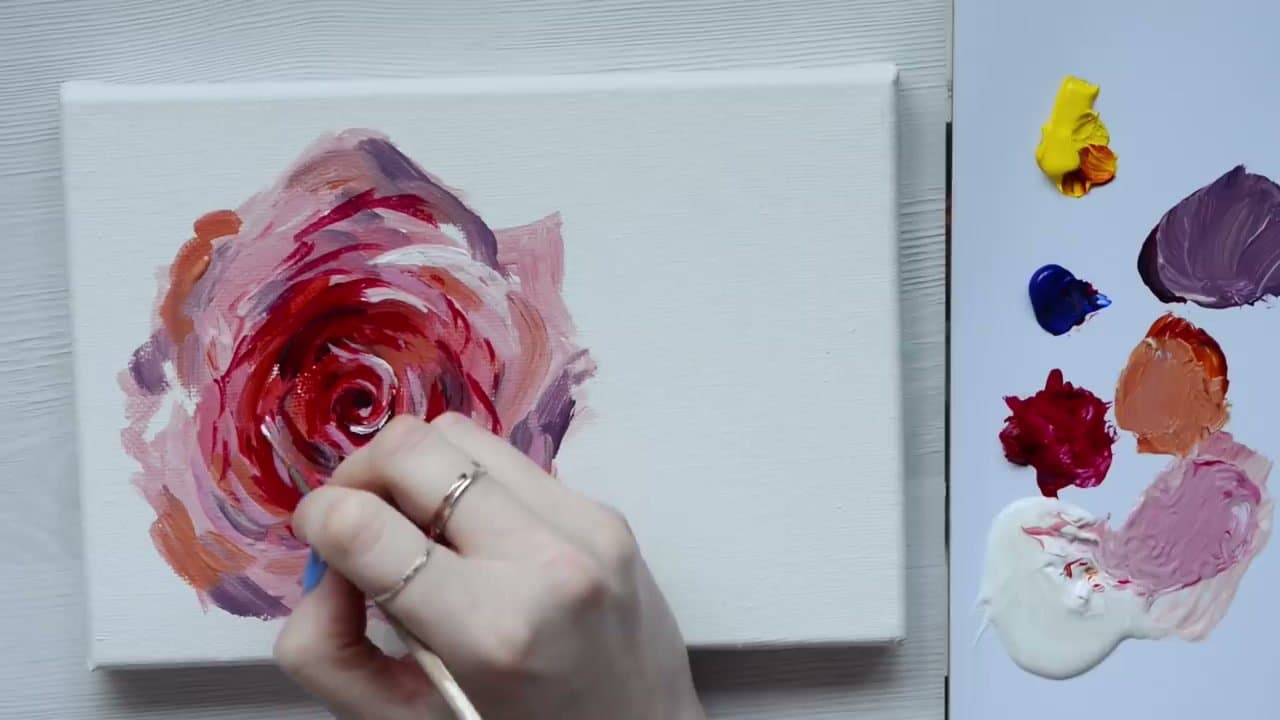
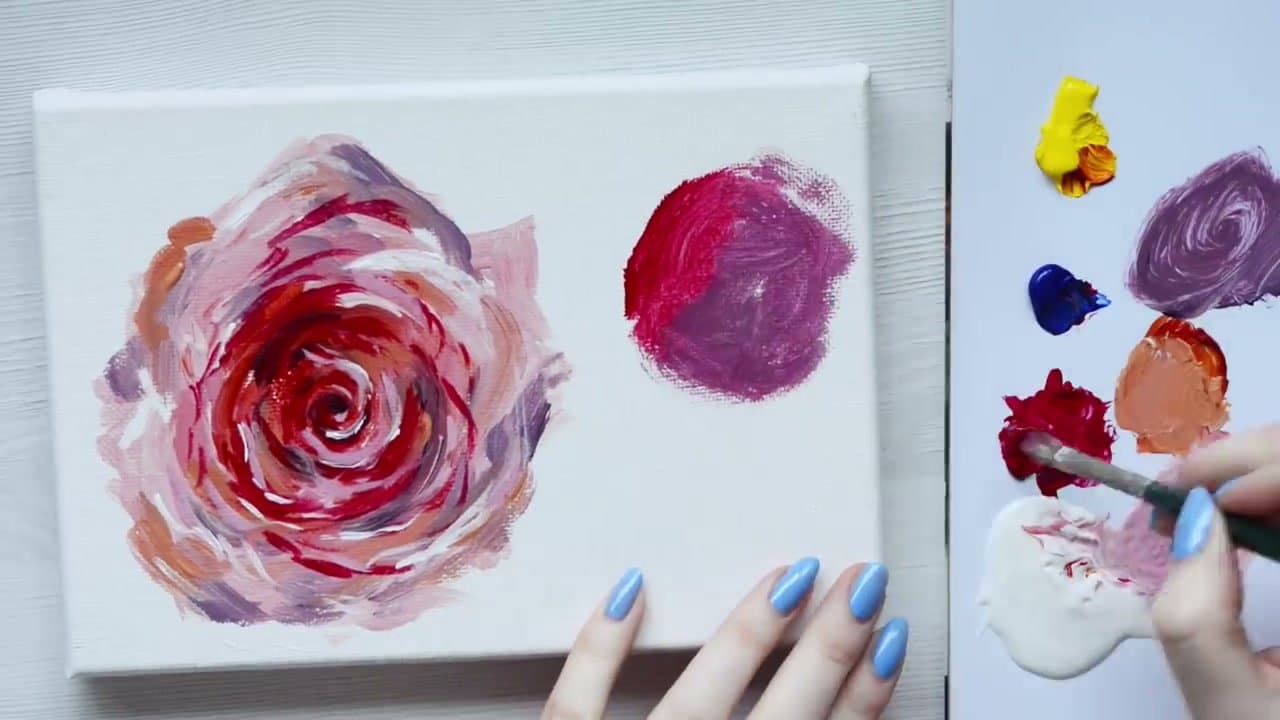
Painting a flower looks impossible until someone shows you the trick: it's the brushstroke itself that shapes the petals, not careful drawing. Katie Jobling builds her acrylic roses in three layers - a warm base, cool shadows for depth, and bright detail work to bring it to life.
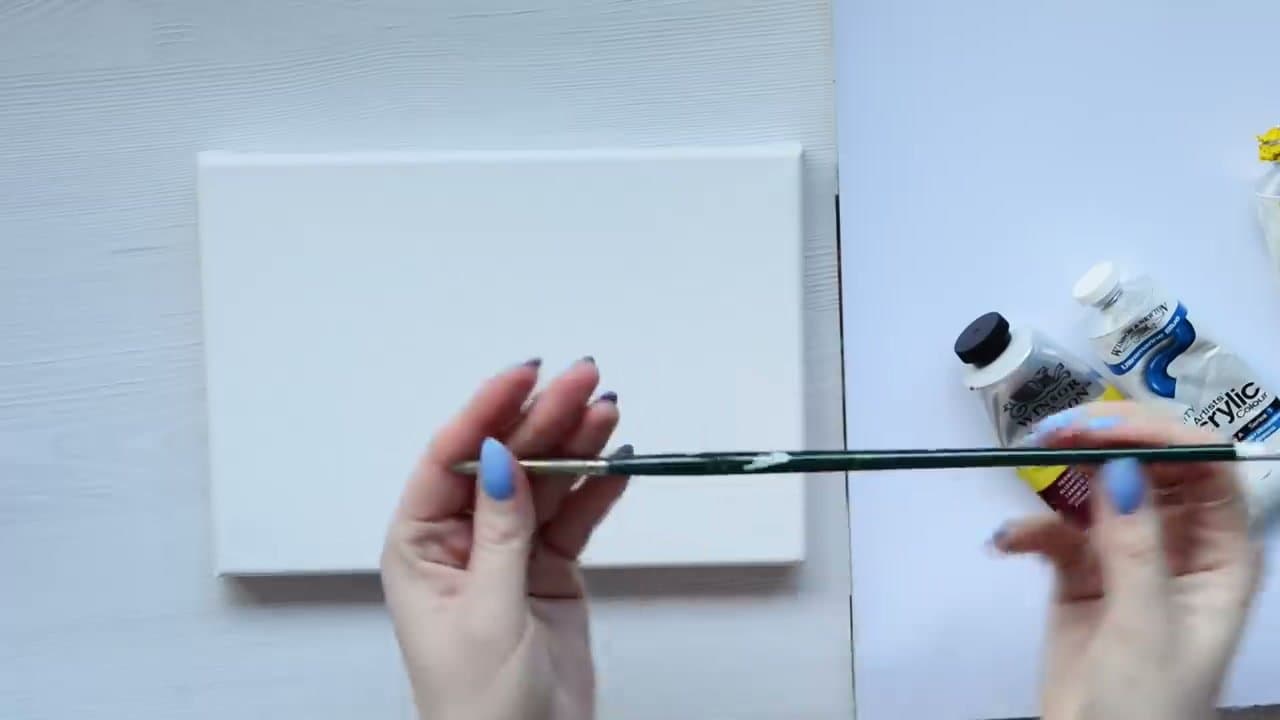
The tutorial runs on three main paint colors: red, yellow, and white, plus a touch of blue for the shadows. Mix them on the palette to get every shade - warm red, light pink, dark red, even cool purple shadows. No need for fancy brushes either; one medium round brush handles 90% of the work, with a smaller detail brush for the final highlights.
Plan on about an hour from start to finish. Acrylics dry fast, but each layer needs five to ten minutes between coats. The result fits comfortably on a small canvas (8x10 inches works) and looks much harder than it is.
What you need
- Acrylic paint in red, yellow, white and a blue. Student-grade tubes are fine.
- A medium round brush, around size 6 to 8
- A small round or liner brush, size 0 to 2
- An 8x10 canvas or canvas panel
- A palette or paper plate, a water jar and paper towels
Why the layers go in this order
The rose is built from middle values toward the extremes. The warm base sets the overall color. The lighter outer petals add the first sense of form. Shadows push the gaps back, the deep red lines define edges, and white goes on last because it is the brightest thing in the painting. Put highlights in early and every later layer either covers them or gets dragged into them.
Mixing shadows without mud
Shadow colors go grey and muddy when too many paints end up in one mix. Keep it to two: red and a small amount of blue. Add the blue to the red, never the other way round, a little at a time. Wipe the brush before you go back into a clean color. If a mix looks brown, start a fresh pile instead of trying to fix it. More on this in how to mix acrylic paint colors.
Blending before acrylic dries
You get a few minutes of working time, less in a warm room. Work one petal group at a time and blend that seam while both colors are wet. A damp brush, not a wet one, softens an edge without lifting paint. A few drops of slow-dry medium (retarder) in the pink mix buys extra time. Misting the palette keeps your piles from skinning over. The full technique is in how to blend acrylic paint.
Use the same three stages on other flowers
- Daisy: a pale grey-white base, white petals pulled out from the center, a yellow center shaded with orange. See how to paint daisies.
- Tulip: a cup-shaped base in the main color, a darker shadow down the middle petal, a white line along each rim.
- Sunflower: yellow petals over a brown disc, orange shadows at the petal roots, dots of light on the seeds.
When you are ready for a fuller bouquet, how to paint roses builds on this same rose.
Common mistakes
- Outlining the rose first. Hard outlines fight the brushstroke petals. Let the strokes make the shape.
- Shadows everywhere. They belong in the gaps only. Too much and the rose turns purple.
- White on wet red. It goes pink and muddy. Wait for the layer to dry.
- Overworking. Stop when it reads as a rose from across the room.