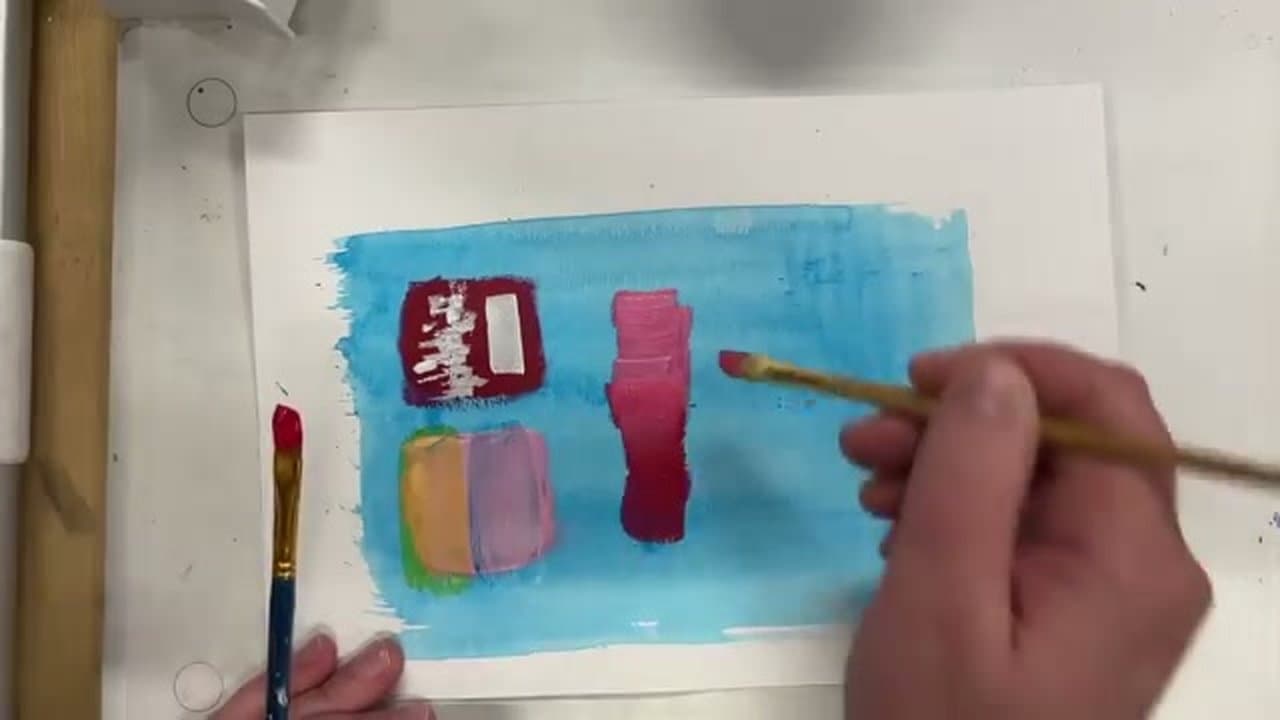
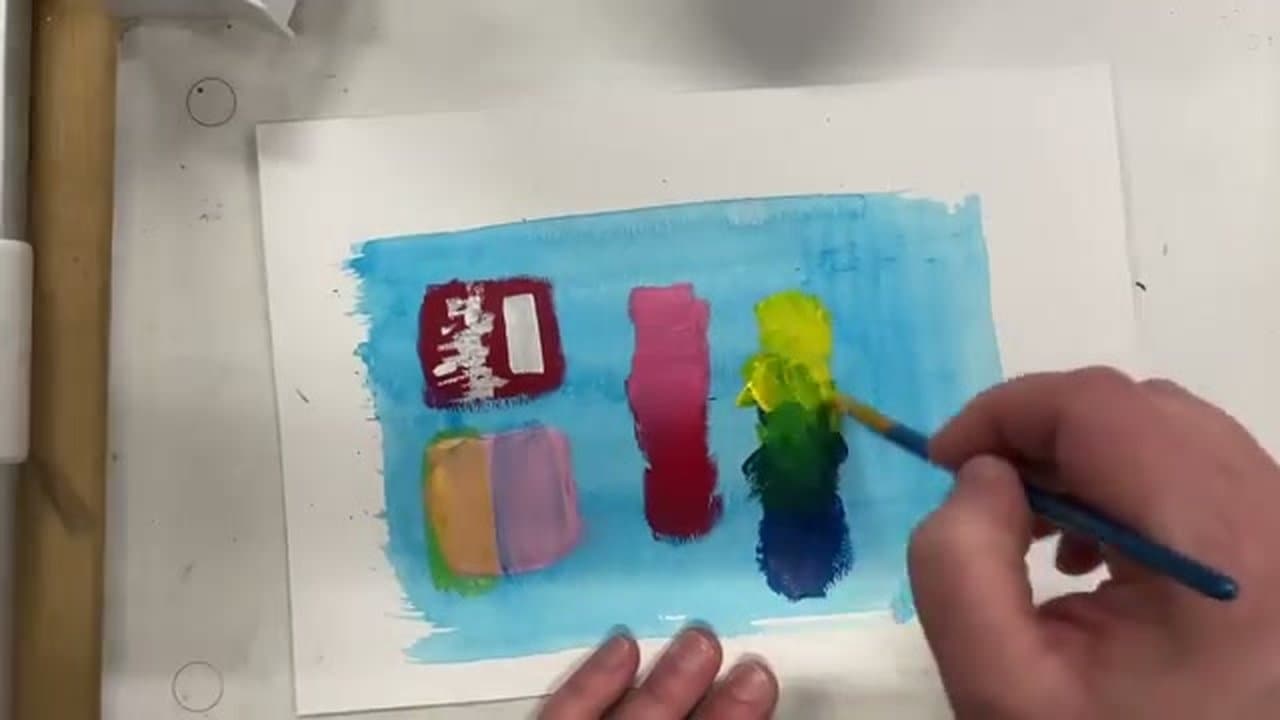
Acrylic is the right paint to start with. It dries in minutes, it cleans up with water, a mistake gets painted over rather than scraped off, and a starter set costs less than a takeaway. Almost everything you will ever paint in acrylic comes down to six moves, and this walkthrough puts all six on one sheet of paper.
The video is from Jennifer Funnell. Work through it once on a practice sheet and you have a reference card you can lay beside every painting you start from here on.
What to buy
A set of eight to twelve student-grade tubes covers everything. You need a warm and a cool of each primary, plus white and a dark. Skip black at first: mixing your darks from blue and burnt umber gives richer shadows than black straight from the tube.
Three brushes: a wide flat for washes, a smaller flat for edges, and a round for detail. Synthetic bristles, not natural. Paper is fine for practice, and cold-press watercolour paper takes acrylic well, but for anything you want to keep, a pre-primed canvas board is cheap and does not buckle.
The one thing beginners skip and regret: a stay-wet palette, or at least a mister bottle. Acrylic skins over in minutes on a dry palette and you spend half your paint scraping crusts.
The six techniques
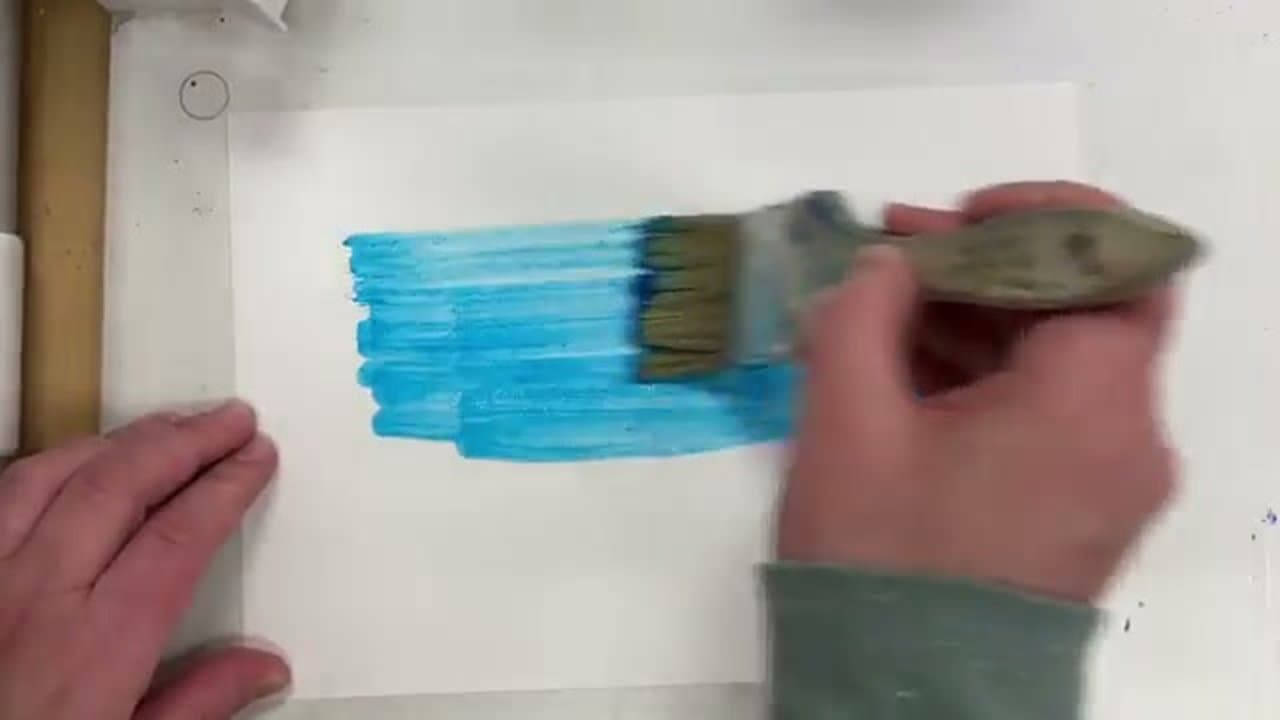
Wash. Thin the paint with water until it flows like tea and lay it across the whole surface. This kills the white of the paper and sets a mood before you paint a single object. Skies, water and backgrounds all start here.
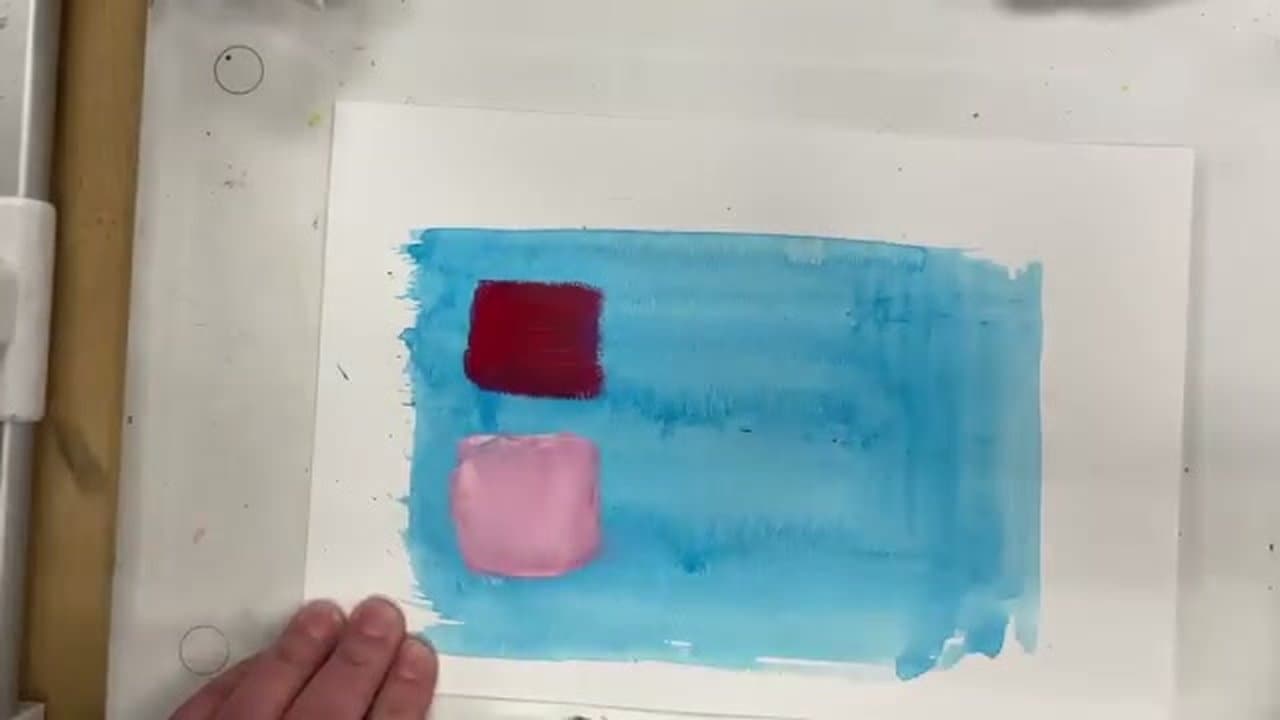
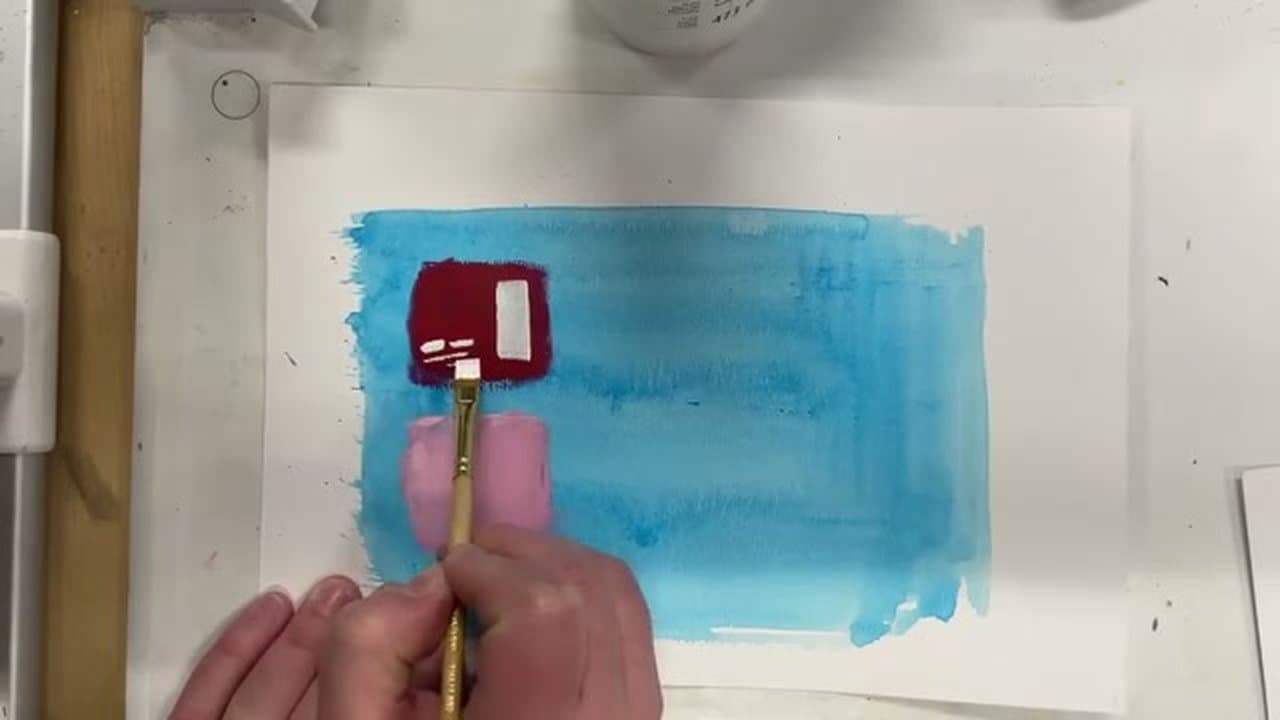
Layering. Acrylic dries opaque, so you build a painting light over dark or dark over light in stacked layers. Each one dries in a few minutes and the next goes straight on top. This is the property that makes acrylic forgiving.
Crisp edges, wet on dry. Paint onto a layer that has fully dried and the edge stays sharp. Horizons, rooflines, the far side of a lake.
Glazing. Thin a colour with glazing medium rather than water and float it over a dry layer. The colour underneath shows through, shifted. One glaze warms a whole sky; three make a shadow look deep instead of flat.
Blending, wet on wet. Lay two colours side by side while both are wet and work the seam with a clean brush. This is how gradients happen, and it is the one move that has a clock on it: you have a couple of minutes before the paint sets.
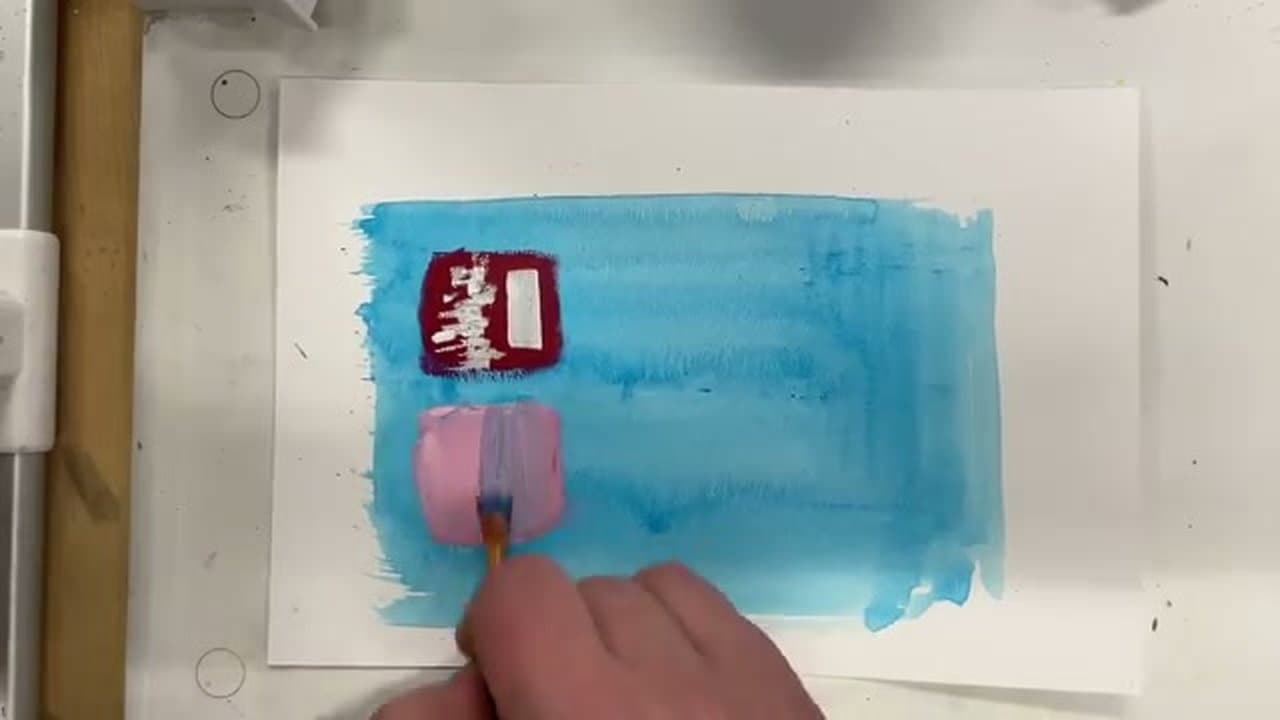
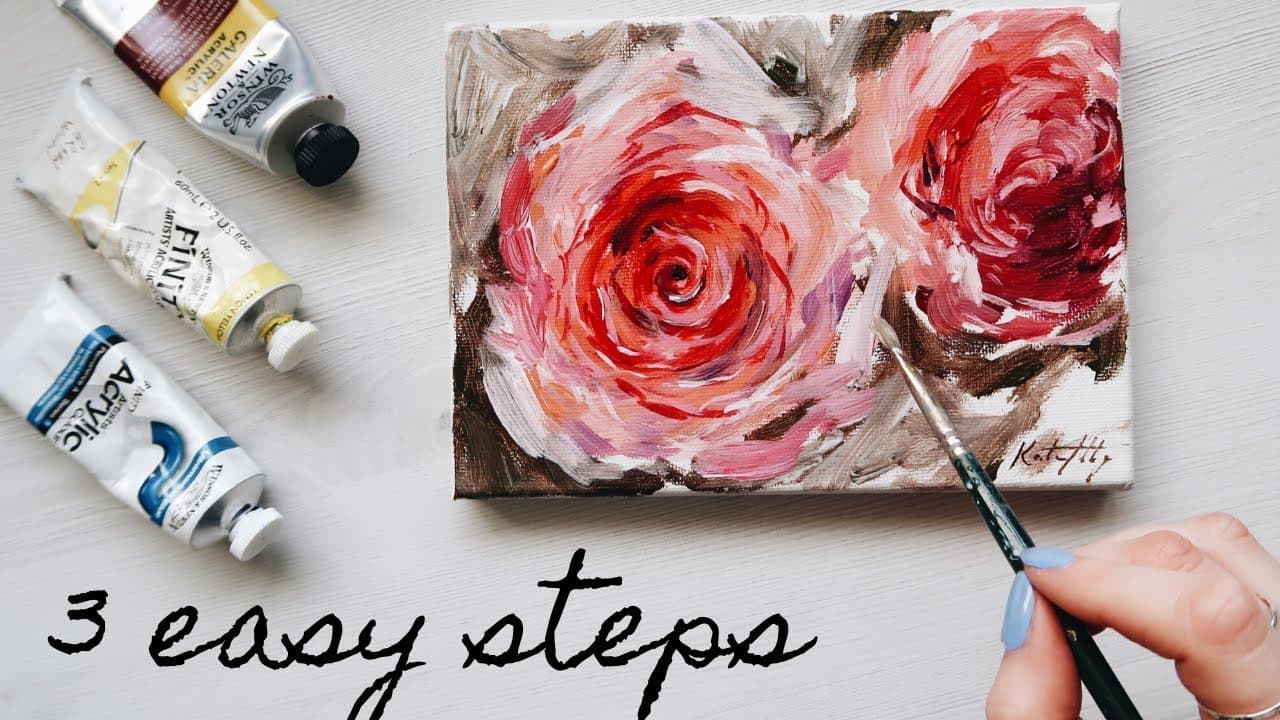
Texture. Thick paint, a dry brush, a stiff bristle, the edge of a palette knife. Texture is what stops an acrylic painting looking like a print.
How to paint your first picture
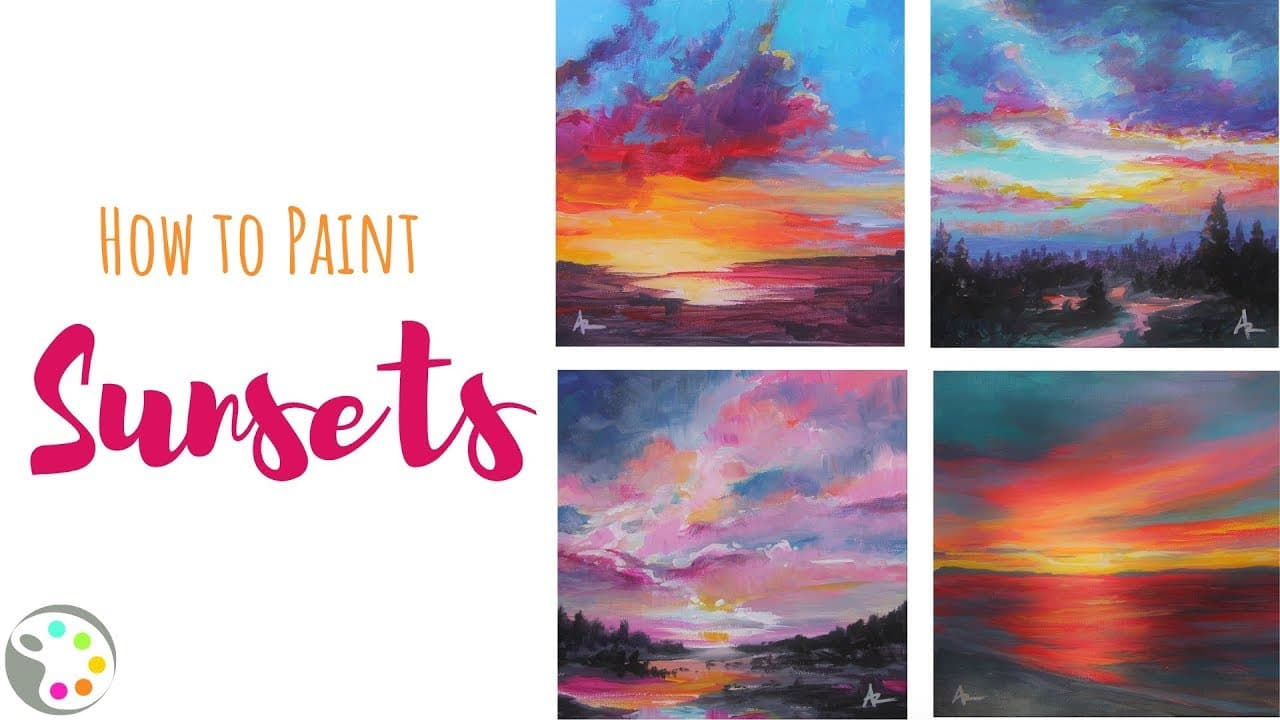
Pick something with three or four big shapes and one light source. A sunset over water, a single tree against a plain sky, a row of hills. Wash the background first, block in the big shapes as flat colour, let it dry, then add the shadows and the highlights last.
Decide where the light comes from before the first stroke and keep it there. Most beginner paintings that look off are lit from two directions at once. If that idea is new, the light-source lesson in how to draw covers it with a pencil, and it transfers straight across.
Where it goes wrong
The colours go muddy. Too many colours in one mix, or a brush that was not rinsed. Three tubes maximum per mix, and rinse between every colour. Mixing acrylic colours covers the combinations that stay clean.
The blend dries with a hard line. The paint set before you worked the seam. Mist the surface, work faster, or use a little retarder medium. Blending acrylics goes through the timing.
The paint is chalky and dull. It was thinned with too much water, which breaks the binder. Past about one part water to one part paint, switch to a medium. Thinning acrylic paint explains where the line is.
The canvas soaks the paint up. It was not primed. Priming a canvas takes ten minutes and one coat of gesso.
Then paint something
Every one of these projects uses only the six techniques above. A sunset is a wash and a wet-on-wet blend. Clouds and a tree are layering and texture. Ocean waves and a galaxy are the two most-saved projects on the site, and both are glazing over a dark wash. When you want a tool that does texture on its own, a palette knife or a fan brush each earn a page.