How to Draw a Rose

Also in:Painting

By ShowMeStepByStepPublished Updated

Based on a video by Art Hub Plus.

Drawing a rose looks intimidating, but the trick is to start tiny and build outward. You begin with a small spiral that becomes the bud, then add curves and S-curves around it - each layer just slightly bigger than the last. The flower takes shape on its own as you go. No careful planning, no precise lines.

This tutorial follows along with Art Hub Plus, a channel known for accessible art lessons that work for kids, teens, and adults alike. The full lesson uses markers, but you can sketch first with pencil and finish with marker, or do the whole thing in pencil if you prefer. The technique is the same.

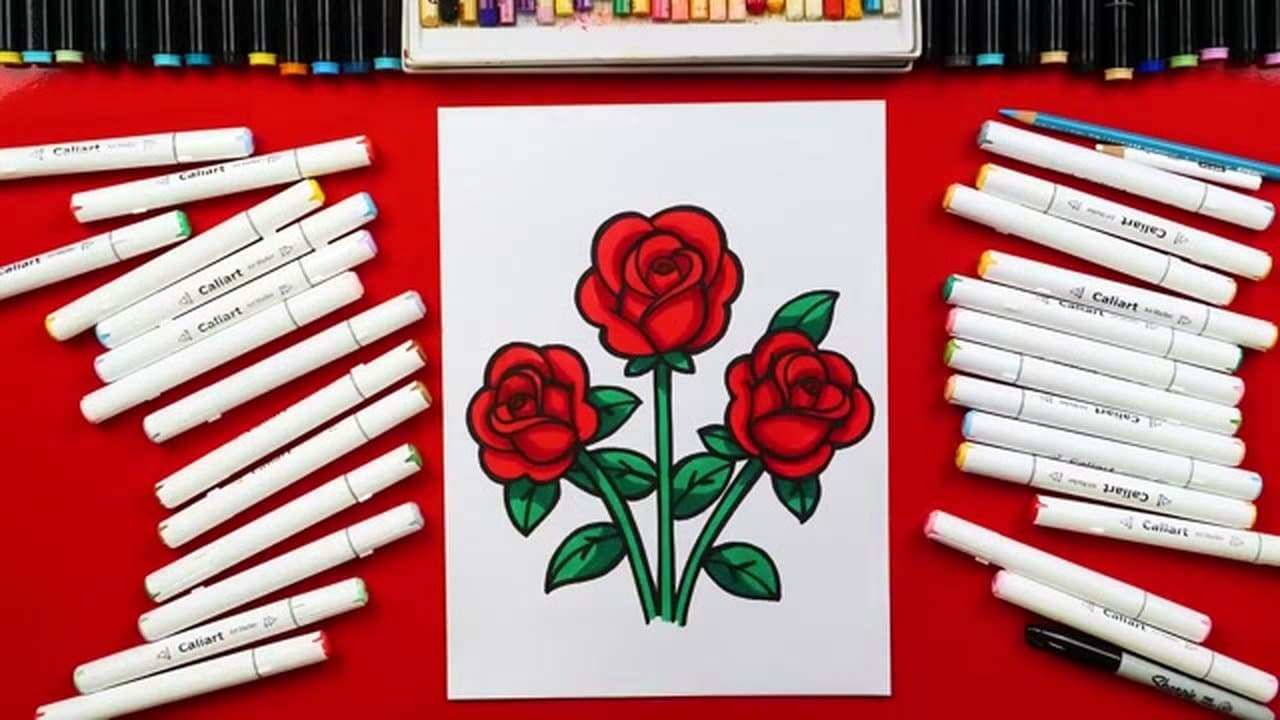
The most useful part is the shading step at the end. A second pass with a darker red lifts the rose off the page and makes it look three-dimensional in about thirty seconds. Once you've drawn one rose with this method, you can repeat it across the page for a bouquet.

Step-by-Step Guide

1

Step 1: Gather your supplies

0:22
Step 1: Step 1: Gather your supplies

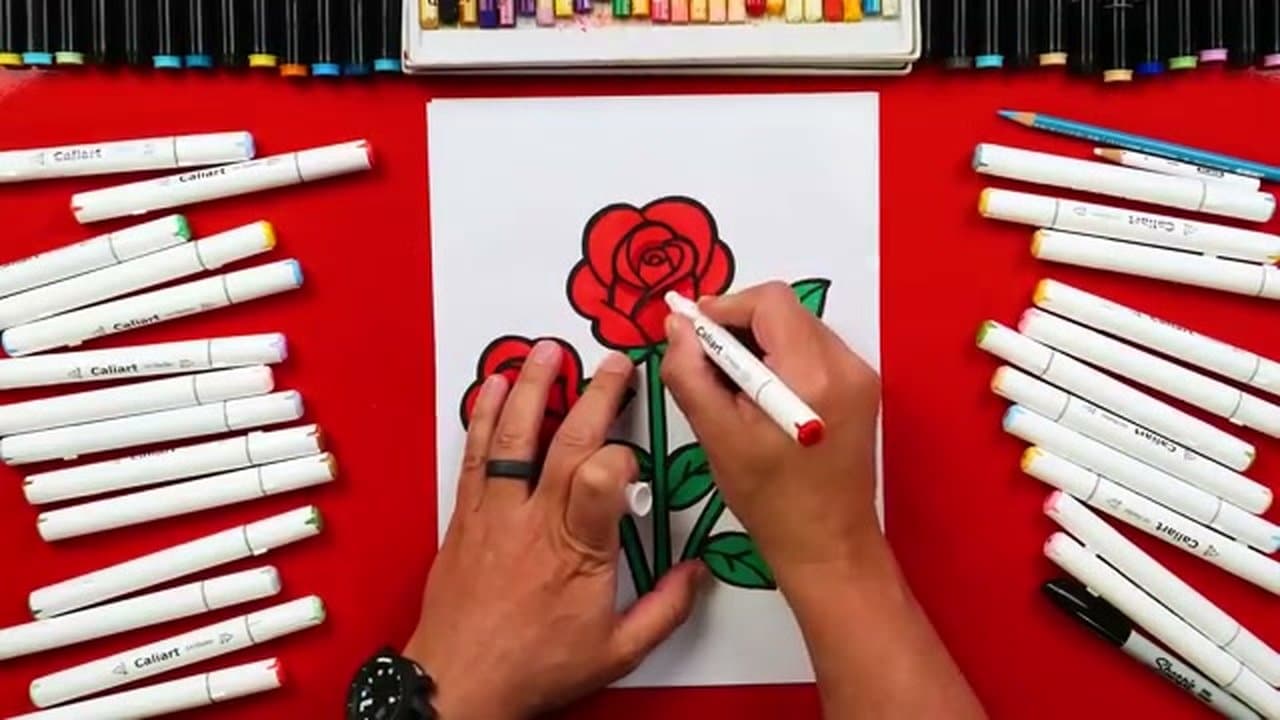
Pull out a pad of marker paper and a small set of markers - any colors you like, plus at least one red, one green, and a darker version of each for shading. A black fine-tip marker is handy for outlining. A pencil is optional but useful if you want to sketch the rough shape first before committing in marker.

Marker paper matters more than you'd guess. Regular printer paper bleeds through and dulls your markers fast. A pad of marker paper keeps colors crisp and protects whatever surface you're working on.

Tip

If you don't have markers, this technique works just as well with colored pencils, watercolor, or even a single black pen. The shape comes from the linework - the color is just the finishing touch.

2

Step 2: Draw the spiral center

0:43
Step 2: Step 2: Draw the spiral center

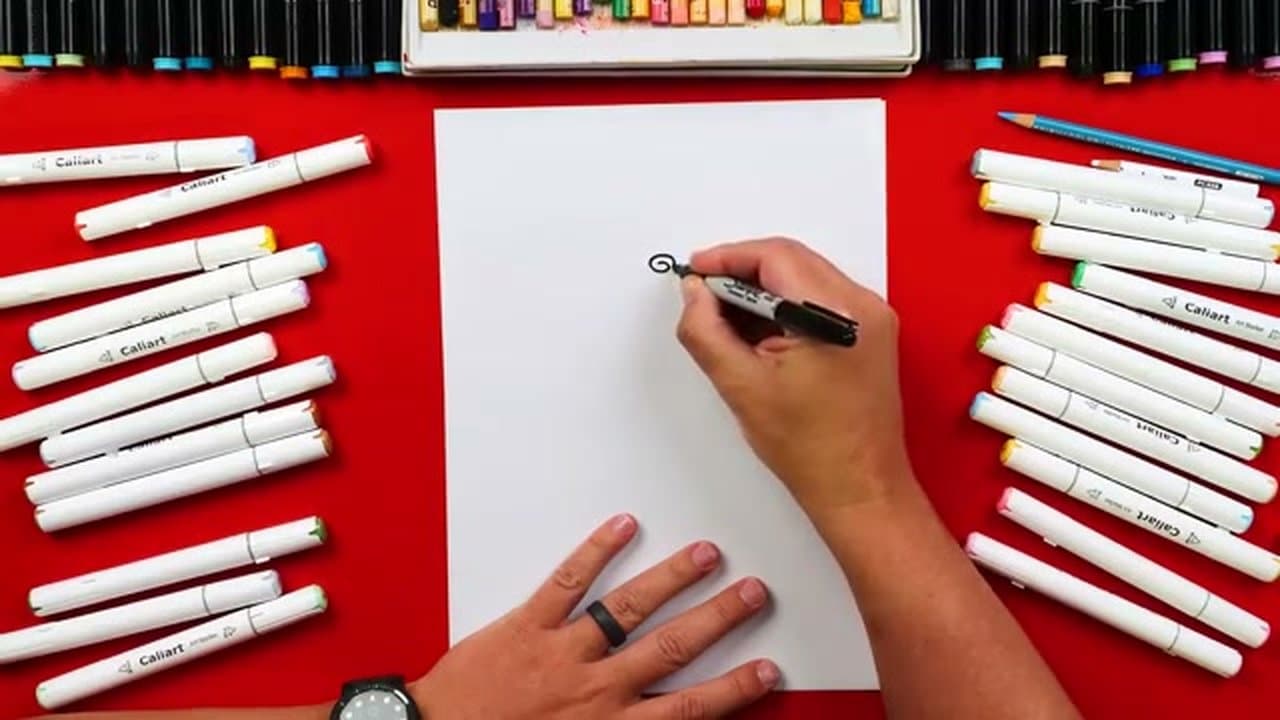
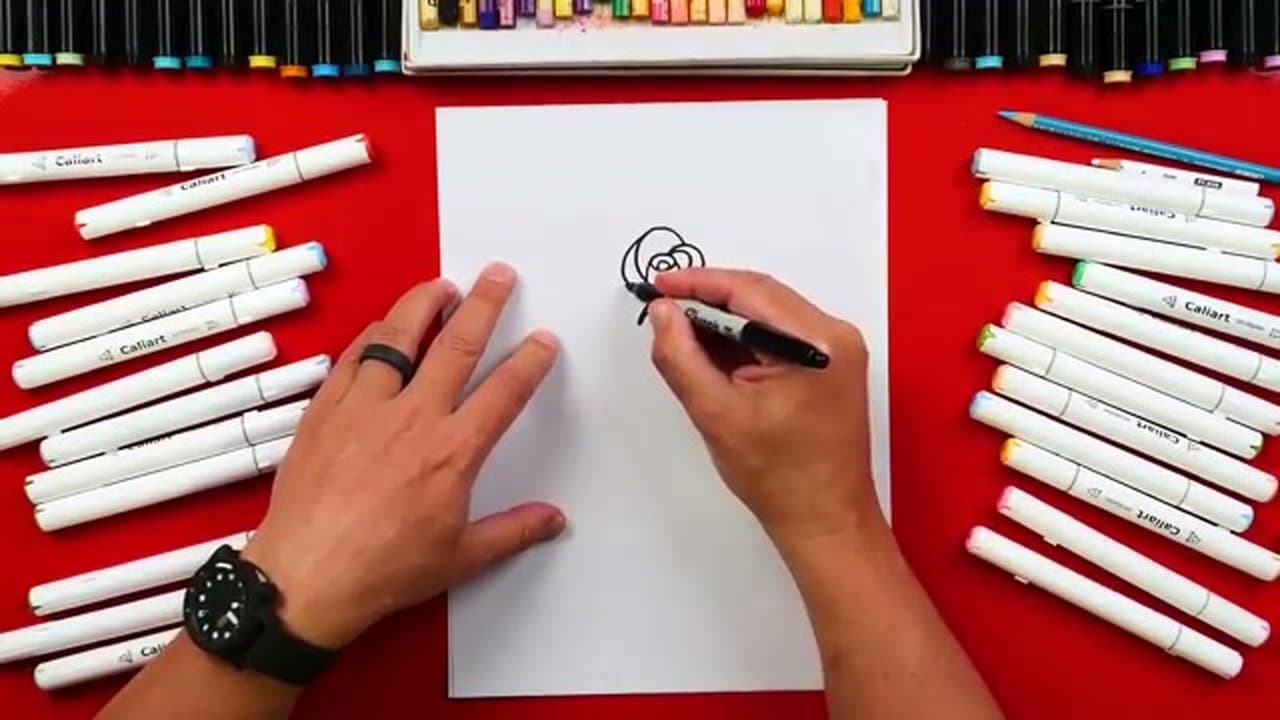
Start near the middle of your paper, slightly toward the top. Draw a small spiral that curls inward - like a tiny snail shell - then close it off where you started. This is the bud at the heart of the rose.

From the center of the spiral, drop a short straight line down. That line marks the first petal. Keep everything small here - the rose will get bigger as you add layers, so leave room around the spiral.

3

Step 3: Add the first ring of petals

2:00
Step 3: Step 3: Add the first ring of petals

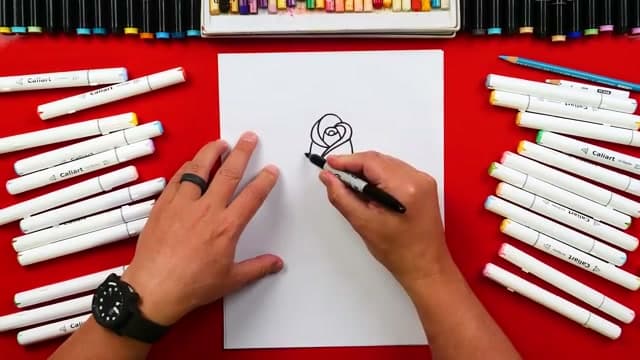
On each side of the center line, draw a soft curve that bows outward and ends slightly lower than where it began. These are the inner petal edges wrapping the bud.

Then come back to the top of the spiral and draw an S-curve down on each side, keeping them short. The inner ring is small on purpose. It sits tightly around the spiral, with each petal getting just a little bigger as you move outward.

Tip

Don't worry about symmetry. Real roses are asymmetrical, and slightly different curves on each side make the rose look more natural, not less.

4

Step 4: Build the next petal layer outward

1:50
Step 4: Step 4: Build the next petal layer outward

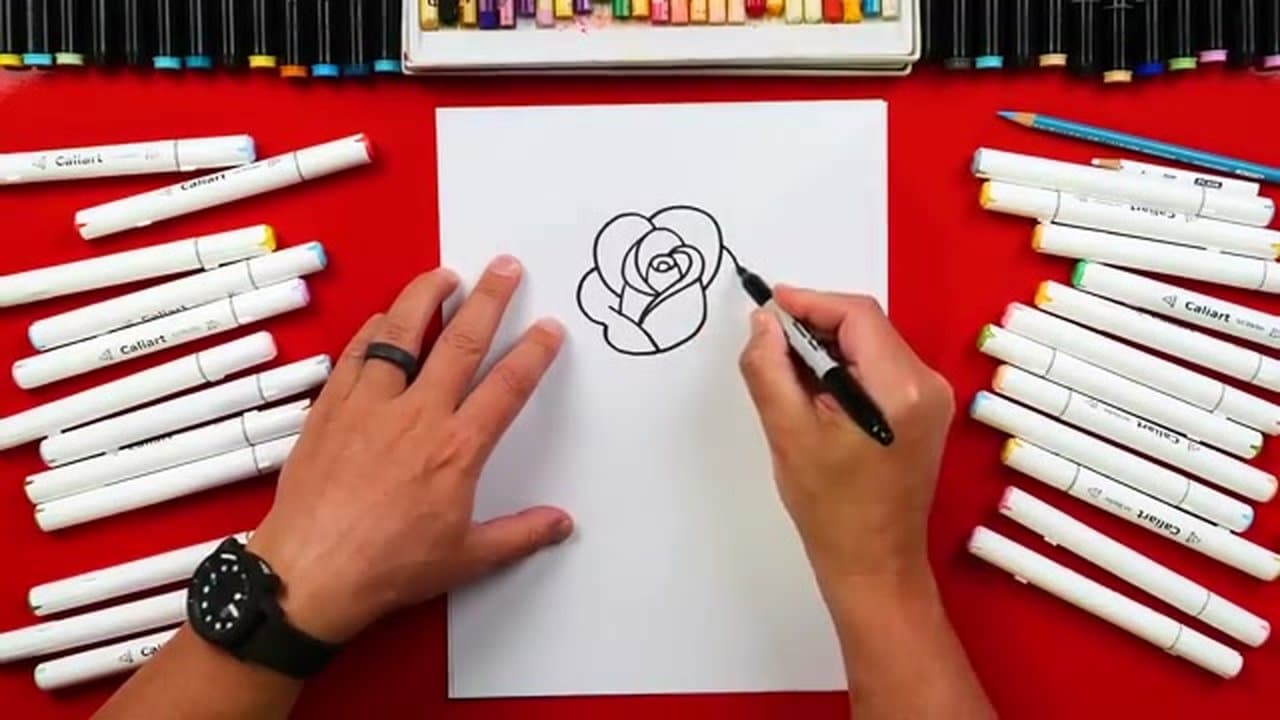
From the bottom of each S-curve, draw a longer curve that swoops out wider, then comes back to a point at the bottom. Mirror this on both sides of the rose.

At this stage the shape should start to look like a heart - that's a good sign. The heart silhouette is the framework that tells you the rose is forming correctly. If your shape looks lopsided, just extend the smaller side a bit further before moving on.

5

Step 5: Add the outer petals with bumps

2:50
Step 5: Step 5: Add the outer petals with bumps

Draw the outermost petals so they curve out wider still, but this time add a small bump in the middle of each curve before bringing the line back down. The bump suggests where one petal folds over another.

Repeat on both sides so the petals balance. The bumps are what stop the rose from looking like a flat fan and make it look like a real flower in bloom. Keep them shallow - a tiny bump goes a long way.

6

Step 6: Draw the stem and leaves

3:20
Step 6: Step 6: Draw the stem and leaves

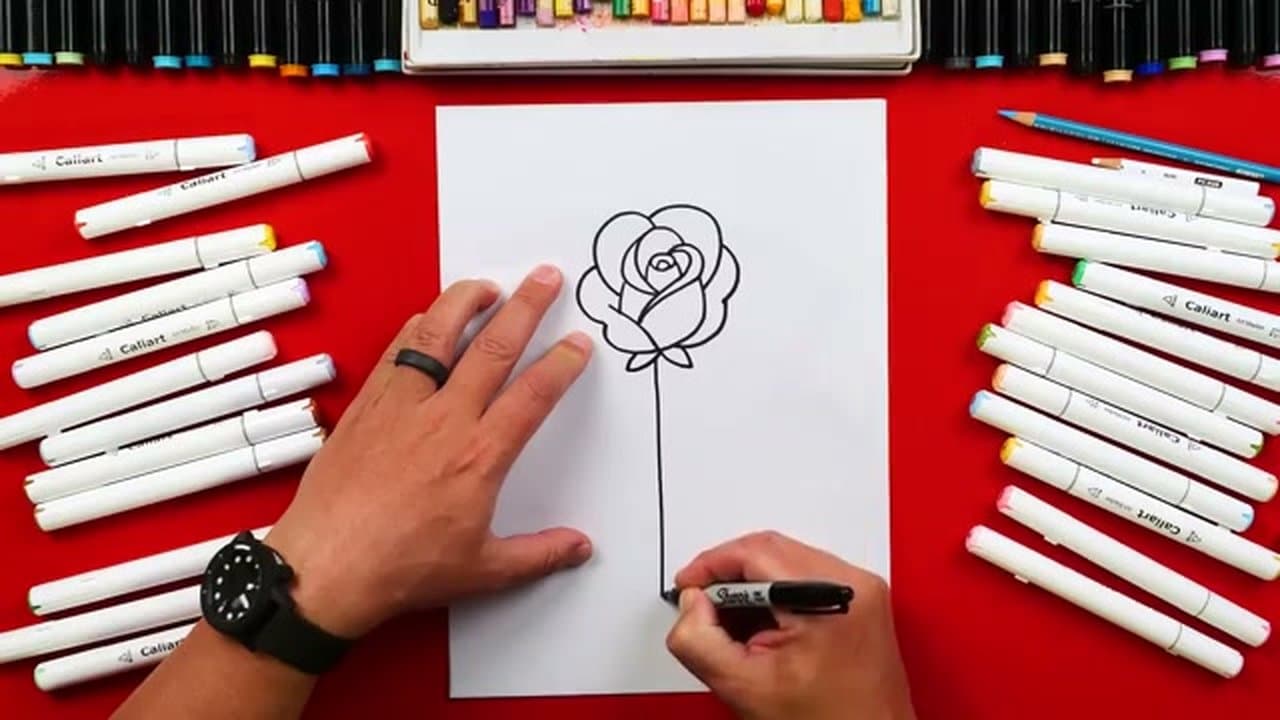
From the bottom of the rose, sketch one leaf curving out to the left and another to the right. Keep them simple - just an almond shape with a center vein line.

Then draw the stem straight down with two parallel lines, leaving a small gap so the stem has thickness. A thicker stem looks more grounded than a single thin line. Real rose leaves have a jagged edge, but a smooth curve keeps the lesson easy and still reads as a leaf.

7

Step 7: Color the rose with red and green

10:20
Step 7: Step 7: Color the rose with red and green

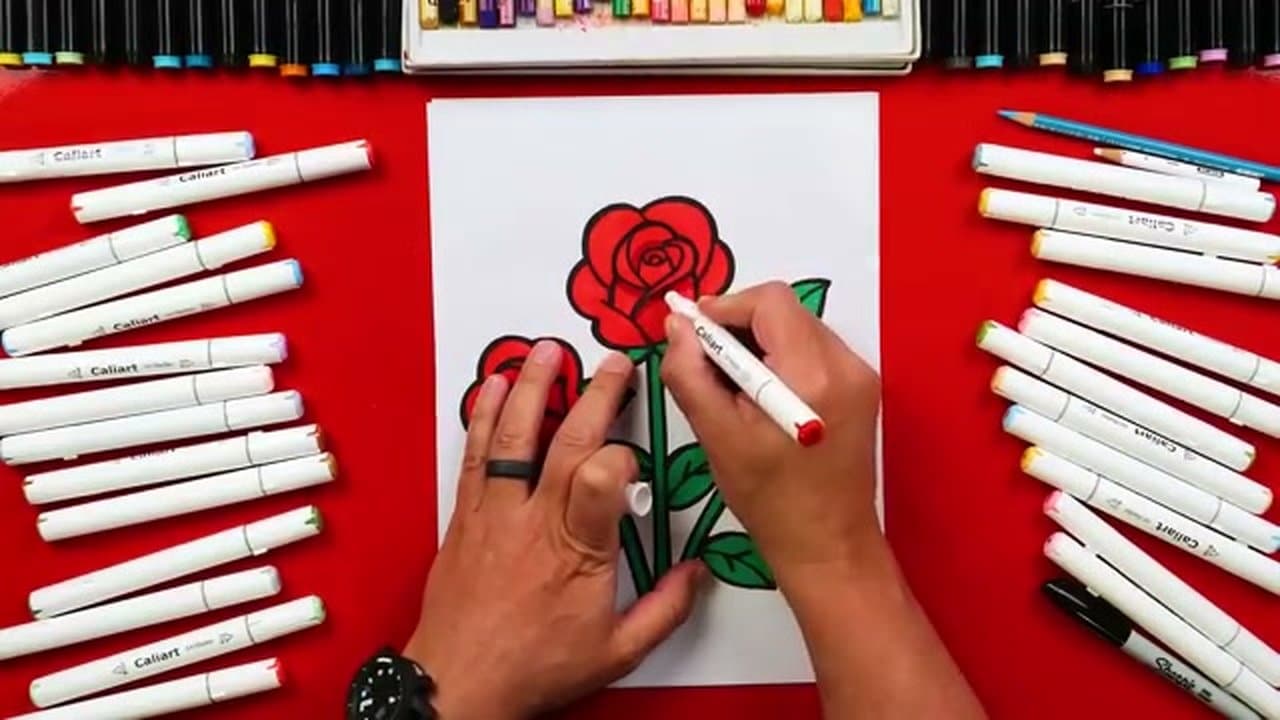
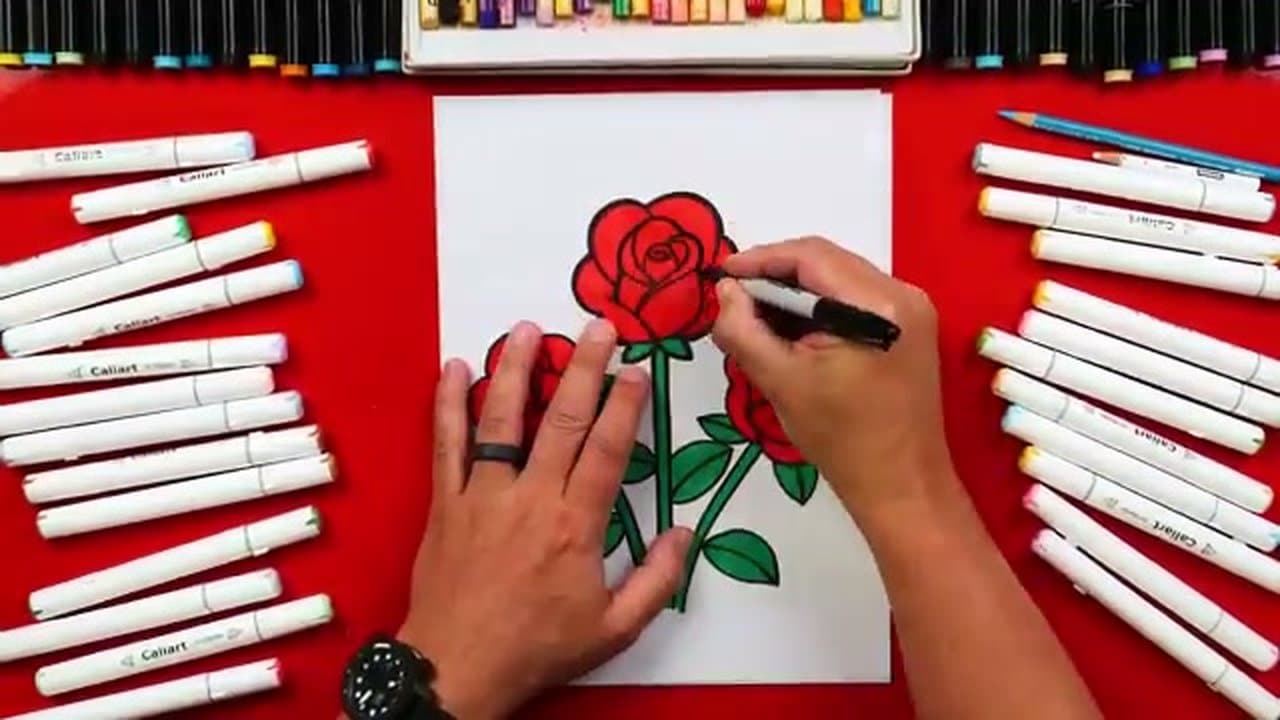
Fill in the rose with solid red marker and the leaves and stem with green. Don't worry about staying perfectly inside the lines - markers don't need to be precise here. Just lay down the base color.

This is your foundation layer. The next step adds shading on top, so what you do here doesn't have to be perfect. Stay loose and quick.

Tip

Color the rose in any direction you want, but try to color the leaves with strokes that follow the leaf's center vein. It's a small detail but it adds a sense of texture without any extra work.

Products used in this step

8

Step 8: Layer darker shades for 3D shading

10:55
Step 8: Step 8: Layer darker shades for 3D shading

Take a darker red marker and layer it on top of the base red. Place shadows underneath each petal, behind petals that sit further back, and inside the center spiral. Then do the same with a darker green on the leaves.

This step is the magic. Two passes of shading turn a flat drawing into one that looks like it has real depth. Stop the moment it looks finished. It's tempting to keep adding shadows, but more isn't better here.

Tip

If you only have one shade of red, leave some of the base color visible and color around the shadows lightly with the same red - the visible base will read as a highlight against the saturated shadow areas.

Products used in this step

Products Used

☐ The Checklist

How to Draw a Rose

Tools
2
Materials
5
Steps
8
Video
12 min

Your Guide

Art Hub Plus

As an Amazon Associate we earn from qualifying purchases. Links on this page may be affiliate links - clicking them and buying doesn't change your price, but helps support ShowMeStepByStep.

Tags

Test your knowledge

Did the lesson stick? Find out in 2 minutes.

5 quick questions covering what you just read. No signup, no score saved — just a gut check.

Quick reference

Key takeaways from How to Draw a Rose

5 questions, answers, and one-line explanations. Tap to expand.

  1. 1.Why does marker paper matter more than you'd guess?

    Answer: Regular printer paper bleeds through and dulls your markers fast

    Marker paper keeps colors crisp and protects your surface.

  2. 2.What shape do you start with for the rose's center?

    Answer: A small spiral that curls inward like a snail shell, closed off at the start

    The spiral is the bud at the heart of the rose.

  3. 3.At the next-petal-layer stage, what silhouette should the rose start to take?

    Answer: A heart shape

    The heart silhouette is the framework that tells you the rose is forming correctly.

  4. 4.What detail on the OUTERMOST petals stops the rose from looking like a flat fan?

    Answer: Small BUMPS in the middle of each curve - suggesting one petal folding over another

    Shallow bumps imply petal-over-petal folds and add real-flower depth.

  5. 5.What's the 'magic' final step that turns a flat drawing into a 3D-looking rose?

    Answer: Layering a DARKER red marker on top of the base red - shadows under petals, behind petals further back, inside the spiral

    Two passes of darker shading give it real depth - stop the moment it looks finished.

What's next

Weekly Digest

Liked this crafts tutorial?

Pick the categories you want to hear about. Weekly digest of new step-by-step tutorials. No spam, easy unsubscribe.

Send me tutorials about

We only email about new tutorials. Easy unsubscribe anytime.