A tree is the first thing most people try to draw outside, and the first thing they quit on. The hand is rarely the problem, the approach is. Drawn leaf by leaf, or branch by branch, a tree comes out looking like a diagram of a tree.
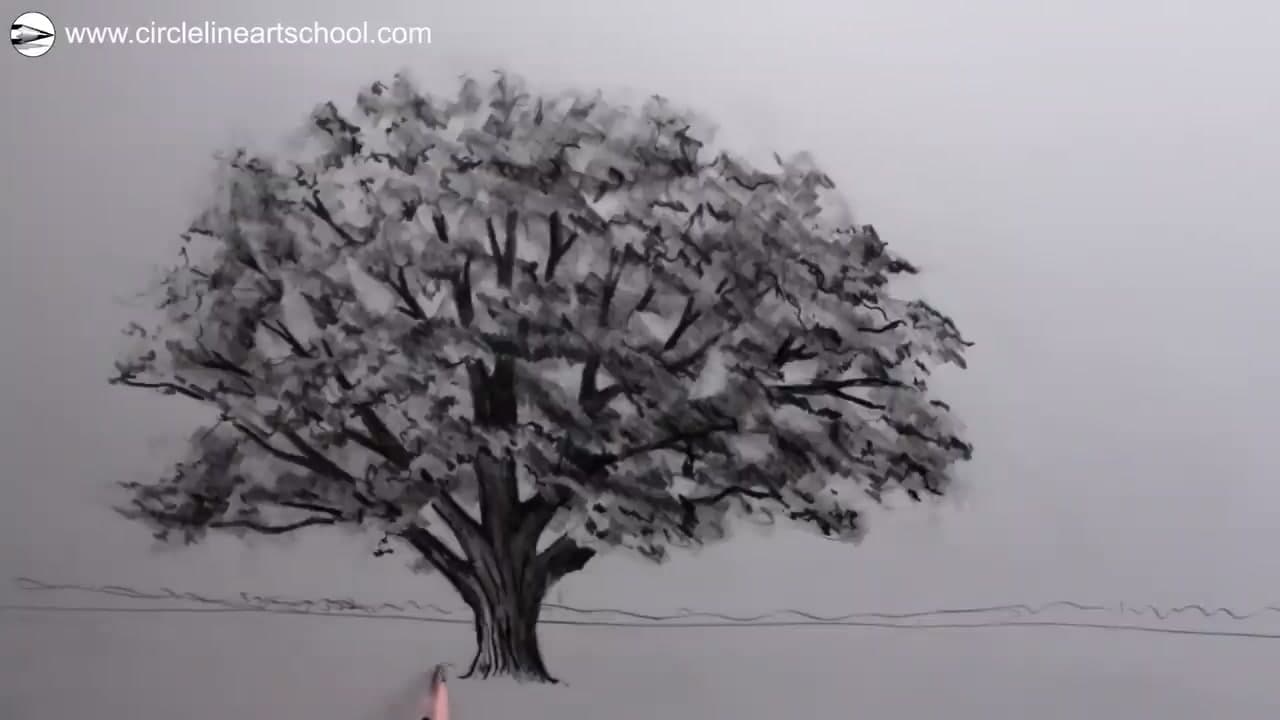
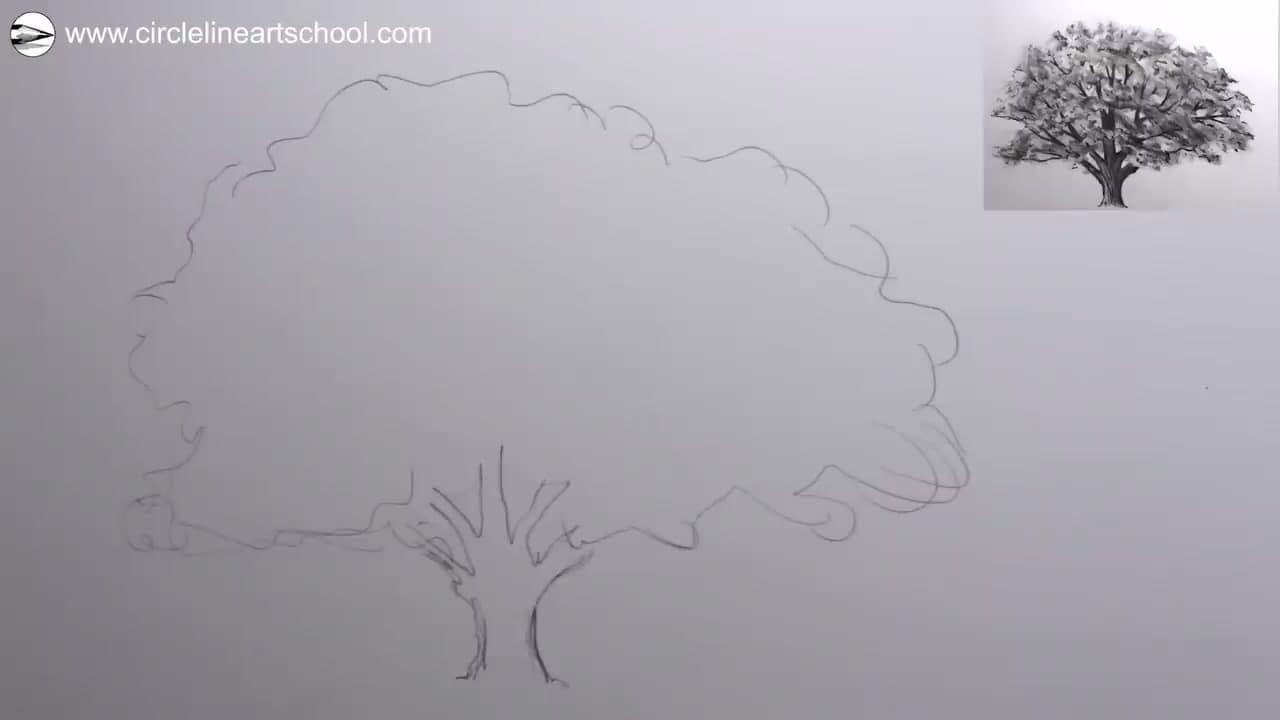
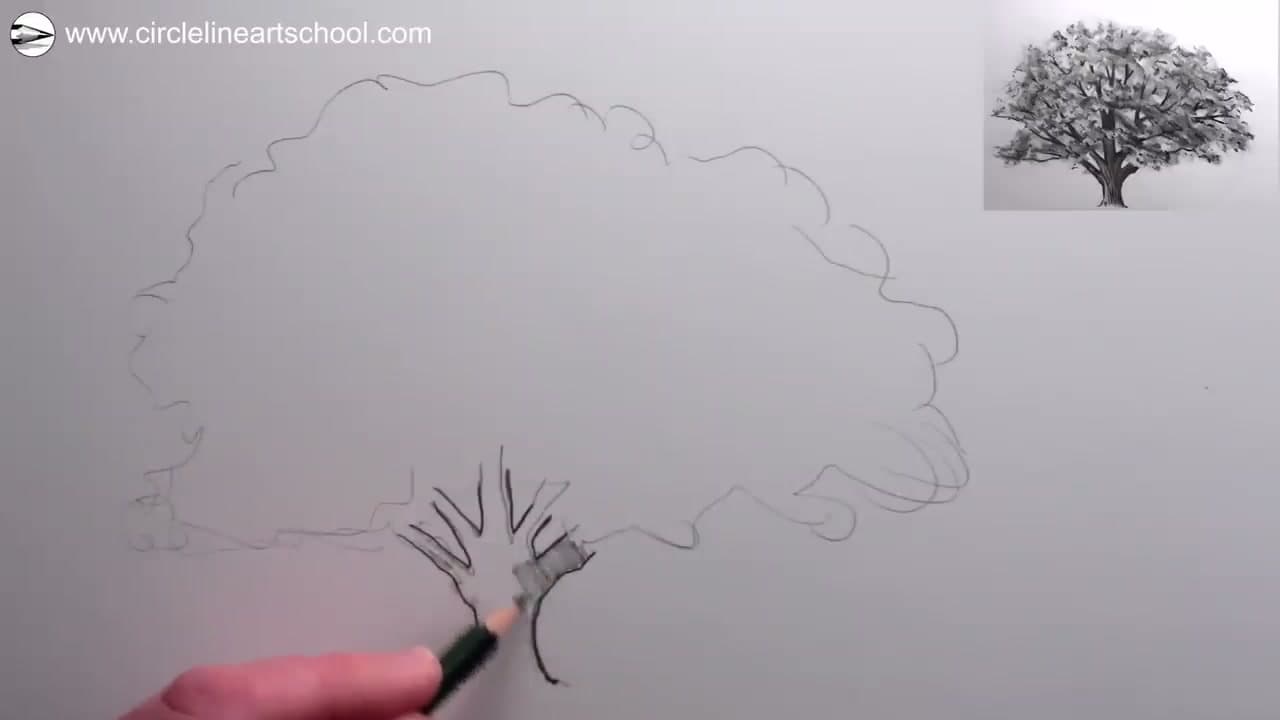
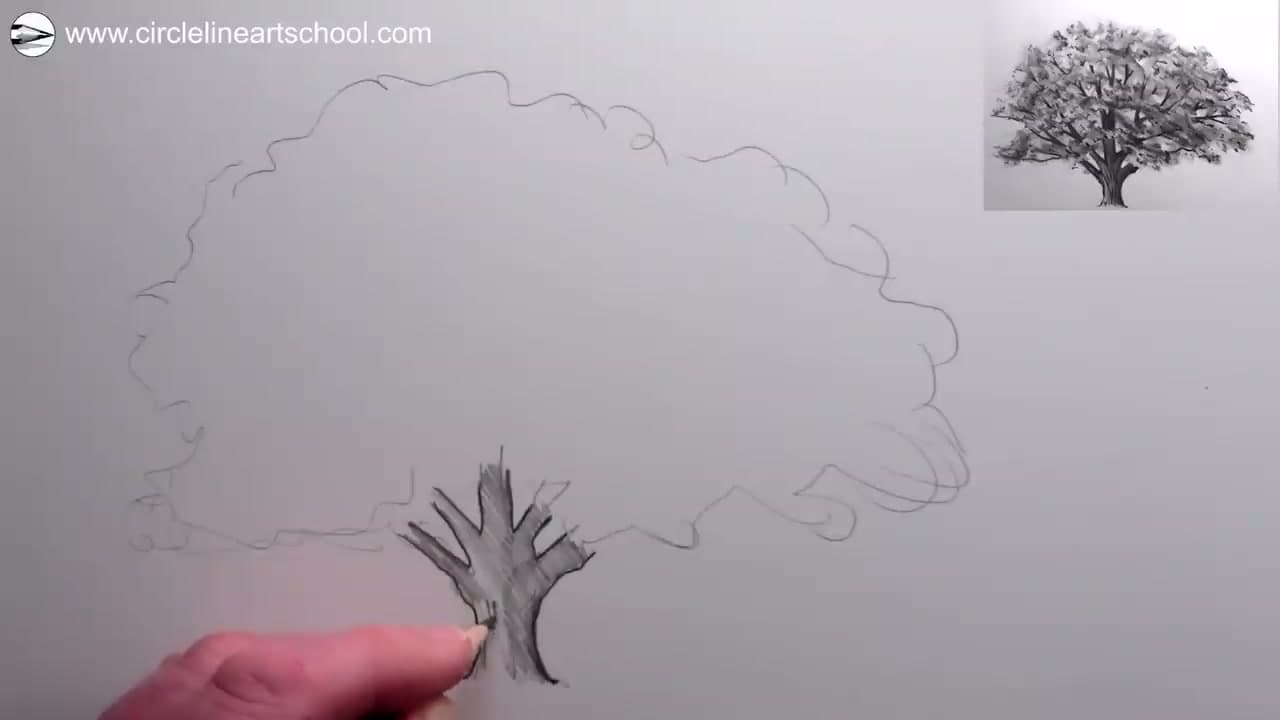
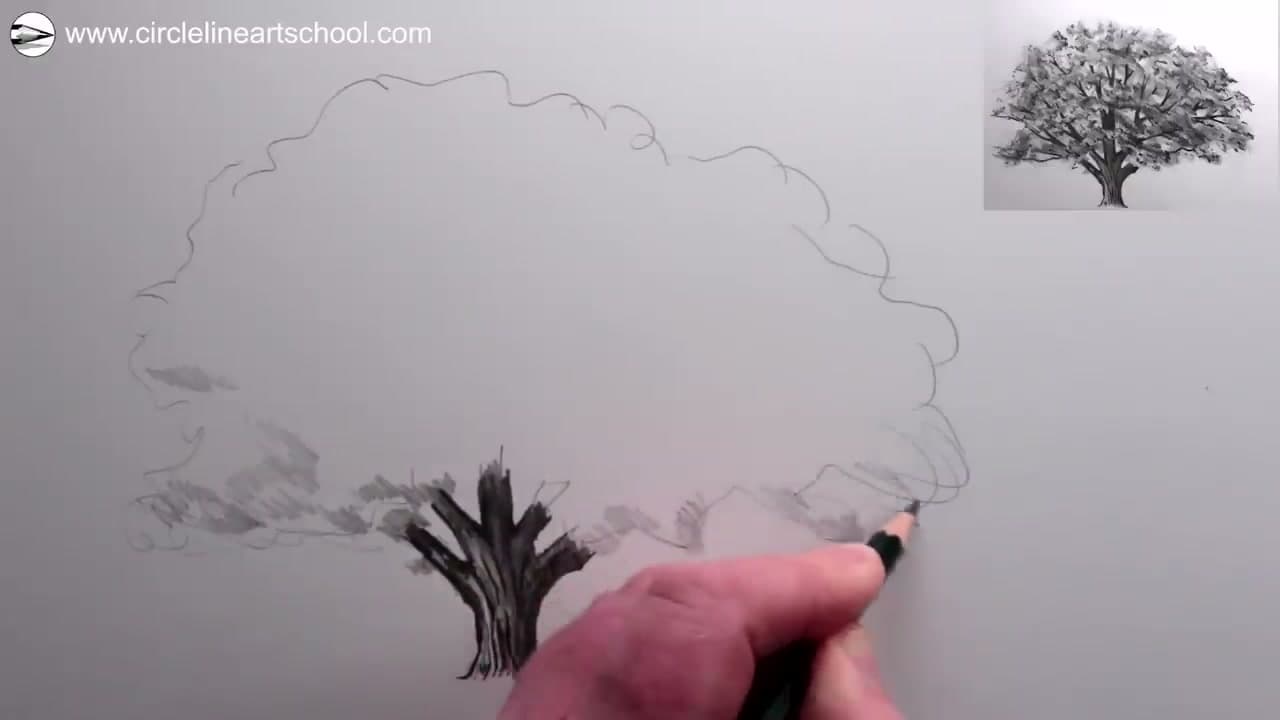
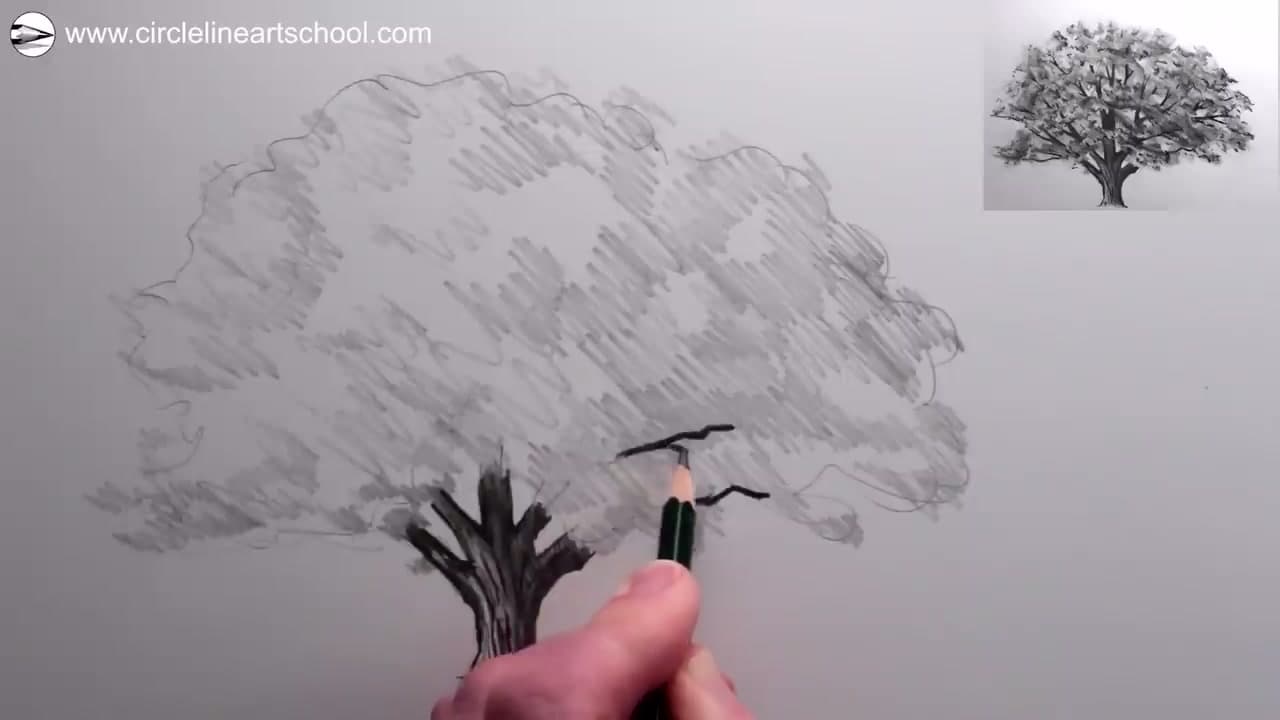
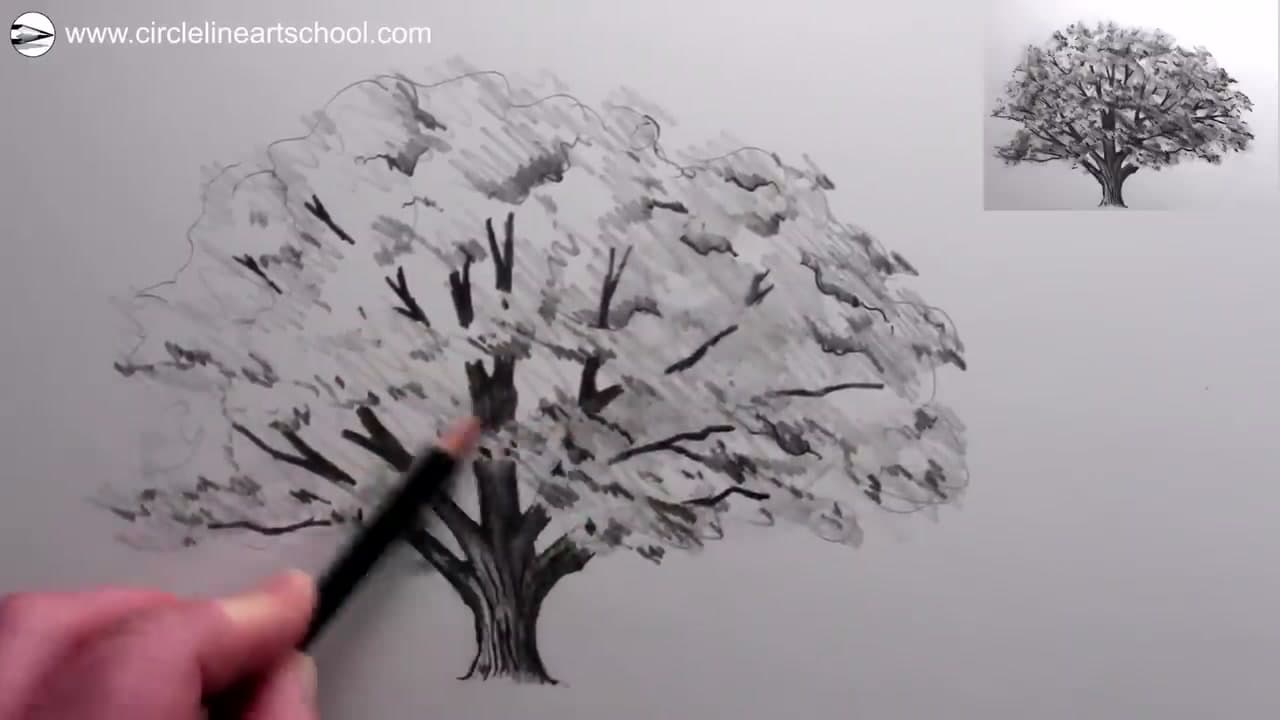
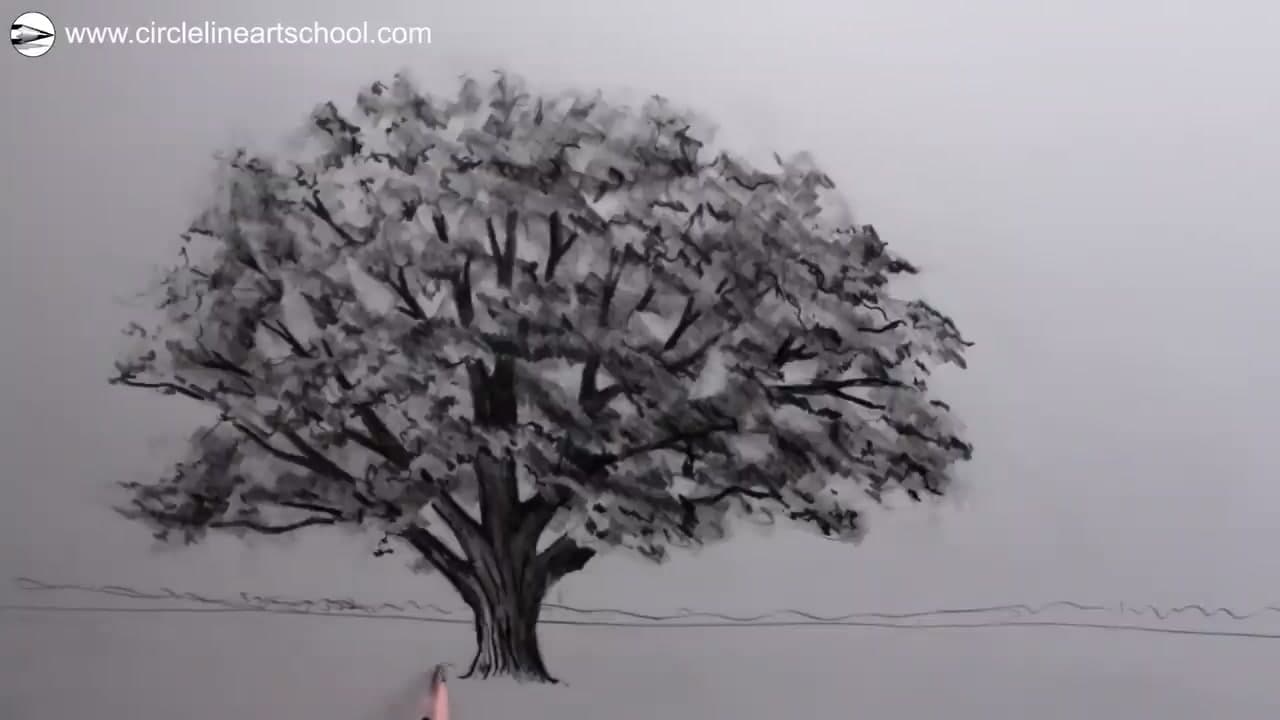
Tom McPherson of Circle Line Art School builds this oak the other way round. A loose shape, then a solid trunk, then tone laid down in passes until the canopy carries some weight. One graphite pencil does the whole drawing. The steps below follow that demonstration. The rest here carries over to the next tree you draw. If you have never shaded anything, the light-pass method and picking a light source are covered in how to draw.
Three Tree Shapes to Learn First
Almost every tree you draw is a variation on three silhouettes, and they get built in different orders.
- Round deciduous (oak, maple, elm): a wide mass of foliage on a short, thick trunk. Build the canopy as one big shape, then break its edge apart. This is the tree below.
- Conical evergreen (pine, spruce, fir): a straight center spine with branches hanging off it, longer toward the ground. Draw the spine first, then layer branches down it, trunk visible the whole way up.
- Bare winter tree: no leaves to hide behind, so it is all branch structure. Every fork splits into two thinner limbs, each losing about half its thickness at the split.
Why Your Tree Looks Like a Lollipop
A lollipop is a smooth closed outline with shading poured inside it. It reads as a sign, not a tree. Three things fix it.
Break the outline: a real canopy edge is ragged, with clumps sticking out and bites taken out of it. Vary the clumps: thumbnail-sized, coin-sized, none evenly spaced. Then let sky through. Punch two or three real holes where you can see past the leaves to a branch behind. Those gaps do more for depth than any amount of shading. The same ragged-edge thinking runs through how to draw clouds.
Foliage Is Masses of Value, Not Leaves
Stand ten feet from a tree and you cannot pick out a single leaf. You see light clumps and dark clumps. Draw that instead.
Give each clump a lit top and a dark underside. Stacked through the canopy, those undersides are what make it read as deep. Put the heaviest darks where two clumps overlap and in the pocket beside the trunk. Leave the tops that face the light untouched - bare paper is brighter than anything an eraser lifts back out later.
Leaf shape only matters up close, where one leaf becomes the subject and the veins do the work. That is a different job: how to draw a leaf.
Bark Texture Comes From Direction, Not Outlines
Outlining every crack turns the trunk into a net. Use short strokes that run the length of the trunk and curve around it as it turns, so the marks describe a cylinder. Where a branch leaves the trunk, bend the strokes with it.
Keep most of that texture on the lighter side. On the dark side it vanishes into the tone anyway, and the contrast between a textured lit side and a solid shadow side is what sells the roundness. Darken the base of the trunk - it sits in its own ground shadow.
Tree drawing ideas to try next
The oak is the hard one. With its light and dark passes in your hand, these come quicker.
- Cartoon tree. A cloud-shaped canopy, a trunk that flares at the base and two or three branch lines. Good for kids and maps.
- Willow. Same trunk, but the foliage hangs in long downward strokes from the branch tips.
- Palm tree. A curved, ringed trunk with five or six long fronds fanning out of the top.
- Autumn tree in color. Lay the same lit and shadowed clumps in orange and red colored pencil, with a few loose leaves on the ground.
- Snowy pine. Draw the evergreen spine, then leave white paper along the top of every branch. Our Christmas tree drawing dresses one up.
Pencil Grades: Two of Them Do the Work
A 24-pencil tin looks like the answer and it is not. An HB handles the sketch, the guideline marks and the first light passes. A 4B or 6B handles the darks under the clumps and the shadow side of the trunk.
Paper decides more than the grade count does. Smooth paper gives clean lines and fights you on tone. Paper with a little tooth grabs graphite and builds dark in fewer passes. A kneaded eraser earns its place either way: press and lift to pull a highlight back out of the canopy.
Those two pencils cover the rest of a landscape. How to draw mountains runs on the same light-to-dark passes, and how to draw water is where leaving the paper white pays off most.