Running out of yarn is part of every knitting project. So is wanting to change colors for stripes. Both situations need the same thing: a clean way to join a new strand without leaving a hole, a lump, or a knot you can see from across the room.
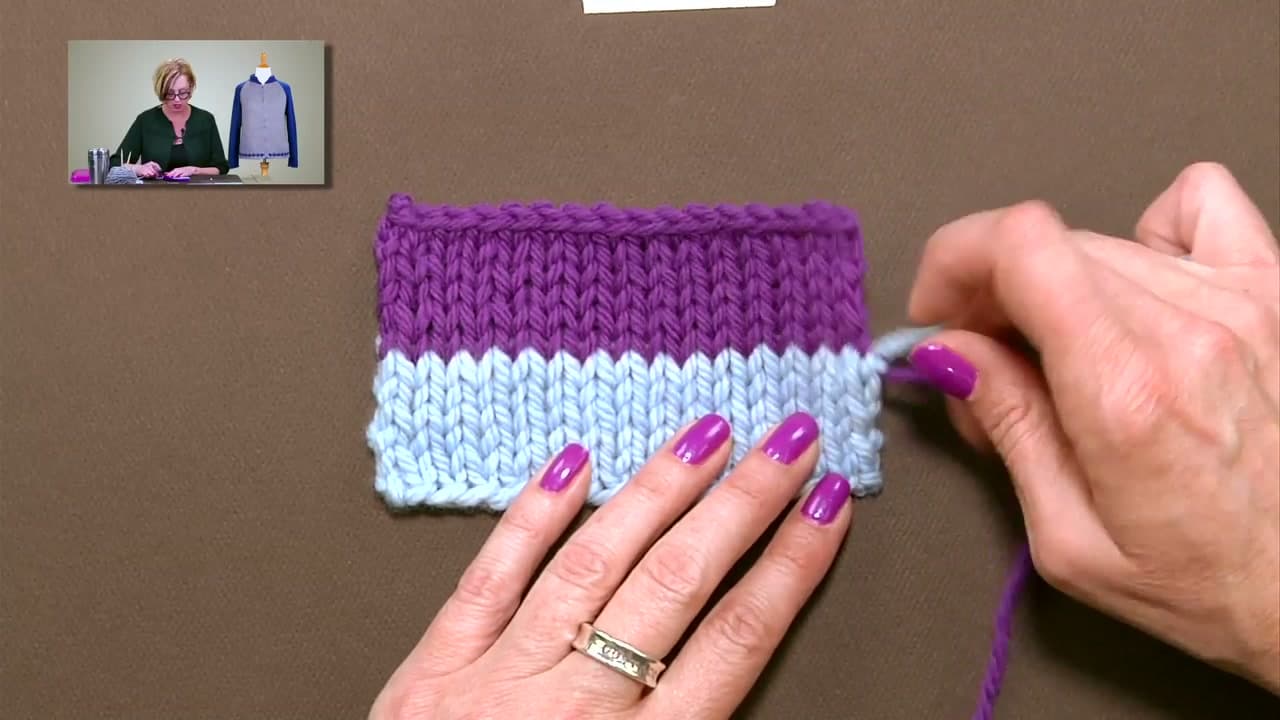
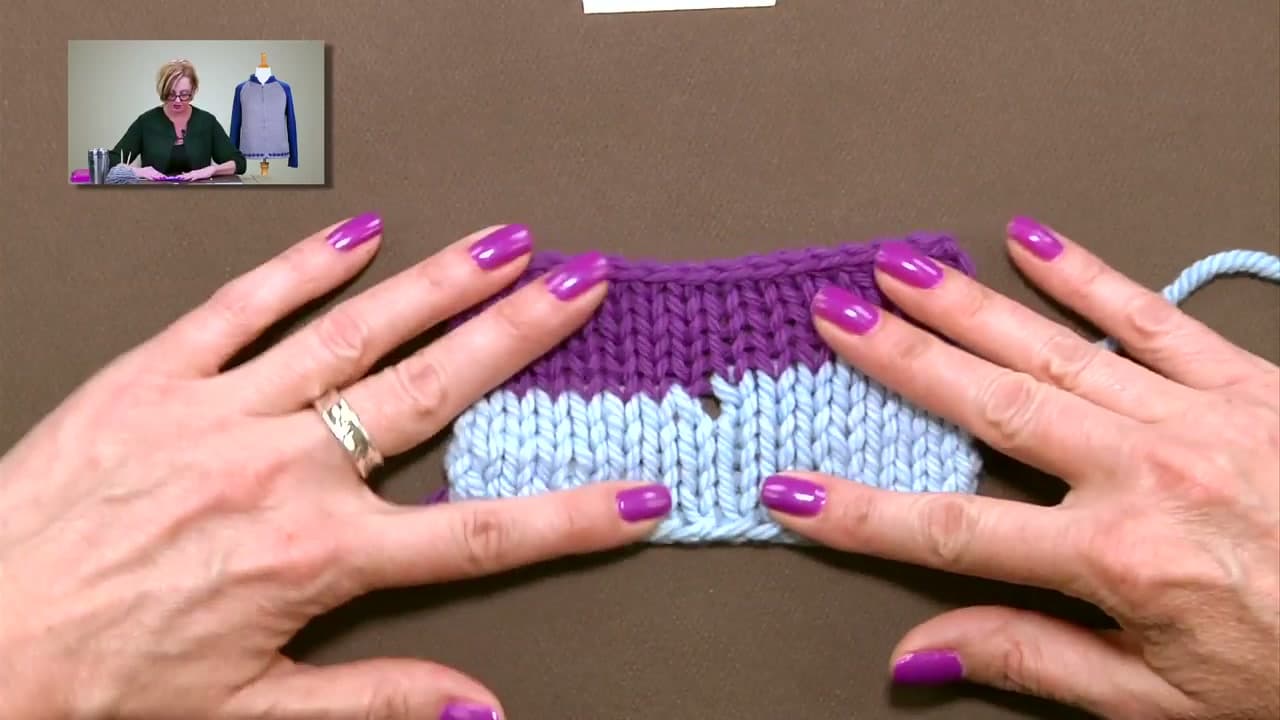
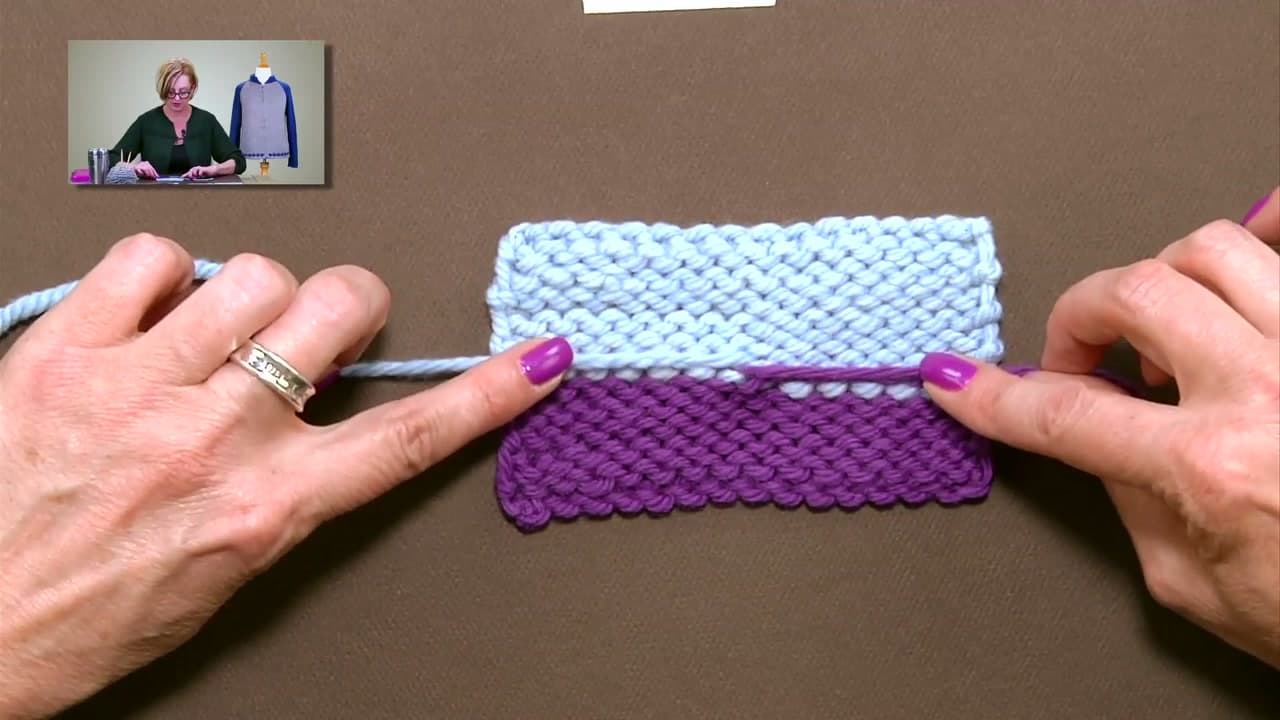
Staci Perry of VeryPink Knits demos four joins on the same swatch so you can compare them. Each one has a job. If you have the basics down, this slots in right after knit and purl and casting on. It is the technique that lets you finish anything bigger than a dishcloth.
The four joins compared
| Join | Fiber | Bulk | Visibility | Best for |
|---|
| Spit splice | Feltable wool, alpaca, mohair | Slight, about an inch | None in one color | Same-color joins |
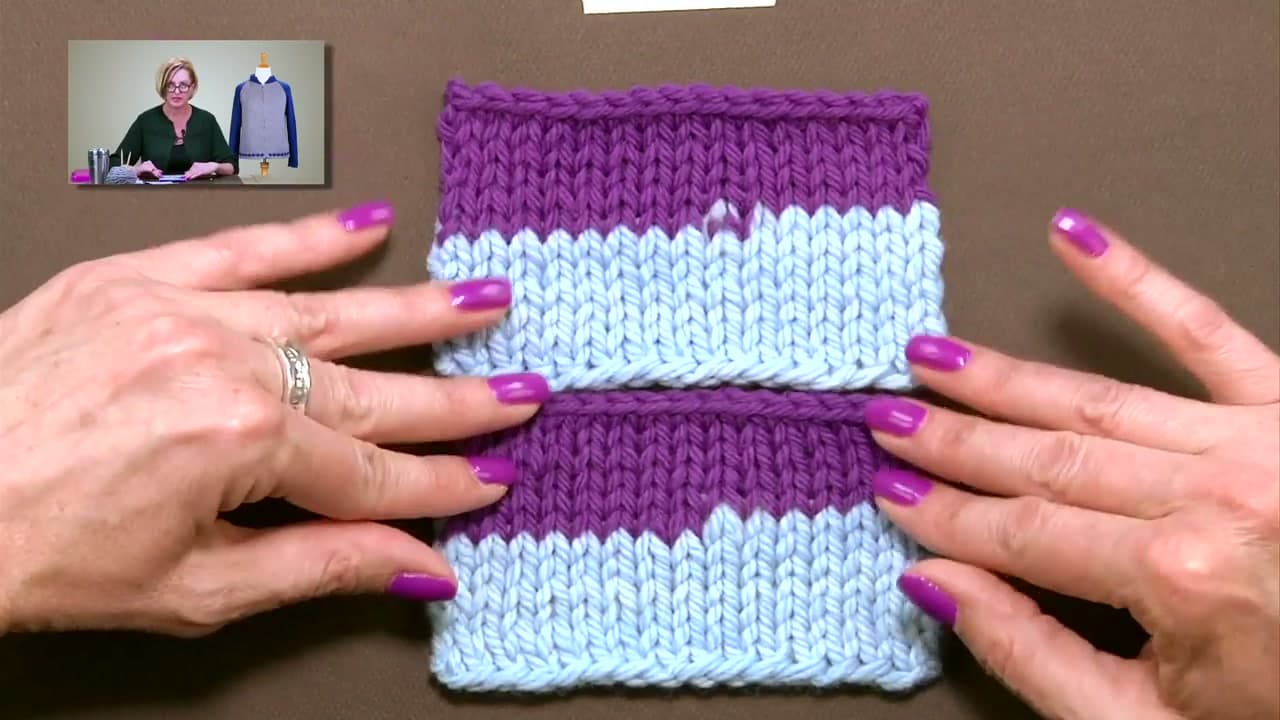
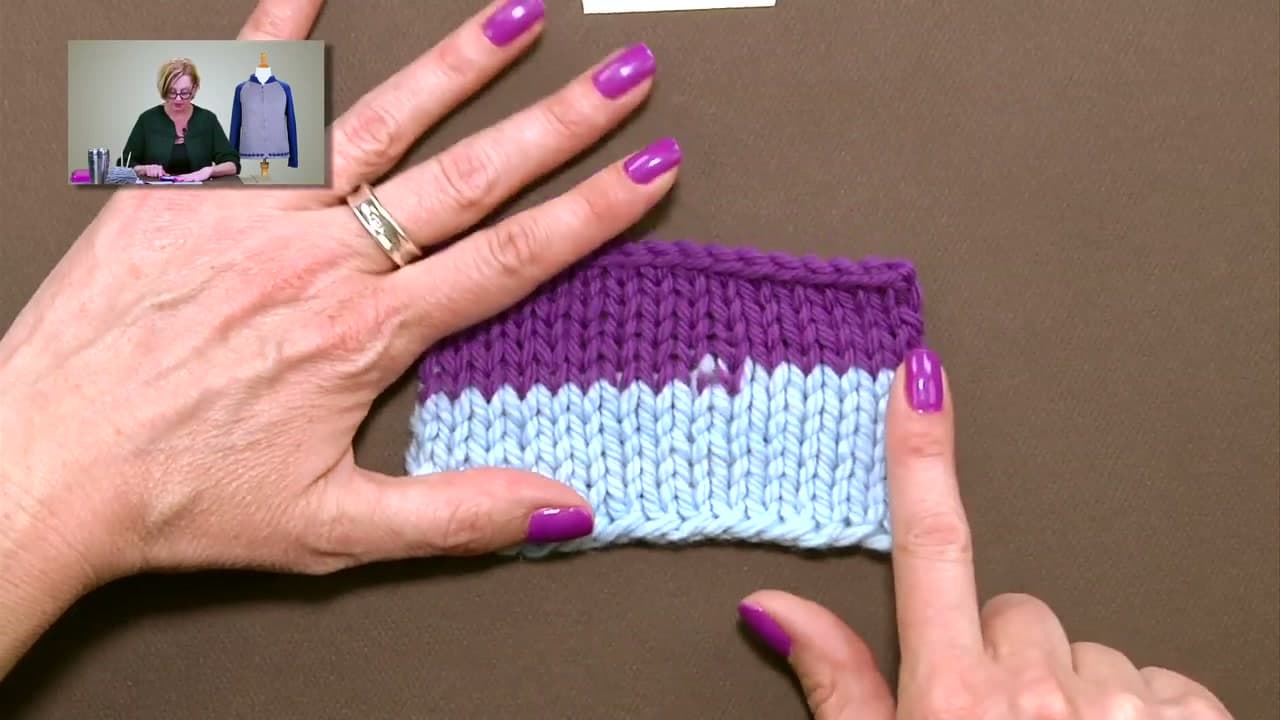
| Russian join | Any fiber | Doubled for about an inch | Crisp color line | Color changes, cotton, acrylic |
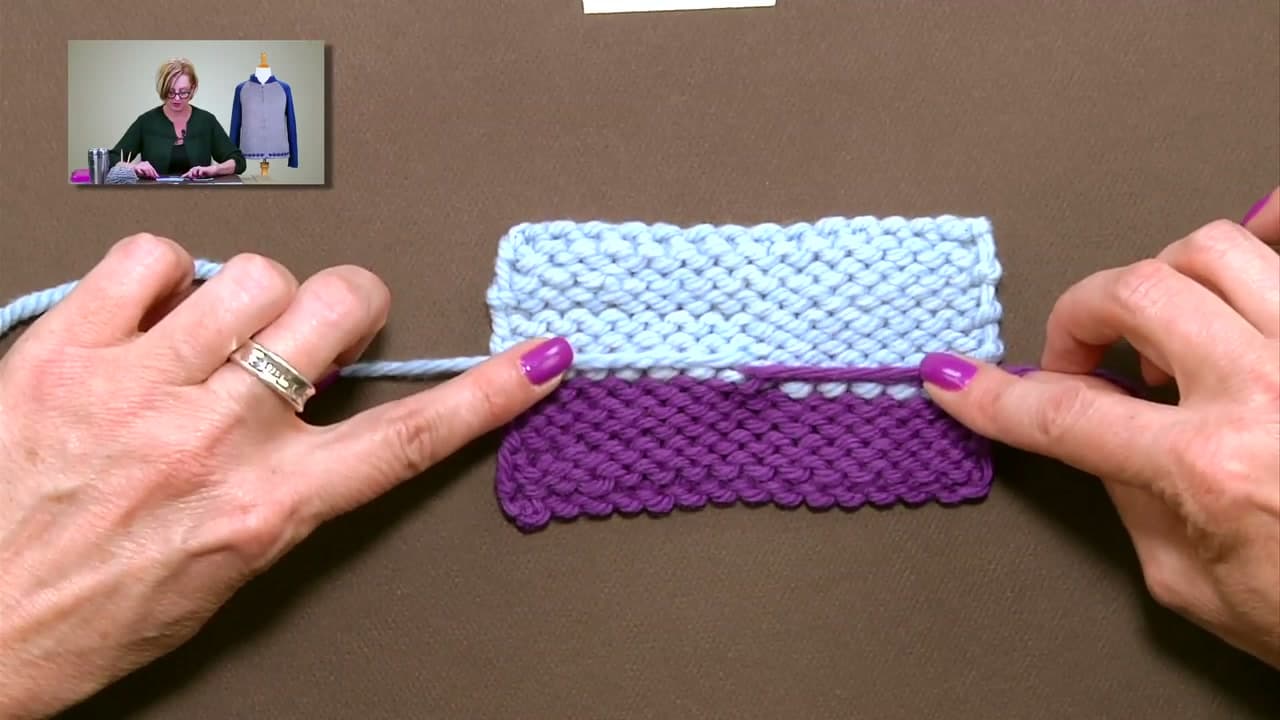
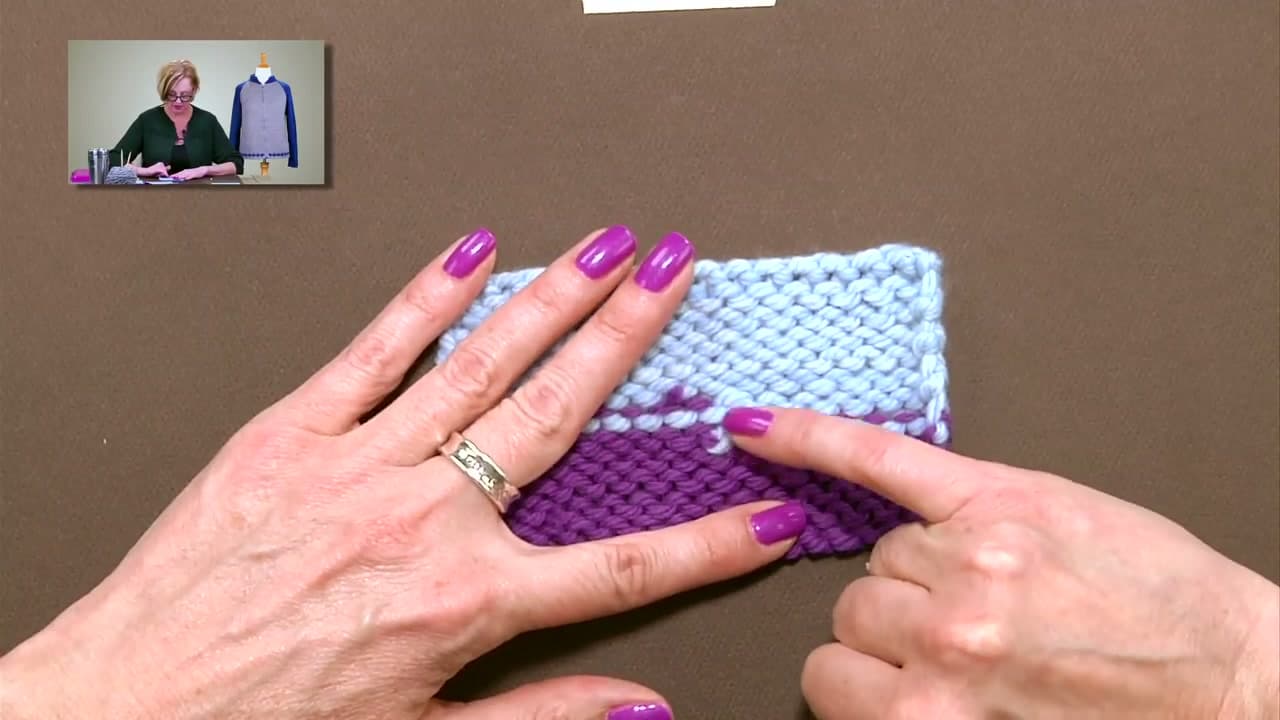
| End-of-row knot | Any fiber | Small knot at the edge | Hidden in the seam | Stripes, slippery cotton |
| Mid-row fix | Any (weave option: wool only) | Small | Low once woven | Running out partway across |
Why spit splice only works on some wool
A spit splice is felting on a tiny scale. Moisture, warmth and friction make the scales on animal fibers tangle and lock. Cotton, acrylic, bamboo and linen have no scales, so rubbing them does nothing.
The one people miss is superwash. Superwash wool is treated so it will not felt in the washing machine, which means it will not felt in your palms either. If the ball band says superwash or machine washable, use a Russian join.
Row end or mid-row?
Join at the start of a row whenever you can. The tails sit at the edge and vanish into a seam or the selvedge. Before you start a row, check what is left: a row of stockinette eats roughly three to four times the width of the fabric. Not enough? Join now and keep the scrap for seaming.
In the round there is no edge, so every join is mid-row. Pick a spot on the side of a hat or under the arm of a sweater, where a slightly thick stitch will not draw the eye.
Changing colors for stripes
Change on a right-side row so the color break is clean. For narrow two-row stripes you do not need to cut at all. Carry the idle color loosely up the side and twist it with the working yarn every couple of rows. For wide stripes, cut and use the end-of-row knot or a Russian join. Crocheters can compare with changing colors in crochet.
What to do with the tails
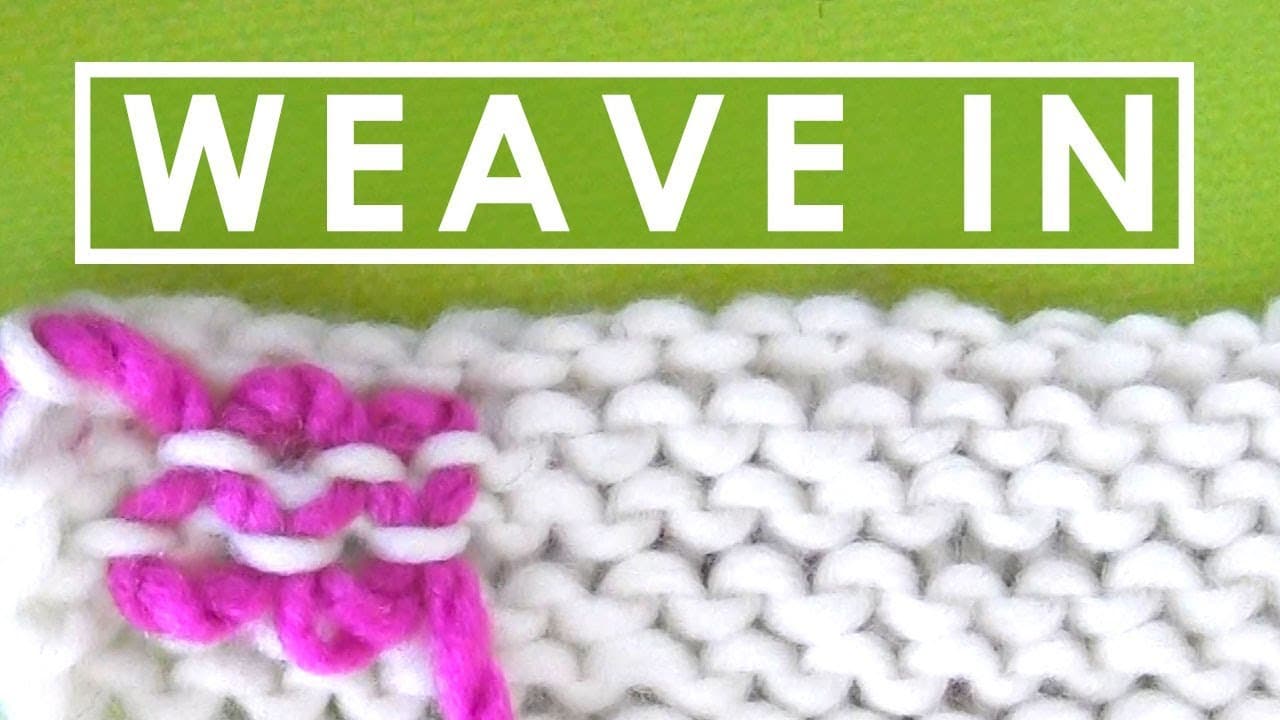
Leave at least six inches on every tail. That is enough to thread a tapestry needle and work it in without a fight. Weave each tail into fabric of its own color so it hides, and do it on the wrong side. Our guide to weaving in ends in knitting covers the edge and diagonal methods.
Common mistakes
- A knot in the middle of a row. It shows as a lump on the right side and can work loose. Move the join to the edge or use a Russian join.
- Splicing superwash. It looks joined until the first tug.
- Tails too short to weave. Two inches is a fight. Six is easy.
- Splicing a color change. The overlap mixes both colors for an inch. Keep the splice for same-color joins.