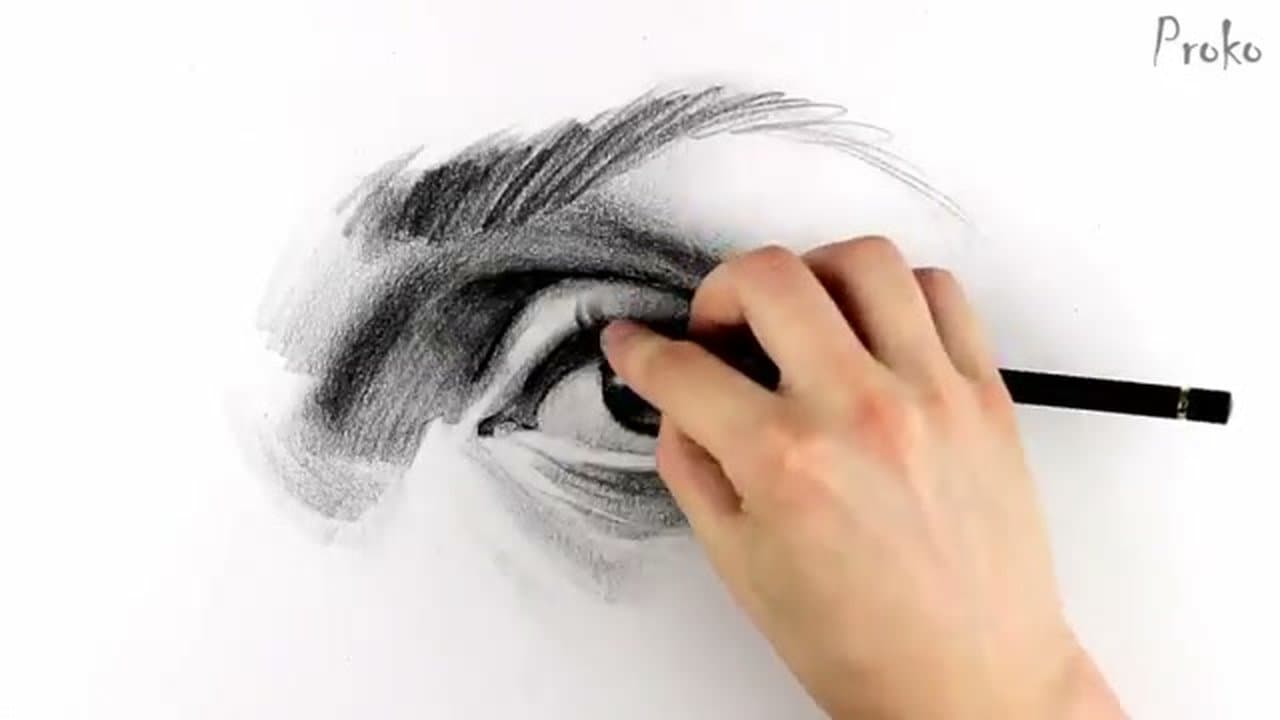
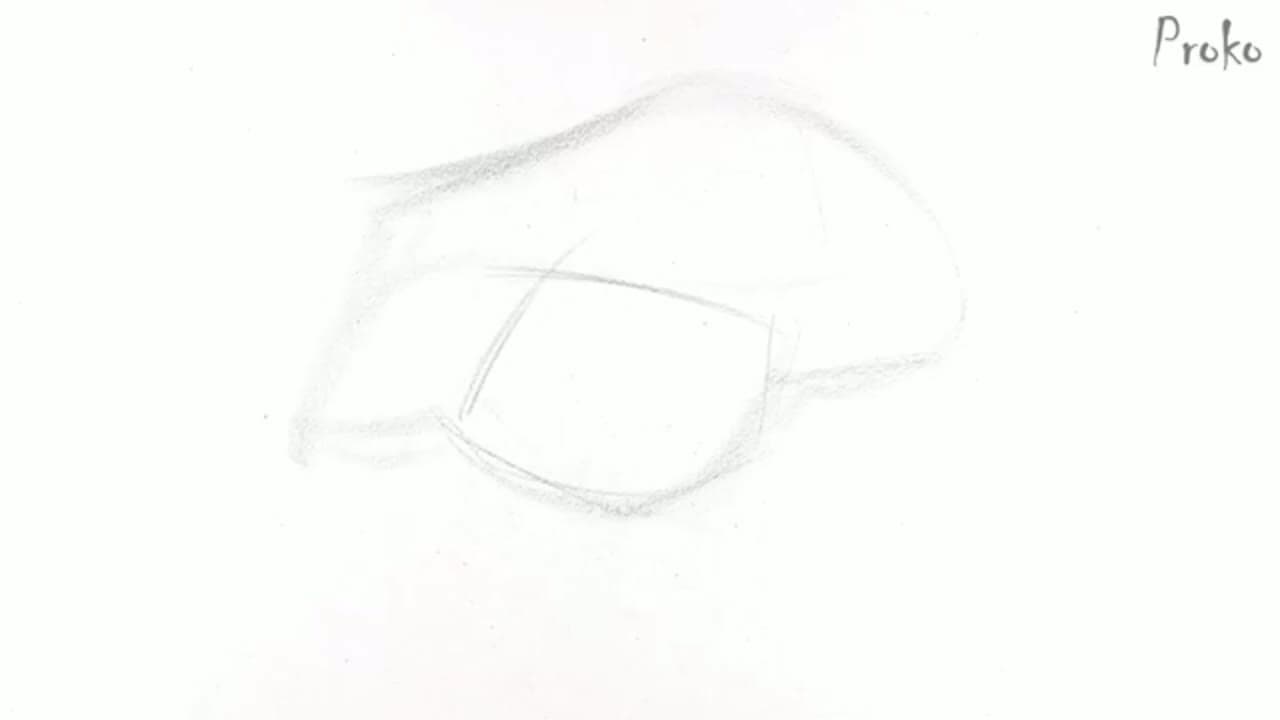
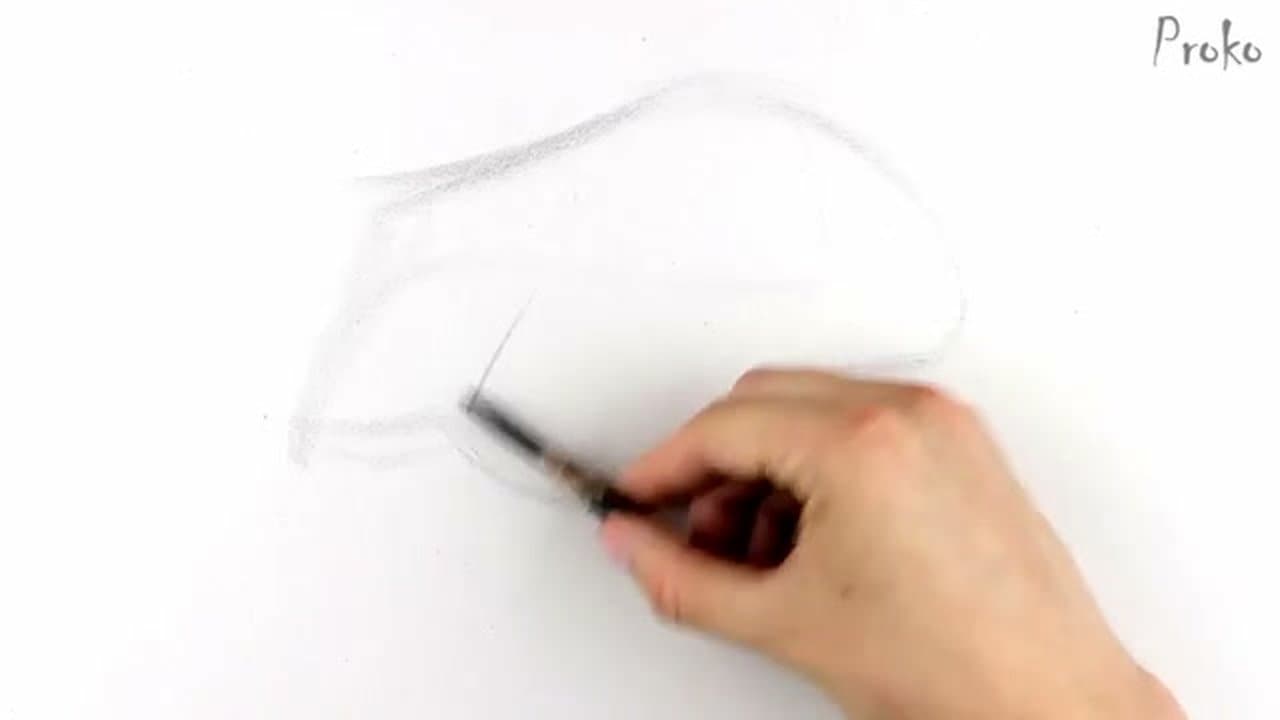
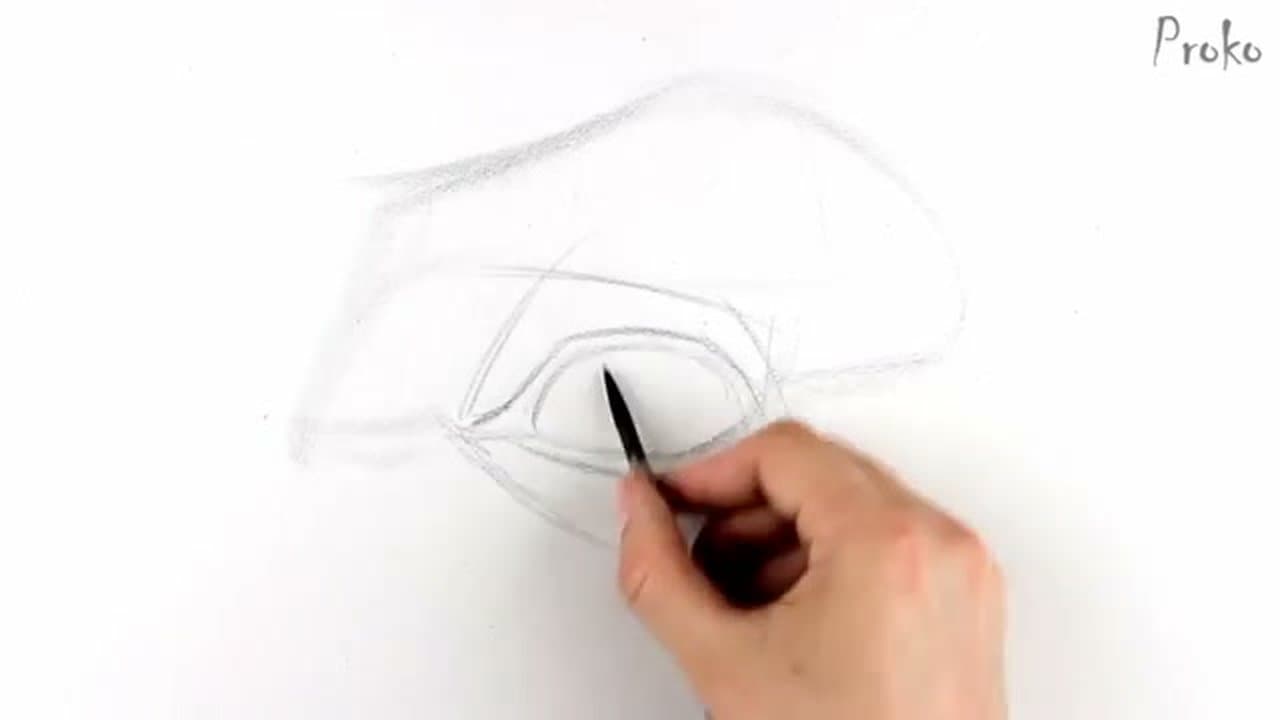
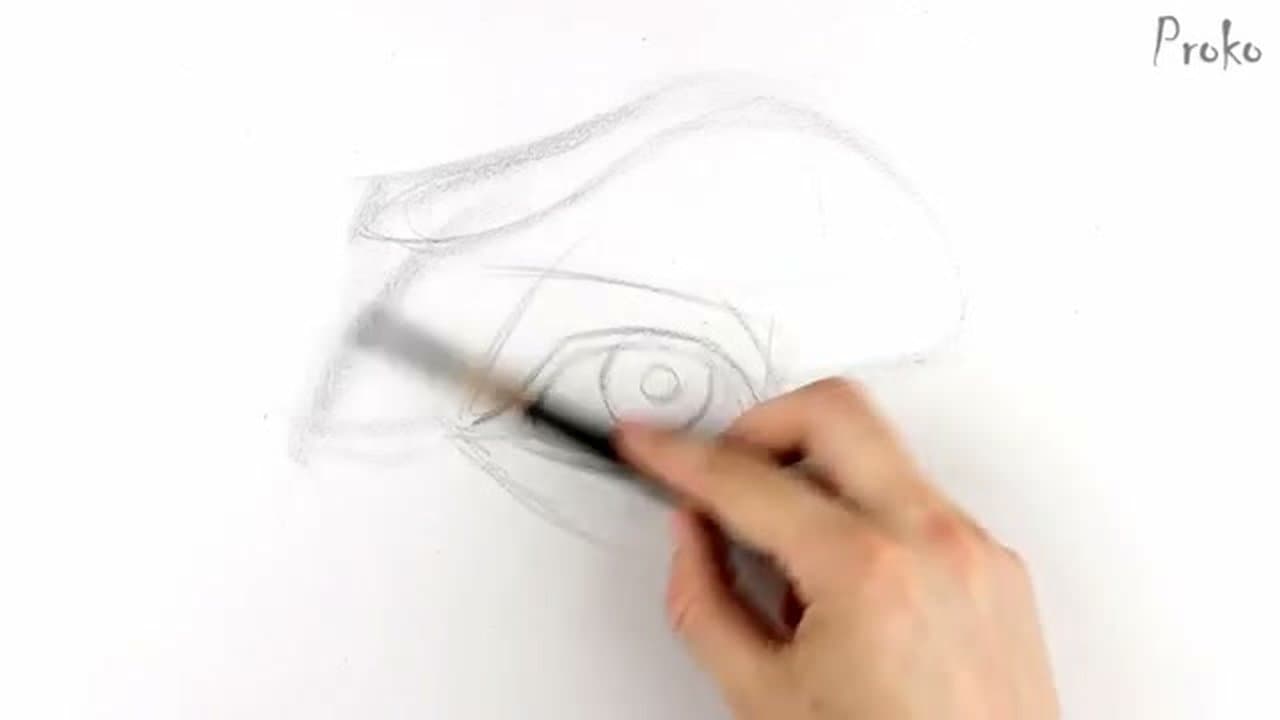
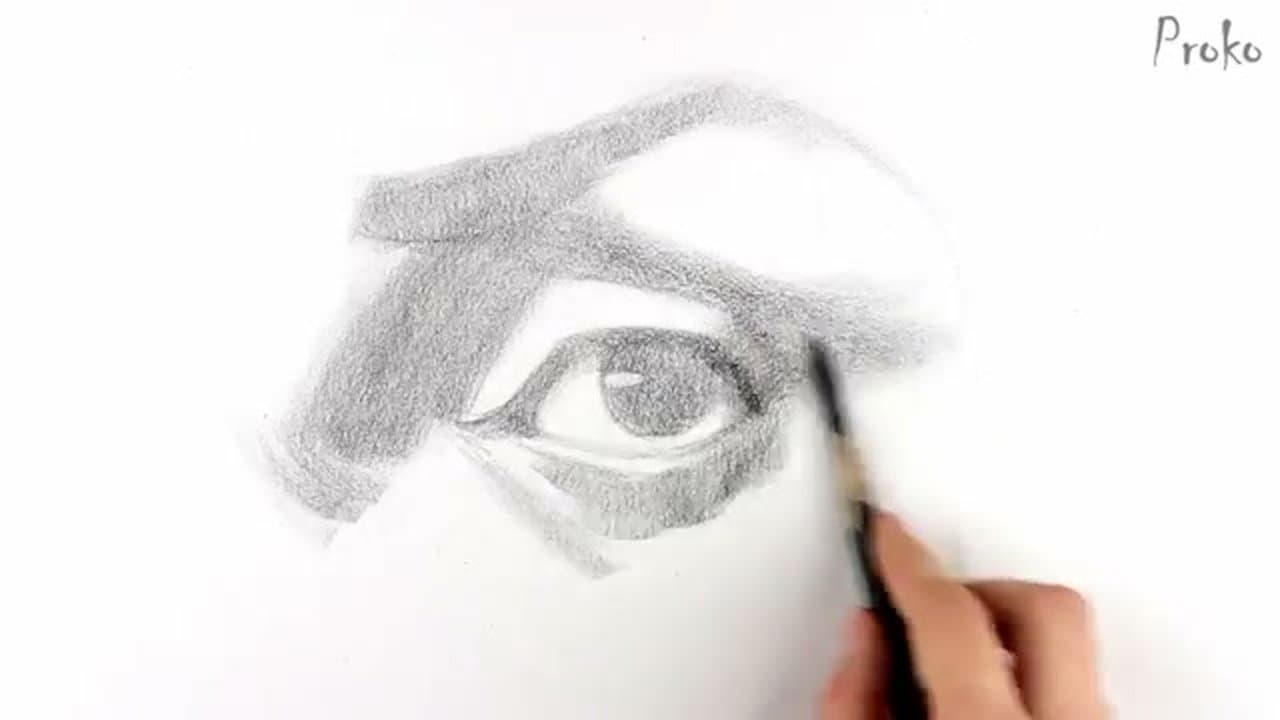
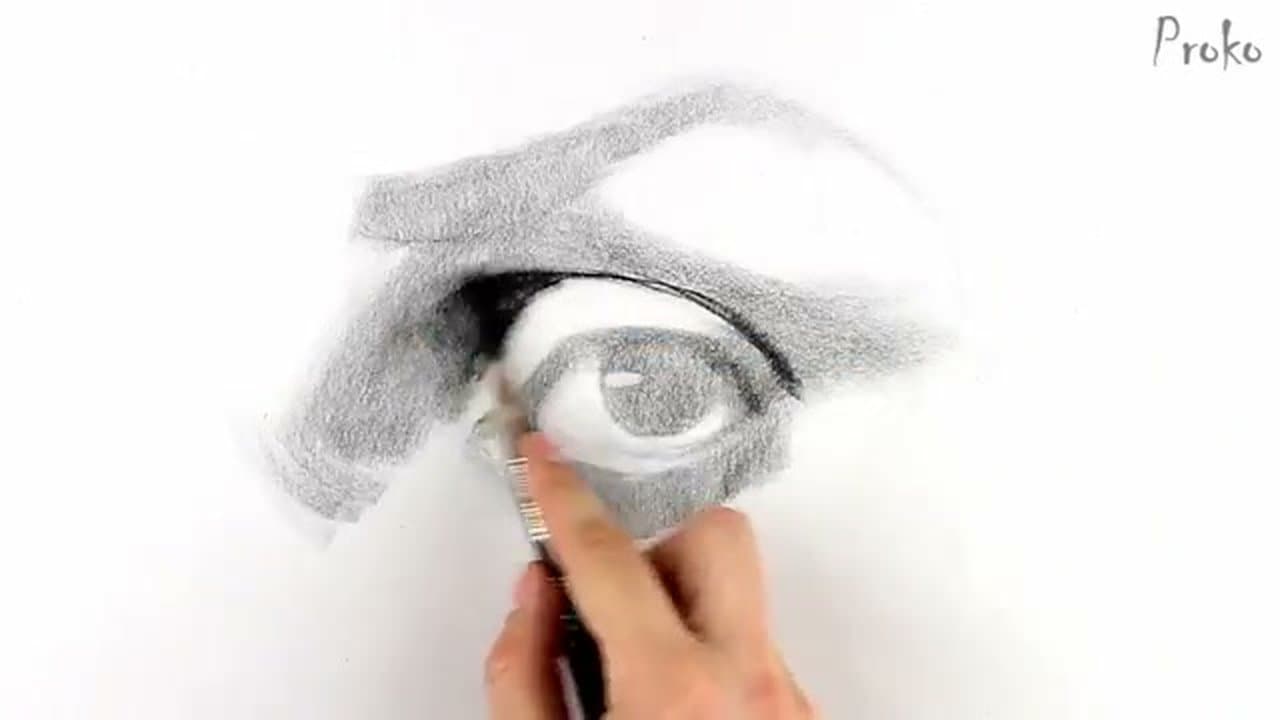
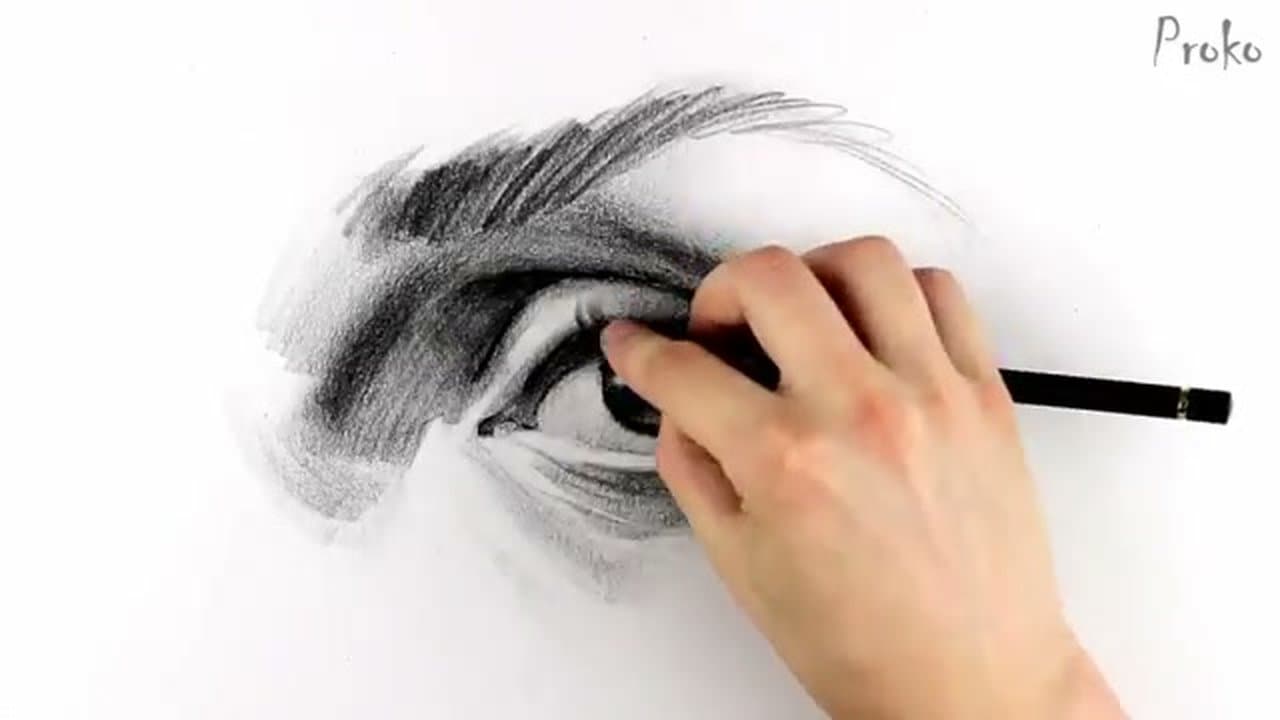
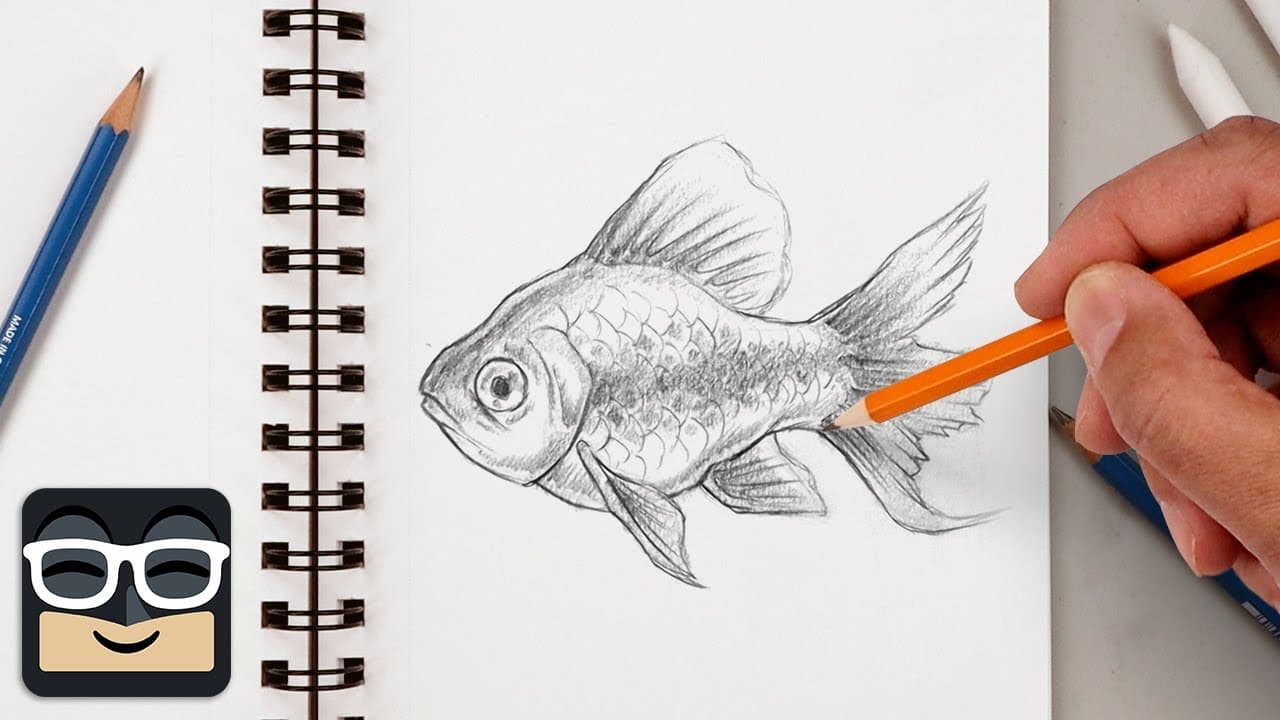
The eye is the part of a portrait everyone looks at first, and the part most beginners flatten into a generic almond with a dot in the middle. The fix is to stop drawing the eye as a symbol and draw it as a 3D ball sitting in a curved socket, with lids that wrap around it.
Stan Prokopenko (Proko) works in a fixed order: structural lay-in, a two-value light and shadow block, dark accents, then halftones and cleanup. The 7 steps below follow it. Give a single eye 30 to 45 minutes at first.
What you need
- An HB for the lay-in, a 2B and 4B for the shadow block, a 6B for the darkest accents
- A kneaded eraser - it lifts graphite off instead of scrubbing it in
- Smooth or hot-press paper - toothy paper fights the small gradations
- A blending stump, and a hand mirror pointed at your own eye for reference
Where the eye sits, and how far apart the pair goes
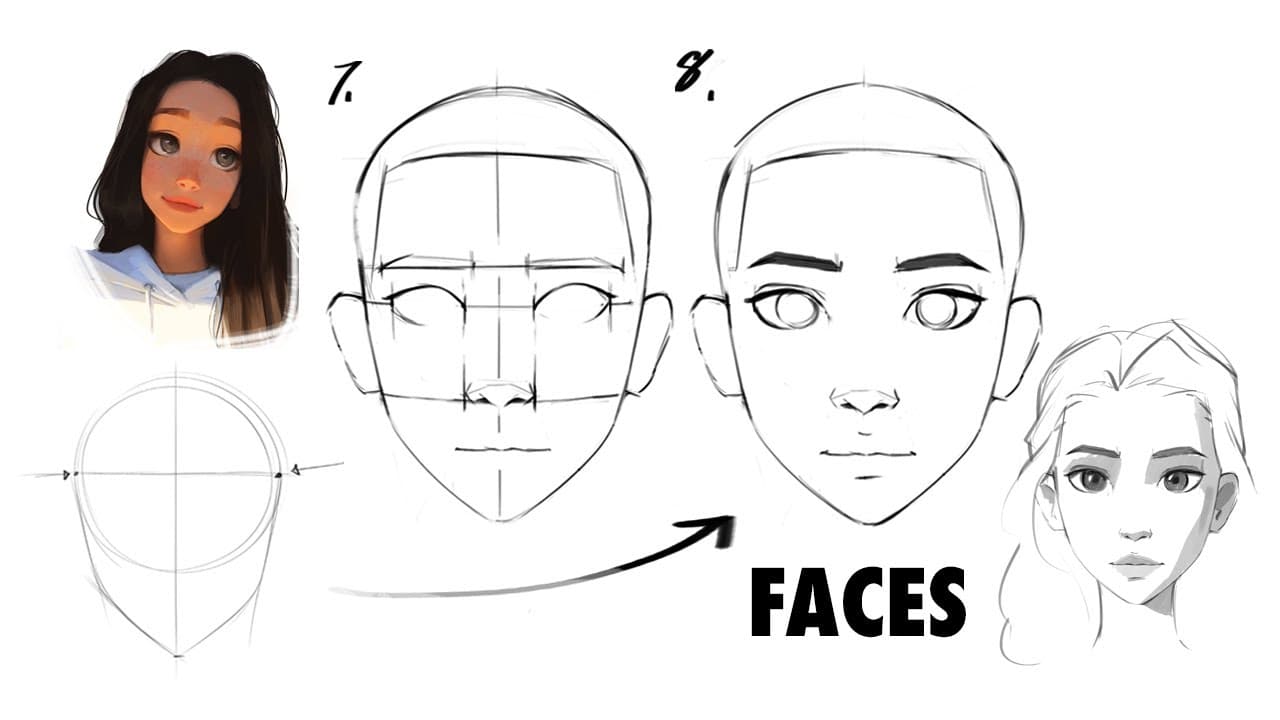
The gap between two eyes is one eye wide. Draw the pair, then measure the eye you have and lay that distance into the middle. Too short reads pinched, too wide drifts toward cartoon.
Eyes also sit about halfway down the head, not near the hairline, and beginners place them too high almost every time. Head layout is in how to draw a face.
The shapes inside the eye
Three shapes do the work: the sclera, the iris, and the pupil. The iris is a circle facing you, an ellipse once the head turns. Draw the whole circle lightly and erase what the lid covers, so it stays round instead of egg-shaped.
The upper lid has real thickness and casts a shadow across the top of the iris - the one detail separating a drawn eye from a flat sticker. The sclera is never white either, so bare paper makes it look lit from inside.
The highlight, and why you leave that paper white
Find the highlight before you shade the lit side. It sits where the eyeball turns most directly toward the light, usually straddling the edge of the iris and pupil, and both eyes get it in the same relative spot. Leave it as untouched paper and shade around it. An eraser lifts graphite back out but never returns paper to full white, so a late-recovered highlight reads grey and fuzzy. One per eye - two sparkles reads as glass.
Lashes that do not turn into spikes
Lashes grow out of the lid thickness, not off the outline of the eye, and they grow in clumps. Draw them in groups of three or four, vary the lengths, let a few cross. Upper lashes are longer and sweep toward the temple; lower ones are short and sparse. The lash line does more work than the lashes: a soft dark band tucked along the top lid reads as lashes from arm's length and never becomes that row of evenly spaced spikes.
Drawing a pair that match
Matching eyes are not mirror copies. Unless the head is dead-on you see them from different angles, so the far eye sits narrower and its iris compresses into an ellipse. Build both together - both sockets, then both almonds, then both irises - checking left against right. Hold the drawing to a mirror when you are done; reversed, a lopsided pair jumps out.
Common mistakes
- A fully round iris. The top lid always covers part of it. A complete circle reads as shock, or a doll.
- Outlining the eye in hard black. Your darks belong in the lash line and the crease; a uniform line around the sclera flattens the ball.
- Forgetting the tear duct. The inner corner is a small soft wedge sitting lower than the outer one. Skip it and a well-shaded eye still looks wrong.
- Mirror-image lashes. Identical curves at identical spacing look drawn. Real clumps are uneven and differ between lids.
Once this one holds up, how to draw lips and how to draw hair cover the other two features that decide a portrait, and the fundamentals sit at how to draw. For the hardest thing in the figure, take on how to draw hands.