How to Draw the Female Figure: 7-Step Beginner Guide

CraftsMedium13:447 stepsBrowse more →
Also in:Painting

By ShowMeStepByStepPublished Updated

Based on a video by Natalia Madej.

Drawing the female figure trips up almost every beginner, and it's not a talent problem - it's a planning problem. Most people start with the face and try to grow the rest from there. By the time they reach the legs, the proportions are off and the pose looks stiff. The fix is the opposite approach: block the whole body with a few simple shapes first, then add the details on top.

This walkthrough follows illustrator Natalia Madej as she shows the shape technique she uses on every figure she draws. An oval for the head, a trapezoid for the torso, another trapezoid for the hips, circles for the joints. That is the entire scaffold. Once it is on the page, you can shift it into any pose - standing, walking, leaning - without losing the proportions.

The skills here pair naturally with the rest of the drawing series on this site. After you have the body down, try how to draw a face for portrait proportions, how to draw hands (the hardest body part for most people), and how to draw eyes for adding life to the head you just blocked in.

Step-by-Step Guide

1

Step 1: Block the Body with Simple Shapes

6:45
Step 1: Step 1: Block the Body with Simple Shapes

Before any detail, get the bones of the pose on the page using basic geometry. Oval for the head. Trapezoid for the torso, wider on top. Circles for the shoulder, elbow, and knee joints. Lines for the arms and legs.

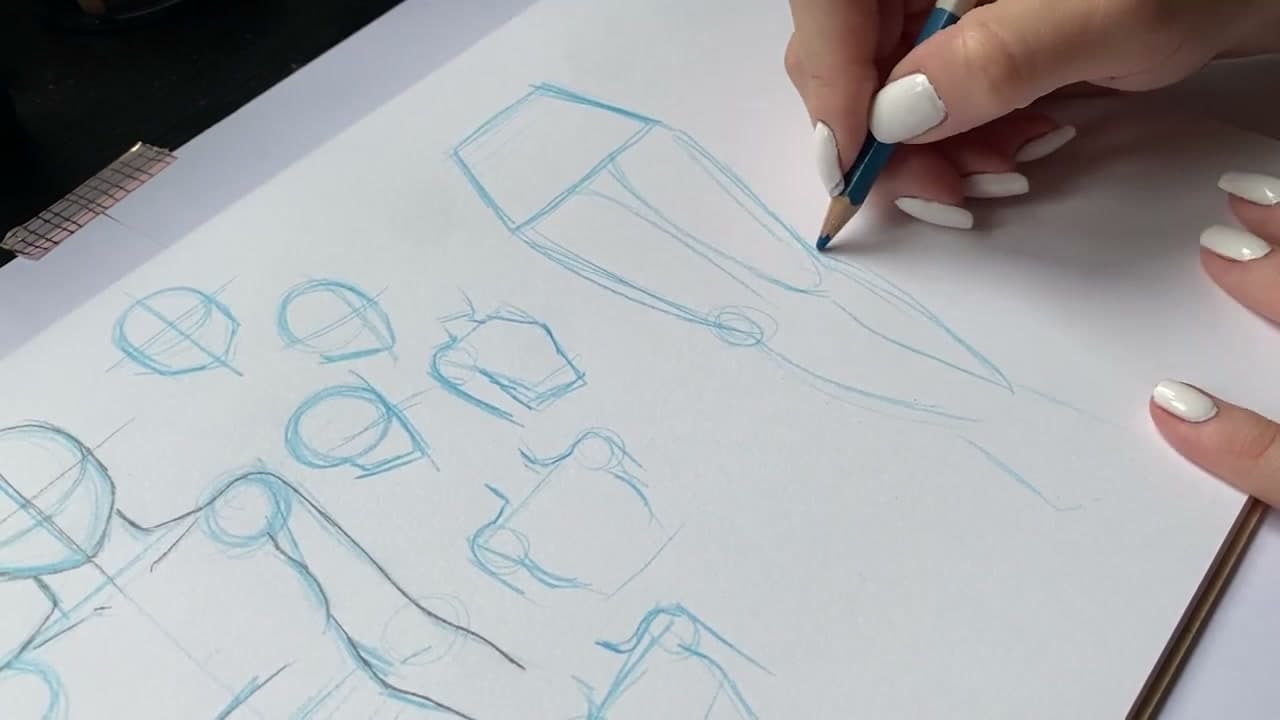
Practice each shape on its own first, then combine them. The point of working in shapes is that you can shift the figure into any pose - standing, walking, leaning - and the proportions still hold up. Detail comes later, on top of this scaffold.

Tip

Use a light blue pencil or a hard graphite pencil (HB) for these guidelines. They need to disappear later under the final outline.

Products used in this step

Faber-Castell 9000 Graphite Pencils Set
Strathmore Sketch Paper Pad 9x12
Pencil Sharpener for Artist Pencils
2

Step 2: Sketch the Head and Upper-Body Trapezoid

4:30
Step 2: Step 2: Sketch the Head and Upper-Body Trapezoid

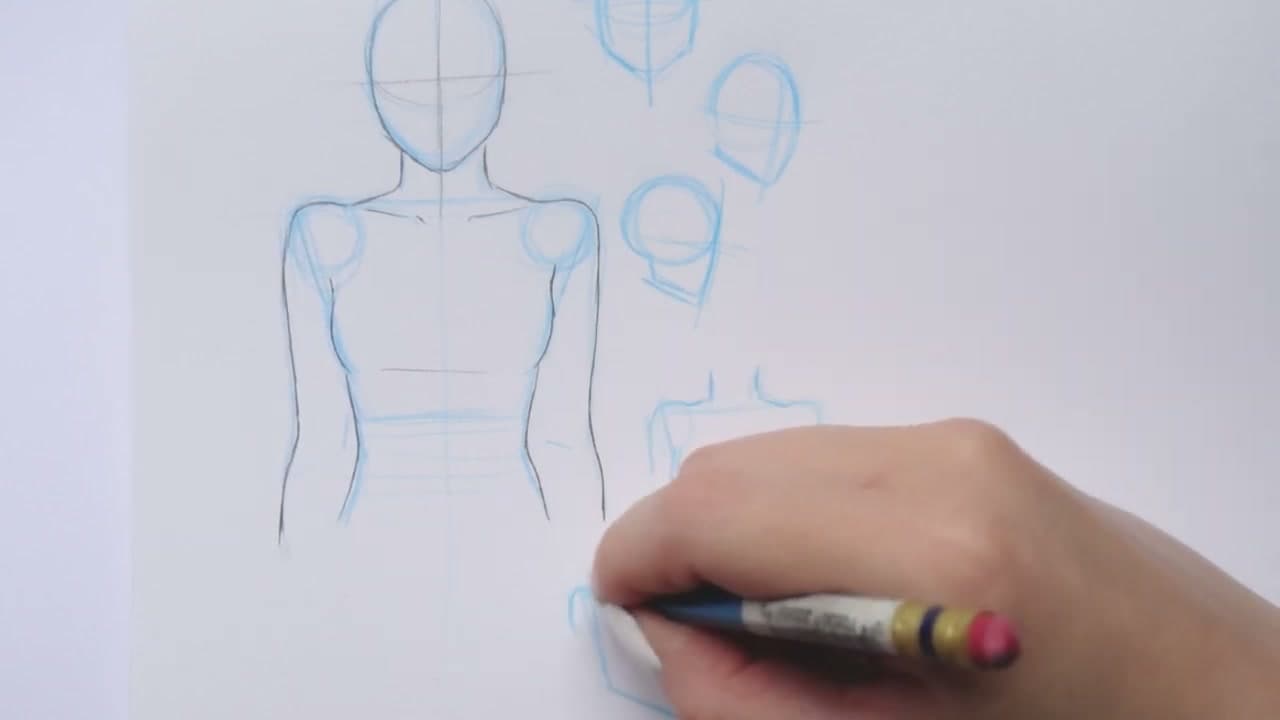
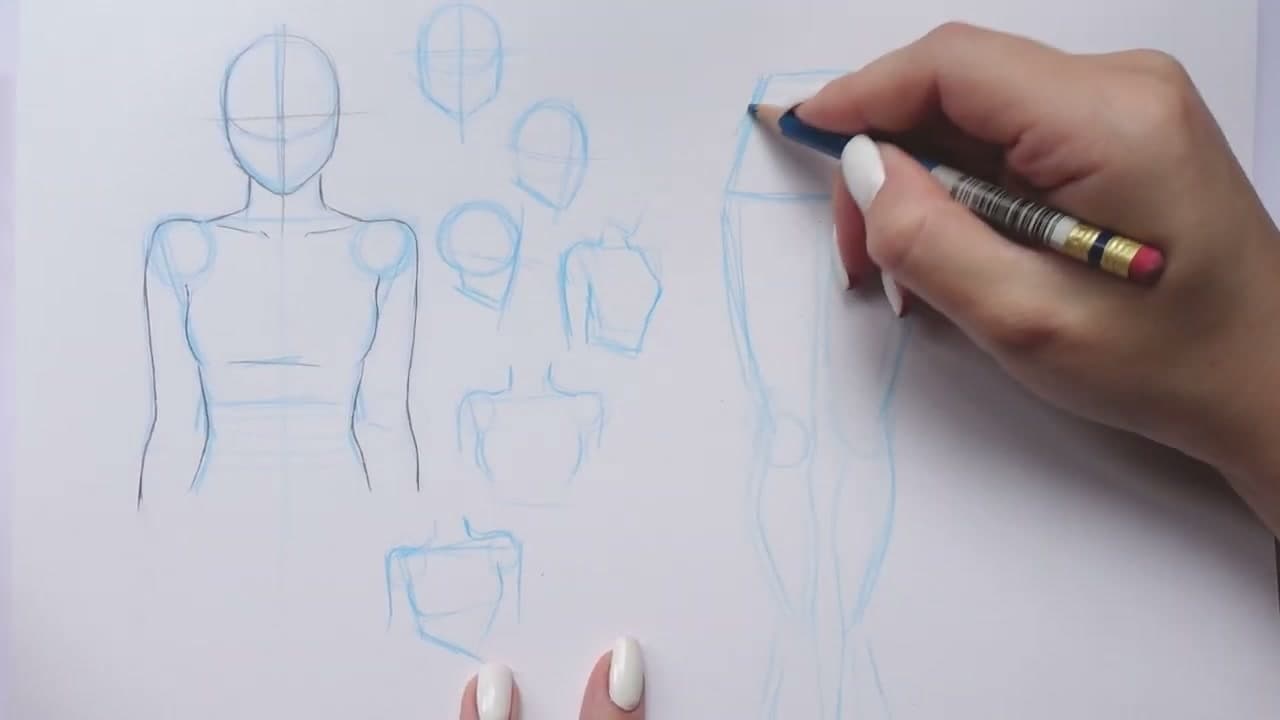
Start with an oval for the head. Run a vertical center line straight down the middle of it - that line tells you which way the head is facing on the page. A tilt to the line means a tilted head later.

Below the head, draw the upper-body trapezoid. The top edge sits at the shoulders and is wider than the bottom, which sits at the waist. Add a small circle on each side of the trapezoid where the shoulder joints would be. Those circles are loose markers - they tell you where the arms can pivot from.

Tip

The full head height should land roughly one-eighth of the total body height. If your torso looks tiny next to a giant head, the head is the part that needs to shrink.

Products used in this step

Faber-Castell 9000 Graphite Pencils Set
Kneaded Rubber Eraser
3

Step 3: Refine the Torso and Add the Bust Line

5:40
Step 3: Step 3: Refine the Torso and Add the Bust Line

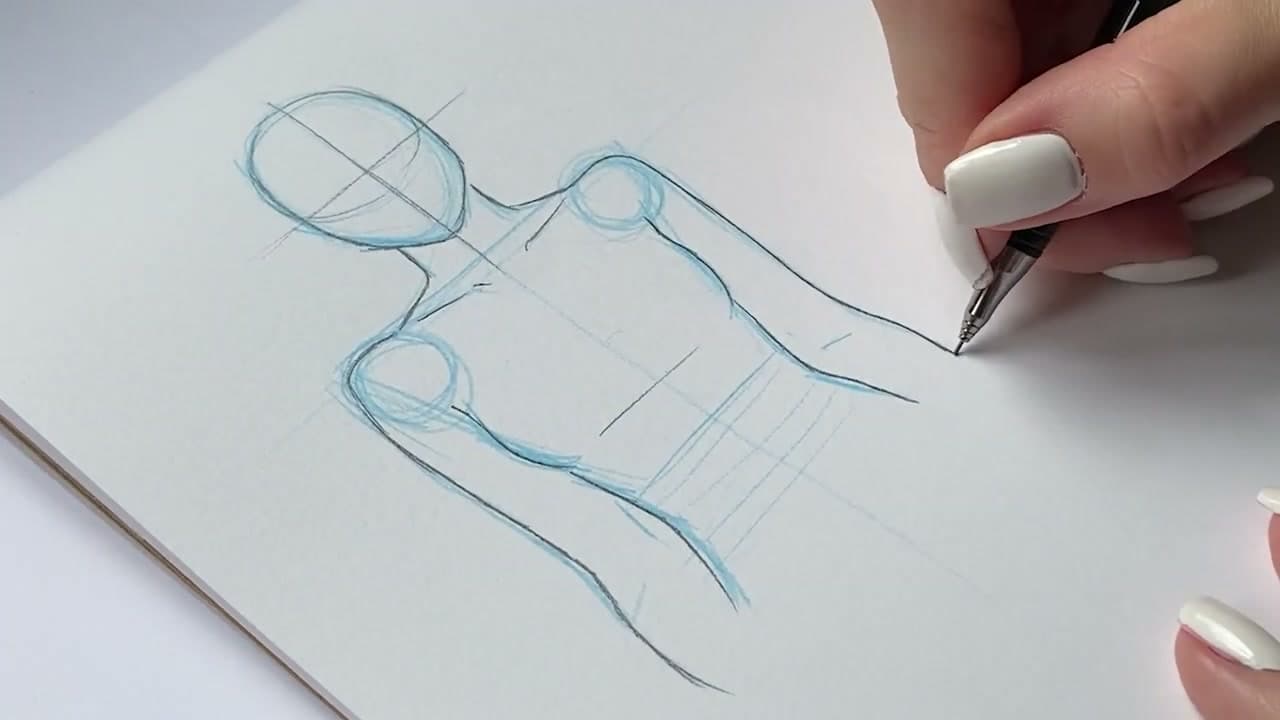
Go back over the upper-body trapezoid with smoother, curvier lines. The human body has very few straight lines anywhere on it, so soften every edge as you build the volume.

Add a soft horizontal line under the shoulder joints for the bust placement - it sits just below where the armpit starts on a front view. Then narrow the waist where the trapezoid bottom meets the hips. The whole torso should read as a soft hourglass, not a box.

Tip

Hold the pencil a little further back than you would for writing. It naturally lightens your touch and stops you committing too hard, too early.

4

Step 4: Add the Hip Trapezoid

7:05
Step 4: Step 4: Add the Hip Trapezoid

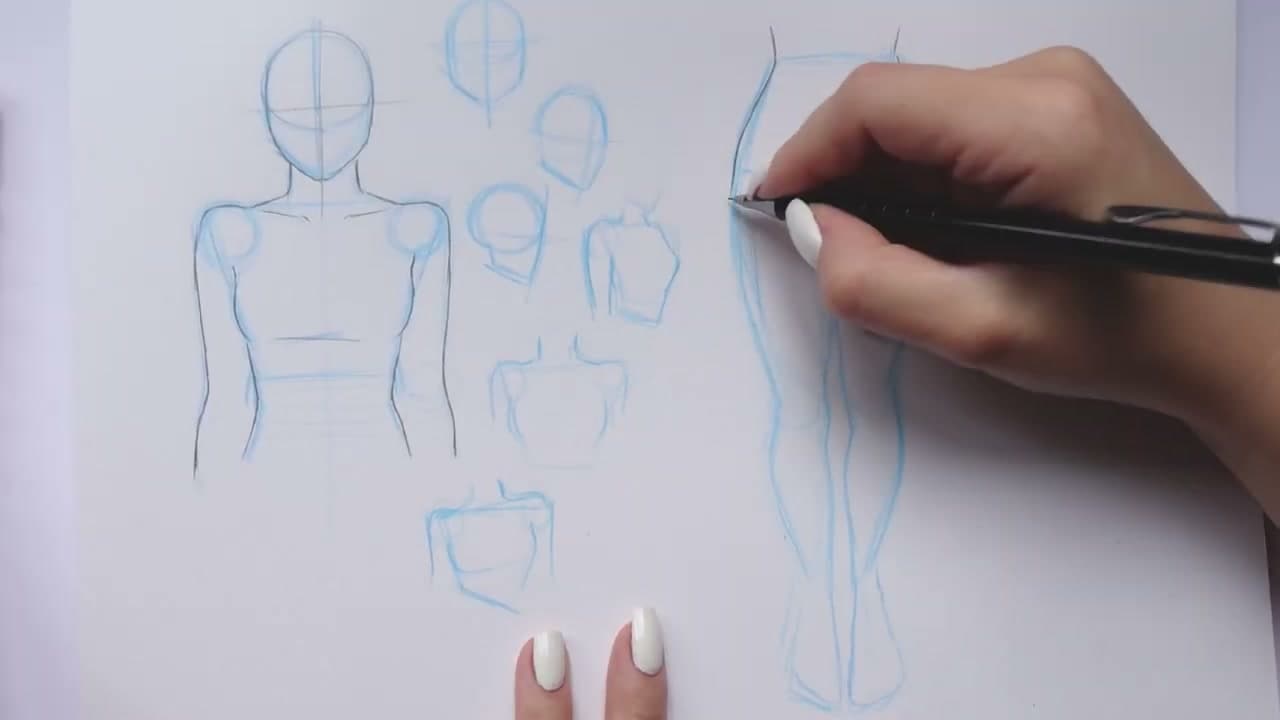
Below the waist, draw a second trapezoid - this one flipped so the wider edge is on the bottom. That bottom width is what sets the width of the hips.

Want wider hips? Make the bottom of the trapezoid wider. Want a narrower silhouette? Pull it in toward a square. The shape decides the proportion, and you can change it pose to pose. Keep the top edge of this trapezoid lined up with the bottom of the torso so the two shapes flow together.

Tip

Total upper body (head + torso) should sit around 35-40% of the full figure. The lower body (hips + legs) takes the remaining 60-65%. Measure with the pencil if you need to.

Products used in this step

Faber-Castell 9000 Graphite Pencils Set
Strathmore Sketch Paper Pad 9x12
5

Step 5: Build the Legs with Knee Circles

7:25
Step 5: Step 5: Build the Legs with Knee Circles

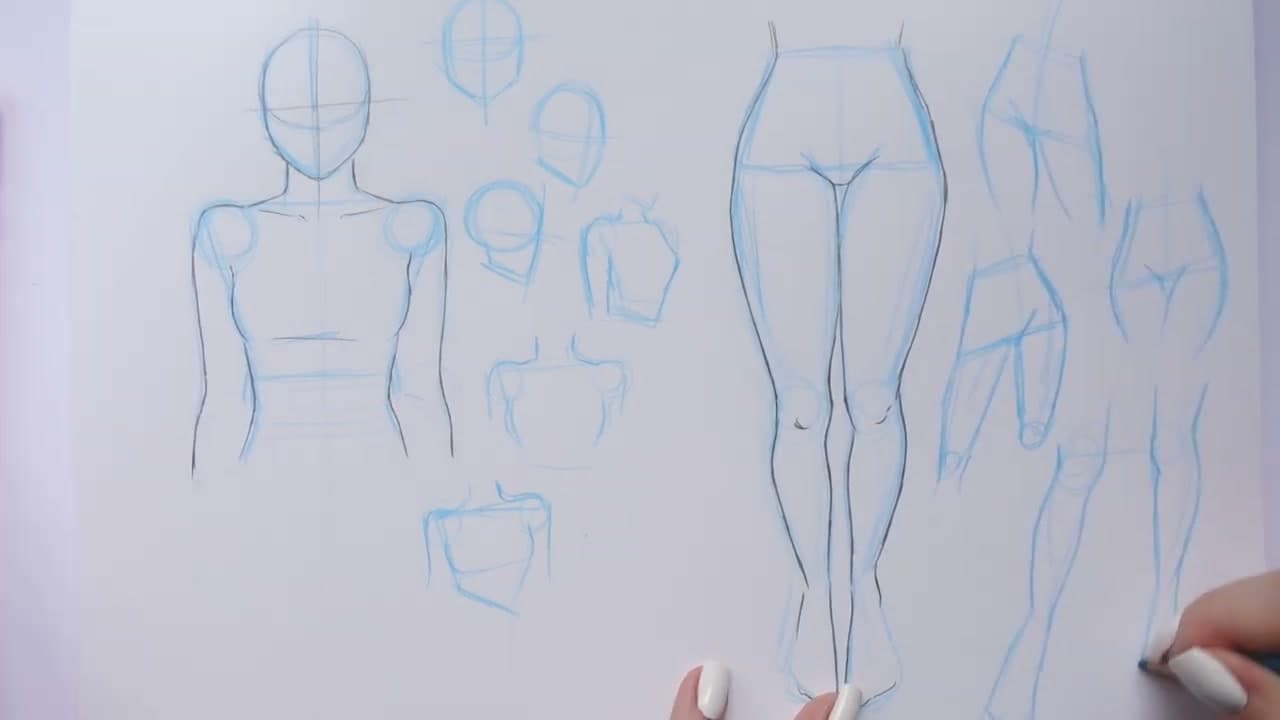
Drop two lines down from the bottom corners of the hip trapezoid for the legs. Curve the lines slightly outward through the thigh, then back in through the calf - real legs are never perfectly straight.

Halfway down each leg, mark a circle for the knee joint. That circle is the bend point. Now build the volume of the thigh above the knee and the calf below it, using curvy lines on both sides. The thigh should run a little longer than the calf, which keeps the proportions believable.

Tip

If a leg looks stiff, the line is probably too straight. Curve it gently outward through the thigh and back inward through the calf to bring in some natural flow.

Products used in this step

Faber-Castell 9000 Graphite Pencils Set
6

Step 6: Add the Arms with Joint Circles

8:20
Step 6: Step 6: Add the Arms with Joint Circles

From the shoulder circles you drew earlier, run a line down for each upper arm. Mark a circle for the elbow at the bend point, then continue the line down to the wrist for the forearm.

If both arms are hanging straight, the shoulder line is horizontal. If one arm is raised or angled, tilt the shoulder line on a diagonal - the whole arm structure follows that tilt. You don't need fingers or hand detail yet. The shapes are still the scaffold; refinement comes after the full body is blocked in.

Tip

Fingertips on a relaxed arm reach about mid-thigh. If your hand is up at the waist or down at the knee, the arm length is off.

Products used in this step

Faber-Castell 9000 Graphite Pencils Set
Kneaded Rubber Eraser
7

Step 7: Combine Everything Into a Full-Body Pose

11:40
Step 7: Step 7: Combine Everything Into a Full-Body Pose

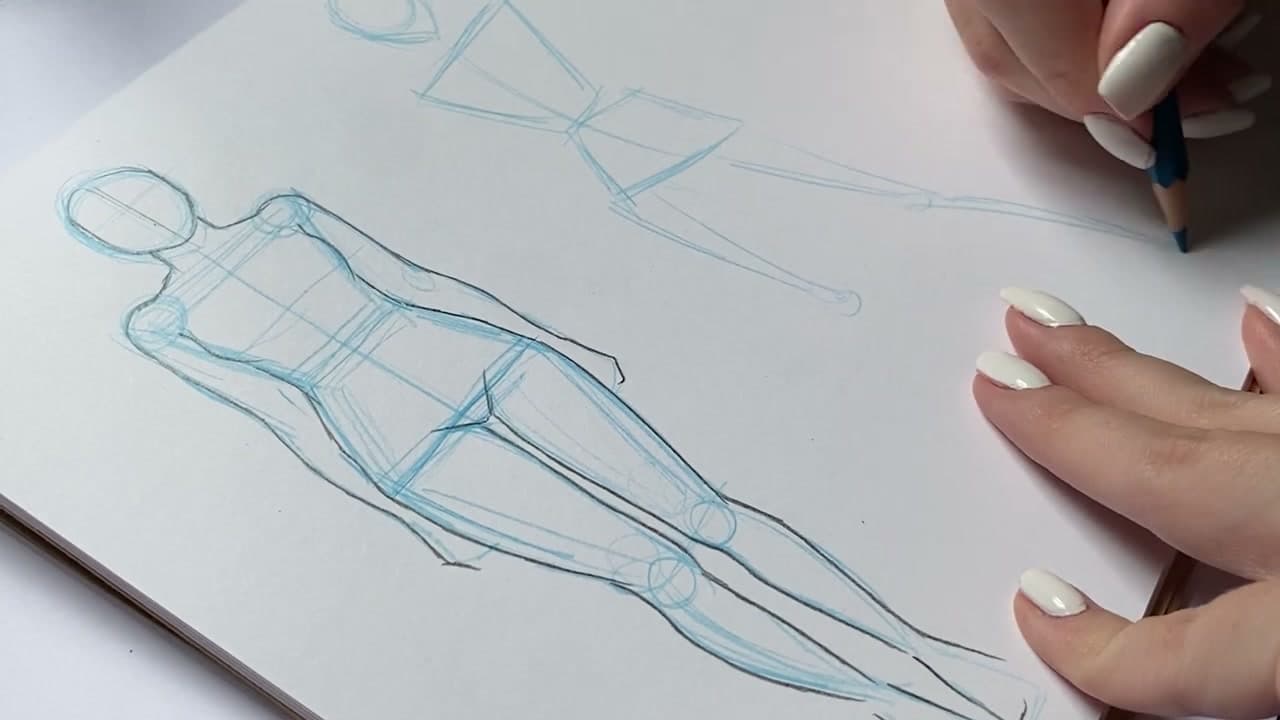
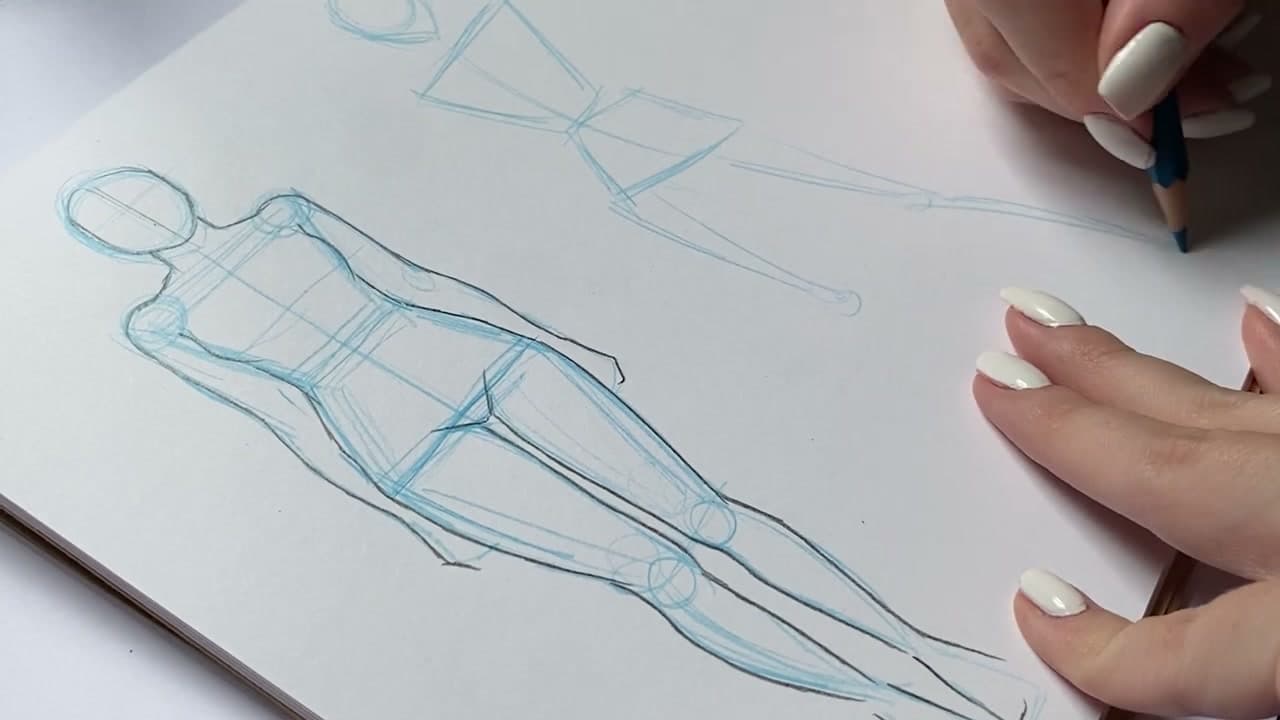
Now put every shape together for a full-body standing pose. Head oval. Torso trapezoid. Shoulder circles. Hip trapezoid. Knee circles. Arm and leg lines. Block the whole figure first - face, hair, and clothing all come later.

Once the structure is right, go over the outside silhouette with smoother darker lines, then erase the inner guides. You now have a proportional female figure that you can copy into any pose. Try a walking pose next - same shapes, just tilt the shoulder line one way and the hip line the other.

Tip

If the finished figure looks off, don't redraw it from scratch. Find which one of the seven shapes is wrong (head too big, hips too narrow, legs too short) and adjust only that piece.

Products used in this step

Faber-Castell 9000 Graphite Pencils Set
Strathmore Sketch Paper Pad 9x12
Kneaded Rubber Eraser

Products Used

Faber-Castell 9000 Graphite Pencils SetStrathmore Sketch Paper Pad 9x12Pencil Sharpener for Artist PencilsKneaded Rubber Eraser
☐ The Checklist

How to Draw the Female Figure: 7-Step Beginner Guide

Tools
5
Steps
7
Video
14 min

Your Guide

Natalia Madej

As an Amazon Associate we earn from qualifying purchases. Links on this page may be affiliate links - clicking them and buying doesn't change your price, but helps support ShowMeStepByStep.

Tags

What's next

Weekly Digest

Liked this crafts tutorial?

Pick the categories you want to hear about. Weekly digest of new step-by-step tutorials. No spam, easy unsubscribe.

Send me tutorials about

We only email about new tutorials. Easy unsubscribe anytime.