How to Draw a Wolf: 10-Step Beginner Pencil Tutorial

CraftsEasy19:3910 stepsBrowse more →
Also in:Painting

By ShowMeStepByStepPublished

Based on a video by Cartooning Club How to Draw.

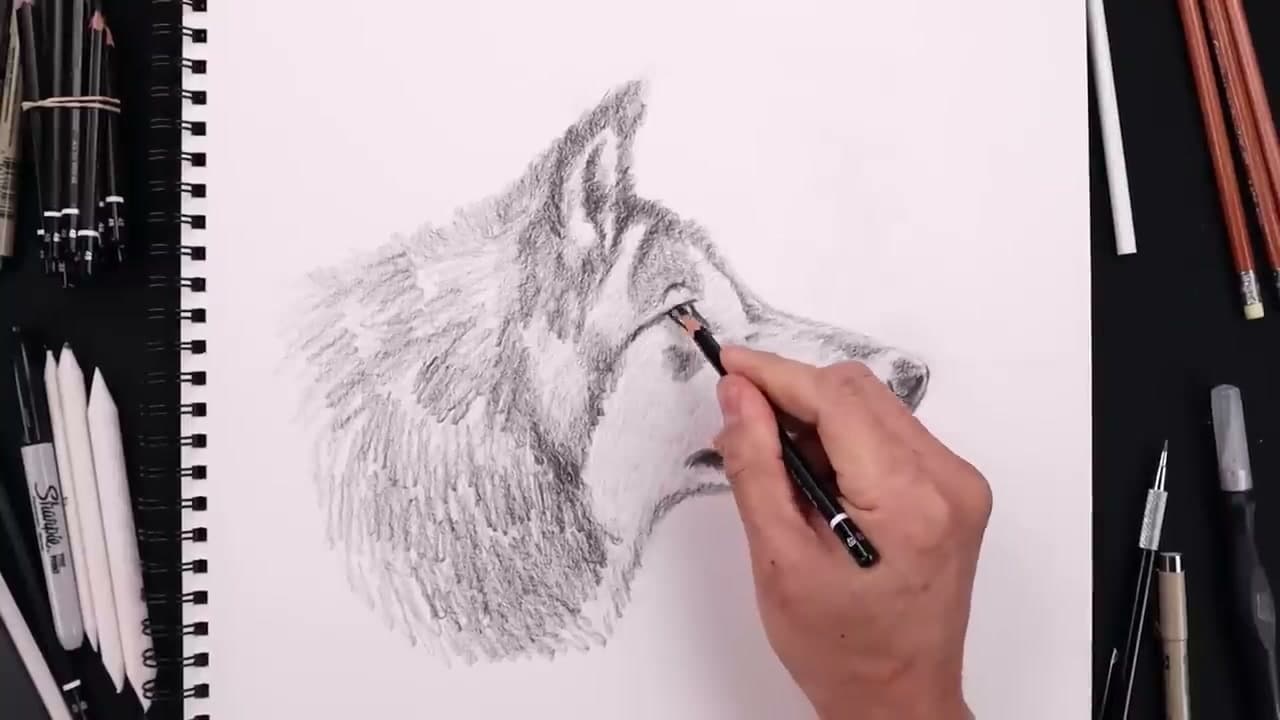
Drawing a wolf looks intimidating until you break it down. The trick is the same trick that works for almost any animal portrait: get the head shape and guidelines down first, drop in the features in the right places, then save the fur for last. Try to start with fur strokes and the whole drawing falls apart, because the structure underneath is wrong and no amount of shading will fix it.

This walkthrough follows Mr Ty of Cartooning Club How to Draw - a working art director with over 30 years at Microsoft and Activision Blizzard, and the host of one of YouTube's most-watched beginner drawing channels. The wolf here is drawn in profile, which is the friendliest angle for a first attempt. You'll start with a single circle for the skull, add cross guidelines, build the ear and muzzle on top, then layer in eye detail and fur texture until the wolf looks like it could step off the page.

If you're working through the drawing series on this site, try this after how to draw a dog and how to draw a cat - the wolf borrows the canine head construction from the dog and the eye-shading technique from the cat. Once you have the wolf down, how to draw the female figure is a good next jump into human anatomy and proportion.

Step-by-Step Guide

1

Step 1: Sketch the Head Circle

0:22
Step 1: Step 1: Sketch the Head Circle

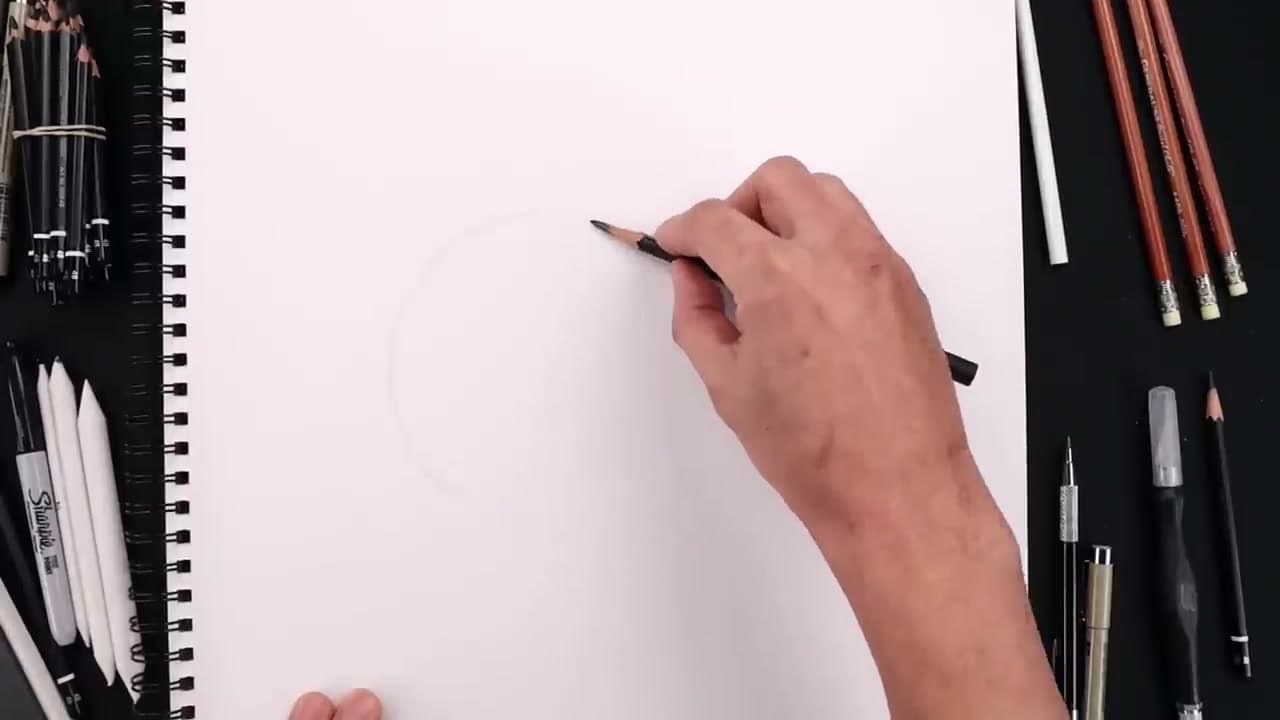
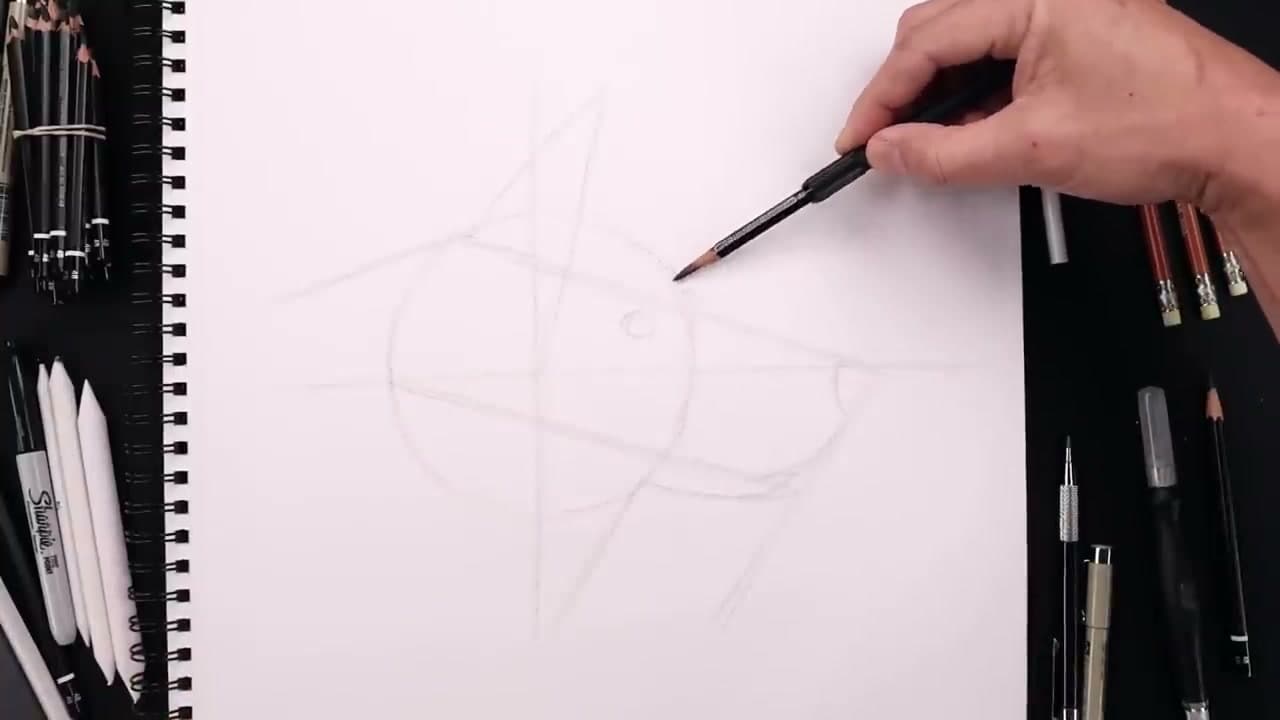
Hold your pencil on its side and use the flat edge to lightly sketch a circle in the middle of the page. Start at the top, work down the left side, across the bottom, and back up the right. Keep the pressure light - this is a guideline, not a finished line.

The circle is the skull. Everything you draw next - ear, muzzle, eye, neck - hangs off this single shape. Get the size right for the paper you're working on, and leave space on the right side for the muzzle to extend.

Tip

The side-grip pencil hold (flat edge against the paper) gives a softer, lighter mark than the writing grip. It's also faster to erase if the circle is too big or off-center.

2

Step 2: Add the Cross Guidelines

0:47
Step 2: Step 2: Add the Cross Guidelines

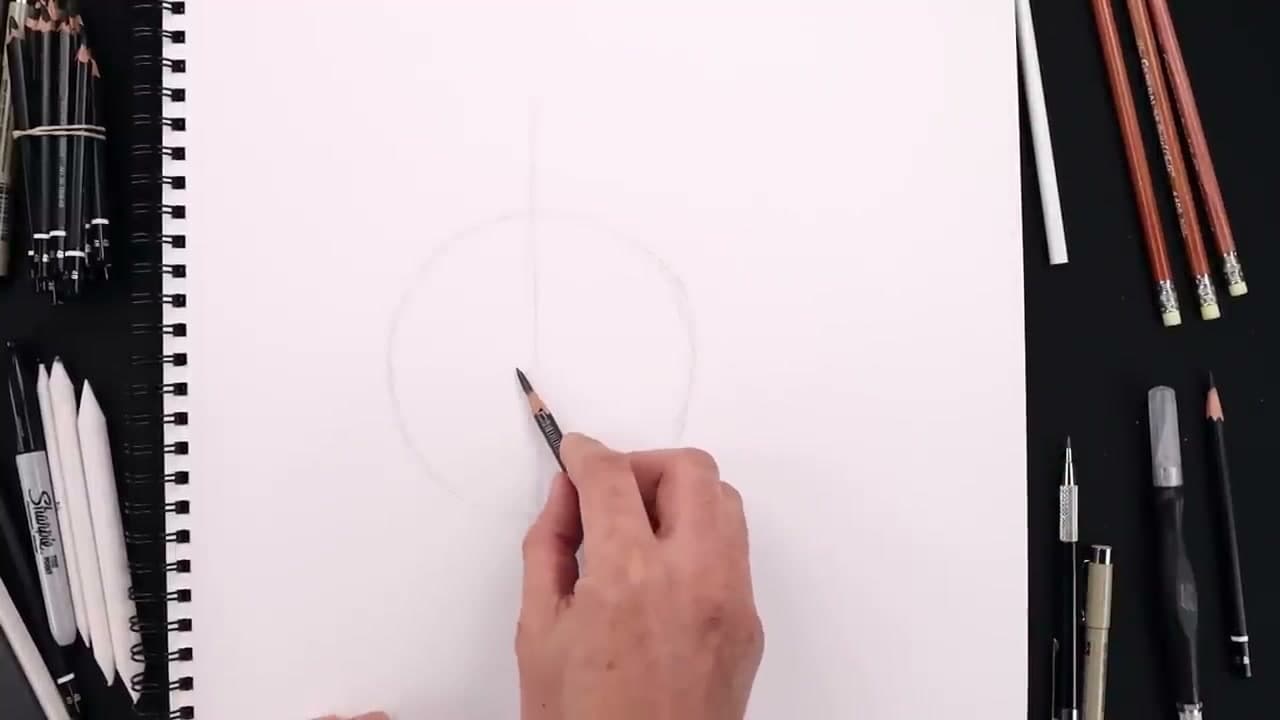
Draw a straight vertical line from the top of the circle down through the middle and out the bottom of the page. Then run a horizontal line through the center of the circle, left to right.

These two lines split the circle into four quarters. The top half is where the ear and forehead go. The bottom half holds the muzzle and mouth. The center cross is where the eye will eventually sit. With the guidelines in place, the rest of the features have an anchor and won't drift around the page.

Tip

If you have a ruler handy, use it for the vertical guideline only. The horizontal can stay freehand - a slight wobble actually helps the final drawing feel less mechanical.

3

Step 3: Draw the Ear Shape

1:15
Step 3: Step 3: Draw the Ear Shape

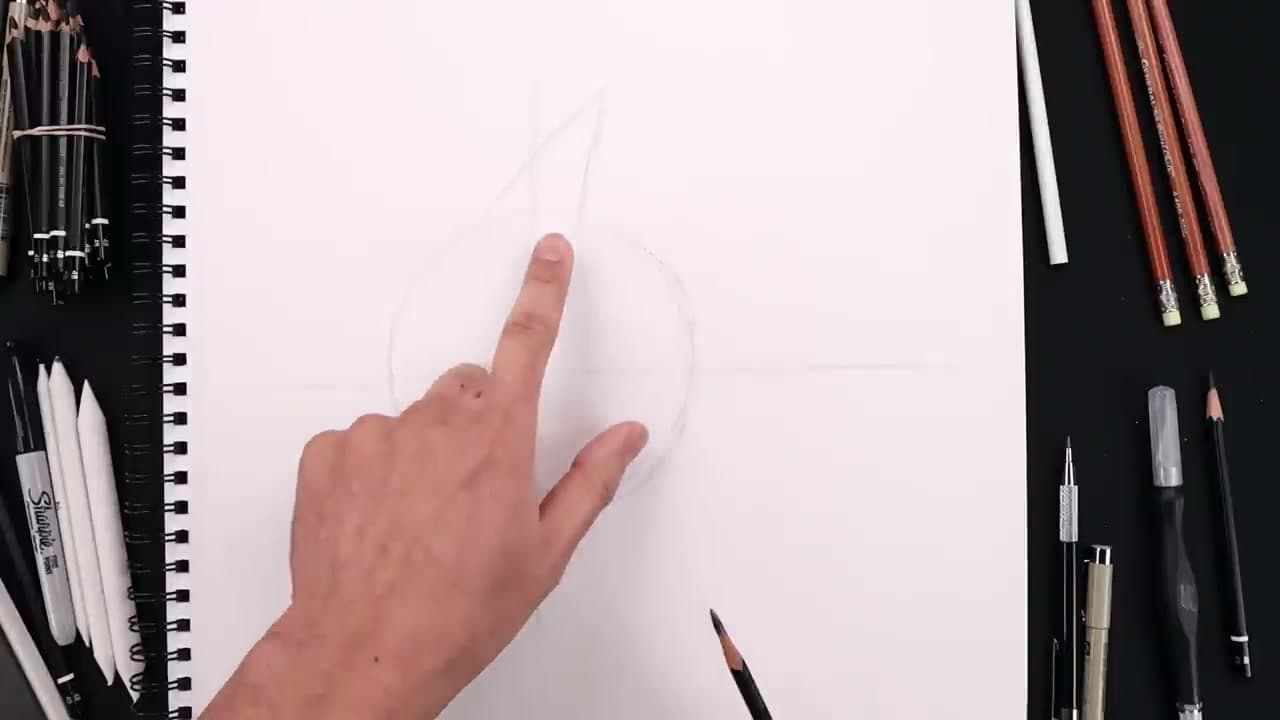
From the top of the circle, just left of the vertical guideline, draw a straight line up and to the right at a steep angle. Stop about a third of a circle-width above the head. That's the tip of the ear.

Then bring a second line back down toward the head, landing just past where you started. The ear is a tall, pointed triangle - more like a coyote's ear than a dog's. The angle and the height of this triangle are what make the animal read as a wolf, so don't round it off.

Tip

Wolf ears are taller and more pointed than dog ears. If your shape ends up rounded at the tip, the drawing will start looking like a husky or a German shepherd instead of a wolf.

4

Step 4: Block In the Muzzle and Jaw

2:15
Step 4: Step 4: Block In the Muzzle and Jaw

From the base of the ear on the left side, run a straight line angled down and to the right - this is the top of the head sloping toward the snout. Then flatten the edge of the muzzle starting from that line, angling down and back toward the circle.

Repeat the same angled line on the lower jaw, then round out the bottom of the mouth so the muzzle closes into a soft point. The whole muzzle should look like a stretched-out triangle pointing right. The line for the bottom of the mouth bends in slightly under the snout to suggest the lower lip.

Tip

Keep the muzzle in proportion - it should land roughly one circle-width long. Too short and you have a fox. Too long and you have a greyhound.

5

Step 5: Sketch the Neck, Back, and Eye

2:55
Step 5: Step 5: Sketch the Neck, Back, and Eye

From the bottom of the muzzle, angle a line down and back toward the vertical guideline for the front of the neck. Then run another line from the base of the ear sloping down and out for the back of the head and the start of the neck mane.

Right where the lower jaw meets the edge of the circle, drop in a small circle for the eye. This is just placement at this stage - no detail yet. The eye sits high on the head, close to the muzzle, which is how a wolf looks alert and predatory rather than friendly and floppy.

Tip

Place the eye where the horizontal guideline crosses the muzzle line. That intersection is the natural anchor for the eye on almost every canine head.

6

Step 6: Refine the Eye and Side-of-Head Folds

4:00
Step 6: Step 6: Refine the Eye and Side-of-Head Folds

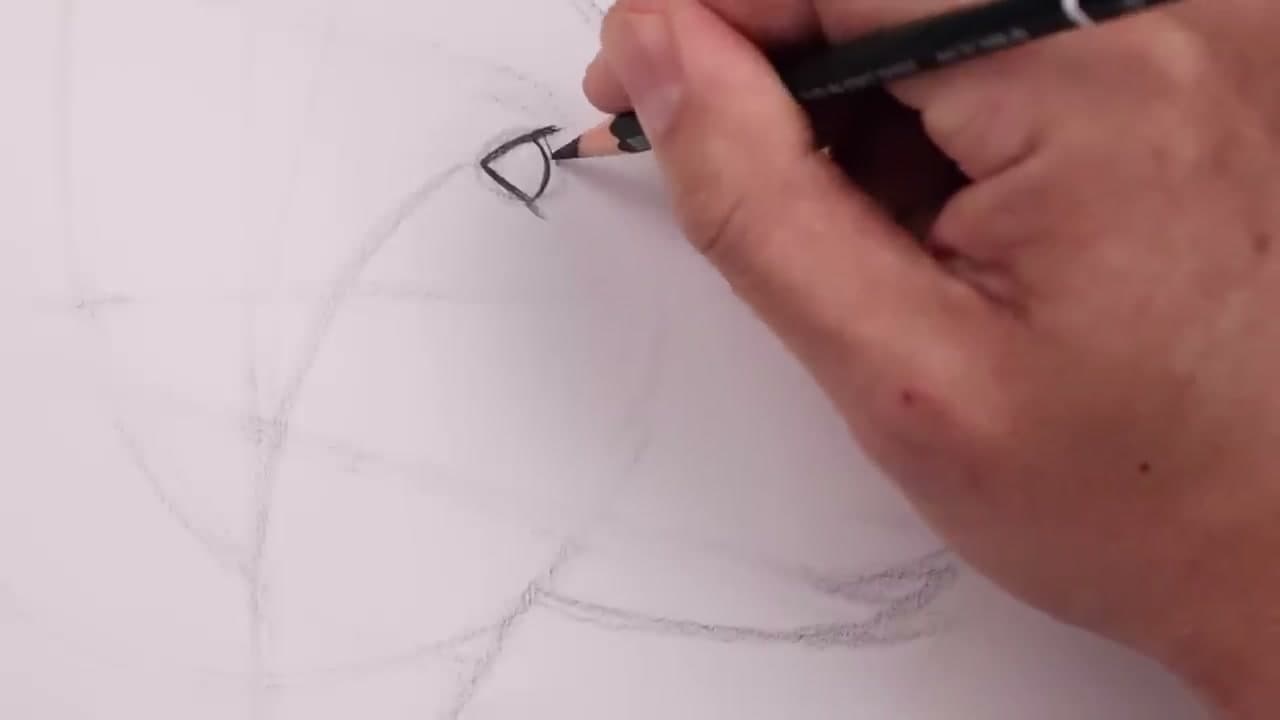
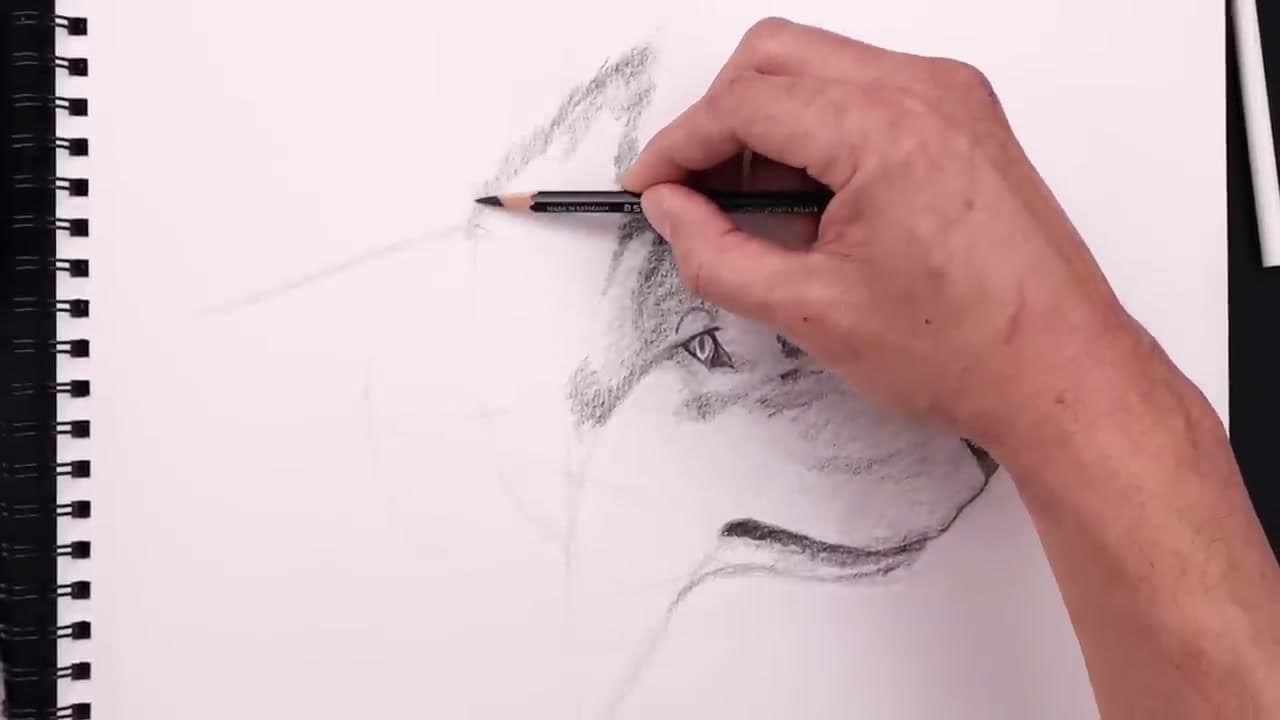
Switch to the tip of your pencil for a finer line. Define the top of the eyelid with a soft curve from the right side of the eye circle bending across and down toward the corner. Round out the front of the eyeball below, working around toward the bottom.

From the base of the ear, draw a small fold running straight down toward the center guideline, then bend it forward under the chin. This crease separates the side of the head from the cheek and is what gives the wolf a sense of bone structure underneath the fur.

Tip

Lightly erase any guidelines that are now buried under cleaner lines. A kneaded eraser dabbed (not rubbed) lifts graphite without smearing.

7

Step 7: Shade the Eye

4:50
Step 7: Step 7: Shade the Eye

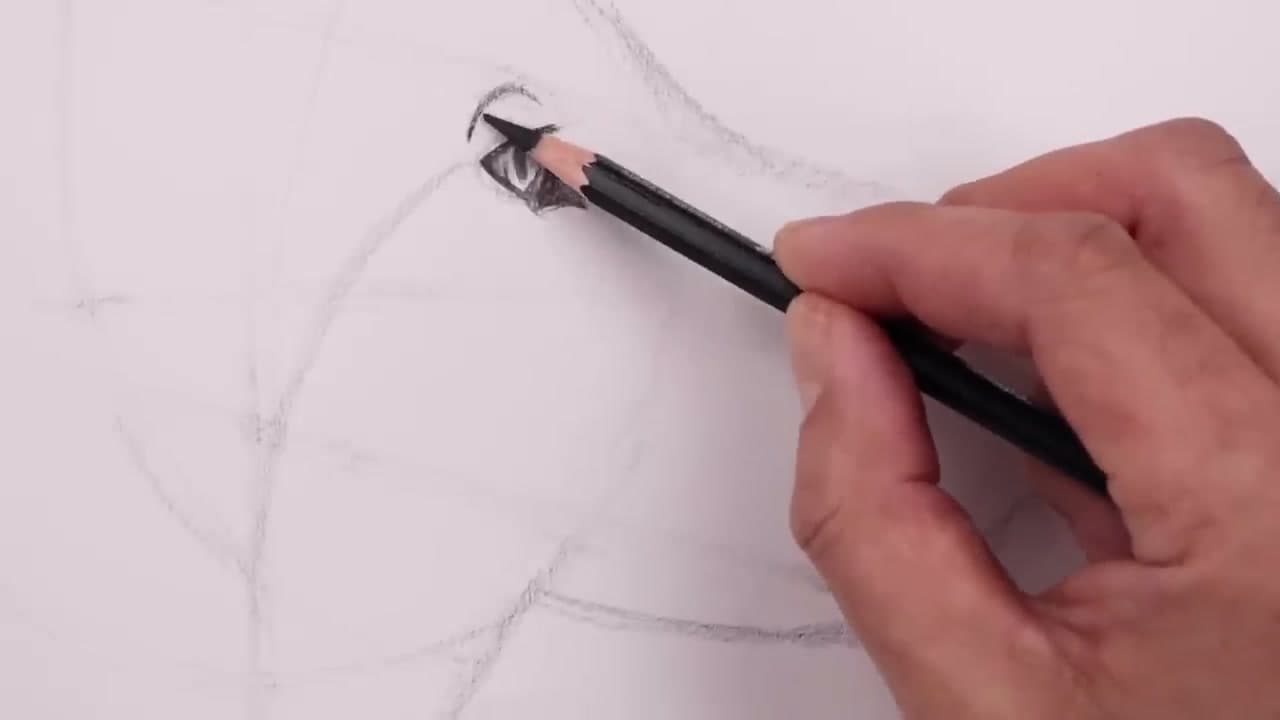
Now darken the inside of the eyeball. Press a little harder with the tip of the pencil to lay down a solid dark tone around the edge of the eye, then fade it across the middle so a small highlight stays bright.

Draw a small oval in the center for the pupil and fill it in completely. The wolf eye should look intense - one tiny bright highlight against a dark iris is what does the trick. Add a soft shadow above the eye for the brow ridge.

Tip

Leave a single small white dot near the top of the pupil for the catchlight. That tiny highlight is what makes the eye read as wet and alive instead of flat.

8

Step 8: Shade the Nose and Muzzle

7:00
Step 8: Step 8: Shade the Nose and Muzzle

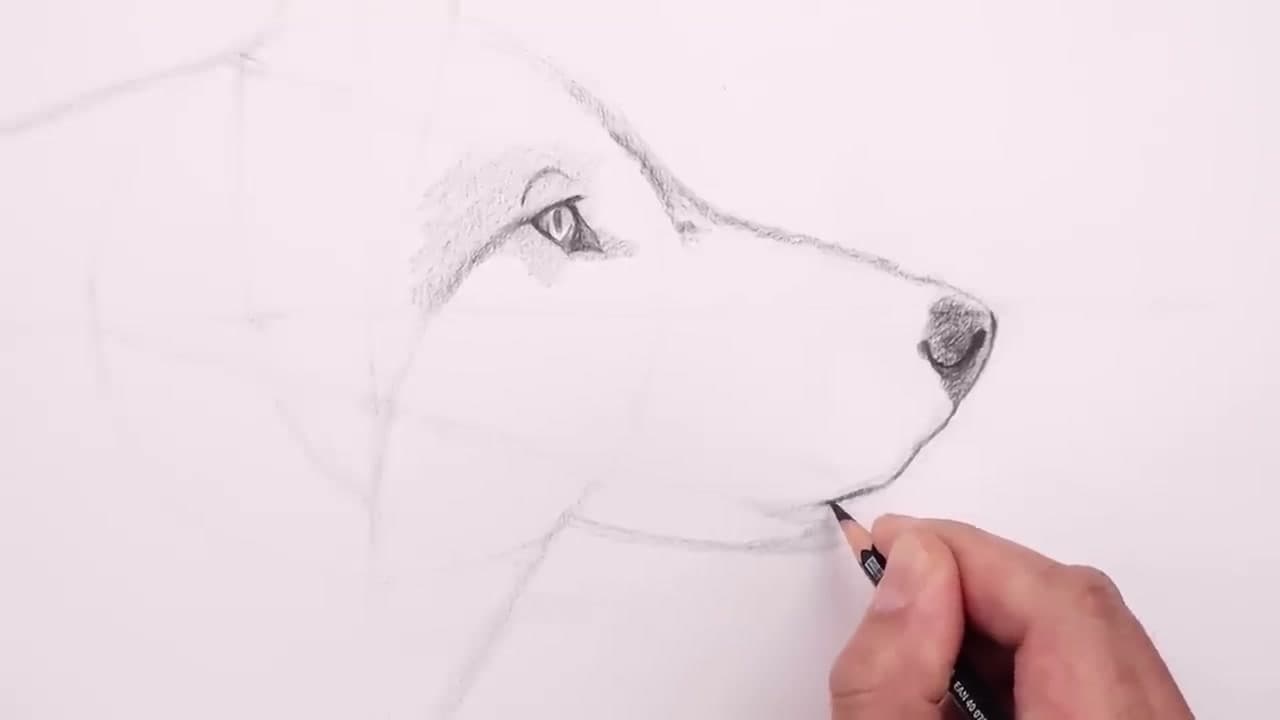
Build up the nose with heavy, dense shading. The tip of the nose is the darkest part of the whole drawing - go in with the tip of the pencil and press firmly. Add a small dark notch for the nostril on the side.

Then drop a soft shadow under the muzzle and along the mouth line. The bottom of the mouth should fade into a thin line that disappears toward the neck. Keep the cheek and lower jaw lighter so the muzzle pops forward.

Tip

The nose is almost black. Don't be shy with the pressure - if you can still see paper texture through the nose, it isn't dark enough.

9

Step 9: Add Fur to the Forehead and Ear

9:40
Step 9: Step 9: Add Fur to the Forehead and Ear

Switch to the side of your pencil and lay down short directional strokes across the top of the head, the forehead, and the back of the ear. Every stroke should follow the direction the fur grows - forward over the brow, up toward the ear tip, back along the side of the head.

Add a dark shadow inside the ear all the way around the rim. The ear interior is one of the darkest spots on a wolf, second only to the nose. Build it up in passes rather than pushing hard on a single stroke.

Tip

Vary the length and pressure of the fur strokes. Identical parallel lines look fake. A little chaos in the strokes reads as natural fur.

10

Step 10: Build Fur Texture and Final Contrast

13:40
Step 10: Step 10: Build Fur Texture and Final Contrast

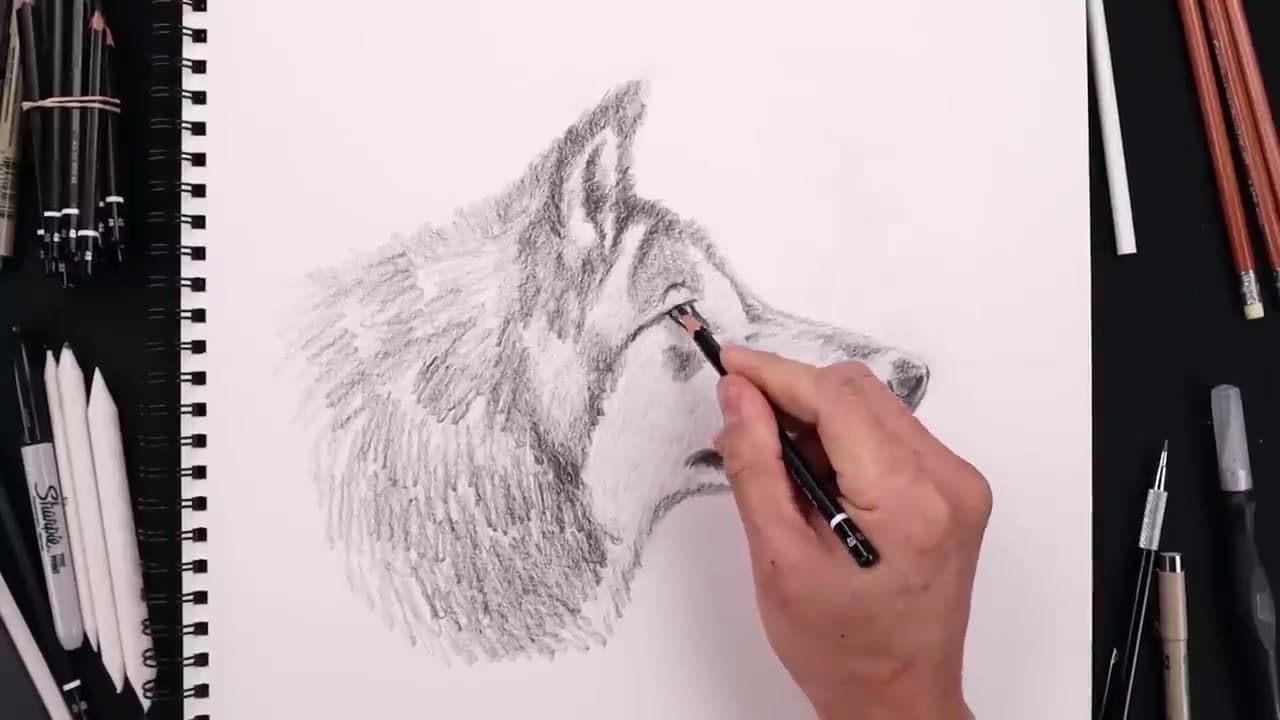
Fill the rest of the head, cheek, and neck with the same short fur strokes, working in the direction the fur grows. The cheek fur sweeps back and down. The neck mane fur drops straight down. The fur along the brow runs forward toward the nose.

Once the fur layer is in, go back over the whole drawing with the sharp tip of the pencil and push the contrast harder. Darken the shadows in the ear, around the eye, and under the chin. Lift any fur strokes that got too heavy with the kneaded eraser. The final wolf should have a clear range from near-white highlights to deep black shadows.

Tip

Take a photo of the drawing on your phone and look at it as a thumbnail. If the wolf still reads at that size, the contrast is right. If it looks flat and gray, push the darks darker.

Products Used

☐ The Checklist

How to Draw a Wolf: 10-Step Beginner Pencil Tutorial

Tools
5
Steps
10
Video
20 min

Your Guide

Cartooning Club How to Draw

As an Amazon Associate we earn from qualifying purchases. Links on this page may be affiliate links - clicking them and buying doesn't change your price, but helps support ShowMeStepByStep.

Tags

What's next

Weekly Digest

Liked this crafts tutorial?

Pick the categories you want to hear about. Weekly digest of new step-by-step tutorials. No spam, easy unsubscribe.

Send me tutorials about

We only email about new tutorials. Easy unsubscribe anytime.