How to Make Alfredo Sauce (Authentic Italian Style)

CookingMedium8:237 stepsBrowse more →

By ShowMeStepByStepPublished Updated

Based on a video by Epicurious.

Real Italian Alfredo has three ingredients - butter, parmesan, pasta. That's it. No heavy cream, no flour, no garlic powder. The American version with cream is its own thing, but the original is just an emulsion of starchy pasta water, real European butter and finely grated parmesan reggiano. When the technique works, the sauce looks like it has cream in it. It doesn't.

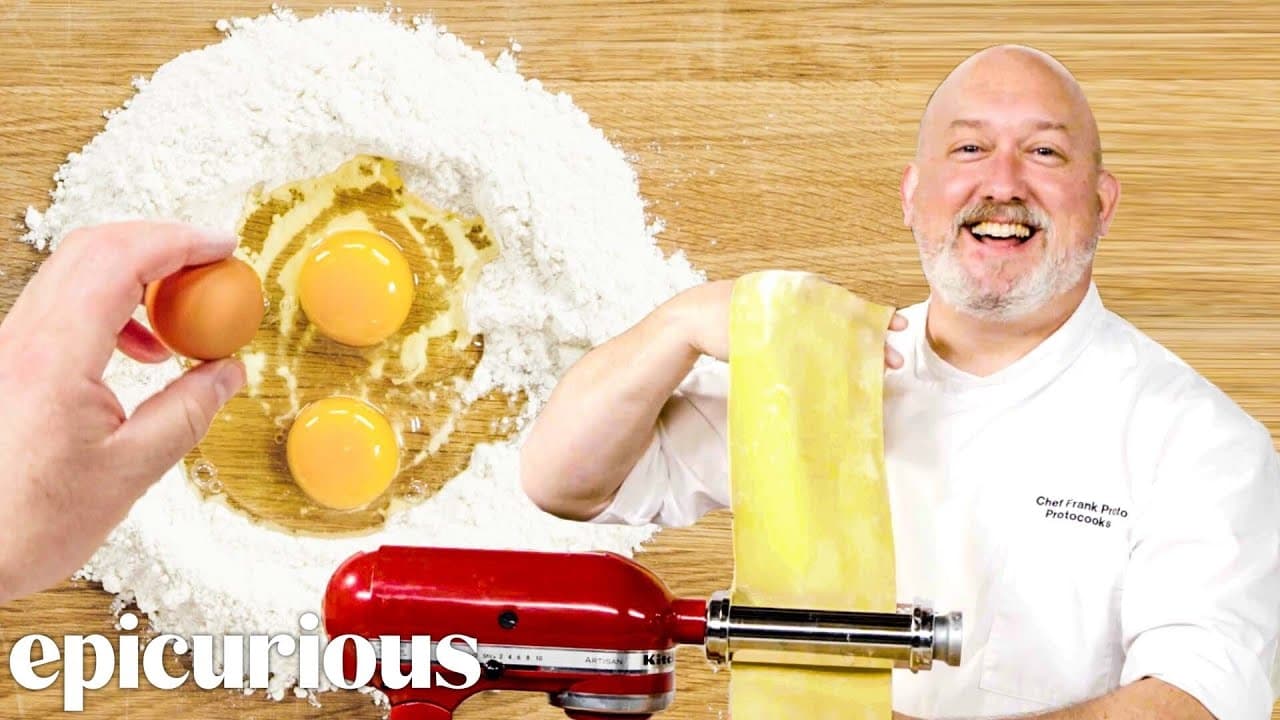
This walkthrough is from chef Frank Proto on Epicurious. The trick is the technique: less water in the pot for extra-starchy cooking liquid, a glass bowl that holds heat without overheating, finely microplaned cheese that melts the second it touches the pasta, and constant stirring to build the emulsion. It comes together in a few minutes once the pasta is in.

Use the best ingredients you can. With only three of them, every one matters. Real parmesan reggiano (look for the rind stamp) and high-fat European butter are non-negotiable.

Step-by-Step Guide

1

Grate the Parmesan Finely on a Microplane

2:00
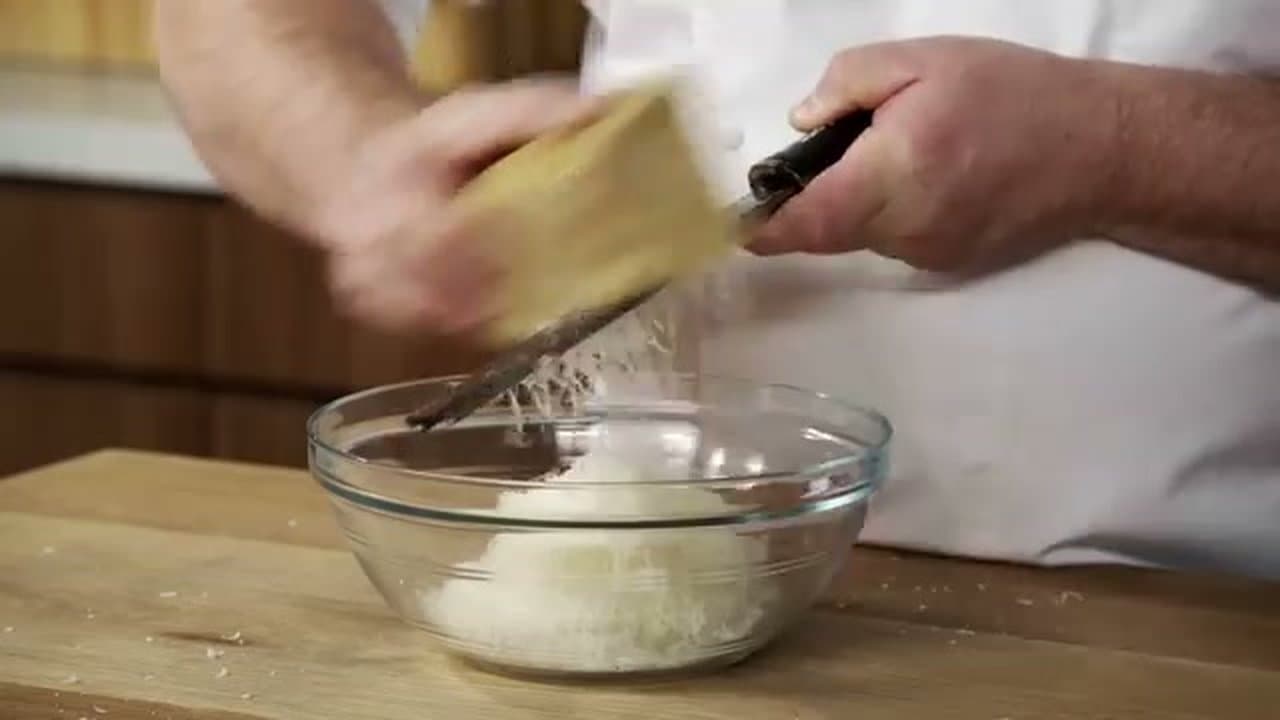
Step 1: Grate the Parmesan Finely on a Microplane

Set up a glass bowl and grate the parmesan reggiano on a microplane. You want the cheese fluffy and powdery, not chunky. Fine grating means the cheese melts the instant it hits the hot pasta, which is what builds the emulsion.

Plan on roughly three-quarters of a pound to a pound of cheese for a pound of pasta. It looks like a lot. It is a lot. This dish is meant to be rich and you are not going to skimp here.

Tip

If you don't have a microplane, use a regular fine grater and pass the result through a sieve to pull out the chunks. Pre-grated cheese in tubs is moist and treated with anti-caking agents - it won't emulsify the same way.
Products used in this step

microplane grater
parmesan reggiano cheese
glass mixing bowl
2

Boil the Pasta in Less Water

3:45
Step 2: Boil the Pasta in Less Water

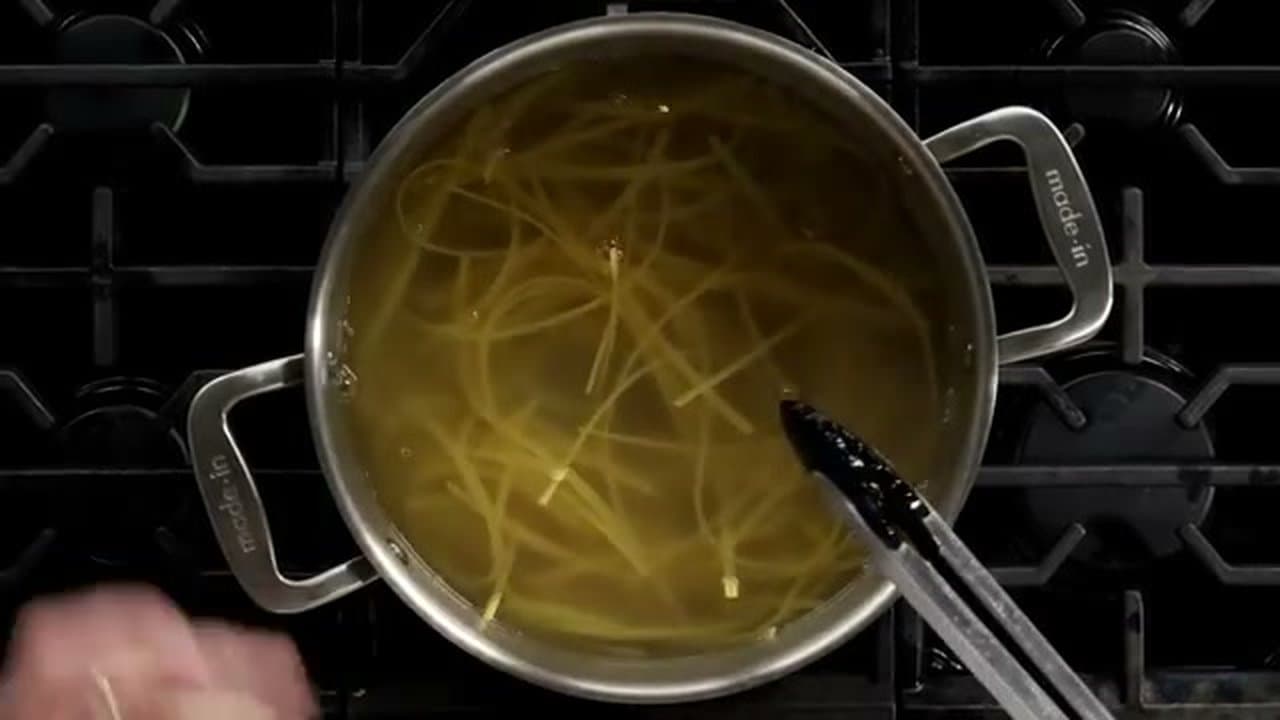
Bring a small pot of water to a boil. Use less water than you would normally for pasta. The whole point is to make the cooking liquid as starchy as possible so it can pull the sauce together later.

Salt the water lightly - much less than you'd usually salt pasta water. The parmesan is already very salty, and you don't want to push the finished dish over the edge. Drop in the dry fettuccine and stir occasionally.

Tip

The water will turn cloudy as it cooks - that cloudiness is starch washing off the pasta. That's exactly what you want. Don't dump it.

Products used in this step

dry fettuccine pasta
3

Lift the Pasta Straight Into the Butter Bowl

5:05
Step 3: Lift the Pasta Straight Into the Butter Bowl

While the pasta cooks, cube a stick of European-style butter into a glass mixing bowl. When the pasta is just past al dente - bite into a strand to check, no white center - turn off the heat.

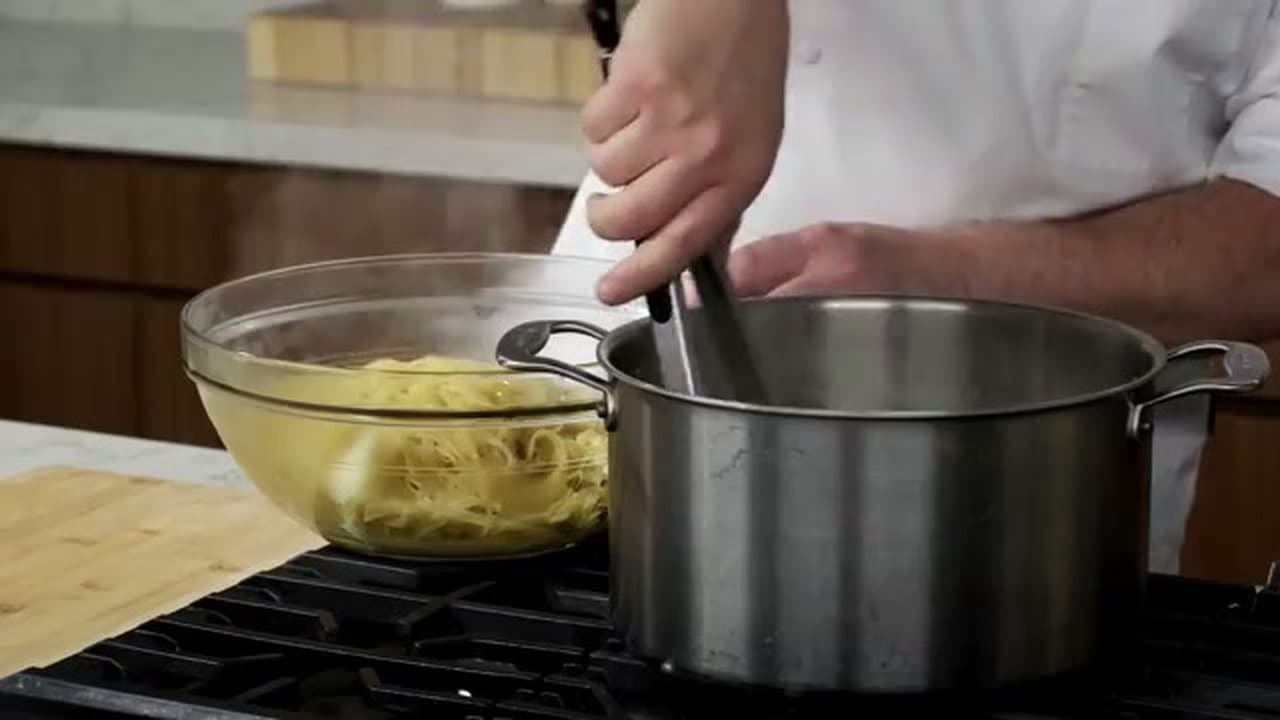
Use tongs to lift the cooked pasta directly out of the pot and into the glass bowl. Don't drain. Don't strain. The starchy water clinging to the noodles is what's going to emulsify with the butter.

Tip

Reserve at least a cup of the cooking water in a heatproof container before you do anything else. You'll likely need it in step 6 to loosen the sauce.

Products used in this step

European-style unsalted butter
kitchen tongs
4

Stir to Melt the Butter Into the Pasta

5:20
Step 4: Stir to Melt the Butter Into the Pasta

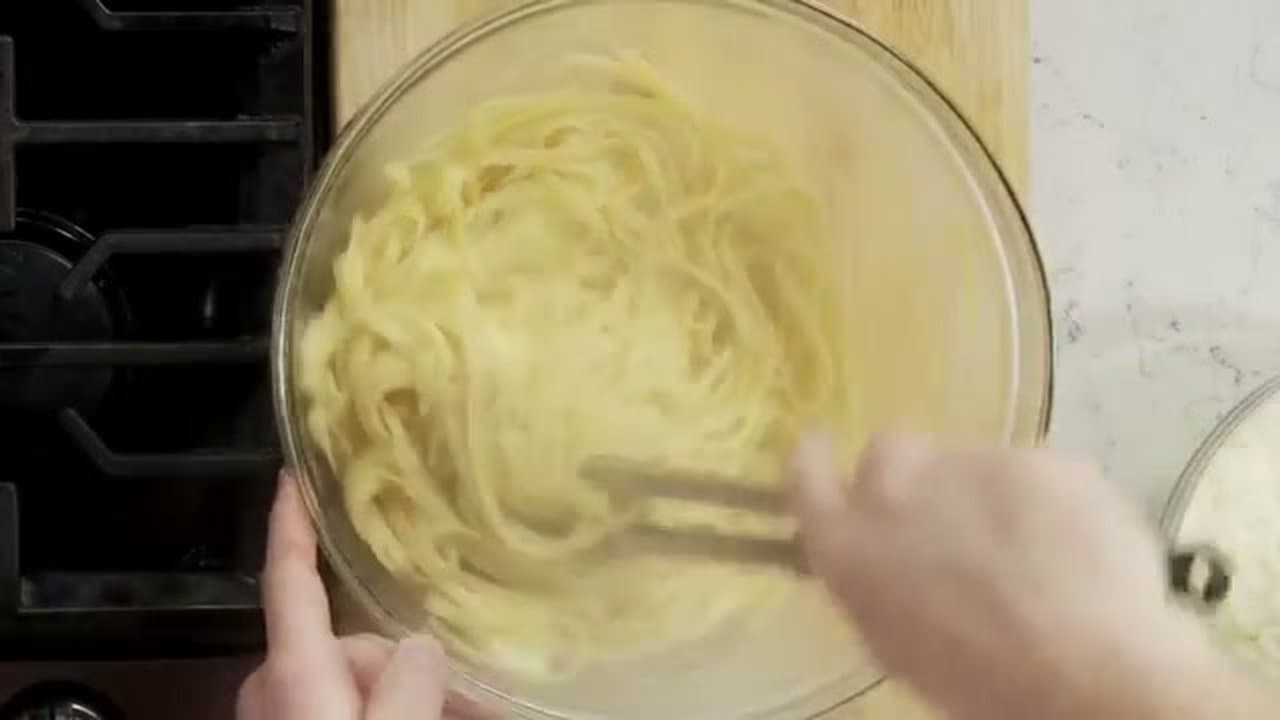
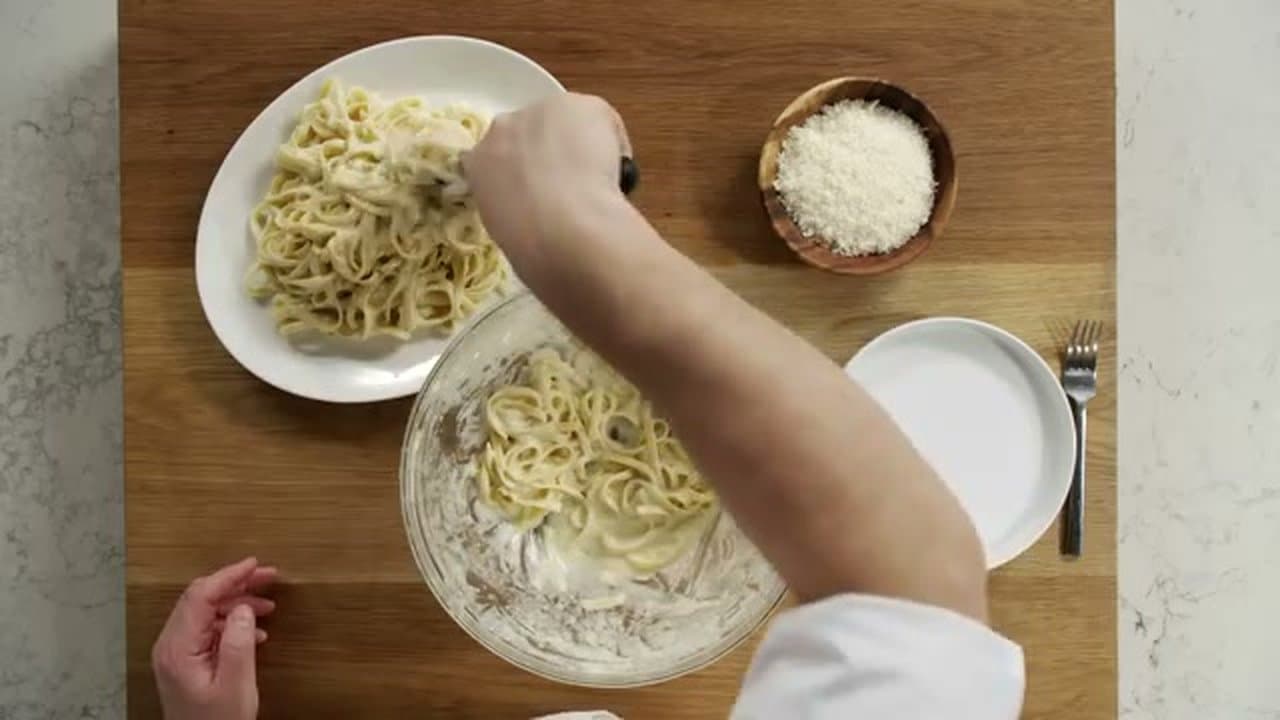
Start stirring immediately and don't stop. The heat from the pasta is what melts the butter, and the starchy water is what helps the butter coat every strand instead of pooling.

You'll see the butter cubes shrink and the bottom of the bowl turn glossy yellow. Keep moving. The motion is what builds the emulsion - if you walk away, the fat separates.

Tip

A glass bowl is intentional. A metal bowl conducts heat too aggressively and can cause the butter to break. Glass holds the residual heat from the pasta gently.

5

Add the Cheese Gradually, Stirring Constantly

5:50
Step 5: Add the Cheese Gradually, Stirring Constantly

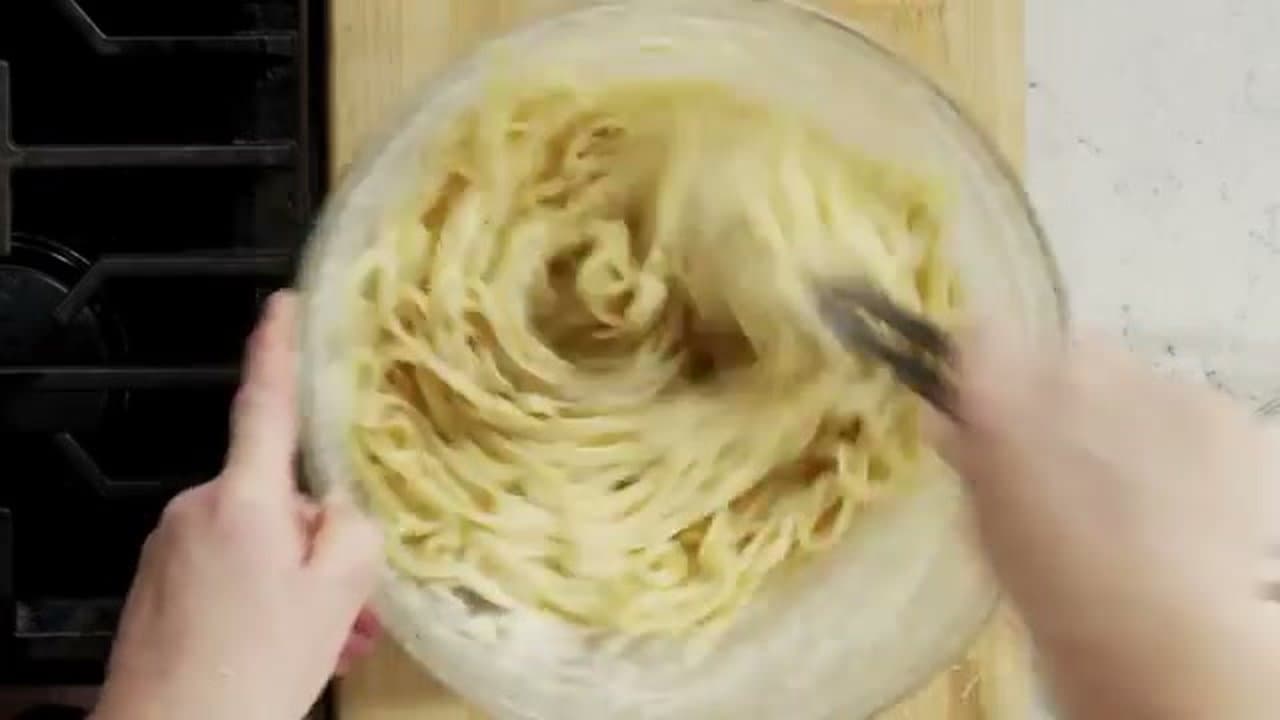
Add the grated parmesan a generous handful at a time. After each addition, stir until that batch is melted and incorporated before adding the next. The sauce thickens as the cheese goes in.

If the cheese starts to clump, you're moving too slow or the bowl has lost too much heat - speed up the stirring. The strands should look creamier with every pass.

Tip

The sauce will tighten before it loosens. Don't panic when it looks thick and pasty - the next step fixes that.

6

Loosen With Pasta Water Until Silky

6:15
Step 6: Loosen With Pasta Water Until Silky

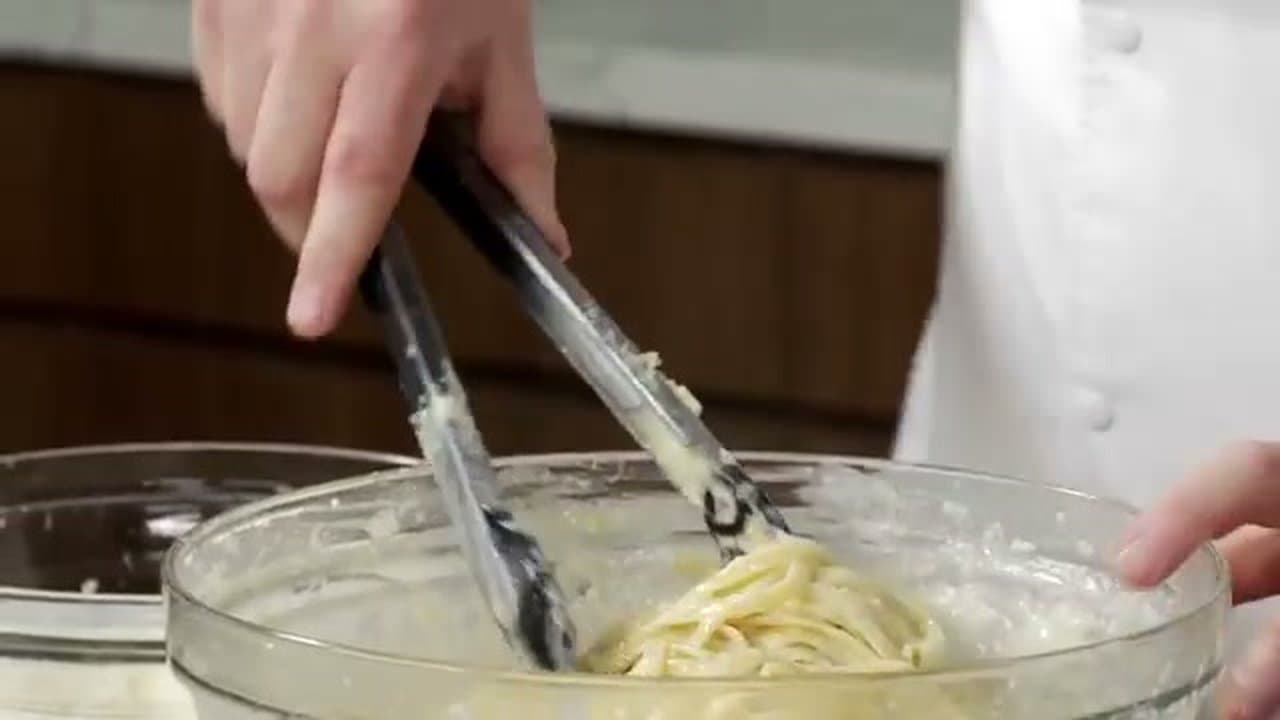
If the sauce looks tight, dry, or clumpy, add a small splash of the reserved pasta water and keep stirring. The starch in the water is what gives Alfredo its signature silkiness.

Add water a tablespoon at a time. Stop the second the sauce turns glossy and the pasta strands ribbon cleanly off the tongs. It should look like there's heavy cream in there. There isn't.

Tip

Too much water and the sauce turns thin and watery instead of silky. Add small splashes and judge by feel - the sauce should coat a spoon, not run off it.

7

Plate Immediately and Serve Hot

7:20
Step 7: Plate Immediately and Serve Hot

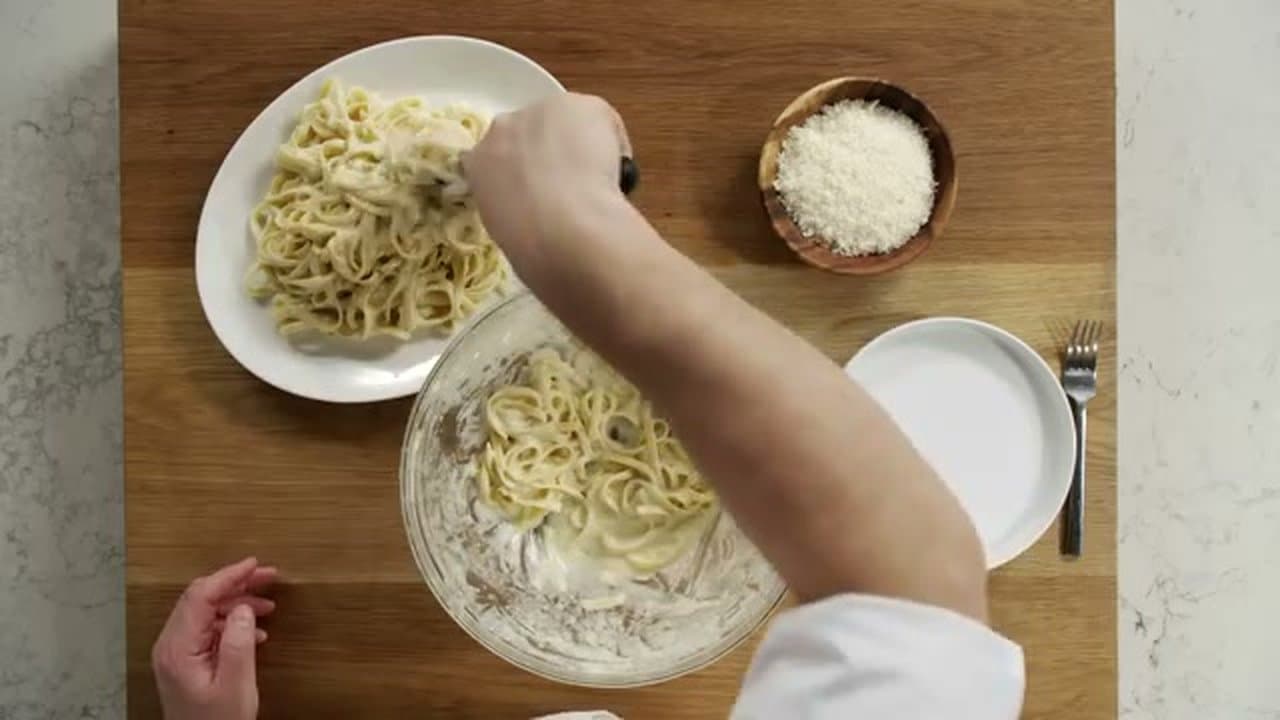
Alfredo doesn't wait. The sauce stays creamy only while it's hot - once it cools, the butter starts to firm and the emulsion breaks. Have the plates ready before you finish the sauce.

Use tongs or a fork to twist the pasta into a nest on each plate. Add a small extra grating of parmesan on top if you want, but taste first - there's already a lot of cheese in there.

Tip

Serve in smaller portions than you'd normally plate pasta. This dish is rich. A modest nest of fettuccine is more satisfying than a full bowl that goes gluey before you finish it.

Products Used

microplane graterparmesan reggiano cheeseglass mixing bowldry fettuccine pastaEuropean-style unsalted butterkitchen tongs
❖ The Recipe

How to Make Alfredo Sauce (Authentic Italian Style)

Italian
Serves
Sauces 1 pound of pasta (serves 4)
Prep
5 min
Cook
10 min
Total
15 min

Ingredients

7 items
  • 1/2 cup (1 stick)butter
  • 1 cupheavy cream
  • 1 1/2 cupsfreshly grated parmesan cheesedo not use pre-shredded
  • 2garlic cloves, minced
  • 1/2 teaspoonkosher salt
  • 1/4 teaspoonblack pepper
  • 1 pound, cookedfettuccine pasta

Nutrition

estimated · per servingEstimated from the ingredient list, not measured. Actual values vary by brand, preparation, and serving size. Not a substitute for measured nutrition data.
Calories
970kcal
Protein
30g
Fat
50g
Carbs
80g
Sodium
1100mg

Method

  1. 1
    Grate the Parmesan Finely on a Microplane. Set up a glass bowl and grate the parmesan reggiano on a microplane.
  2. 2
    Boil the Pasta in Less Water. Bring a small pot of water to a boil.
  3. 3
    Lift the Pasta Straight Into the Butter Bowl. While the pasta cooks, cube a stick of European-style butter into a glass mixing bowl.
  4. 4
    Stir to Melt the Butter Into the Pasta. Start stirring immediately and don't stop.
  5. 5
    Add the Cheese Gradually, Stirring Constantly. Add the grated parmesan a generous handful at a time.
  6. 6
    Loosen With Pasta Water Until Silky. If the sauce looks tight, dry, or clumpy, add a small splash of the reserved pasta water and keep stirring.
  7. 7
    Plate Immediately and Serve Hot. Alfredo doesn't wait.
☐ The Checklist

How to Make Alfredo Sauce (Authentic Italian Style)

Tools
4
Materials
4
Steps
7
Video
8 min

Your Guide

Epicurious

As an Amazon Associate we earn from qualifying purchases. Links on this page may be affiliate links - clicking them and buying doesn't change your price, but helps support ShowMeStepByStep.

Tags

What's next

Weekly Digest

Liked this cooking tutorial?

Pick the categories you want to hear about. Weekly digest of new step-by-step tutorials. No spam, easy unsubscribe.

Send me tutorials about

We only email about new tutorials. Easy unsubscribe anytime.