When you move, the Post Office forwards your mail for a year. The IRS doesn't get that memo. It keeps your old address on file until you tell it otherwise, and any tax notice, refund check, or audit letter it sends you in the meantime goes to your old mailbox.
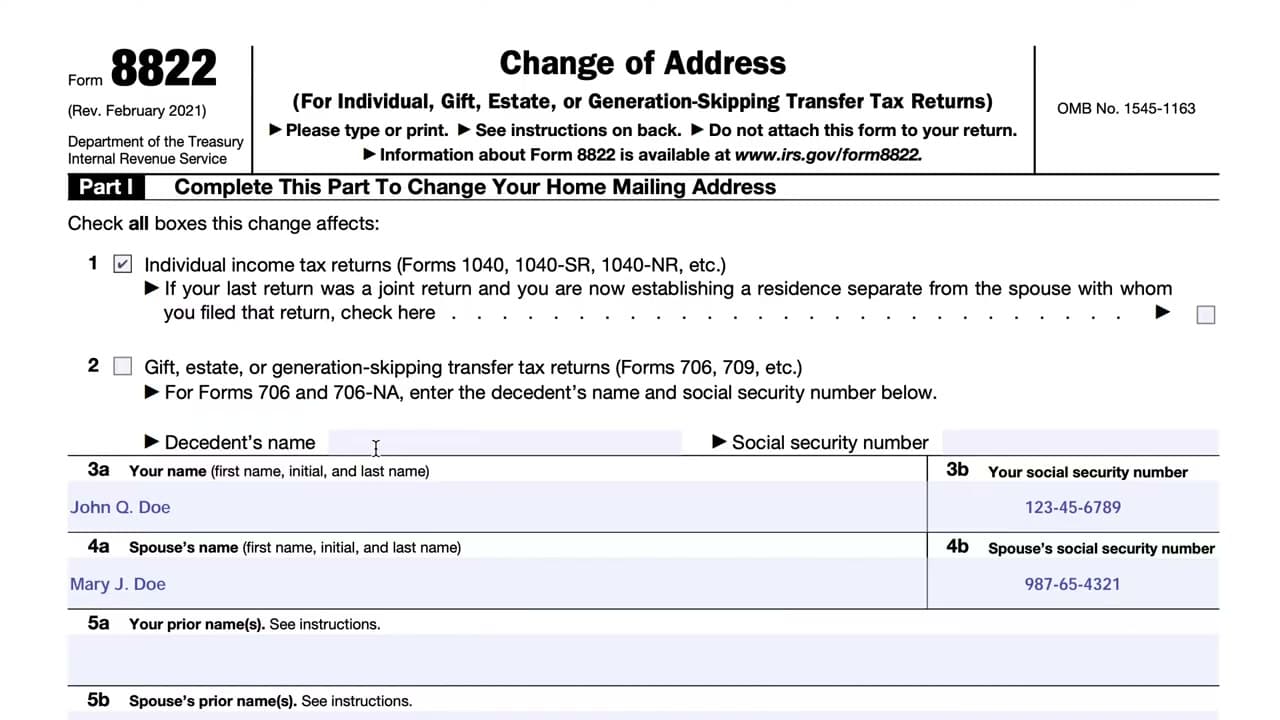
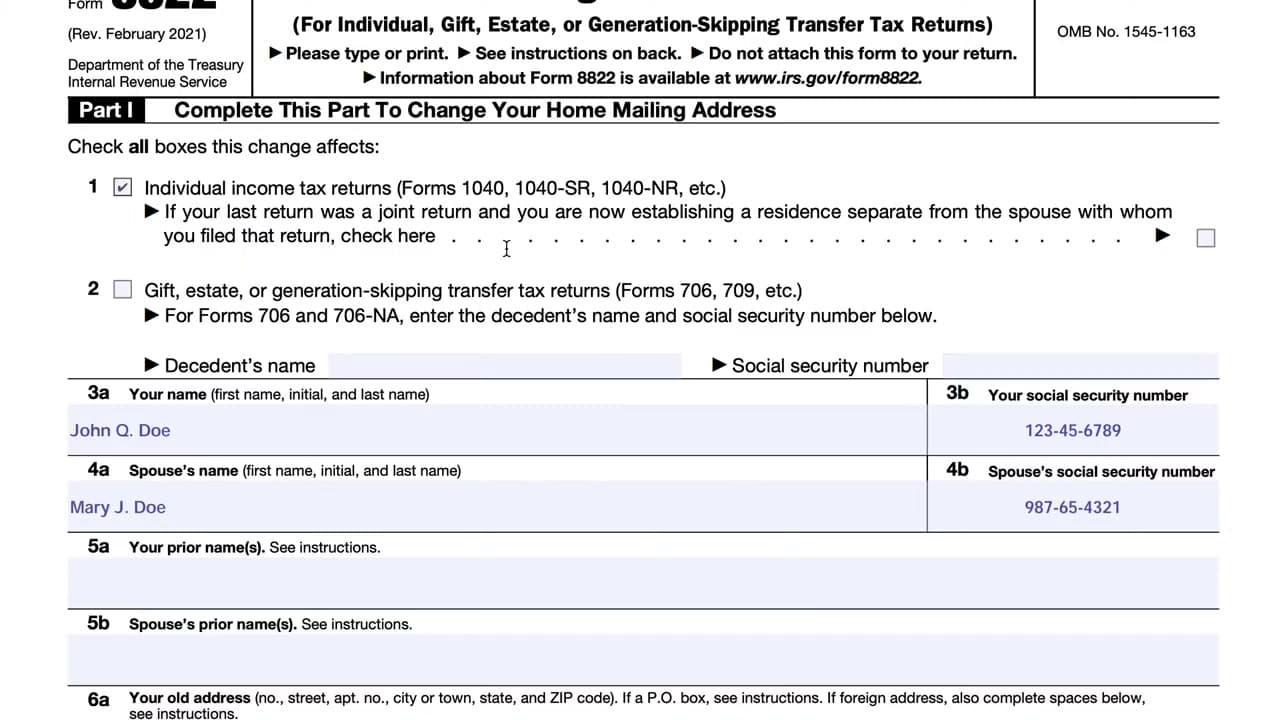
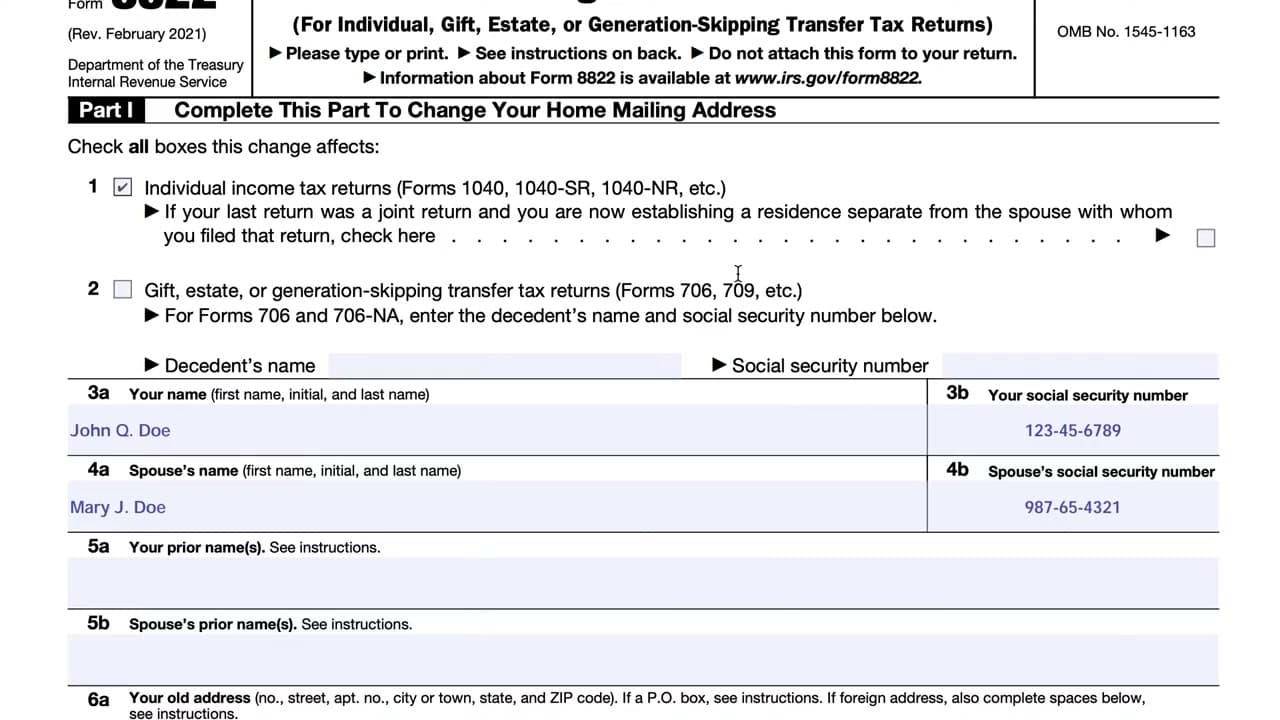
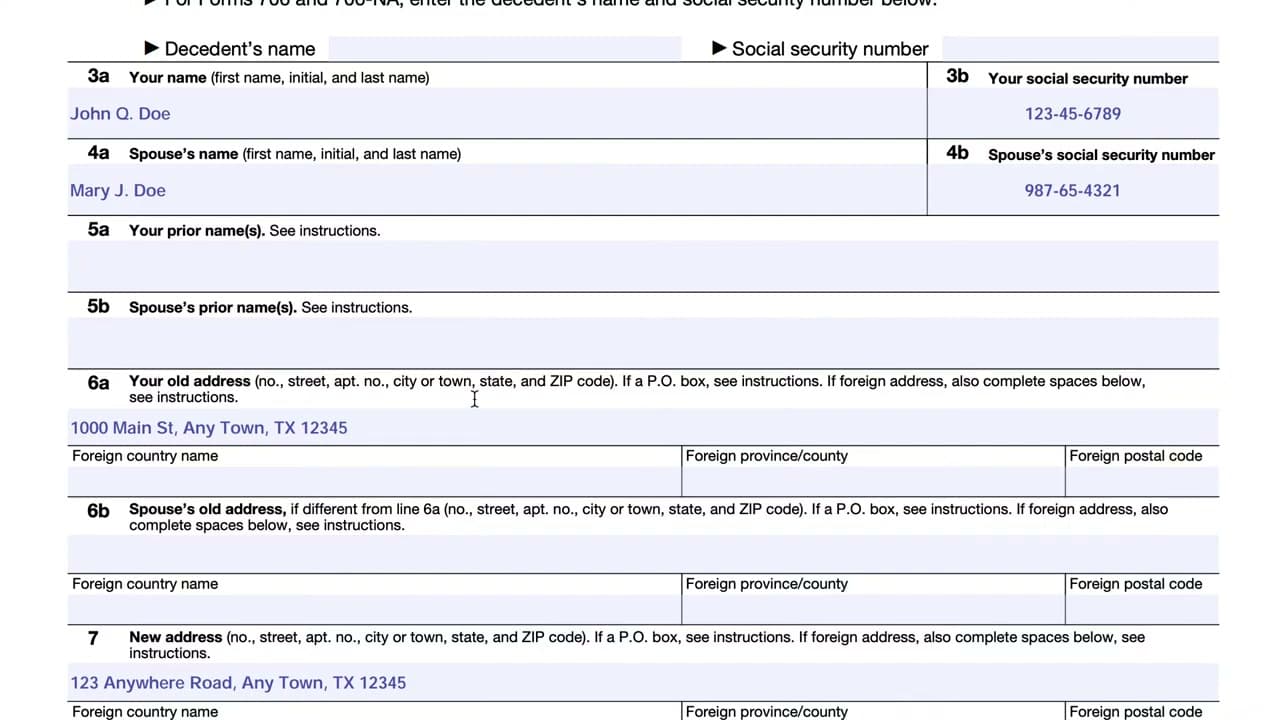
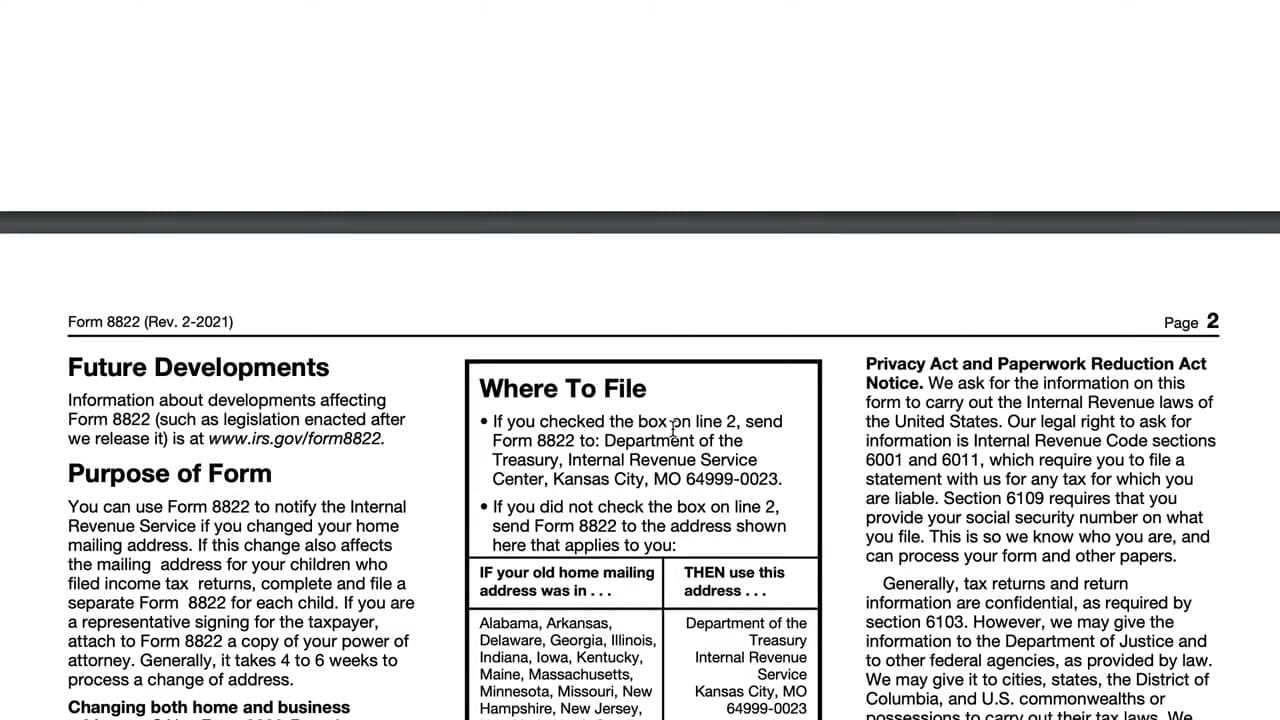
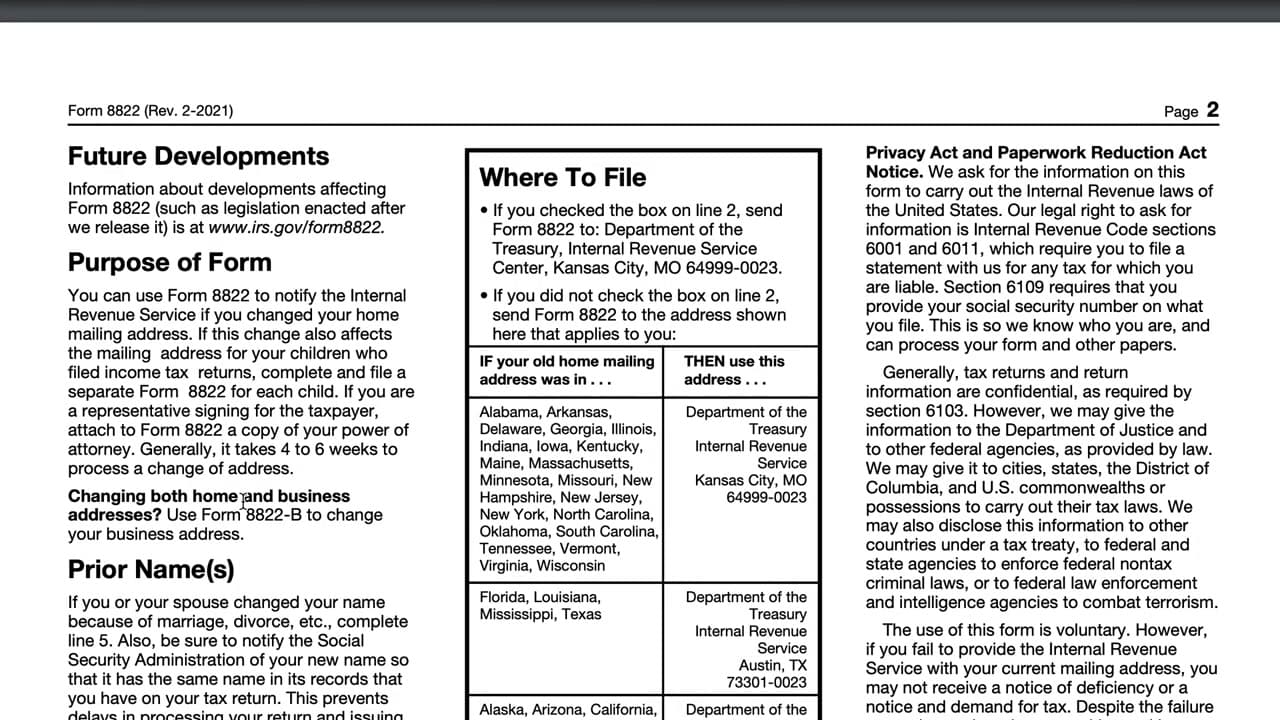
The fix is one free form. IRS Form 8822, Change of Address is a single page with a handful of fields - the boxes you want to update, your name and Social Security number, your old address, your new address, and a signature. You print it, fill it in by hand or in a PDF editor, and mail it to one of about a dozen IRS service centers based on the state you used to live in.
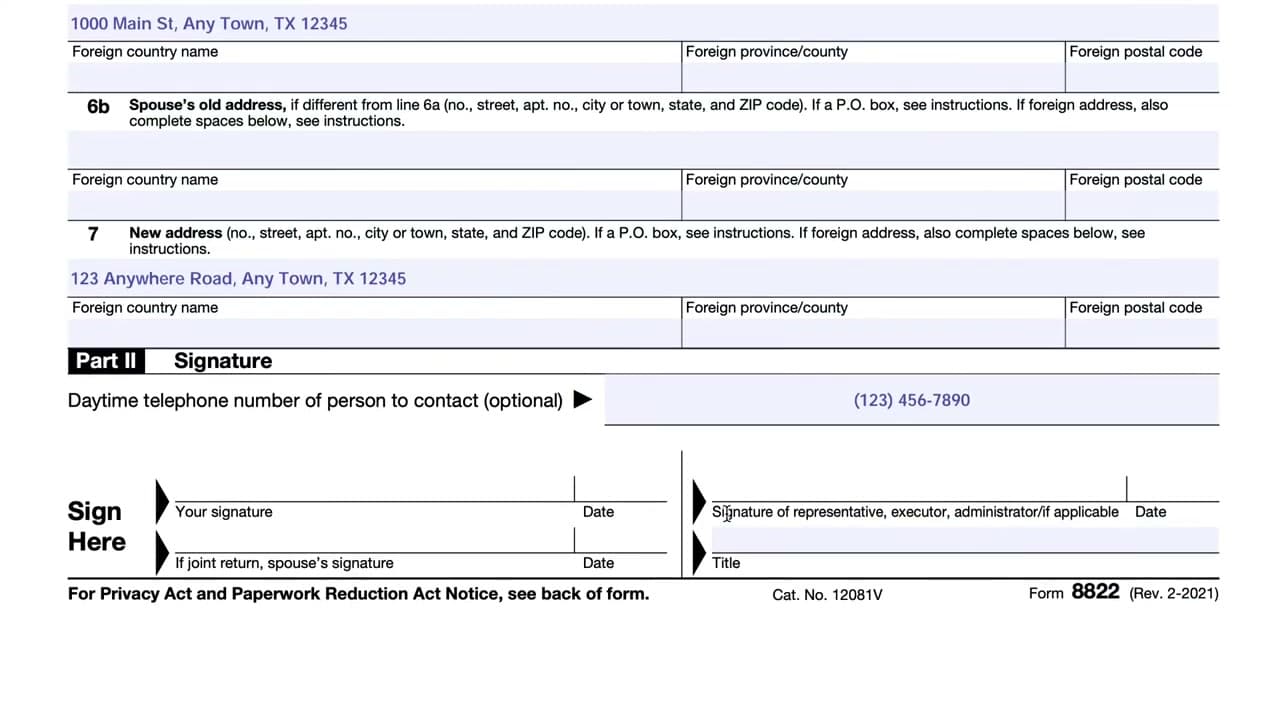
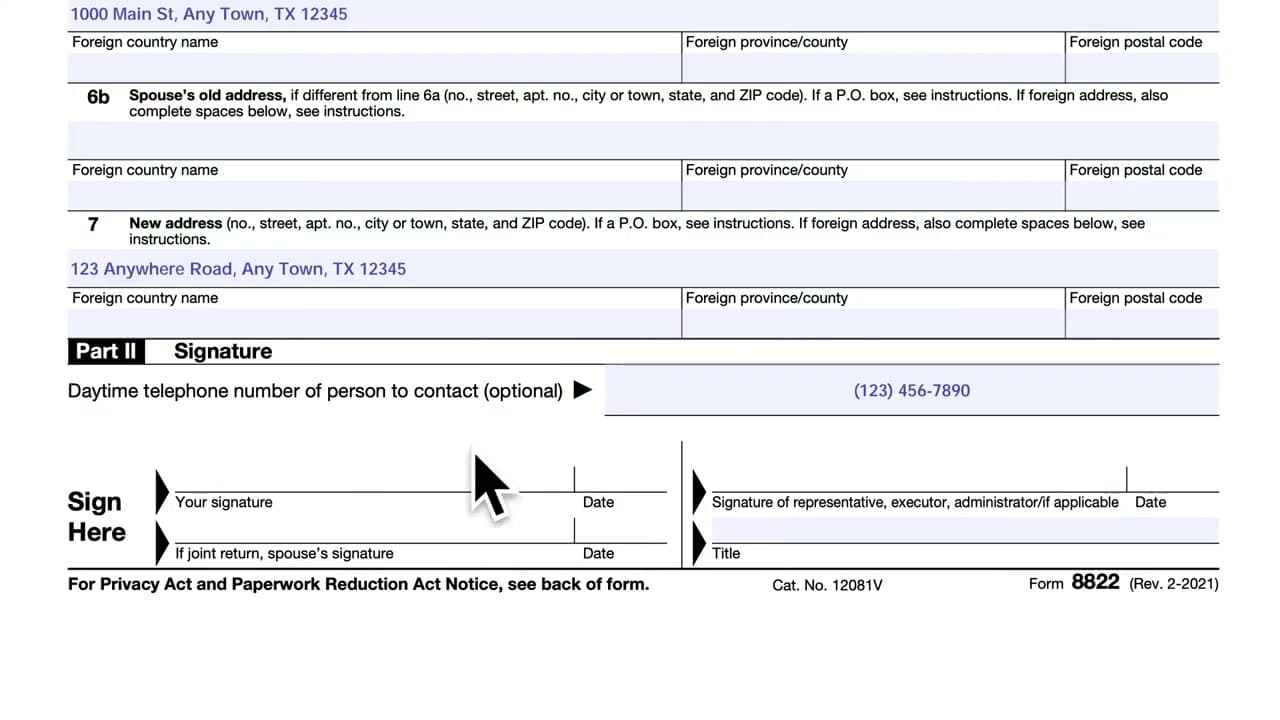
This walkthrough is based on the Form 8822 video from Teach Me! Personal Finance. It covers Part I (the address change itself), Part II (your signature), where to mail the completed form, and how to handle the edge cases - sole proprietors, kids who file their own returns, and joint filers who are now establishing separate residences.
If you're working through a full move, this is the IRS piece of a bigger checklist. You'll also want to forward your mail with USPS, update your driver's license, and run through the broader how-to-move playbook. The IRS one is the cheapest of the bunch - the form itself is free, the only cost is a stamp.
IRS Change of Address: The Short Version
There are three ways to get a new address onto your IRS record, and you only need one of them.
- Mail Form 8822. Grab it from irs.gov/form8822, fill in the old address, the new address, and sign it. Send it to the service center listed on page 2 for the state you moved from, not the one you moved to.
- Put the new address on your next tax return. The IRS works off the address on the most recent return it processes, so a return filed after the move handles it with no extra paperwork.
- Call 1-800-829-1040. An agent can change it once you clear the identity check. This is the route when you need the record fixed before the mail catches up with you.
None of the three costs anything past a stamp or your time on hold. Any site charging a fee to file your IRS change of address online is charging you to mail a free form. Postage is the entire budget here, and mailing it certified costs a few dollars more if you want proof of delivery.
| Your situation | What to file |
|---|
| You moved, filing single, joint, or head of household | Form 8822 |
| You moved and you are filing a return soon anyway | New address on Form 1040, no 8822 needed |
| Business address, or any entity holding an EIN | Form 8822-B |
| New responsible party on an EIN | Form 8822-B, within 60 days |
| Gift, estate, or generation-skipping transfer returns | Form 8822, second box in Part I |
| Refund check already bounced back to the IRS | Where's My Refund, or the phone line |
Can I Change My Address on Form 1040 Instead of Filing Form 8822?
Yes, if you're filing this year's return soon. The IRS pulls your address from whatever return you file most recently, so writing your new address at the top of Form 1040 updates the IRS automatically when the return is processed. There's no separate Form 8822 needed when you do it this way. The catch: address-from-1040 only takes effect once the return is accepted, which can be 6 to 8 weeks for a paper filing or 2 to 3 weeks for an e-file with direct deposit. Until then, any mid-year notice or refund check from a prior year is still going to your old address.
Use the Form 1040 method when you're moving in January or February and plan to file your return before mid-April anyway. Skip the 8822, write the new address on the 1040, and the IRS records update when the return clears. Use Form 8822 when you move outside of filing season (May through December) or when you're expecting a check, notice, or audit response in the next few weeks and can't wait for the next return to process. The two methods don't conflict, but filing both is redundant and occasionally confuses the IRS records system.
One more wrinkle on joint filers: if you filed jointly last year and you're moving to separate addresses this year (divorce, separation, college kid moving out who's no longer a dependent), both people should file individual Form 8822s with their own new addresses. Putting two different addresses on a future 1040 is not an option - the form has one address field. The 8822 is how you tell the IRS that one tax record now splits into two mailing destinations.
Is There an Online Way to Change Your Address with the IRS?
The IRS does not currently accept address changes through the main IRS.gov website or the regular IRS Online Account dashboard. The only digital path is calling the IRS at 1-800-829-1040 and updating the address by phone after the agent verifies your identity with your SSN, prior-year AGI, and address on file. Phone wait times during filing season (January through April) regularly run 60 to 90 minutes; off-season is closer to 20 to 40 minutes.
Online options exist for a few narrow cases. If you set up direct deposit on your last refund and you're tracking a pending refund, the Where's My Refund tool at irs.gov/refunds will sometimes let you update the address tied to a specific refund delivery, but only for that one payment, not your record on file. Taxpayers with an IRS Online Account who use Identity Protection PINs (IP PINs) can update the address tied to their IP PIN profile, but again that only affects IP PIN correspondence, not the master record. For any other purpose - audit notices, future refund checks, annual reminders, deficiency letters - the mailed Form 8822 or the next-return method are the only two paths that update the master file.
The IRS has been promising a true online change-of-address tool for several years and it's still not live. If a third-party site claims to file the change for you online, it's either reselling Form 8822 (charging $20 to $50 to mail a free form on your behalf) or it's not actually updating the IRS record. The only no-cost, official methods are the paper Form 8822, the phone call to 1-800-829-1040, or writing the new address on your next return.
Searching for an irs.gov change of address lands you on the Form 8822 page rather than a form you can submit in the browser. That page is still worth going to, because it holds the current PDF and the current Where To File chart, and both get revised. Pull the form fresh instead of reusing the copy you saved during the last move.
Changing Your IRS Address by Phone
Have your Social Security number, the old address, the new address, and last year's return within reach before you dial. The agent verifies you against the record before changing anything, and a wrong digit on the prior-year figure ends the call. If someone is handling this on your behalf, the IRS wants authorization on file first: Form 2848 for a representative who can act for you, Form 8821 for someone who only needs to see your information. The same rule shows up on paper, where a representative signing Form 8822 has to attach a copy of the power of attorney.
How Long Does an IRS Change of Address Take?
Form 8822 tells you to allow four to six weeks. Treat that as the window rather than a promise. The form travels by mail, gets keyed in by hand at a service center, and joins the same queue as everything else that arrived that week. From January through April that queue is at its longest, so a form mailed in February sits behind filing season.
There's no tracking number and nothing to refresh. If the timing matters, send it certified with return receipt. A few dollars buys a dated record that the IRS took delivery, which is worth having when you're mid-audit, chasing a check, or answering a notice that has a deadline printed on it.
Your real confirmation is the next piece of IRS mail you get. When it shows up at the new address, the record changed. If something still arrives at the old address more than six weeks after you mailed the form, call and ask the agent to read back the address on file. That's faster than mailing a second 8822 and waiting out another six weeks.
The return method trades speed for effort. Nothing moves until the return is processed, but once it clears, the address is on the record without a separate mailing. Moved in November? The form gets there sooner. Moved three weeks before you were going to file anyway? The return does it for free.
How to Update Your Address with the IRS After Filing Your Return
If you already filed this year's return and then moved, file Form 8822 right away. Don't wait for next year's return - any notice, adjustment letter, or refund check the IRS sends between now and your next filing date will go to the address on the most recent return, which is now your old address. Refund checks that bounce back from a closed mailbox are held by the IRS until you call to request a reissue, which adds 4 to 8 weeks to the wait.
The timing matters most if you're expecting an amended-return refund, a CP2000 adjustment notice from an under-reported income match, or any audit-related correspondence. Those all arrive months after the original filing and bypass NCOA, so USPS forwarding from your new address doesn't catch them. File the 8822 as soon as the move is final - the IRS recommends within 30 days of the address change for active taxpayers and ideally before any expected correspondence.
If you moved between when you filed and when the IRS actually processed your return (common with paper returns in April), the address that ends up on file is whichever the IRS keyed in first. In practice that's almost always the old address from the return itself. File a Form 8822 anyway just to be sure - duplicate filings of 8822 won't break anything, they just overwrite the previous record with the most recent date.
You Moved Before the Refund Arrived. Where Does the Check Go?
Direct deposit doesn't care where you live. The money goes to the routing and account number on the return, so a move between filing and payment changes nothing about the delivery. Check the bank account before you start worrying about the mailbox.
A paper check is the one to worry about. It goes to the address printed on the return the IRS is paying out on, which is the old one. USPS forwarding may catch it, but forwarding is a redirect with an expiry date on it, and it isn't something to bet a four-figure refund on.
When a check does come back to the IRS undeliverable, the refund is held, not lost. Where's My Refund at irs.gov/refunds is the tool that takes a corrected address in that situation and gets the check reissued. If the tool won't accept the change, the phone line will. Either way a reissue adds weeks on top of the wait you've already done, which is the argument for filing the 8822 the week the move is final rather than the week the check goes missing.
If you're moving often, or you moved once and never want to think about this again, switch to direct deposit on the next return and the question stops existing. Filing online makes it the default.
Do You Have to Tell the USPS as Well as the IRS?
Yes, and they do two different jobs. The USPS change of address redirects mail that is already addressed to the old house. The IRS record decides what address gets printed on everything the IRS sends you from here on. Doing one does not do the other.
The IRS does draw on the postal service's national change of address database, so an address updated with USPS sometimes turns up on the IRS record without you doing anything. Sometimes. There's no way to check it, no way to schedule it, and it does nothing about the twelve-month cliff when forwarding ends. Mail the form.
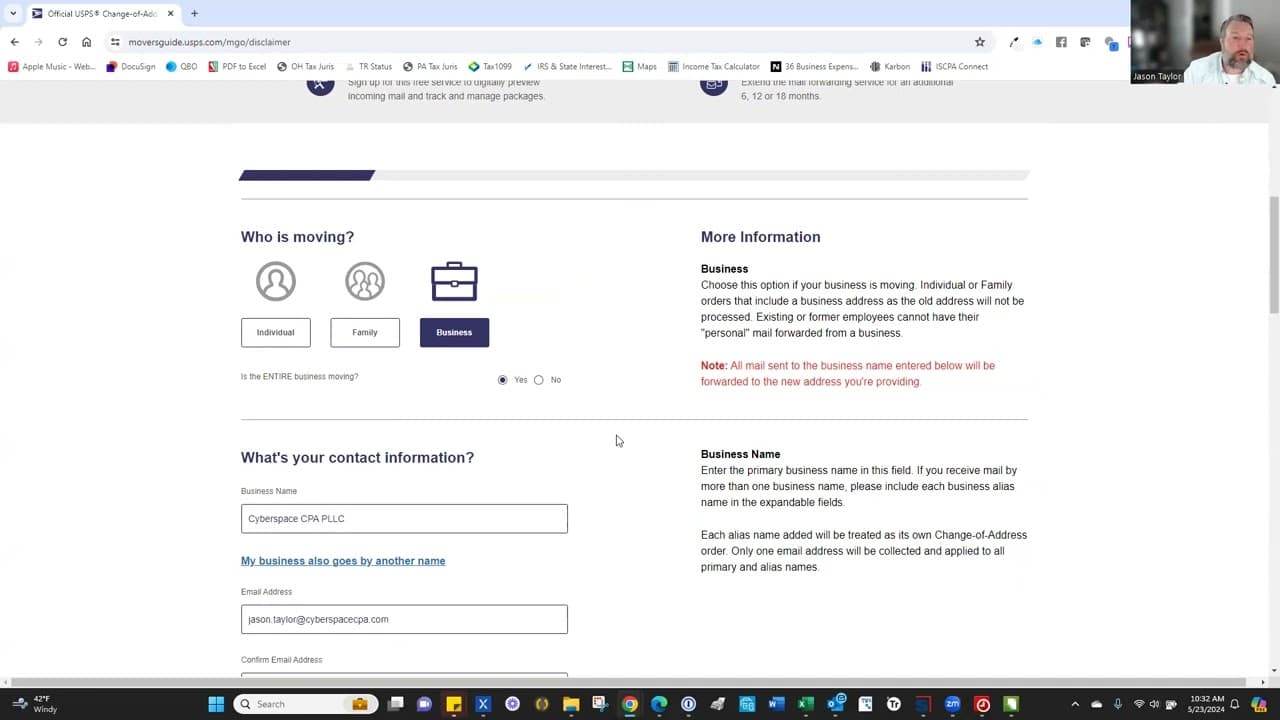
Do the postal forward first, since it has a start date you control, then file the 8822 in the same sitting while the old ZIP code is still in your head. The mail forwarding walkthrough covers both the online version and the free form at the counter.
Changing a Business Address with the IRS: Form 8822-B
Form 8822 handles you. Form 8822-B handles the entity. If you hold an EIN, the address attached to that EIN is a separate record from your personal one, and it has its own Where To File chart on the back of its own form.
Sole proprietors get caught by this more than anyone. Running a Schedule C business out of the house you just left means two records changed on the same day, and the personal 8822 doesn't touch the EIN. File both, mail them separately, and don't staple them together.
Form 8822-B also reports a change of responsible party, meaning the person who controls or manages the entity. The IRS wants that reported within 60 days of the change, and it applies even when nobody moved at all. A partner buying out another partner or a new managing member stepping into an LLC both trigger it.
Payroll is where a stale business address turns expensive. Employment tax filings carry the entity address, so notices about deposits and quarterly returns go to whatever the EIN record says, and those notices have real deadlines. If you have employees, treat the 8822-B as urgent rather than housekeeping, and check what address your payroll provider has on file while you're thinking about it.
What Information Do You Need to Send the IRS with a Change of Address?
Form 8822 asks for less than you might expect. The required fields are: which box to check in Part I (almost always box 1 for individual income tax returns), your name and Social Security number, your spouse's name and SSN if you filed jointly, your old address, your new address, and your signature. That's it. No proof of residence, no copy of a utility bill, no driver's license number, no photo ID.
Optional but worth including: the daytime phone number at the top of Part II. It's the only way an IRS clerk can reach you if anything on the form is unclear - missing a digit in the ZIP code, illegible handwriting on the SSN, an apartment number that doesn't match anything in the state. Without a phone number, an unclear form gets returned by mail and the address update is delayed by 6 to 8 weeks. With a phone number, the clerk can call and resolve it the same day.
Do not send: your tax return, copies of a lease or mortgage, identification, payment of any kind, or any cover letter. The IRS processes 8822s on a high-volume conveyor and any attachments get separated and frequently discarded. If you have a separate issue - an amended return, a notice response, an underpayment - file each one separately on its own form, mailed to its own address. Bundling correspondence is the single most common reason an address change gets lost or delayed at the IRS.
Who Else Needs the New Address
The IRS is one line on a longer list, and most of the rest of that list is what generates next year's tax paperwork.
- Your employer. A W-2 mailed to the old house is the classic February scramble. Payroll usually takes the change through the same portal you use for your W-4, and a move is a fair moment to look at the withholding while you're in there.
- Banks, brokerages, and anybody who sends you a 1099. Interest, dividends, contract work, retirement distributions. Each one mails a form in January, and each one keeps its own address list.
- Your state tax agency. A federal Form 8822 does nothing at the state level. Most states run their own change-of-address form or an online account, and the state is often the one sending the balance-due letter.
- Social Security and Medicare. Benefit letters, annual statements, and the December notices all key off the SSA record, not the IRS one. The Social Security walkthrough covers where that record lives.
- Driver's license and vehicle registration. Most states put a deadline on this one, often counted in days rather than weeks. Updating the license tends to be the fastest item on the whole list.
Run the set in one sitting the week you move and none of it comes back at you in eleven months when the forwarding stops. The moving checklist has the rest of it in order.