A suit without a tie always looks a little bare. The pocket square is what saves it. Six different folds cover almost every situation - one is bold, one is minimal, one is for black tie, and one takes about ten seconds.
This walkthrough from MyNiceTie covers those six folds plus the prep work most people skip. Cotton holds a crisp fold; silk suits the soft ones.
One rule before you start: don't match your pocket square to your tie exactly. Complementary colors look intentional. A perfect match looks like you tried too hard.
What you need
- A pocket square. Cotton at 10 to 12 inches for flat folds, silk at 14 to 17 for soft ones.
- A flat table. Folding on your knee is why edges come out crooked.
- An iron, for the flat folds only. Low heat on silk.
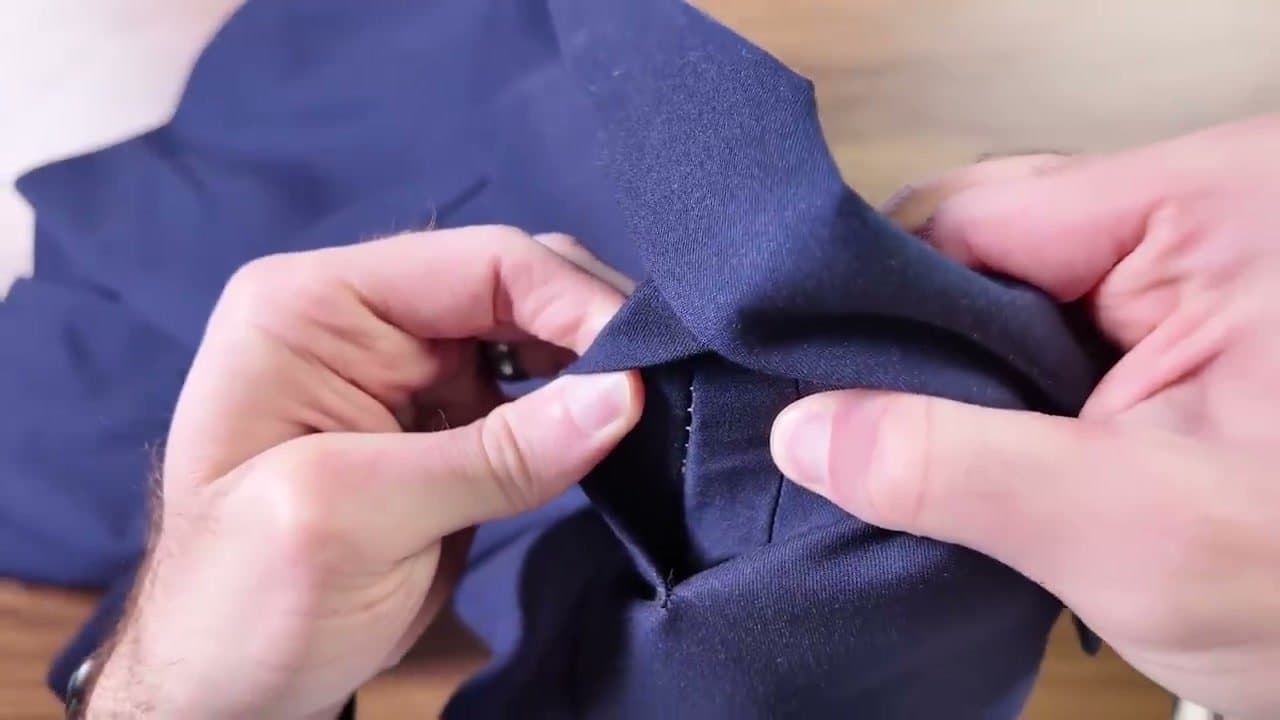
- Small scissors, if the breast pocket is still stitched shut from the shop.
Every fold here, and its other names
Half the confusion around pocket squares is naming: the same fold goes by two or three names depending on who taught it.
The puff fold
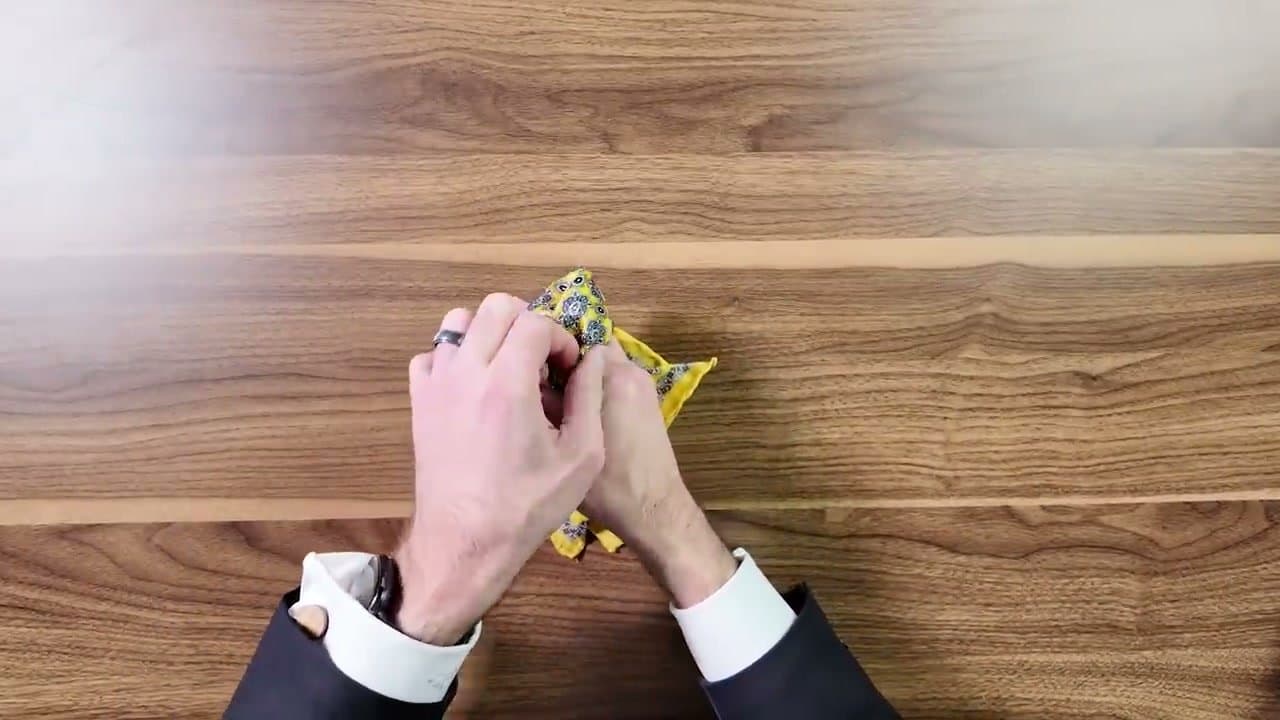
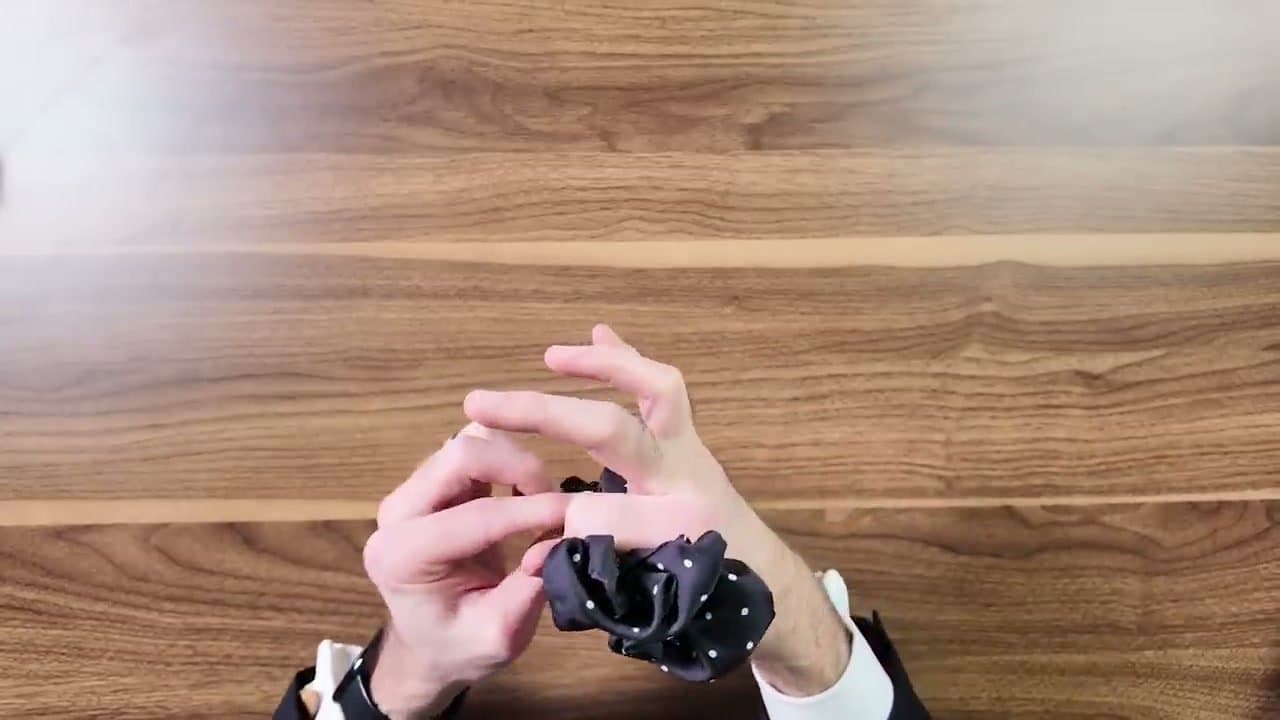
Pinch the center, let the corners hang, then push the pinch through your closed hand into a soft dome. Drop it in points-down. Learn this one if you learn no others: ten seconds, suits silk, forgives a rushed hand. Step 3.
The presidential fold, also called the straight fold or the TV fold
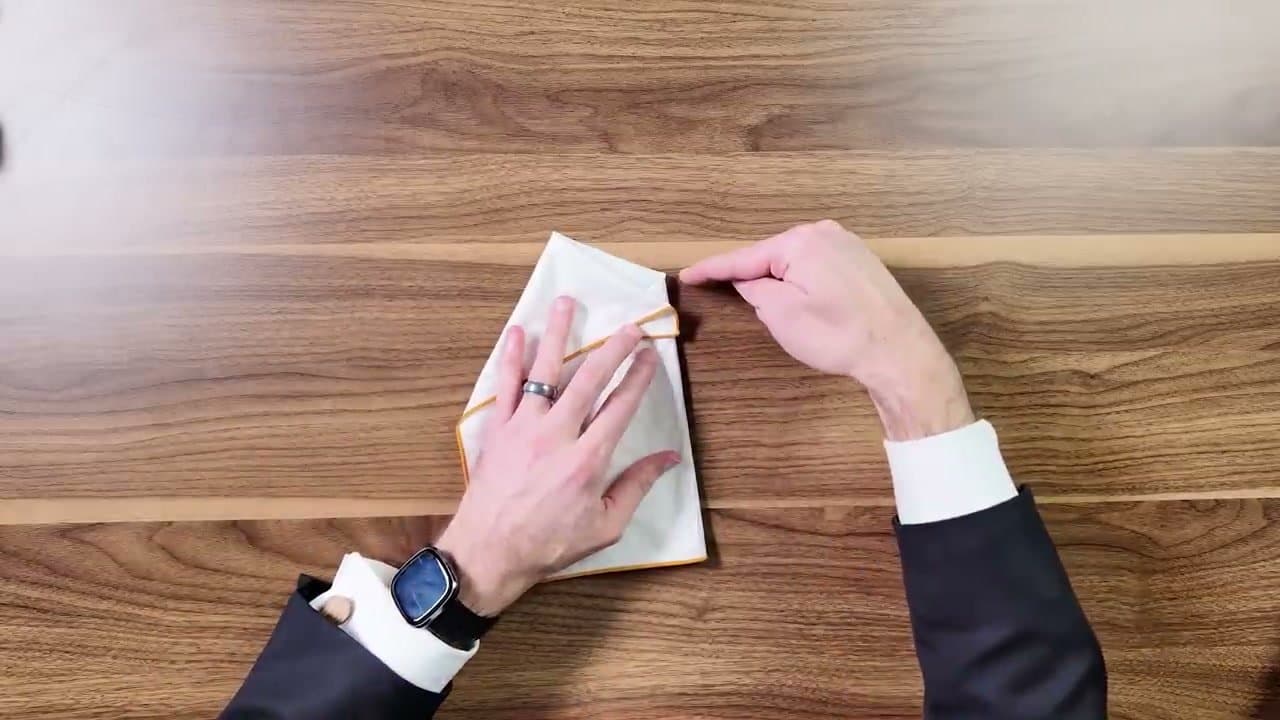
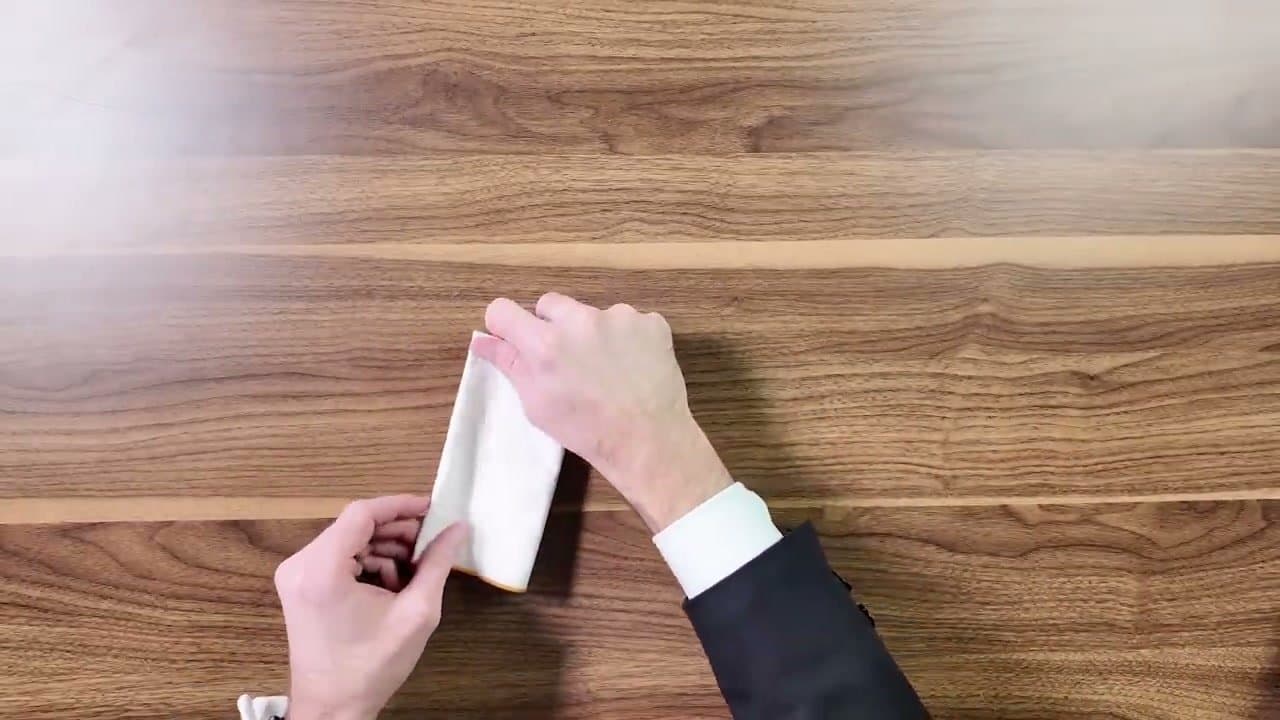
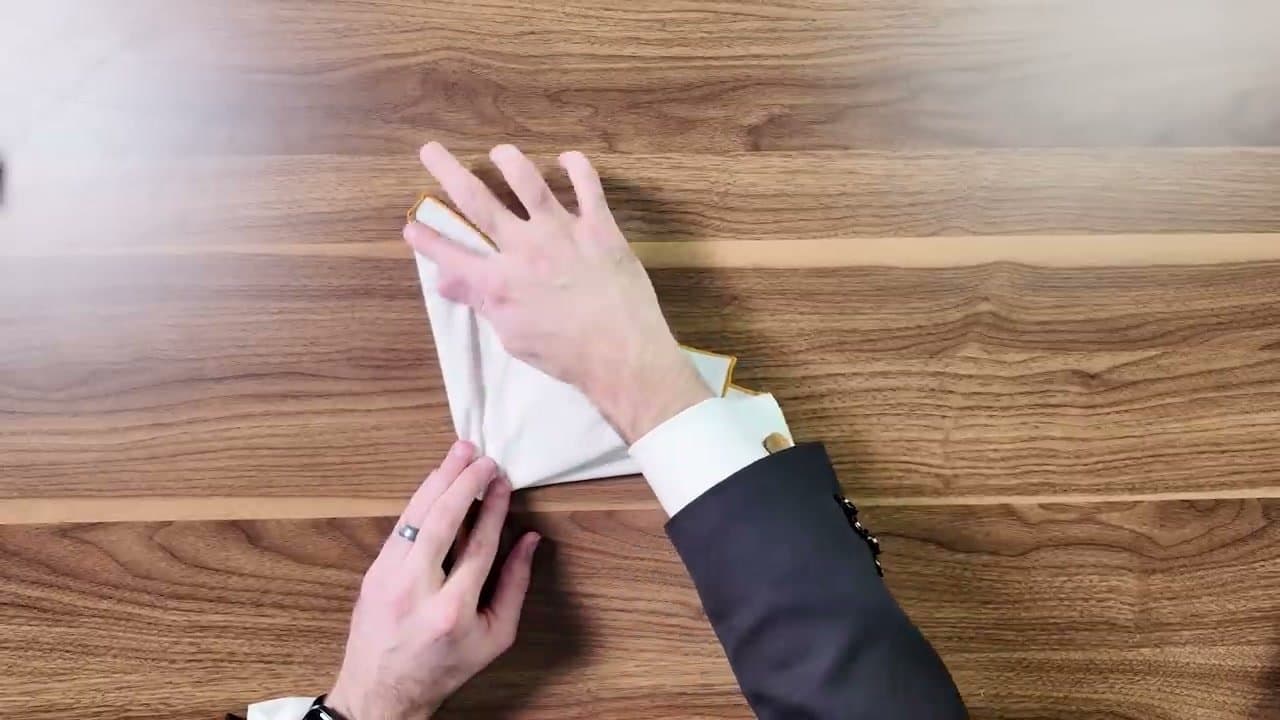
Three names, one fold: a flat bar of cloth a quarter inch above the pocket seam, nothing else. A diagram labelled straight fold or TV fold is step 2 here. The black tie answer, and the only fold where the iron matters more than your fingers.
The three stairs fold
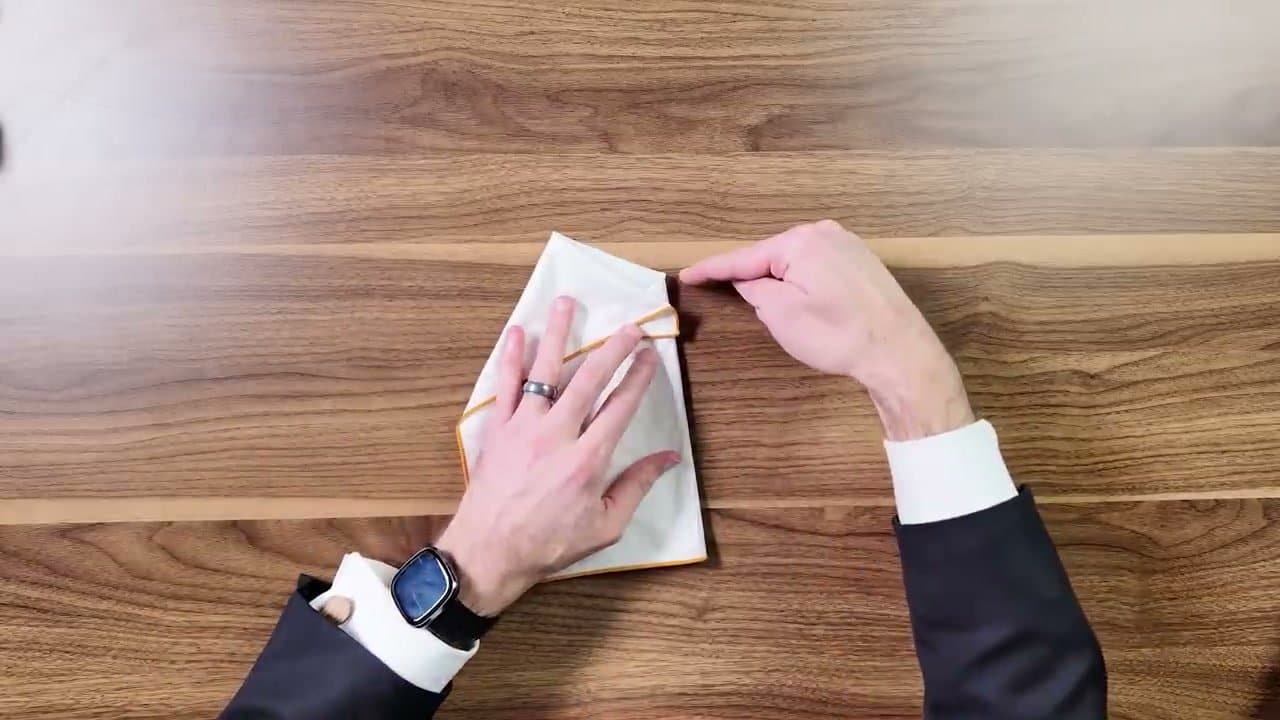
Two pleats fanned open along one side so the layers climb like steps. On the table they rise to the right; on the jacket they lean up and left with the pocket. Step 6.
Three more folds here
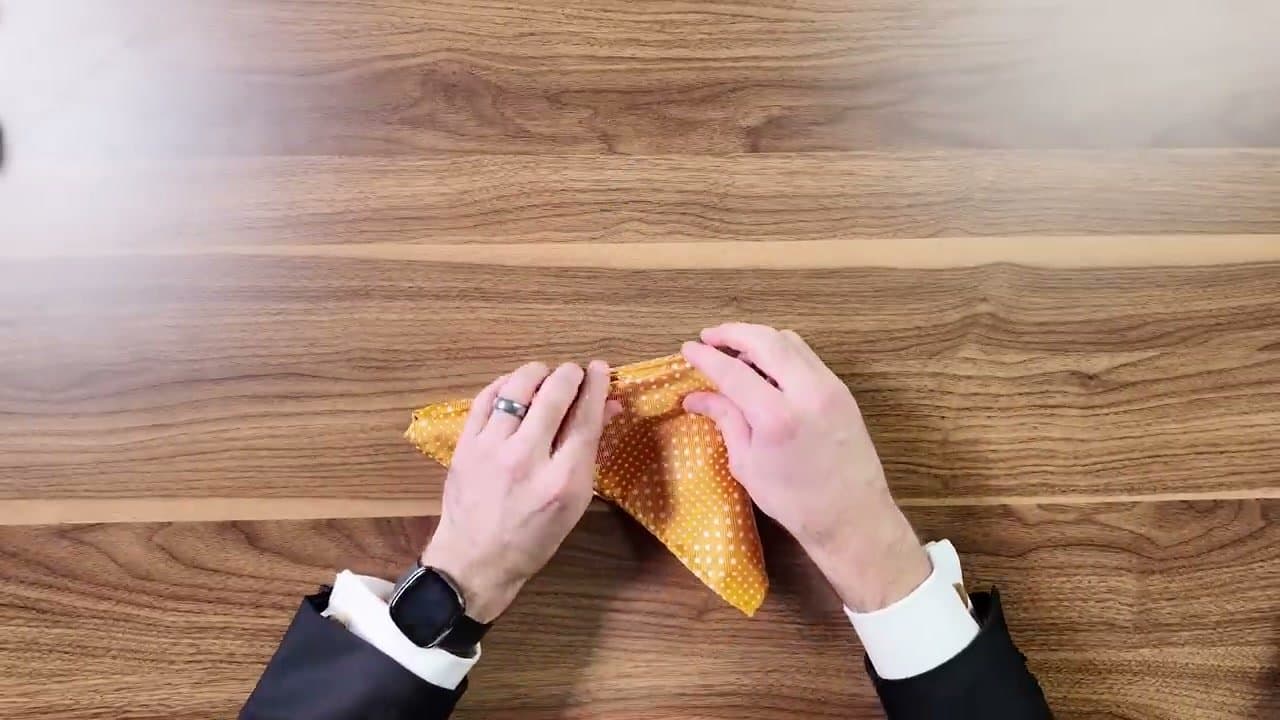
- Angled peaks - four staggered points across the top, step 4. Patterned cotton shows the layering; plain white wastes it.
- Reverse center - corners folded in, pinched and lifted so the print faces out, step 5. Wants a large silk square.
- Prophet - a presidential with a slant, step 7. The top edge leans with the pocket instead of cutting straight across.
Can you wear a pocket square without a tie?
Yes, and it is one of the better reasons to own one. An open collar under a jacket reads unfinished; a square in the breast pocket puts the detail back. Go softer than you would with a tie: a puff in a muted color, not a stark white presidential. Pattern is safer too, with no tie to clash with. If you do want the tie, a full Windsor knot fills a spread collar, and black tie means an actual bow tie.
Pocket square or handkerchief?
A handkerchief is for your nose and lives in a trouser pocket. A pocket square is for your jacket and never touches your face. Once one goes in the breast pocket, that is its job for the night. Handkerchiefs also run bigger and hem heavier, which fights the flat folds.
Common mistakes
Too much fabric showing. A quarter to a half inch for flat folds, closer to an inch for the puff. Past that, the square wears you.
Folding to the wrong depth. Measure the pocket once - most run five to six inches - and fold up to that height. If it still slides out of sight by dessert, fold the bottom edge into a shallow V so the points catch the lining.
A crease you cannot get out. Silk does not want a hot iron: low heat with a pressing cloth, or hang it in a steamy bathroom. Cotton takes all the heat you have, which is why the presidential is a cotton fold. Same habits as when you iron a dress shirt.
Travel crush. Press it flat and slip it inside a folded dress shirt. Loose in a suitcase corner it arrives as a ball, so give it a minute while packing the suitcase.