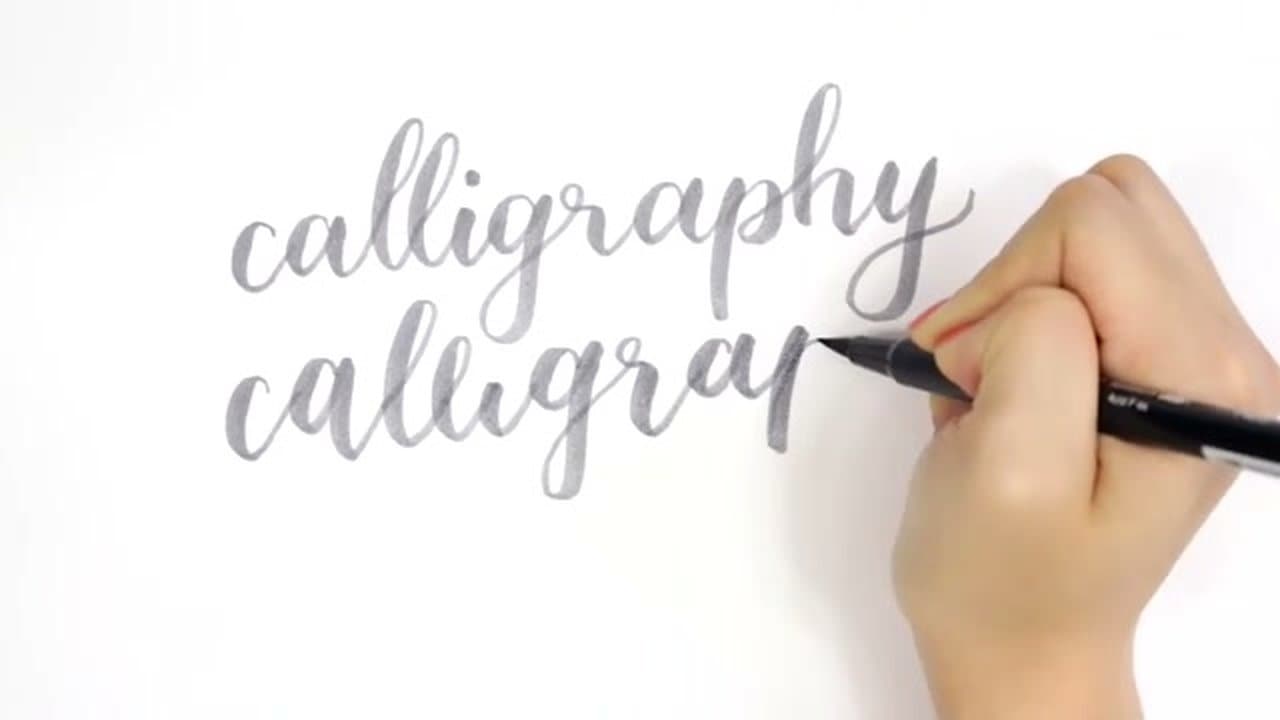
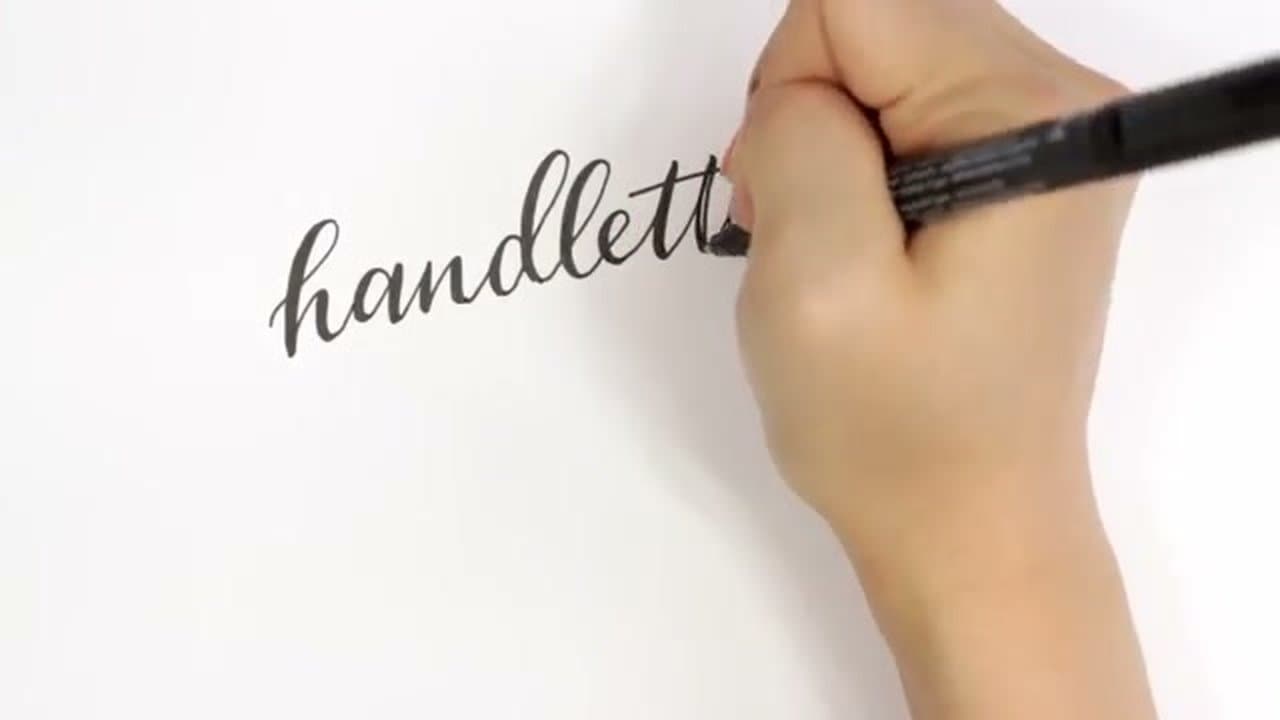
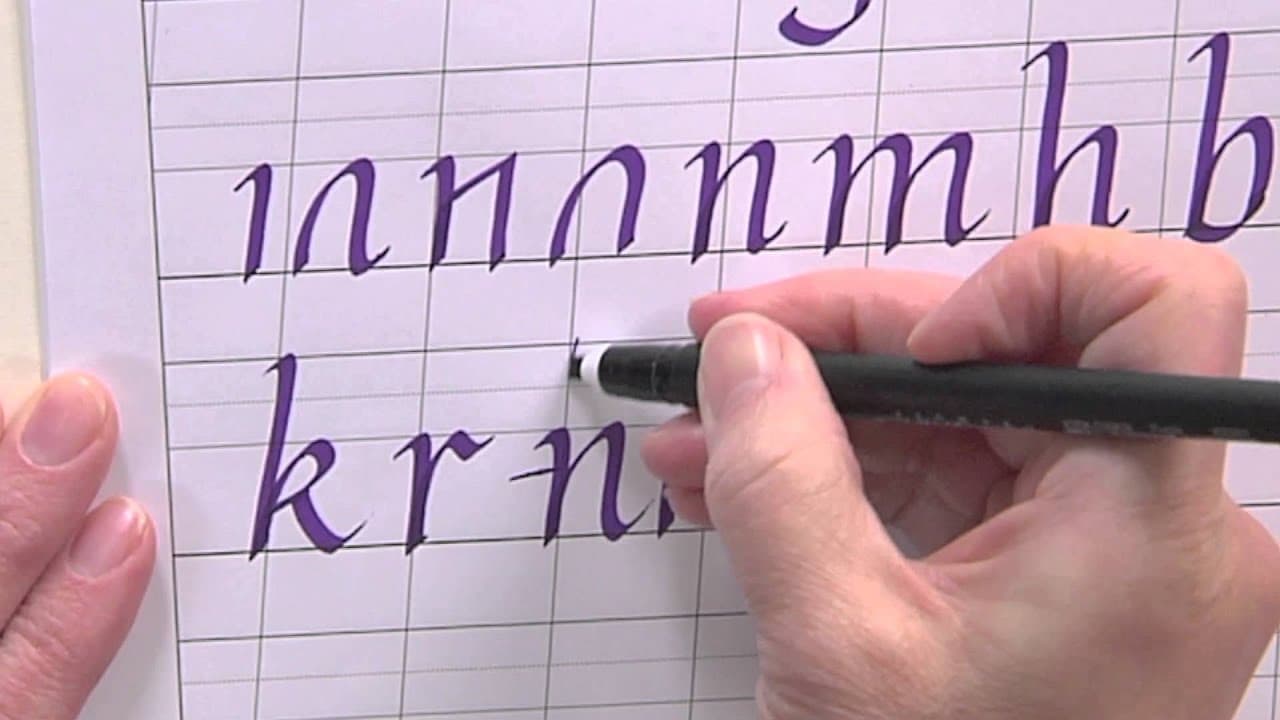
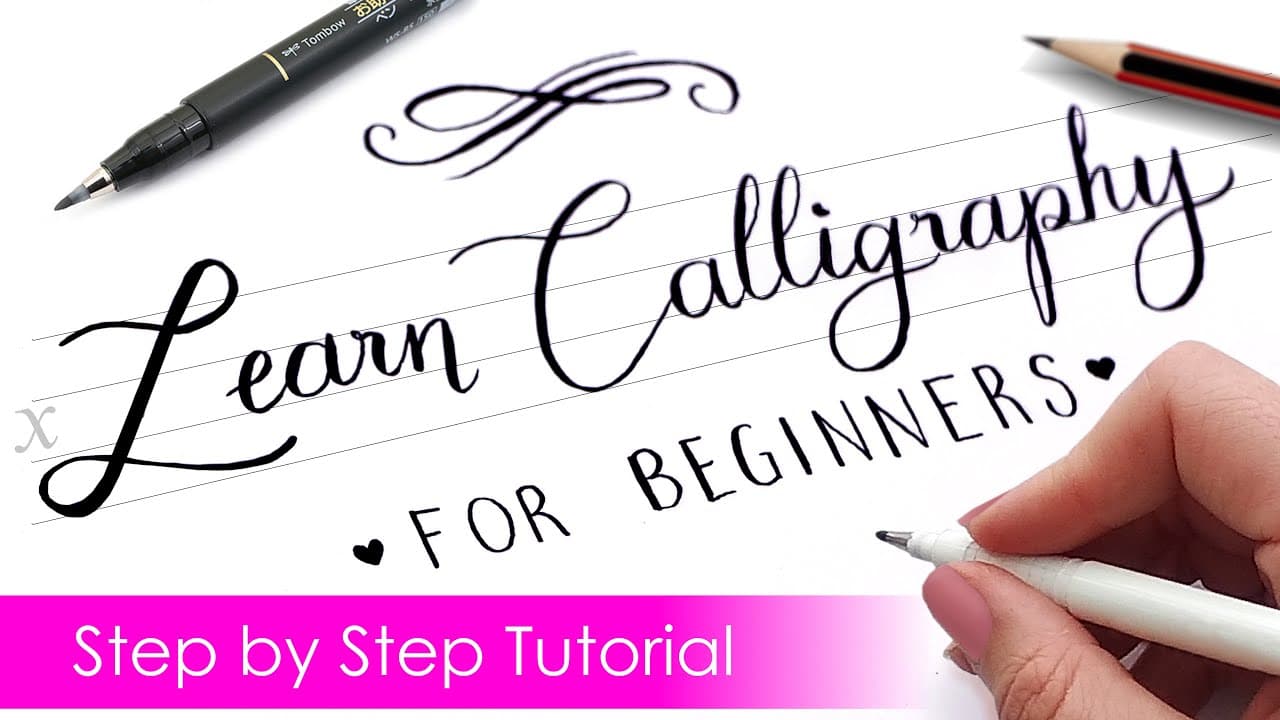
Modern calligraphy isn't traditional pointed-pen work. It's brush lettering - softer, more forgiving, and what most people picture when they search for it. A brush pen does the job the dip pen and ink pot used to.
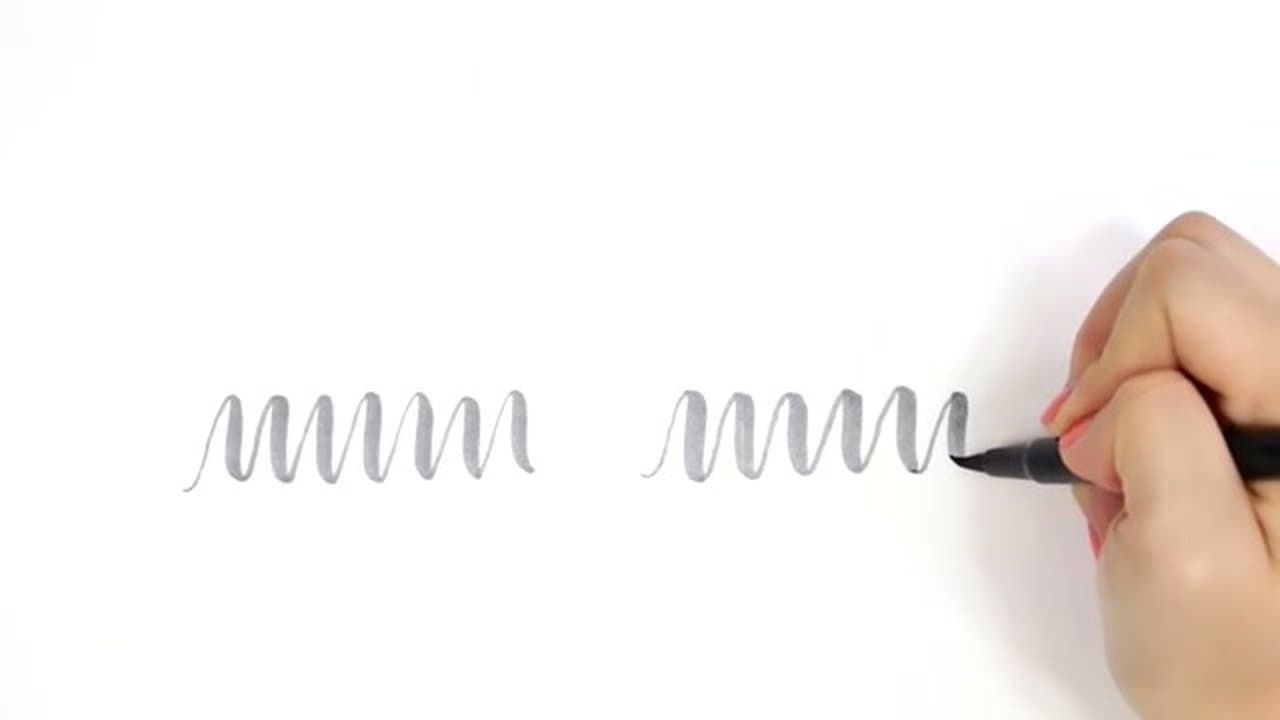
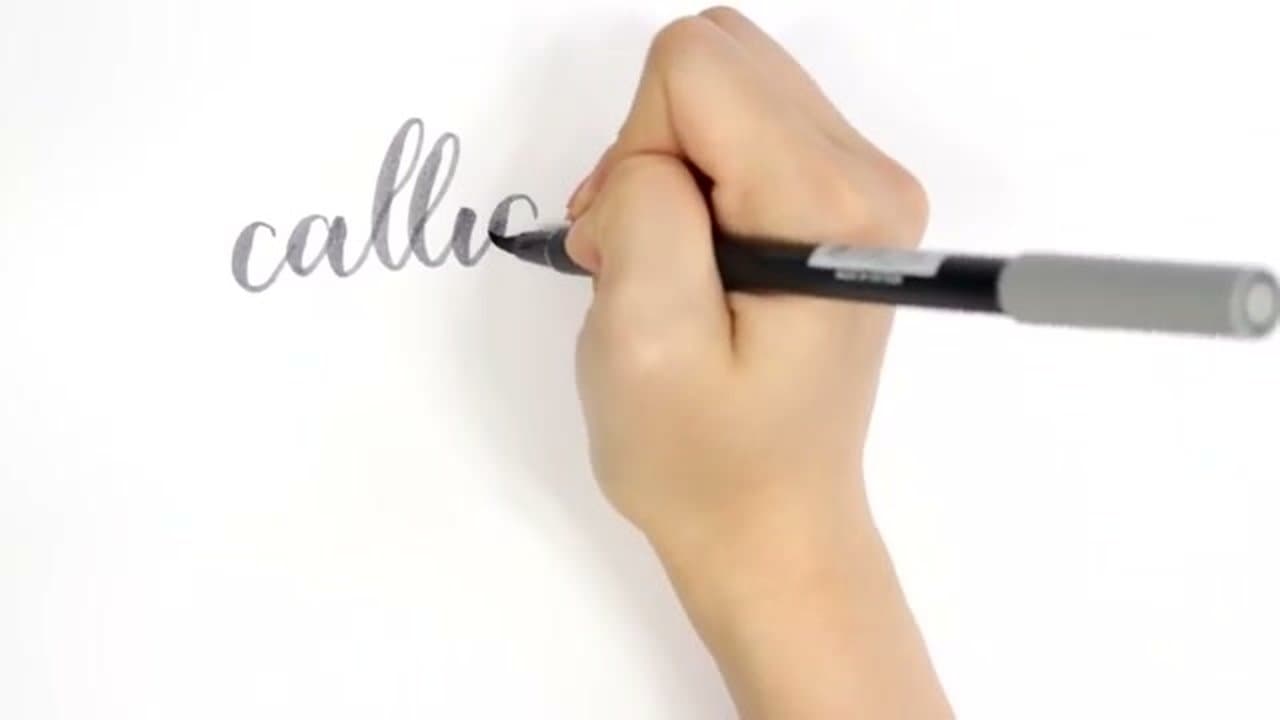
The technique reduces to one rule: light pressure on every upstroke, heavy pressure on every downstroke. That thin/thick contrast is what makes writing read as calligraphy rather than cursive. Ten minutes a day and it clicks inside a week.
What you need
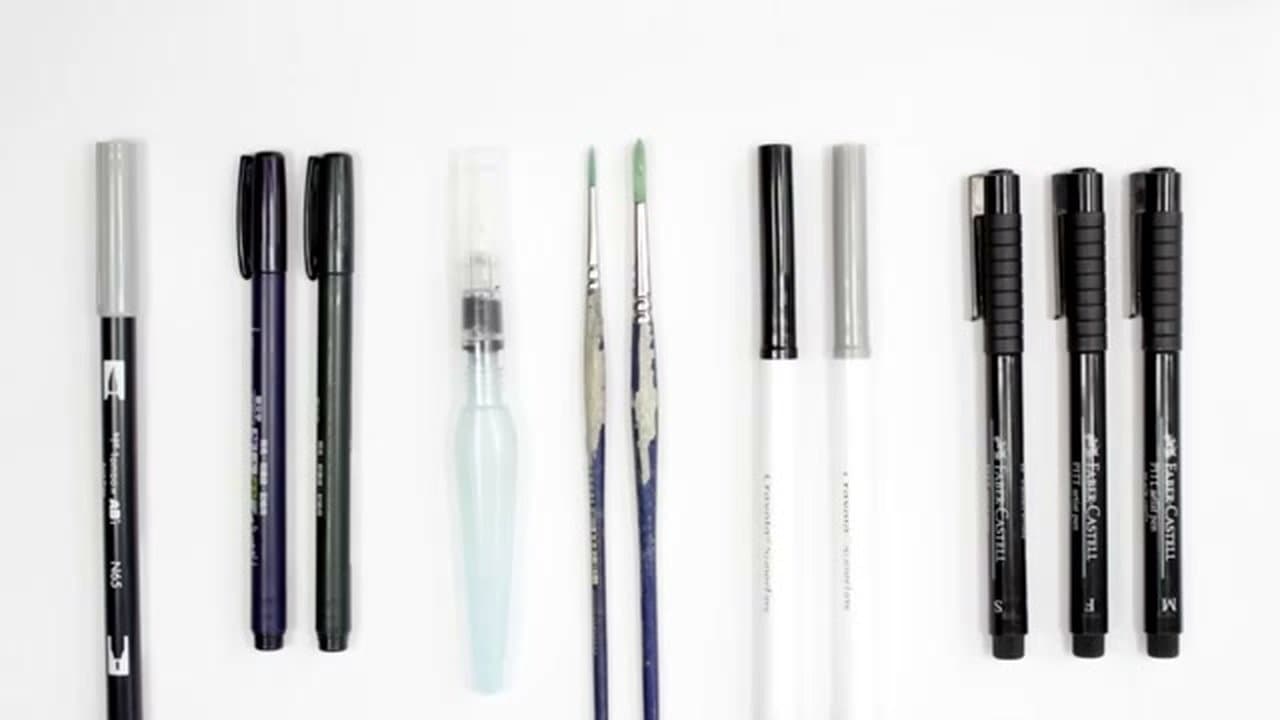
- One brush pen. Tombow Dual Brush for large writing, Fudenosuke for small.
- Smooth paper. Printer paper for drills, marker paper for keepers.
- A fine liner, for the faux method before you buy a brush pen.
- Pencil and ruler for guidelines.
Working through the calligraphy alphabet
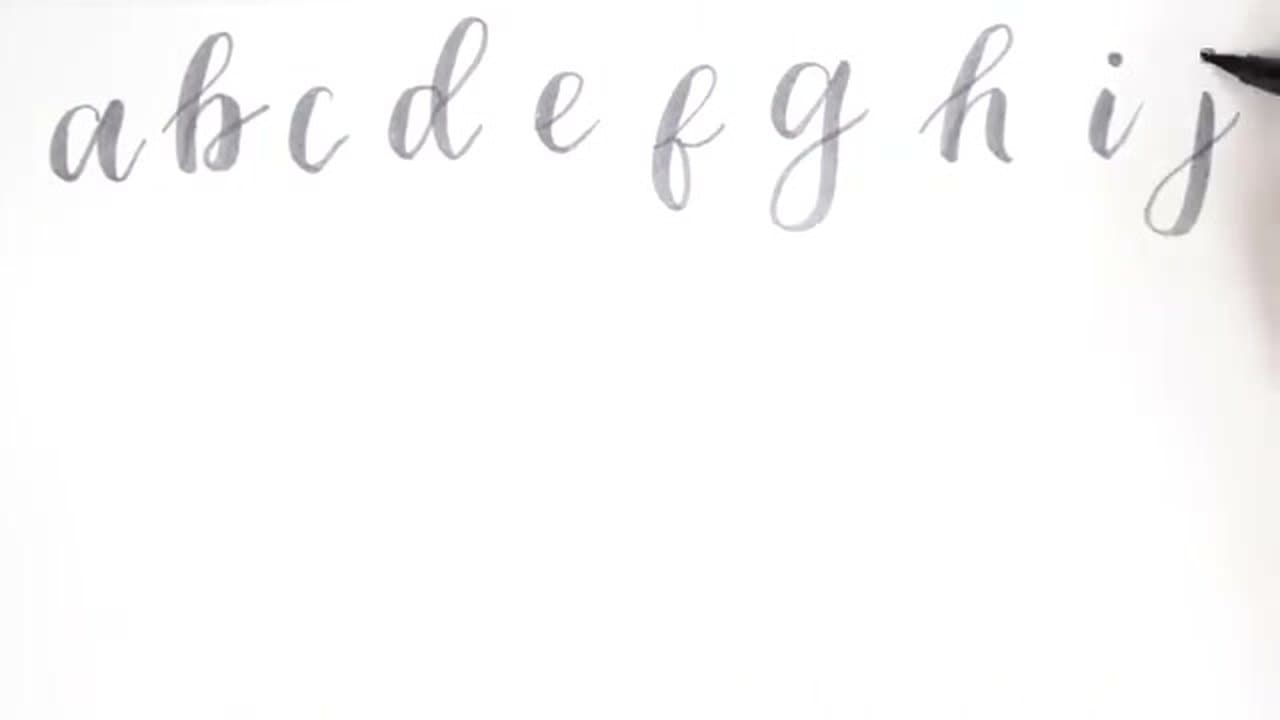
Grinding the calligraphy alphabet A to Z is the slow way round. The lowercase letters come out of a few repeated shapes - learn one and you pick up a whole group.
- Ovals - a, c, d, g, o, q. All open with the same round downstroke. Get it consistent and six letters land at once.
- Underturns - i, u, w, t. Thick down, curve at the bottom, thin back up.
- Overturns - m, n, v, y. Thin up, arch over, thick down.
- Loops - b, f, h, k, l. The upper line letters, climbing past the x-height to the top guide. Keep them one width or the word goes lopsided.
- Loners - e, r, s, z, x, p. Nothing to group them with. Drill them alone.
The s causes most of the grief: its spine changes direction mid-stroke, so pressure comes off and back on inside one movement. Capitals come last.
Calligraphy versus hand lettering
The two get swapped constantly and they are different crafts. Calligraphy is written: a letter comes out of one stroke, and the thick parts exist because you leaned on the pen while it moved. Hand lettering is drawn: you outline the letter and fill it in. The steps here teach the written kind; step 7 crosses into lettering on purpose, covered on its own at faux calligraphy.
Dip pen, brush pen, or the marker in your drawer
A pointed dip pen gives the finest hairlines and fights you for them - the nib catches on upstrokes and you dip every few words. Good for the classical look, wrong as a starter. A brush pen gets the same contrast with none of the mess, and every step below uses one. More on tips in brush pen calligraphy. A rounded-tip marker works too, and plenty of people learn on Crayola Super Tips.
The basic strokes
Drill strokes before letters: entrance stroke, full-pressure downstroke, underturn, overturn, compound curve, oval, ascending loop, descending loop. The transition is the whole game - pressure changes while the pen is moving. Early writing goes wrong when the hand slams down at the top of a downstroke and lets go at the bottom - a blunt club instead of a taper.
Italic handwriting style is the hand most people learn first, since the pen angle never changes. Learning calligraphy has a longer practice plan, and writing in cursive sharpens the joins.
When it goes wrong
- Ink feathers. Toothy stock wicks ink sideways. Move to smooth marker paper.
- The tip scratches going up. Too much pressure, or the pen is too upright. Drop it nearer 45 degrees.
- Shaky lines. A tight grip tires the hand fast. Loosen off and slow through the bends.
- The slant drifts. Rule faint pencil slant lines and erase them once the ink is dry.
Credit to AmandaRachLee for the source video.