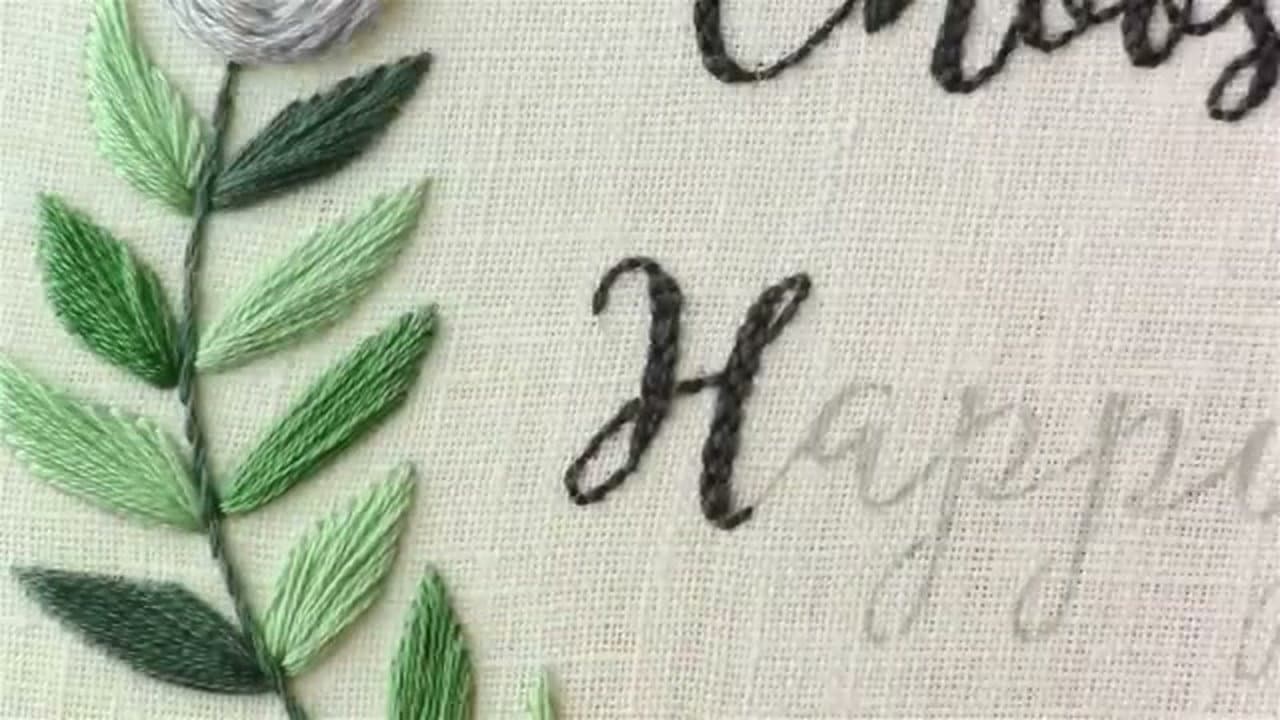
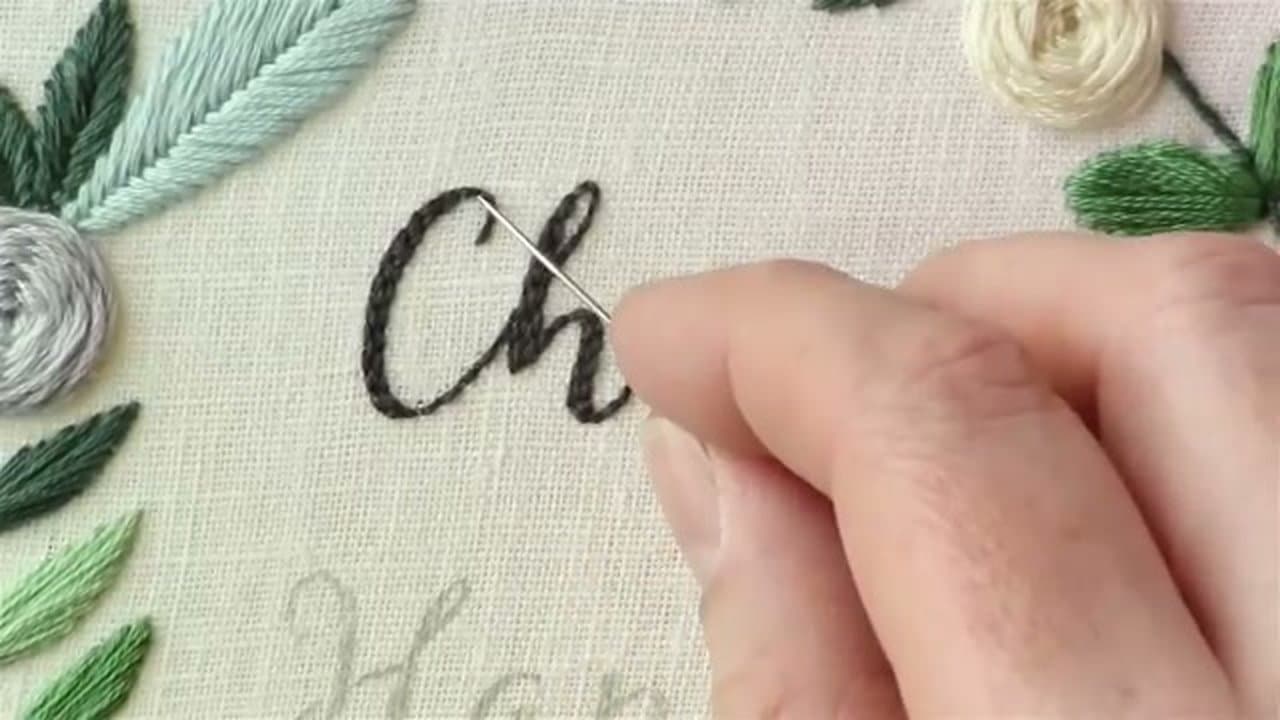
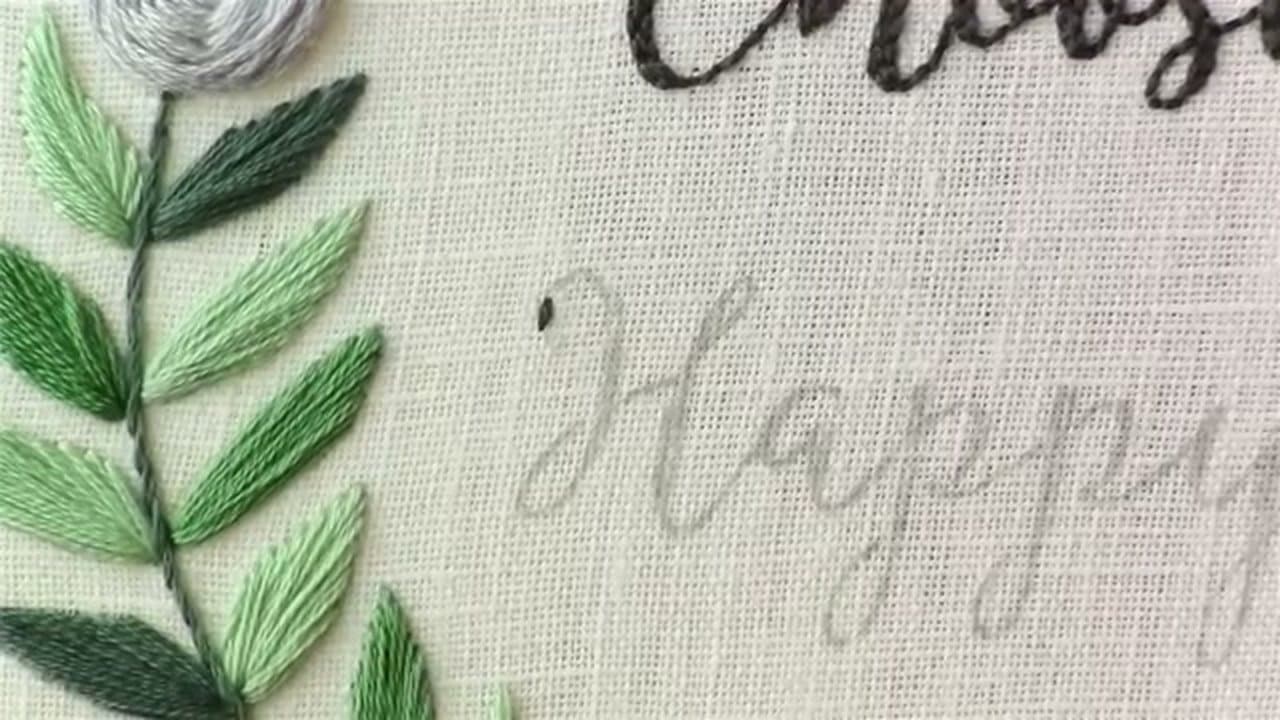
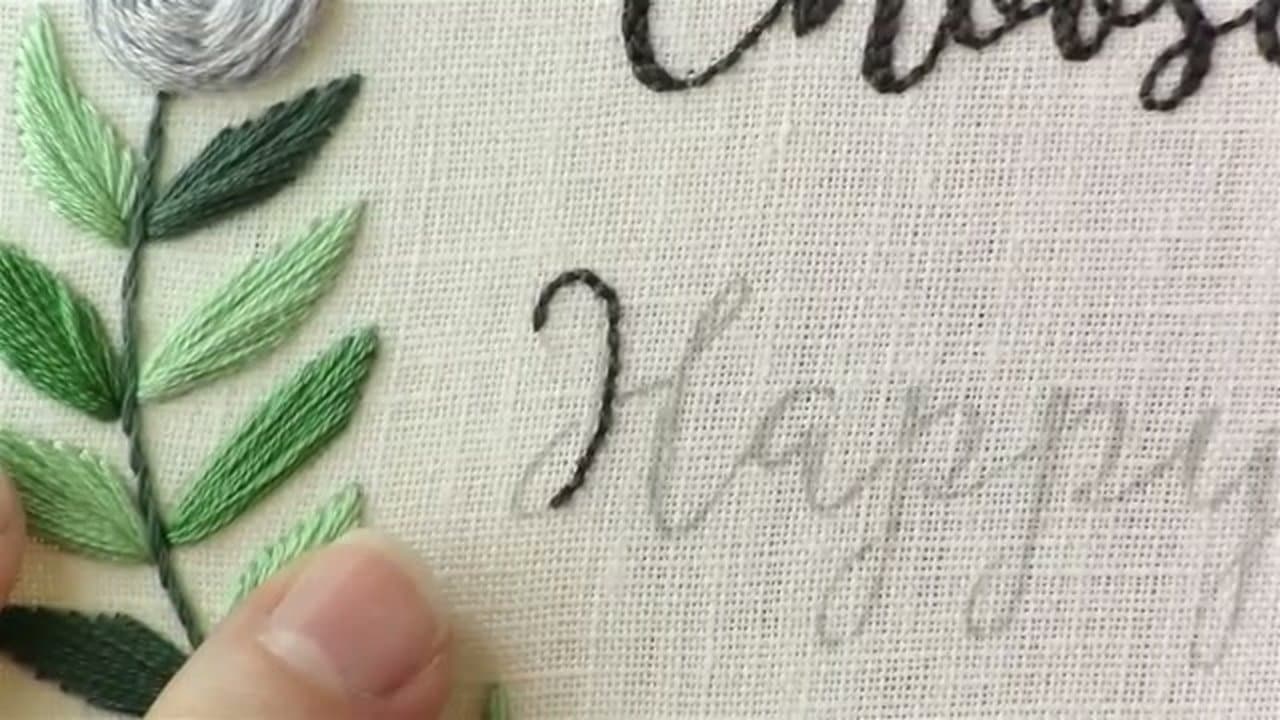
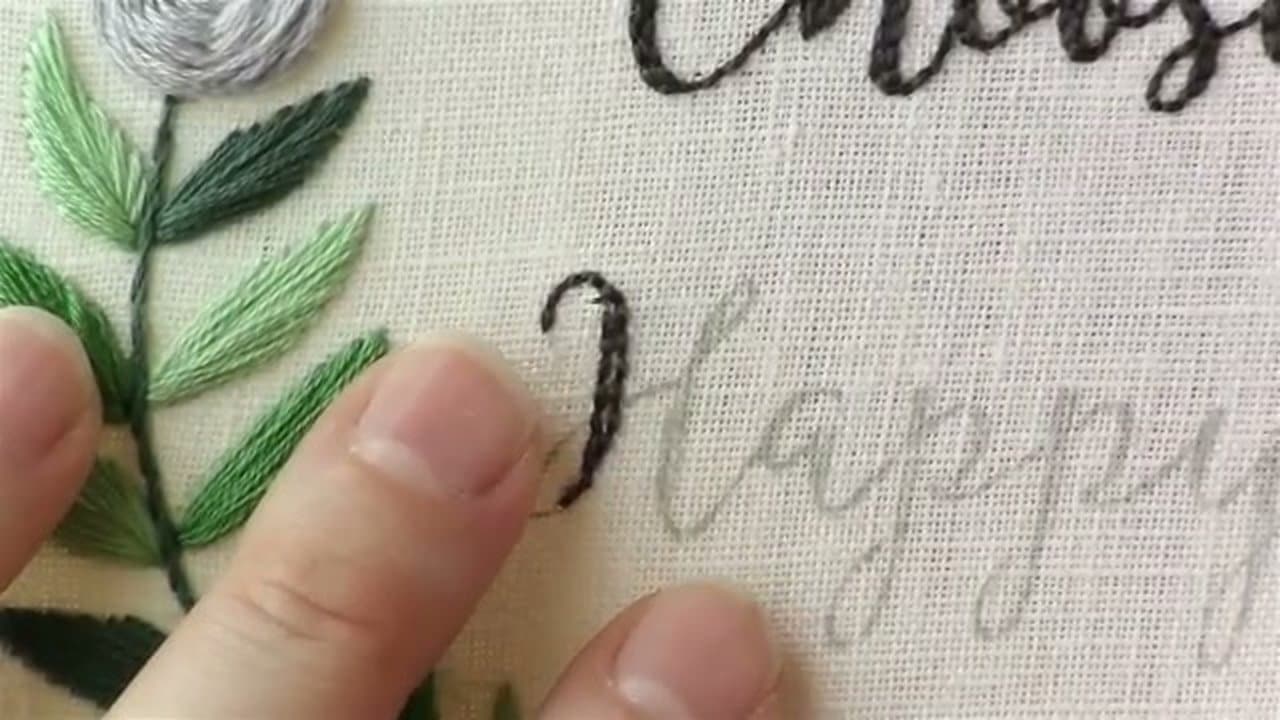
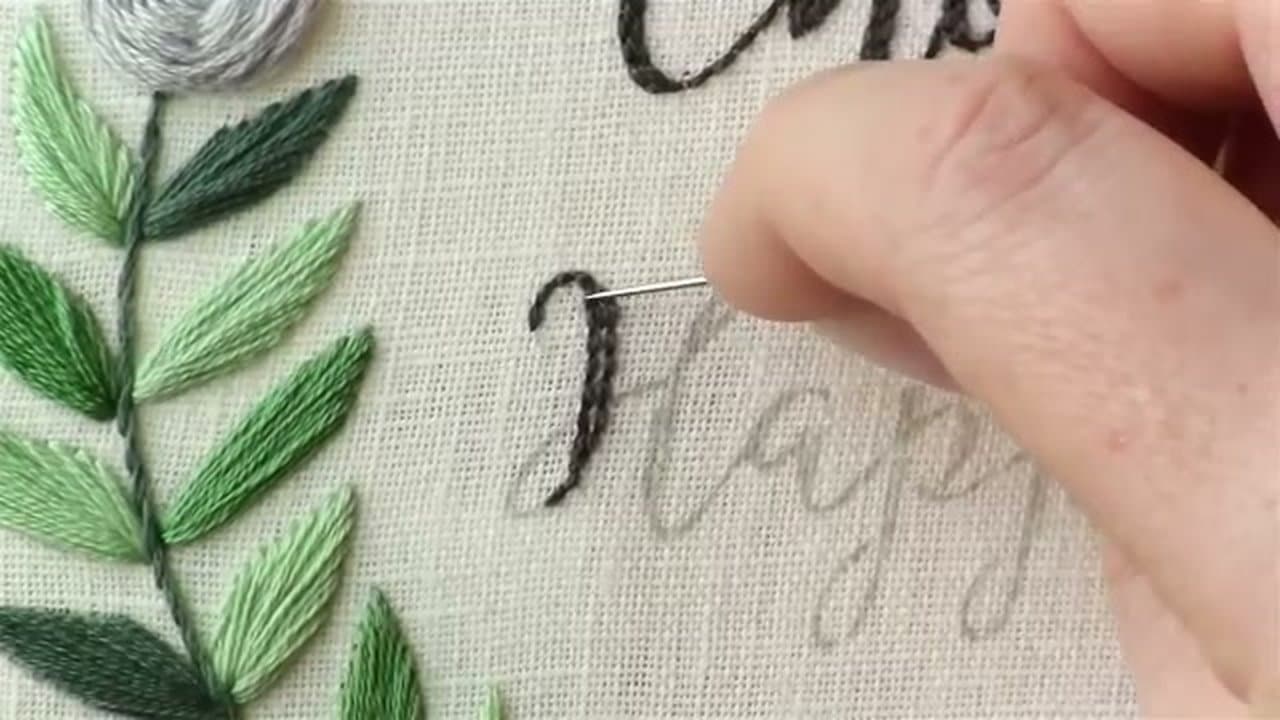
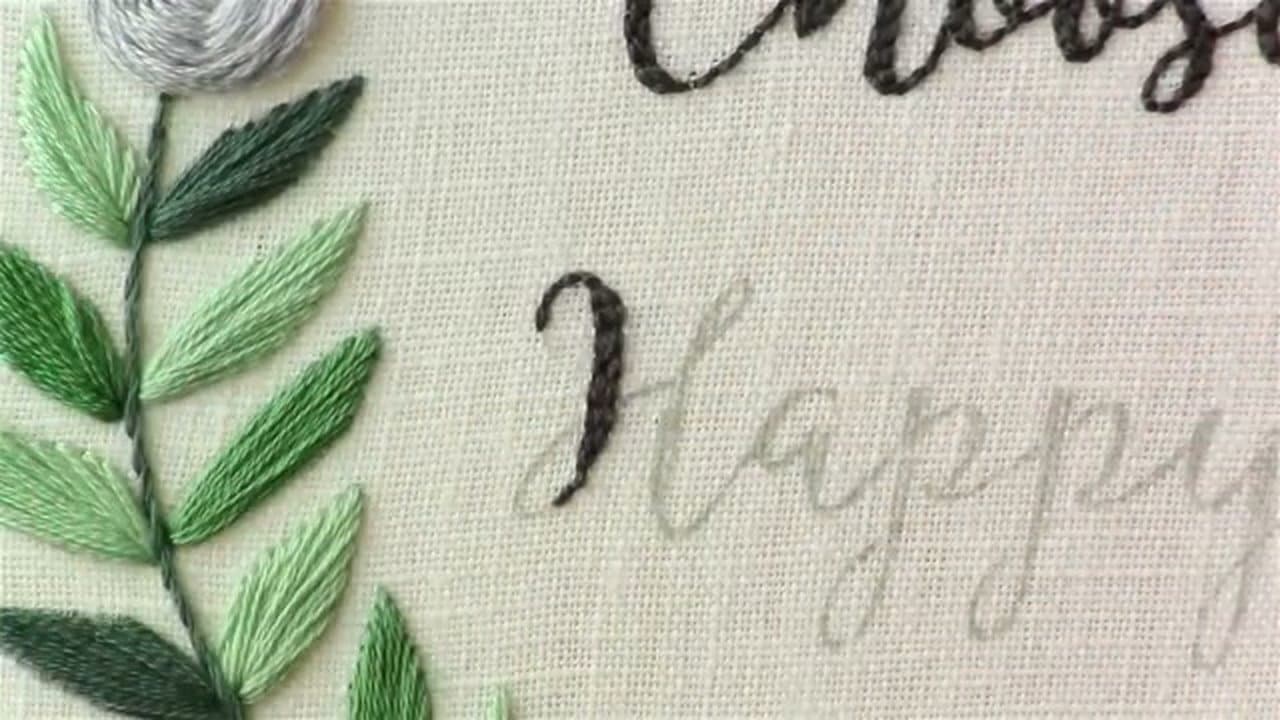
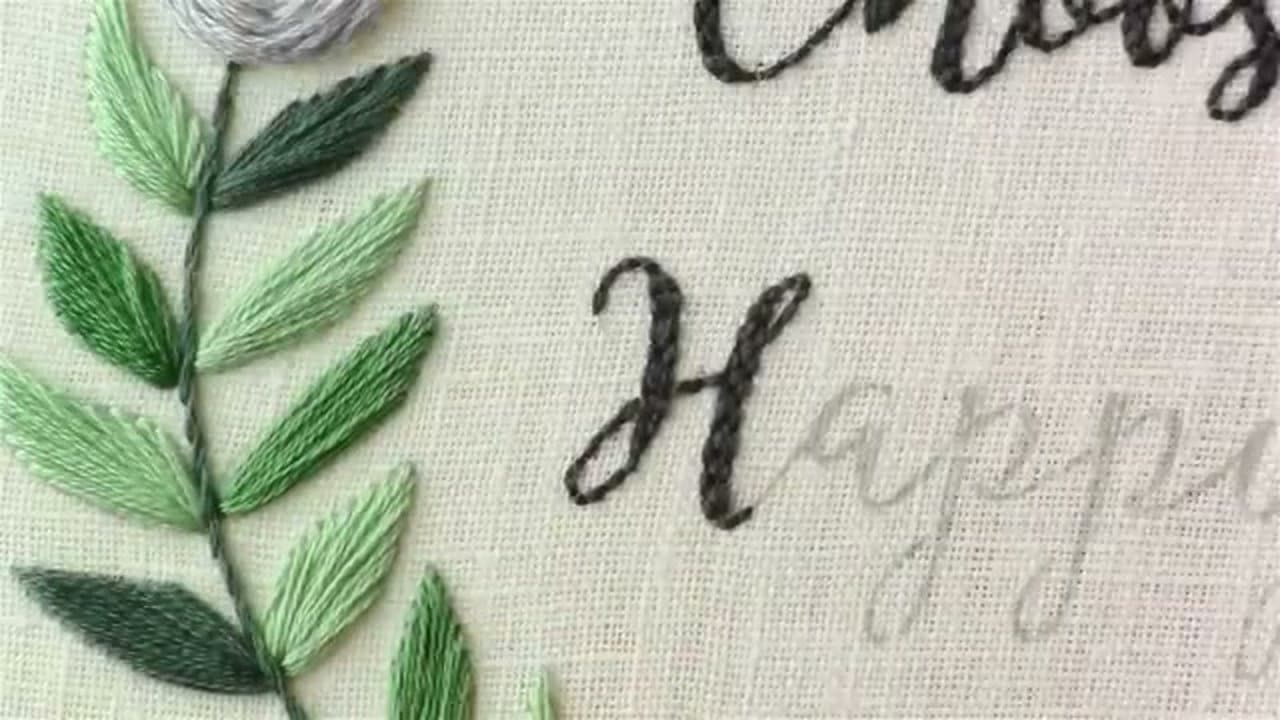
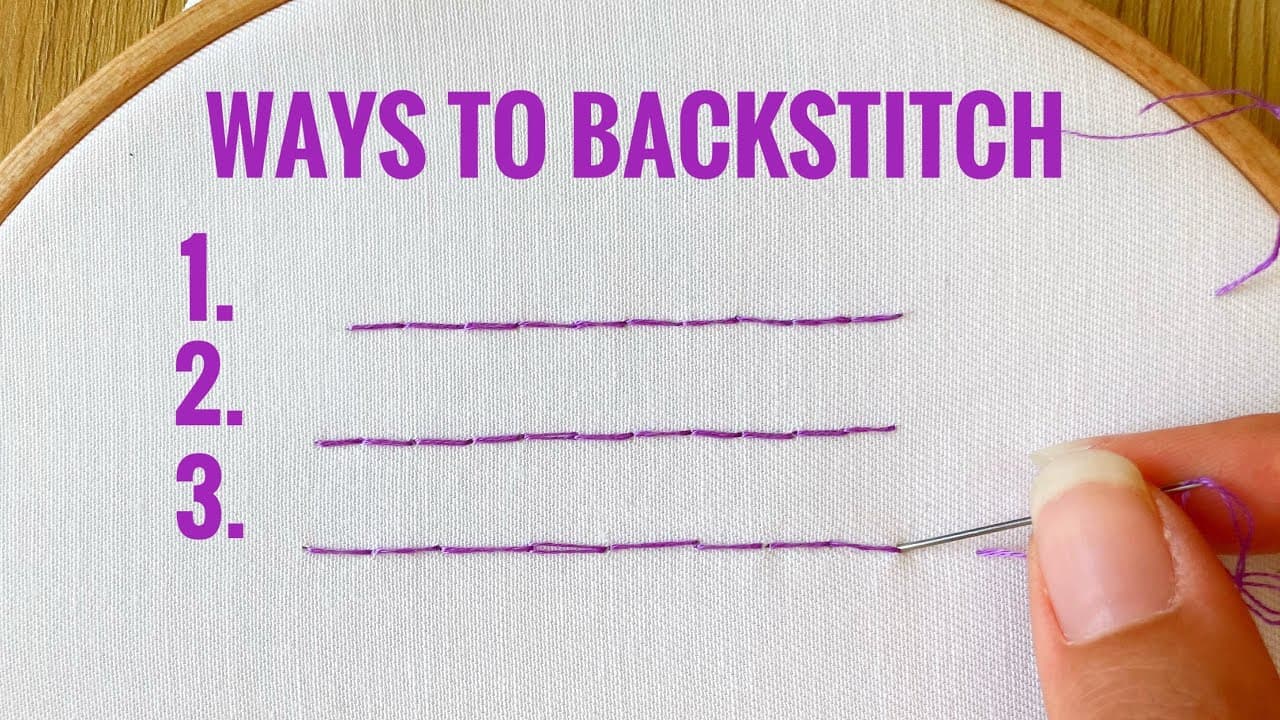
Script fonts with thick and thin strokes are everywhere on Pinterest right now - and they're easier to embroider than they look. The trick is one stitch (the backstitch) used three different ways: a single line for thin parts, two parallel lines that outline the thick parts, and a third row down the middle to fill them in.
Jessica from Cutesy Crafts demonstrates on a Choose Happy hoop with greenery already finished around the letters. She uses three strands of dark embroidery floss on natural linen, but the technique works with any color combination on any fabric weight you can hoop.
The lettering takes longer than the rest of the design - budget about an hour for a short word like Happy and double that for a longer phrase. Trace the letters lightly in pencil or use heat-erase pen so the marks disappear when you're done.
Getting the letters onto the fabric
Type the word in a script font, print it at the size you want, and pick one of three ways to move it across:
- Light box or window. Tape the printout behind light-colored fabric and trace with a heat-erase or water-soluble pen.
- Water-soluble pen on top. Good on thin cotton and linen. The lines rinse out in cold water once you finish.
- Printable stabilizer. Print straight onto the sheet, stick it to dark or thick fabric, stitch through it, then soak it away.
More detail on each method is in how to transfer an embroidery pattern.
How many strands of floss
Standard floss is six strands twisted together. Separate them and recombine the number you need. Two or three strands suit script lettering in a 5-6 inch hoop - fine enough for tight curves, thick enough to cover. Block letters and larger words can take four to six. Fewer strands means more stitches, but crisper letters.
Stitch length on curves
This is where most lettering goes bumpy. On a straight stroke a stitch of about 1/8 inch looks fine. On the tight loop of an e or the bowl of an a, cut that in half. Short stitches bend around a curve. Long ones cut a corner and leave a flat spot you can see from across the room.
If you are new to the stitch itself, practice a row in how to backstitch before you start on the real word.
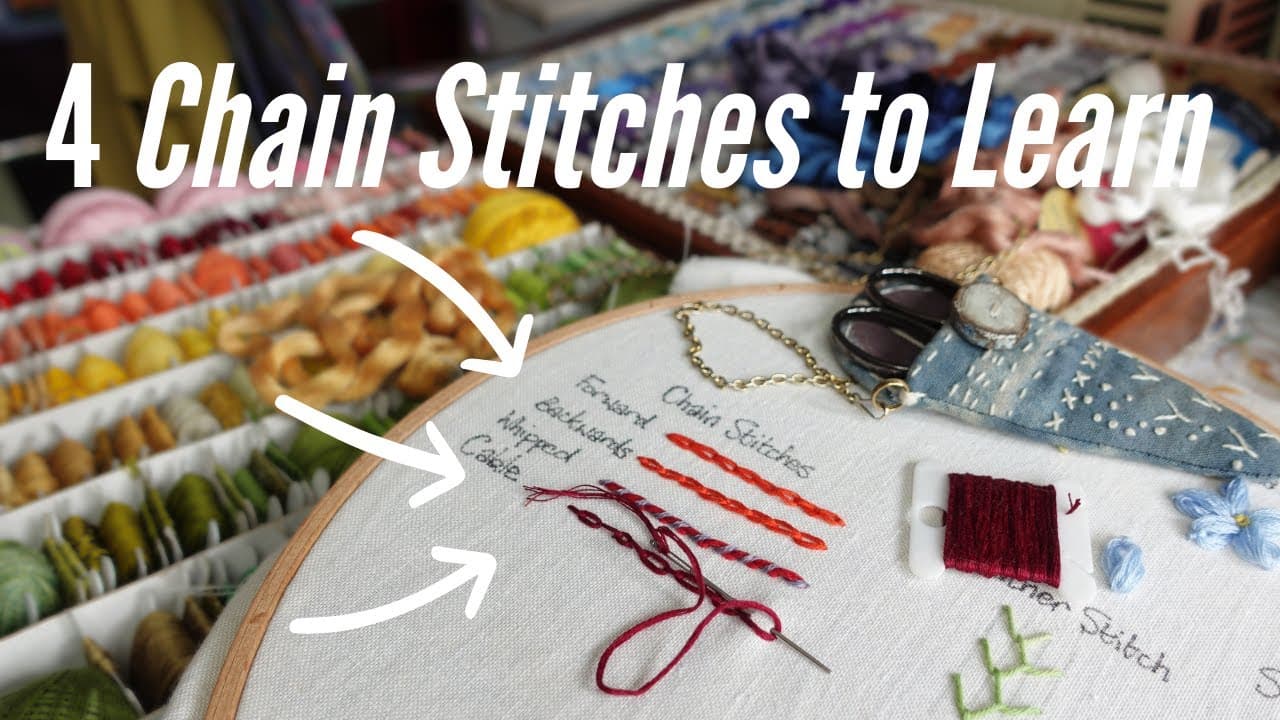
Other stitches for lettering
- Split stitch - a rope-like line, good for thin strokes that need a little weight.
- Stem stitch - a twisted line that flows around curves.
- Satin stitch - solid fill for block letters and monograms. See how to do a satin stitch.
The outline-and-fill backstitch on this page gives a thick stroke a satin look without the long floats that snag.
Keeping the back neat
Light fabric shows everything behind it. A dark thread jumping from the end of one letter to the start of the next becomes a gray shadow across the front. Travel under existing stitches on the back, and when a gap is wider than about half an inch, tie off and start again.
Common mistakes
- Loose fabric. If the hoop is not drum-tight, stitches pucker and letters lean.
- Pulling too hard. Tight stitches drag the fabric and thin the line.
- Ink that will not leave. Test your pen on a scrap first. Some heat-erase marks come back in the cold.
Name and monogram gift ideas
A first name in a 4 inch hoop, a single initial with a sprig of greenery, or a short phrase on a tea towel all work up in an evening or two. That makes lettering a good December project for teachers, grandparents and new babies.