How to Embroider a French Knot: 6 Step Beginner Tutorial

By ShowMeStepByStepPublished Updated

Based on a video by Mary Corbet.

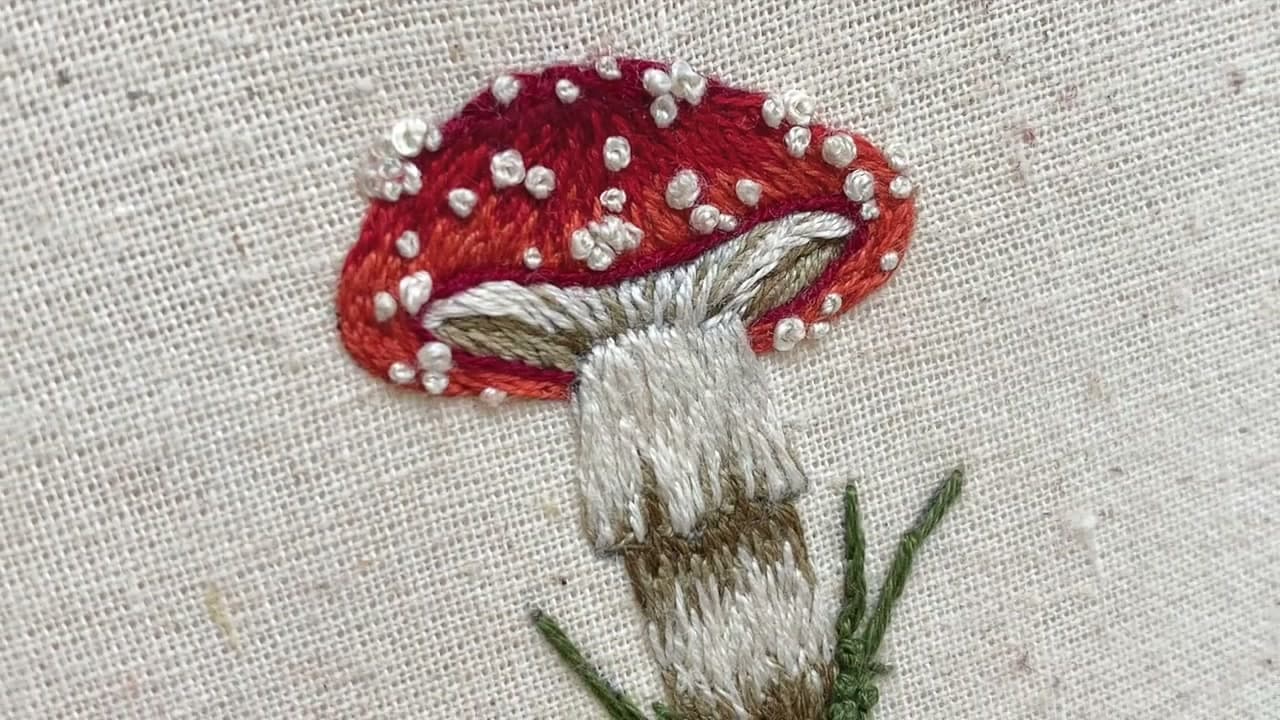
The French knot is the embroidery stitch that beginners struggle with the most and that experienced stitchers use the most. It looks like a tiny bead sitting on the fabric - perfect for the centers of flowers, scattered texture, lettering accents, or anywhere you want a small dot of color and dimension.

This walkthrough from Mary Corbet at Needle 'n Thread breaks the knot into six clean steps. The single biggest reason French knots fail for beginners is the wrong needle - she explains why a milliner needle (also called a straw needle) makes the technique work where a regular embroidery needle fights you.

Step-by-Step Guide

1

Step 1: Use a Milliner Needle, Not an Embroidery Needle

0:14
Step 1: Step 1: Use a Milliner Needle, Not an Embroidery Needle

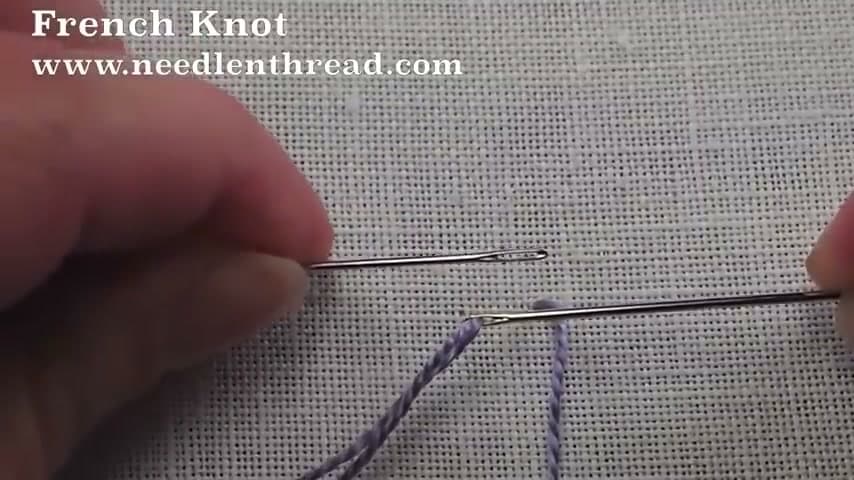
The needle matters more than any other tool for French knots. Use a milliner needle (also sold as a straw needle) - the shaft is the same width as the eye, so the needle slides through the wrapped thread without catching.

A regular embroidery needle has a longer, wider eye that bulges out from the shaft. That bulge snags on the wraps when you try to pull through, which is why beginners' knots fall apart or never form. Milliner needles solve the problem in one step.

2

Step 2: Bring the Working Thread to the Front

0:38
Step 2: Step 2: Bring the Working Thread to the Front

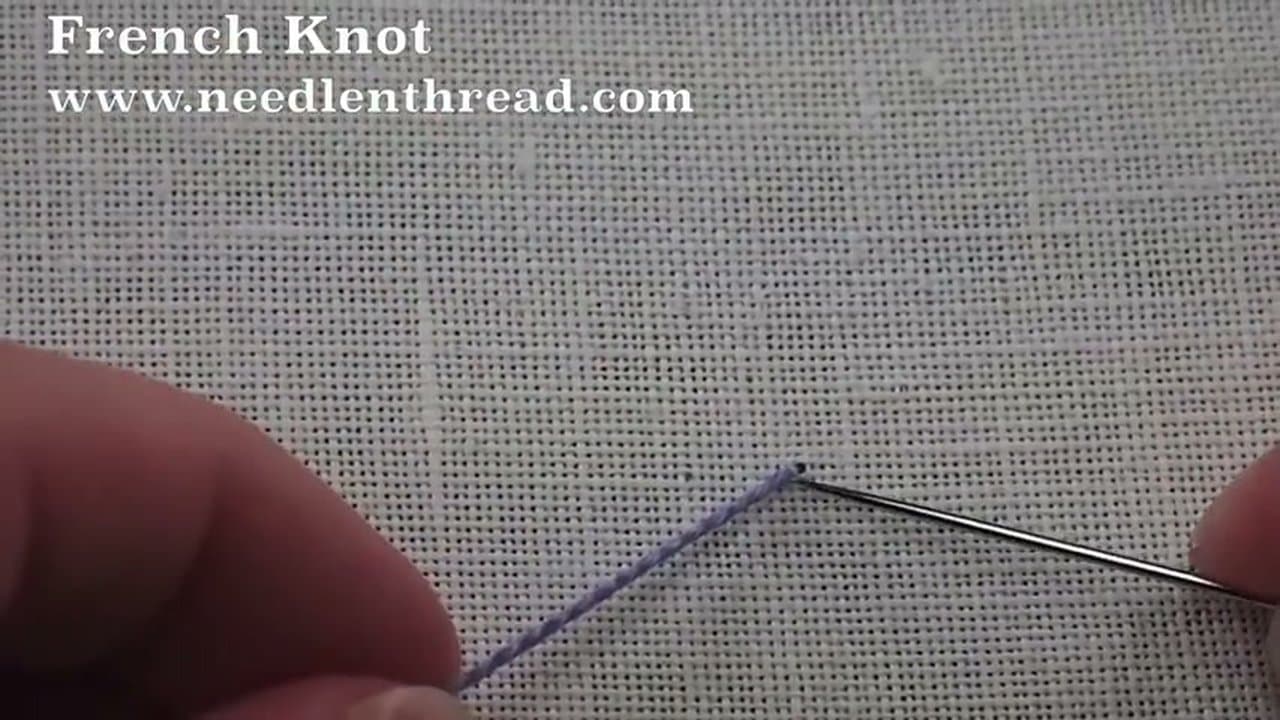
Bring your threaded needle up through the fabric where you want the knot to sit. Pull all the slack through so the working thread is taut against the back of the fabric.

Hold the thread between the thumb and forefinger of your non-stitching hand a couple of inches from where it exits the fabric. You'll keep this hand on the thread the whole time - tension is what makes the knot form cleanly.

3

Step 3: Wrap the Thread Around the Needle Twice

0:46
Step 3: Step 3: Wrap the Thread Around the Needle Twice

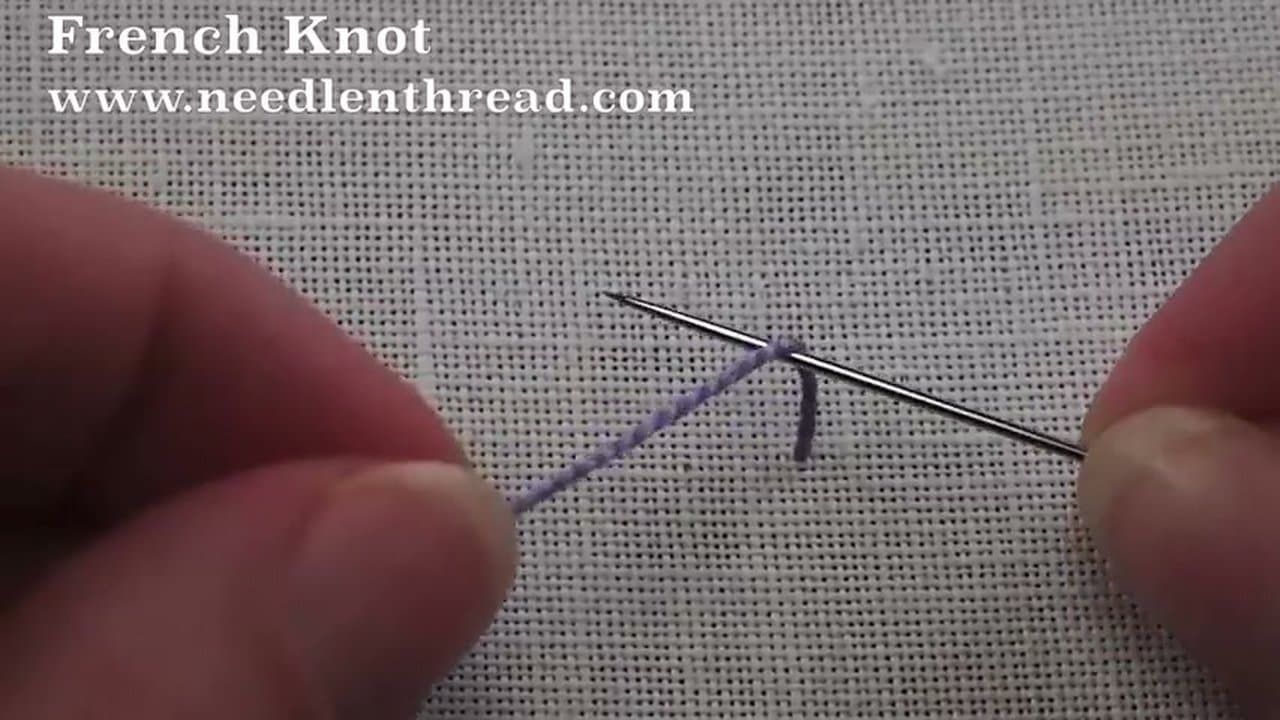
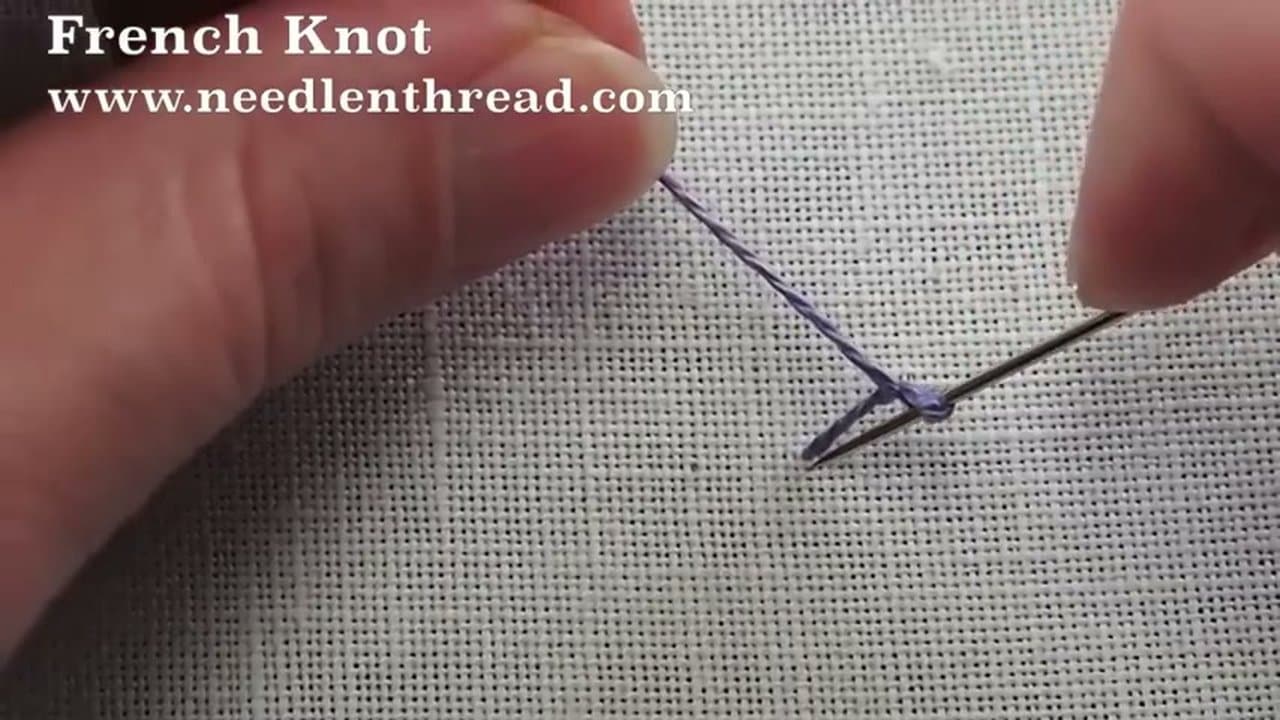
Lay the needle horizontally against the working thread, then wrap the thread around the needle two full times. Two wraps gives a knot about the size of a small bead - plenty for most projects.

One wrap makes a tiny knot that can pull through the fabric. Three or more wraps makes a sloppy floppy knot. Two is the sweet spot for almost everything.

4

Step 4: Insert the Needle Next to the Exit Point

0:51
Step 4: Step 4: Insert the Needle Next to the Exit Point

Take the tip of the needle down into the fabric right next to where the working thread came up - close, but not in the same hole. A few fabric threads' worth of distance is enough.

This is the most common French knot mistake. If you go down in the same hole, the knot pulls right through to the back as you tighten. Going next to the exit point gives the knot a tiny bridge of fabric to sit on top of.

Products used in this step

5

Step 5: Hold Light Tension and Pull the Needle Through

1:00
Step 5: Step 5: Hold Light Tension and Pull the Needle Through

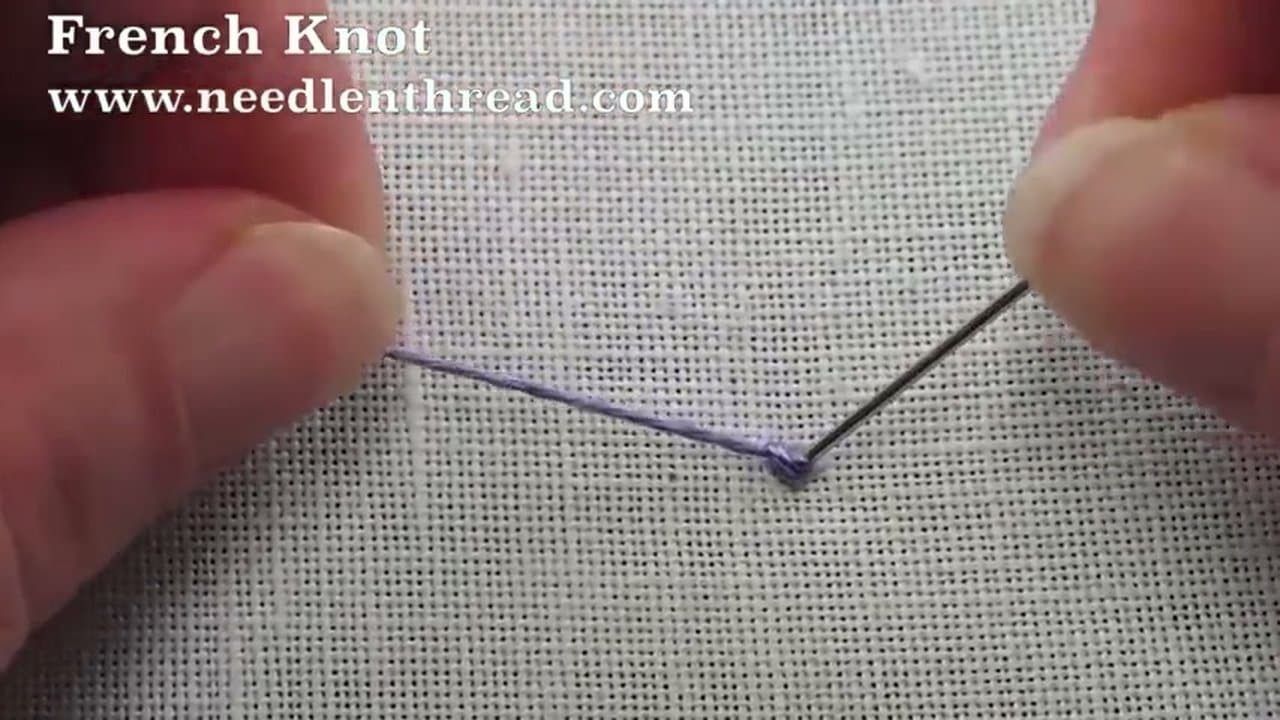
With your non-stitching hand still holding the working thread, pull the needle through the fabric and through the wraps. Keep just enough tension on the working thread to hold the knot's shape - don't yank.

Too much tension chokes the wraps onto the needle and the needle won't pass through. Too little and the wraps unspool. Light steady tension is the goal - the knot should stay neat as the needle pulls through it.

Products used in this step

6

Step 6: Release the Thread as It Settles

1:45
Step 6: Step 6: Release the Thread as It Settles

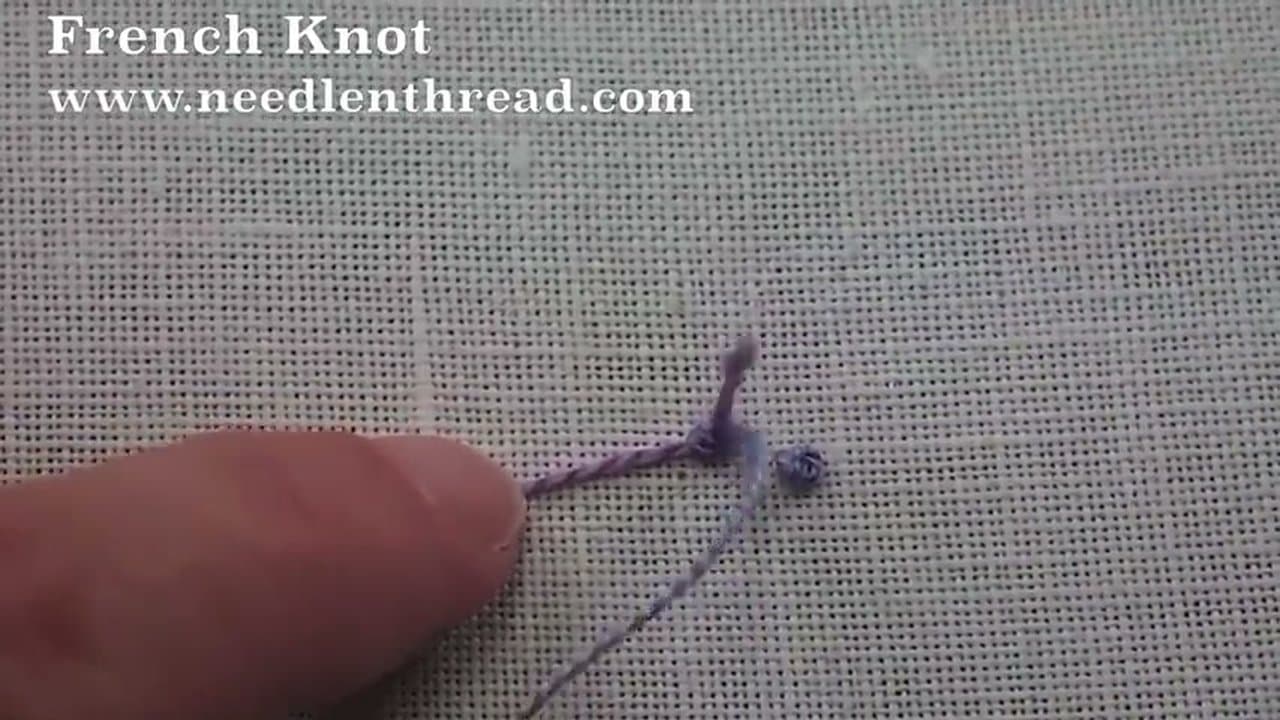
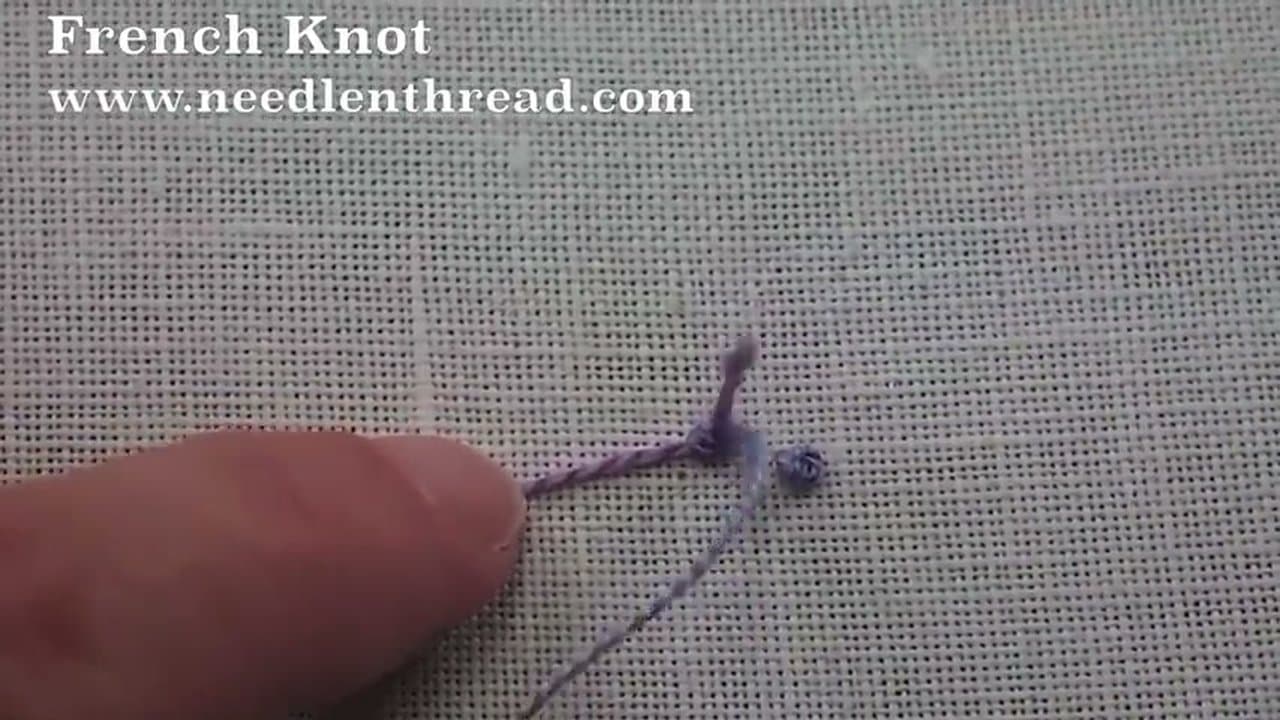
As the needle pulls almost all the way through, let go of the working thread. The last bit slides through and the knot drops onto the fabric surface as a tight little bead.

If you hold tension to the very end, the knot can pull tight enough to deform. Releasing in the final inch lets the knot relax into its natural shape. Practice a few times in a corner of your fabric before using French knots on a real piece - it's a stitch that gets easier fast once your hands learn the rhythm.

Tip

French knots cluster well - dot a few together for the center of a flower, scatter them across a leaf for texture, or string them along a line for lettering accents. Use 3 or 4 strands of floss for most projects; 6 strands makes a chunky knot.

Products Used

☐ The Checklist

How to Embroider a French Knot: 6 Step Beginner Tutorial

Tools
3
Materials
2
Steps
6
Video
4 min

Your Guide

Mary Corbet

As an Amazon Associate we earn from qualifying purchases. Links on this page may be affiliate links - clicking them and buying doesn't change your price, but helps support ShowMeStepByStep.

Tags

Test your knowledge

Did the lesson stick? Find out in 2 minutes.

5 quick questions covering what you just read. No signup, no score saved — just a gut check.

Quick reference

Key takeaways from How to Embroider a French Knot: 6 Step Beginner Tutorial

5 questions, answers, and one-line explanations. Tap to expand.

  1. 1.Most important tool difference for French knots?

    Answer: Milliner needle

    Milliner (straw) needle - shaft same width as eye, slides through wraps cleanly. Embroidery needle bulges and snags.

  2. 2.How many wraps for a 'small bead' knot?

    Answer: Two wraps

    Two = small-bead size, perfect for most projects. One = too tiny, pulls through. Three+ = sloppy floppy knot.

  3. 3.Where do you insert the needle going down?

    Answer: Next to exit hole

    Close but not same hole. Same hole = knot pulls through to back. Next-to gives a tiny fabric bridge to sit on.

  4. 4.What about the working thread tension as you pull?

    Answer: Light steady hold

    Too much = chokes wraps, needle won't pass. Too little = wraps unspool. Light steady keeps knot neat as needle goes through.

  5. 5.What do you do as the needle exits the wraps?

    Answer: Release the thread

    Let go in the final inch. Last bit slides through and knot relaxes into natural shape on fabric.

What's next

Weekly Digest

Liked this embroidery tutorial?

Pick the categories you want to hear about. Weekly digest of new step-by-step tutorials. No spam, easy unsubscribe.

Send me tutorials about

We only email about new tutorials. Easy unsubscribe anytime.