How to Do a Blanket Stitch (Decorative Edging by Hand)

By ShowMeStepByStepPublished Updated

Based on a video by Sarah Homfray Embroidery.

Blanket stitch is one of those hand embroidery stitches that pays you back the moment you learn it. It lays down a row of stitching with little arms standing up from a baseline, and that simple shape turns out to be useful everywhere: edging a blanket, binding a frayed edge, attaching an applique shape, or just adding a decorative border. In this tutorial, Sarah Homfray of Sarah Homfray Embroidery shows you how to work it from the very first stitch.

You will start by forming the stitch in a hoop, learn the one move that makes it lock (coming up inside the loop every time), then see how to vary the arm lengths for a decorative edge. After that, Sarah works the same stitch over a raw fabric edge so you can bind and neaten any border by hand. If you are just getting started with embroidery, this pairs naturally with cross stitch as a foundation stitch.

One last thing worth knowing: blanket stitch and buttonhole stitch are the same stitch. The only difference is spacing. Leave gaps and it is blanket stitch; pack the arms tight and it becomes buttonhole stitch, a solid edge strong enough to bind a buttonhole or a cut applique shape. Learn the one and you get both.

Step-by-Step Guide

1

Step 1: Start at the Bottom of the Stitch

0:47
Step 1: Step 1: Start at the Bottom of the Stitch

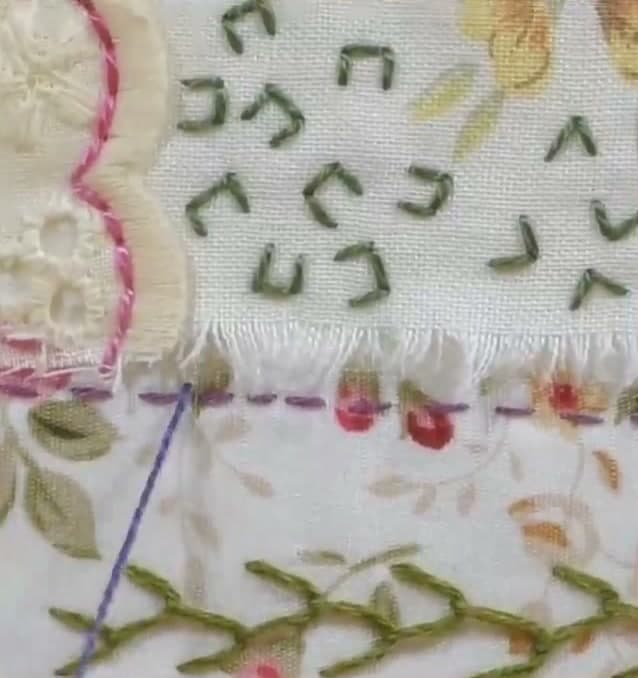
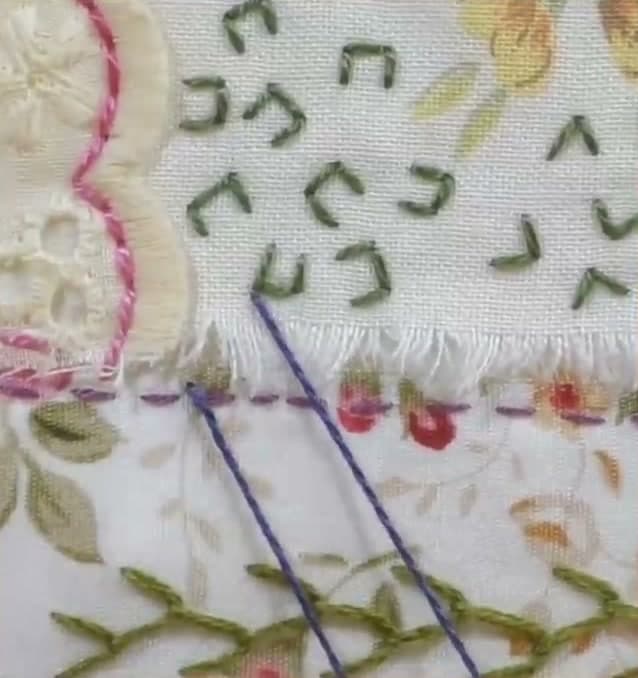
Blanket stitch builds along a baseline with little arms standing up from it, so you start at the bottom of where that row will sit. Bring your needle up at the baseline, then stab back down a short diagonal distance away, like reaching for the opposite corner of a small square.

The trickiest part of this whole stitch is getting going. Once the first one is set, the rest follow the same rhythm. Keep your spacing relaxed for now and worry about evenness after a stitch or two.

Tip

Watch this step Mark a faint guideline with a water-soluble pen if you want your baseline dead straight. It wipes away with a damp cloth when you are done.
2

Step 2: Form the Loop and Come Up Inside It

1:04
Step 2: Step 2: Form the Loop and Come Up Inside It

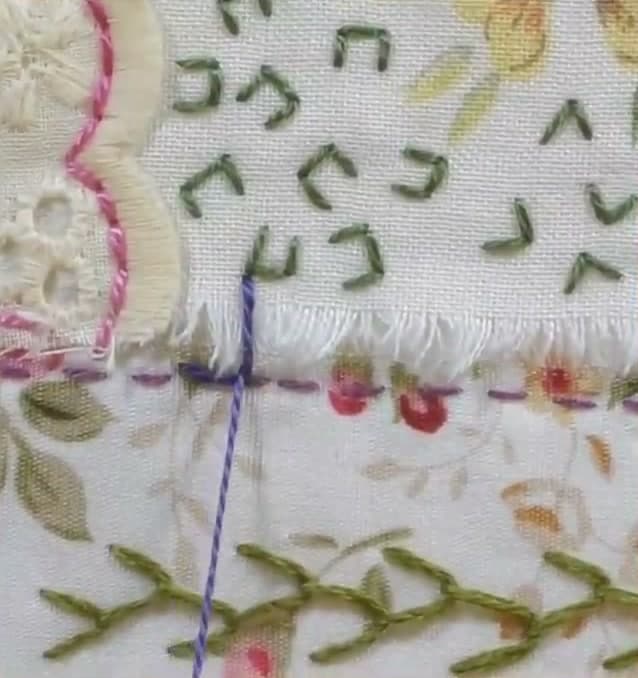
With the needle still down in the fabric, lay the working thread under the tip so it forms a little loop. Now bring the needle up immediately below where you went down and just to the right, catching the corner of that square, and make sure the point comes up inside the loop.

That last part is the whole trick. If the needle does not pass through the loop, the stitch will not lock and you will just get a plain straight stitch instead.

Tip

Watch this step If you lose track of the loop, hold it open with your thumb until the needle is through. A little patience here saves you from picking out stitches later.

3

Step 3: Pull Down to Shape the Stitch

1:18
Step 3: Step 3: Pull Down to Shape the Stitch

Pull the thread slowly down toward you. As it tightens you will see it form a backward L: a vertical arm coming up from the baseline and a short horizontal bar running along it. That shape is the signature of blanket stitch.

Put a finger on the bar as you tension so it does not creep or twist. Even, gentle tension is what keeps the row looking tidy. Yank it and the fabric puckers.

Tip

Watch this step Aim for the same firmness on every pull. Consistent tension matters more than dead-even spacing for a row that reads as neat.

4

Step 4: Repeat to Build the Row

1:45
Step 4: Step 4: Repeat to Build the Row

Work the next stitch exactly like the first. Go down into the fabric a short distance along the baseline, loop the thread, come up below inside the loop, and pull. A row starts to build, with the line of stitching running along the bottom and the little arms standing up.

The arms sit outside the piece you are edging and the baseline sits on the fabric, which is why this stitch is so good for covering a raw edge neatly.

Tip

Watch this step Keep your stitches evenly spaced by eyeballing the gap against the previous arm. After five or six they start to feel automatic.

5

Step 5: Vary the Arm Length for a Decorative Edge

2:45
Step 5: Step 5: Vary the Arm Length for a Decorative Edge

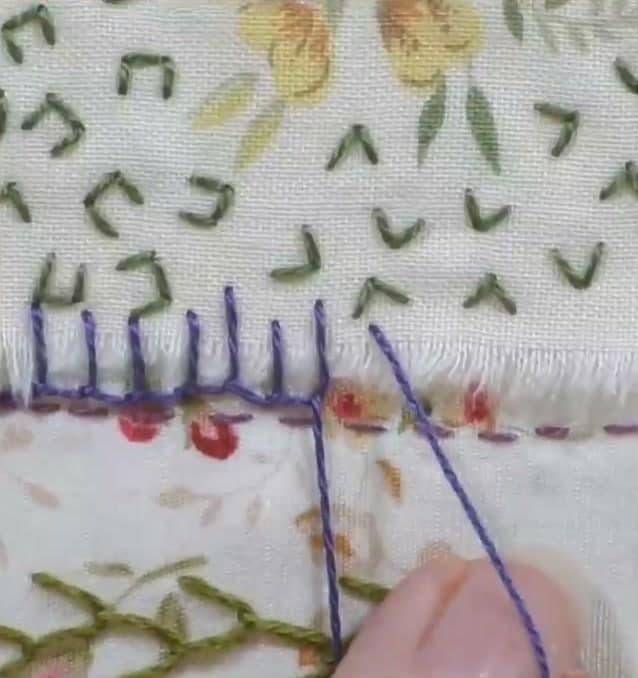
You do not have to keep every arm the same height. Alternate a tall stitch with a short one, or work a repeating pattern, and the row turns into a decorative border. It is a simple way to add interest without learning a new stitch.

Whatever rhythm you choose, keep checking that the needle has gone inside the loop before you tension. That is the one mistake that trips people up, and it is easy to fix by sliding the needle back under and re-looping.

Tip

Watch this step This stitch is the cousin of cross stitch in the beginner toolkit. Learn both and you can edge, outline, and fill almost any small project.

6

Step 6: Work the Stitch Over a Raw Edge

4:42
Step 6: Step 6: Work the Stitch Over a Raw Edge

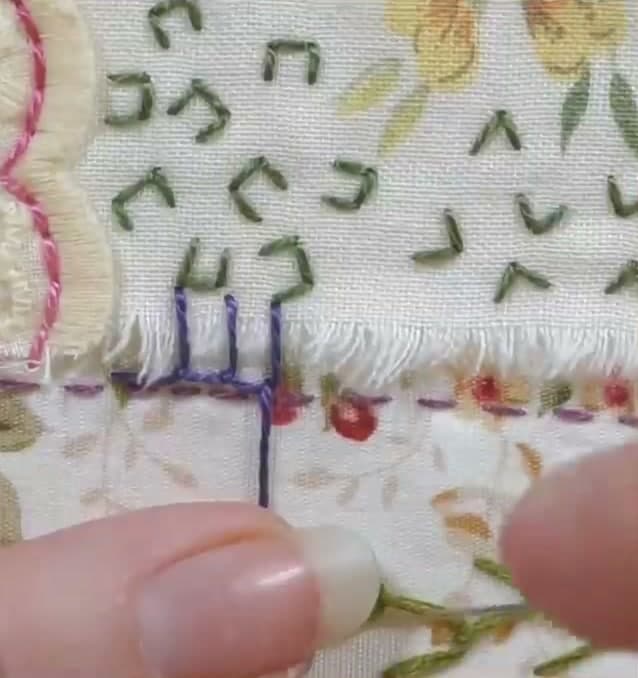
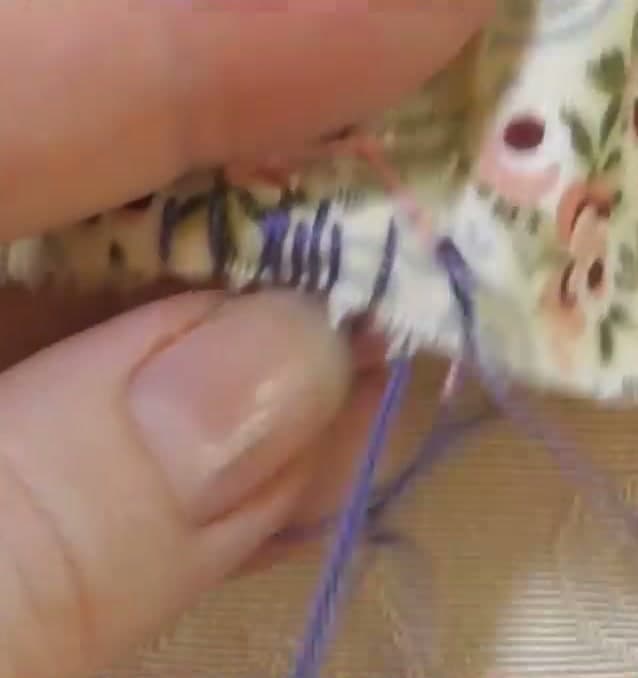
Blanket stitch really shines as an edging. Hold the fabric in your hands or keep it in a hoop, then stab down a little way in from the raw edge and bring the needle through the loop right at the edge itself. The thread wraps over the side and anchors there.

Repeat along the edge and you bind a frayed border into something clean and finished. Quilters love this for tidying edges; slow stitchers use it to frame a frayed edge on purpose.

Tip

Watch this step Felt and tightly woven cotton both take this edge well. Looser weaves fray more, so keep your stitches a touch closer together on those.

7

Step 7: Space It Out, or Pack It Tight for Buttonhole

5:20
Step 7: Step 7: Space It Out, or Pack It Tight for Buttonhole

Spacing is what separates the two stitches in this family. Leave gaps between the arms and you have blanket stitch. Pack them right up against each other and you have buttonhole stitch, which lays down a solid, almost satin-like ridge of thread along the edge.

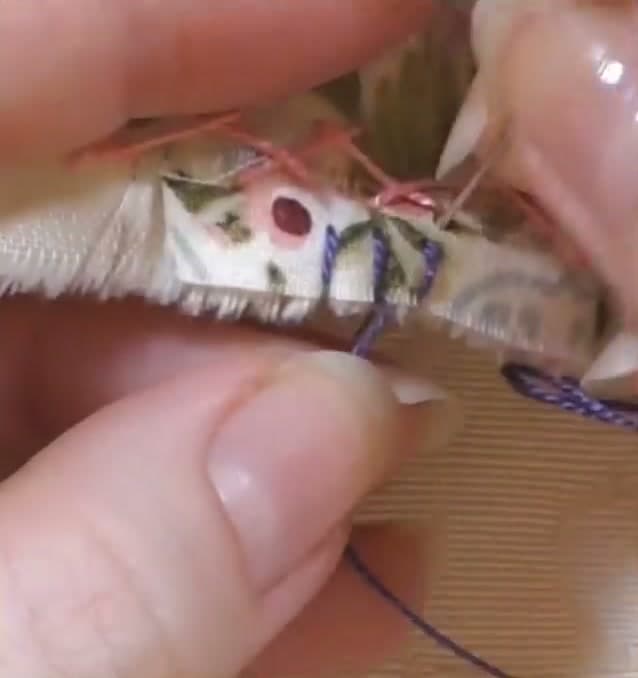
Buttonhole takes more thread and more time, but it gives a really firm edge that holds up to handling and even stops cut fabric from fraying. When you reach the end, take the tail through to the back and weave it under the stitches so it does not show on the front.

Tip

Watch this step Use blanket stitch for a light decorative edge and buttonhole when you need strength, like binding a buttonhole, a cut applique shape, or a wired three-dimensional piece.

8

Step 8: See It on a Finished Piece

6:33
Step 8: Step 8: See It on a Finished Piece

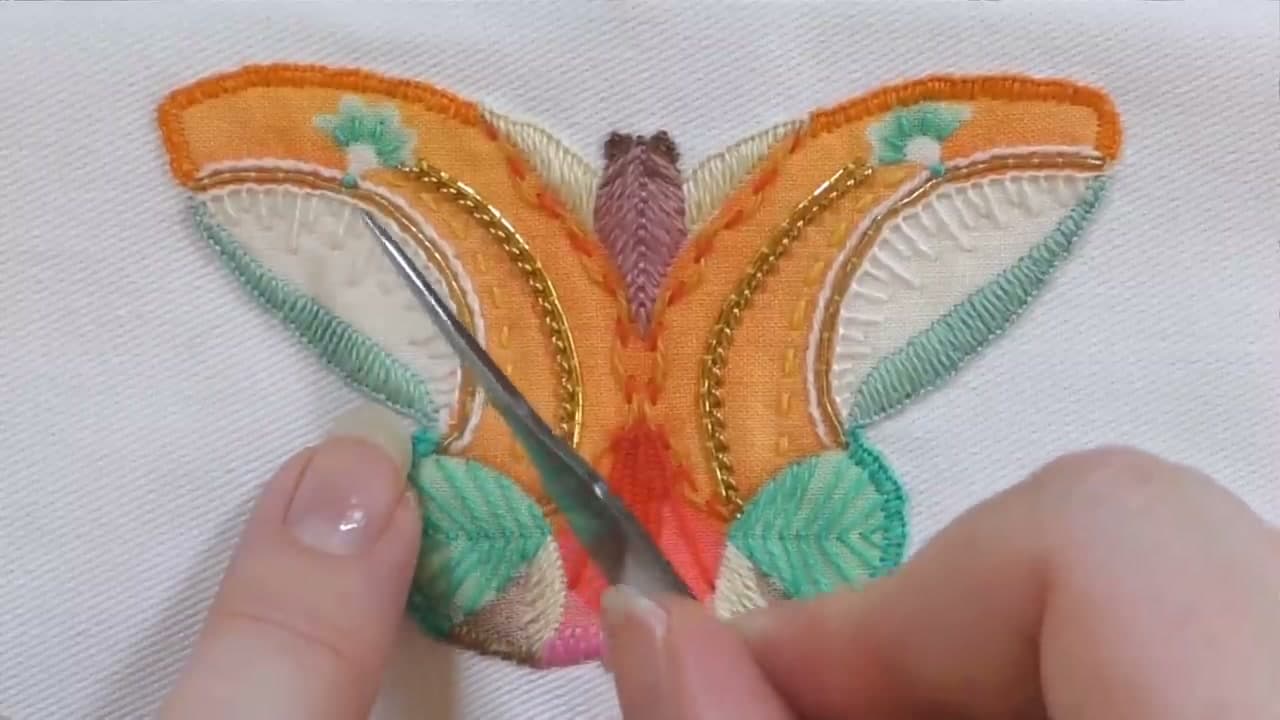
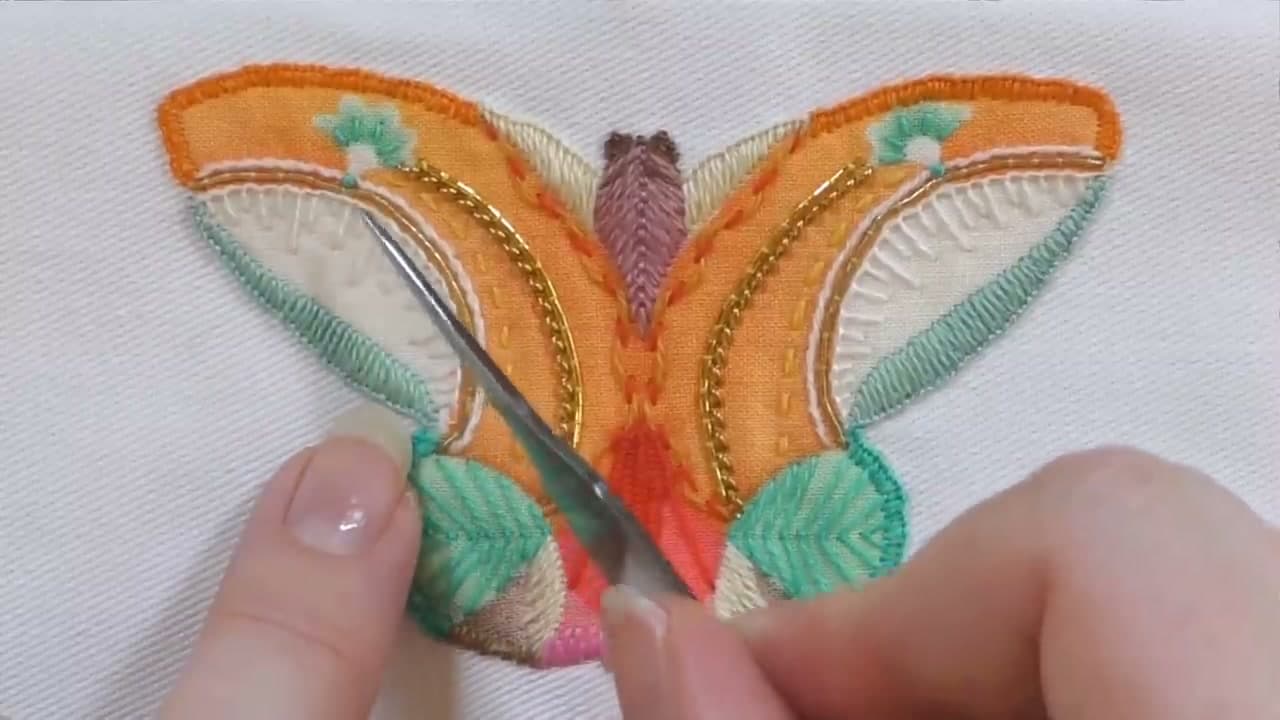
Here is the stitch doing real work. Around this appliqued butterfly, blanket stitch follows every curve and corner cleanly, holding the cut fabric shapes down while adding a decorative outline at the same time. It does two jobs in one pass.

That versatility is why it earns a permanent spot in your stitch bank. Use it to edge a blanket, attach a felt heart, join two layers of a pouch, or outline an applique. Once it is in your hands, you will reach for it constantly.

Tip

Watch this step Try it next on a small felt shape attached to a backing fabric. It is a quick, satisfying first project that shows off the edge to full effect.

Products Used

☐ The Checklist

How to Do a Blanket Stitch (Decorative Edging by Hand)

Tools
4
Materials
2
Steps
8
Video
11 min

Your Guide

Sarah Homfray Embroidery

As an Amazon Associate we earn from qualifying purchases. Links on this page may be affiliate links - clicking them and buying doesn't change your price, but helps support ShowMeStepByStep.

Tags

What's next

Weekly Digest

Liked this embroidery tutorial?

Pick the categories you want to hear about. Weekly digest of new step-by-step tutorials. No spam, easy unsubscribe.

Send me tutorials about

We only email about new tutorials. Easy unsubscribe anytime.