A tie knot is one of those things nobody teaches you and then everybody expects. Interview Monday, wedding Saturday, a funeral with two days notice. One knot covers almost all of it, and it is the easiest one to learn.
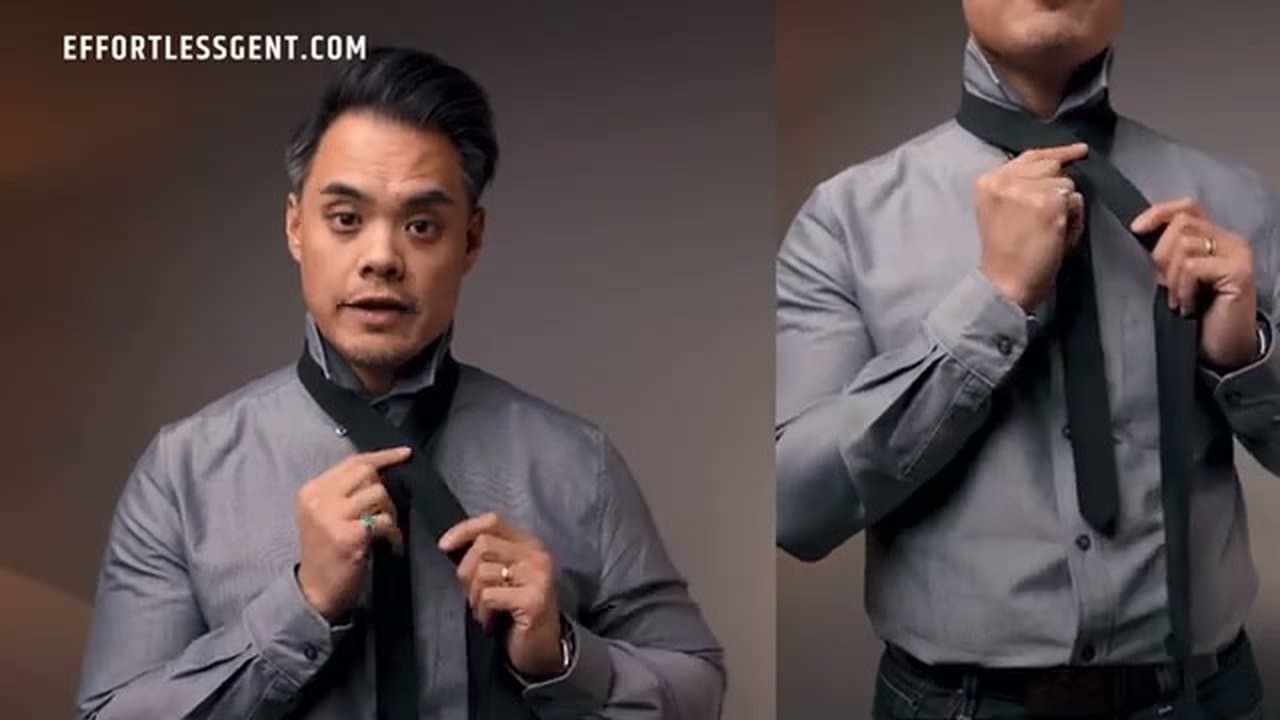
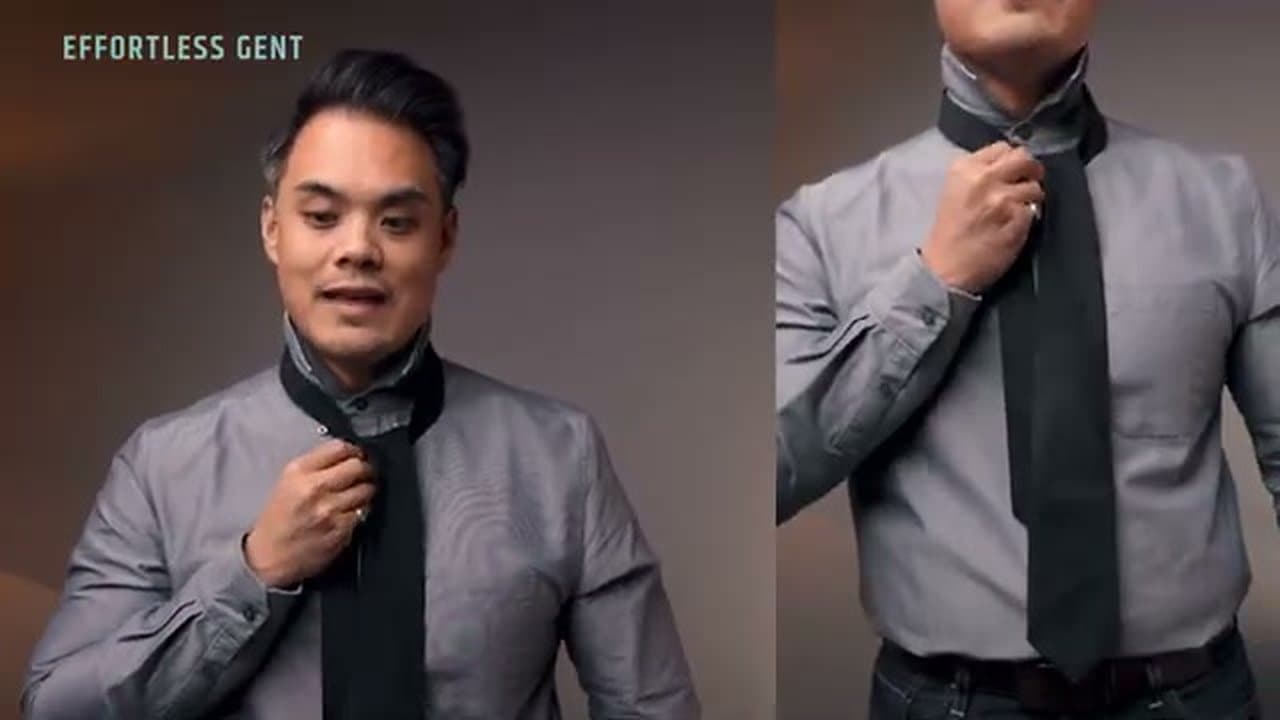
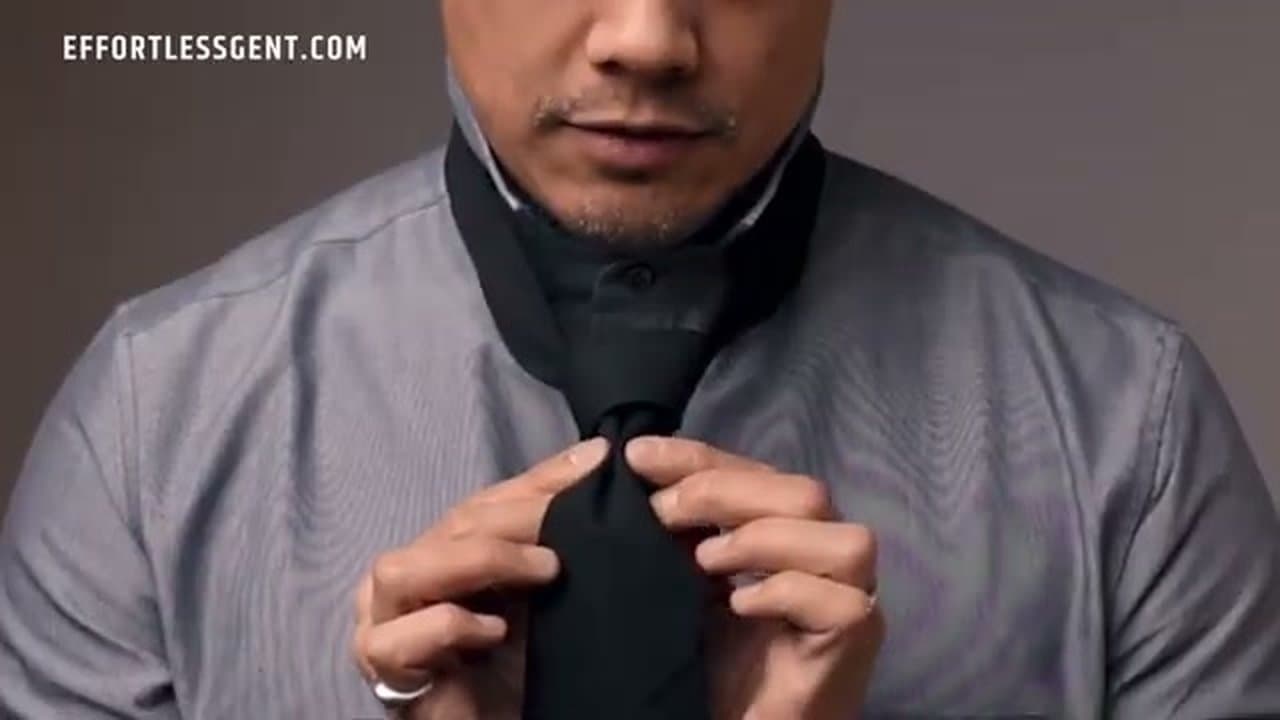
Baron at Effortless Gent ties the four-in-hand in the video below in about three minutes. Two wraps and a pull-through. The steps have the mechanics. What follows is what decides whether the knot looks sharp or looks borrowed: which knot your collar wants, how to land the tip at your belt buckle, and how to set the dimple.
Which Knot to Use, and When
Three knots cover every occasion you will ever dress for. The difference between them is bulk.
- Four-in-hand - narrow, slightly asymmetric, fast. Point collars, button-downs, work, school, most weddings. The knot on this page.
- Half-Windsor - one extra wrap, a little wider, symmetric. Good for a spread collar, or a thin tie that needs body.
- Full Windsor - the wide triangle. Formal events, cutaway collars, and taller men who need the width for a long neck.
Learn the four-in-hand and stop there for a while. It is the only one you can tie half awake in a dark hotel room.
Landing the Tip at Your Belt Buckle
The tip of the wide end should finish at the top of your belt buckle. Higher and it looks like you outgrew the tie. Lower and it looks like you borrowed it from someone bigger.
That gets decided before you start. Every wrap eats fabric off the wide end, so where the narrow end hangs at the beginning sets where the wide end stops. Around the navel is the default.
If the tip came out too high, undo the knot and start again with the narrow end an inch or two higher up your chest. A shorter narrow end leaves more wide end to work with, which drops the finish. Too low, go the other way. Tie length matters too: most run 57 to 59 inches, and over six foot two you want a 61 or 63 inch extra-long.
The Dimple Is the Whole Difference
The dimple is the small vertical crease under the knot. It separates a tie that looks tied from a tie that looks thrown on.
Set it before you tighten. Pinch the wide end between your thumb and middle finger an inch below the knot, press your index finger into the middle to make the fold, then pull down on the narrow end while that pinch holds. Once the knot is snug the fabric has nowhere left to fold.
Silk holds a dimple best. Knit and heavy wool ties mostly will not hold one, and nobody expects them to.
Match the Knot to Your Collar
Collar spread is the gap between the collar points. A point collar leaves a narrow gap and wants a narrow knot, which is what the four-in-hand gives you. A spread or cutaway collar leaves a wide gap a four-in-hand cannot fill, and you get a strip of shirt showing on either side of a skinny knot.
Tie fabric changes knot size too. A lined silk or wool tie builds a bigger four-in-hand than a thin unlined summer tie. If your knot keeps coming out too small for the collar, a thicker tie fixes that faster than learning a second knot.
Taking It Off Without Wrecking It
Reverse the steps. Loosen the knot, feed the wide end back up through the front loop, unwrap it twice. What destroys ties is yanking the narrow end through a tight knot at the end of a long day. That pulls the silk off its bias, the seam twists, and the tie never hangs straight again. Spilled something at dinner? Blot, do not rub, then treat it like an oil stain on a shirt.
Hang it over a rod overnight so the creases drop out, then roll it loosely. Rolled ties hold their shape better than folded ones and survive a suitcase, the same reason rolling beats folding when packing a car full of clothes.
If you landed here after a rope knot, that is a different job entirely. Two more from the same drawer: a shoelace knot that stays tied, and what to say when the offer arrives after the interview you are wearing this for.