How to Tie a Bow Tie

Also in:Adulting

By ShowMeStepByStepPublished Updated

Based on a video by Offshoreorganbuilder.

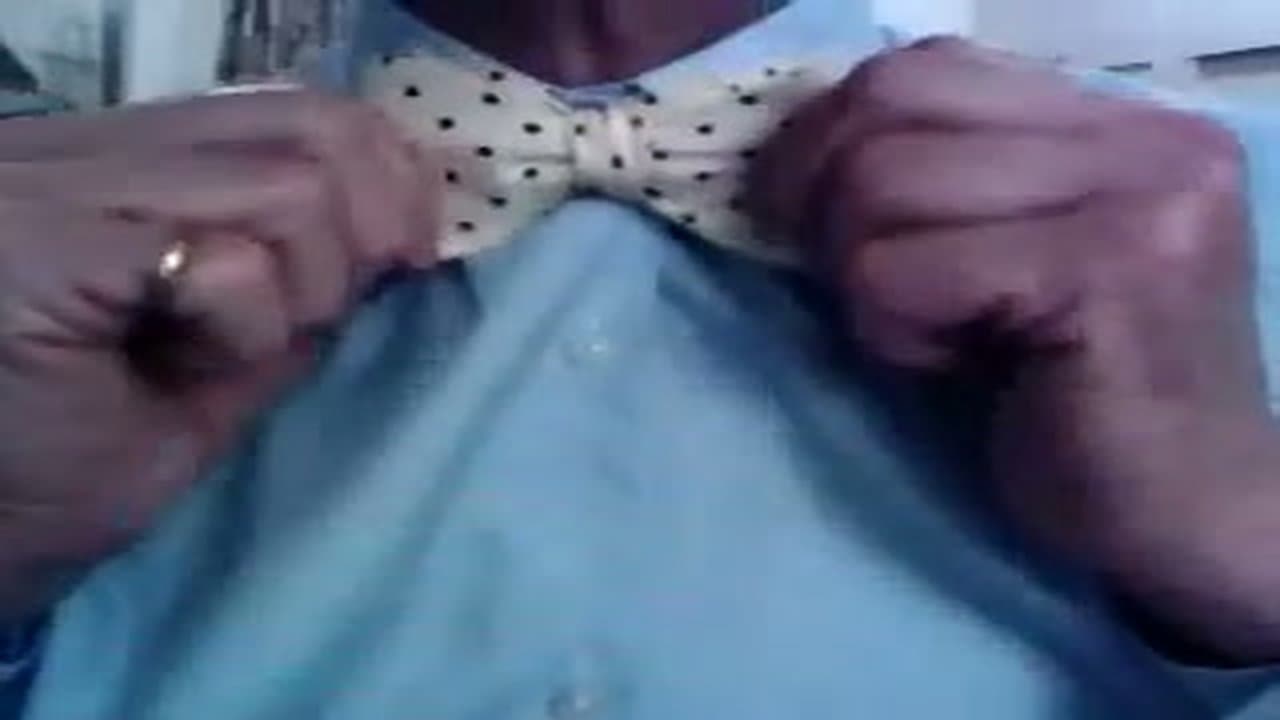
How to tie a bow tie is one of those skills people put off until the morning of the wedding, then panic-Google in the bathroom 30 minutes before the ceremony. A self-tie bow tie looks better than a pre-tied clip-on - it sits with character, the fabric drapes a little asymmetrically, and the people who know, notice. The downside for beginners is that the knot is counter-intuitive the first three or four times. This guide breaks it into 8 step-by-step movements you can practice in front of a mirror without getting lost.

The walkthrough below follows a video from Offshoreorganbuilder that has pulled nearly 6 million views because it actually shows what your hands are doing - not just what the finished bow should look like. Each step pairs a still-frame diagram with a plain-English description, so this works as both a video tutorial and a step-by-step bow tie diagram when you have to teach yourself in a hotel room without sound. Give yourself 10 to 15 minutes the first attempt. By the fourth or fifth try, tying a bow tie starts to feel like tying a shoe.

A few things that help beginners before the first attempt: practice with a light-colored tie (black on black is impossible to see in a mirror), stand with your shirt collar flipped up, and don't rush the second loop - that's the move 90% of first-timers get wrong. The knot is the same motion every time once you've got it. For other formal-wear basics, see how to tie a full Windsor knot, how to iron a dress shirt like a pro, and how to fold a pocket square to complete the outfit.

Variations by bow tie style and occasion

Butterfly (the standard). The classic shape - wide ends that flare out into a symmetrical bow. The 8-step method in this guide ties a butterfly perfectly. Best for most occasions: weddings, prom, business-formal events. Width is typically 2.5 to 3 inches across when tied.

Batwing (or straight-end). A narrower, rectangular shape with flatter ends. Same knot, just a slimmer tie. Good for a more modern or minimal look, or for slimmer faces. The technique below works without modification.

Diamond point. Pointed ends instead of straight. Slightly more formal-looking; popular with vintage and dandy-style outfits. Tie it the same way - the points just sit a little differently.

Black tie events. A black silk bow tie is the gold standard for tuxedo dress codes. The knot is identical to any other bow tie - just don't pull it perfectly tight. A little asymmetry signals 'I tied this myself' which is the entire point.

Common questions

How long does it take to learn to tie a bow tie? Most beginners get a passable result on attempt three or four (10-15 minutes per try). After a half-dozen reps the muscle memory locks in and the whole tie takes under 60 seconds.

Is a self-tie bow tie better than a pre-tied one? Yes, for one reason: a hand-tied bow has slight asymmetry and looser fabric drape that signals it's the real thing. Pre-tied bow ties look perfect, which is the giveaway. For weddings and black-tie events, hand-tie if you can.

What size bow tie should a beginner buy? An adjustable strap with a band length of 14 to 18 inches fits most adult necks. The tie itself should be 4.5 to 5 inches blade width (the wider part) for a standard butterfly shape. Avoid 'slim' or 'skinny' bow ties for your first - the extra fabric in a regular makes the knot easier to see and adjust.

Can I tie a bow tie without a mirror? Eventually, yes - the same way you can tie a regular tie blind. The first 10+ times you'll need a mirror to check the second loop. After that, it becomes a hand-feel thing.
Step-by-Step Guide

1

Set Up in Front of a Mirror with the Collar Up

1:02
Step 1: Set Up in Front of a Mirror with the Collar Up

Stand in front of a mirror. Button your shirt all the way up and flip the collar up so you can see what you're doing. Tying against a flat collar is harder, and you can fold the collar down at the end anyway.

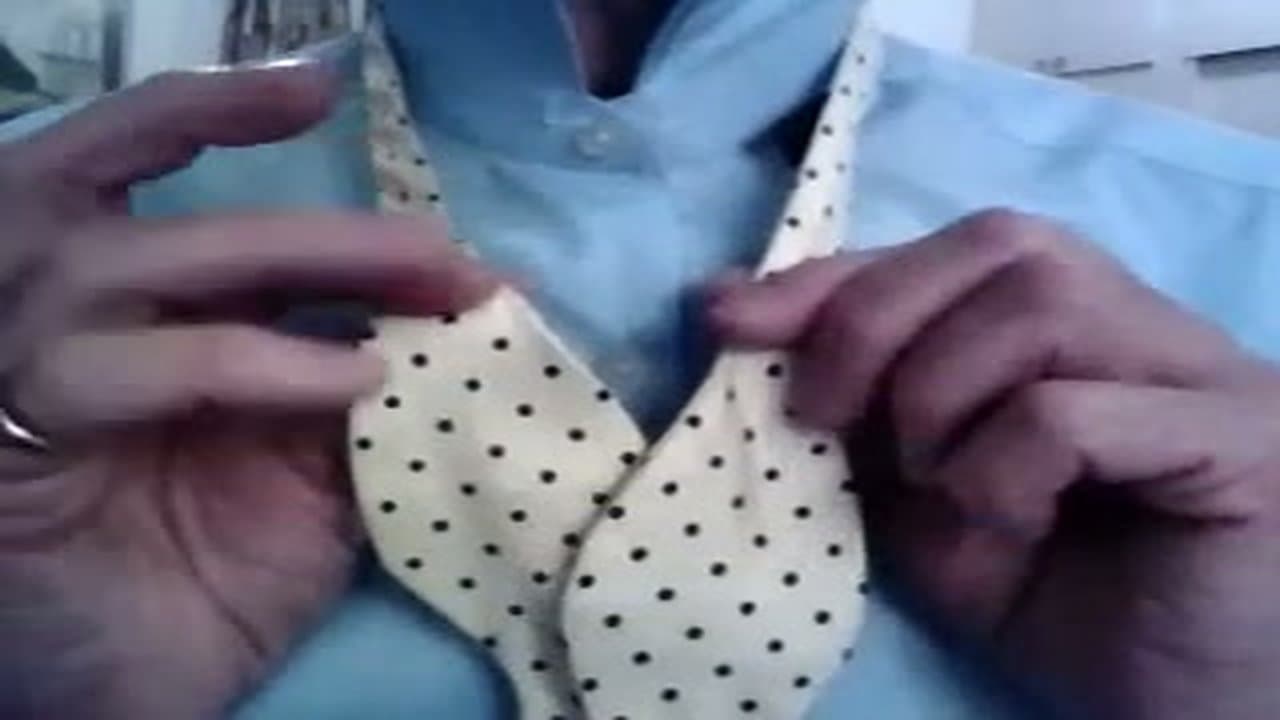
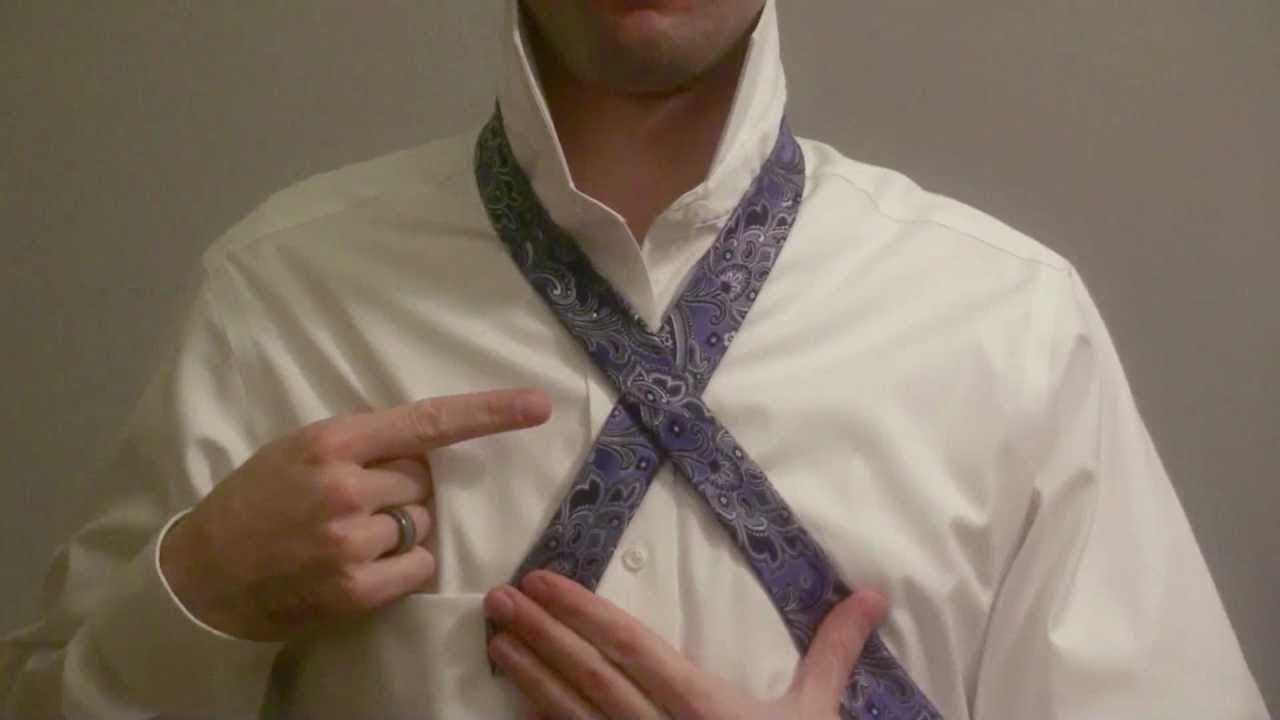
Drape the bow tie around your neck with both ends hanging down. The ends are shaped like fish: a narrow tail and a wider body. Both ends are identical, so it doesn't matter which side starts where.

Watch this moment in the video.

Tip

If it's your first time, use a light-colored tie against a darker shirt. Black on black is impossible to see while you're learning. Switch to formal black once the motion is muscle memory.

Products used in this step

2

Position the Tie Left Over Right

1:20
Step 2: Position the Tie Left Over Right

Slide the tie so the very top of the fish shape on the left end sits right in front of the collar button. The left end crosses over the right end.

This sets the starting length so the two ends end up even when you're done. If one end is noticeably longer than the other at this stage, slide the whole tie sideways until the short end is near the collar button.

Watch this moment in the video.

Tip

Getting this length wrong is the #1 reason the final bow looks lopsided. If you finish and one side is visibly bigger, the fix is usually to redo Step 2.

3

Make the First Cross and Tighten at the Collar

2:00
Step 3: Make the First Cross and Tighten at the Collar

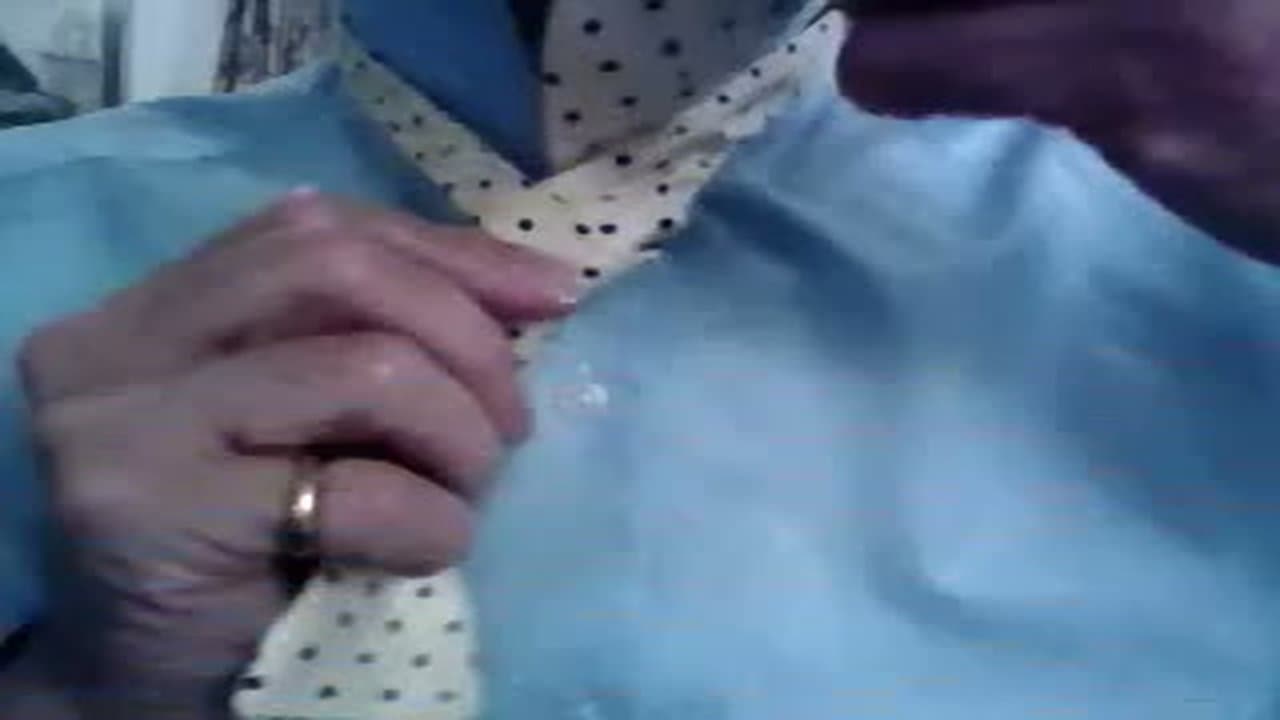
Without letting the tie shift on your neck, pull the two ends apart to open up a gap where they cross. Take the end in your right hand, tuck it up through that gap from underneath, then pull it straight up.

Tighten that crossover firmly against the collar button. This is the only chance you'll have to tighten the tie against the collar, so don't go light here.

Check that the front end now hangs lower than the back end. If it doesn't, you positioned the tie too far to one side in Step 2. Reset and try again.

Watch this moment in the video.

Tip

Tight at the collar now saves you from a droopy tie later. The knot you're about to build doesn't let you add tension after this point.

4

Form the Back Bow Shape

3:05
Step 4: Form the Back Bow Shape

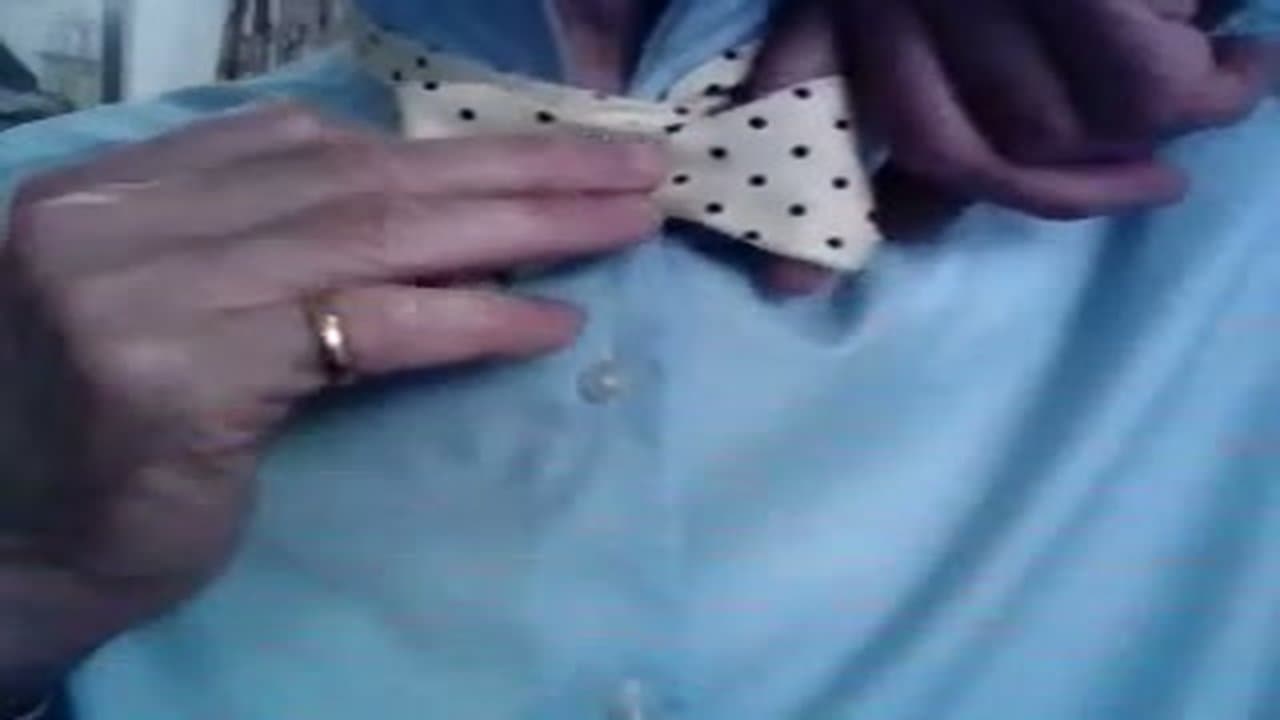
Throw the front end over your shoulder so it's out of the way. Hold the tail of the fish on the back end with your left hand.

Put your right index finger across the narrow waist of the fish (where the body meets the tail) from behind. Lift that waist up and forward so the body sits in front of the collar button.

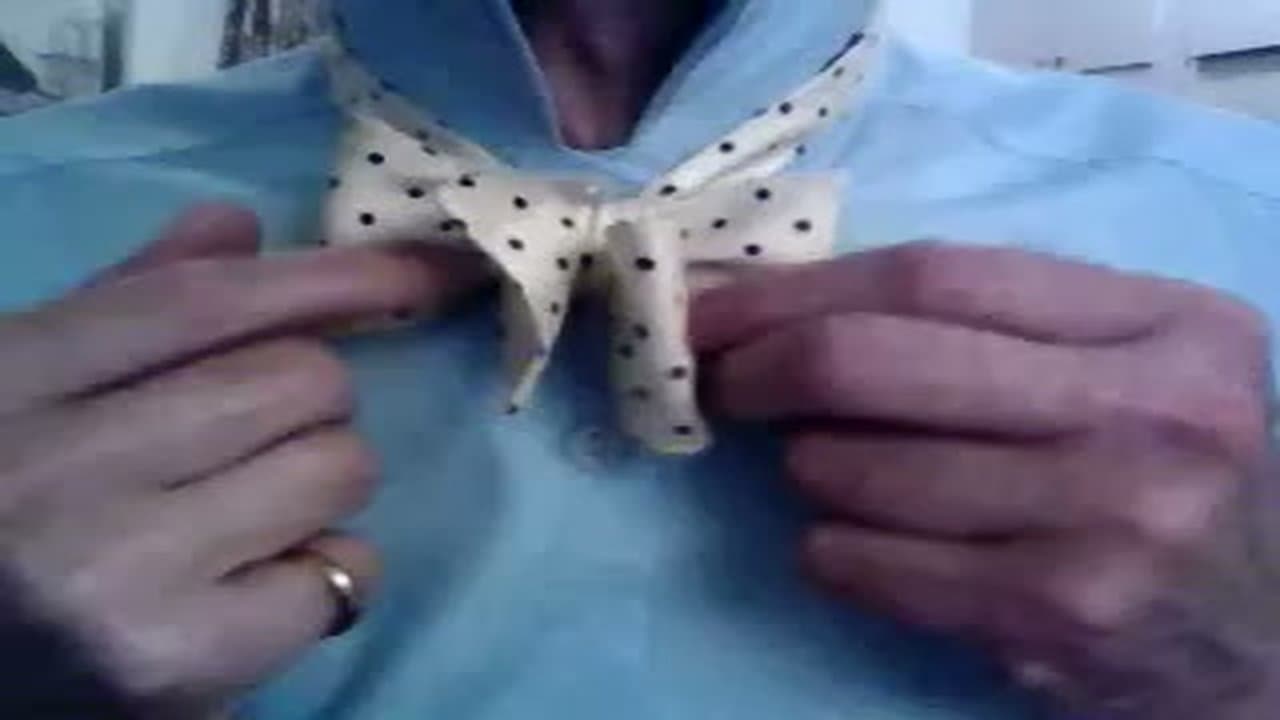
You've now got a horizontal bow shape pressed against your collar. Pinch it in place.

Watch this moment in the video.

Tip

Think of the bow shape like a butterfly lying sideways across your collar. If it's vertical instead of horizontal, you lifted the wrong part of the fish.

5

Drop the Front Down and Slide Your Thumb Through

4:15
Step 5: Drop the Front Down and Slide Your Thumb Through

Bring the front end back down over the top of the bow you're holding. Smooth out any creases in the fabric.

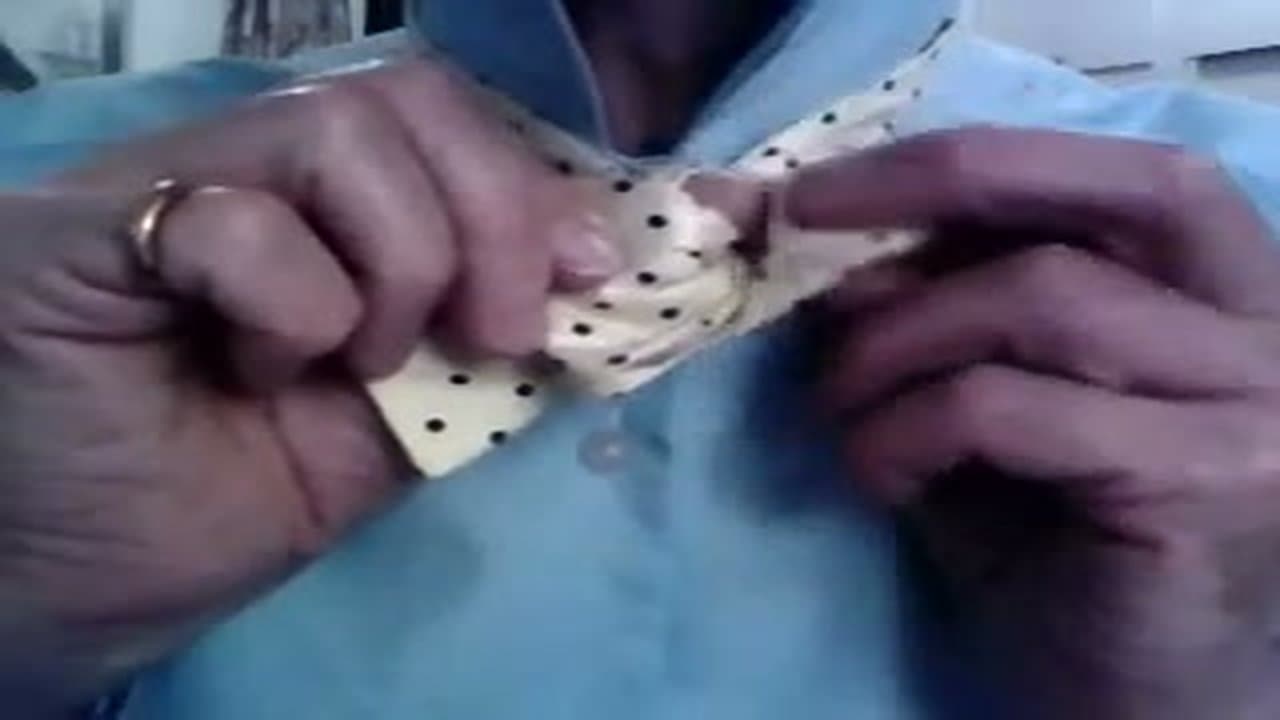
Now slide your right thumb in from above, pushing it through the top edge of the bow you're pinching. The thumb makes a small tunnel through the knot.

This is the move everyone gets wrong the first time. Take your time and feel the thumb push through the layers. If you can't get the thumb in, the bow shape from Step 4 probably collapsed - go back and pinch it tighter.

Watch this moment in the video.

Tip

If your bow tie is unusually wide at this point, pinch the front end in half vertically before bringing it down. Narrower fabric makes a cleaner knot.

6

Push the Fish Body Through the Tunnel

4:50
Step 6: Push the Fish Body Through the Tunnel

With the front end hanging down, put your left index finger on the front of the fish body and turn it up and back. Fold it on top of your thumb and push it through the tunnel your thumb made.

Pull your thumb out as the material comes through. The part of the fabric that was touching your finger is the part that faces forward. Make sure it faces out, not in.

Push the fold through until the tail is about halfway through. Don't pull it all the way - you still need a bow on this side.

Watch this moment in the video.

Tip

If you push a single layer through instead of a fold, the knot will pull apart when you tighten. You want a U-shaped fold going through, like threading a belt loop.

7

Tighten and Adjust Until Both Sides Match

7:00
Step 7: Tighten and Adjust Until Both Sides Match

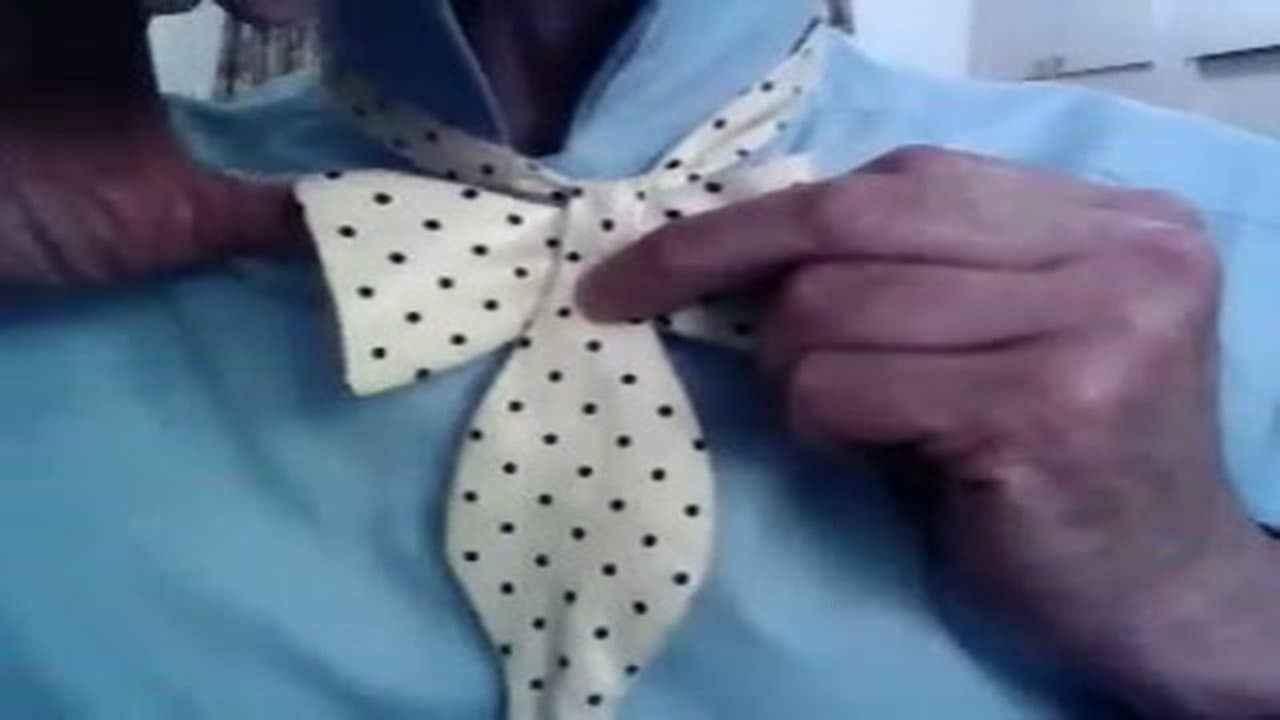
You now have two folded pieces (one front, one back) and two single pieces on opposite sides. Grab the folded pieces and pull them gently outward. The knot in the middle starts to tighten.

Pull until the knot feels firm, but don't pull the tail all the way through or you'll lose the bow on that side.

To make the front bow bigger, hold everything in your left hand and tug on the back loop. To make the back bigger, tug on the front loop. Work back and forth until both sides are the same size.

Watch this moment in the video.

Tip

Symmetry is good but not gospel. A bow tie that's too symmetrical looks machine-made. Leave a little bit of character in the shape.

8

Flip the Collar Down and Smooth the Tie Flat

9:05
Step 8: Flip the Collar Down and Smooth the Tie Flat

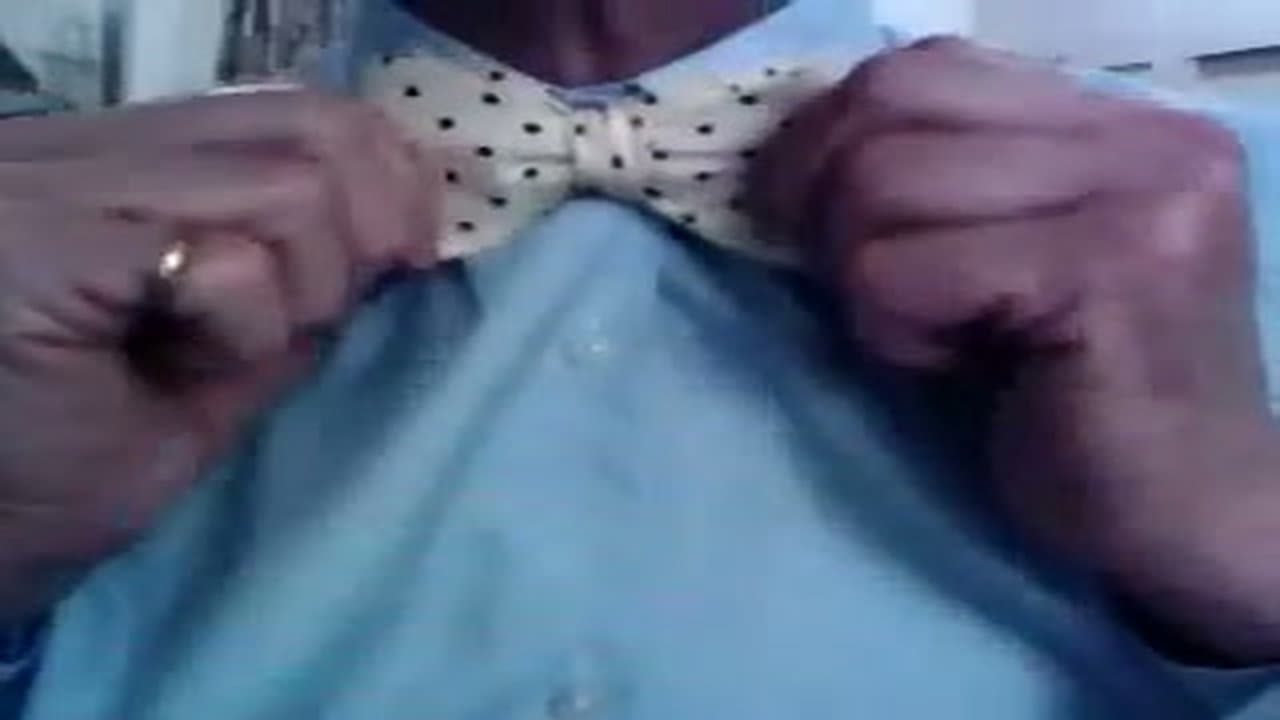
Pinch both bows together where the knot is. Stretch the bow horizontally to flatten the fabric and smooth out any bumps.

Fold the collar back down over the tie. The tie should lie flat against the collar without sticking out or pulling the collar up.

Step back from the mirror and check how it looks from normal distance. If one side is still bigger than the other, you can grip the knot and pull a little fabric through.

You're done. A slightly imperfect bow tie looks better than a machine-perfect one.

Watch this moment in the video.

Tip

Don't re-tie if it's slightly uneven. The first few times you'll be tempted to start over for tiny flaws. Leave it. A real self-tied bow tie has imperfections that a clip-on never does.

Products used in this step

Products Used

Your Guide

Offshoreorganbuilder

As an Amazon Associate we earn from qualifying purchases. Links on this page may be affiliate links - clicking them and buying doesn't change your price, but helps support ShowMeStepByStep.

Tags

Test your knowledge

Did the lesson stick? Find out in 2 minutes.

5 quick questions covering what you just read. No signup, no score saved — just a gut check.

Quick reference

Key takeaways from How to Tie a Bow Tie

5 questions, answers, and one-line explanations. Tap to expand.

  1. 1.Should you tie the bow tie with the collar UP or DOWN?

    Answer: Up - tying against a flat collar is harder, and you can fold it down at the end

    Collar up gives you access to the knot zone; fold it down only at the end.

  2. 2.After draping the tie around your neck, how do you position it?

    Answer: Slide it so the top of the LEFT end's fish shape sits right at the collar button (left crosses over right)

    Left over right at the collar button sets up the length so the two ends finish even.

  3. 3.What's the move everyone gets wrong the first time?

    Answer: Sliding your thumb in from above to make a tunnel through the bow

    Pushing your thumb through the bow's top edge makes the tunnel; everyone collapses the bow shape the first try.

  4. 4.After the bow is formed, what do both sides need to be?

    Answer: The same SIZE - adjust by tugging the loops back and forth until they match

    Tug front to enlarge back, back to enlarge front - balance until they match.

  5. 5.What's the final aesthetic note about a self-tied bow tie?

    Answer: A slightly imperfect bow tie looks better than a machine-perfect one

    Slight imperfection signals 'tied by hand' - that's the look you want.

What's next

Related collections

Curated theme pages that include this tutorial.

Weekly Digest

Liked this lifestyle tutorial?

Pick the categories you want to hear about. Weekly digest of new step-by-step tutorials. No spam, easy unsubscribe.

Send me tutorials about

We only email about new tutorials. Easy unsubscribe anytime.