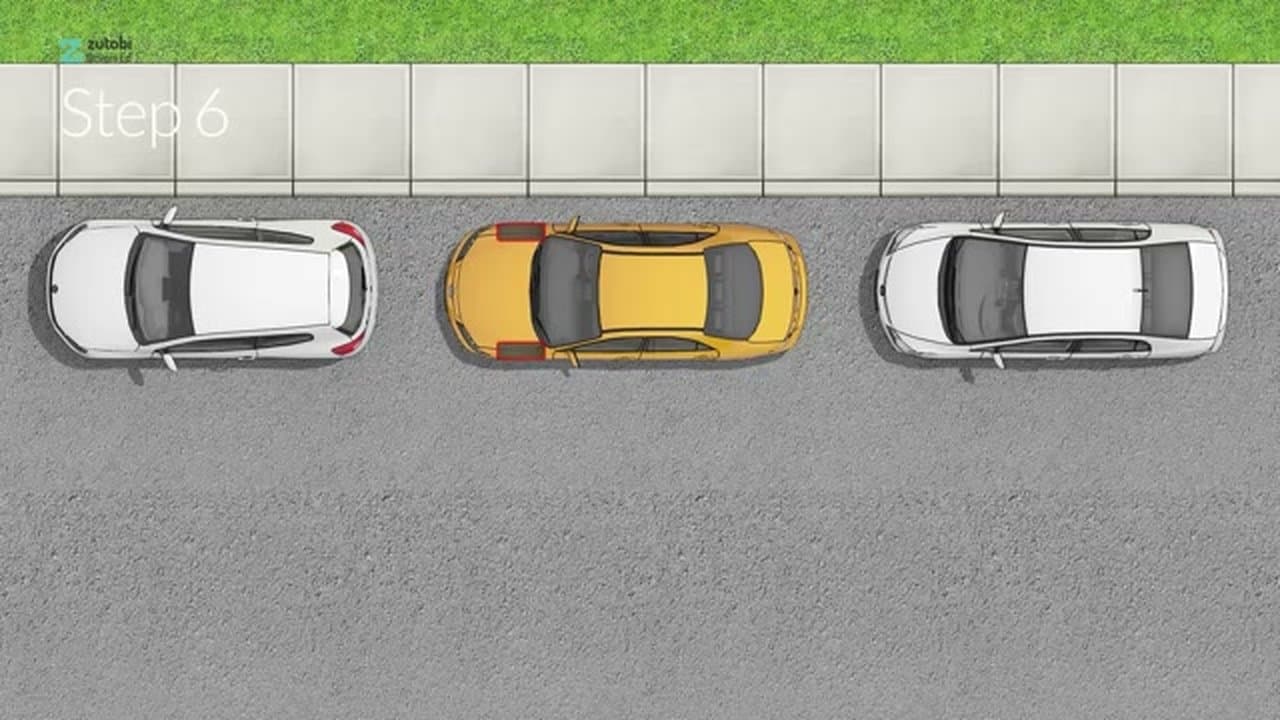
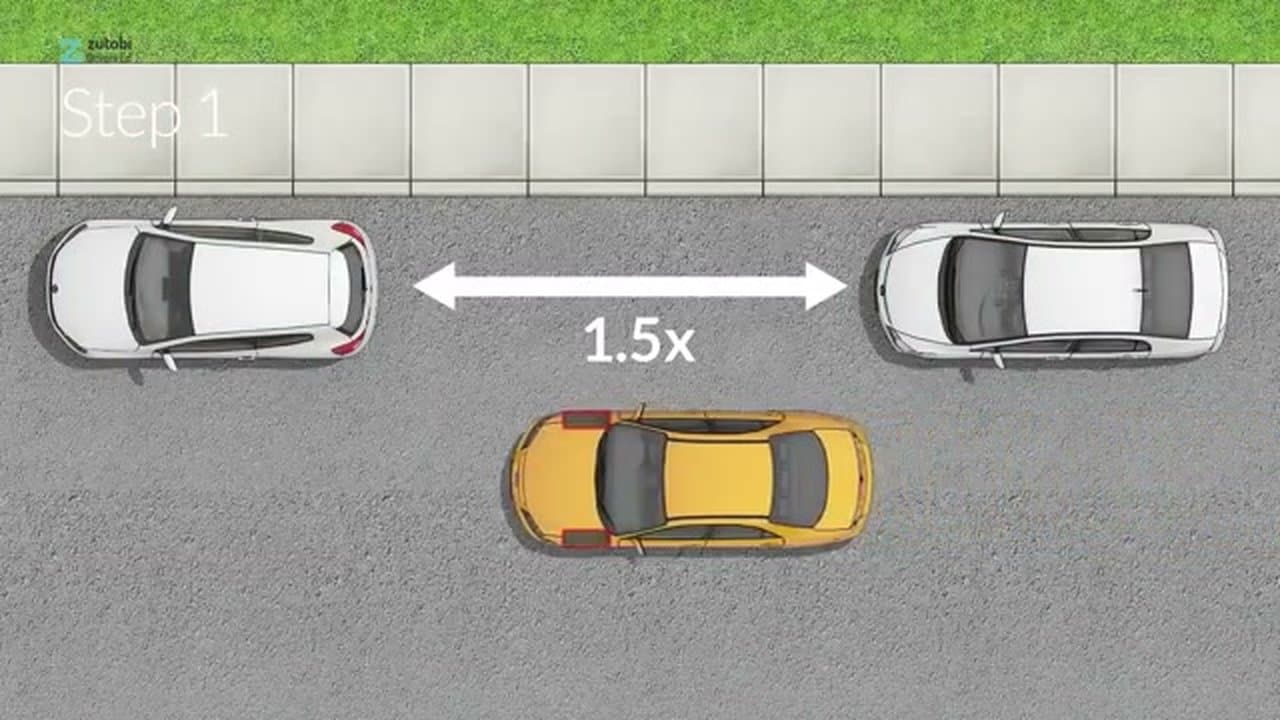
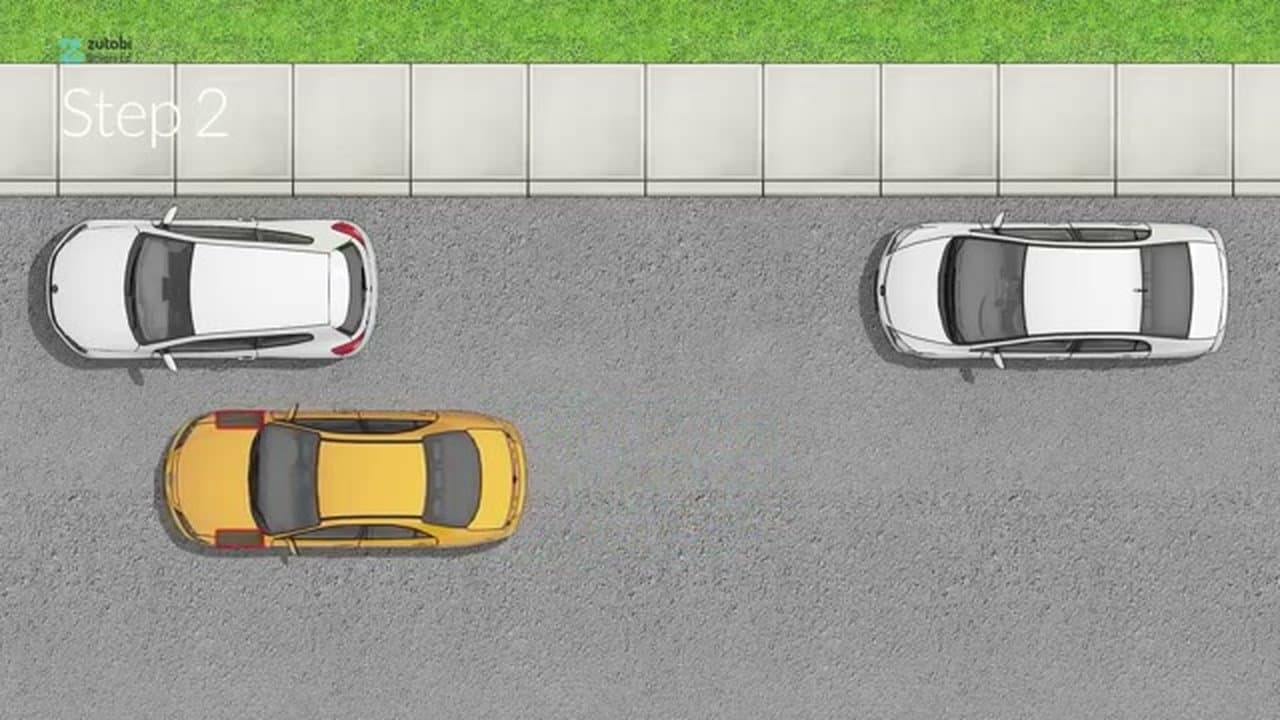
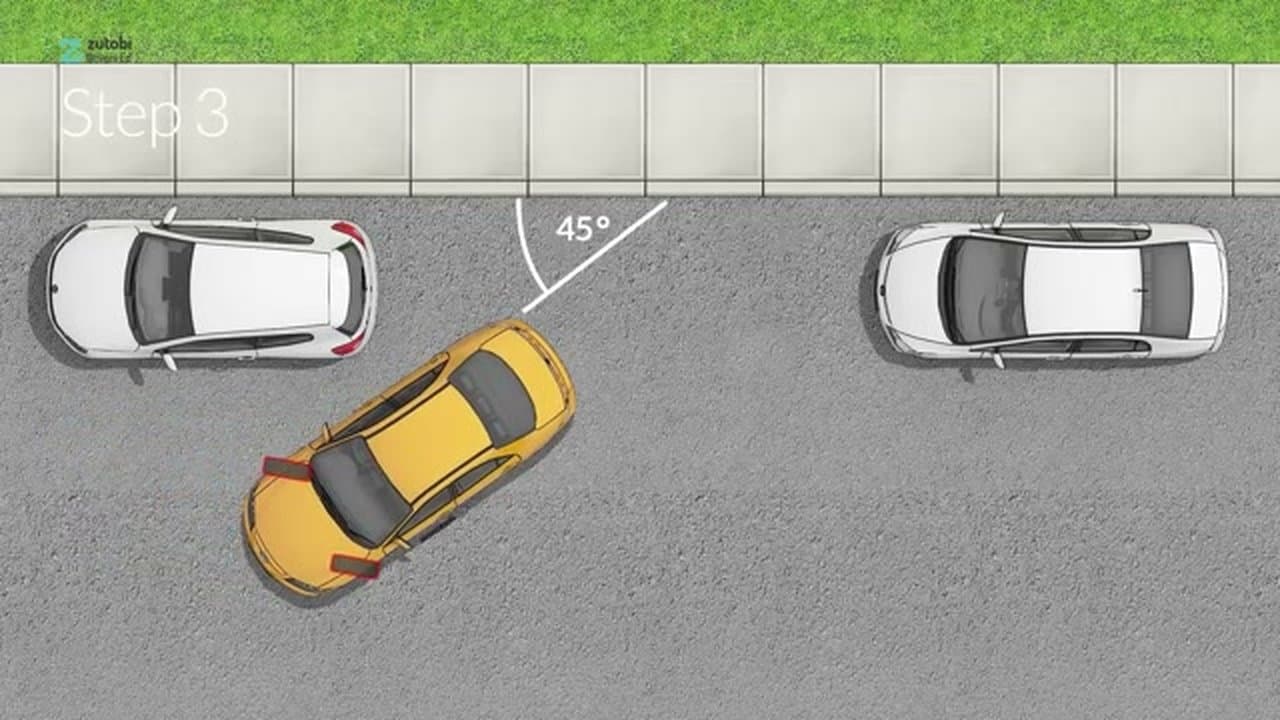
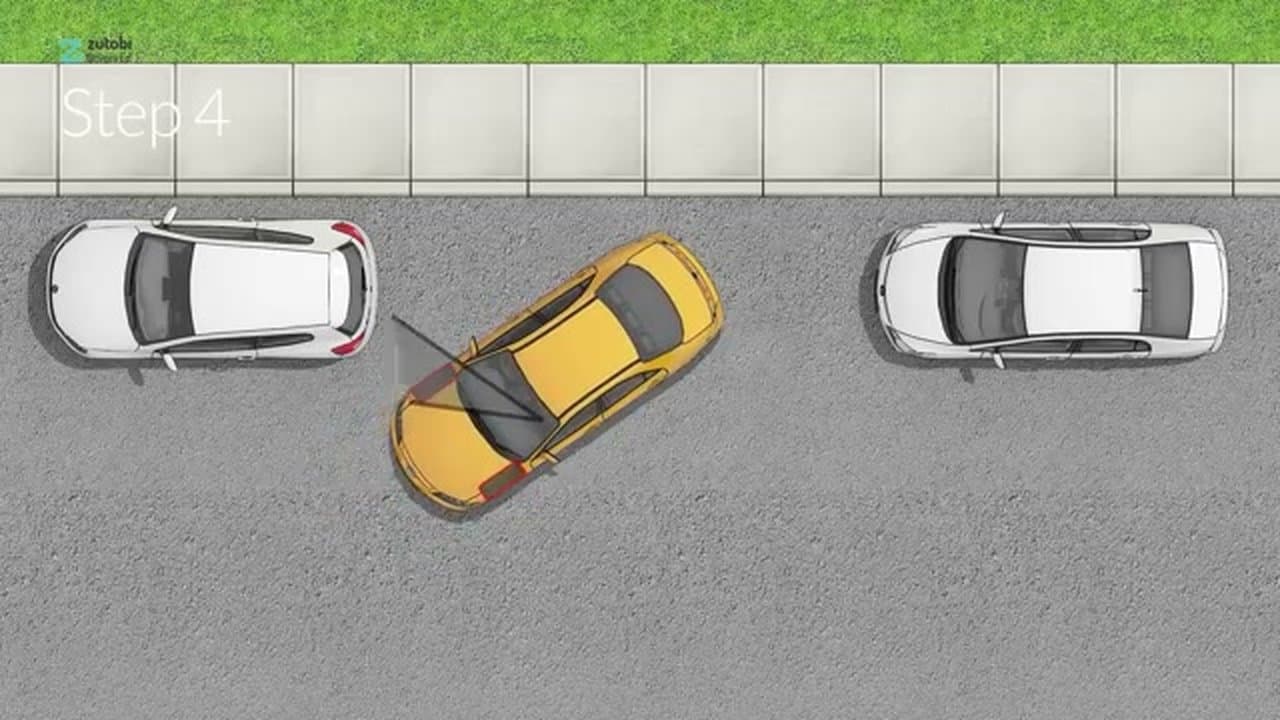
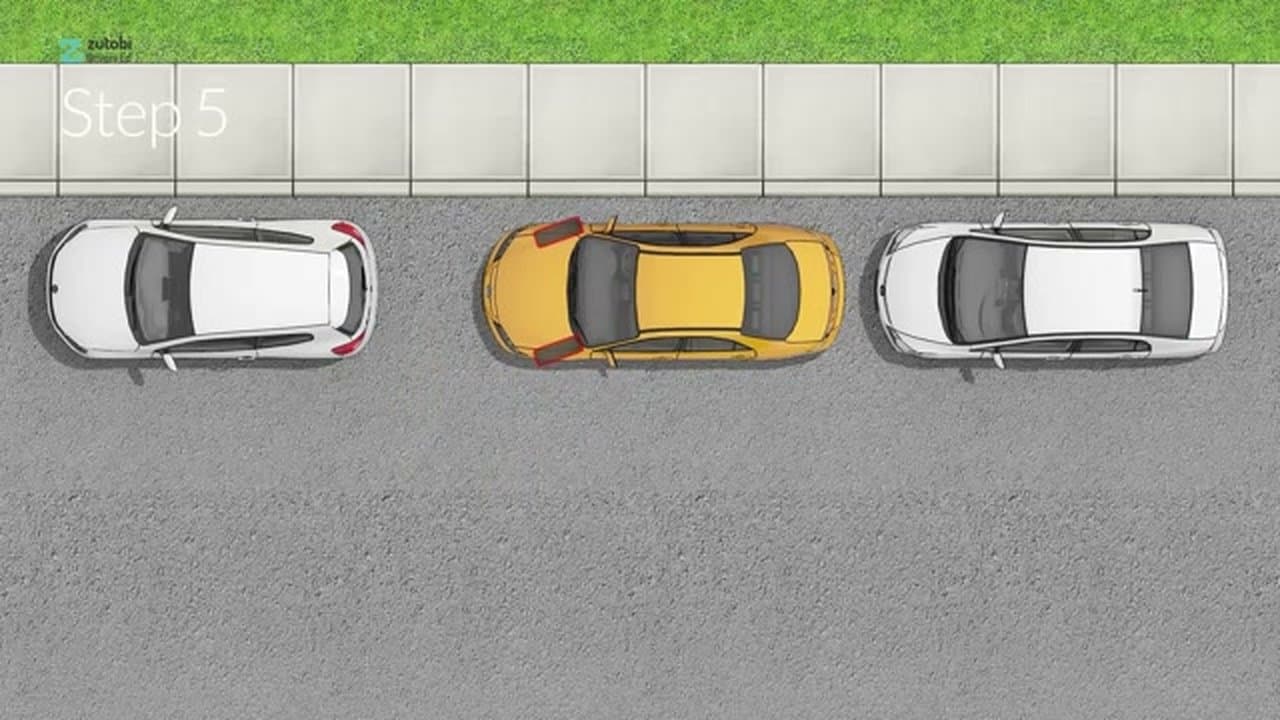
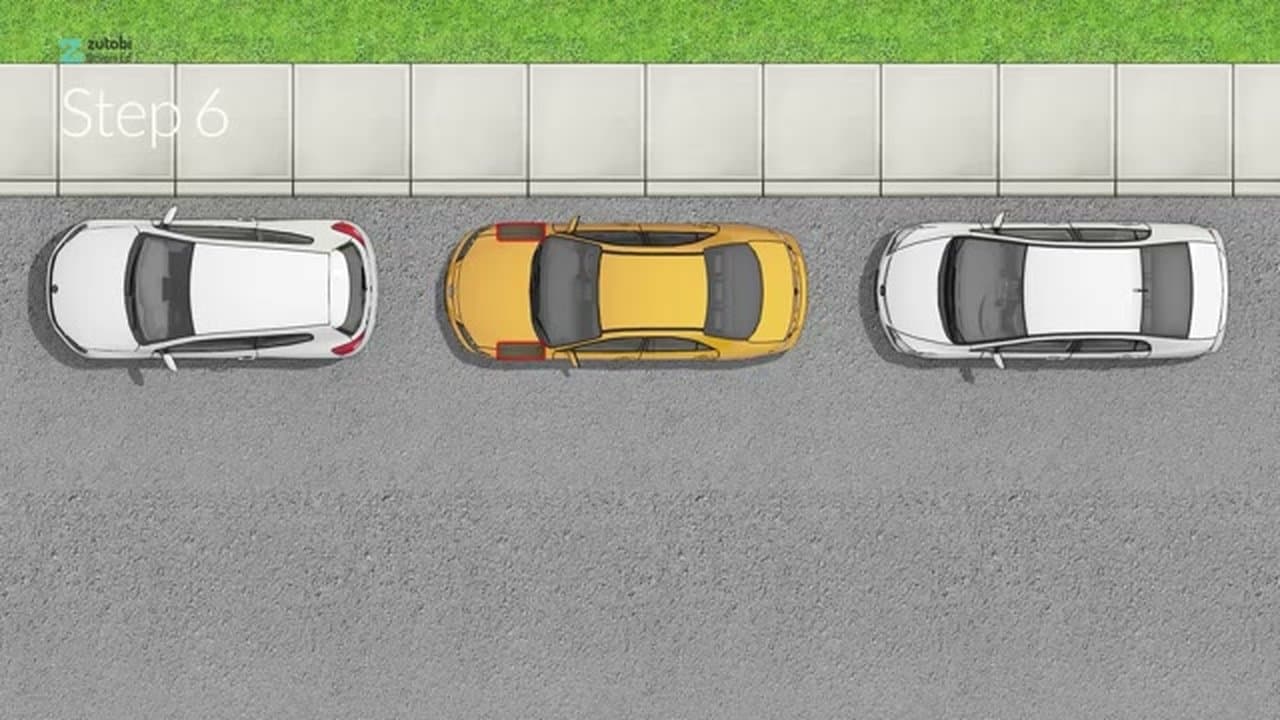
To parallel park: find a space at least 1.5 times your car's length. Pull alongside the front car with your rear bumpers aligned. Crank the wheel fully right and reverse until your car sits at a 45-degree angle to the curb. Straighten the wheels and keep reversing until your front bumper clears the front car. Crank the wheel fully left and back in to swing the front into the spot, then straighten up and shift to park.
- Find a parking spot at least 1.5 times your car's length.
- Line up next to the car in front with your rear bumpers aligned, about 2-3 feet apart.
- Crank the wheel fully right and start reversing slowly until the car sits at a 45-degree angle.
- Straighten the wheels and keep reversing until your front bumper clears the car in front.
- Crank the wheel fully left and back in to swing the front into the spot.
- Straighten up and center yourself between the two cars, then shift to park.
Parallel parking looks like geometry you have to calculate in real time. It isn't - it's a six-step recipe with mirror checkpoints at each stage. Go slow, check the curb in your side mirror after step 3, and don't be afraid to pull out and re-try if the angle is wrong. While you're sharpening driving basics, our tire-change guide and jump-starting walkthrough cover the two roadside skills you'll be glad you practiced before you need them.
Common questions about parallel parking
Answers to the questions we see most often about parallel parking - the trick most drivers miss, how much space you actually need, and how to handle hills and tight curbs without panicking.
What is the trick to parallel parking?
The trick is using mirror reference points instead of guessing where the car is. Three checkpoints do the work: align your rear bumper with the front car's rear bumper before reversing, stop turning right when the full front of the car behind you appears in your left side mirror, and start turning left when your right side mirror lines up with the rear tail light of the car in front. Hit those three and the geometry works itself out.
How big a space do you need to parallel park?
At least 1.5 times your car's length - about 18 feet for a typical sedan. Experienced drivers can squeeze into less, but anything under about 1.3x is genuinely tight even for a small car. If the gap looks snug from outside, it almost always is. Drive past and find a bigger one. That's faster than aborting a failed attempt and starting over.
How far from the curb should you be after parallel parking?
In most U.S. states the road-test passing standard is 12 to 18 inches from the curb. In real-world driving the same range is what to aim for: closer than 12 inches risks a wheel scrape, more than 18 inches risks a citation in busier cities. Step out and eyeball the gap rather than guess from the driver's seat - the angle from inside the car is misleading.
Why is parallel parking so hard?
Because you're steering in reverse, which feels backwards: turning the wheel right swings the back of the car right and the front left. Add other moving cars, an unfamiliar street, and someone watching from the sidewalk and the cognitive load spikes. The fix is the opposite of speed - going slower lets you read your mirrors at each checkpoint and correct before the angle is wrong.
What gear do you use to parallel park?
Reverse for the entire backing-in maneuver. Once you're in the spot, shift to drive and creep forward an inch or two only if you need to center yourself between the cars. Then shift to park - or first gear with the parking brake set if you're driving manual.
How do you parallel park on a hill?
The maneuver is identical, but how you finish matters. On a downhill grade, turn your front wheels toward the curb after parking so a failed parking brake sends the car into the curb instead of into traffic. On an uphill grade with a curb, turn the wheels away from the curb - the back of the front tire will catch the curb if the brake fails. No curb? Always turn the wheels toward the side of the road.