How to Make Pickles: 6 Methods From Quick Pickle to Lacto-Fermented

CookingMedium16:287 stepsBrowse more →

By ShowMeStepByStepPublished Updated

Based on a video by LifebyMikeG.

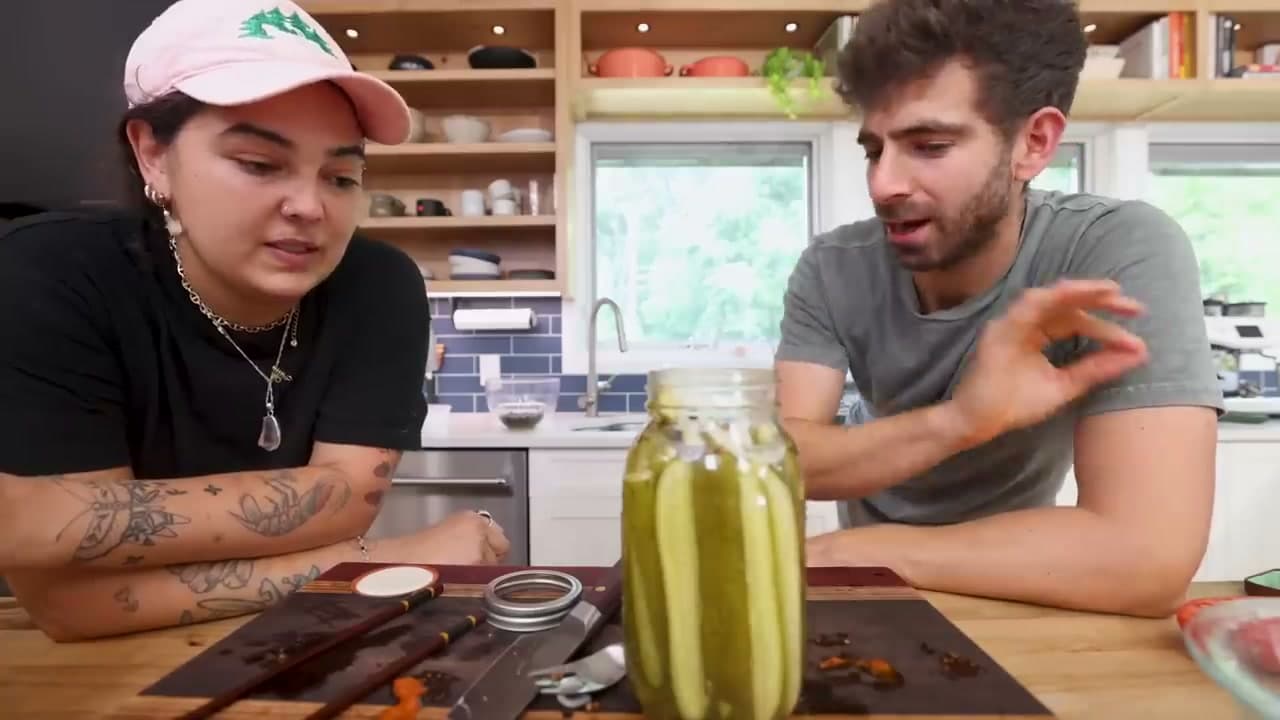
Pickles can mean a lot of different things, and the home cook's confusion is usually that one word covers six very different techniques. Mike from LifebyMikeG walks through all six in one video so you can pick the method that matches what you have on hand.

The quick refrigerator pickle is the place to start - it is nearly impossible to mess up and uses a 50/50 vinegar-water brine with kosher salt and sugar. The full-sour lacto-fermented pickle is what builds probiotic flavor through wild bacteria over 10-14 days at room temperature. The water-bath canned pickle is what gives you a year of shelf-stable jars without taking up fridge space.

You only need cucumbers, salt, vinegar (for the vinegar-brined methods), and a 32-ounce mason jar to start. The basic ratios scale up cleanly - 4 teaspoons each of salt and sugar per quart for the garlic dill, 4-5% salt by water weight for the fermented versions, 1/4 cup salt and 1/2 cup sugar per quart for the water-bath canned. Add fresh dill, garlic, onion, and whatever spices fit the flavor you want.

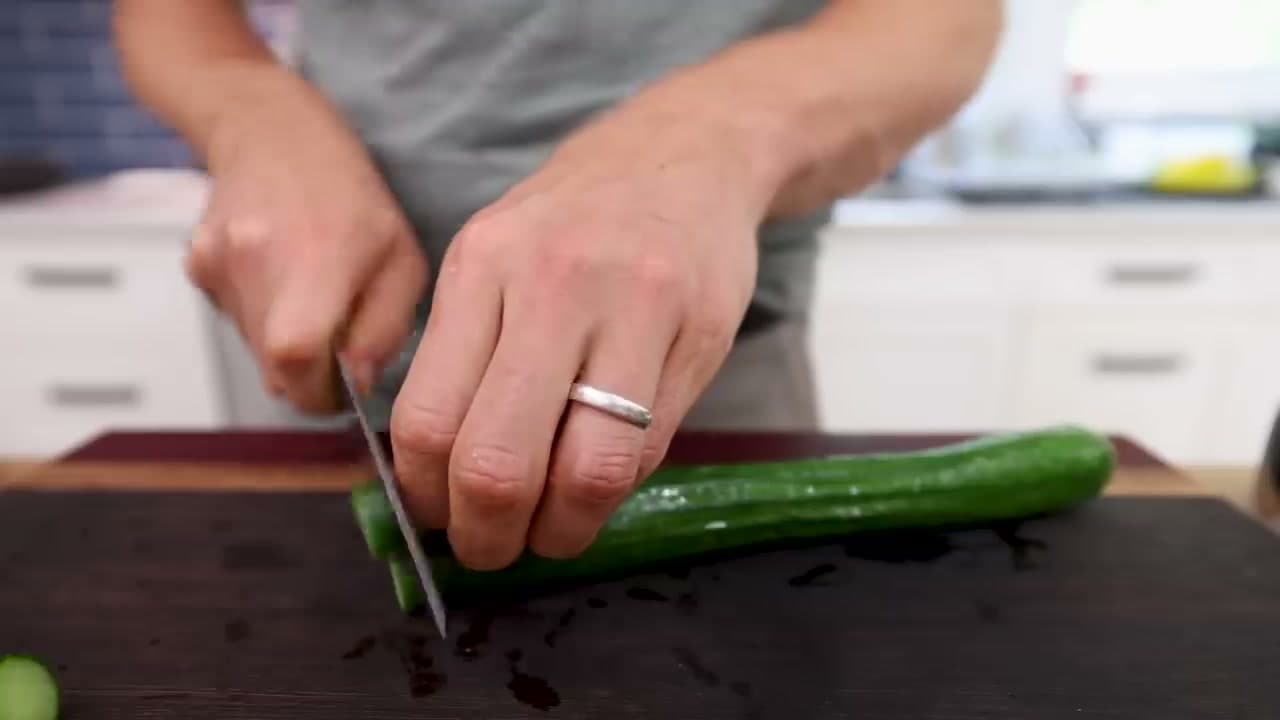
Pick a method that matches the cucumbers you have. The classic Kirby is best for whole pickles, gherkins for tiny pickles, Persian mini cucumbers for slicing, and Japanese cucumbers for either spears or planks. Whatever variety you grew or bought, one of these six methods will turn them into the best pickles you have ever made.

Step-by-Step Guide

1

Make Classic Garlic Dill Quick Pickles

5:55
Step 1: Make Classic Garlic Dill Quick Pickles

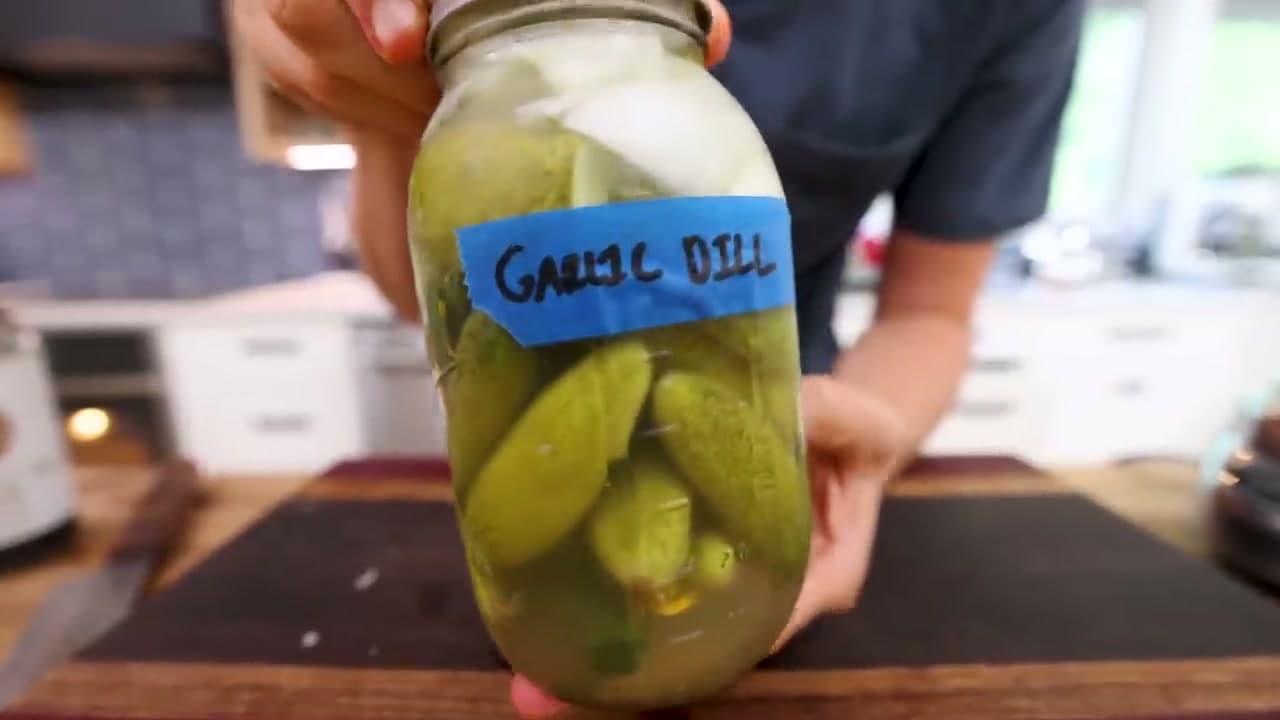
Start here - this is the easiest method and the place every home pickler should begin. Pack a 32 oz mason jar with whole gherkins (or sliced cucumbers if larger), 4-5 cloves of garlic, sliced onion, and a handful of fresh dill or dill flowers.

Fill the jar half with white vinegar and half with water for a 50:50 brine. Pour the liquid into a pan with 4 teaspoons each of kosher salt and sugar, bring to a boil to dissolve, then pour the hot brine back over the cucumbers. Seal the jar and refrigerate. Wait at least 24 hours before tasting. These last about a month in the fridge.

Tip

If you want a more acidic pickle, shift to 60:40 vinegar-to-water. For a milder pickle, 40:60. The 50:50 is the foolproof starting point.
2

Make Sweet Bread and Butter Pickles

7:45
Step 2: Make Sweet Bread and Butter Pickles

Slice cucumbers thin (1/4 inch coins are classic). Layer them in the jar with thin-sliced onion. The brine for bread and butter is sweet - 2 parts white vinegar to 1 part water, plus a full cup of sugar per quart, 1 tablespoon black peppercorns, 1 teaspoon coriander seed, and 1 teaspoon turmeric for color.

Heat the brine to dissolve the sugar, pour hot over the cucumbers, seal and refrigerate. Bread and butter pickles taste best after 3-4 days in the fridge - the sugar needs time to penetrate the cucumber.

Tip

The yellow color in commercial bread and butter pickles comes from turmeric. A pinch in the brine gives you that classic golden look.

3

Make Half-Sour Lacto-Fermented Pickles

9:35
Step 3: Make Half-Sour Lacto-Fermented Pickles

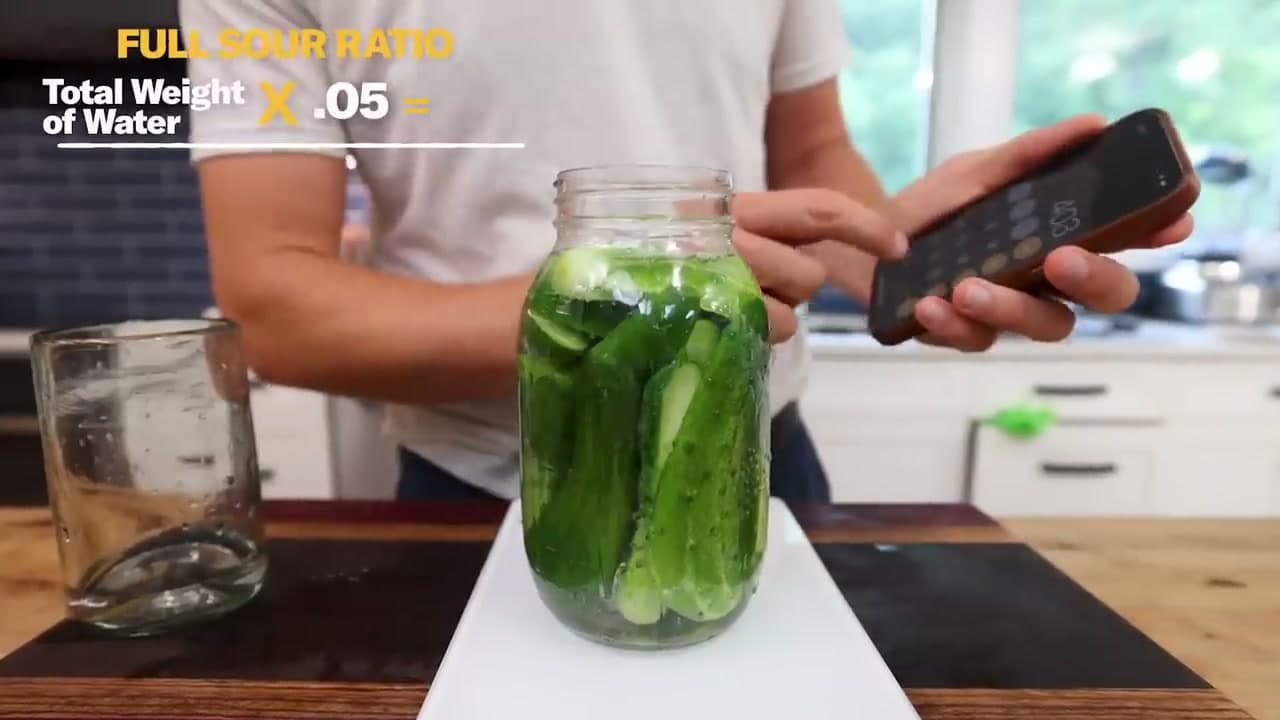
This is where pickles get interesting. Fill a jar with cucumbers, garlic, and dill. Make a brine of filtered water and kosher salt at 4-5% salt by weight - weigh your water in grams and multiply by 0.04 to 0.05 for the salt. No vinegar.

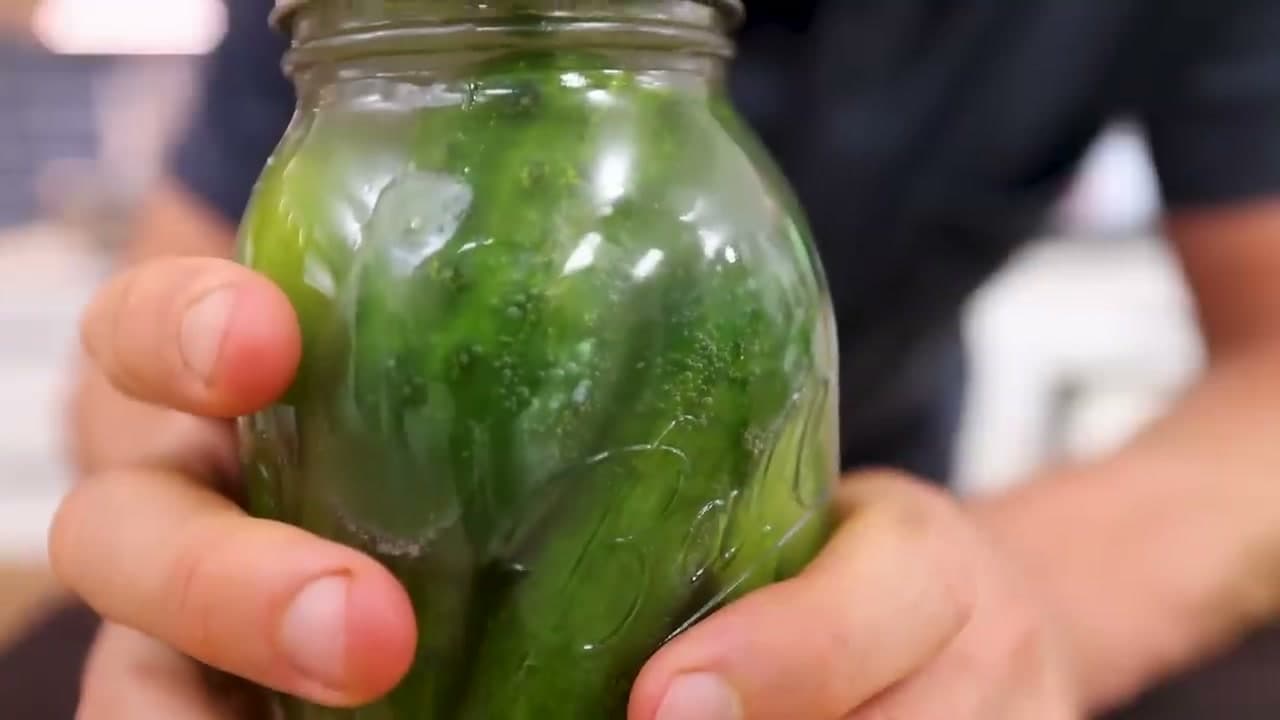
Pour the brine over the cucumbers, weight them down so they stay submerged, and leave the jar at room temperature with the lid loose. Within 3-5 days the brine will start to cloudy and the cucumbers will turn from bright green to half-green - that is when you have a half-sour. Move to the fridge while still crunchy.

Tip

Cucumbers must stay submerged below the brine. If yours float, weigh them down with a small glass jar of water or a fermentation weight - exposure to air invites mold.

4

Make Full-Sour Fermented Pickles

11:10
Step 4: Make Full-Sour Fermented Pickles

Same method as half-sour but leave the jar out for 10-14 days instead of 3-5. The brine turns cloudy white, the cucumbers turn olive-green throughout, and the flavor goes from mild salt-tang to deep deli-style sour. Move to the fridge once they reach your preferred sourness.

Mike uses a 5% salt ratio (water weight x 0.05 = grams of salt) for full-sour. The higher salt slows the ferment so you have more control over when to stop it.

Tip

A few bubbles in the brine after day 3 is exactly what you want - that is the lactic acid bacteria working. If you see white film on top, skim it off and keep going.

5

Make Korean Kimchi-Style Spicy Pickles

13:40
Step 5: Make Korean Kimchi-Style Spicy Pickles

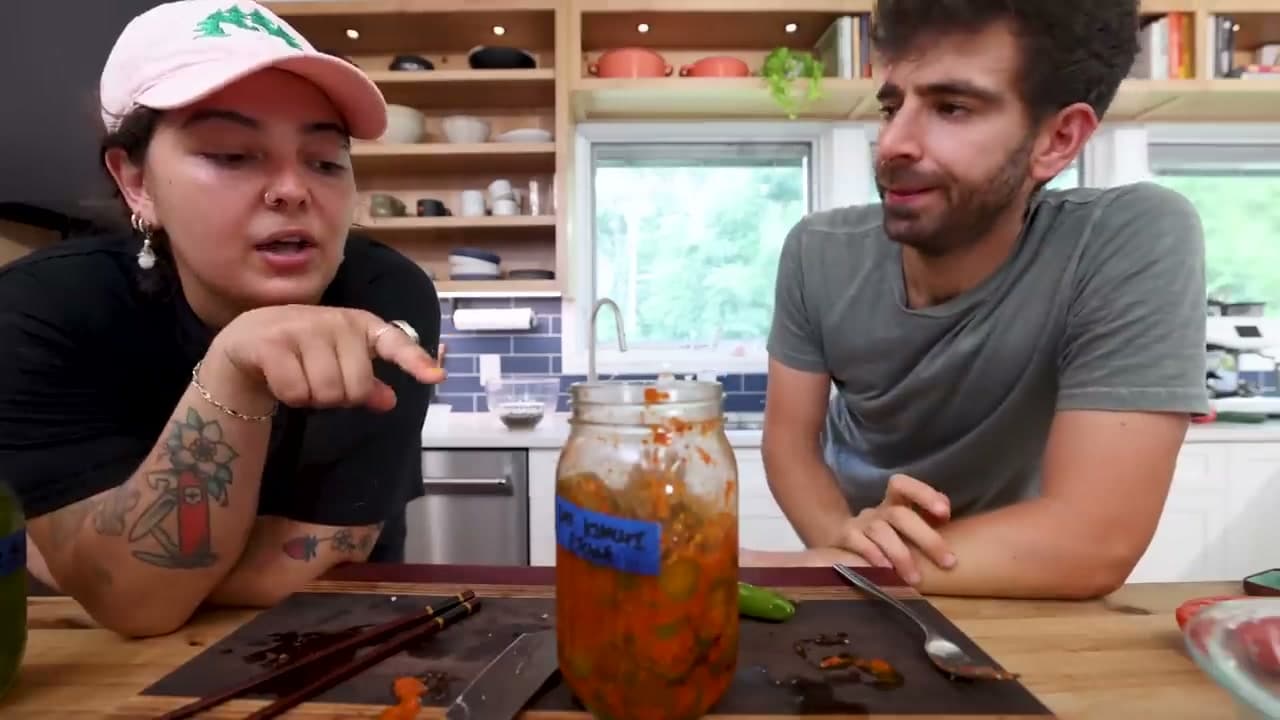
This is where things get fun. Pack a jar with cucumbers, plus 4-5 cloves of garlic, a chunk of fresh ginger, sliced scallions, 1/4 cup Korean gochugaru chili flakes, and a splash of soy sauce. Top with a light salt brine (3% salt by weight).

Leave at room temperature for 2-3 days for a quick spicy pickle, then move to the fridge. The gochugaru turns the whole jar a deep red-orange and the flavor is closer to a kimchi than a classic pickle.

Tip

Korean gochugaru is mild-to-medium heat with a distinct fruity-smoky flavor. Don't substitute regular red pepper flakes if you can help it - they will be hotter and lack the depth.

6

Water-Bath Can Pickles for Long-Term Storage

15:15
Step 6: Water-Bath Can Pickles for Long-Term Storage

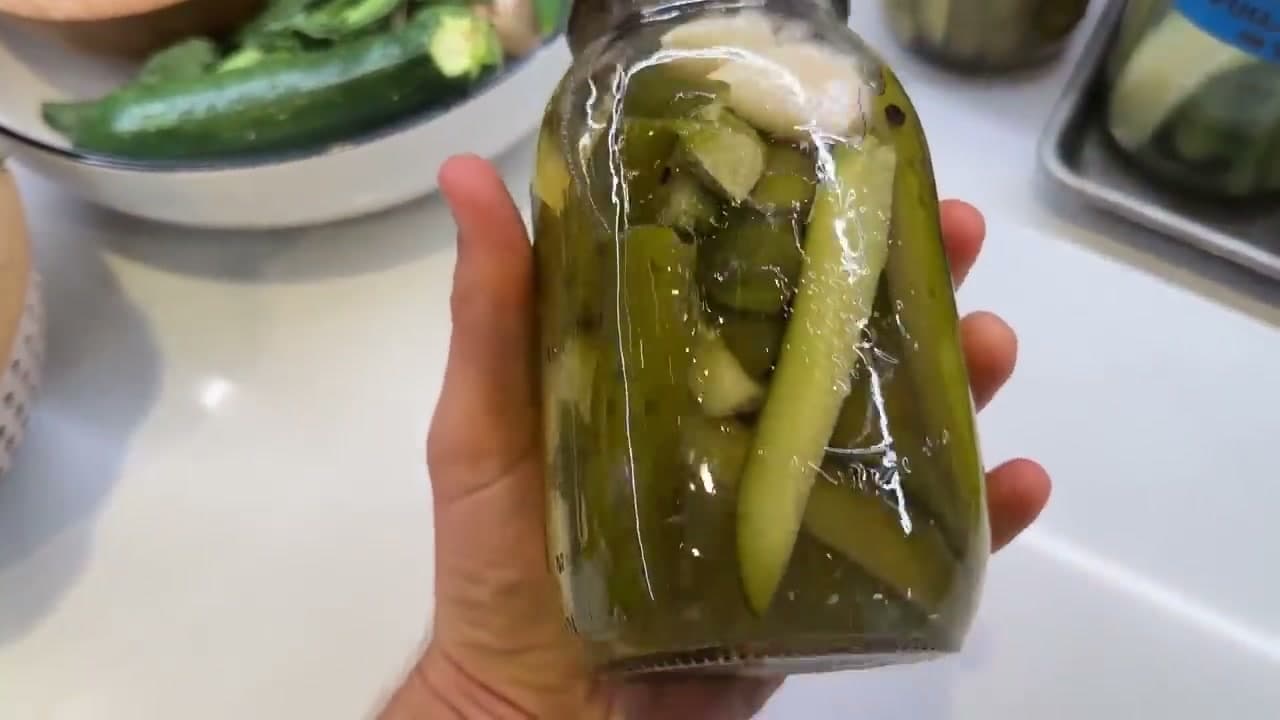
This is the method that gives you a pantry full of pickles that last 1-2 years at room temperature. Pack sterilized quart jars with cucumbers, 12 cloves of garlic, fresh dill, and any spices you want (peppercorns, coriander seed, mustard seed).

Make a brine of 1 part vinegar to 1 part water with 1/4 cup kosher salt and 1/2 cup sugar per quart of brine. Pour cold over the cucumbers leaving 1/2 inch headspace. Seal with new lids and process in a boiling water bath for 10 minutes (covered by 1 inch of water). When the jars cool, the lids will pop down - that is your seal.

Tip

If a lid does not pop down after the jars cool fully, store that jar in the fridge instead - it didn't seal properly for room-temperature storage. Use it within a month.

7

Compare, Age, and Store Your Six-Pickle Lineup

16:05
Step 7: Compare, Age, and Store Your Six-Pickle Lineup

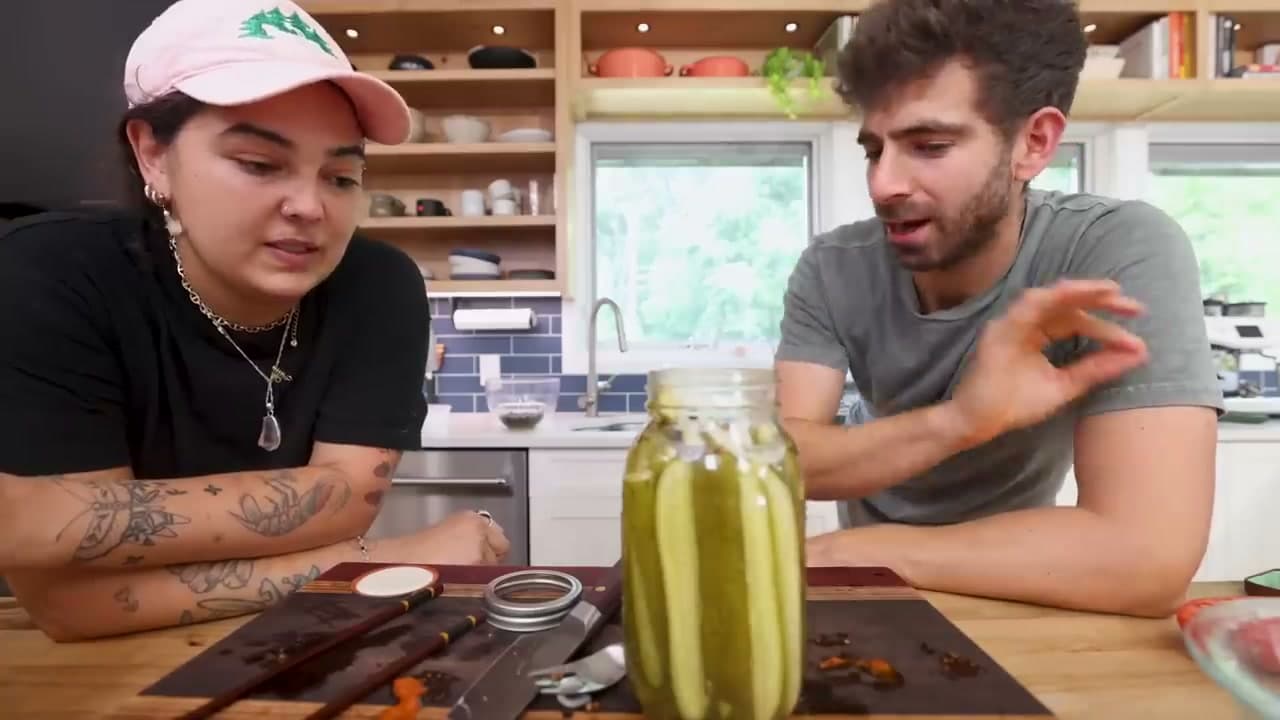
The six methods give you wildly different pickles from the same starting cucumber. Quick pickles last about a month in the fridge. Half-sour and full-sour fermented pickles last 6 months refrigerated. Water-bath canned pickles last 1-2 years at room temperature.

Wait at least 24 hours before tasting any pickle - the flavor needs time to penetrate. Fermented pickles taste best after 1-2 weeks of cold storage; the flavor continues to develop in the fridge. Label every jar with the method and date so you remember which is which when you reach for one a month from now.

Tip

Blue painter's tape and a Sharpie are the cheapest jar labels you'll ever buy. Write the method, the date, and the salt ratio - in two months you'll be glad you did.

Products Used

❖ The Recipe

How to Make Pickles: 6 Methods From Quick Pickle to Lacto-Fermented

American
Serves
Makes 1 quart jar (about 4-6 servings)
Prep
15 min
Cook
10 min
Total
25 min

Ingredients

13 items
  • 1-2 lb per quart jarPickling cucumbers (Kirby, gherkin, Persian, or Japanese)Smaller cucumbers stay crunchier through fermentation
  • 1.5 cupsWhite vinegar50:50 with water for garlic dill; 2:1 vinegar-water for bread & butter
  • 1.5 cupsFiltered waterRequired for lacto-fermented methods - chlorinated tap water can kill the fermentation bacteria
  • 4 tsp per quartKosher salt4-5% by water weight for lacto-fermented methods
  • 4 tsp per quartGranulated sugar1 cup per quart for bread & butter; skip entirely for lacto-fermented
  • 4-5 per jarFresh garlic clovesSmashed or whole
  • 1 small handful per jarFresh dill (or dill flowers)Flowers work the same as fresh dill
  • 1/4 cup per jarSliced yellow onionOptional but adds depth to garlic dill
  • 1 Tbsp per jarWhole black peppercornsRequired for bread & butter
  • 1 tsp per jarWhole coriander seedBread & butter only
  • 1/4 cupKorean gochugaru chili flakesKimchi-style pickle only - sub red pepper flakes if needed
  • 1 TbspSoy sauceKimchi-style pickle only
  • 2-3 each per jarFresh ginger and scallionsKimchi-style pickle only

Nutrition

estimated · per servingEstimated from the ingredient list, not measured. Actual values vary by brand, preparation, and serving size. Not a substitute for measured nutrition data.
Calories
15kcal
Protein
1g
Fat
0g
Carbs
3g
Sugar
2g
Sodium
700mg

Method

  1. 1
    Make Classic Garlic Dill Quick Pickles. Start here - this is the easiest method and the place every home pickler should begin.
  2. 2
    Make Sweet Bread and Butter Pickles. Slice cucumbers thin (1/4 inch coins are classic).
  3. 3
    Make Half-Sour Lacto-Fermented Pickles. This is where pickles get interesting.
  4. 4
    Make Full-Sour Fermented Pickles. Same method as half-sour but leave the jar out for 10-14 days instead of 3-5.
  5. 5
    Make Korean Kimchi-Style Spicy Pickles. This is where things get fun.
  6. 6
    Water-Bath Can Pickles for Long-Term Storage. This is the method that gives you a pantry full of pickles that last 1-2 years at room temperature.
  7. 7
    Compare, Age, and Store Your Six-Pickle Lineup. The six methods give you wildly different pickles from the same starting cucumber.
☐ The Checklist

How to Make Pickles: 6 Methods From Quick Pickle to Lacto-Fermented

Tools
8
Materials
12
Steps
7
Video
16 min

Your Guide

LifebyMikeG

As an Amazon Associate we earn from qualifying purchases. Links on this page may be affiliate links - clicking them and buying doesn't change your price, but helps support ShowMeStepByStep.

Tags

What's next

Related collections

Curated theme pages that include this tutorial.

Weekly Digest

Liked this cooking tutorial?

Pick the categories you want to hear about. Weekly digest of new step-by-step tutorials. No spam, easy unsubscribe.

Send me tutorials about

We only email about new tutorials. Easy unsubscribe anytime.