How to Add Washer Fluid (Step by Step)

Also in:Car Care

By ShowMeStepByStepPublished Updated

Based on a video by Evgeniy.

Step-by-Step Guide

1

Step 1: Buy Washer Fluid (Winter Blend if You Live Where it Freezes)

2:05
Step 1: Step 1: Buy Washer Fluid (Winter Blend if You Live Where it Freezes)

Pick up a jug of windshield washer fluid at an auto parts store, big box store, or even a gas station. A gallon runs about three or four dollars. There's no need to spend extra unless you want one of the upgrade blends that adds a Rain-X-style water repellent or a bug-cutting solvent for summer driving.

The main thing to get right is the blend. Standard blue summer fluid is fine in mild weather. If you live anywhere that drops below freezing overnight, you need a winter blend rated for cold - usually labeled -20F or -40F. Cold-blend fluid has methanol or isopropyl alcohol in it that keeps it liquid at low temperatures.

This is the same maintenance category as the rest of the basics. If you haven't already, see our guides on changing windshield wipers, checking coolant, and checking tire pressure - they pair well with this five-minute job.

Tip

Pick winter blend (-20F or -40F rated) if you live where temps drop below freezing - regular fluid can freeze and crack the reservoir. A cracked plastic tank or split washer hose is a couple hundred dollars to fix; the winter jug costs a dollar more than the summer one.
2

Step 2: Park Flat and Locate the Hood Release

0:35
Step 2: Step 2: Park Flat and Locate the Hood Release

Pull into the driveway or a flat parking spot and turn the engine off. The car doesn't need to be cold - the washer fluid reservoir isn't heat-sensitive the way the coolant tank is - but a flat surface keeps the fluid level honest when you check the MAX line.

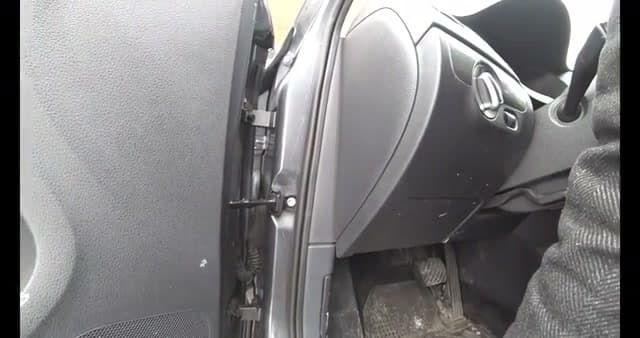
Inside the cabin, look down at the driver's-side footwell or under the dashboard for a small lever marked with a hood icon. Most cars put it on the left side under the steering column. Pull it firmly and you'll hear a metallic click - the hood pops up about an inch but stays held by a safety latch at the front.

If the manual is in the glove box, flip to the maintenance section and check whether your make has anything unusual to know - some European cars share a reservoir layout with the coolant tank, and the manual will tell you the exact fluid capacity if you want to top up to an exact volume.

Tip

Pull the parking brake before you walk around to the front of the car. It's a small habit that catches the day your transmission decides to roll while you have your hands buried in the engine bay.

3

Step 3: Pop the Hood and Prop it Open

0:50
Step 3: Step 3: Pop the Hood and Prop it Open

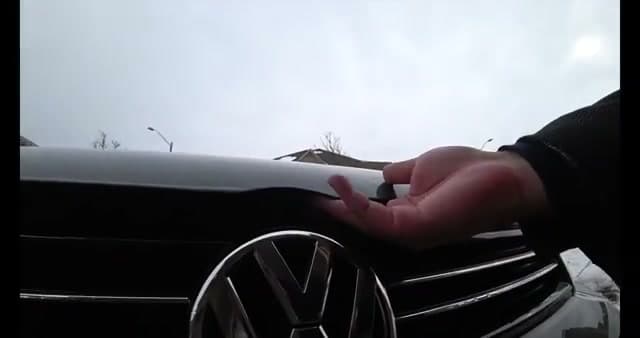
Walk to the front of the car and slide a hand under the leading edge of the hood right in the middle. You're feeling for a small lever or tab - the safety release. Push it sideways (most cars push left or right; you'll feel which way it moves) while lifting the hood with your other hand.

Many newer cars have gas struts that hold the hood up on their own once you lift it past a certain point. If your hood drops back down on its own, find the prop rod clipped to the underside of the hood near one of the edges. Pull it free, lift the hood high enough to swing the rod up vertically, and seat the rod tip into the small support hole on the underside of the hood.

Give the hood a gentle push down on the rod to confirm it's seated and won't slip out. Hood security matters - a falling hood with hands in the engine bay is the kind of injury that ends a Saturday.

Tip

If you can't find the safety release tab on the first try, look at where your fingers naturally land along the front edge - it's almost always in the center or slightly to one side. Some cars put it surprisingly close to the grille.

4

Step 4: Locate the Washer Fluid Reservoir

1:40
Step 4: Step 4: Locate the Washer Fluid Reservoir

Stand in front of the open hood and look at the engine bay. You're hunting for a brightly colored plastic cap with a windshield icon stamped on top. Blue is the most common color, but some cars use yellow. The icon is small but unmistakable - a stylized windshield with little spray lines coming up at it.

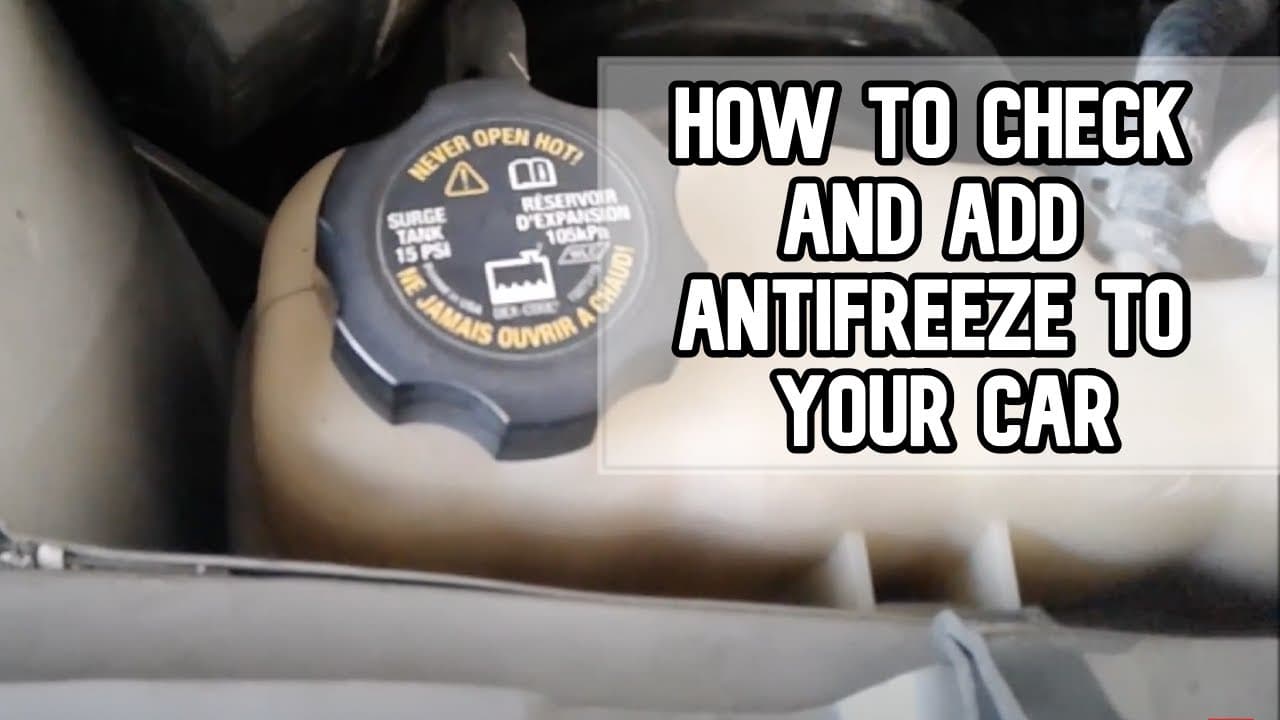
The cap sits on top of a translucent white plastic tank you can see the fluid level through. The reservoir is usually toward the front of the engine bay near one of the fenders. Don't grab the round opaque coolant reservoir cap by mistake - that one usually has a different color, a different icon (a thermometer in waves), and shouldn't be opened when the engine is hot anyway.

If you have two similar-looking caps, the windshield icon is the giveaway. Compare to the photo - the blue cap with the windshield-spray icon is the washer fluid; the smaller cap or round overflow tank with no icon (or a thermometer icon) is the coolant. When in doubt, check the owner's manual diagram.

Tip

If the cap has a hinge instead of a screw thread, just flip it open like a hatch. Hinged caps don't come all the way off - they swing up out of the way so you can pour.

5

Step 5: Unscrew the Cap and Pour to the MAX Line

3:20
Step 5: Step 5: Unscrew the Cap and Pour to the MAX Line

Lift or unscrew the washer fluid cap and set it aside in a clean spot on the engine bay (not in the dirt). Pour the fluid in slowly - the reservoir openings are smaller than the jug spout, so you'll glug a bit if you tip the jug too hard.

Watch the fluid level rise through the translucent plastic on the side of the tank. There's usually a molded MAX or FULL line, and sometimes a MIN line near the bottom. Stop pouring when you reach MAX. If you can't see a line, leave about an inch of headspace at the top - the fluid needs a little room to slosh and expand without spilling.

A small funnel makes this much tidier if the opening is narrow or hard to reach. Plenty of cars have you pouring straight from the jug, but a one-dollar funnel keeps spills off the engine. If you do spill some, wipe it up with a rag - the fluid is a mild solvent and can damage paint or rubber hoses over time.

Tip

Don't overfill. Pouring past MAX means fluid sloshes out the cap vent the first time you brake hard, which lands it right on hot engine components. The reservoir is sized for the right amount; trust the line.

6

Step 6: Replace the Cap and Close the Hood

4:05
Step 6: Step 6: Replace the Cap and Close the Hood

Snap or screw the washer fluid cap back on. Hinged caps just click down; threaded caps need to be turned until they seat firmly. A loose cap lets the fluid evaporate over weeks and lets dirt fall in - both bad for the pump and the spray nozzles downstream.

If you used the prop rod, lift the hood off the rod a few inches, swing the rod back down, and clip it into its holder on the underside of the hood. Don't try to close the hood with the rod still up - you'll bend the rod or dent the hood.

Lower the hood the last few inches and let it drop the final six inches under its own weight. The latch needs that small impact to fully engage. Don't slam it from over your head - that's how dents and bent hood latches happen. After it drops, lift gently on the leading edge to confirm it's locked. If it pops up, lower and drop again from a slightly higher start.

Tip

If the hood doesn't latch on the first drop, the safety release tab is probably still partially engaged. Press down once firmly with both hands on either side of the center - that's enough to seat the latch the rest of the way.

7

Step 7: Test the Sprayer and Run the Wipers

4:50
Step 7: Step 7: Test the Sprayer and Run the Wipers

Get in the car and turn the ignition to accessory (or start the engine). Pull the wiper stalk back toward you, or press the dedicated washer button on the stalk. You should hear the pump kick on and see fluid spray onto the windshield in a thin fan from the spray nozzles on the hood or cowl.

Run the wipers a couple of cycles to clear the streaks. If the spray is uneven - one side weaker than the other - the nozzles are probably partly blocked and can be cleared with a sewing needle or a thin pin (gently, with the car off). If nothing sprays at all, recheck that the cap is fully seated, confirm the reservoir is actually full (it can drain faster than you expect on a sweep through the engine bay), and listen for the pump motor. If you don't hear the pump, the fuse may have blown - check the owner's manual for the washer pump fuse location.

One last upgrade worth knowing about: a windshield treatment spray like Rain-X applied separately to the glass makes rain bead off at highway speed and dramatically cuts how often you'll need the wipers in the first place.

Tip

In freezing weather, the pump can run but no fluid comes out because the line is frozen. Park in a heated garage for an hour, switch to winter blend, and the problem usually disappears.

Products Used

☐ The Checklist

How to Add Washer Fluid (Step by Step)

Tools
2
Materials
2
Steps
7
Video
5 min

Your Guide

Evgeniy

As an Amazon Associate we earn from qualifying purchases. Links on this page may be affiliate links - clicking them and buying doesn't change your price, but helps support ShowMeStepByStep.

Tags

What's next

Weekly Digest

Liked this adulting tutorial?

Pick the categories you want to hear about. Weekly digest of new step-by-step tutorials. No spam, easy unsubscribe.

Send me tutorials about

We only email about new tutorials. Easy unsubscribe anytime.