Your dashboard tire light comes on and you have no idea what number your tires are supposed to be at. You are not alone. Plenty of people drive for years without touching a gauge and pay for it in uneven tread wear and extra dollars at every fill-up.
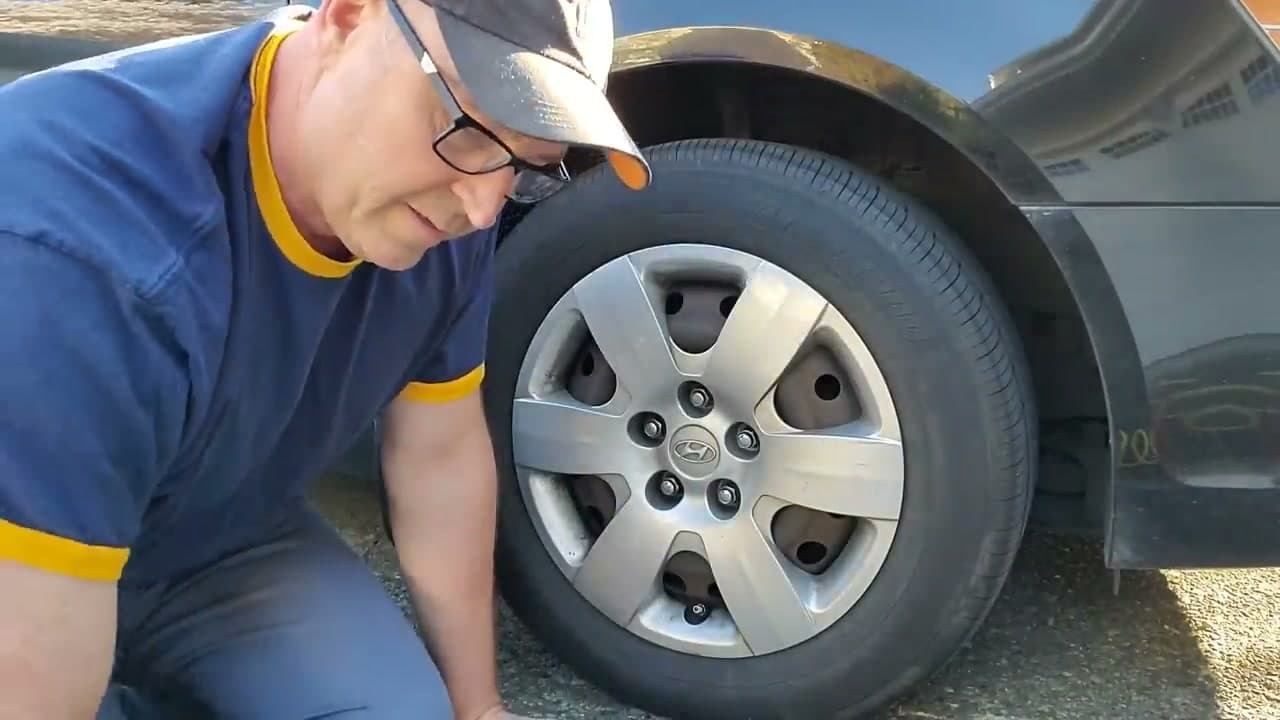
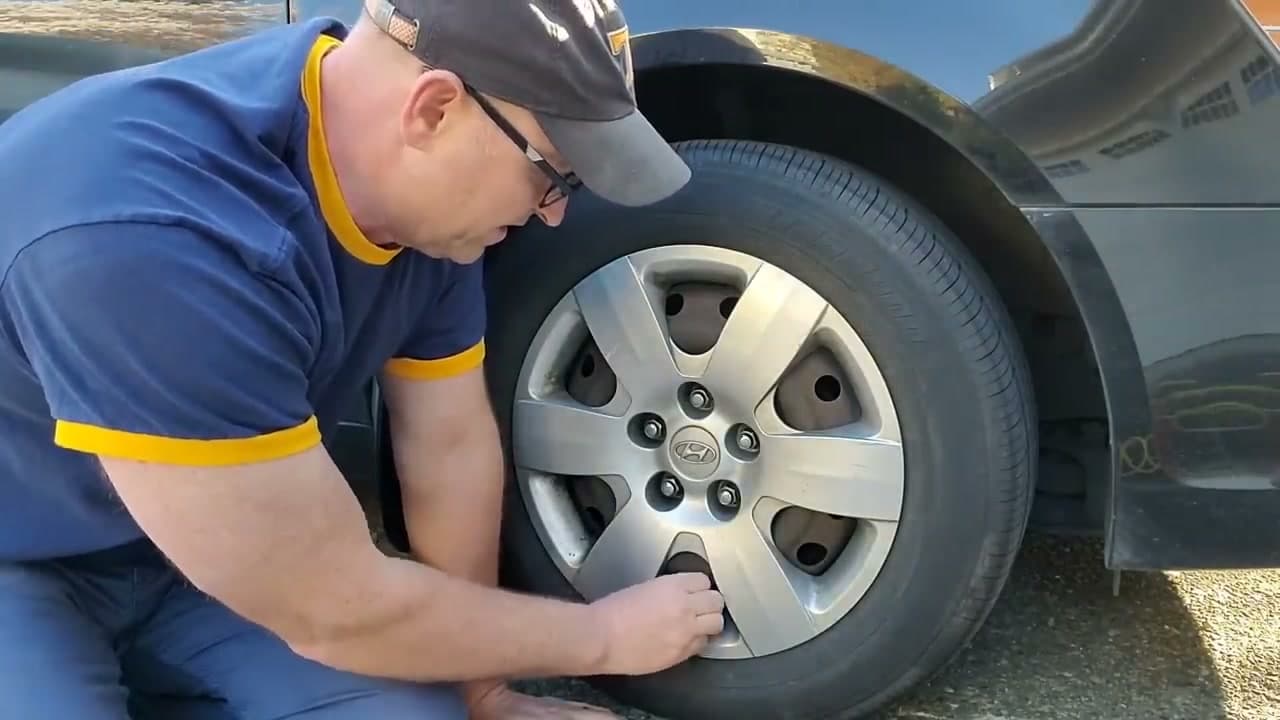
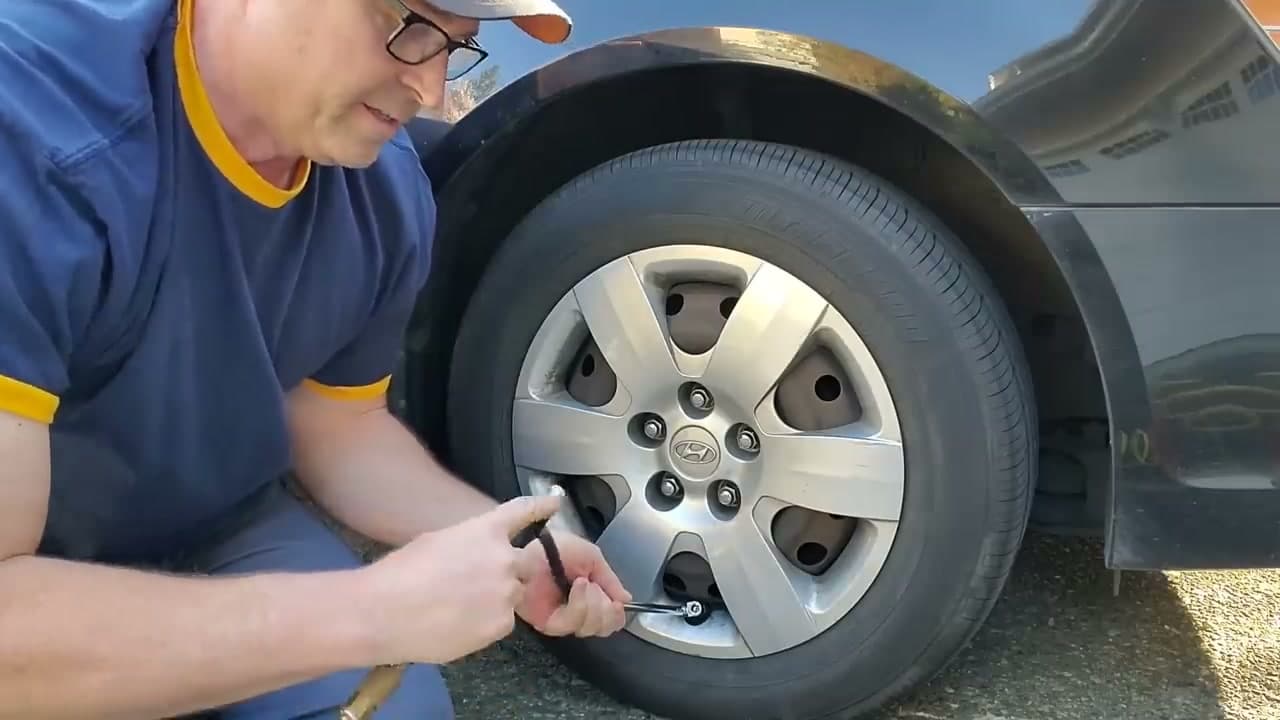
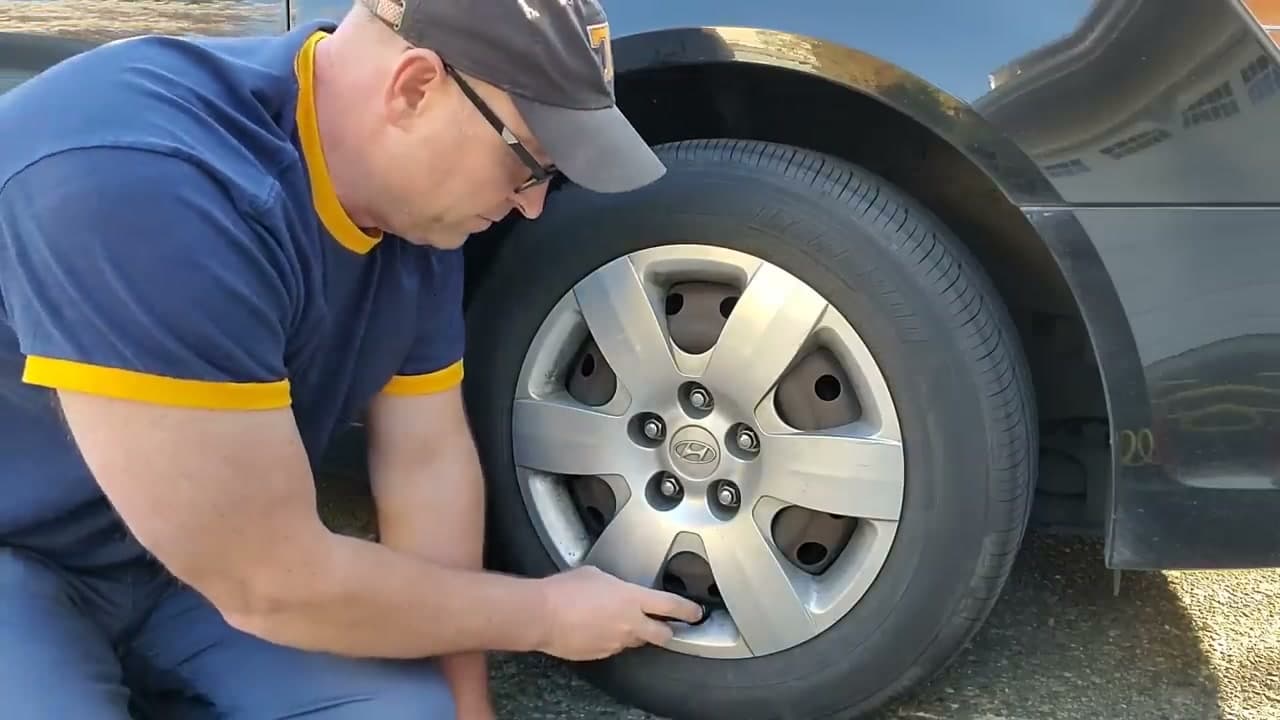
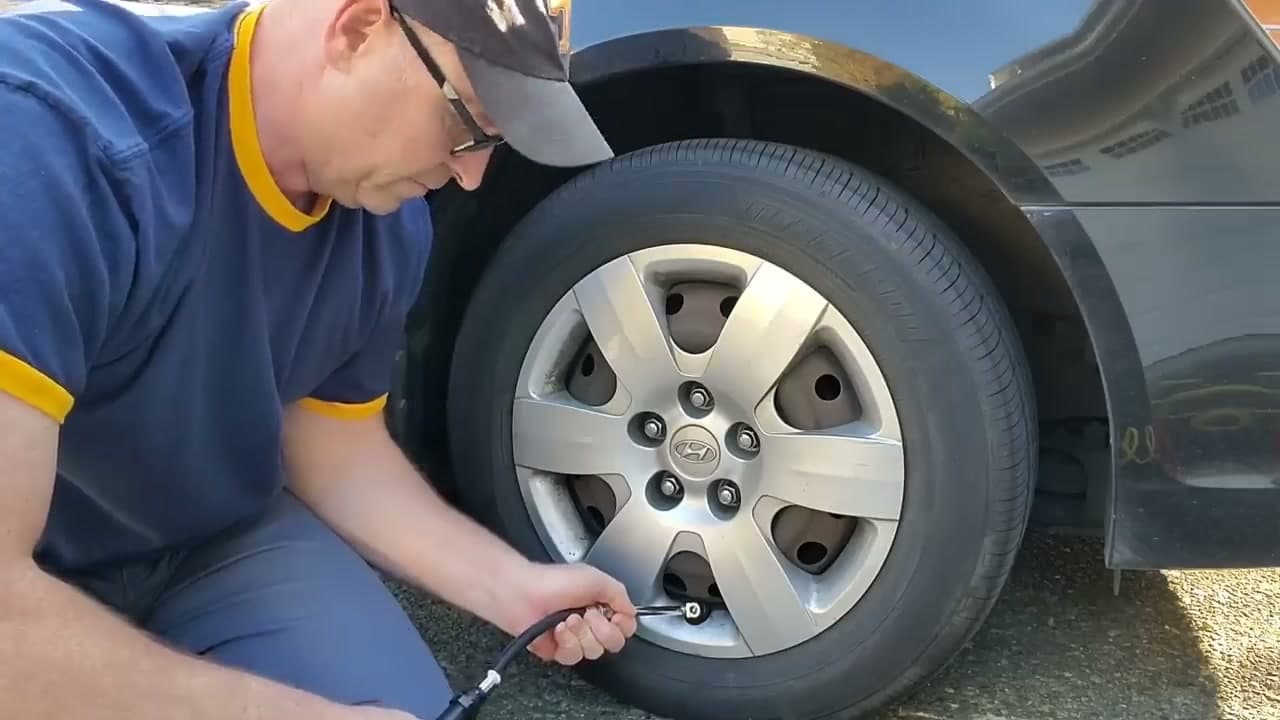
This walkthrough from Rob Kenney at Dad, how do I? covers the routine: find your car's recommended PSI, read each valve stem with a gauge, add or bleed air to match. The rest of this page covers what it moves past quickly.
What you need
- A tire pressure gauge - stick, dial or digital
- Air: a 12V portable compressor, a home compressor, or a gas station pump
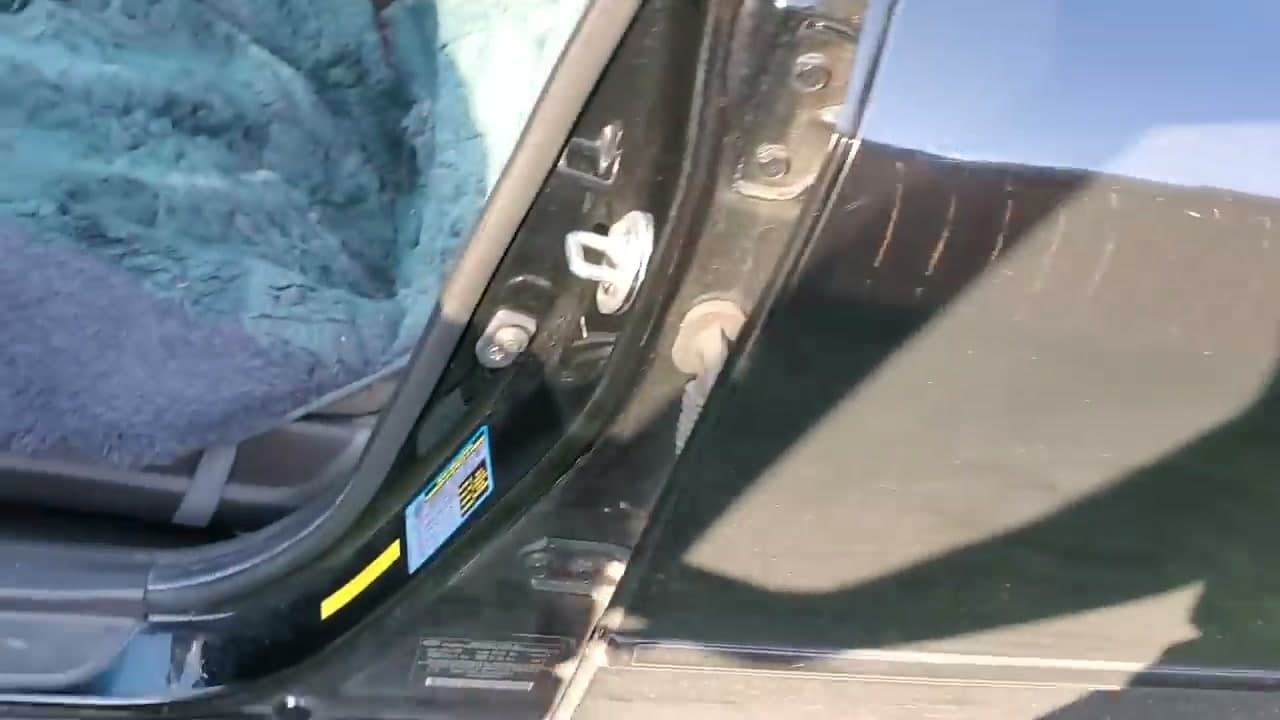
- The sticker in your driver's door jamb, or the owner's manual if it has peeled off
- Five minutes, before you drive anywhere
Why the light comes on the first cold morning
Air contracts as it cools. Tire pressure falls about 1 PSI for every 10 degrees Fahrenheit the temperature drops, which is the whole story behind the October wave of tire lights. A tire set to 33 PSI on an 80-degree afternoon reads about 28 on the first 30-degree morning, and 28 trips the sensor on most cars. Nothing is punctured - the same air is taking up less room. Top back up to the door-jamb number and the light clears.
Where your real PSI number lives
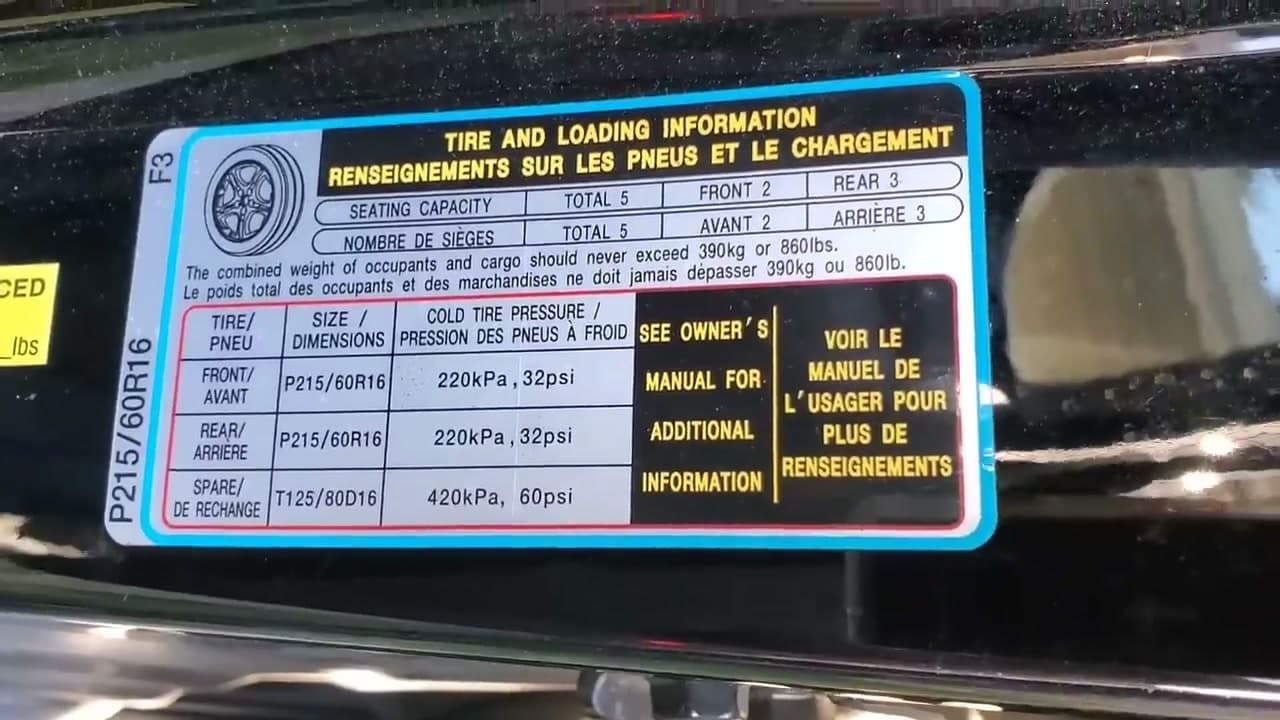
The number stamped into the sidewall is not your target. That is the maximum the tire can hold, often 44 or 51 PSI, and filling to it buys a hard ride and wear down the middle of the tread. Your number is on the placard inside the driver's door jamb: cold pressure front and rear, not always the same figure, plus a spare pressure that is often much higher - 60 PSI is normal for a compact donut. If the sticker is gone, the table is in the owner's manual.
Check cold, not after a drive
Cold means the car has sat three hours or more, or has covered less than a mile. Driving heats the air inside, and a warm tire reads 4 to 6 PSI high. Set a warm tire to the sticker number and you have quietly underinflated it. If the nearest air is five miles away, fill to about 3 PSI over and bleed off the difference the next morning.
How low is too low
The monitoring system waits until a tire sits about 25 percent below the placard pressure, so on a 33 PSI car the light holds off until roughly 25 PSI. That is a late warning. Within 2 PSI of the sticker number, leave a tire alone - two gauges disagree by that much anyway. Below 20 PSI, stop driving on it: the sidewall flexes hard enough to build heat, and heat turns a soft tire into a blowout at speed. Put the spare on and get the flat looked at.
Getting the TPMS light to go off
It usually clears after a few miles above 20 mph once all four tires are back up. If it stays lit, look for a TPMS reset button under the steering column or a tire page in the dash menu and hold it with the key on and the engine off until the light blinks. One that returns weekly points at a slow leak: a nail, a corroded rim bead, a brittle valve stem. One that flashes on startup then goes solid is a failed sensor, not low air.
Gauge choice and the usual mistakes
A pencil-style stick gauge costs a few dollars and is accurate enough unless you have run it over. Digital gauges read finer and are kinder to tired eyes, on a battery that dies unannounced. Either beats the one on the gas station hose.
- Pressing the gauge on crooked. A long hiss means a bad seal and a low reading.
- Reading the tires after driving to the air pump. Warm tires read high, every time.
- Filling to the sidewall number. That is the ceiling, not the target.
- Skipping the spare. It bleeds down in the trunk for years and it is the one you need in the dark on a shoulder.
The cold morning that softens your tires also finds a weak battery, so learn jump-starting a car and changing a car tire before you need either. Do the same walk-around when you rotate the tires, check the brake pads and check your oil.