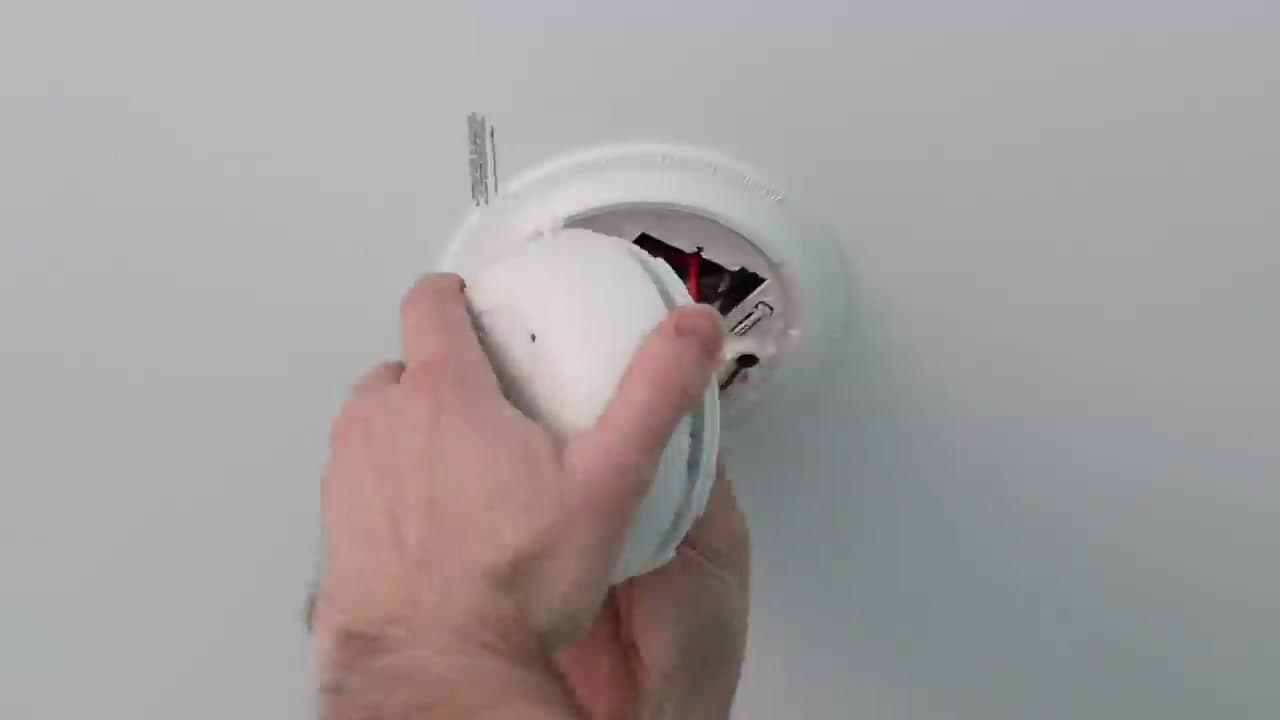
How to Install a Smoke Detector (Step by Step)

By ShowMeStepByStepPublished Updated

Based on a video by The Excellent Laborer.

Smoke detectors are the cheapest piece of safety gear in your house. They are also the one piece of gear that gets ignored for years at a time. A working detector pays for itself the first time it goes off.

Josh from The Excellent Laborer walks through a full hardwired install with battery backup on a new build. He covers the code requirements he has to meet for inspection, the three-wire daisy chain that interconnects every detector in the house, and the bracket-and-twist method that gets the unit onto the ceiling in under a minute once the wiring is done.

Safety first. Always turn off the breaker before any electrical work and confirm the wires are dead with a non-contact voltage tester. Mount detectors per your local code - typically on the ceiling, at least 10 feet from the kitchen and away from bathroom steam, with one in every bedroom and hallway. Test the alarm monthly and replace the backup battery every year per NFPA recommendations.

If you have not opened a ceiling box before, the wiring side of this job is the same as the dimmer switch install. Familiarity with hot, neutral, and ground will make this go a lot smoother. For another beginner-friendly install in the same skill bucket, see how to install a doorknob or our walkthrough of how to install a toilet.

Step-by-Step Guide

1

Review the Code Requirements and Pick Your Locations

0:50
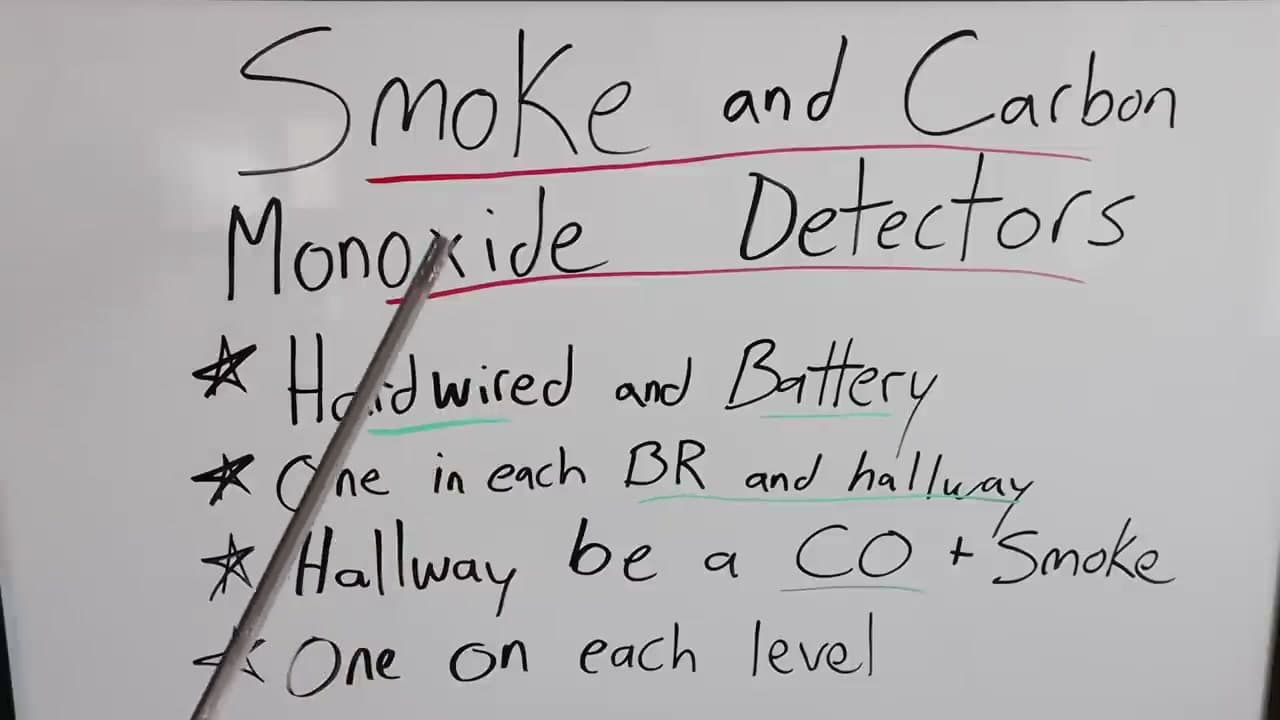
Step 1: Review the Code Requirements and Pick Your Locations

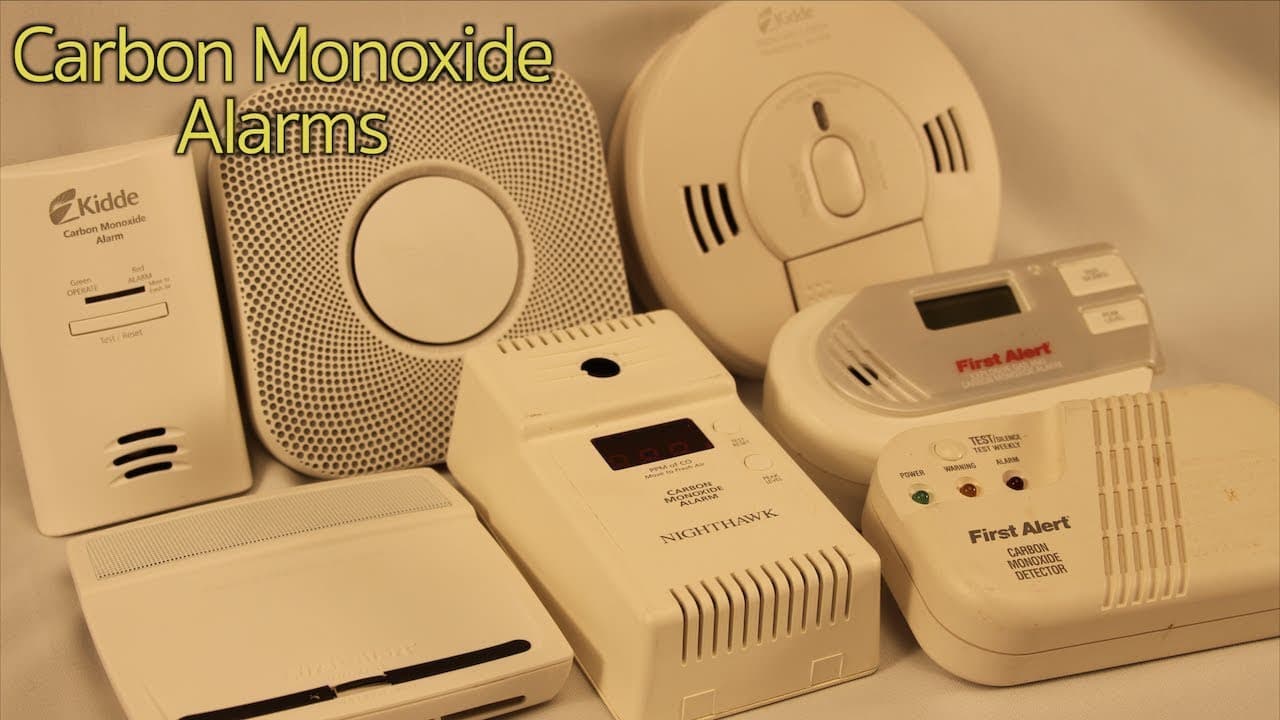
Before you open a single box, know what your local code wants. Most US jurisdictions require detectors that are hardwired with battery backup, interconnected on a three-wire daisy chain so they all sound when any one trips, and placed in every bedroom, every hallway connected to a bedroom, and on every level of the house. Hallways usually need a combination smoke + carbon monoxide unit.

Plan your runs first. The first detector in the chain only needs two-wire power coming in. Every detector after that runs on three-wire so the interconnect signal can pass through. Mark each ceiling location with a pencil before you start cutting drywall or fishing cable.

Tip

Check your local building department's website for the exact requirements - they vary by state and city. NFPA 72 is the national baseline but your inspector goes by the local amendment.
2

Unbox the Detector and Identify the Parts

2:40
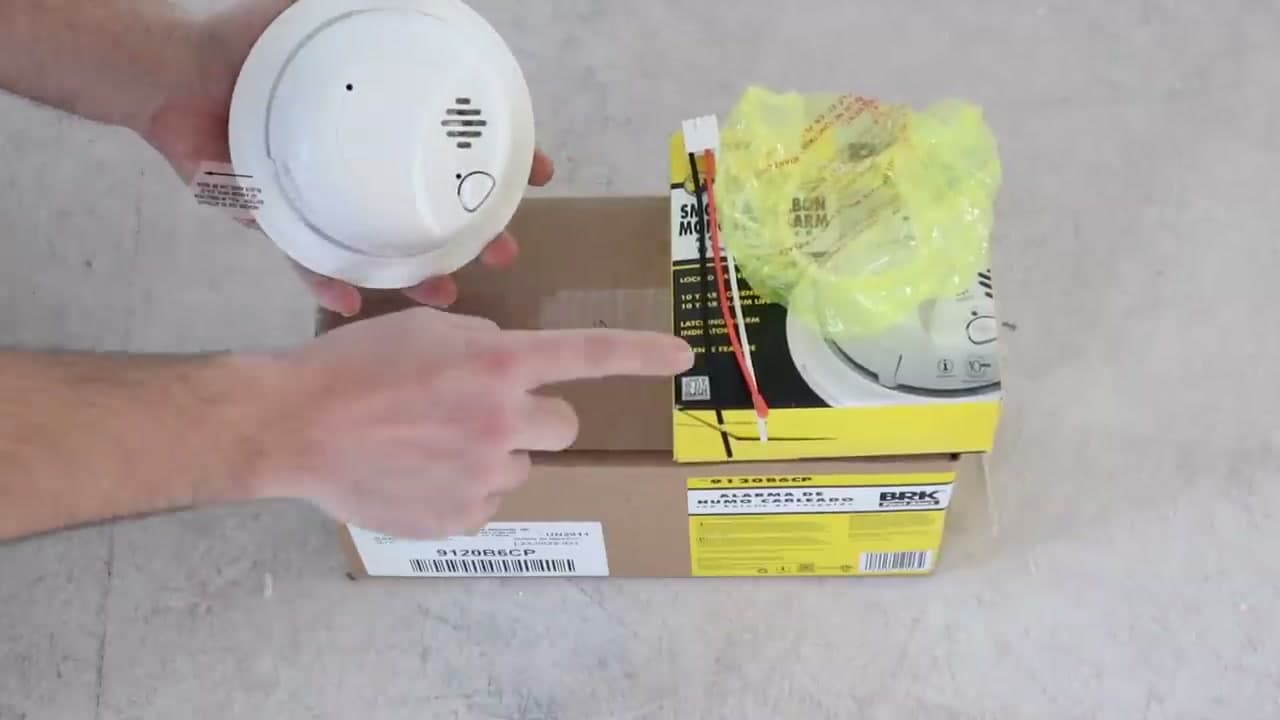
Step 2: Unbox the Detector and Identify the Parts

Pop the box and you should find four things: the round mounting flange (bracket) that screws to the ceiling, the wiring harness pigtail that connects the house wires to the detector, a plastic dust cover for use during construction, and the detector itself.

Wire nuts are not usually included. Grab a small bag of orange and red wire nuts before you start - you will need at least two sizes (smaller for the red interconnect pair, larger for the white and black pairs).

Tip

If the house is still under construction, leave the dust cover on the detector after install. Sawdust and drywall mud will ruin a detector's sensor in a hurry. Pull the cover off the day you move in.

3

Pull the Wires Down From the Ceiling Box

3:15
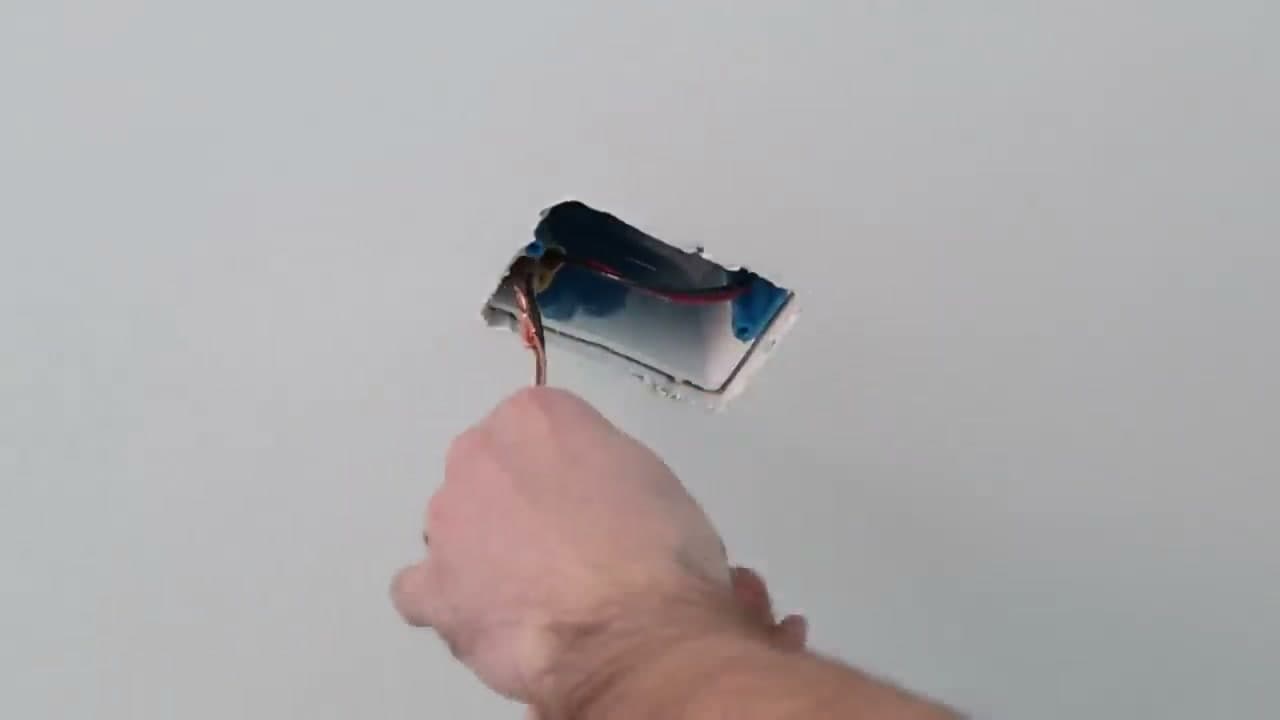
Step 3: Pull the Wires Down From the Ceiling Box

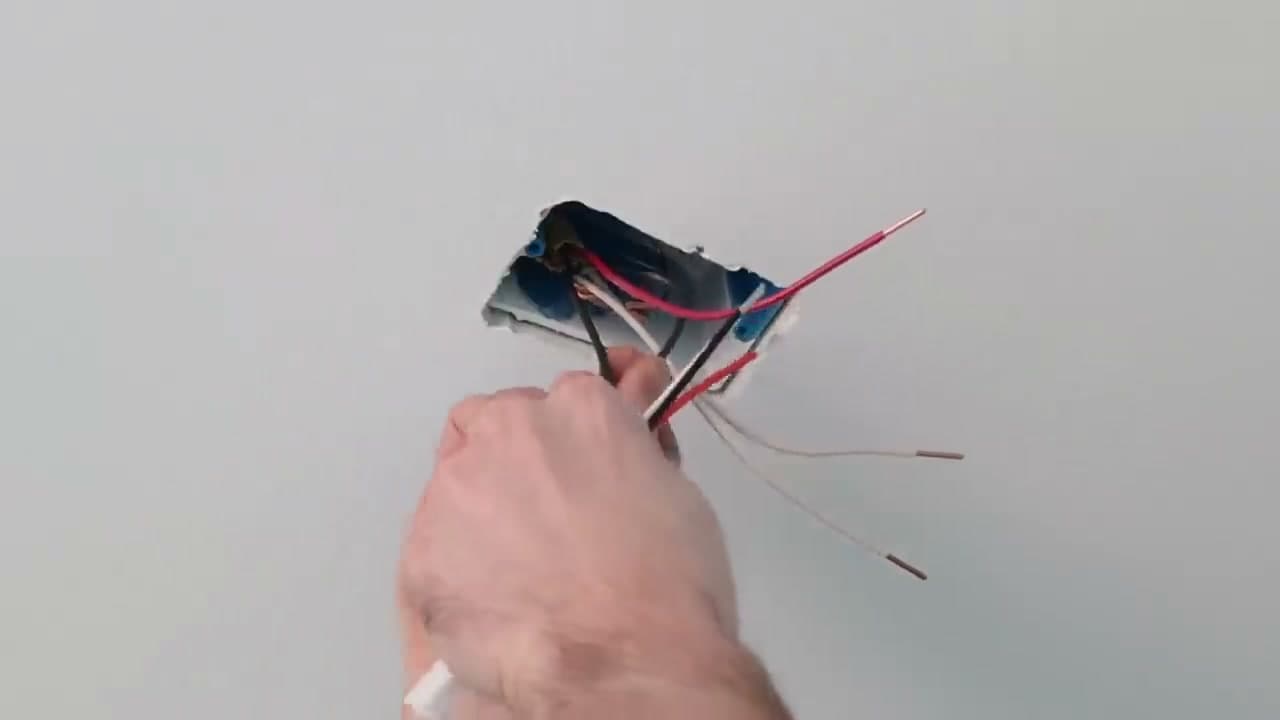
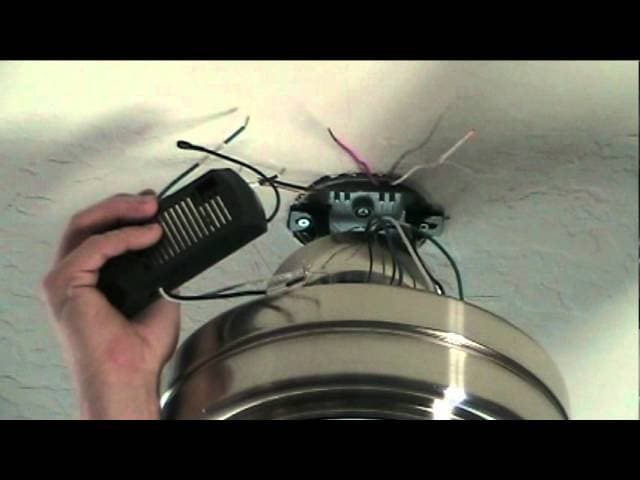
At the breaker, kill power to the detector circuit and verify dead with a non-contact voltage tester. Climb the ladder, gently work the cables out of the ceiling outlet box, and let them hang down where you can reach them. For the first detector in the chain you will have one two-wire cable (power in). For middle detectors you will have two three-wire cables (one from the previous detector, one heading to the next).

Address the ground wires first. The First Alert BRK detectors used in this video are not grounded, so tie all the bare copper grounds together with a wire nut and tuck them up out of the way.

Tip

Touch the voltage tester to a known-live outlet first to confirm the tester is working. A dead tester gives you a false sense of safety - check the tester before you trust it.

4

Separate the Wires and Pre-Twist Each Color

4:30
Step 4: Separate the Wires and Pre-Twist Each Color

Strip the outer sheathing off the wiring harness so you have three loose conductors: white (neutral), black (hot), and red (interconnect). The harness comes pre-slit so you can just peel the jacket back. The red wire on the harness has a factory tip you need to strip with wire strippers before you twist.

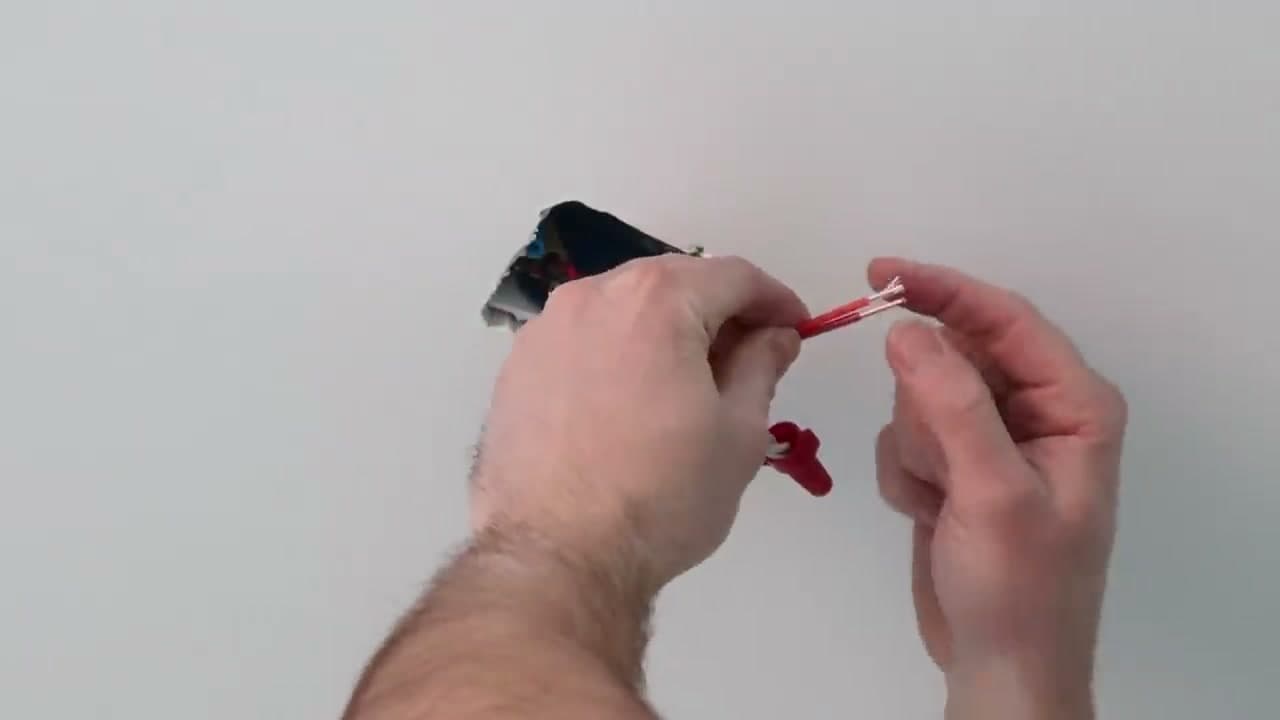
Hold the matching colors together - all the whites in one bundle, all the blacks in another, all the reds in another - and twist them with a pair of lineman's pliers until you have a clean spiral about an inch long. Pre-twisting makes a much stronger connection than relying on the wire nut alone.

Tip

Hold the wire ends flush before you twist. If one wire sticks out longer than the others, the wire nut will only grab the longest one and the rest will pull free.

5

Cap Each Set With a Wire Nut

5:54
Step 5: Cap Each Set With a Wire Nut

Wire nuts are sized by the number and gauge of conductors they grip. Use the larger orange or yellow nut for the white pair and the black pair. Use the smaller red nut for the red interconnect pair (it has fewer wires to grab so the nut has to be smaller to bite).

Twist the nut on clockwise until it is firmly snug. Do not gorilla it - the nuts crack if you go too hard. Once it stops turning easily, give each wire a tug. If anything pulls out, redo the connection. A loose wire nut is the most common cause of an intermittent detector and a failed inspection.

Tip

The wire nut package lists the wire combinations it is rated for - usually printed as something like 'three 14 AWG' or 'two 12 AWG plus one 14 AWG'. Match what is in your hand to what is on the package.

6

Mount the Bracket to the Ceiling Box

6:30
Step 6: Mount the Bracket to the Ceiling Box

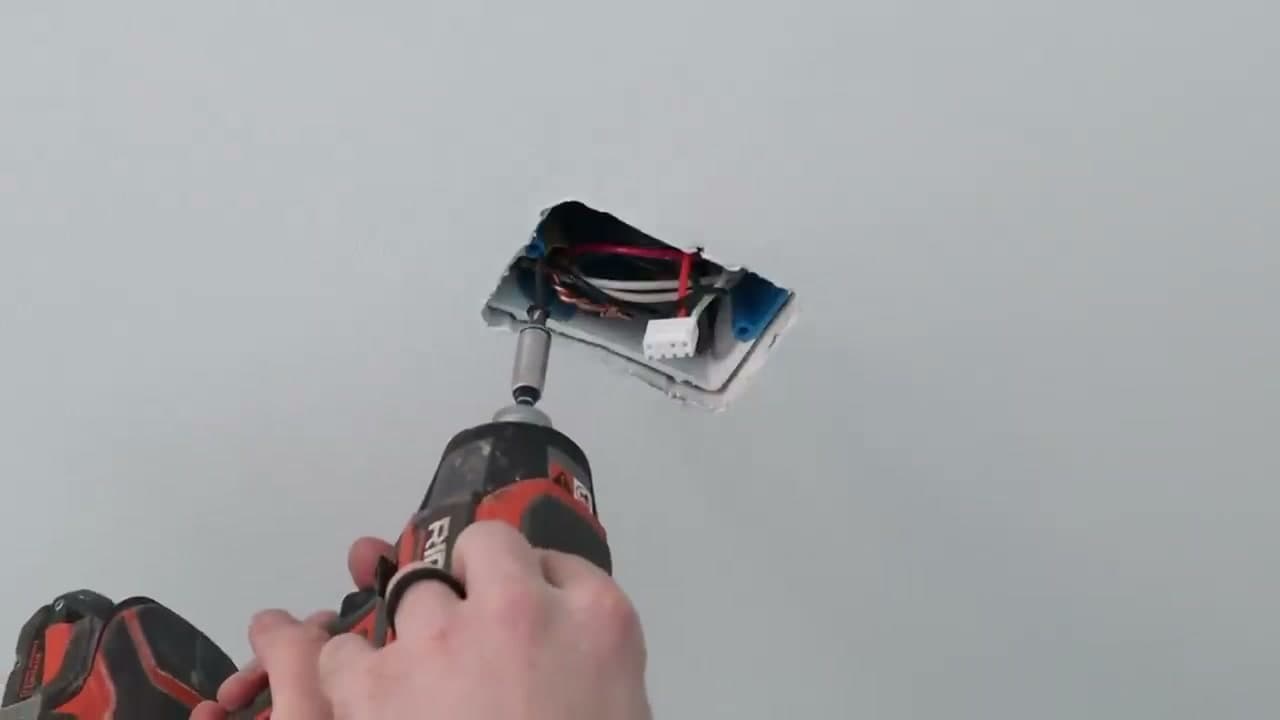
Tuck all the wired connections back up into the outlet box, leaving just the harness pigtail hanging down. Start two drywall screws by hand into the threaded holes on the outlet box and run them in with a drill until they stick out about a quarter inch.

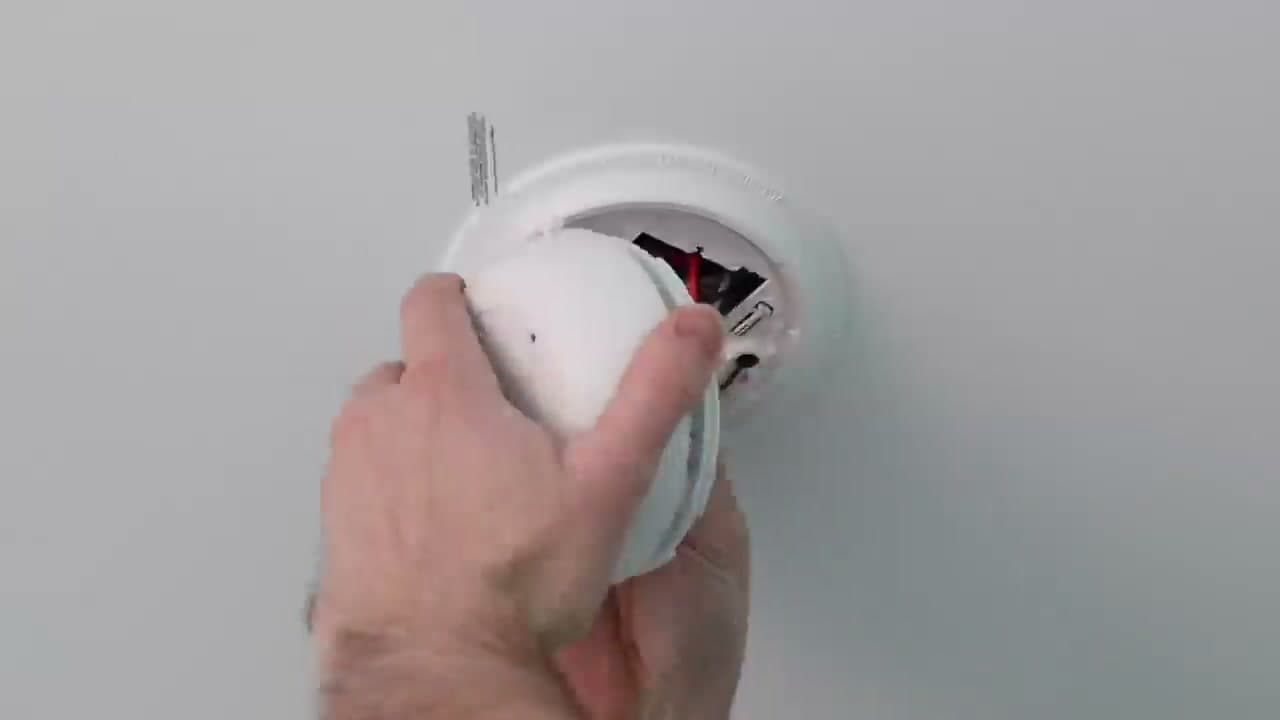
Position the mounting bracket over the two screw heads with the keyhole slots lined up, then twist the bracket clockwise. The slots tighten down over the screws and lock the bracket in place. Snug the screws the rest of the way with a screwdriver - just enough to clamp the bracket flat against the ceiling. The flange is plastic and it will crack if you torque it too hard.

Tip

If the bracket sits crooked, back the screws out a quarter turn, re-twist the bracket level, and re-tighten. Crooked brackets mean crooked detectors, which you will notice every time you walk under it.

7

Plug In, Twist On, and Test the Alarm

7:17
Step 7: Plug In, Twist On, and Test the Alarm

Snap the wiring harness into the matching socket on the back of the detector. Confirm the 9V backup battery is seated in its compartment - some detectors ship with a pull-tab you have to remove first. Lift the detector up to the bracket, line up the keyhole arrows, and twist clockwise until it clicks home.

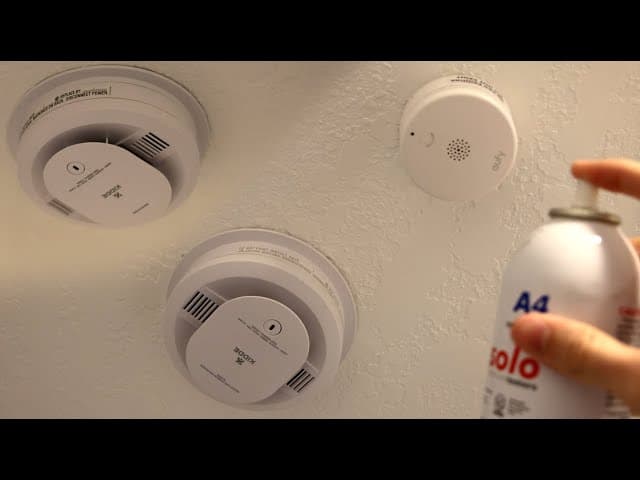
Flip the breaker back on. The green power LED should come on. Push the test button firmly for two seconds and the detector should let out a loud chirp + alarm pattern. If the units are interconnected, every other detector in the house should sound at the same time. Set a recurring reminder to press the test button once a month and to swap the backup battery once a year per NFPA recommendations.

Tip

If the alarm does not sound when you press the test button, kill the breaker again and pull the detector. Check that the harness is fully clicked in and that the backup battery is good. Both have to be live for the test to work.

Products Used

☐ The Checklist

How to Install a Smoke Detector (Step by Step)

Tools
6
Materials
4
Steps
7
Video
11 min

Your Guide

The Excellent Laborer

As an Amazon Associate we earn from qualifying purchases. Links on this page may be affiliate links - clicking them and buying doesn't change your price, but helps support ShowMeStepByStep.

Tags

Test your knowledge

Did the lesson stick? Find out in 2 minutes.

5 quick questions covering what you just read. No signup, no score saved — just a gut check.

Quick reference

Key takeaways from How to Install a Smoke Detector (Step by Step)

5 questions, answers, and one-line explanations. Tap to expand.

  1. 1.Hardwired detectors require what backup?

    Answer: Battery backup

    Hardwired + battery backup is the standard. Power outages are exactly when fatal fires happen, so the battery is non-negotiable.

  2. 2.Interconnect wire color?

    Answer: Red

    White = neutral, black = hot, red = interconnect (so all detectors in the chain sound when any one trips).

  3. 3.Wire nut size for the red interconnect pair?

    Answer: Smaller red nut

    Wire nuts are sized to grip a specific number and gauge of conductors. Two small reds need a small nut.

  4. 4.Press test on ONE interconnected unit. What happens?

    Answer: Every detector sounds

    That's the interconnect doing its job. If only the pressed unit sounds, the red interconnect wire is loose or missing.

  5. 5.Code-required detector locations?

    Answer: Every bedroom + level

    Inside each bedroom, outside each sleeping area, every level including basement. A combo smoke + CO unit usually goes in the bedroom hallway.

What's next

Related collections

Curated theme pages that include this tutorial.

Weekly Digest

Liked this home improvement tutorial?

Pick the categories you want to hear about. Weekly digest of new step-by-step tutorials. No spam, easy unsubscribe.

Send me tutorials about

We only email about new tutorials. Easy unsubscribe anytime.