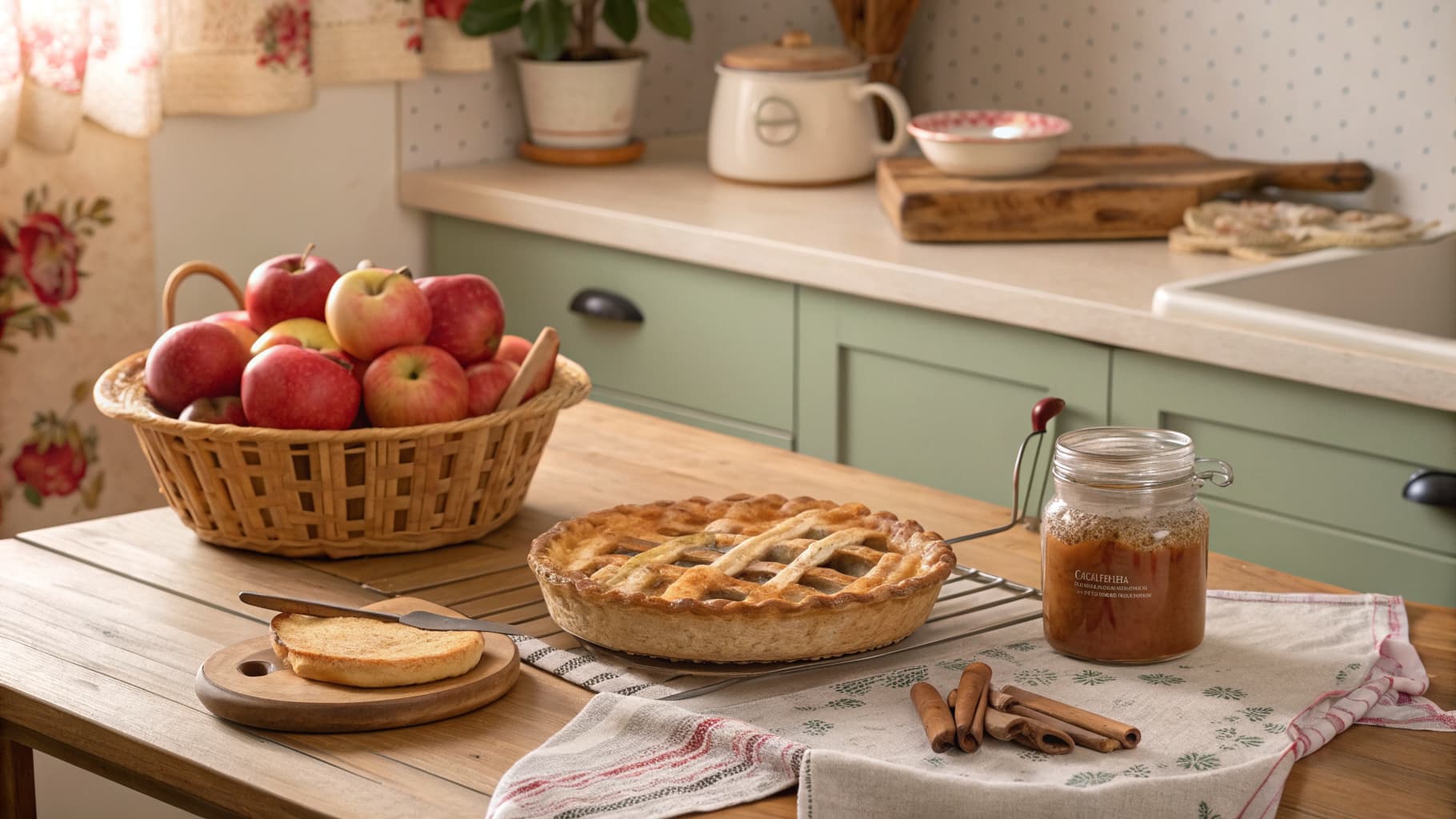
Pie crust has a reputation it mostly does not deserve. It is flour, butter, salt and water. What trips people up is that all four have to stay cold and the dough has to stay under-worked, and those two things fight against however long you spend fiddling with it.
This one is 100% butter, no shortening, and it works for sweet pies and savory ones. Adrianna and Joanne at Inspired Taste use it for everything from a single-crust sweet potato pie to a double-crust lattice apple.
The split flour trick
This is the part that makes it flaky, and it is not how most recipes tell you to do it.
Instead of putting all the flour in at once, hold back about 40% of it. Cut the butter into the first portion until the mixture turns yellow and clumps when you squeeze it, then stir the reserved flour through at the end.
The reason is gluten. The flour that got worked with the butter is coated in fat and cannot form much gluten, so it stays tender. The flour added at the end is dry and free to build the structure that holds your crust up. You get both, instead of picking one.
Food processor or by hand?
A processor is faster and gets the butter more evenly distributed. Four or five pulses and you are done.
By hand with a pastry cutter takes a minute or two of real effort and never blends quite as evenly, but it comes close, and plenty of people prefer the control. The dough behaves the same either way.
What you should not use is a stand mixer or a blender. A mixer over-works the dough before you notice, and a blender heats the butter.
How much water?
Six tablespoons is where to start. Then judge, because the honest answer depends on the day.
Dry air pulls moisture out of flour and you will need more. Humid air means less. Scatter it a tablespoon at a time and press the dough with a spatula between additions.
You are looking for a mixture that still looks crumbly but holds together when you squeeze a handful on one side of the bowl. If it forms a smooth ball in the bowl, that is too much water and the crust will come out tough.
Use ice water, and fish out any cubes that fall in.
Rolling it out without tearing
Straight from the fridge the dough is too hard to roll. Press down on it gently with the rolling pin a few times to soften it before you start rolling properly.
Roll away from you, then turn the disc a quarter turn and roll again. Turning as you go keeps it roughly round and stops it sticking. Cracks around the edge are normal - pinch them back together and carry on.
Keep going until the circle is at least an inch wider than your dish all the way around. Check underneath every so often by sliding it sideways; add flour if it is gripping, and if it goes soft and floppy, slide it onto a baking sheet and chill it for five minutes.
Getting it into the dish
Roll the dough loosely up around your rolling pin, lift it across, and unroll it over the dish. Ease it down into the corners rather than pulling it.
Stretched dough shrinks back in the oven, which is how you end up with a crust that has slumped down the sides. Lift and settle, do not pull.
Make it ahead
The discs keep three days in the fridge and three months in the freezer, well wrapped. This recipe makes enough for two single-crust pies or one double-crust.
Frozen dough thaws overnight in the fridge. Do not thaw it on the counter, because the butter softens before the middle catches up.
The rest of the Thanksgiving table
Dessert is the last thing to think about. The savoury half of the day:
The classic use for this crust is pumpkin pie, which blind bakes the shell first and seals it with egg white so the custard cannot soak in.