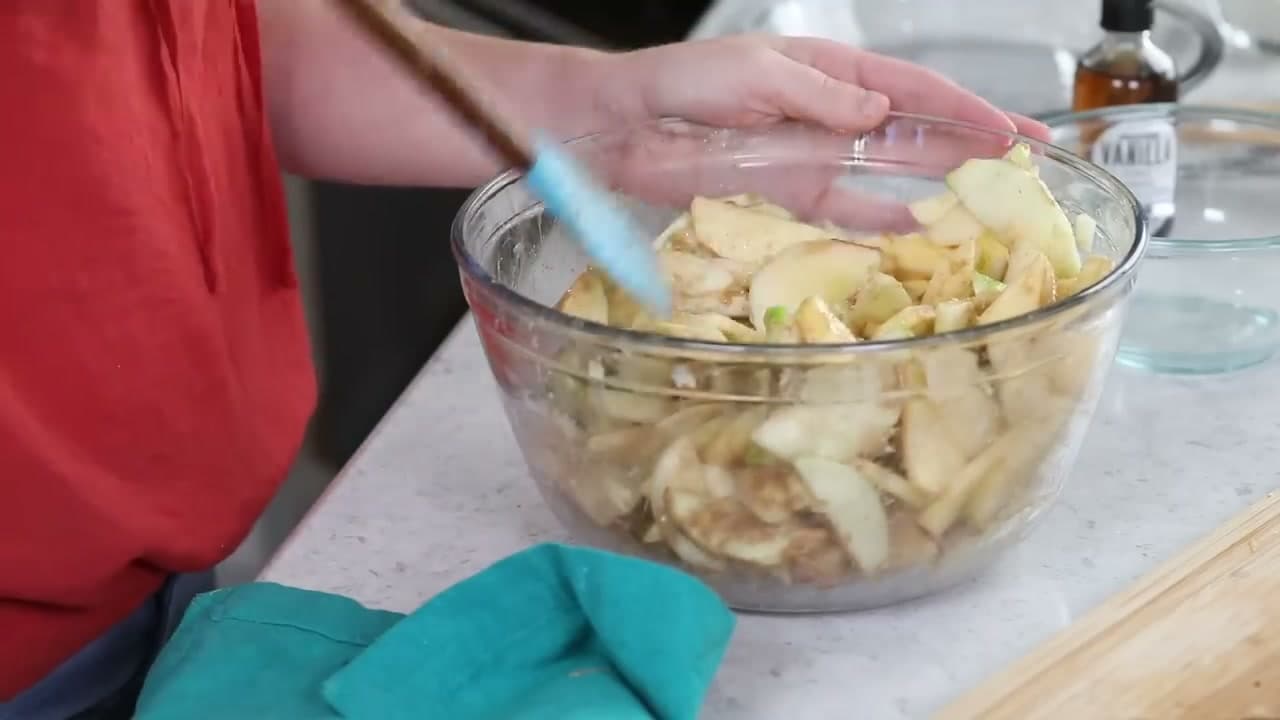
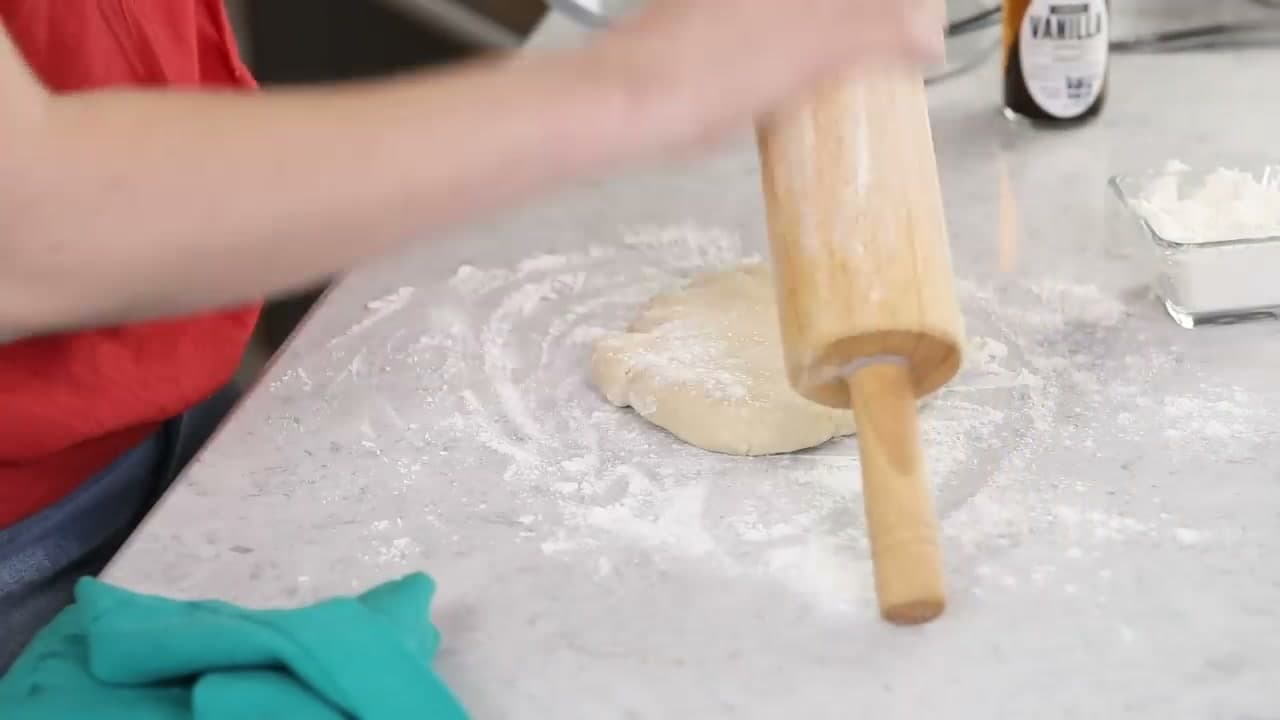
An apple pie built the fast way: no pre-cooked filling, no blind baking, no chilling the assembled pie before it goes in. You slice apples, toss them in cinnamon sugar, and let the oven do the rest.
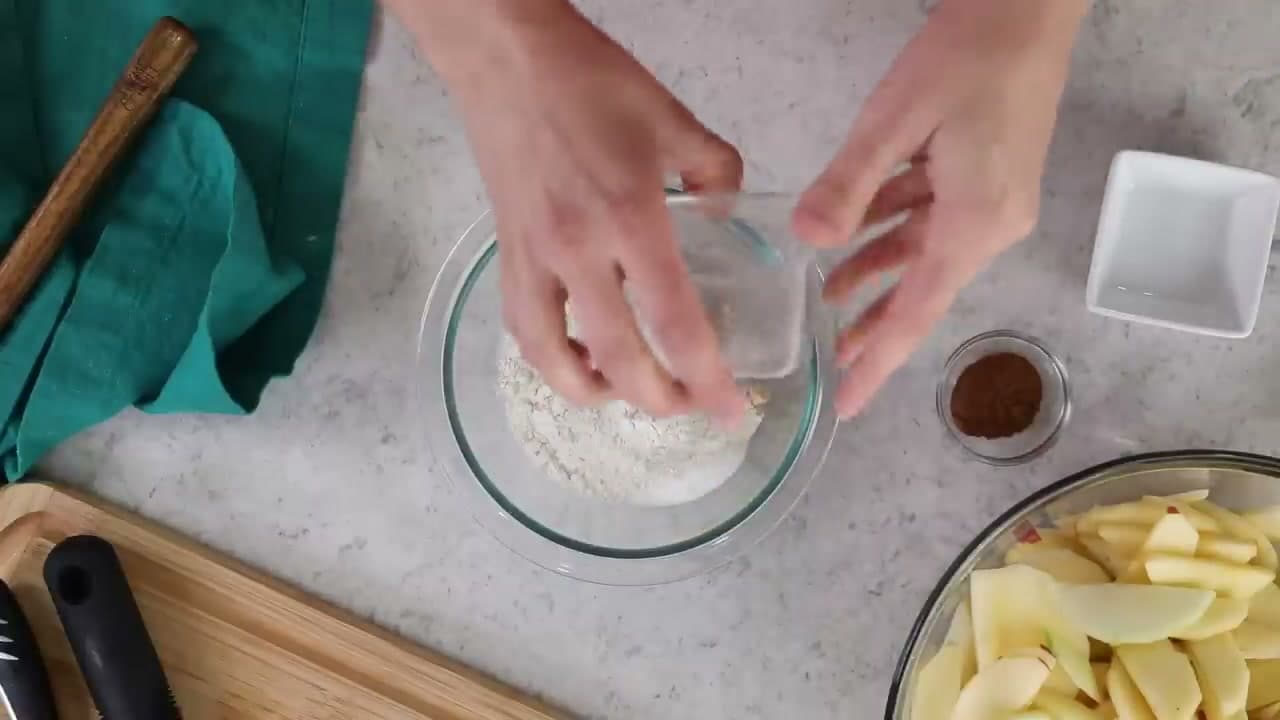
This one follows Sugar Spun Run's method. Two details are worth stealing: the egg wash brushed onto the bottom crust before the fruit goes in, the soggy-bottom fix, and the flour in the sugar mixture, which sets the juice so a slice holds together.
Homemade or store-bought crust both work. Nobody at the table will run a forensic investigation.
What you need
- Two pie crusts, homemade or store-bought, kept cold
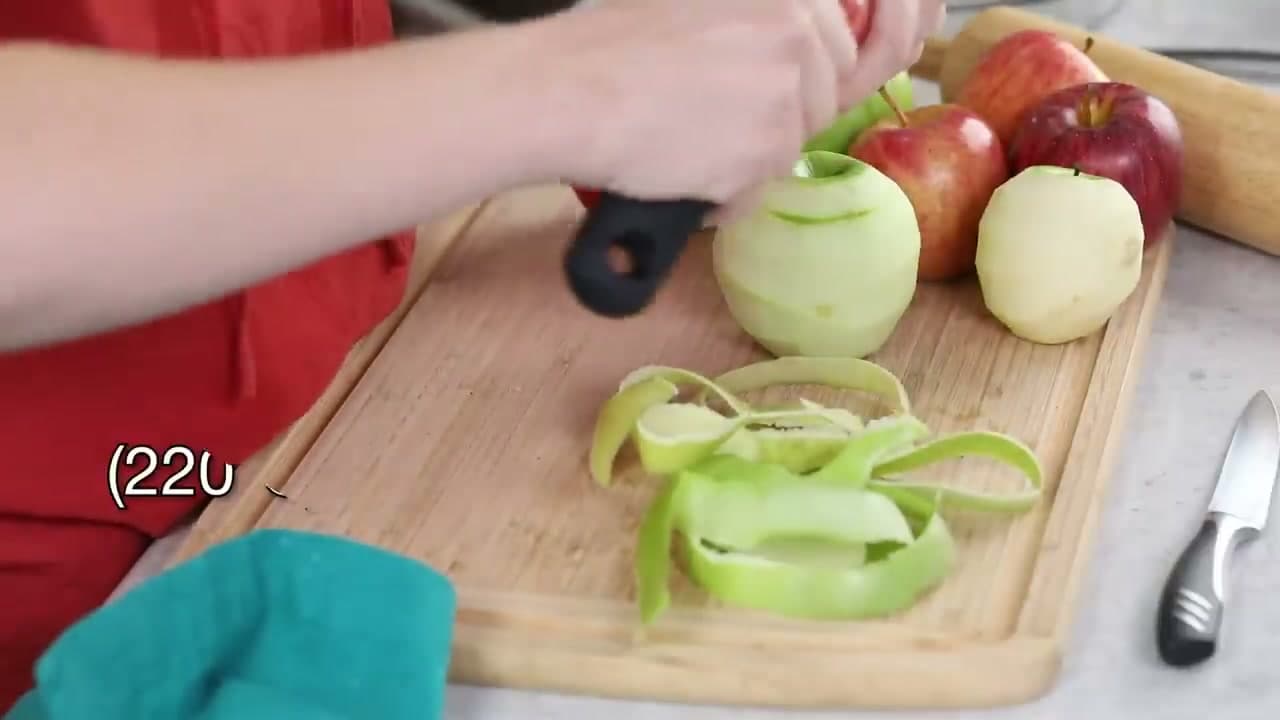
- 3 lbs firm tart apples, about 10 cups once sliced
- Brown sugar, granulated sugar, all-purpose flour, cinnamon, salt
- Lemon juice, vanilla, butter, one egg, coarse sugar for the top
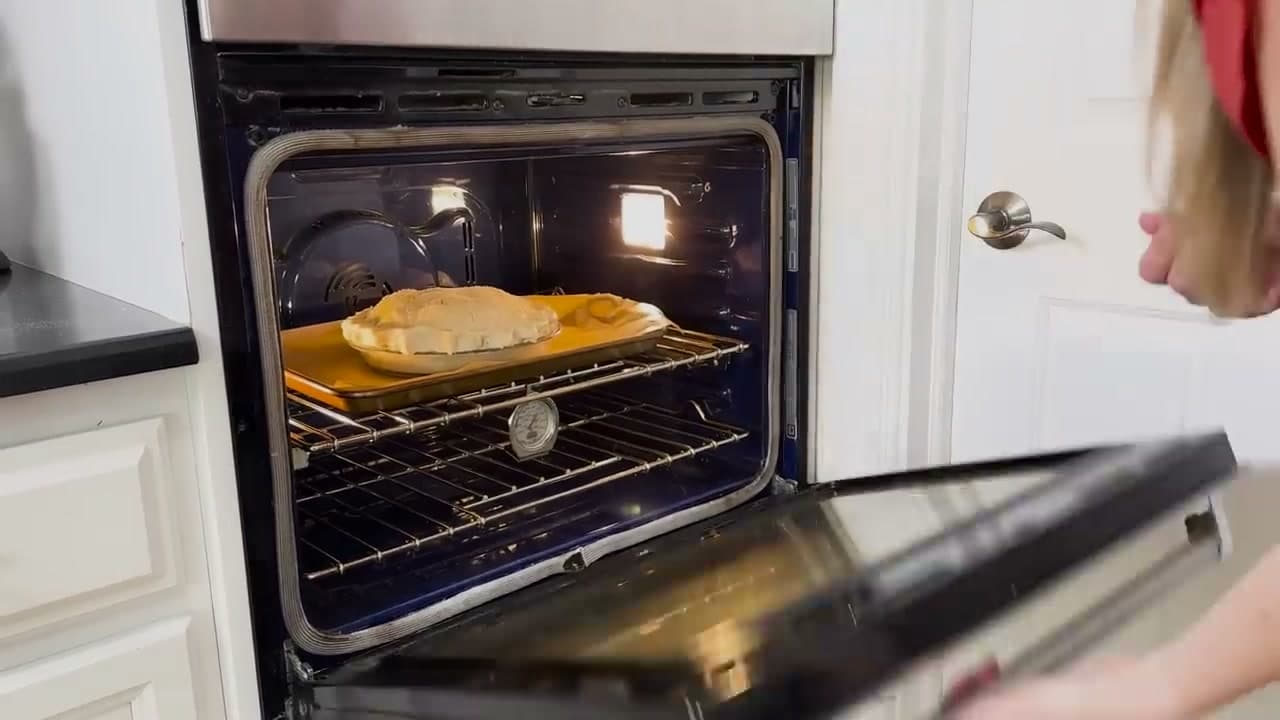
- A 9 inch pie plate and a rimmed baking sheet
Which apples to use
One variety gives you one note. A mix gives you a pie. Make about half the bowl Granny Smith for shape and acid, then fill the rest with something sweeter that still holds up: Honeycrisp, Braeburn, Jonagold or Pink Lady. Red Delicious and McIntosh on their own collapse into sauce and the pie sinks under its lid.
Why the filling is not pre-cooked
Pre-cooking is a workaround for a filling with no thickener. A quarter cup of flour whisked through the sugars does that job in the oven, and the apples keep some bite.
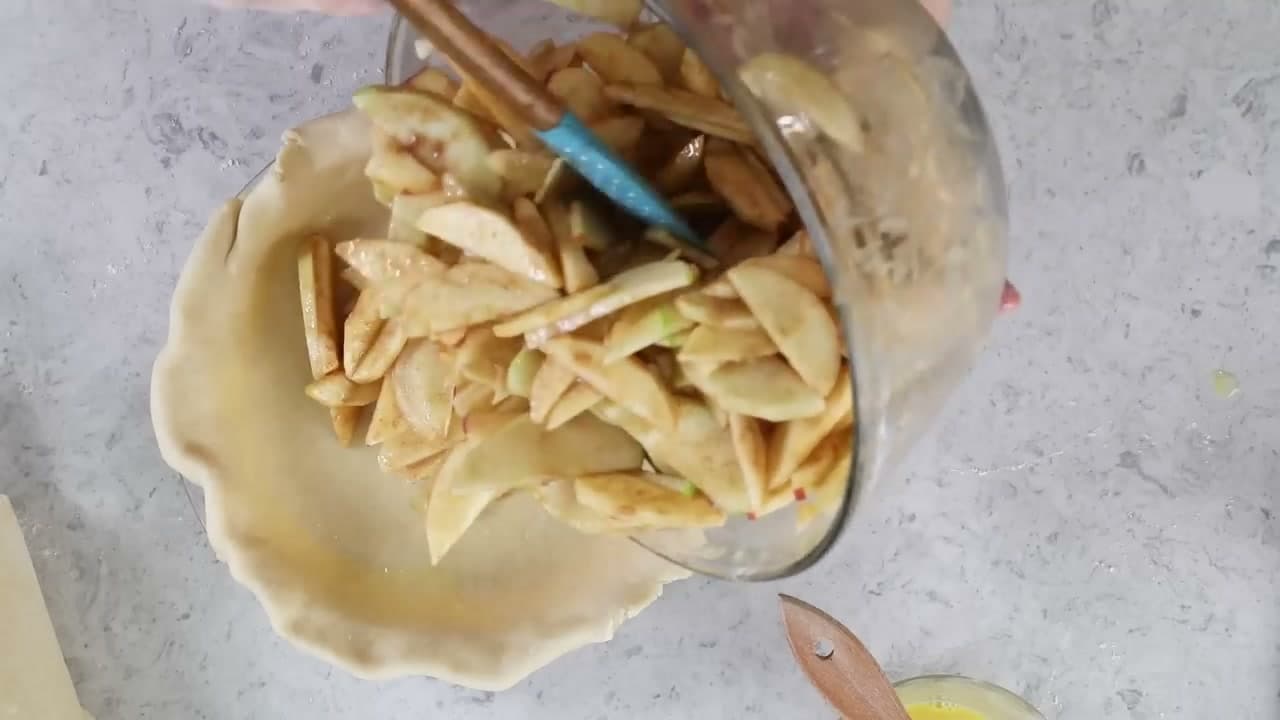
Two habits stop it running. Slice a quarter inch thick so the fruit cooks in the time the crust needs, and leave the pooled liquid behind in the bowl. That syrup poured in with the apples is how a pie turns soupy.
The soggy bottom, and skipping the blind bake
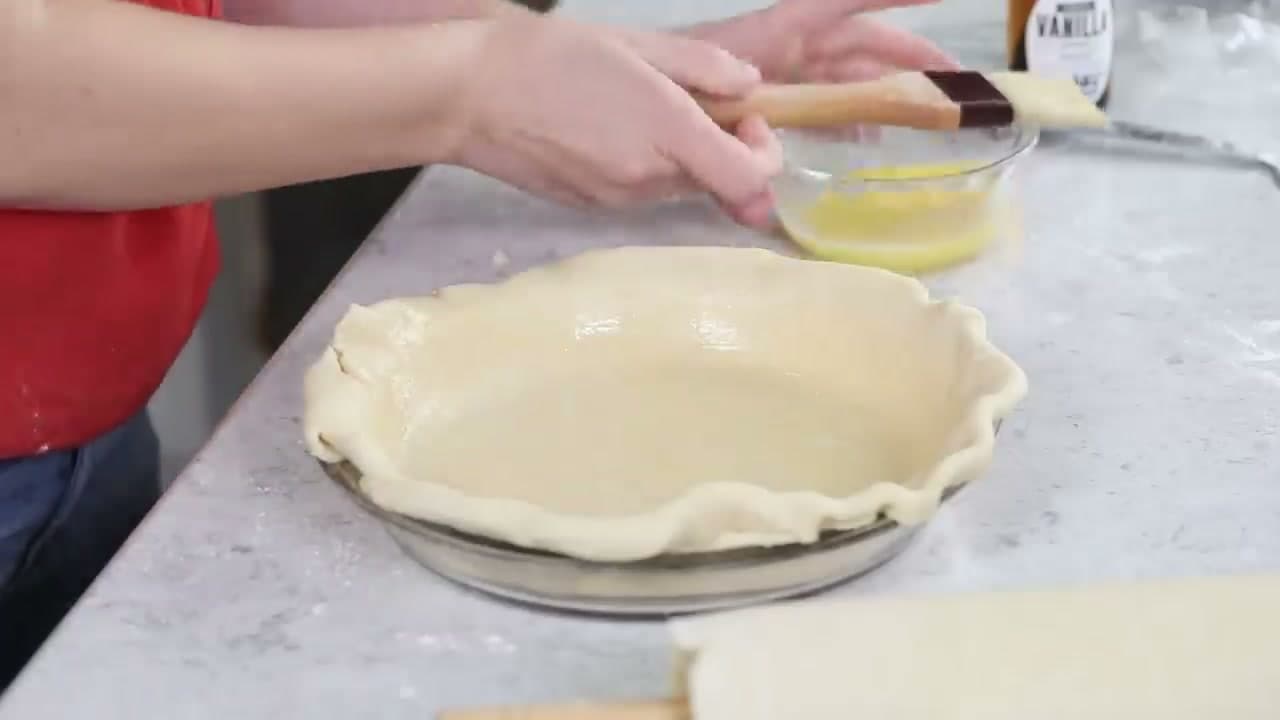
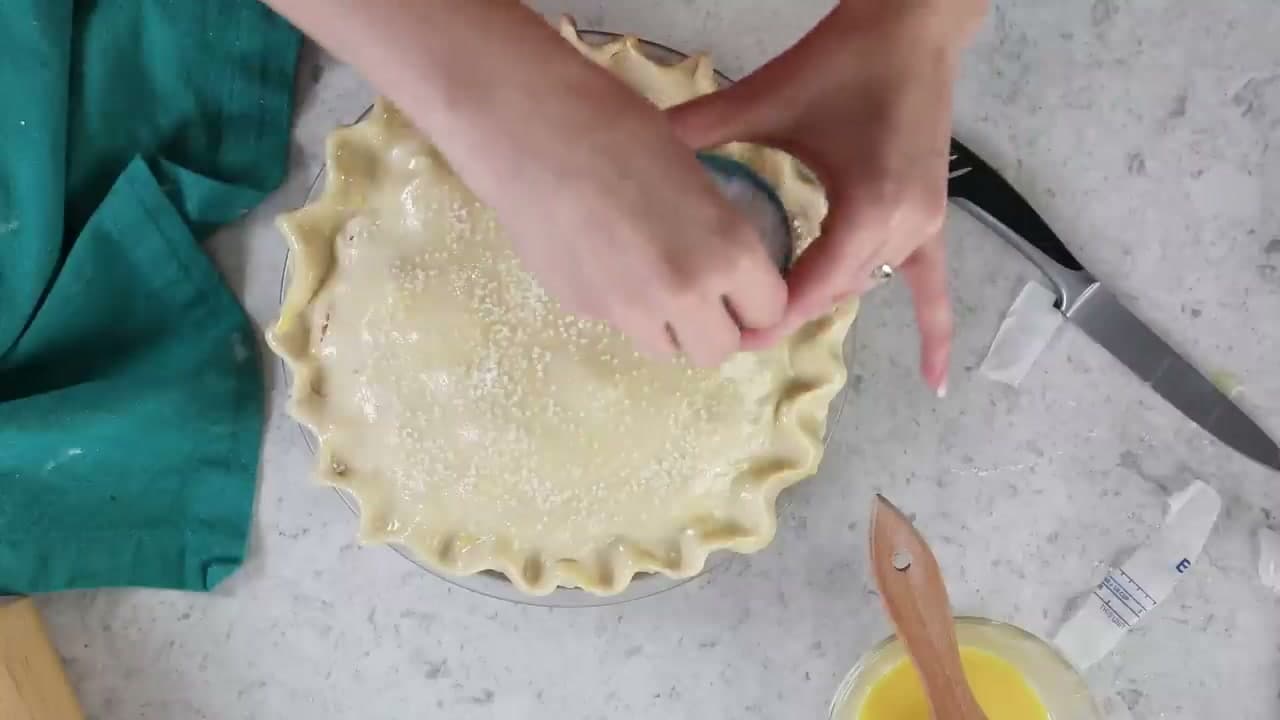
Blind baking under a wet raw filling is more trouble than it is worth: the shell puffs and the rim over-browns with an hour of baking still ahead. A thin coat of egg wash over the raw base seals it instead, setting in the first minutes so the juice never reaches the pastry.
Lattice, double crust or crumb top
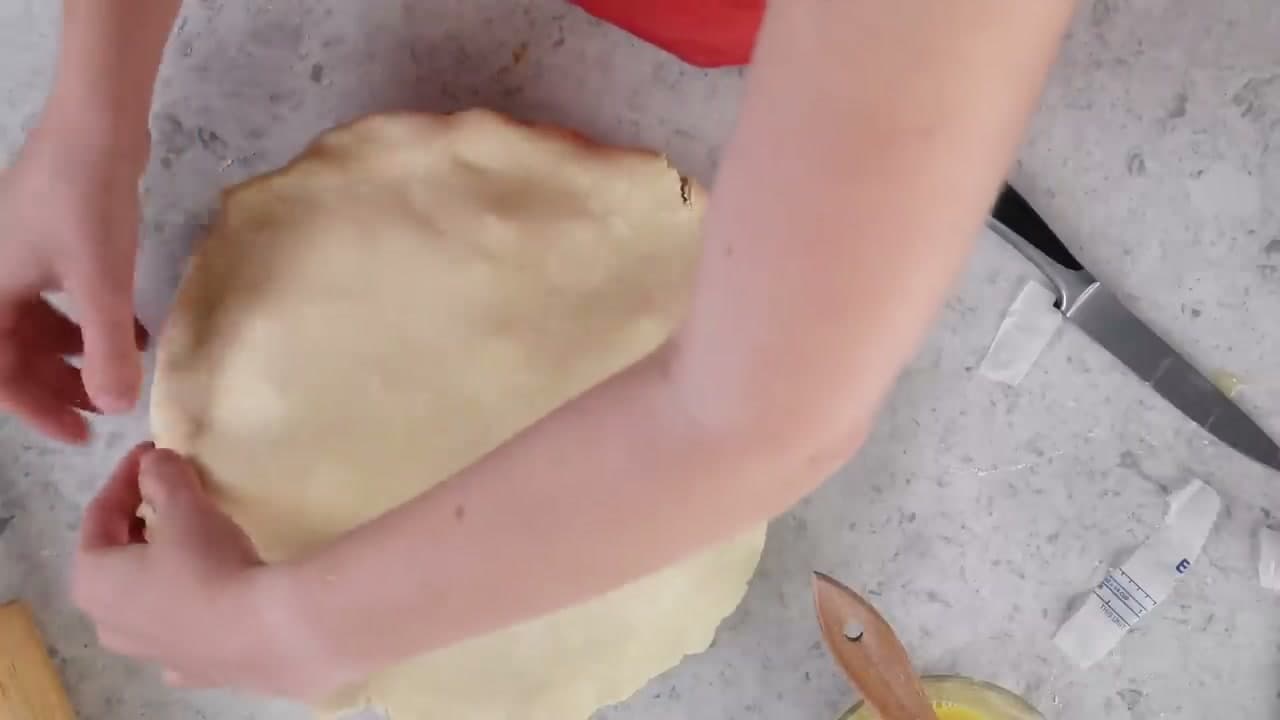
A solid double crust with vents cut through it is the sturdiest lid and the easiest to seal. Lattice lets more steam out, so it suits juicier apples. A crumb top of butter, flour, brown sugar and oats skips the second rolling - the apple crisp topping over a bottom crust.
Whatever lid you use, seal the rim properly or the filling boils out of the side.
How long to bake, and how to tell it is done
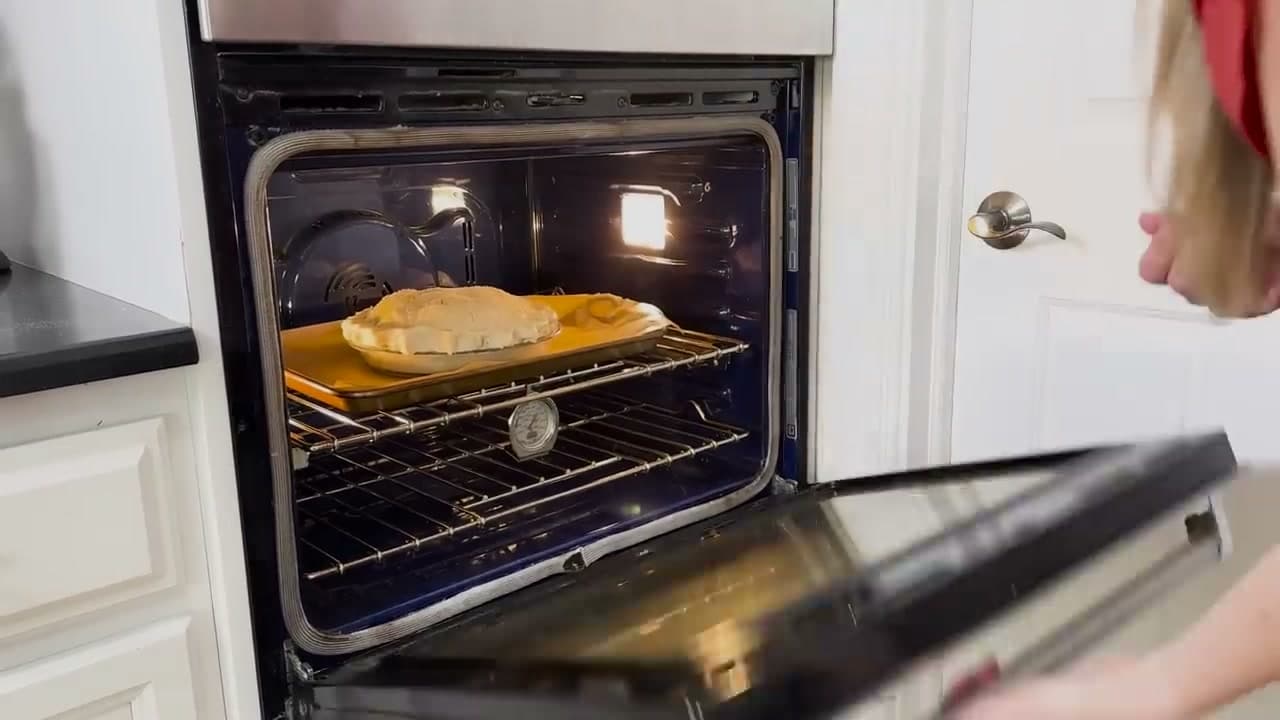
425F for 15 minutes, then 350F for 45 to 55 minutes. Colour is not the test. Look for filling bubbling in the centre of the pie, through the vents, not only at the rim - edge bubbles start long before the middle is cooked.
Then leave it alone for at least 4 hours, overnight if you can. The flour has to cool to set; cut it hot and you get filling with pastry floating in it. Reheat slices at 300F for 15 minutes to serve them warm with whipped cream or vanilla ice cream.
Make it ahead or freeze it
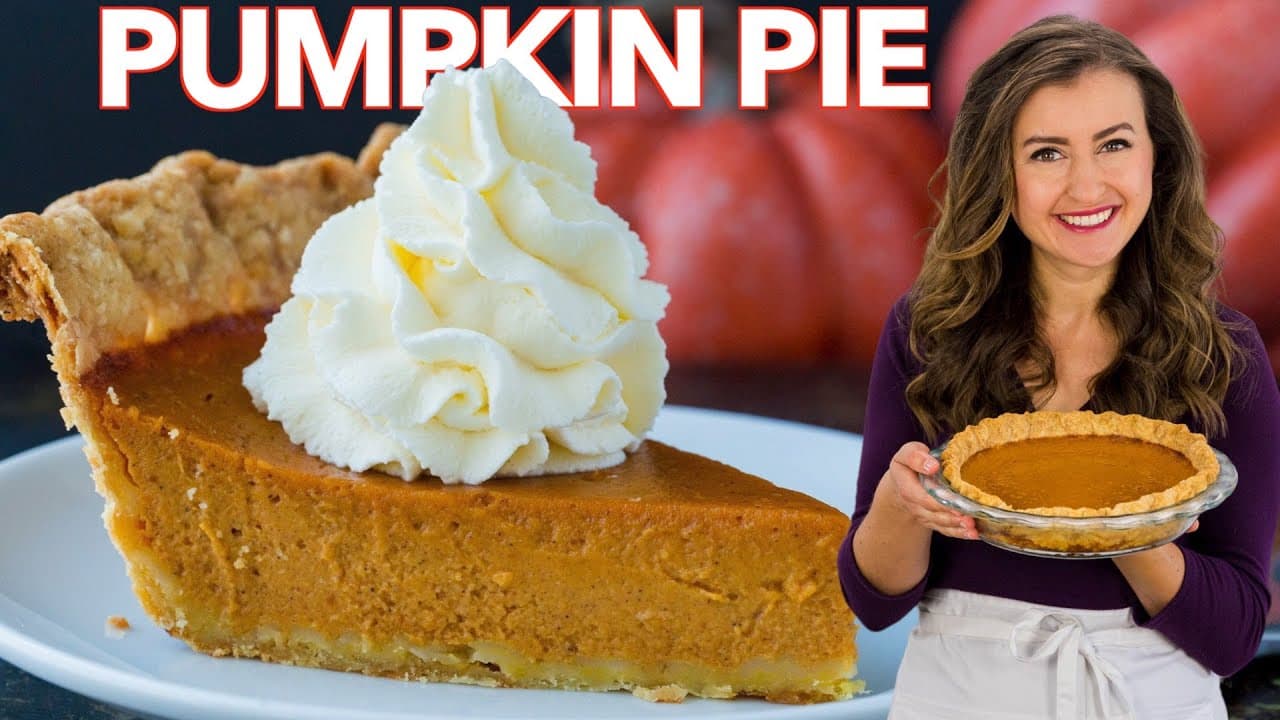
Assemble the pie unbaked, wrap it well and freeze it flat. Bake from frozen at the same temperatures, plus 15 to 20 minutes. Do not thaw it, or the base goes wet before it meets heat. A baked pie keeps two days on the counter, four in the fridge. For a holiday meal, build it the day before and hold it, like pumpkin pie, so the oven stays free.
Common mistakes
- Cutting it warm. The biggest cause of runny apple pie, and no filling trick makes up for it.
- Leaving out the flour. Apples give up a lot of water and it has to go somewhere.
- A flat filling. Mound the apples high in the middle. They collapse in the oven and a flat start leaves a gap under the lid.
- No baking sheet. Apple pies leak sugar, and it smokes on the oven floor all afternoon.