How to Make Icing (Easy Buttercream Frosting)

CookingEasy8:4610 stepsBrowse more →

By ShowMeStepByStepPublished

Based on a video by Preppy Kitchen.

Buttercream icing is the workhorse of every cake, cupcake, and birthday party in America. The version below is American buttercream - the simplest of the four classic buttercreams (American, Swiss, Italian, and French) - and the one most home bakers reach for because it comes together with a stand mixer, a spatula, and ingredients you probably already have.

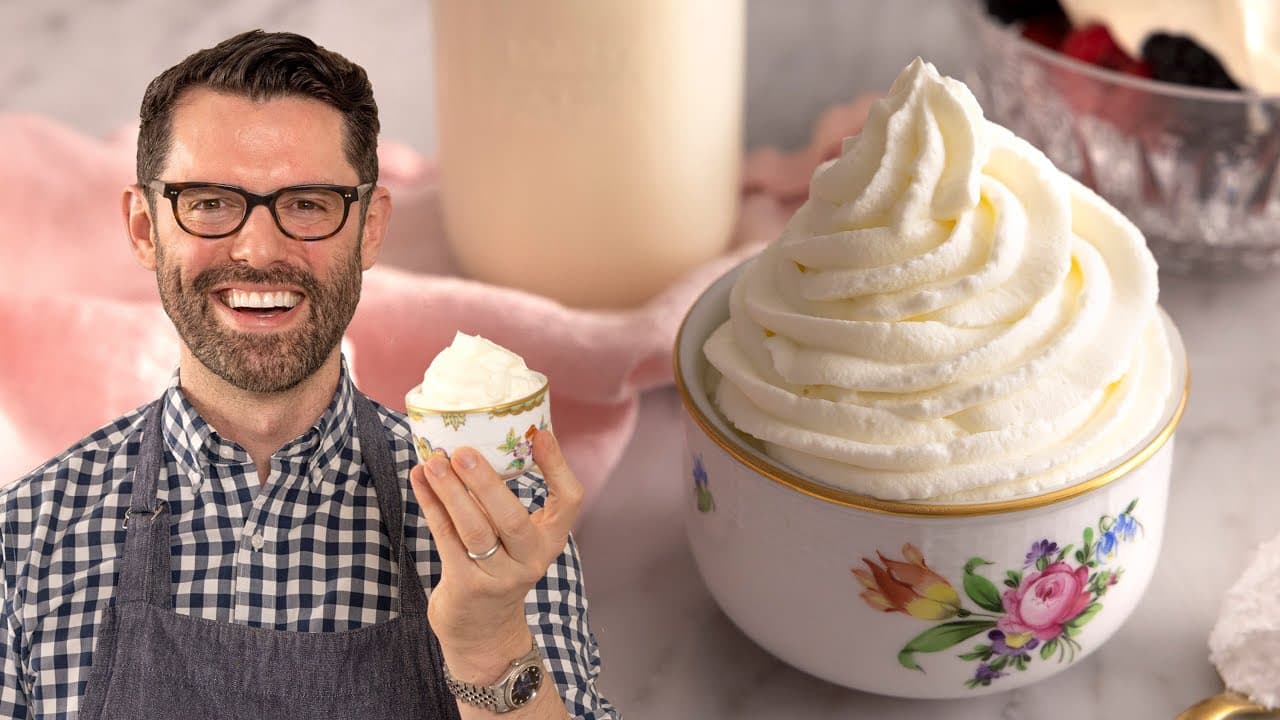
This walkthrough follows John Kanell from Preppy Kitchen, whose buttercream is smooth, pipeable, and never gritty. The trick is not the recipe itself - it's the technique. Soften the butter properly, use a paddle (not a whisk), sift the powdered sugar, and go low and slow on the mixer. Do those four things and you'll get the silky, bakery-style finish every time.

Once you have a batch made, it keeps in the fridge for 3 to 4 weeks or in the freezer for two months - so it's worth making a full batch even for a single cake. Pair it with homemade waffles or pipe it onto your next batch of cornbread cupcakes for an instant dessert.

Step-by-Step Guide

1

Step 1: Bring the Butter to Room Temperature

0:14
Step 1: Step 1: Bring the Butter to Room Temperature

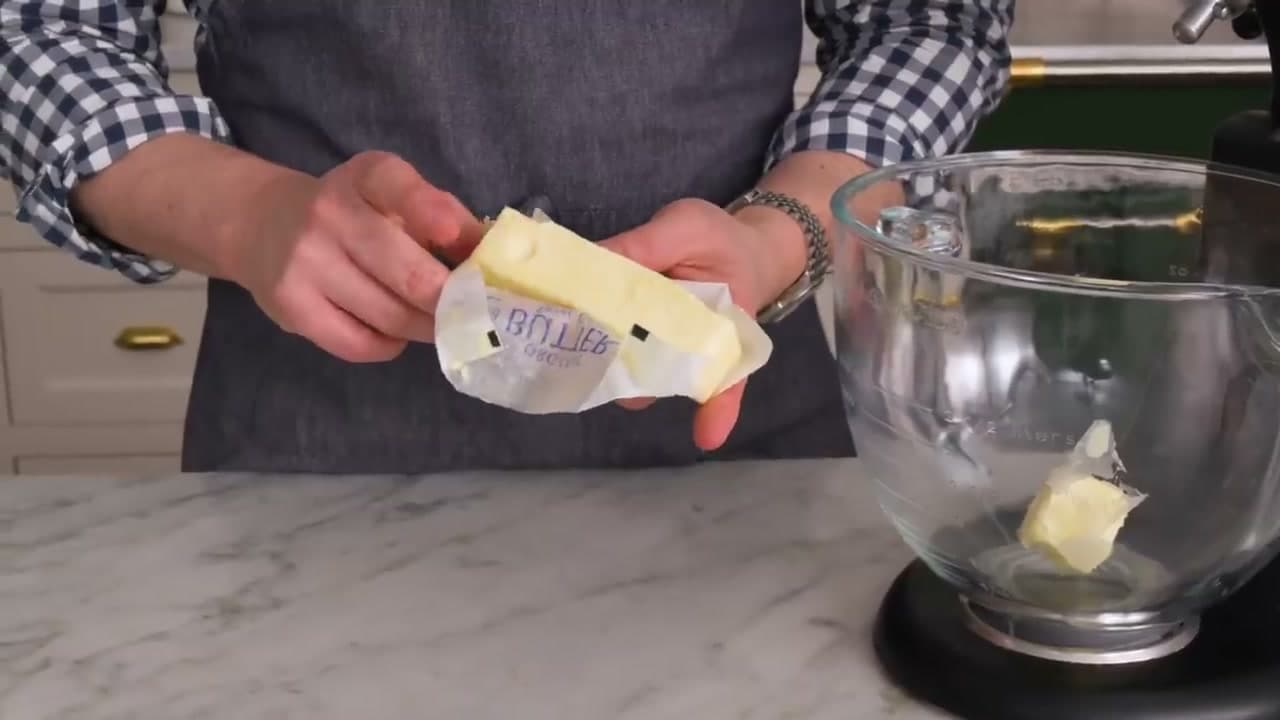
Take 1 cup (226g) of unsalted butter out of the fridge and let it sit on the counter until it's soft enough to dent with a finger - usually 30 to 60 minutes depending on your kitchen. It should yield like soft cream cheese. Cold butter won't cream, and melted butter ruins the texture entirely.

If you forgot to plan ahead, cut the butter into tablespoon-sized cubes and microwave at 50% power in 10-second bursts. Stop the moment it dents - even one extra burst can melt the edges.

Tip

Use unsalted butter so you control the salt yourself. Salted butter works in a pinch - just skip the added salt later in the recipe.

2

Step 2: Choose the Paddle Attachment (Not the Whisk)

1:00
Step 2: Step 2: Choose the Paddle Attachment (Not the Whisk)

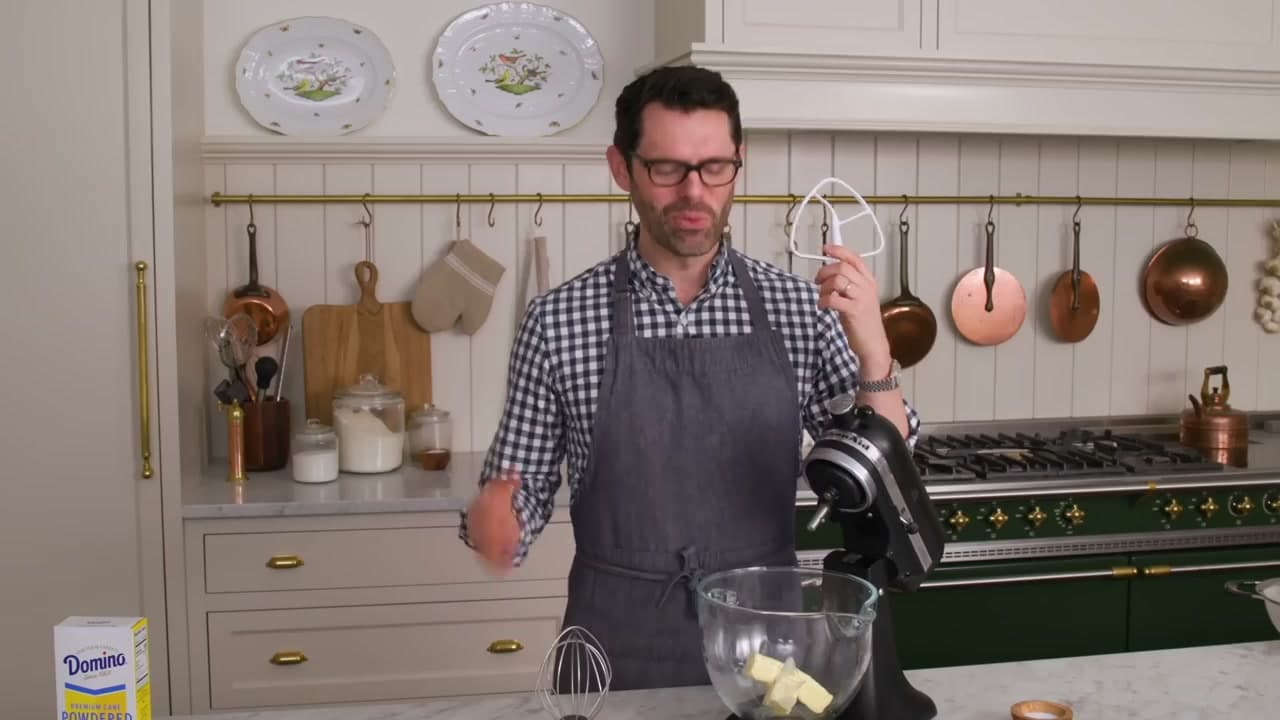
The paddle attachment is the right tool for buttercream, not the whisk. A whisk pumps the mixture full of air bubbles that show up later as little holes when you smooth the frosting onto a cake. The paddle beats the butter creamy and silky without aerating it.

If you're using a hand mixer instead of a stand mixer, that works too - just keep the speed lower than you would for whipped cream. Buttercream is built on beating, not whipping.

Tip

If your stand mixer came with a flex-edge paddle (the kind with a silicone wiper on one side), use that one - it scrapes the bowl down for you and saves stopping every few minutes.

3

Step 3: Cream the Butter Until Pale and Fluffy

1:42
Step 3: Step 3: Cream the Butter Until Pale and Fluffy

Drop the soft butter into the mixer bowl and beat it on medium-high for about 5 full minutes. You want it visibly paler than when you started - the color goes from yellow-gold to almost ivory - and the texture should be light and fluffy like whipped frosting on its own.

This long whip is what makes the difference between a buttercream that's creamy and one that's greasy. Don't shortcut it. Set a timer if you have to.

Tip

Scrape the sides and bottom of the bowl once at the 2-minute mark. Butter clings to the bowl walls and the bottom doesn't get worked otherwise.

Products used in this step

4

Step 4: Sift the Powdered Sugar

2:12
Step 4: Step 4: Sift the Powdered Sugar

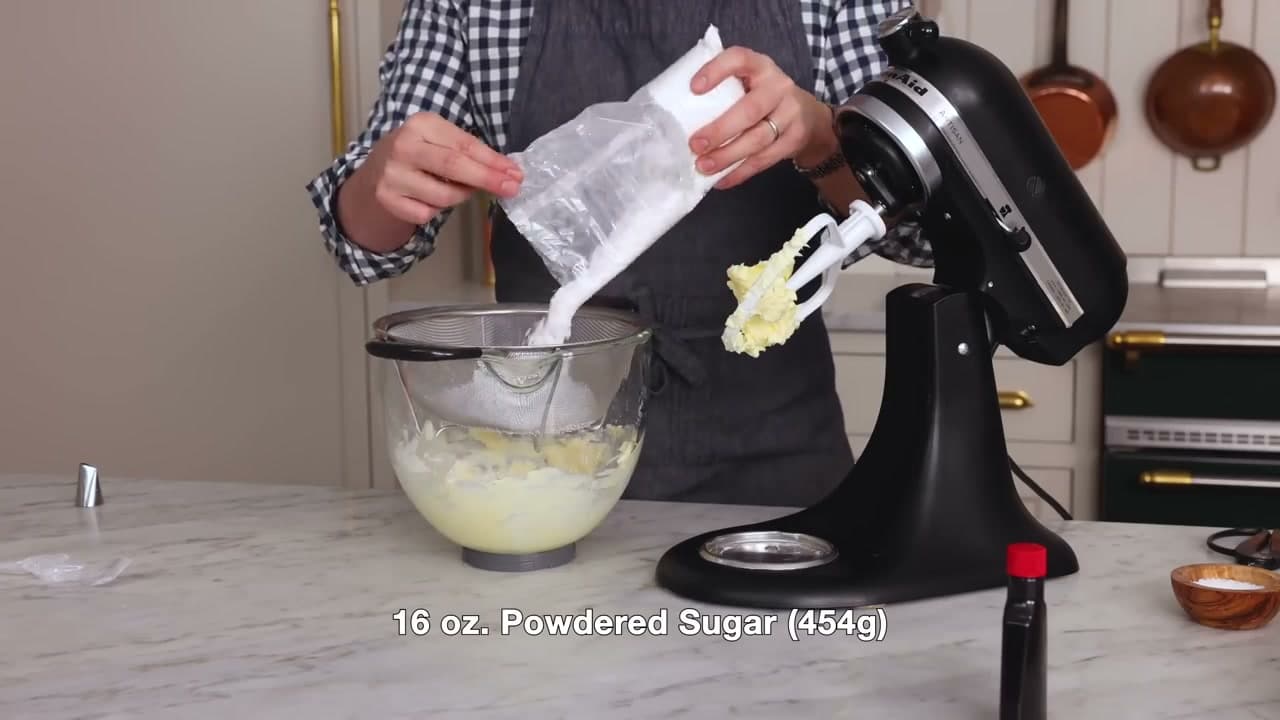
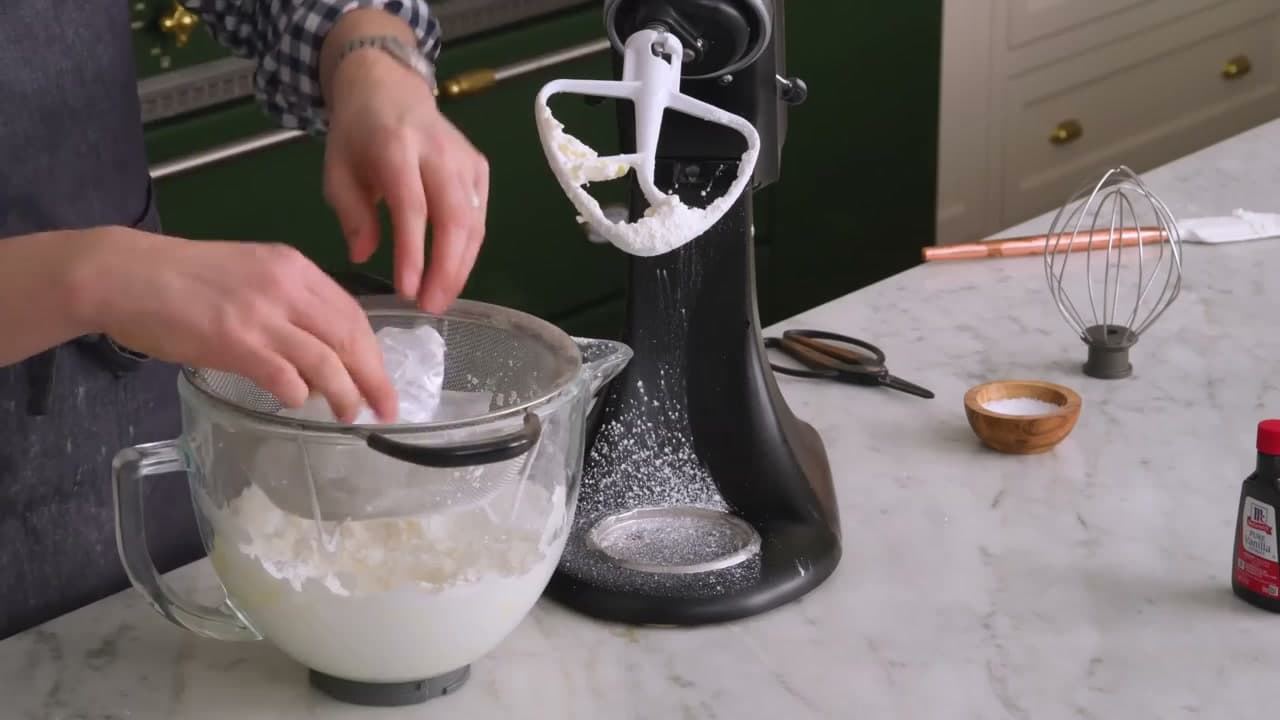
Pour the full 16 oz (454g) package of powdered sugar into a fine-mesh strainer set over your mixer bowl. New packages almost always have small rocks of compressed sugar inside, and those rocks are what clog a piping tip and leave gritty bits in your finished icing.

Tap and shake the strainer until all the sugar is through. You'll usually catch a small pile of hard lumps in the mesh - throw those out, don't try to break them down with a spoon. The sifted sugar lands right on top of the creamed butter, ready to mix in.

Tip

If you're in a hurry, set a fine-mesh strainer right on the rim of the mixer bowl and sift directly into it. No second bowl to wash.

5

Step 5: Mix the Sugar Into the Butter on Low

4:00
Step 5: Step 5: Mix the Sugar Into the Butter on Low

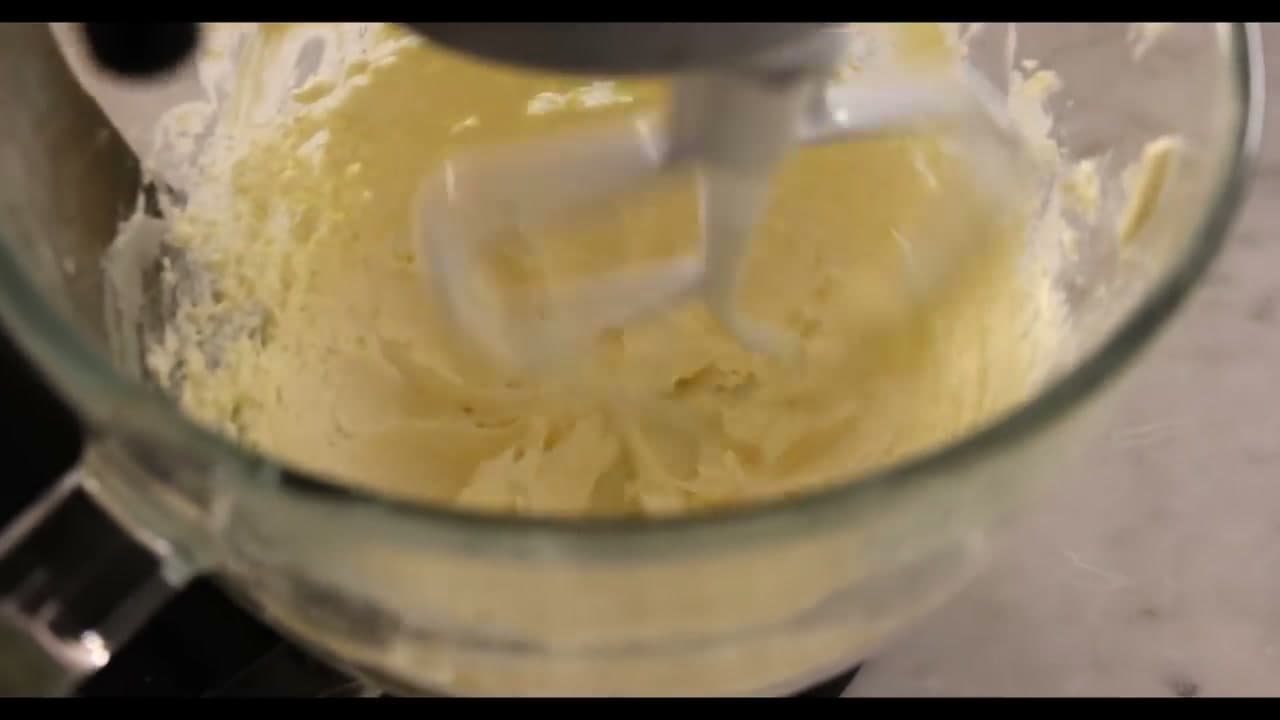
Start the mixer on the lowest speed. It will look like nothing is happening for the first 30 seconds - the butter and sugar barely seem to touch. Keep going. The longer you stay on low, the creamier the final texture.

If you crank the speed up to incorporate it faster, you'll launch powdered sugar all over your kitchen and beat in air bubbles. Patience here pays off in the finished bowl.

Tip

If the sugar starts to fly out of the bowl at the start, drape a clean kitchen towel over the mixer top until the sugar is fully incorporated. Remove it once everything is wet.

6

Step 6: Add the First Tablespoon of Cream

4:33
Step 6: Step 6: Add the First Tablespoon of Cream

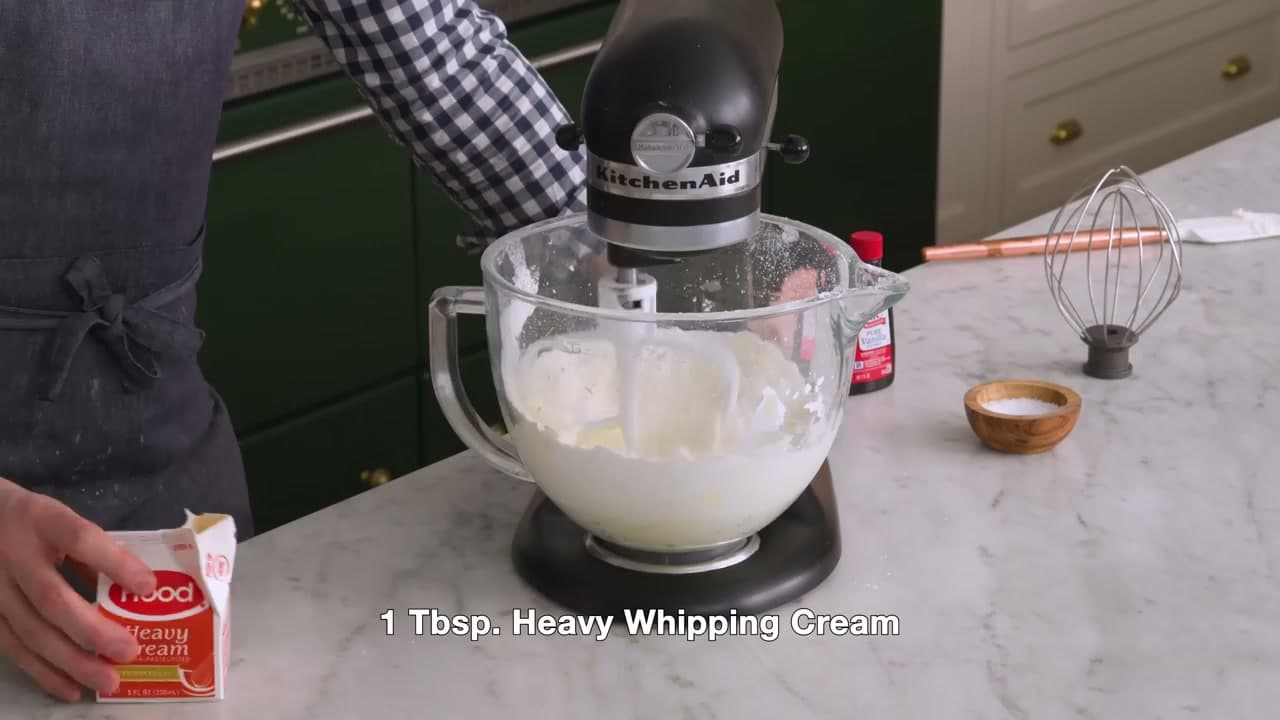
With the mixer still running on low, pour in 1 tablespoon of heavy whipping cream. Then walk away. Don't stand there watching it - go check on something else for 60 seconds and let the mixer do its job.

The cream loosens the mixture and the buttercream comes together almost on its own. Standing over it and stopping the mixer every 10 seconds to peek actually slows things down.

Tip

Whole milk works in place of heavy cream, but the buttercream won't be quite as rich. Half-and-half is a fine compromise.

7

Step 7: Add Salt, Vanilla, and More Cream

6:10
Step 7: Step 7: Add Salt, Vanilla, and More Cream

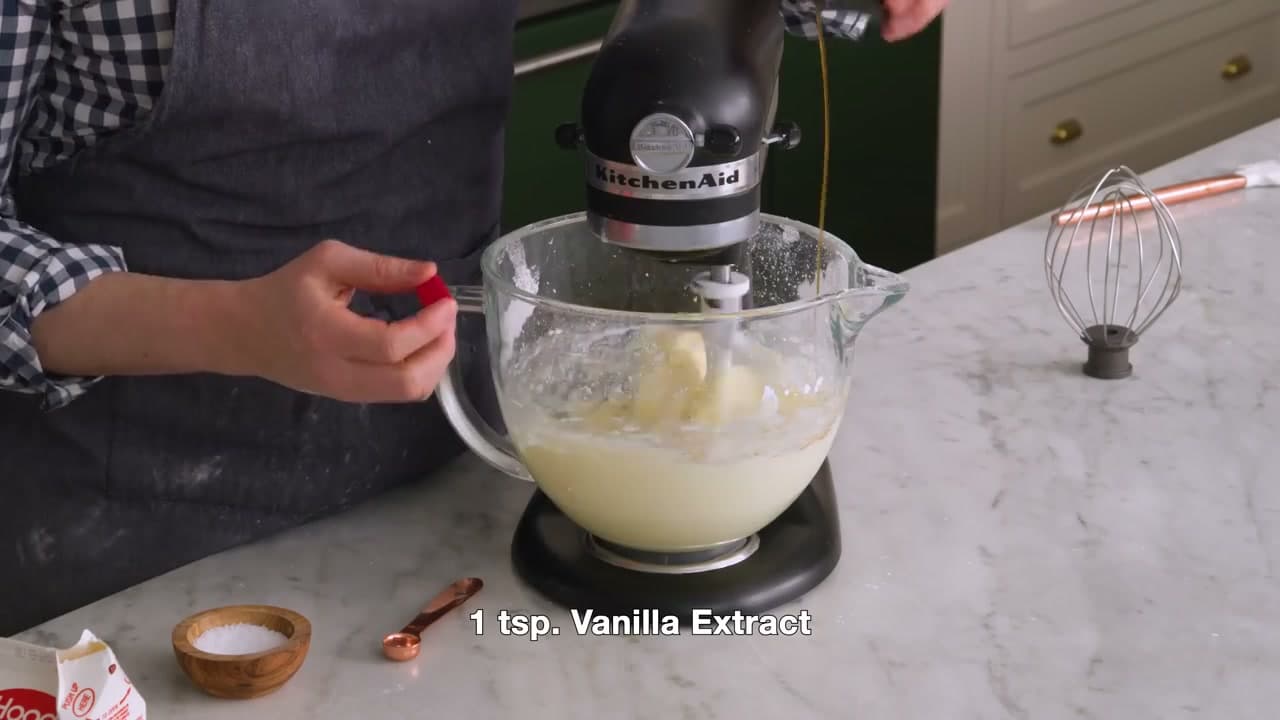
Add 1/2 teaspoon of kosher salt, 1 teaspoon of pure vanilla extract, and a second tablespoon of heavy cream to the running mixer. The salt is non-negotiable - American buttercream tastes one-note-sweet without it. Salt is what makes the butter taste like butter and the vanilla taste like vanilla.

Mix on low for another minute or so until everything is smooth and uniform. Taste it. If it tastes too sweet, you didn't add enough salt - add another pinch.

Tip

Pure vanilla extract is worth the extra dollar over imitation. The difference is obvious in a frosting where vanilla is the only flavor.

8

Step 8: Scrape the Bowl and Finish With the Last Cream

7:25
Step 8: Step 8: Scrape the Bowl and Finish With the Last Cream

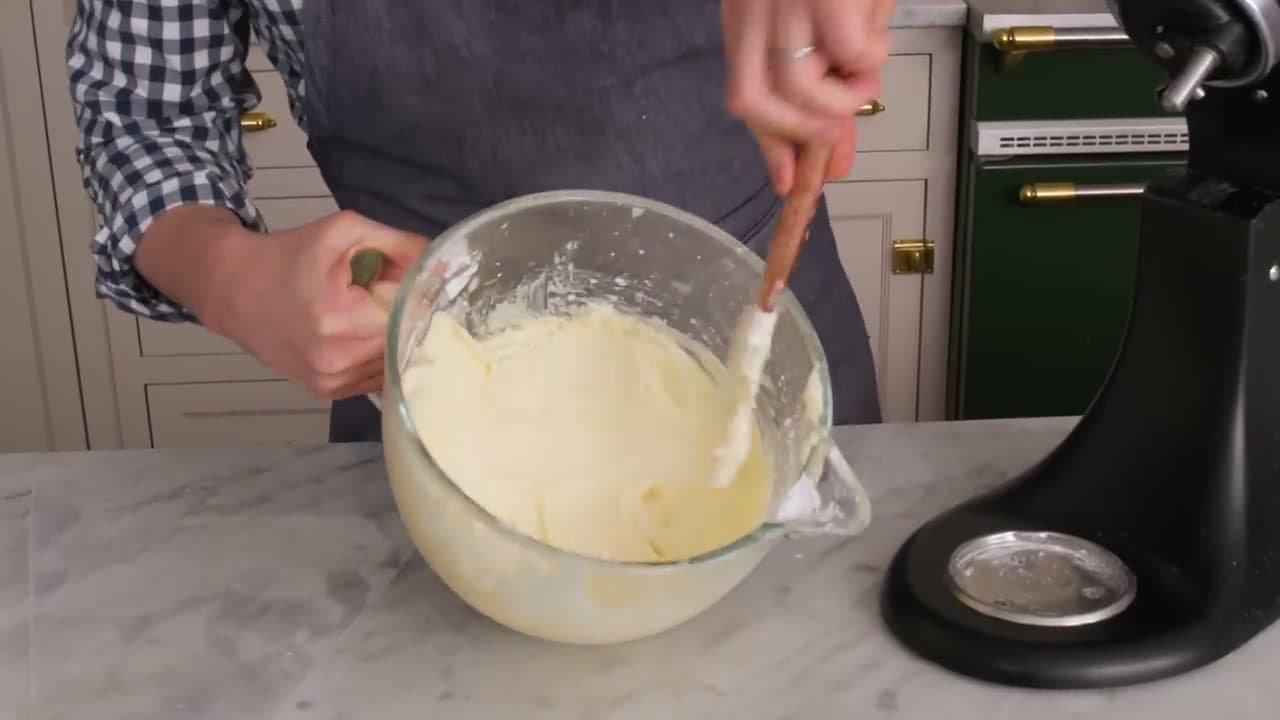
Stop the mixer. Use a spatula to scrape down the sides and across the bottom of the bowl, then under the paddle. The bottom of the bowl traps a layer of stiffer, less-mixed butter that never makes it up to the paddle, and the top of the bowl holds a layer of looser sugar-and-vanilla mixture. Scraping pulls them together.

Add the third and final tablespoon of cream, then run the mixer on low for one more minute to bring the consistency together. The buttercream should look pale, smooth, and pipeable now.

Tip

If the buttercream looks broken or grainy at this point - little curds instead of cream - it's usually because the butter was too cold. Wrap a warm wet towel around the outside of the bowl for a minute and keep mixing. It'll smooth out.

Products used in this step

9

Step 9: Press Out the Air Bubbles (Optional)

7:36
Step 9: Step 9: Press Out the Air Bubbles (Optional)

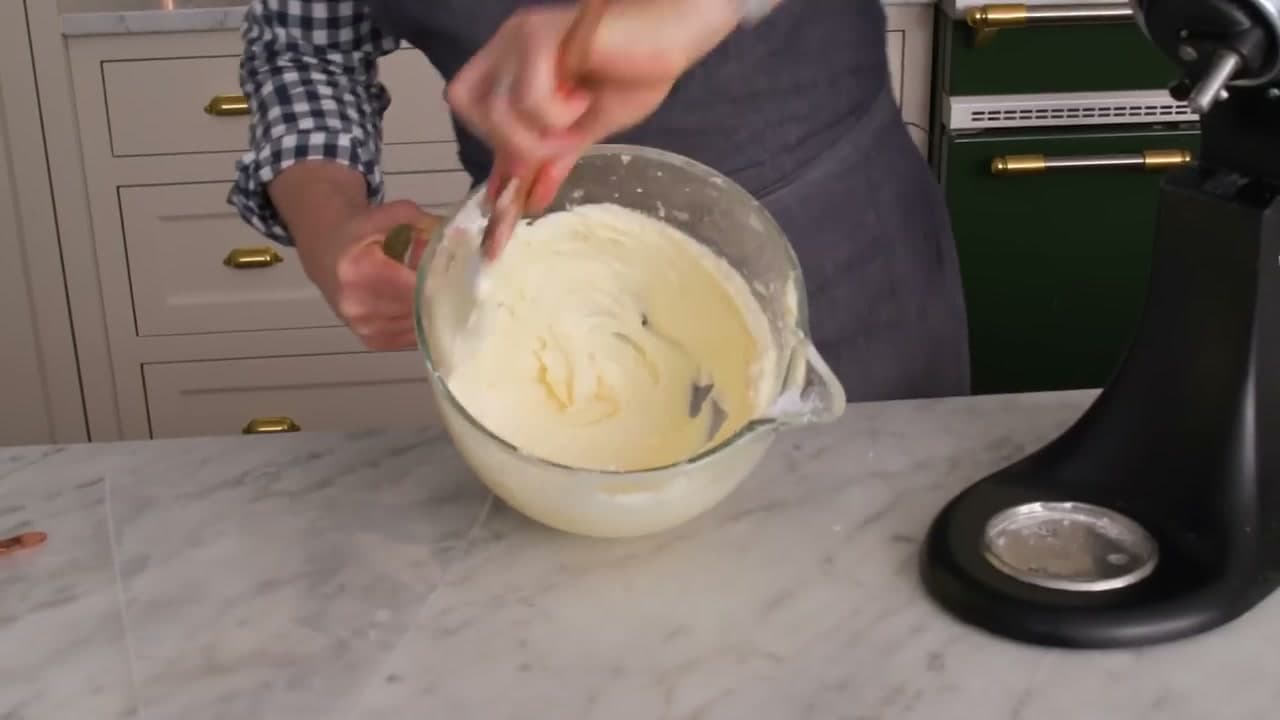
This step is optional but it's what separates bakery-finish from amateur. Take a spatula and press the buttercream against the inside wall of the bowl, smearing it flat. Then fold it back over and press again. The motion is exactly like macaronage when you make French macarons - you're forcing out the air bubbles that got trapped during mixing.

Two or three passes around the bowl is enough. The buttercream changes from slightly bubbly to completely silky and mirror-smooth. If you're piping detail work or smoothing the frosting on a cake, this is the difference between a clean finish and a pocked-looking surface.

Tip

Skip this step if you're frosting a casual cake or filling cupcakes - the small air bubbles disappear once the frosting is spread thin. Only worth doing for piping or smooth-top cakes.

Products used in this step

10

Step 10: Pipe It Onto the Cake

8:15
Step 10: Step 10: Pipe It Onto the Cake

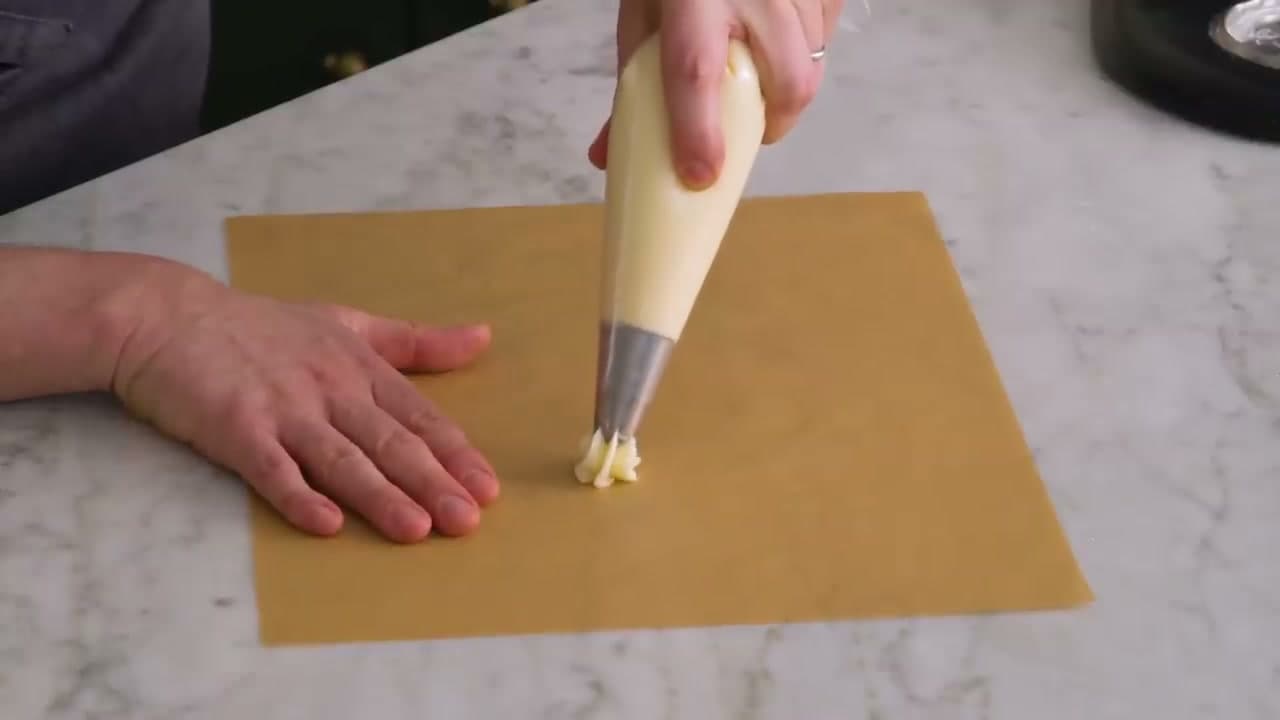
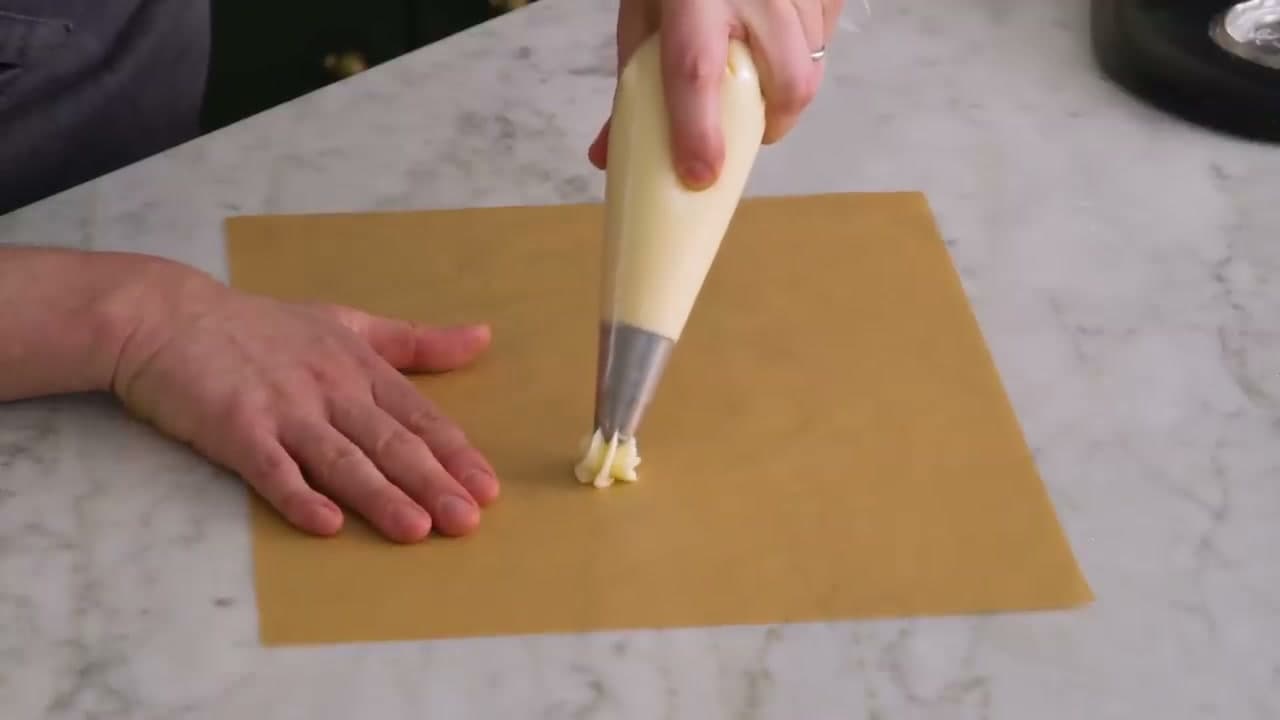
Fit a piping bag with a closed-star tip (John uses an Ateco 846, which is the standard size for cake borders and cupcake swirls). Stand the bag tip-down in a tall glass, fold the top down like a cuff, and fill it with buttercream using your spatula. Twist the top closed and squeeze the buttercream toward the tip.

For scallops, hold the bag at a 45-degree angle and pipe small back-and-forth waves. For rosettes, hold straight up and pipe in a tight spiral. For a smooth cake finish, skip the bag and spread the buttercream with an offset spatula instead.

If you're not using the buttercream right away, transfer it to an airtight container or a sealed piping bag. It keeps in the fridge for 3 to 4 weeks and in the freezer for 2 months. Bring it back to room temperature on the counter, then re-mix on low for a minute before piping.

Tip

If you're piping onto cupcakes, refrigerate the cupcakes for 15 minutes first. A cool surface stops the buttercream from sliding around while you pipe.

Products Used

❖ The Recipe

How to Make Icing (Easy Buttercream Frosting)

American
Serves
Makes about 3 cups - enough to frost a 9-inch 2-layer cake or 24 cupcakes
Prep
10 min
Cook
0 min
Total
10 min

Ingredients

5 items
  • 1 cup (226g / 2 sticks)unsalted butterroom temperature, soft enough to dent with a finger
  • 4 cups (16 oz / 454g)powdered sugarsifted - one full package
  • 3 tablespoonsheavy whipping creamadded one tbsp at a time
  • 1 teaspoonvanilla extractpure vanilla, not imitation
  • 1/2 teaspoonkosher salt

Method

  1. 1
    Step 1: Bring the Butter to Room Temperature. Take 1 cup (226g) of unsalted butter out of the fridge and let it sit on the counter until it's soft enough to dent with a finger - usually 30 to 60 minutes depending on your kitchen.
  2. 2
    Step 2: Choose the Paddle Attachment (Not the Whisk). The paddle attachment is the right tool for buttercream, not the whisk.
  3. 3
    Step 3: Cream the Butter Until Pale and Fluffy. Drop the soft butter into the mixer bowl and beat it on medium-high for about 5 full minutes.
  4. 4
    Step 4: Sift the Powdered Sugar. Pour the full 16 oz (454g) package of powdered sugar into a fine-mesh strainer set over your mixer bowl.
  5. 5
    Step 5: Mix the Sugar Into the Butter on Low. Start the mixer on the lowest speed.
  6. 6
    Step 6: Add the First Tablespoon of Cream. With the mixer still running on low, pour in 1 tablespoon of heavy whipping cream.
  7. 7
    Step 7: Add Salt, Vanilla, and More Cream. Add 1/2 teaspoon of kosher salt, 1 teaspoon of pure vanilla extract, and a second tablespoon of heavy cream to the running mixer.
  8. 8
    Step 8: Scrape the Bowl and Finish With the Last Cream. Stop the mixer.
  9. 9
    Step 9: Press Out the Air Bubbles (Optional). This step is optional but it's what separates bakery-finish from amateur.
  10. 10
    Step 10: Pipe It Onto the Cake. Fit a piping bag with a closed-star tip (John uses an Ateco 846, which is the standard size for cake borders and cupcake swirls).

Your Guide

Preppy Kitchen

As an Amazon Associate we earn from qualifying purchases. Links on this page may be affiliate links - clicking them and buying doesn't change your price, but helps support ShowMeStepByStep.

Tags

What's next

Related collections

Curated theme pages that include this tutorial.

Weekly Digest

Liked this cooking tutorial?

Pick the categories you want to hear about. Weekly digest of new step-by-step tutorials. No spam, easy unsubscribe.

Send me tutorials about

We only email about new tutorials. Easy unsubscribe anytime.