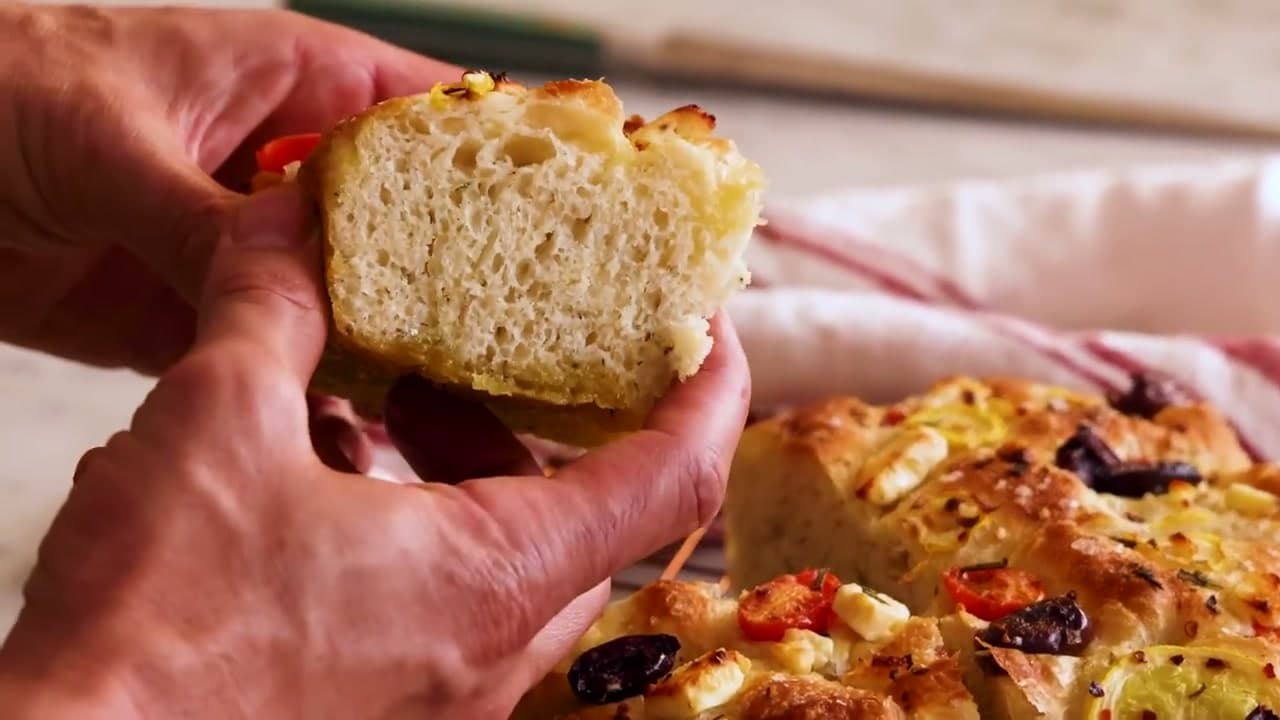
How to Make Focaccia: Easy No-Knead Italian Bread Recipe

By ShowMeStepByStepPublished Updated

Based on a video by Preppy Kitchen.

Focaccia is the gateway bread. There's no kneading, no proofing baskets, no banneton, no scoring. You mix five ingredients in a bowl, let the dough sit, dimple it with your fingers, and bake it in a pan of olive oil. What comes out is the kind of bread that turns a Tuesday dinner into something worth slowing down for - crisp on the bottom, fluffy in the middle, and smelling like every good Italian bakery you've ever walked past.

John Kanell of Preppy Kitchen walks through the version from his new cookbook in about 9 minutes. The dough takes 5 minutes of hands-on work, then a long slow rise (two hours at room temperature, or overnight in the fridge for deeper flavor). After a quick fold, you stretch it into oiled pans, dimple it with your fingertips, and load on whatever toppings you want. Cherry tomatoes and olives. Sliced shallots and strawberries. Plain with flaky salt and rosemary. The base recipe is so easy and forgiving that you can treat it like pizza night and let everyone build their own.

The technique is no-knead, which means the gluten develops on its own during the long rise instead of from your hands. That's why focaccia is the right starter bread - it's almost impossible to overwork. Read each step before you begin so you know when to bloom the yeast, when to fold, and when the second rise has to start. The total clock time is long but the active work is minimal. You'll spend more time waiting than mixing.

Step-by-Step Guide

1

Step 1: Bloom the Yeast

0:15
Step 1: Step 1: Bloom the Yeast

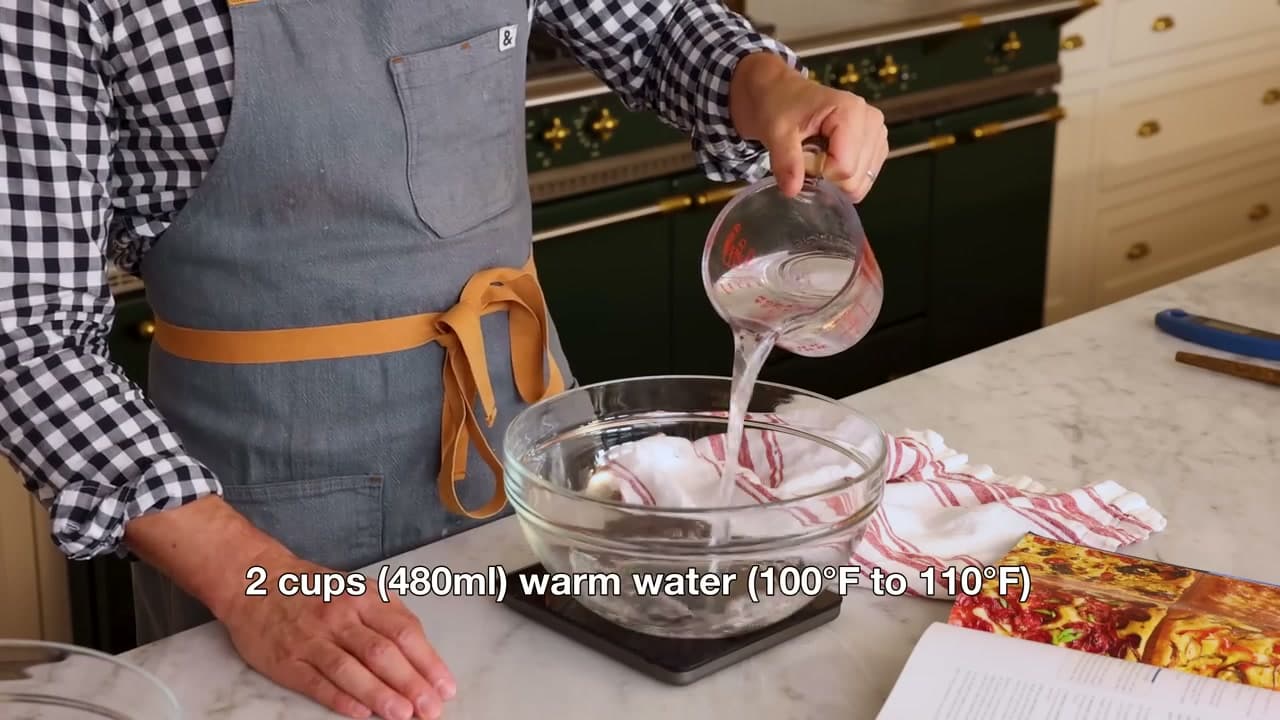
Warm 2 cups (480ml) of water until it's between 100 and 110F - a finger dipped in should feel pleasantly warm, not hot. Pour it into a large bowl. Add one packet (2 1/4 tsp) of active dry yeast and 1 tablespoon of honey to feed the yeast. Whisk briefly to combine, then set it aside for about 5 minutes until you see a foamy cap on the surface. If it doesn't foam, your yeast is dead and you'll need to start over with a fresh packet - the bread won't rise without live yeast.

Tip

John uses active dry yeast specifically. Instant yeast skips the proofing step and works differently in this recipe. If you only have instant, you can use it but skip the 5-minute foam wait.
2

Step 2: Measure the Dry Ingredients

1:15
Step 2: Step 2: Measure the Dry Ingredients

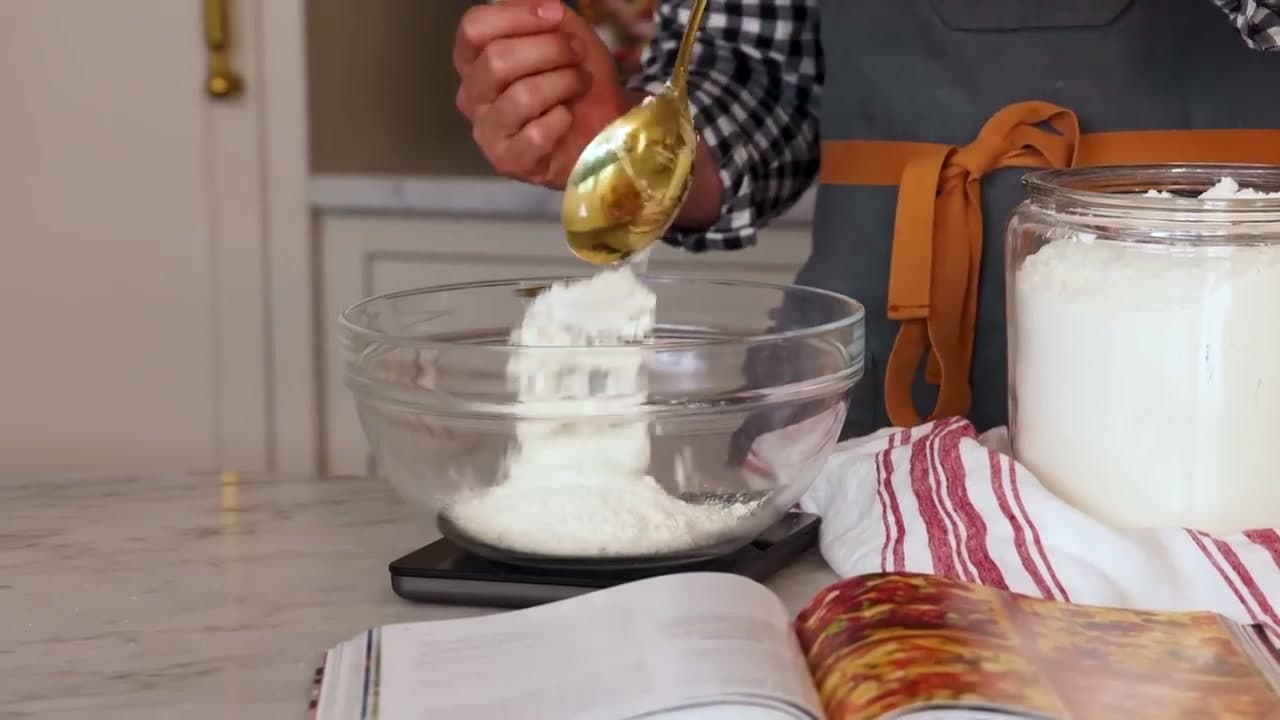
In a separate bowl, measure 5 cups (600g) of all-purpose flour. A kitchen scale gets you closer to John's exact ratio than measuring cups do - flour packs differently every time you scoop. Add 1 teaspoon of fine salt and 1 tablespoon of fresh thyme. Salt in the dough is what gives focaccia its flavor; without it, the bread tastes flat. Pick your herb based on what you have - oregano, Italian seasoning, and herbes de Provence all work. Whisk the dry ingredients briefly to distribute the salt and herbs.

Tip

Bread flour will give you a chewier crumb if that's what you prefer, but all-purpose is what John uses and what most home bakers have on hand. Don't substitute self-rising flour - it already has salt and leavening that will throw off the recipe.

3

Step 3: Combine Wet and Dry

3:00
Step 3: Step 3: Combine Wet and Dry

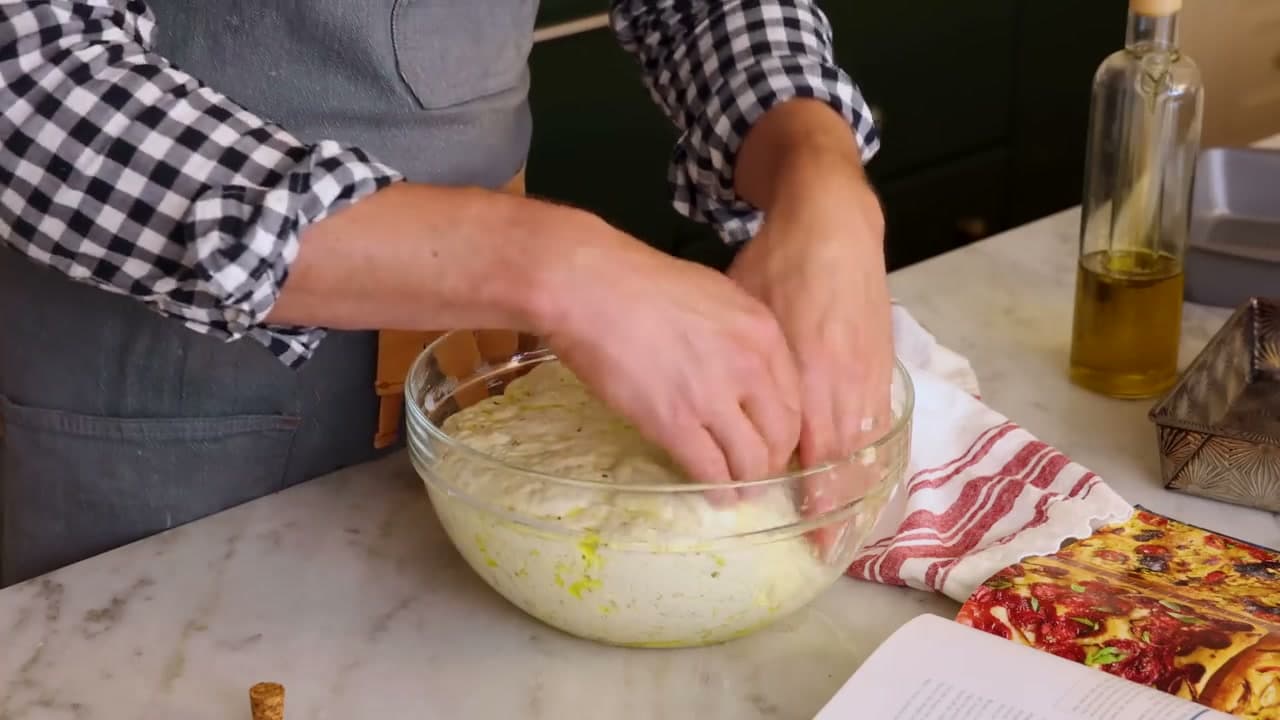
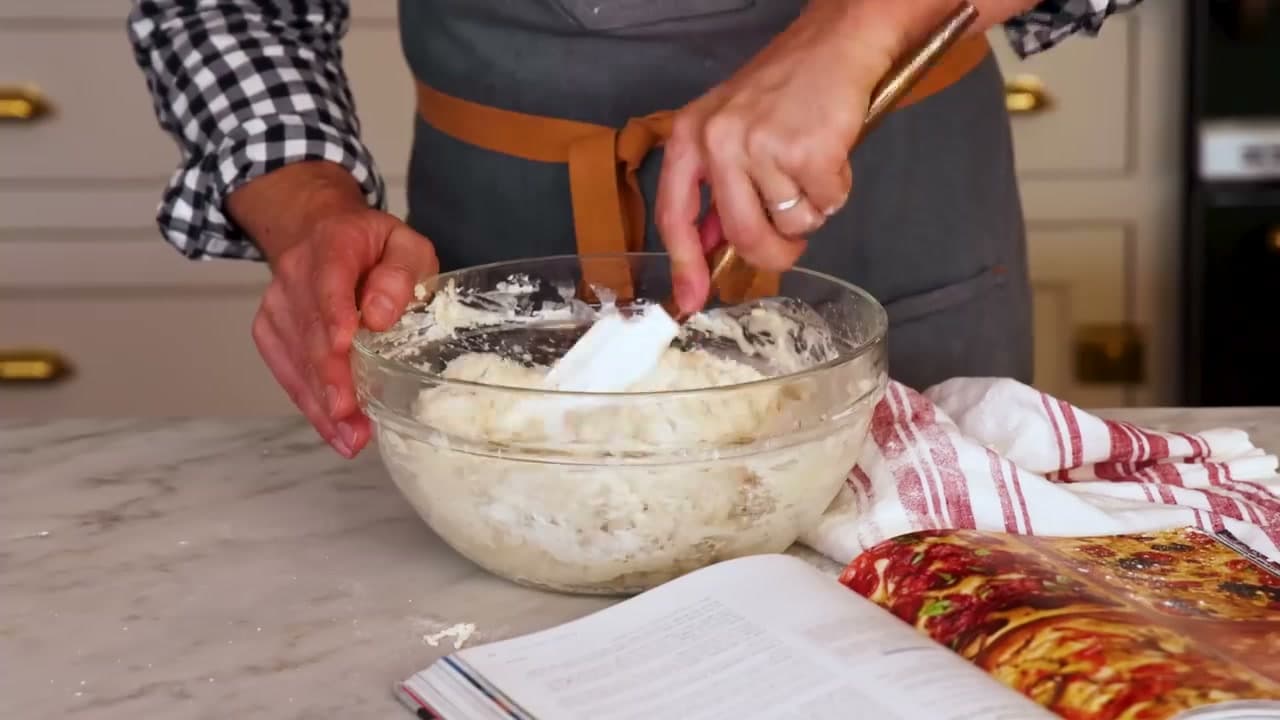
Pour the foamy yeast water into the flour bowl and fold everything together with a spatula. Push down through the center, scrape up the sides, and rotate the bowl as you go. Keep folding until there are no dry pockets of flour at the bottom or edges. The dough will look shaggy, wet, and sticky - that's correct. Don't be tempted to add more flour. The high hydration is what gives focaccia its airy, open crumb after baking.

Tip

You can mix the entire recipe in one bowl if you want to save dishes. John uses two bowls in the video for clarity, but a single big bowl works just as well.

4

Step 4: Coat in Olive Oil and First Rise

3:25
Step 4: Step 4: Coat in Olive Oil and First Rise

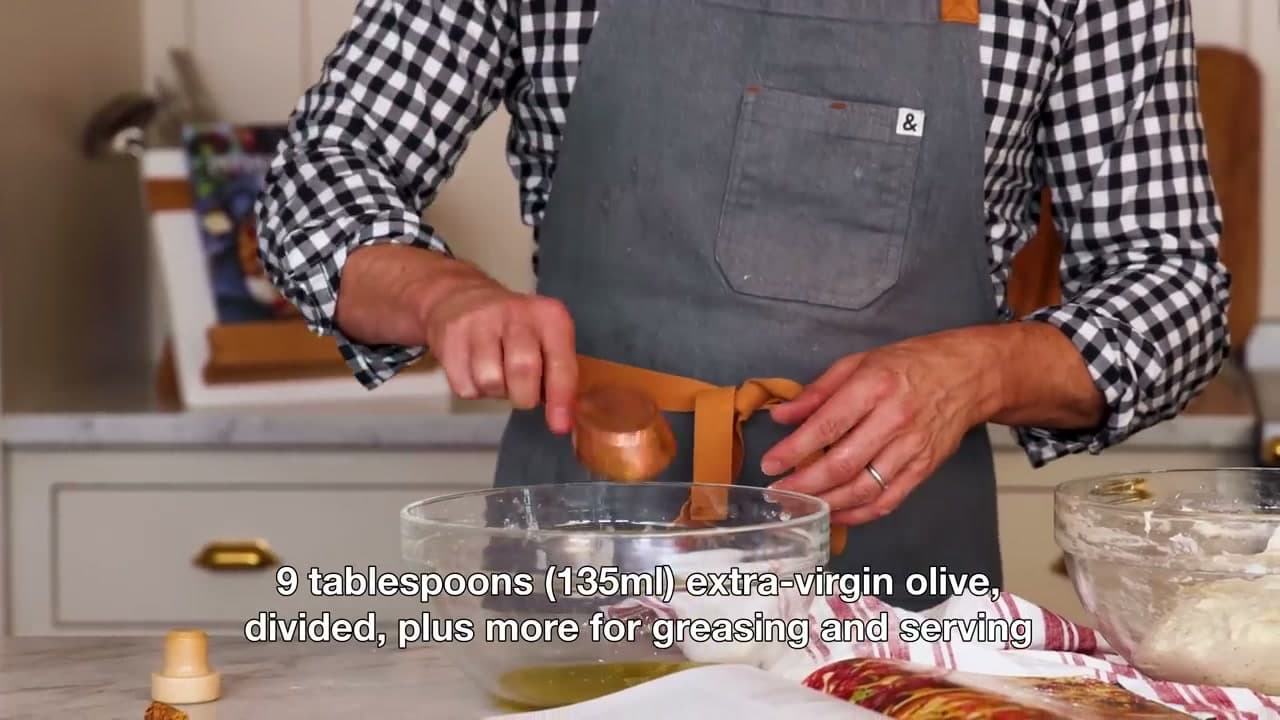
Pour 4 tablespoons (1/4 cup, 60ml) of extra-virgin olive oil into your original empty bowl. Transfer the shaggy dough back into the oiled bowl and gently turn it so the entire surface is coated. The oil keeps the dough from drying out and gives focaccia its signature crisp, golden crust later. Cover the bowl and leave it to rise for 2 hours at room temperature until doubled, or pop it in the fridge for 12 to 18 hours for a more flavorful overnight rise.

Tip

The overnight cold rise in the fridge is the pro move. The dough develops more complex flavor and is easier to handle when chilled. If you're baking the same day, find a warm corner of your kitchen and give it the full 2 hours.

5

Step 5: Fold the Dough Four Times

4:20
Step 5: Step 5: Fold the Dough Four Times

Once the dough has doubled, lightly oil your clean hands. Reach under one side, lift the dough, and fold it over itself toward the center. Rotate the bowl 90 degrees and repeat. Do four folds total. This is not kneading - you're not working the dough, just building a bit of structure so it holds together when you transfer it to the pan. The dough should feel jiggly and alive under your hands.

Tip

Wet hands or oiled hands keep the sticky dough from grabbing your skin. Dry hands will turn this step into a frustrating mess - take the extra 10 seconds.

6

Step 6: Transfer to Oiled Pans and Stretch

5:45
Step 6: Step 6: Transfer to Oiled Pans and Stretch

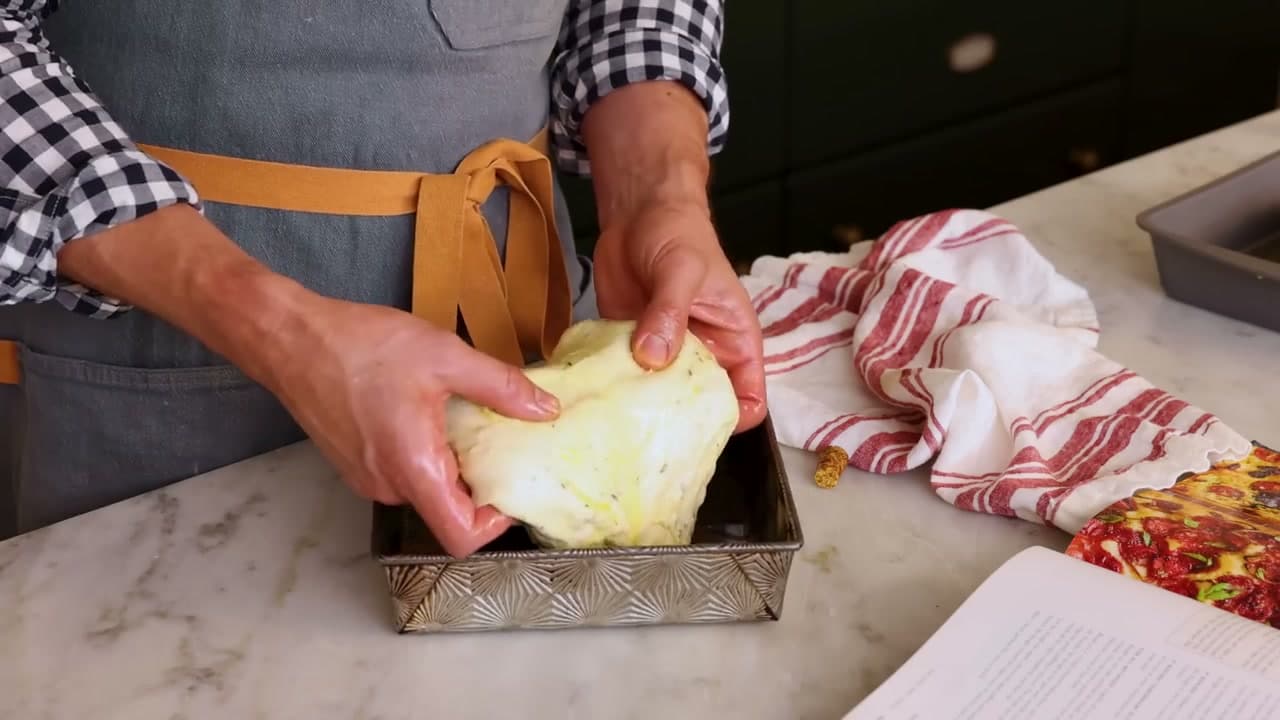
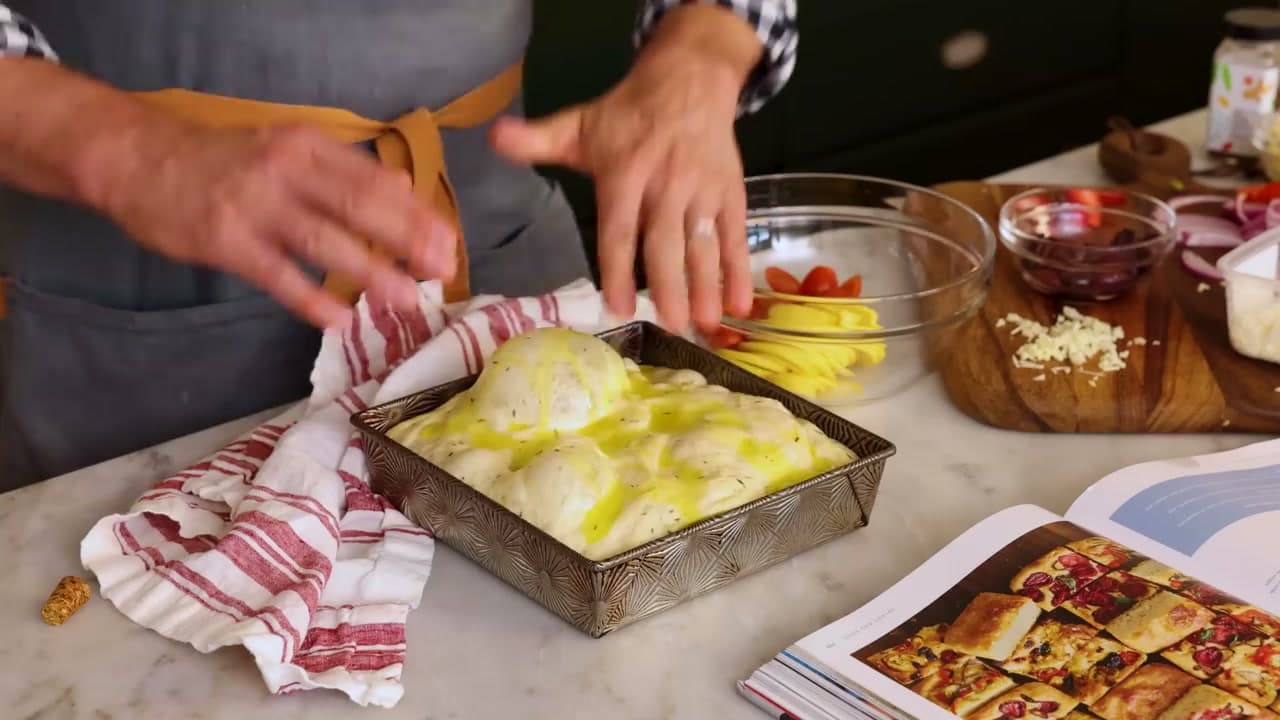
Pour a generous glug of olive oil into the bottom of your pan. John uses two 8-inch square pans for a thick focaccia, but you can also use one 9x13-inch sheet pan or two 9-inch rounds. Divide the dough between the pans if needed. Use your fingers to stretch the dough toward the corners of each pan. The gluten will spring back at first - that's fine. The dough still has a second rise of 1 to 2 hours, and you'll stretch it again every 30 minutes until it reaches the corners.

Tip

An hour into the second rise, preheat your oven to 450F so it's screaming hot when the dough is ready. Cold ovens make pale focaccia.

7

Step 7: Dimple, Drizzle, and Top

6:35
Step 7: Step 7: Dimple, Drizzle, and Top

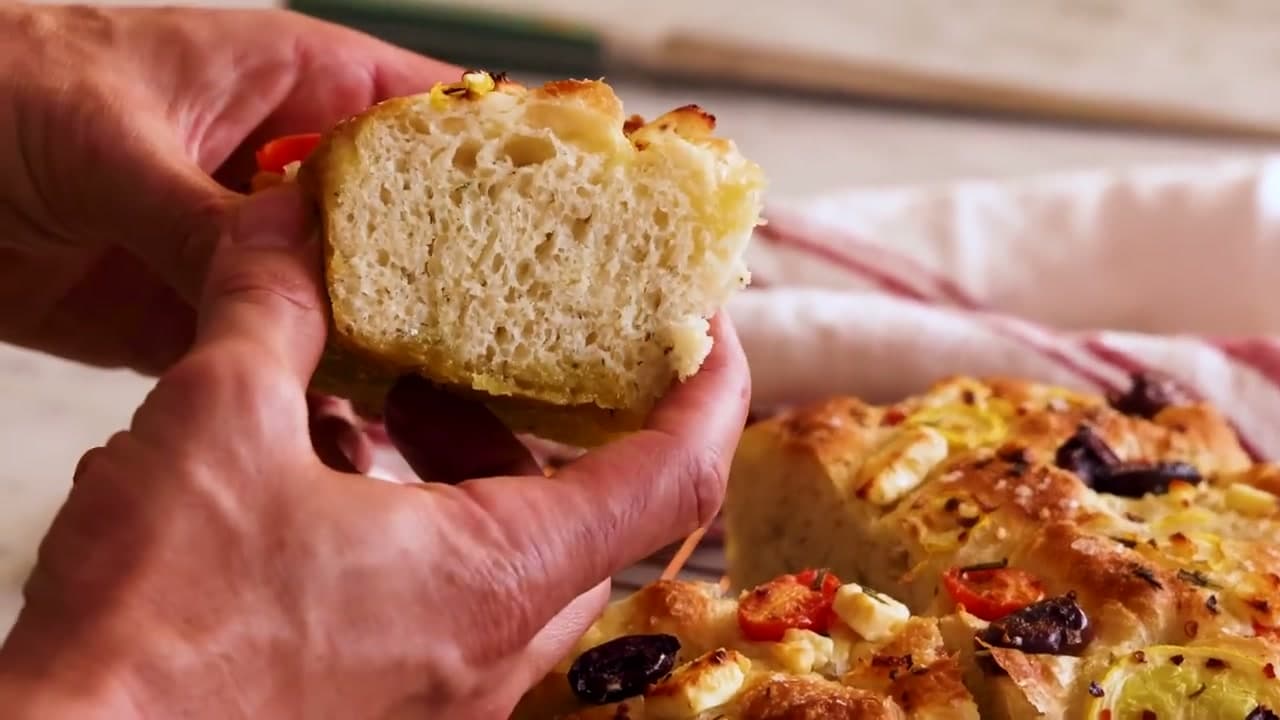
After the second rise, drizzle the top of the dough generously with more olive oil. Oil your fingertips and press straight down into the dough to create the signature focaccia dimples across the entire surface. The divots catch oil and toppings and help the bread bake evenly. Scatter on whatever toppings you want - halved cherry tomatoes, pitted Kalamata olives, crumbled feta, thin slices of red onion or yellow squash. Finish with a few sprigs of fresh rosemary and a sprinkle of flaky sea salt. Toss vegetable toppings in a little olive oil so they don't burn at high heat.

Tip

For something unexpected, try thinly sliced shallots with strawberries tossed in balsamic and finished with fresh basil. John calls this his build-your-own focaccia and lets everyone in the family top their own portion.

8

Step 8: Bake and Cool on a Wire Rack

9:05
Step 8: Step 8: Bake and Cool on a Wire Rack

Bake at 450F for 20 to 25 minutes, or until the top is deeply golden and the edges are crisp. Pull the pan out and let the focaccia cool for about 5 minutes so it's not screaming hot. Then transfer it to a wire rack right away. This is the same move as a good skillet cornbread - leaving the bread in the hot pan steams the bottom and ruins the crisp crust you just baked. Slice into squares or strips and serve warm. Focaccia keeps 3 days at room temperature wrapped in plastic, or 2 months in the freezer wrapped tight to avoid burn.

Tip

Reheat leftover focaccia in a 350F oven for 5 minutes to bring back the crisp crust. The microwave makes it gummy - skip it.

Products Used

❖ The Recipe

How to Make Focaccia: Easy No-Knead Italian Bread Recipe

Italian
Serves
Makes 18 servings (one 18x13-inch sheet or two 8-inch squares)
Prep
30 min
Cook
25 min
Total
55 min

Ingredients

12 items
  • 2 cups (480ml)warm water100 to 110F - warmer kills the yeast
  • 1 packet (2 1/4 tsp)active dry yeastJohn specifies active dry, not instant
  • 1 tablespoonhoneyfeeds the yeast; sugar works as a substitute
  • 5 cups (600g)all-purpose flour
  • 1 teaspoonfine saltfor the dough
  • 1 tablespoonfresh thyme or other herbthyme, oregano, Italian seasoning, or herbes de Provence
  • 1/2 cup plus more for pans and toppingextra-virgin olive oilthe focaccia basically fries in the oil
  • to tasteflaky sea saltfor sprinkling on top before baking
  • a few sprigsfresh rosemaryoptional topping
  • 1 cup, halvedcherry tomatoesoptional topping
  • 1/2 cup, halved and pittedKalamata olivesoptional topping
  • 1/2 cupcrumbled fetaoptional topping

Nutrition

estimated · per servingEstimated from the ingredient list, not measured. Actual values vary by brand, preparation, and serving size. Not a substitute for measured nutrition data.
Calories
180kcal
Protein
4g
Fat
6g
Carbs
28g
Fiber
1g
Sugar
1g
Sodium
220mg

Method

  1. 1
    Step 1: Bloom the Yeast. Warm 2 cups (480ml) of water until it's between 100 and 110F - a finger dipped in should feel pleasantly warm, not hot.
  2. 2
    Step 2: Measure the Dry Ingredients. In a separate bowl, measure 5 cups (600g) of all-purpose flour.
  3. 3
    Step 3: Combine Wet and Dry. Pour the foamy yeast water into the flour bowl and fold everything together with a spatula.
  4. 4
    Step 4: Coat in Olive Oil and First Rise. Pour 4 tablespoons (1/4 cup, 60ml) of extra-virgin olive oil into your original empty bowl.
  5. 5
    Step 5: Fold the Dough Four Times. Once the dough has doubled, lightly oil your clean hands.
  6. 6
    Step 6: Transfer to Oiled Pans and Stretch. Pour a generous glug of olive oil into the bottom of your pan.
  7. 7
    Step 7: Dimple, Drizzle, and Top. After the second rise, drizzle the top of the dough generously with more olive oil.
  8. 8
    Step 8: Bake and Cool on a Wire Rack. Bake at 450F for 20 to 25 minutes, or until the top is deeply golden and the edges are crisp.
☐ The Checklist

How to Make Focaccia: Easy No-Knead Italian Bread Recipe

Tools
4
Materials
5
Steps
8
Video
9 min

Your Guide

Preppy Kitchen

As an Amazon Associate we earn from qualifying purchases. Links on this page may be affiliate links - clicking them and buying doesn't change your price, but helps support ShowMeStepByStep.

Tags

Test your knowledge

Did the lesson stick? Find out in 2 minutes.

5 quick questions covering what you just read. No signup, no score saved — just a gut check.

Quick reference

Key takeaways from How to Make Focaccia: Easy No-Knead Italian Bread Recipe

5 questions, answers, and one-line explanations. Tap to expand.

  1. 1.What temperature should the water be to bloom the yeast?

    Answer: Lukewarm 100-110F

    100-110F feels pleasantly warm, not hot. Hotter water kills the yeast before it has a chance to wake up.

  2. 2.What is the room-temperature first rise time?

    Answer: 2 hours

    2 hours doubles the dough at room temp. The fridge alternative takes 12-18 hours but builds deeper flavor.

  3. 3.Why oil your hands before folding the risen dough?

    Answer: Sticky dough won't grab

    High-hydration focaccia dough sticks to bare skin. Oiled or wet hands slide through the folds without ripping the dough.

  4. 4.What do the fingertip dimples on top do?

    Answer: Catch oil and toppings

    The dimples hold pools of olive oil and act as cradles for toppings during the bake. They also help even browning.

  5. 5.Why move the loaf to a wire rack right after baking?

    Answer: Stops bottom steaming

    Bread left in the hot pan steams from underneath and softens the crust. The rack lets air circulate so the bottom stays crisp.

What's next

Related collections

Curated theme pages that include this tutorial.

Weekly Digest

Liked this cooking tutorial?

Pick the categories you want to hear about. Weekly digest of new step-by-step tutorials. No spam, easy unsubscribe.

Send me tutorials about

We only email about new tutorials. Easy unsubscribe anytime.