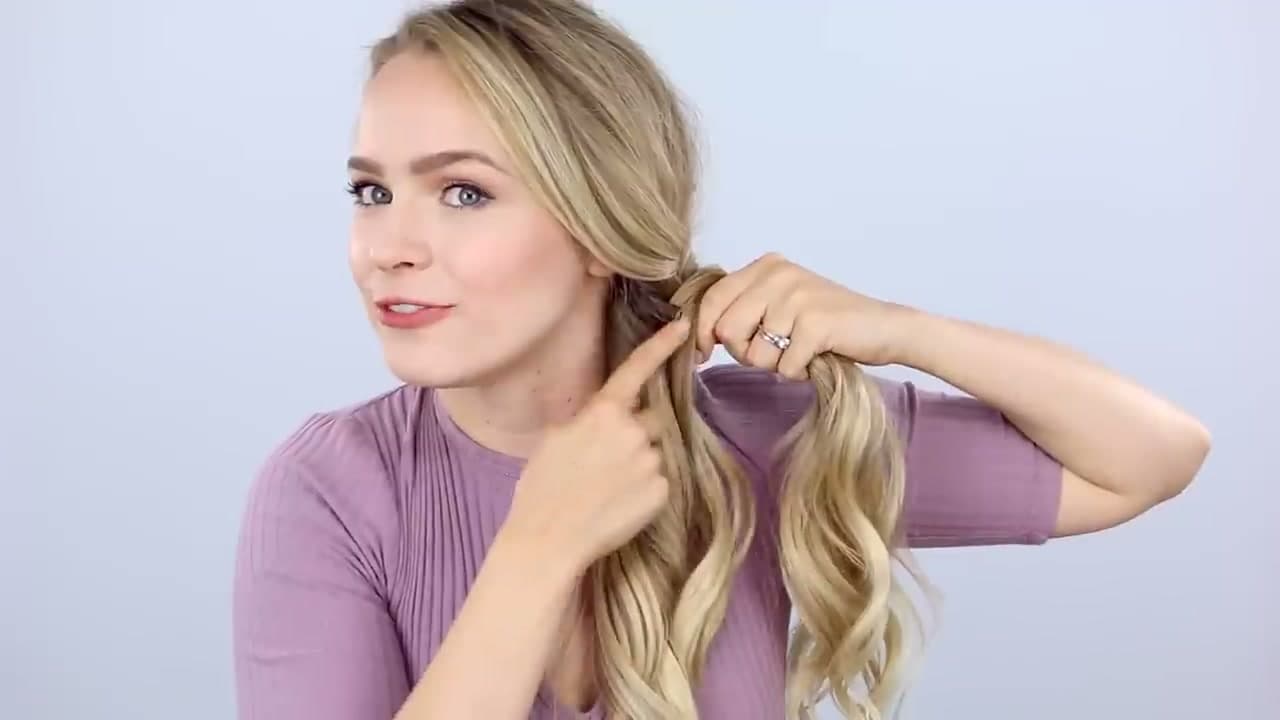
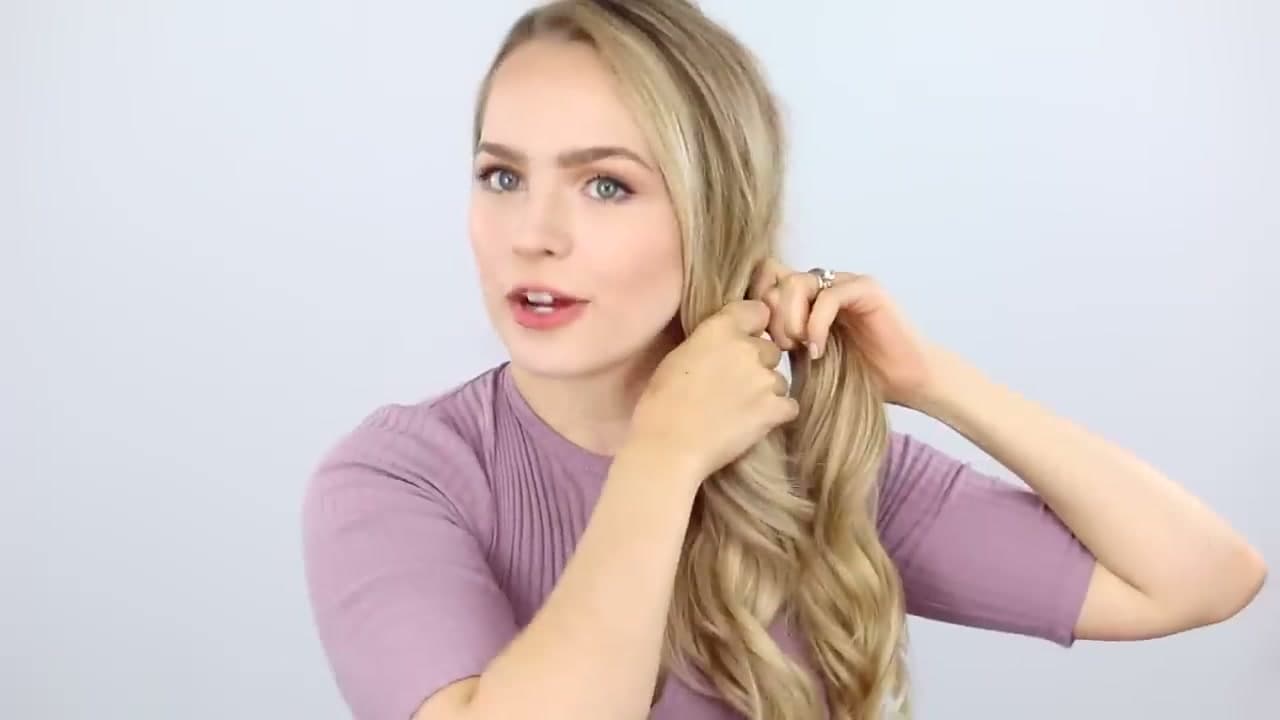
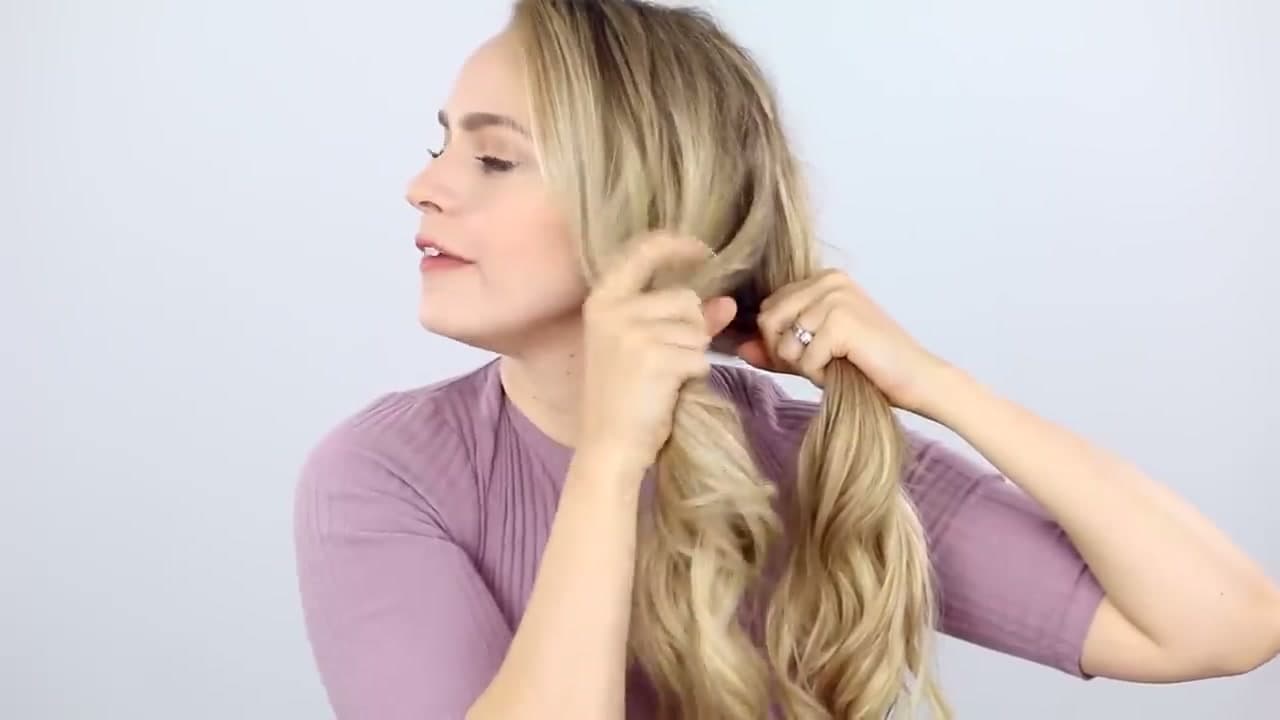
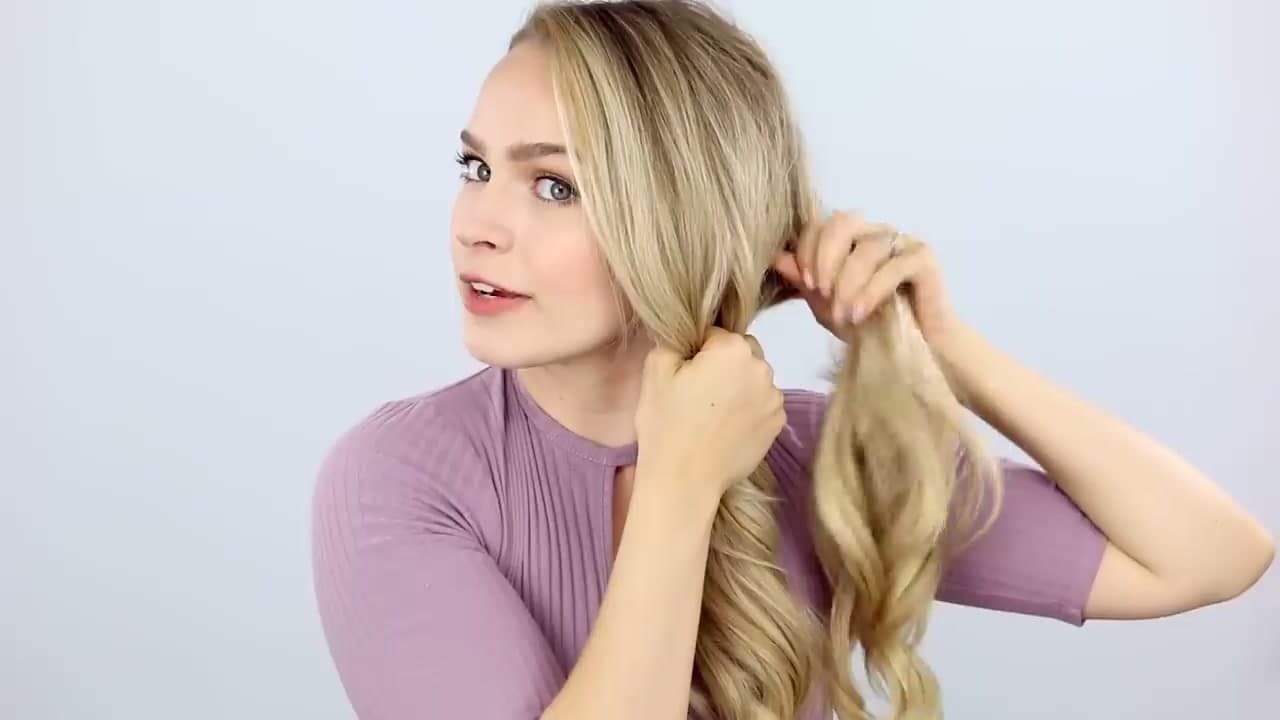
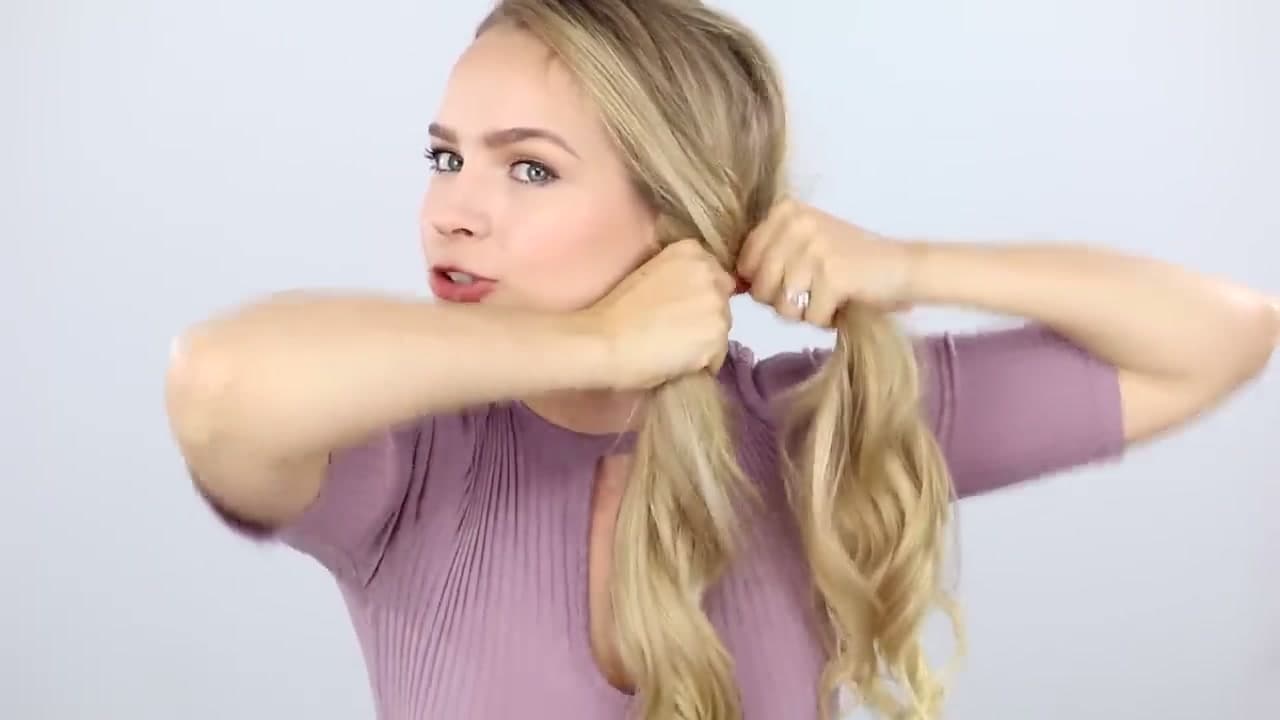
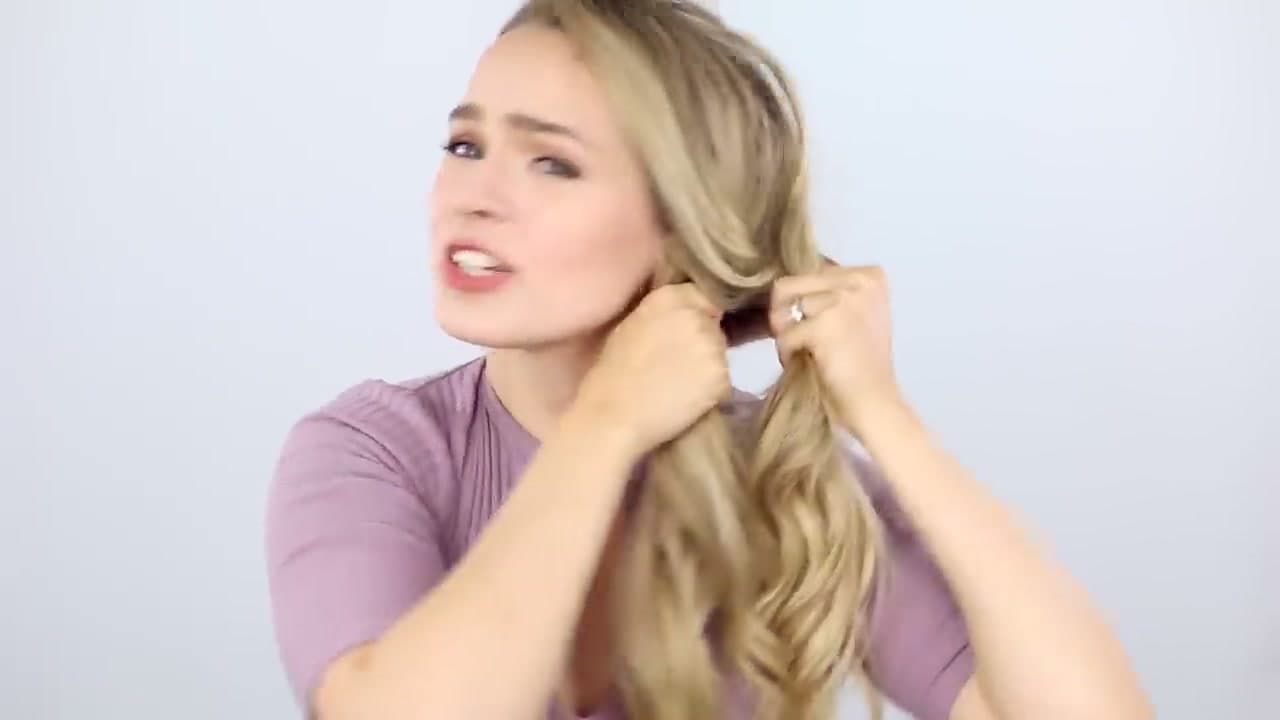
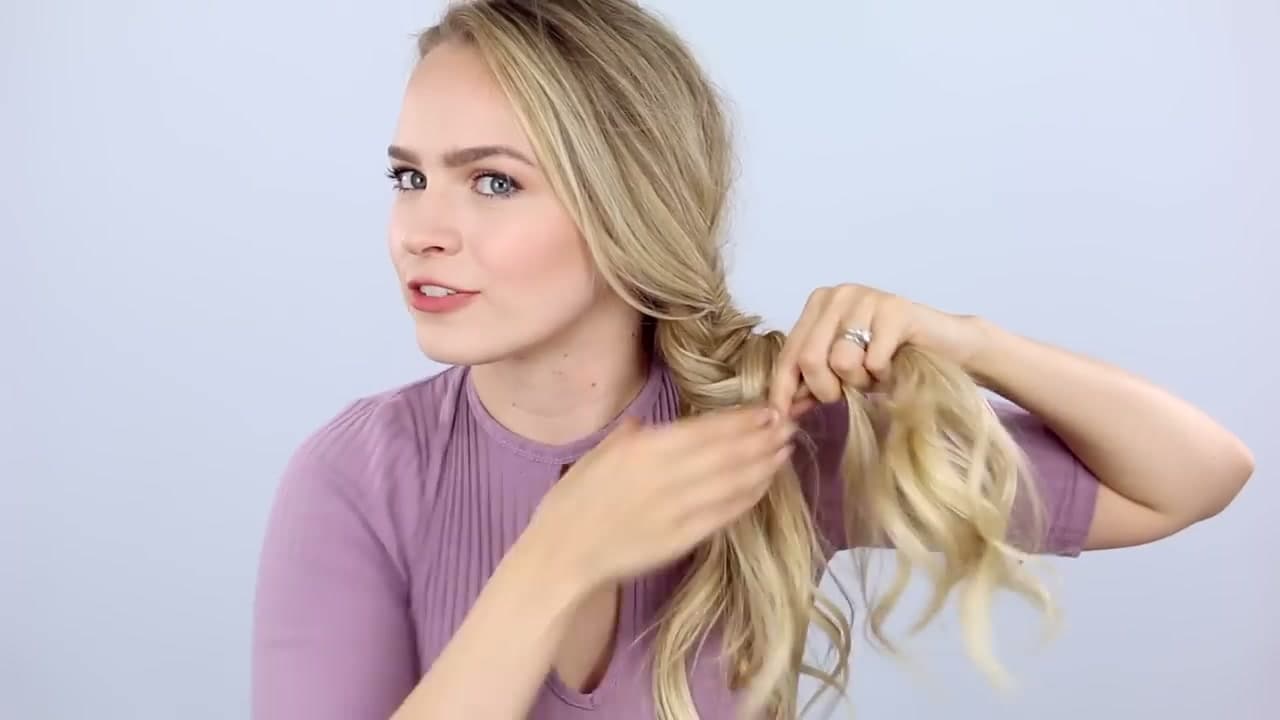
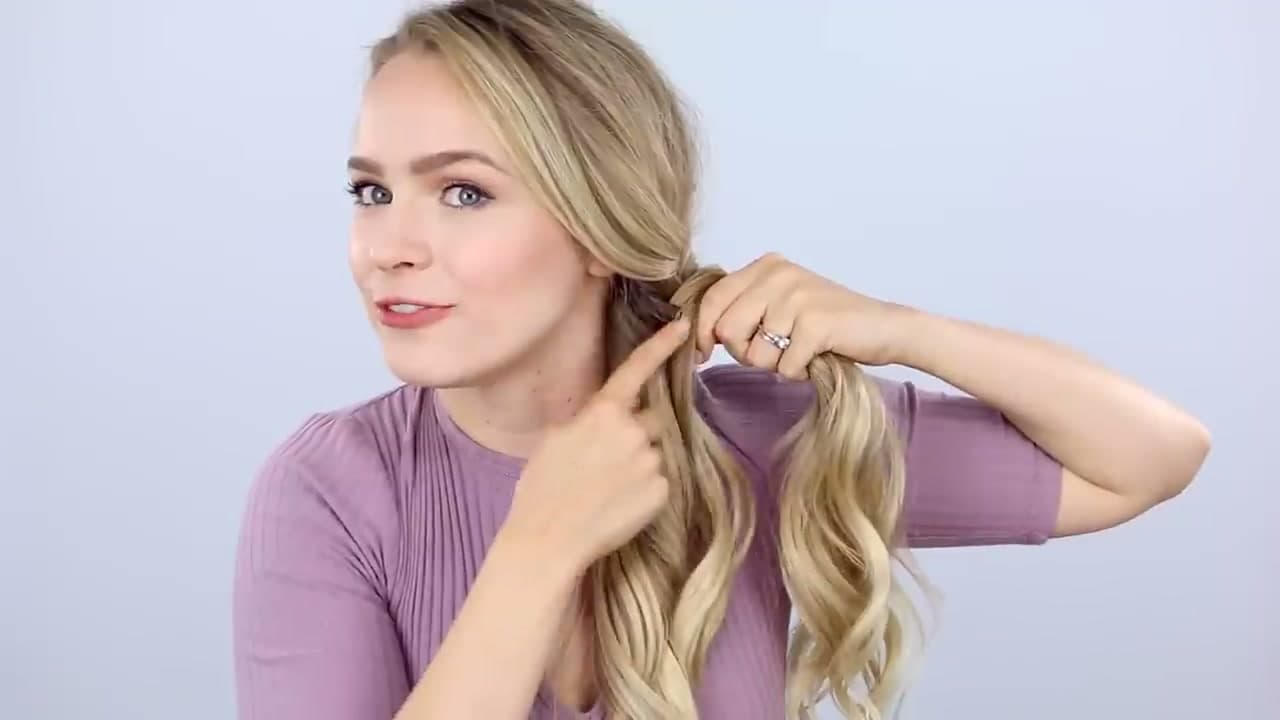
A fishtail braid looks harder than it is. It uses two sections of hair, not three, and the whole braid runs on one repeating four-beat rhythm: pierce, grab, slide, reset. Once that rhythm clicks you can do it without a mirror.
It is called a fishtail plait in the UK and a fish braid pretty much everywhere, and all three names describe the same braid. The narrow V-shaped crosses look like the scales along a fish.
This tutorial breaks the finger mechanics down in detail, because that is where most fishtail tutorials fall short. They show the moves at full speed and leave you guessing which hand is doing what. The video comes from Kayley Melissa, who demos on her own hair sectioned to one side so every cross is visible.
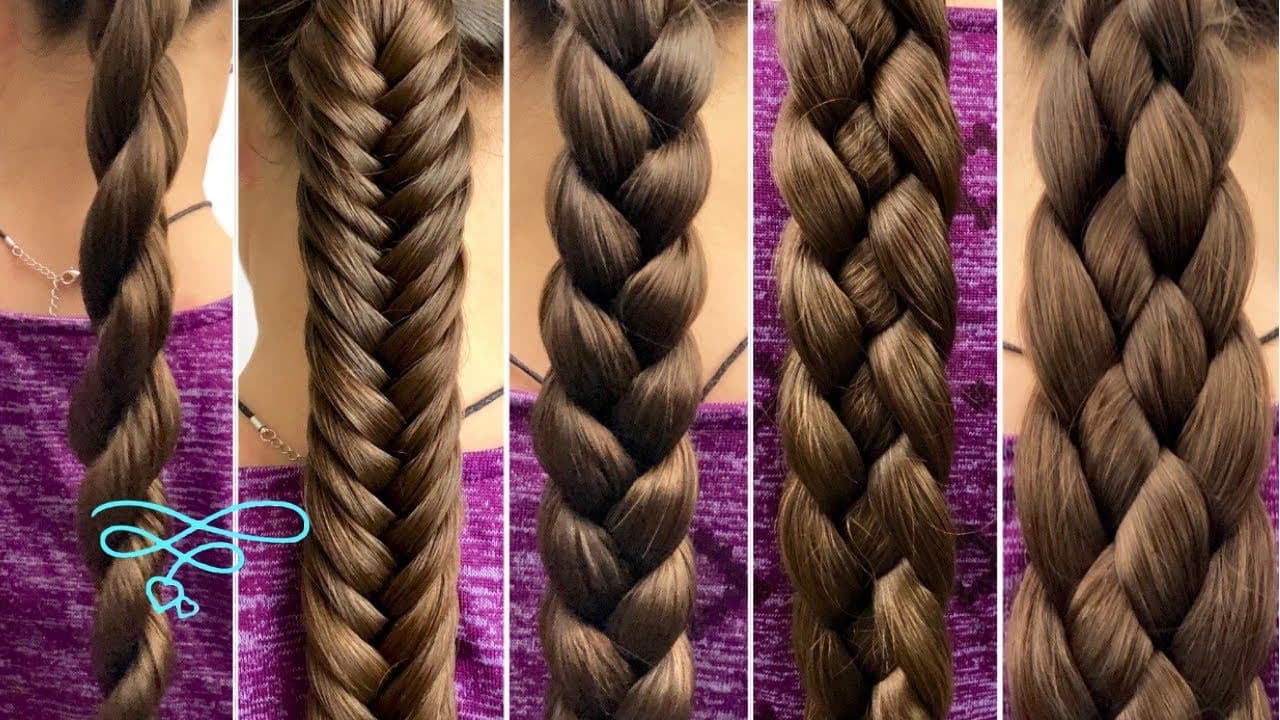
Fishtail vs French vs Dutch
These three get mixed up constantly, and the difference is simple once you see it.
A fishtail uses two sections. You take a thin strand from the outside edge of one section and cross it over to join the other section. No hair is added from the scalp. The pattern is fine and rope-like.
A French braid uses three sections and adds hair from the scalp as it travels down, crossing each side strand over the middle. It lies flat against the head.
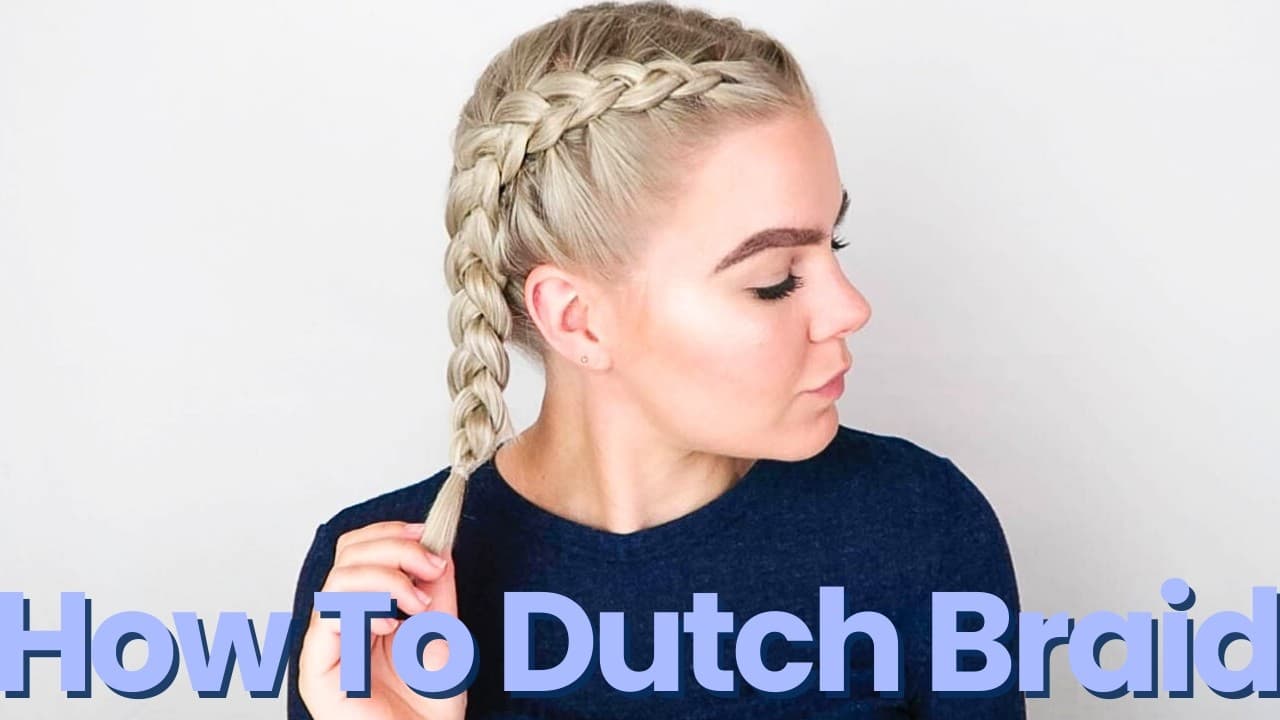
A Dutch braid is a French braid crossed under instead of over, which lifts it so it sits on top of the head like a rope.
You can combine them. A French fishtail adds hair from the scalp into a two-section fishtail as you work down, which is the version you see on wedding hair. Learn the plain fishtail first.
How thin should the strands be
This is the single decision that changes how the braid looks. Thin strands, roughly a quarter-inch, give you the fine woven texture people picture when they hear fishtail, and take longer. Thick strands, closer to an inch, work up in a couple of minutes but look more like a rope twist than a fishtail.
Start thick while you are learning the rhythm, then go thinner once your hands stop needing your eyes. Consistency matters more than thinness. A braid of evenly thick strands looks deliberate; one that alternates thick and thin looks like a mistake.
What goes wrong for beginners
The braid loosens as you go. You are letting go of the tension between crosses. Keep both sections held taut in your palms the entire time and only release to pick up the next strand.
It looks like a rope, not a fishtail. Strands are too thick, or you are taking them from the wrong place. Each strand comes from the far outside edge of a section, not from anywhere in the middle.
It falls apart on clean hair. Freshly washed hair is too slippery to hold a fishtail. Use day-two hair, or work a little texturising spray or dry shampoo through it first.
Your arms get tired. Normal, and the reason to braid over your shoulder rather than behind your head. Pull all your hair to one side at the start and work down the front.
Making it look fuller
Pancaking is the step that turns a thin, tight braid into the loose one you see in photos. Once the braid is tied off, gently pull outward on the edge of each individual cross, working from the bottom up. Pull too hard and the braid unravels, so tug a few millimetres at a time.
Tie it off with a clear elastic rather than a thick hair tie. A bulky tie fights the taper at the end of the braid and makes the whole thing look bottom-heavy.
For a side fishtail, gather everything over one shoulder before you split into two sections. For a half-up version, take only the top third of your hair and fishtail that, leaving the rest loose.
New to braiding altogether? Start with the three-strand braid guide, which covers sectioning and tension before any of the patterned braids.