How to Read a Knitting Pattern (Beginner's Guide)

The finished result: How to Read a Knitting Pattern (Beginner's Guide)
Also in:Crafts

By ShowMeStepByStepPublished Updated

Based on a video by Jacq Knits.

A knitting pattern is a set of instructions for making a knitted project, but at first glance it can look like a wall of cryptic abbreviations and numbers in parentheses. Once you know what each section does, the same shorthand is easy to follow on any pattern - sock, sweater, scarf or shawl.

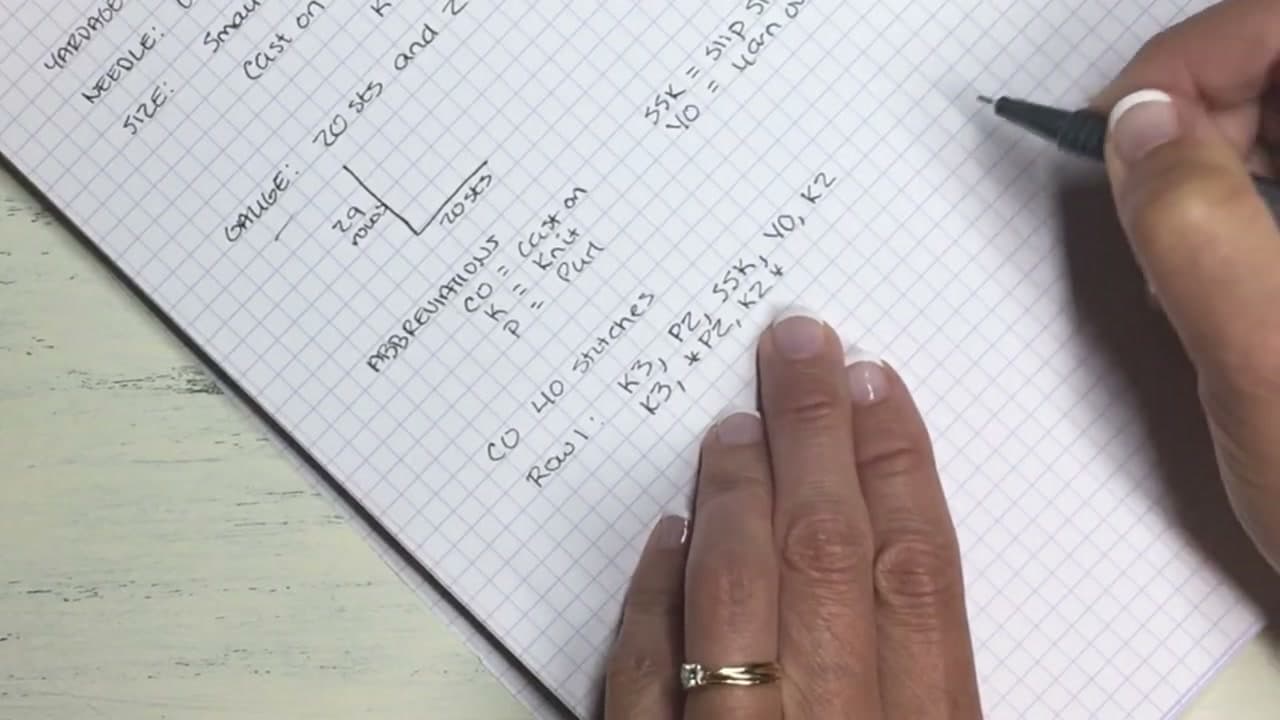
Jacqueline from Jacq Knits walks through every section a typical pattern includes, then writes out a sample pattern by hand so you can see how the pieces fit together. After this you will know how to pick the right yarn weight, work a gauge swatch, decode SSK and K2tog, follow repeats, and read sizing brackets without second-guessing yourself.

The abbreviations you will see most

Abbr.Meaning
k / pknit / purl
k2togknit two together (right-leaning decrease)
sskslip, slip, knit (left-leaning decrease)
yoyarn over (adds a stitch and an eyelet)
pm / smplace marker / slip marker
RS / WSright side / wrong side
reprepeat
st(s)stitch(es)
CO / BOcast on / bind off
inc / decincrease / decrease

Asterisks and brackets

"*K2, p2; rep from * to end" means work k2, p2 across the whole row. "Rep from * to last 2 sts, k2" means stop the repeat when two stitches remain and knit those. Brackets sit inside a repeat for a smaller one: "*[k1, p1] twice, k4; rep from *" works the bracket twice each time through. Some patterns use parentheses for sizes and repeats both, so read the context.

Charts vs written instructions

A chart is a grid where each square is one stitch. Read it from the bottom up. On right-side rows read right to left, the way the stitches sit on your needle. On wrong-side rows read left to right. In the round every row is a right-side row, so always read right to left. Check the key: a blank square often means knit on RS and purl on WS.

Why gauge matters

Say the pattern gauge is 20 sts = 4 inches, or 5 stitches per inch, and a 40-inch chest takes 200 stitches. If your swatch gives 22 sts over 4 inches, those same 200 stitches measure about 36 inches. Nearly four inches too small, from two stitches you did not count. Change needle size until the swatch matches.

Choosing your size

Pick from the finished measurements, not your body size. The gap between the two is ease. A relaxed sweater might have 2-4 inches of positive ease; hats and socks use negative ease so they stretch to fit. Lay a sweater you love flat and measure it. That number tells you which size to circle.

Common mistakes

  • Skipping the swatch on anything fitted.
  • Misreading a repeat and working "to end" when it said "to last 2 sts". Count after the first row.
  • Missing "at the same time". It means two sets of shaping run together. Read the whole section before you start.

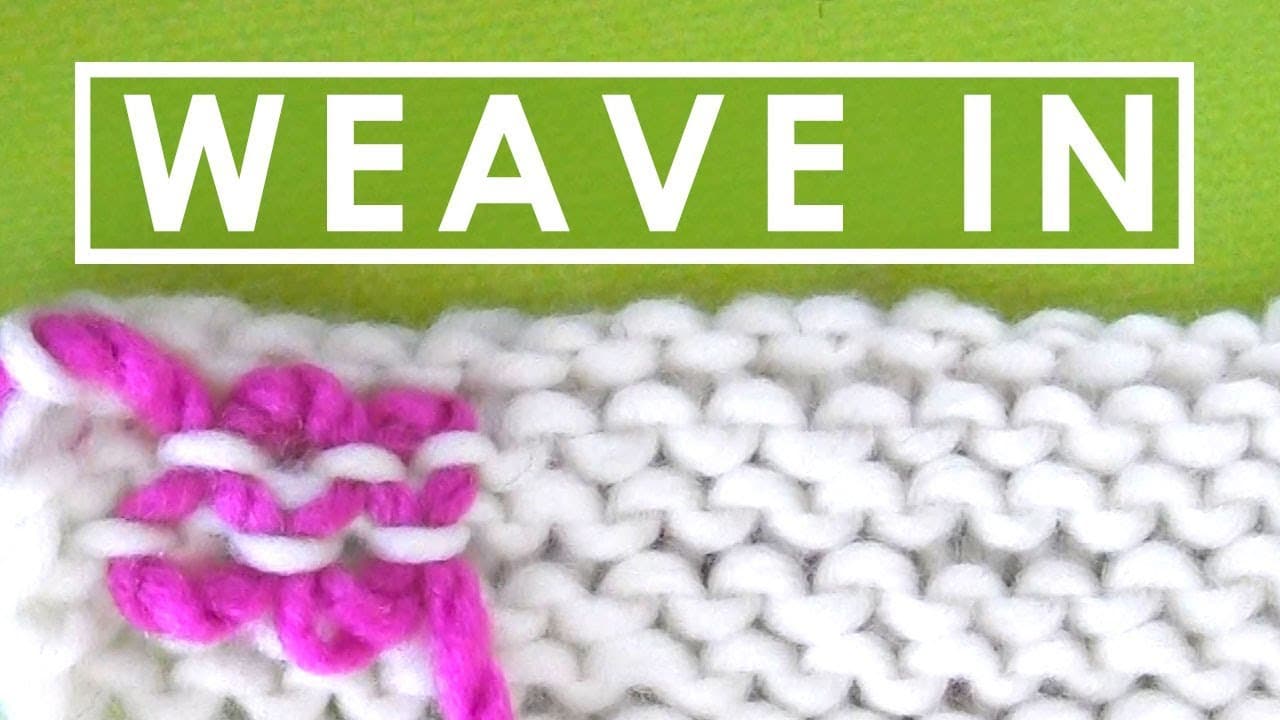
When a ball runs out mid-project, see how to join yarn in knitting. To build your first project, start with how to cast on, how to knit and purl, how to increase and how to slip stitch.
What you'll need

Step-by-Step Guide

7 steps · about 17 minutes.Check off each step as you go and your progress saves automatically.

1

Skim the Pattern Anatomy

1:00
Step 1: Skim the Pattern Anatomy - How to Read a Knitting Pattern (Beginner's Guide)

Every pattern opens with the same handful of sections: a short description of the finished piece, construction notes (knit flat on straight needles or in the round on circulars), yarn and needle requirements, gauge, sizing, an abbreviations key, and then the row-by-row instructions.

Read the opening paragraph first. The designer is telling you what the project is, how it is built (top-down, bottom-up, flat or in the round), and roughly how hard it is. This is where you decide if it is the right project for you before you buy yarn.

2

Match the Yarn Weight

3:00
Step 2: Match the Yarn Weight - How to Read a Knitting Pattern (Beginner's Guide)

The pattern lists a yarn weight (worsted, fingering, bulky, etc.) and usually a yardage estimate. The weight is what you have to match - color and brand are up to you.

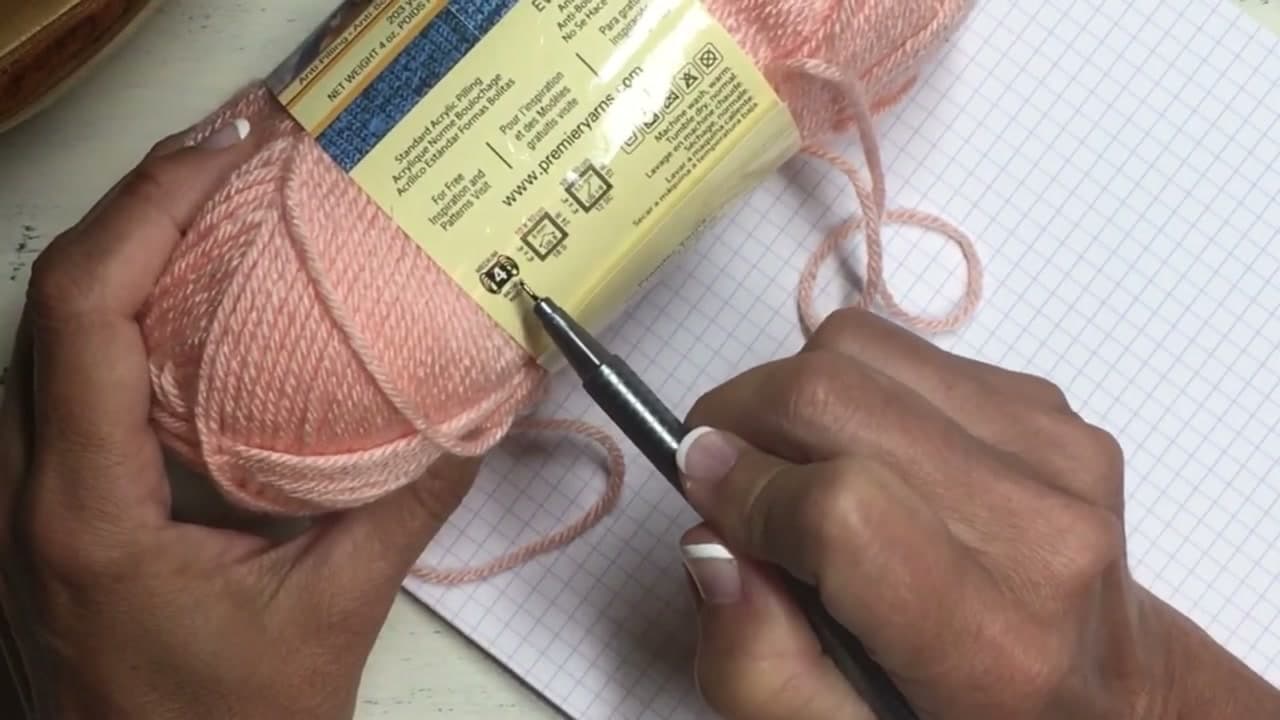
Every yarn skein label has a small number inside a yarn-ball icon. A 4 is worsted weight, a 1 is fingering, a 5 is bulky, and so on. Google "yarn weight chart" if you want the full list. Pick a yarn at the same weight or your finished piece will not measure correctly. Buy a little more yardage than the pattern asks for so you do not run short on the last row.

Tip

Different fibers behave differently. Cotton has almost no stretch and drapes heavy. Wool is springy. Acrylic sits in the middle. If you can, use the same fiber type the designer used.

3

Check the Needle Size

4:00
Step 3: Check the Needle Size - How to Read a Knitting Pattern (Beginner's Guide)

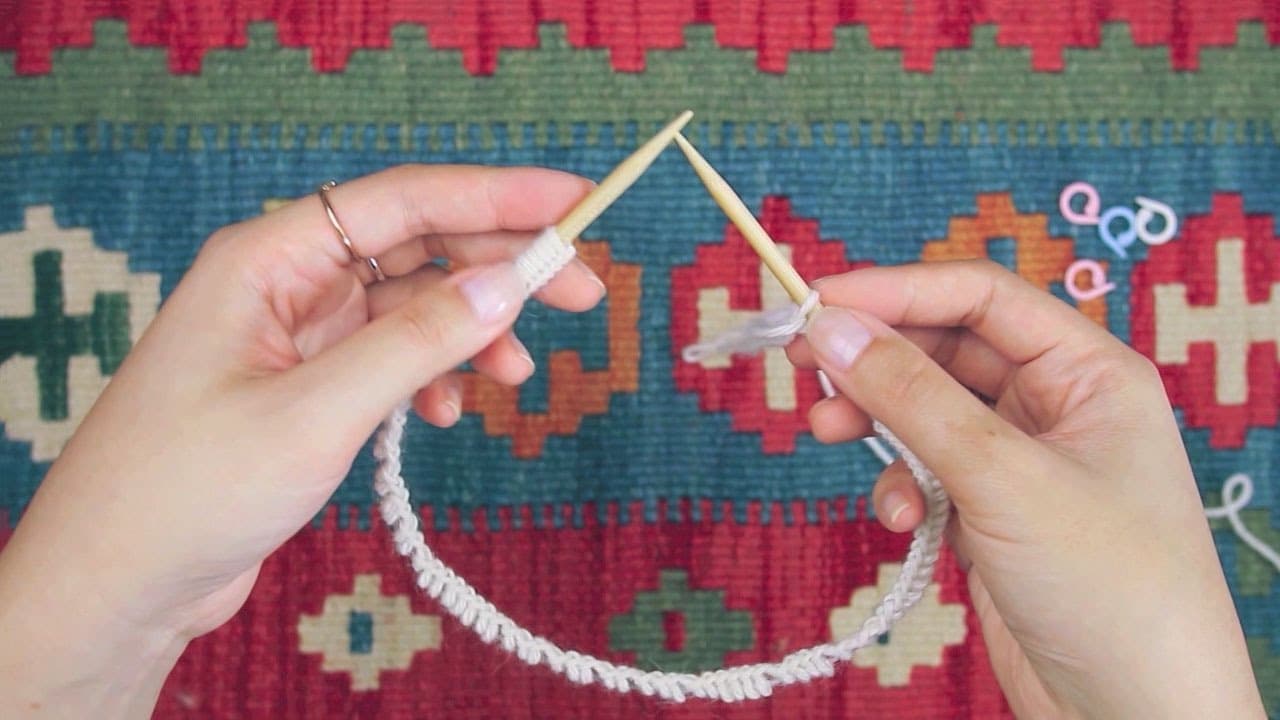
Needle requirements come right after the yarn. The pattern lists a needle type (straight for flat pieces, circular or double-pointed for working in the round) and a size in both US and metric, like US 7 (4.5mm).

If you buy your needles in the US, the US size is what is printed on the package. Metric sizing shows up on European brands and is more precise, so it is the one to trust if you are using needles from different manufacturers.

4

Decode the Sizing Key

5:05
Step 4: Decode the Sizing Key - How to Read a Knitting Pattern (Beginner's Guide)

Patterns for fitted pieces - sweaters, socks, hats - give instructions for multiple sizes at once using parentheses. The format usually reads "size small (medium, large, X-large)" at the top of the pattern.

From then on, every stitch count follows the same format. "Cast on 40 (42, 44, 46) stitches" means cast on 40 for small, 42 for medium, 44 for large, 46 for X-large. Before you knit a single stitch, grab a highlighter or pen and circle every number that matches your size all the way through the pattern. It is the single best habit for following a sized pattern without losing your place.

5

Knit a Gauge Swatch

7:40
Step 5: Knit a Gauge Swatch - How to Read a Knitting Pattern (Beginner's Guide)

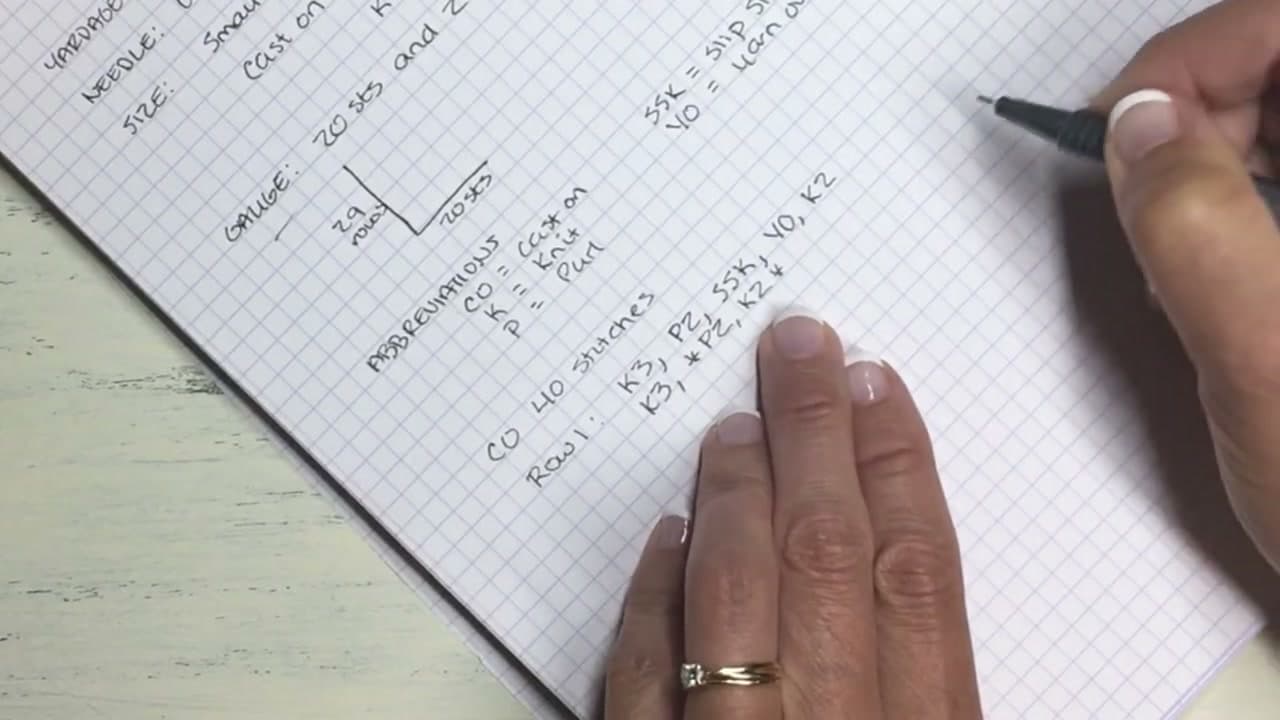
The gauge box looks something like "20 stitches and 29 rows = 4 inches in stockinette stitch." That is the designer telling you how many stitches per inch they got with the recommended yarn and needles.

Cast on about 24 stitches with your yarn and needles, knit a stockinette square (knit one row, purl one row) until it measures roughly 5 inches tall, then bind off. Lay a ruler across it and count stitches in a 4-inch span. If you have more than 20, your knitting is tight - go up a needle size. Fewer than 20 means it is loose - go down a size. For scarves, blankets, and other non-fitted projects you can skip the swatch entirely.

Tip

Wash and block your swatch the same way you plan to wash the finished piece. Some fibers (especially superwash wool and cotton) grow when wet, and your gauge after blocking is the gauge that matters.

6

Read the Abbreviations Key

10:00
Step 6: Read the Abbreviations Key - How to Read a Knitting Pattern (Beginner's Guide)

Every abbreviation the pattern uses is defined in one block, usually right before the instructions. The most common ones repeat across nearly every pattern you will ever read:

  • CO - cast on
  • BO - bind off (cast off in UK patterns)
  • K - knit
  • P - purl
  • K2tog - knit two stitches together (decrease)
  • SSK - slip slip knit (decrease)
  • YO - yarn over (increase / eyelet)
  • Sl1 - slip one stitch
  • M1L / M1R - make one stitch (left or right leaning)
  • kfb - knit front and back (increase)

If any abbreviation in the key is new to you, look it up on YouTube before you cast on. Five minutes of video now saves you from ripping out a row later.

7

Work the Row-by-Row Instructions

13:00
Step 7: Work the Row-by-Row Instructions - How to Read a Knitting Pattern (Beginner's Guide)

Pattern rows read left to right, one comma at a time. A comma means "and then." So Row 1: K3, P2, SSK, YO, K2 reads as: knit 3, then purl 2, then slip slip knit, then yarn over, then knit 2.

Asterisks mark repeats. K3, *P2, K2* repeat 10 times means knit 3 once, then do the P2 K2 sequence between the asterisks ten times in a row. You will also see brackets used the same way - [K2, P2] x 3 means work K2 P2 three times. At the end of every row the stitch count should still match what the pattern expects, so count after the first few rows to catch any mistakes early.

When the pattern says repeat rows 1-4, five more times, that means you have already done the four rows once and now repeat them another five times for six total. The final block of any pattern is the bind-off (BO) instruction, which finishes the piece.

Tip

Place a stitch marker every time the pattern tells you to. Markers split each row into smaller chunks so you do not have to count across 80 stitches every time. They slip from one needle to the other as you work.

Keep going

How to Knit Continental Style for Faster, Smoother Knitting

Products Used

The Checklist

How to Read a Knitting Pattern (Beginner's Guide)

Tools
4
Materials
1
Steps
7
Video
17 min

Tools we recommend

Your Guide

Jacq Knits

As an Amazon Associate we earn from qualifying purchases. Links on this page may be affiliate links - clicking them and buying doesn't change your price, but helps support ShowMeStepByStep.

Tags

Sunday How-To

New knitting tutorials, every Sunday

One short email with the week's best step-by-step guides. Free, no spam, unsubscribe anytime.

Test your knowledge

Did the lesson stick? Start with this one.

5 questions covering what you just read. No signup, no score saved, and you can stop after this one.

Question 1 of 5

On a yarn label, what does the number inside the yarn-ball icon tell you?

Quick reference

Key takeaways from How to Read a Knitting Pattern (Beginner's Guide)

5 questions, answers, and one-line explanations. Tap to expand.

  1. 1.On a yarn label, what does the number inside the yarn-ball icon tell you?

    Answer: The yarn WEIGHT - 1=fingering, 4=worsted, 5=bulky, etc.

    Yarn weight number tells you whether it's lace, fingering, sport, worsted, bulky, or super bulky.

  2. 2.When a sized pattern says 'cast on 40 (42, 44, 46)' for sizes S/M/L/XL, what's the single best habit?

    Answer: Grab a highlighter or pen and CIRCLE every number that matches your size all the way through the pattern

    Pre-marking your size = no losing-your-place mid-pattern.

  3. 3.What's a 'gauge swatch' and why do you knit one?

    Answer: A test square to compare your stitches-per-inch against the pattern's spec - more stitches means you go up a needle size, fewer means down

    Wrong gauge = wrong size finished piece; the swatch tells you if you need to change needles.

  4. 4.What does K2tog mean in a pattern?

    Answer: Knit two stitches together (decrease)

    K2tog = knit two stitches together as one = decrease.

  5. 5.What do asterisks (or brackets) in a row instruction like 'K3, *P2, K2* repeat 10 times' mean?

    Answer: Repeat the sequence between the marks the indicated number of times

    Asterisks/brackets mark a repeated block; do K3 once, then P2-K2 ten times.

Did this work for you?

What's next

Weekly Digest

Liked this knitting tutorial?

Pick the categories you want to hear about. Weekly digest of new step-by-step tutorials. No spam, easy unsubscribe.

Send me tutorials about

We only email about new tutorials. Easy unsubscribe anytime.