What Is a Good Credit Score

By ShowMeStepByStepPublished Updated

Based on a video by TruFinancials.

What is a good credit score? Short answer: 670 or higher on the standard 300-to-850 scale. That single three-digit number decides what interest rate you get on a mortgage, whether the car dealer hands you keys or sends you home, and in many states what your auto insurance premium looks like. Knowing where your score sits is one of the cheapest moves you can make for your wallet.

This walkthrough is built around an explainer from Denis Trufin at TruFinancials. You will learn the five FICO ranges (poor, fair, good, very good, excellent), exactly where the cutoffs fall, what moves the number up or down, and how to check yours for free. The same numbers apply whether you are buying your first car or refinancing a house at 60.

If you are getting your basic money setup in order, also read our walkthroughs on how to read your credit report, how to write a check, and how to forward your mail. Your credit score is one piece of the adulting puzzle. The rest gets easier once you know what the number means.

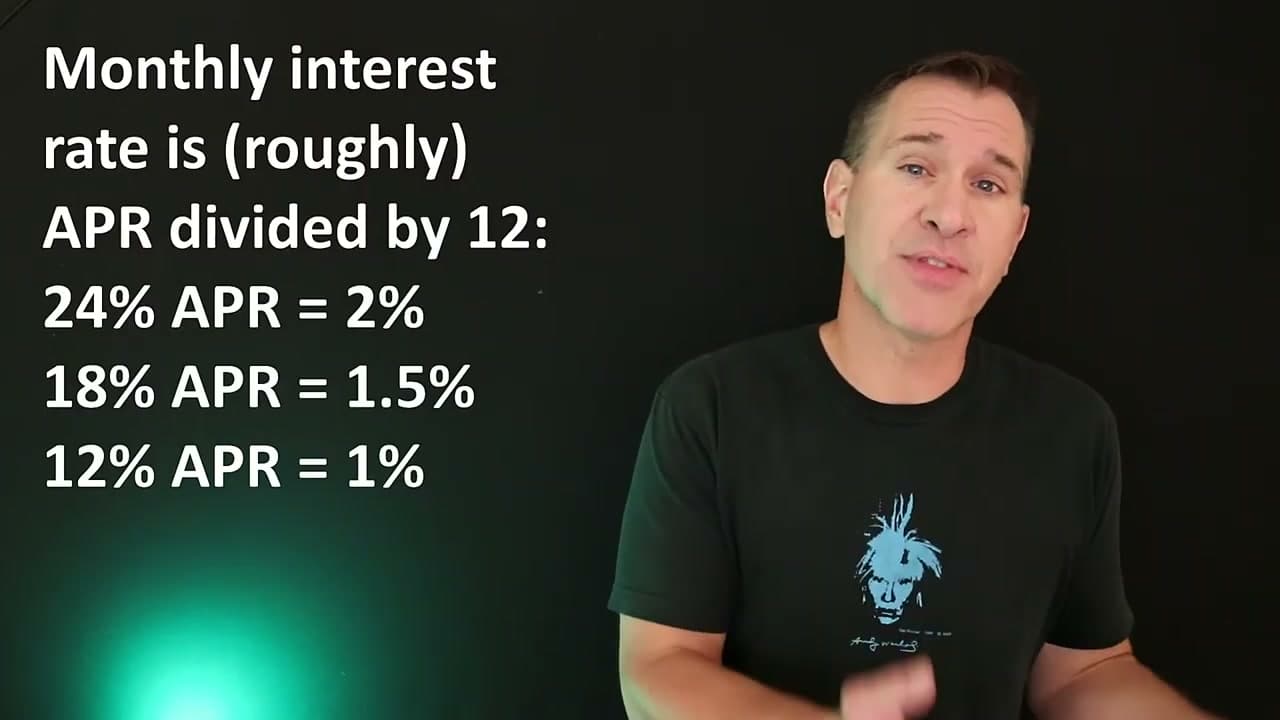
Disclaimer: This is general educational content, not personal financial advice. FICO and VantageScore update their models periodically and lenders set their own cutoffs. For decisions about a specific loan, talk to a licensed financial professional.

Step-by-Step Guide

1

Step 1: Know the 300-to-850 Scale

0:04
Step 1: Step 1: Know the 300-to-850 Scale

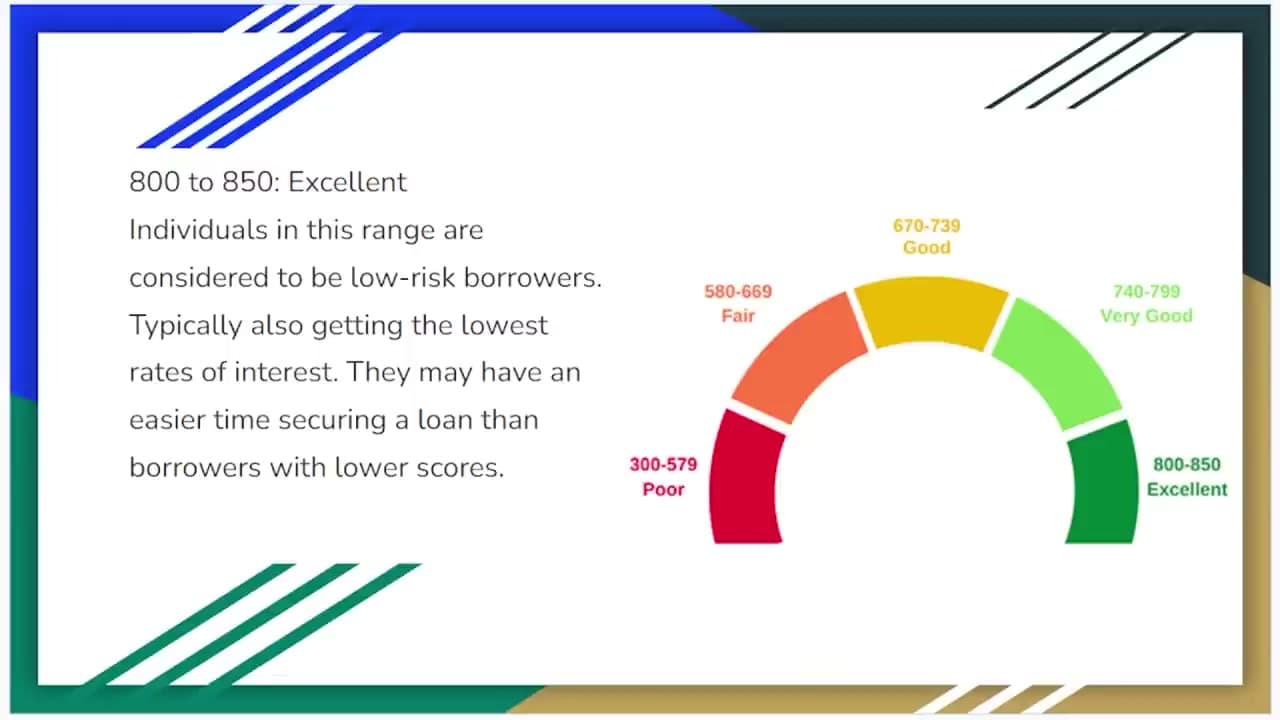
Every credit score you will ever see lives on a 300-to-850 scale. Watch the intro at 0:04. The two big scoring models, FICO and VantageScore, both use this range. FICO is the one most lenders care about - it shows up in roughly 90 percent of US lending decisions. VantageScore is what you usually see when you peek at your score through Credit Karma or your bank's free app. The two models can give you slightly different numbers from the same credit file because they weight things a little differently, but the 300 to 850 scale is the same. Three hundred is rock bottom. Eight fifty is a perfect score, and only about 1.7 percent of adults ever hit it.

Tip

Do not chase a perfect 850. Once you cross 760, almost every lender treats you the same. The difference between 760 and 850 rarely changes your interest rate.
2

Step 2: Memorize the Five FICO Ranges

0:16
Step 2: Step 2: Memorize the Five FICO Ranges

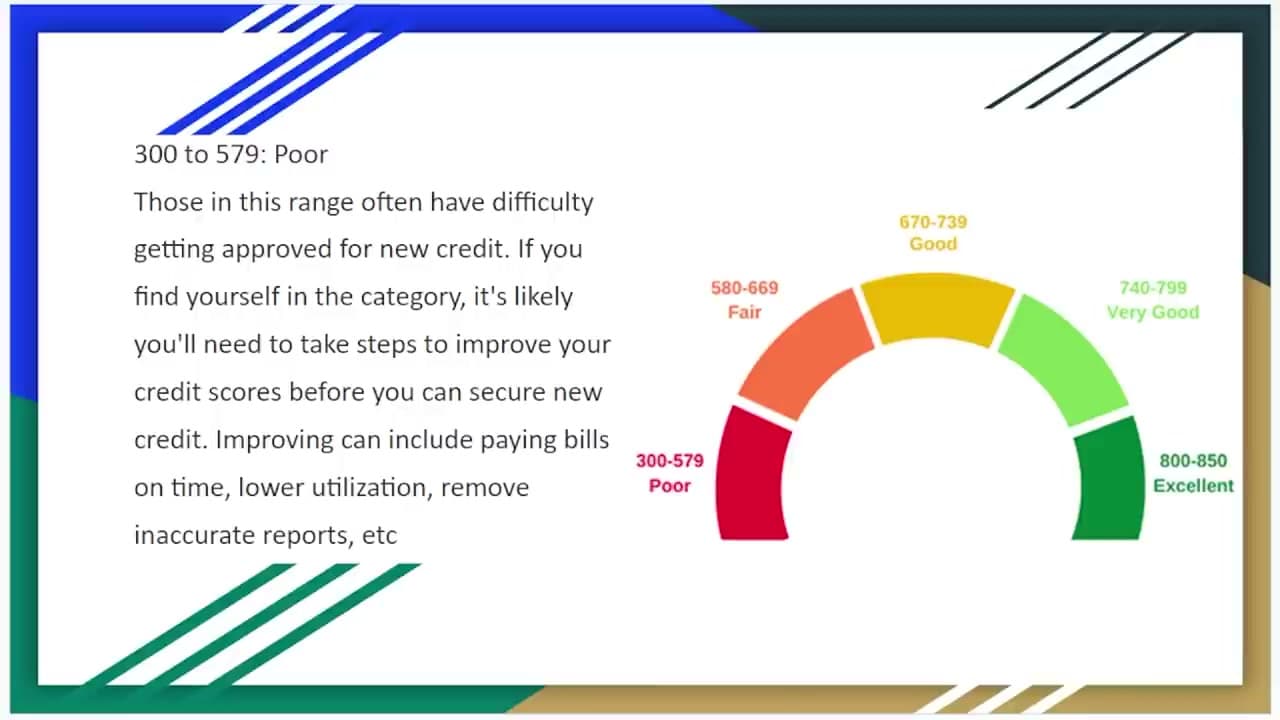
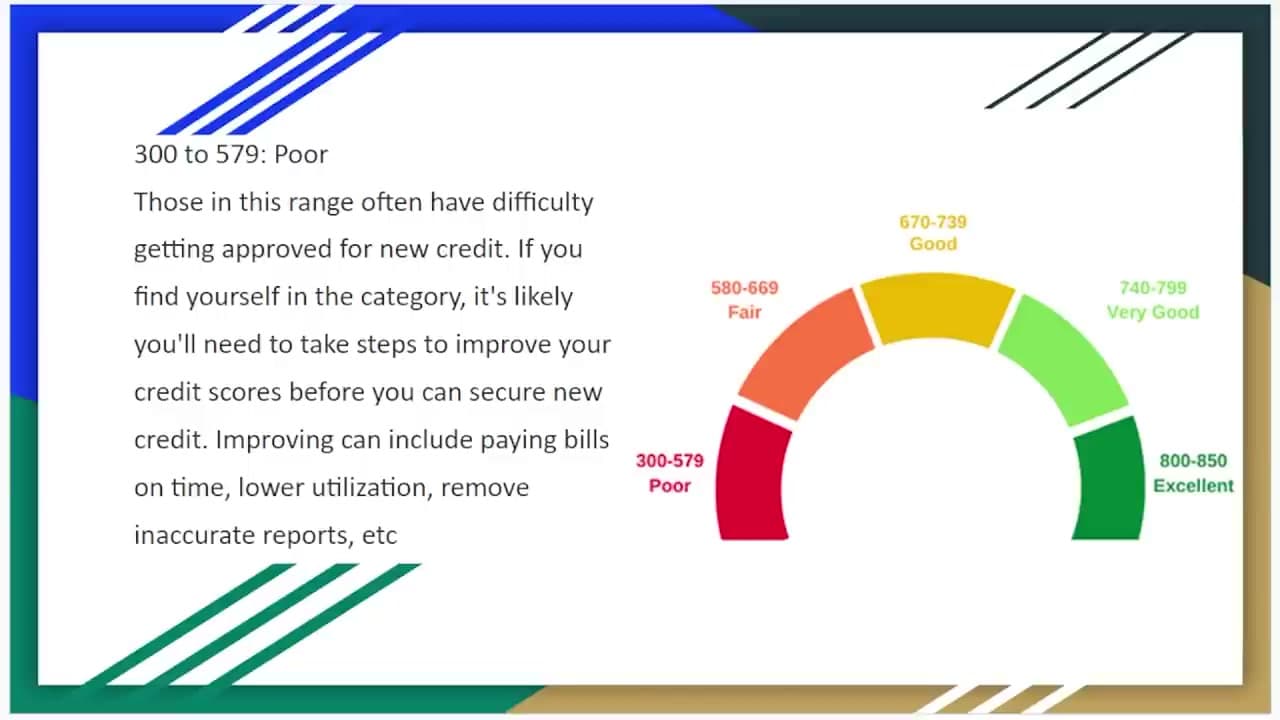
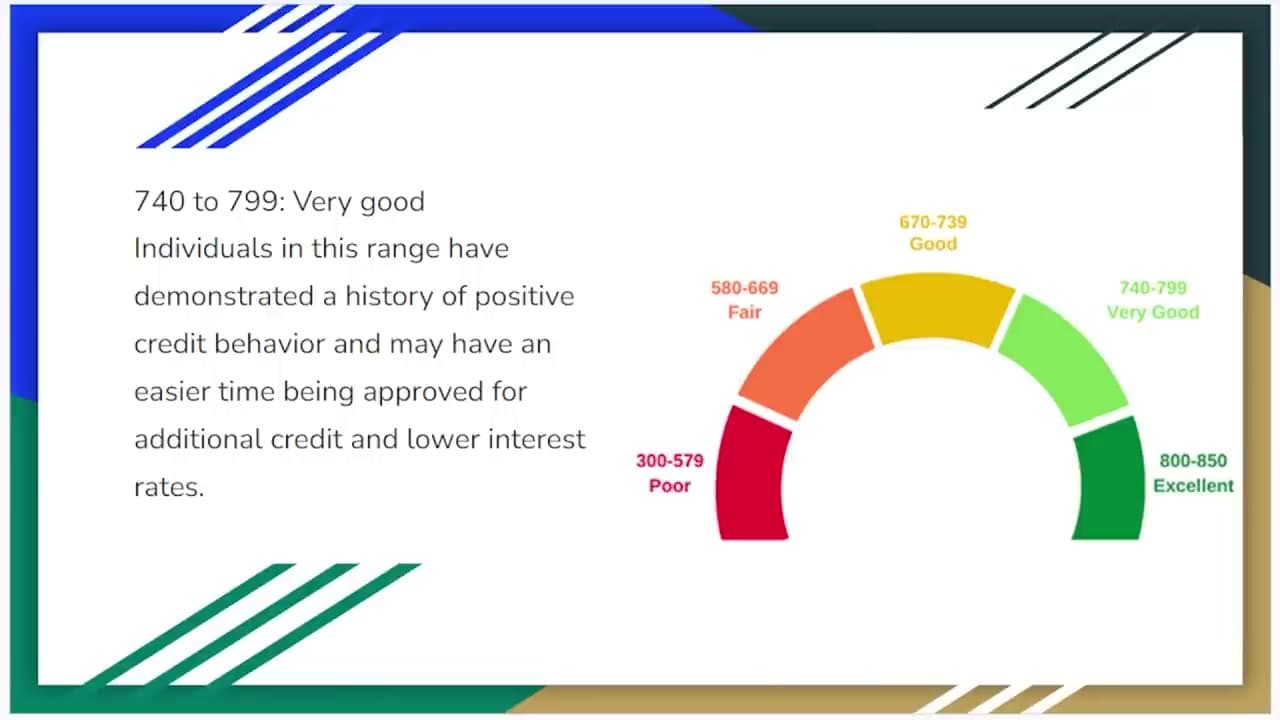
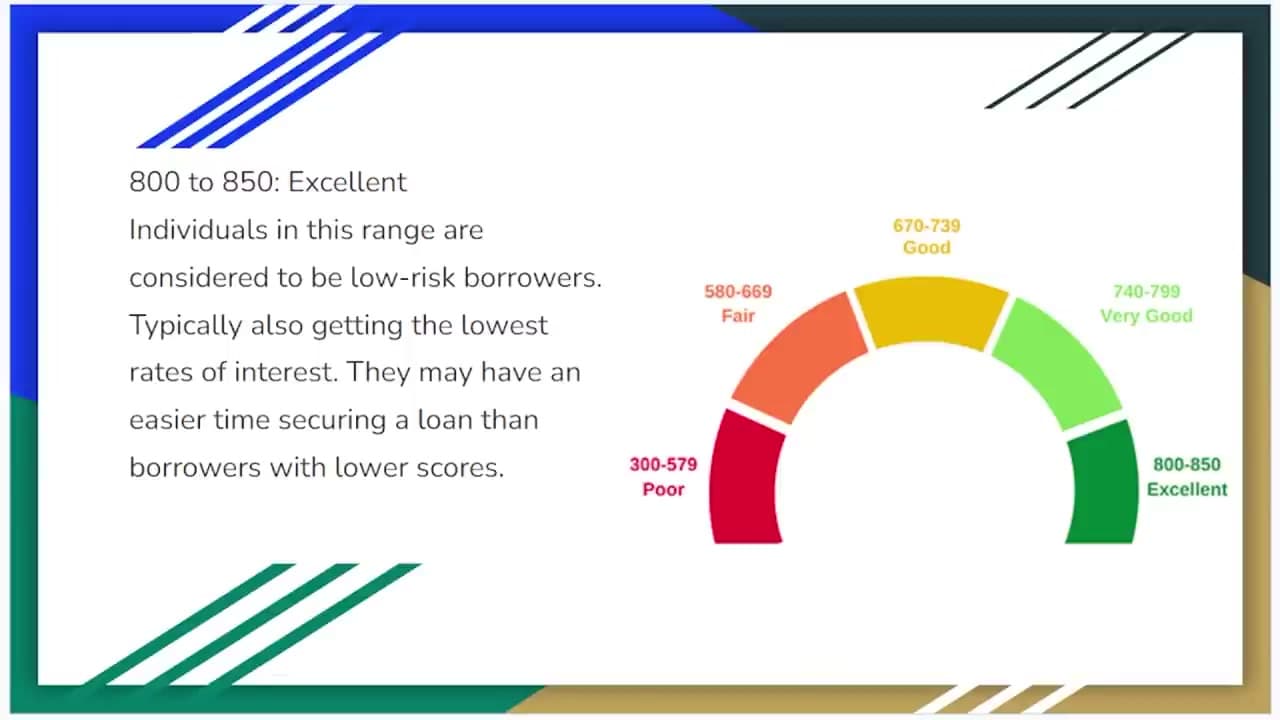
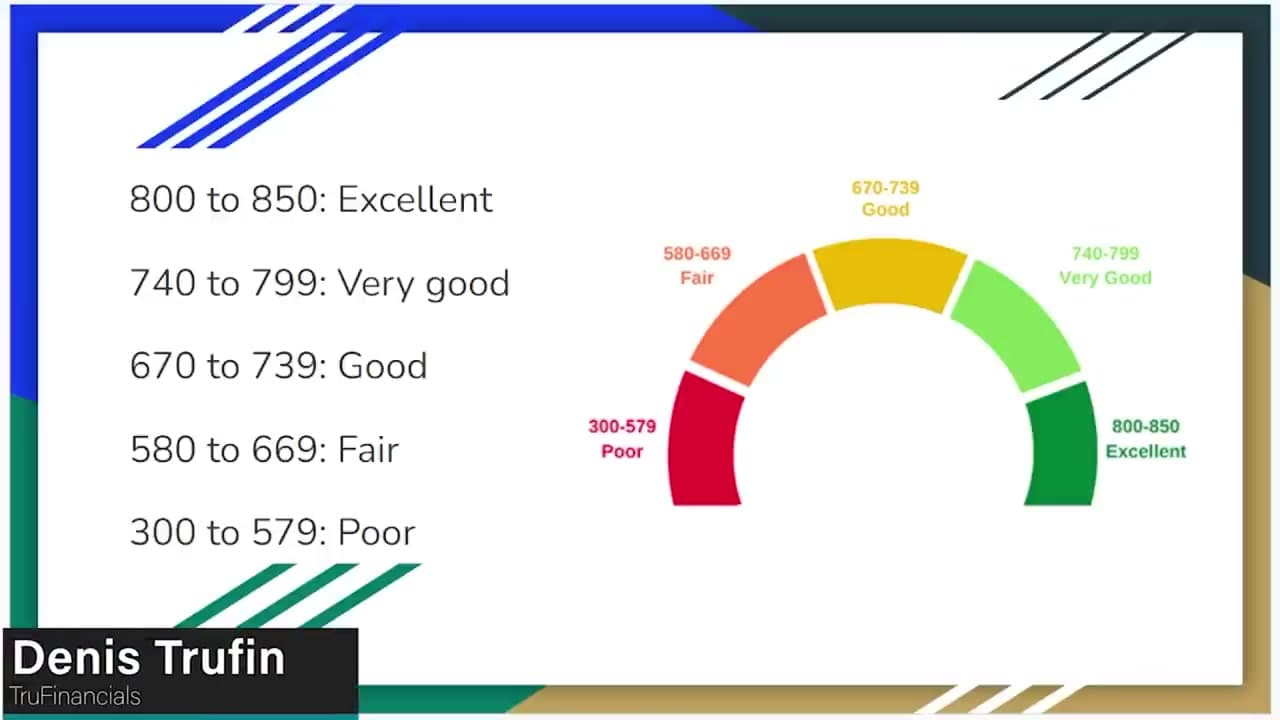
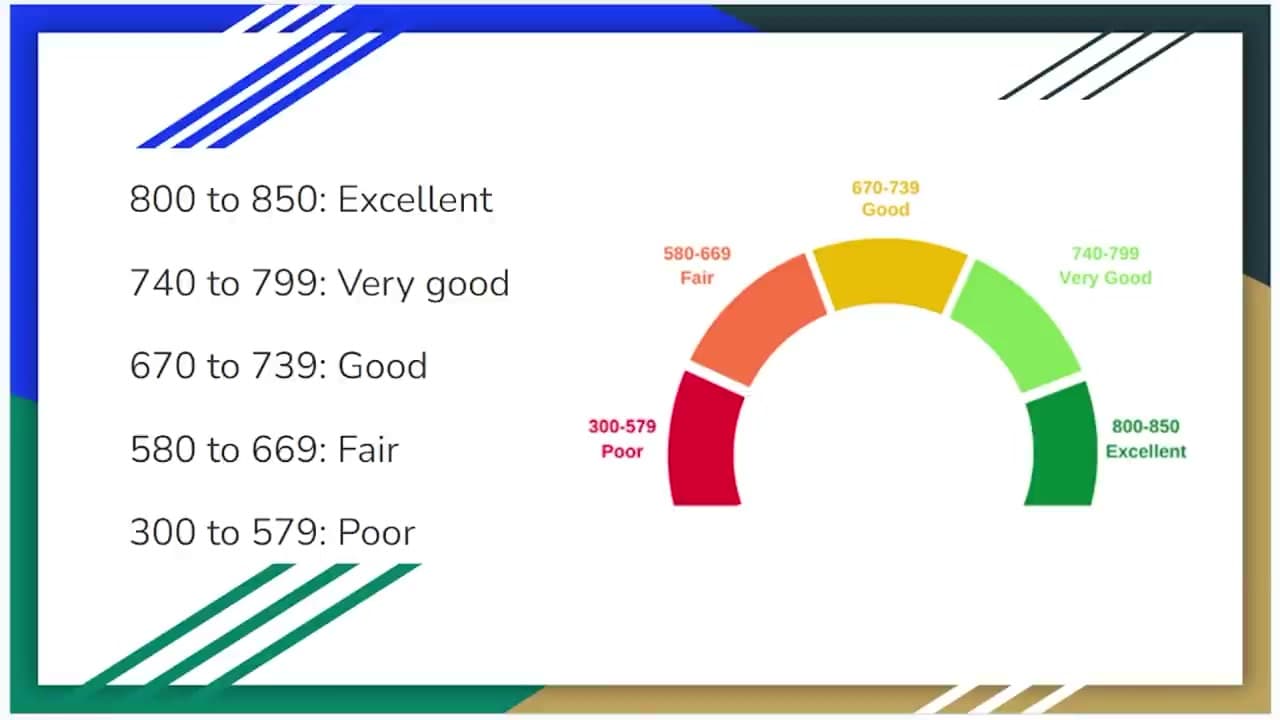
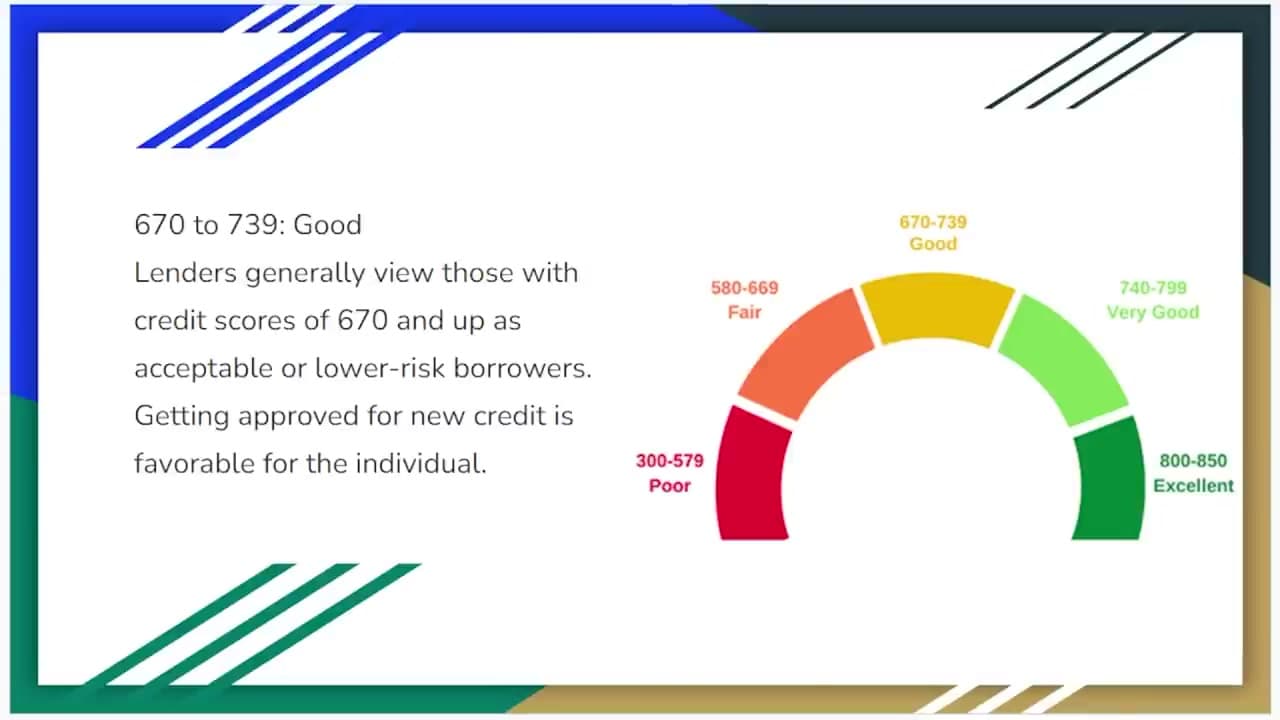
FICO splits the 300-to-850 scale into five buckets. Watch the breakdown at 0:16. From bottom to top: 300 to 579 is poor, 580 to 669 is fair, 670 to 739 is good, 740 to 799 is very good, and 800 to 850 is excellent. VantageScore uses similar ranges but shifts the cutoffs slightly - their "good" range starts at 661 instead of 670. Most lenders use FICO, so those are the numbers worth memorizing. Where you land in this chart tells you whether a lender will approve you, what your interest rate will look like, and whether you will be asked for a co-signer or a bigger down payment.

Tip

Write the five ranges on a sticky note. Every credit question you have for the rest of your life fits inside one of these five buckets.

3

Step 3: Understand What 'Good' Really Means

2:25
Step 3: Step 3: Understand What 'Good' Really Means

A score in the 670-to-739 range is the threshold lenders mean when they say "good credit." Watch the explanation at 2:25. Lenders generally view anyone at 670 or higher as an acceptable, lower-risk borrower. You will get approved for most credit cards, car loans, and mortgages at reasonable rates. The average FICO score in the US in 2025 was 713 - right in the middle of the good range. A jump of a few points inside the same bucket (say, 675 to 690) usually does not change how a lender treats you. Crossing into a new bucket - from fair to good, or good to very good - is where you actually unlock better terms.

Tip

If you are sitting at 665, ten points is the difference between fair and good. Pay down a credit card balance the month before a mortgage application and you can often push yourself across the line.

4

Step 4: Learn the Five Factors That Move Your Score

0:51
Step 4: Step 4: Learn the Five Factors That Move Your Score

FICO calculates your score from five inputs. Watch the breakdown at 0:51. Payment history is the biggest at 35 percent - whether you pay your bills on time, every time. Amounts owed (your credit utilization) is 30 percent. Length of credit history is 15 percent. New credit applications make up 10 percent, and your credit mix (cards plus installment loans) is the final 10 percent. Two of these five factors account for two thirds of the math. Pay on time and keep your balances low and the rest will mostly take care of itself. Errors on your credit report can also drag the number down, so checking your report once a year matters.

Tip

Set autopay on every credit card for at least the minimum payment. One missed payment can drop your score 50 to 100 points and stays on your report for seven years.

5

Step 5: Check Your Score for Free

4:23
Step 5: Step 5: Check Your Score for Free

You never have to pay to see your credit score. Watch the free-check walkthrough at 4:23. The best free option is annualcreditreport.com - the only site officially authorized by federal law to give you your full credit report from all three bureaus (Equifax, Experian, TransUnion). Since the pandemic, all three bureaus offer the report weekly at no cost. For the actual score number, Credit Karma shows your VantageScore for free, most major bank apps (Chase, Capital One, Wells Fargo, Discover) show your FICO score on the dashboard, and Experian gives you your FICO 8 score directly. Check once a quarter at minimum. If you are about to apply for a big loan, check the week before.

Tip

annualcreditreport.com gives you the report (the data lenders see). Credit Karma and bank apps give you the score (the three-digit number). You need both - the report is where you find errors to dispute.

6

Step 6: Lower Your Credit Utilization Below 30 Percent

1:25
Step 6: Step 6: Lower Your Credit Utilization Below 30 Percent

If your score is below where you want it, the fastest fix is dropping your credit utilization. Watch the example at 1:25. Utilization is the percentage of your available credit you are using right now. Carry an $800 balance on a card with a $1,000 limit and you are at 80 percent - and your score will reflect that. Get that same balance to $300 and you drop to 30 percent. Below 30 is the rule of thumb most experts use, and getting under 10 percent is even better for your score. Utilization is calculated across all your revolving credit (cards plus personal lines of credit), so adding a second card or asking for a credit-limit increase on an existing card can drop the percentage without paying down a cent.

Tip

Pay your card balance down BEFORE the statement closes, not just before the due date. Credit bureaus see the balance on the statement date, so paying earlier in the month is what lowers the utilization the bureaus see.

7

Step 7: See Why a Good Score Saves Real Money

3:15
Step 7: Step 7: See Why a Good Score Saves Real Money

A good credit score is not just a number to brag about - it is real cash. Watch the interest-rate example at 3:15. Move from fair (580-669) to very good (740-799) and your mortgage rate could drop by two or three percentage points. On a $300,000 30-year mortgage, that single jump saves you over $100,000 in interest across the life of the loan. Auto loans are smaller dollars but the same percentage spread - a borrower with a 760 FICO often gets 4 to 6 points less than someone at 620 on the same car. Even auto insurance and rental applications pull your score in most states. Every cross-bucket jump unlocks money you can keep.

Tip

Before any big loan, get your score and report 60 days early. That gives you time to dispute errors and pay down balances - both can move your number 20 to 50 points in a single billing cycle.

8

Step 8: Recheck Your Score on a Schedule

4:25
Step 8: Step 8: Recheck Your Score on a Schedule

Your credit score is not a one-and-done. Watch the wrap-up at 4:25. Check once a quarter at minimum to catch errors, fraud, and identity theft early. Check the week before any big loan application so you know what rate you should be quoted. Pull your full report from annualcreditreport.com once a year (the law gives you free access). If you spot an account you do not recognize, dispute it with the bureau within 30 days - the bureau has to investigate. Stay on top of the number the way you stay on top of your weight: a quick check every few months, no panic, just keep it moving in the right direction.

Tip

Soft pulls (you checking your own score, or a pre-approval offer) never hurt your score. Hard pulls (an actual loan or credit-card application) do. Check yours as often as you want - the score only drops when a lender pulls it.

Products Used

Your Guide

TruFinancials

As an Amazon Associate we earn from qualifying purchases. Links on this page may be affiliate links - clicking them and buying doesn't change your price, but helps support ShowMeStepByStep.

Tags

Test your knowledge

Did the lesson stick? Find out in 2 minutes.

5 quick questions covering what you just read. No signup, no score saved — just a gut check.

Quick reference

Key takeaways from What Is a Good Credit Score

5 questions, answers, and one-line explanations. Tap to expand.

  1. 1.What is the maximum FICO credit score?

    Answer: 850

    The FICO scale runs from 300 to 850. Lenders treat anything above 760 nearly the same as a perfect 850.

  2. 2.At what score does Good credit officially begin on the FICO scale?

    Answer: 670

    670 is the threshold where most lenders start offering standard rates instead of subprime ones.

  3. 3.Which of the following is one of the five factors FICO uses to calculate your score?

    Answer: Your credit utilization ratio

    Utilization makes up about 30% of your FICO score, the second-biggest factor after payment history.

  4. 4.Why should you keep credit utilization below 30%?

    Answer: Because high utilization signals to lenders you may be overextended

    High utilization is a red flag to lenders. Staying under 30% shows you use credit responsibly.

  5. 5.Why does a higher credit score save real money over time?

    Answer: It results in lower interest rates on loans and credit products

    Even a half-percent lower mortgage rate saves tens of thousands of dollars over a 30-year loan term.

What's next

Related collections

Curated theme pages that include this tutorial.

Weekly Digest

Liked this credit score tutorial?

Pick the categories you want to hear about. Weekly digest of new step-by-step tutorials. No spam, easy unsubscribe.

Send me tutorials about

We only email about new tutorials. Easy unsubscribe anytime.