How to Read Your Credit Report Section by Section

Credit ScoreEasy14:566 steps

Based on a video by Moms and Money.

Your credit score is a single number. Your credit report is a 4-page document that explains why that number is what it is - and it's where you'll spot identity theft, mixed files, or reporting errors before they tank your score.

This walkthrough follows a sample Experian report (free at annualcreditreport.com - one report per bureau per year). Stagger your three free pulls four months apart for year-round monitoring at zero cost. Each section below explains what to look for, what's normal, and what's a red flag.

Step-by-Step Guide

1

Step 1: Find Your Report Number and Index

11:40
Step 1: Step 1: Find Your Report Number and Index

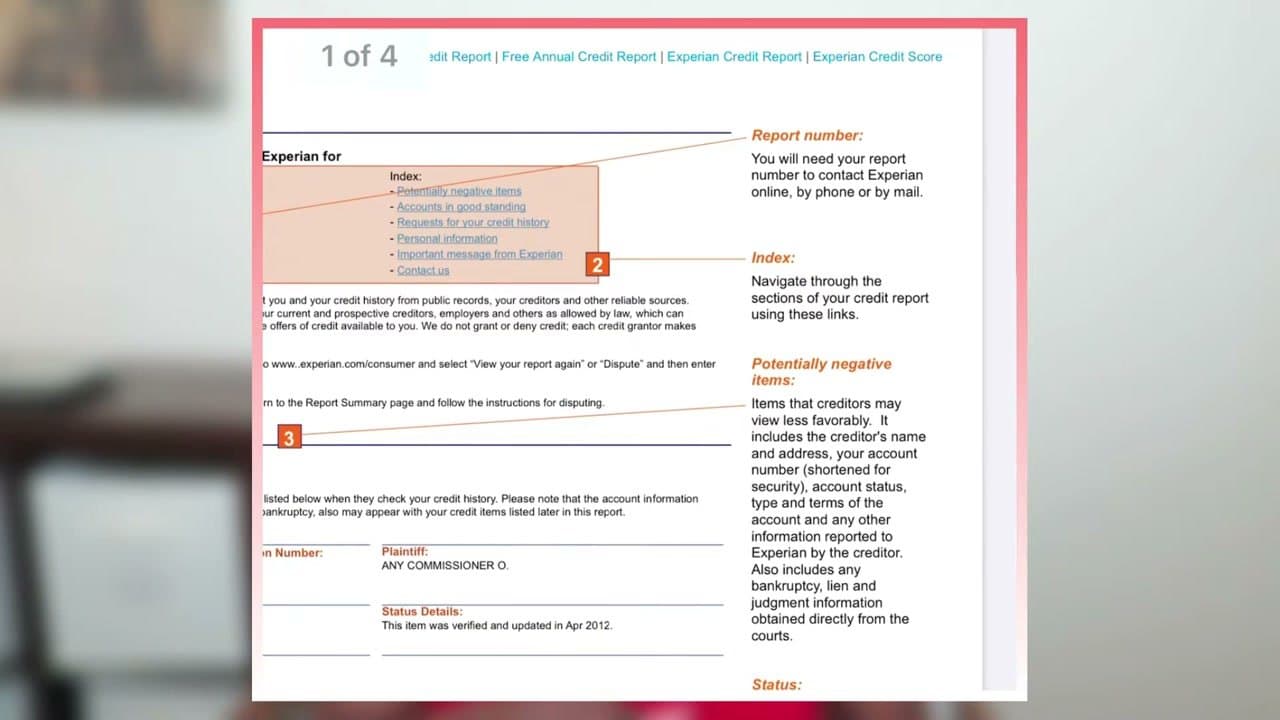
Every credit report starts with a report number and an index of sections. Save the report number - you'll need it if you contact the bureau to dispute anything.

The index lets you jump to Potentially Negative Items, Accounts in Good Standing, Requests for Your Credit History, and Personal Information. Use it as a navigation aid - the full report can be 20+ pages on a long credit history.
2

Step 2: Verify Your Personal Information

14:20
Step 2: Step 2: Verify Your Personal Information

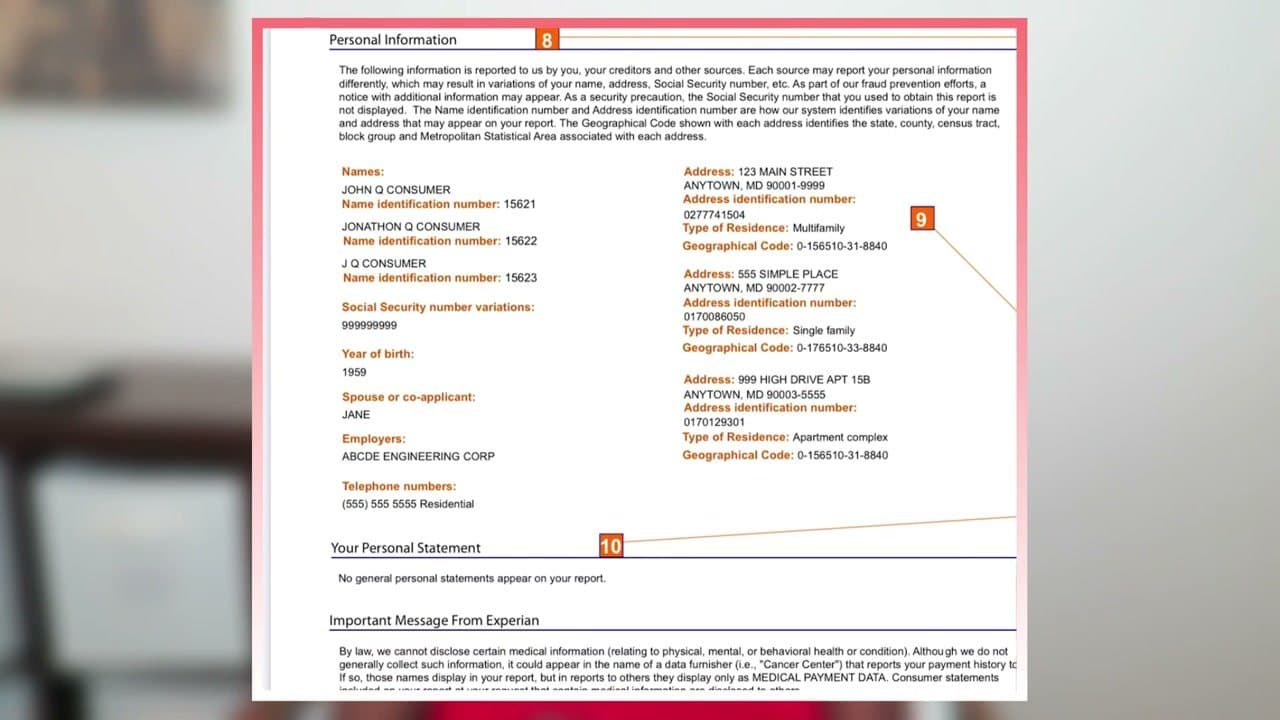
Find the Personal Information section and check every field against what you actually know about yourself. Names (including misspellings, maiden names, and nicknames), every address you've lived at, employers, your date of birth, and the last digits of your SSN.

Addresses you've never lived at are the biggest red flag - that often signals fraud or a 'mixed file' where someone else's data got merged with yours. Misspellings of your name are usually harmless reporting noise, but addresses are not.

3

Step 3: Scan Potentially Negative Items - Public Records First

12:00
Step 3: Step 3: Scan Potentially Negative Items - Public Records First

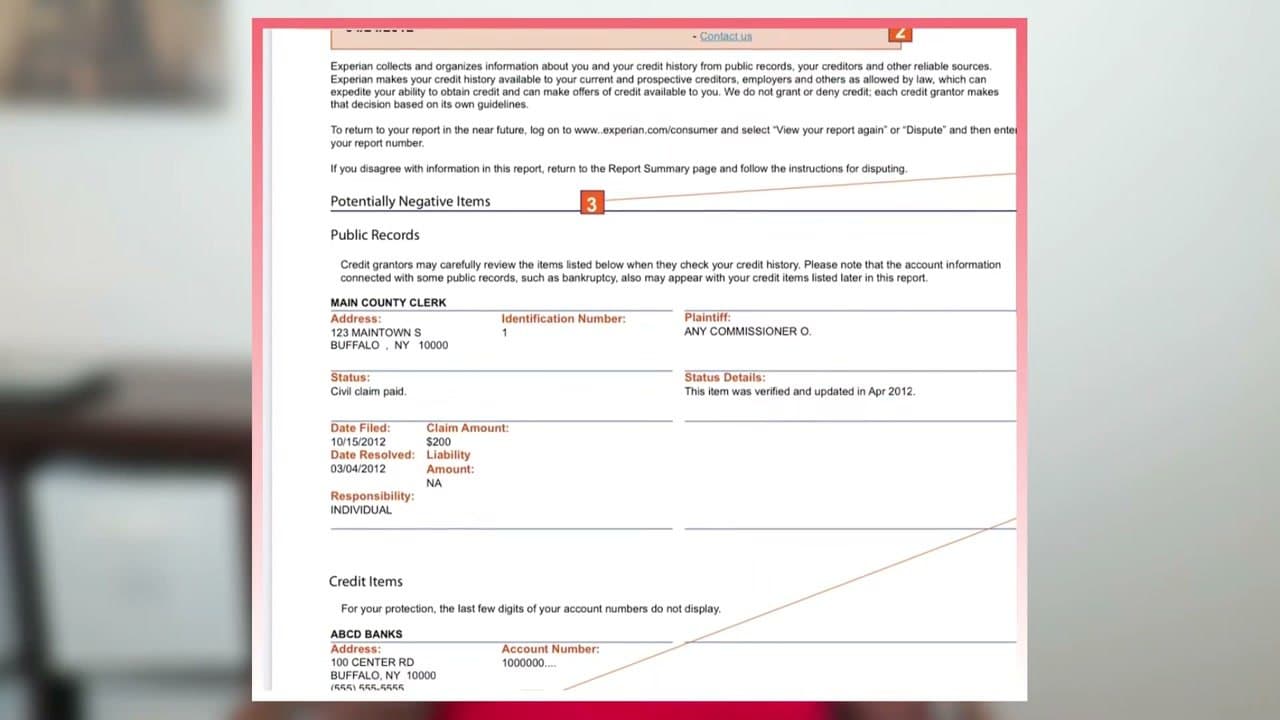
Right under the index, the report flags Potentially Negative Items - the things creditors view unfavorably. The first subsection is Public Records: court-pulled items like bankruptcies, civil judgments, and tax liens.

Each entry shows the court name, identification number, plaintiff, status, date filed, claim amount, and date resolved. These hit your score the hardest and stay on your report the longest (7-10 years), so any unfamiliar entry needs immediate follow-up with the bureau.

4

Step 4: Review Each Past-Due or Delinquent Credit Item

12:50
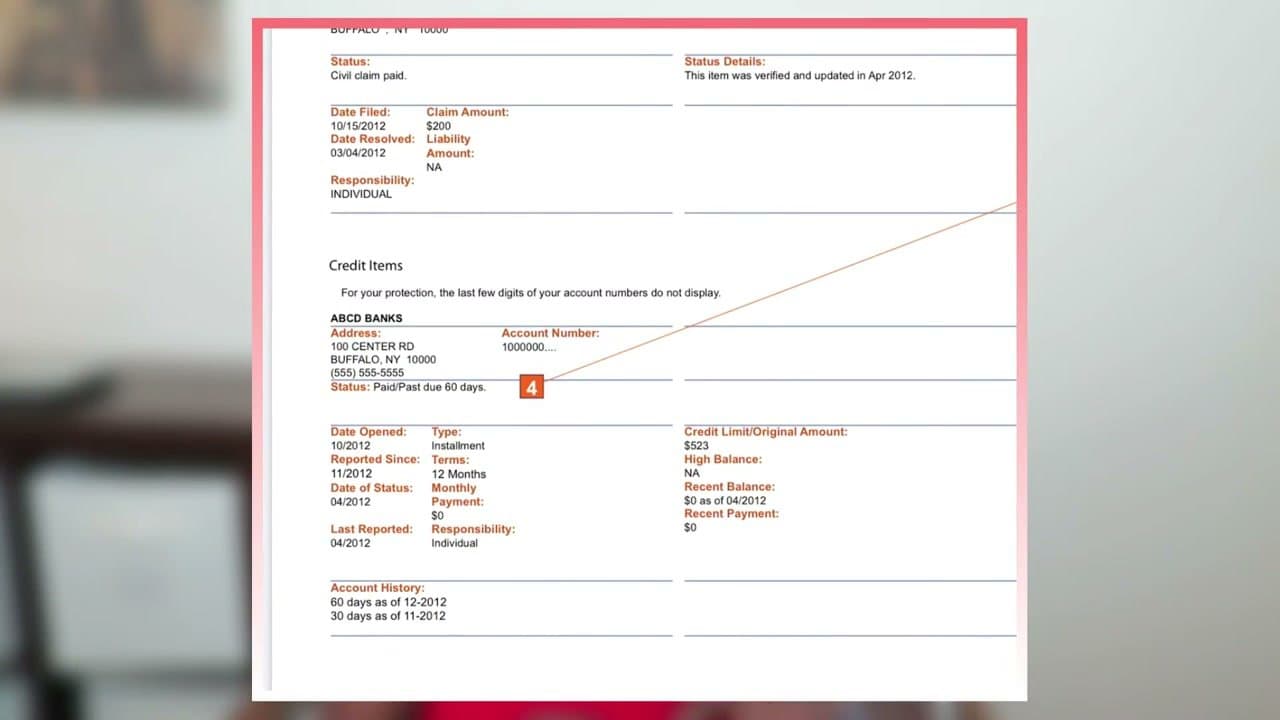
Step 4: Step 4: Review Each Past-Due or Delinquent Credit Item

After Public Records comes Credit Items - your credit cards, loans, and lines flagged as past-due or in collections. Each entry shows the creditor's name and address, account number, status (e.g. 'Paid/Past due 60 days'), date opened, monthly payment, credit limit, and an account history showing how many days late and when.

Even paid-off collections stay listed for years unless you negotiated removal as part of the payoff. The status line is what creditors and lenders actually look at when deciding whether to extend you credit.

5

Step 5: Review Accounts in Good Standing

13:20
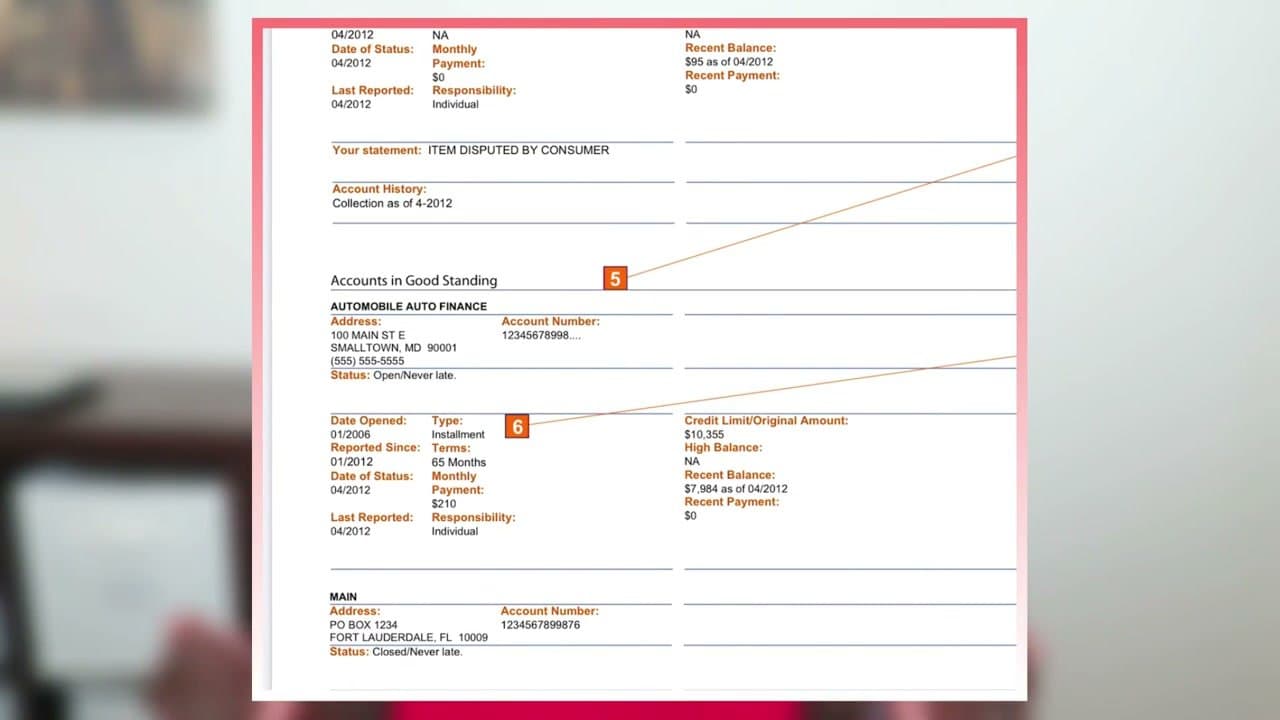
Step 5: Step 5: Review Accounts in Good Standing

Below the negative section, accounts in good standing get listed. Each entry shows the lender, account number, status (you want 'Open / Never Late'), date opened, monthly payment, credit limit or original loan amount, and the most recent reported balance.

Note: the recent balance can be a statement behind real-time, so don't panic if it doesn't match what you see in your bank app. Lenders only report once a month, so timing differences are normal.

6

Step 6: Check Requests for Your Credit History

13:45
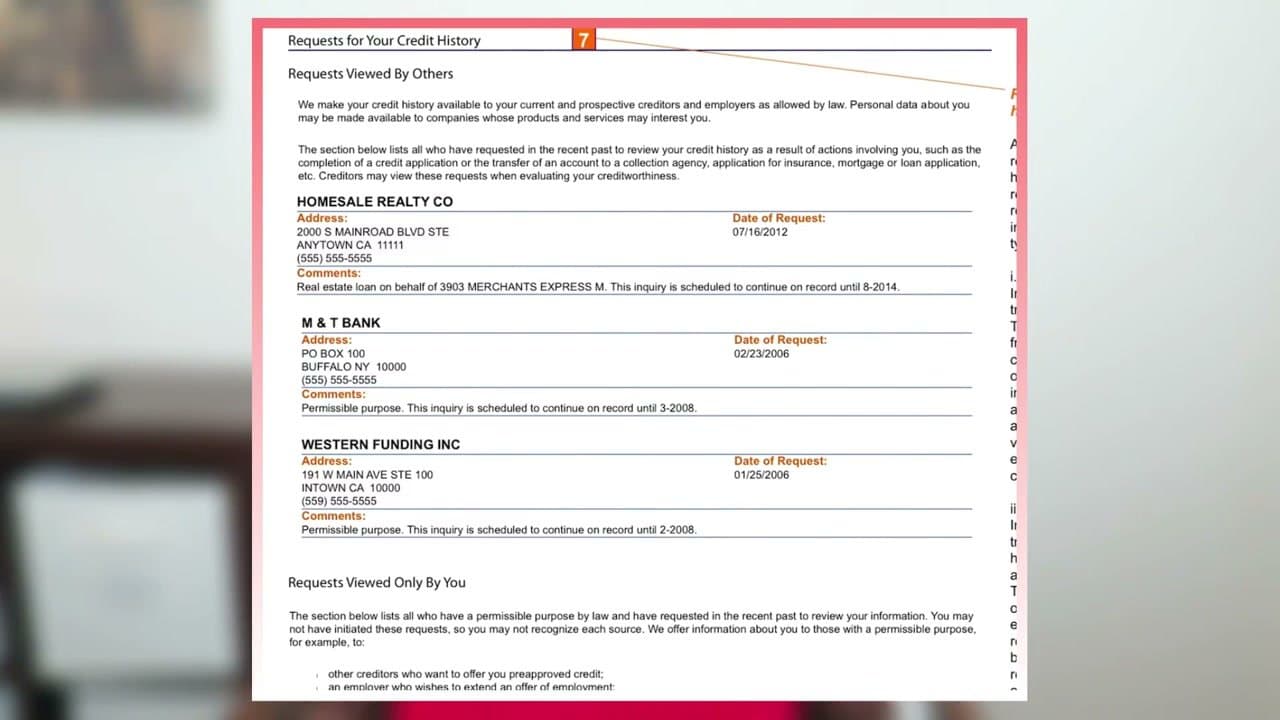
Step 6: Step 6: Check Requests for Your Credit History

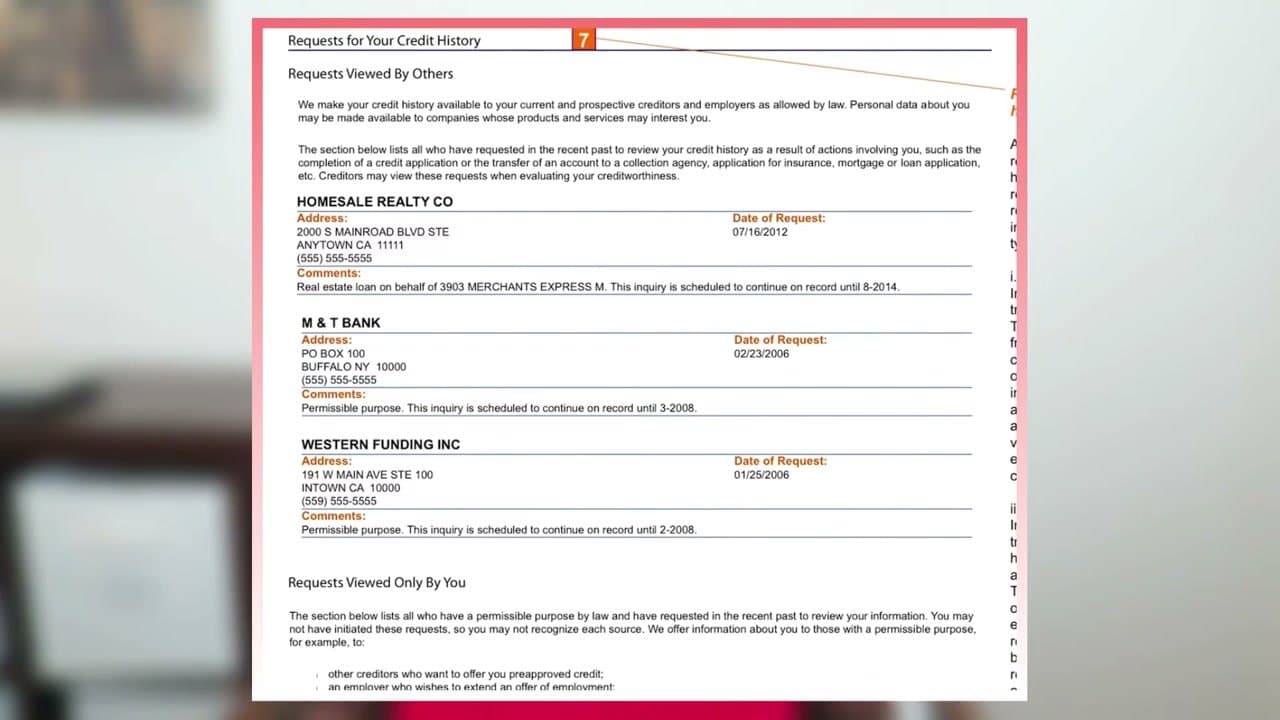
The last section lists who pulled your credit. Hard inquiries (loan applications, credit cards, mortgages) appear in 'Requests Viewed By Others' and ding your score temporarily.

Soft inquiries (preapprovals, employer checks, your own pulls) appear in 'Requests Viewed Only By You' and don't affect your score. If any hard inquiry shows up that you didn't authorize, that's a major identity-theft red flag - dispute it with the bureau and put a fraud alert or freeze on your file immediately.

Tip

Pull from a different bureau every four months instead of all three at once. Experian in March, TransUnion in July, Equifax in November gives you year-round monitoring at zero cost.

Your Guide

Moms and Money

As an Amazon Associate we earn from qualifying purchases. Links on this page may be affiliate links - clicking them and buying doesn't change your price, but helps support ShowMeStepByStep.

Tags

Related Tutorials

How to Read Your Credit Report - Section by Section Guide