How to Make Your First Budget From Scratch in 8 Steps

BudgetingEasy8:218 steps

Based on a video by Debt Free Millennials.

If you've never written down a budget before, the whole exercise can feel intimidating. It isn't. A working budget is one page of paper with six sections on it - and you can have yours filled out in under 30 minutes.

This walkthrough follows Justine from Debt Free Millennials, who paid off $35,000 of student loans on a $37,000 salary using exactly this method. Grab a notebook, a pen, and your most recent bank statement before you start. By the end you'll know whether you're overspending, where the leaks are, and what to cut first.

Step-by-Step Guide

1

Step 1: Write Down Your Monthly Income

1:55
Step 1: Step 1: Write Down Your Monthly Income

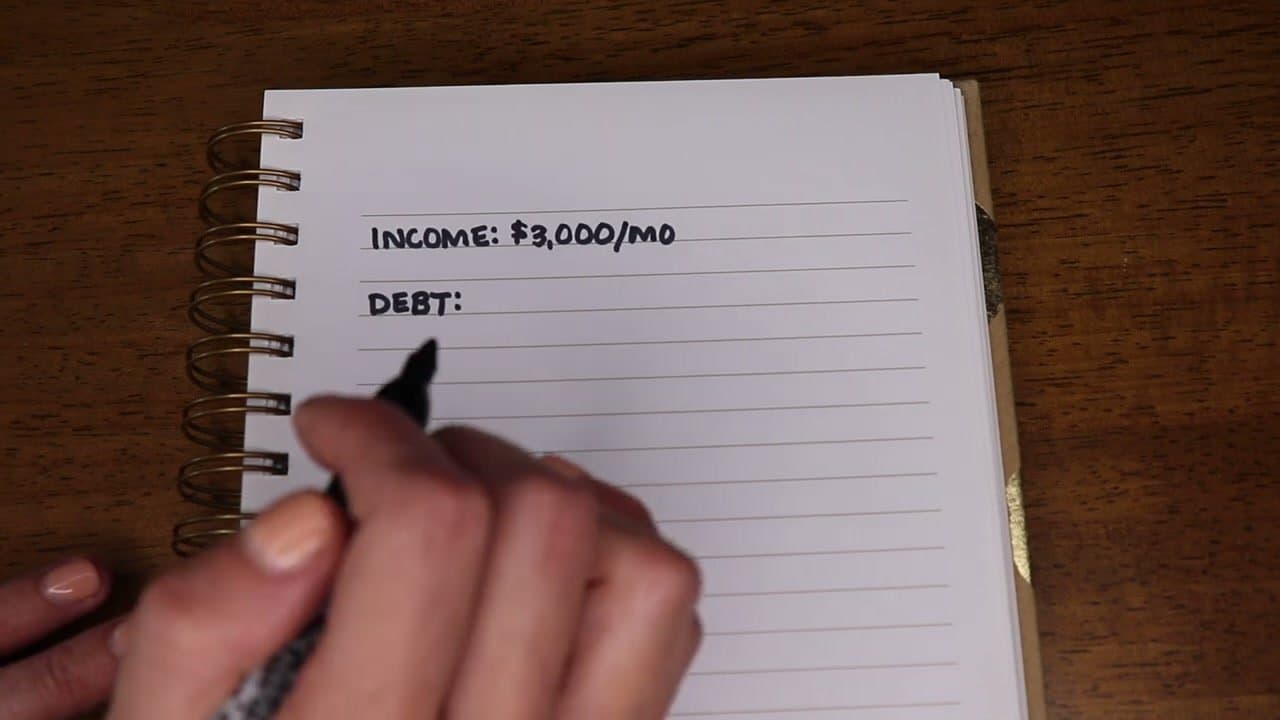
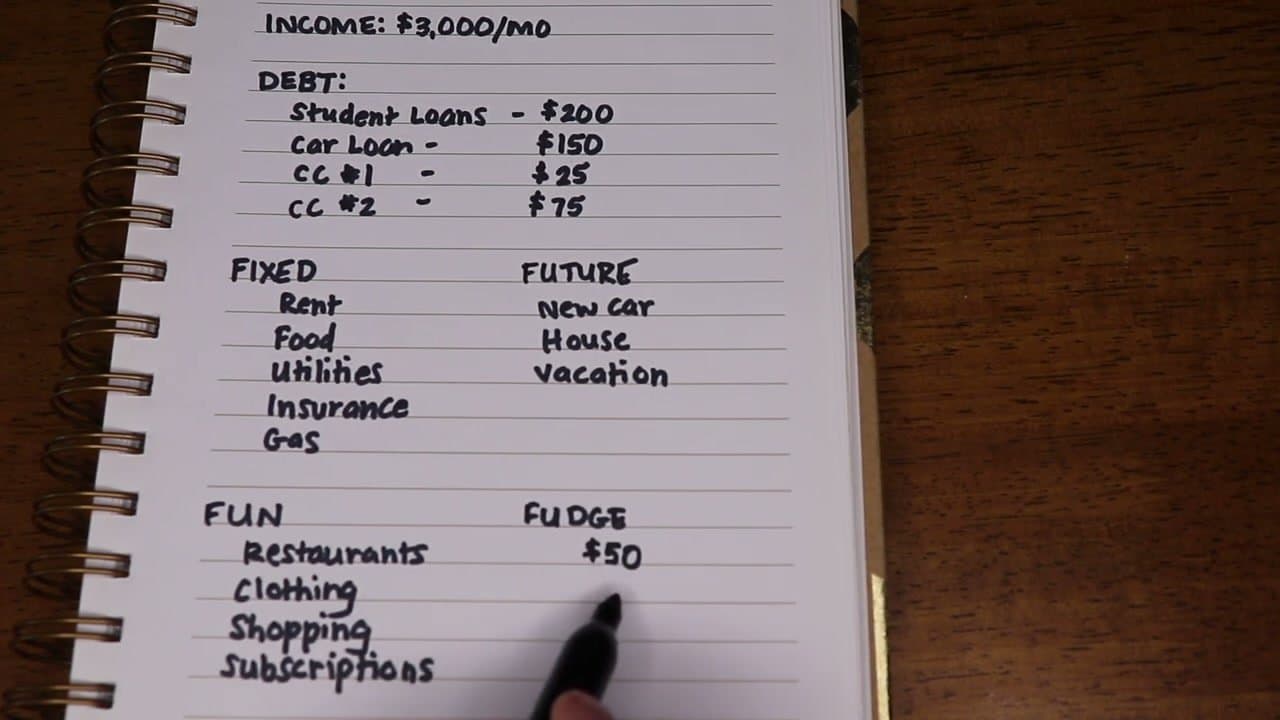
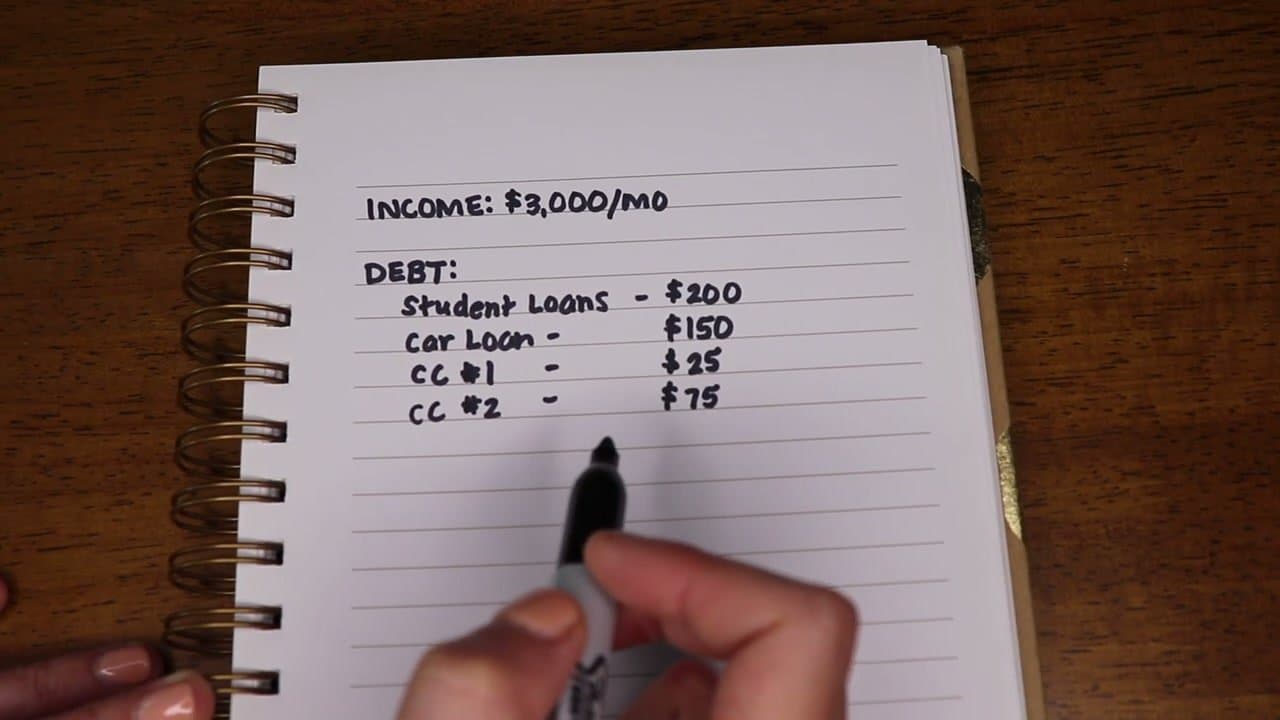
Start with a blank page and write your total monthly take-home at the top. The number you want is what actually lands in your bank account, not your gross salary - taxes and benefits are already gone.

Pull the figure straight from recent paychecks. If your hours fluctuate, average the last three months so a slow week doesn't throw the whole plan off. The example here uses a $3,000 monthly take-home.
2

Step 2: List Every Debt and Its Minimum Payment

2:13
Step 2: Step 2: List Every Debt and Its Minimum Payment

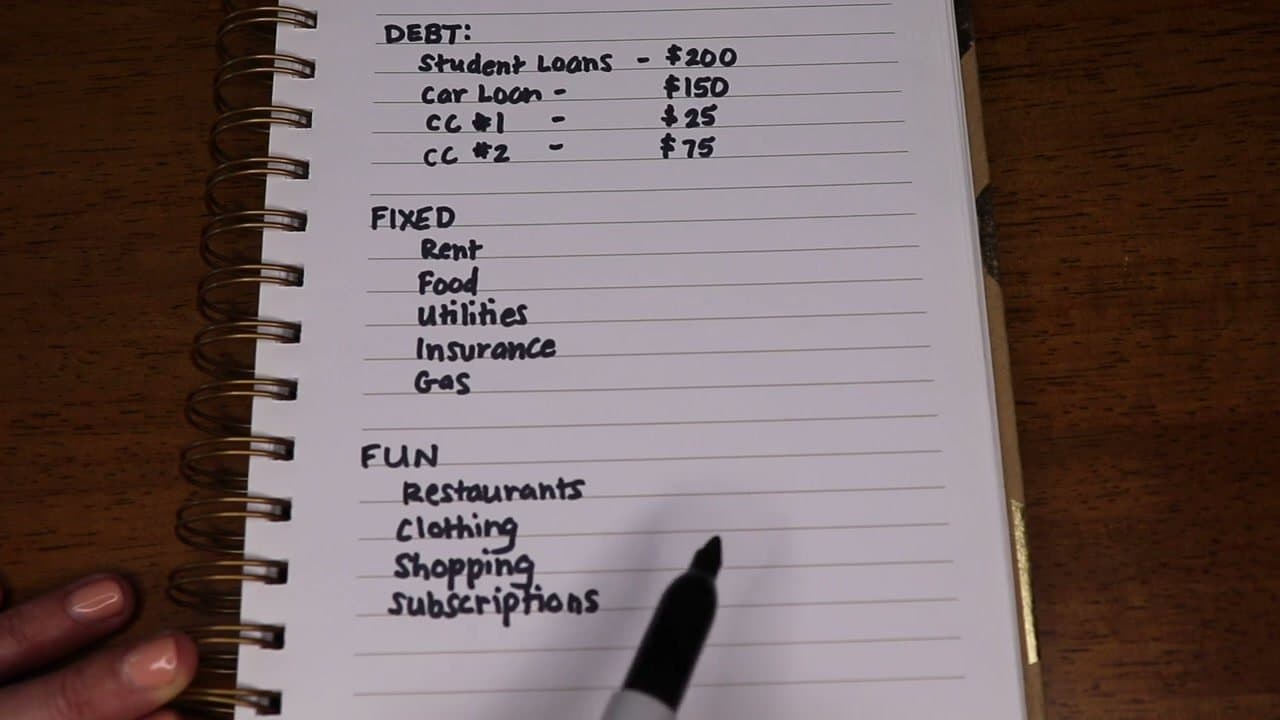
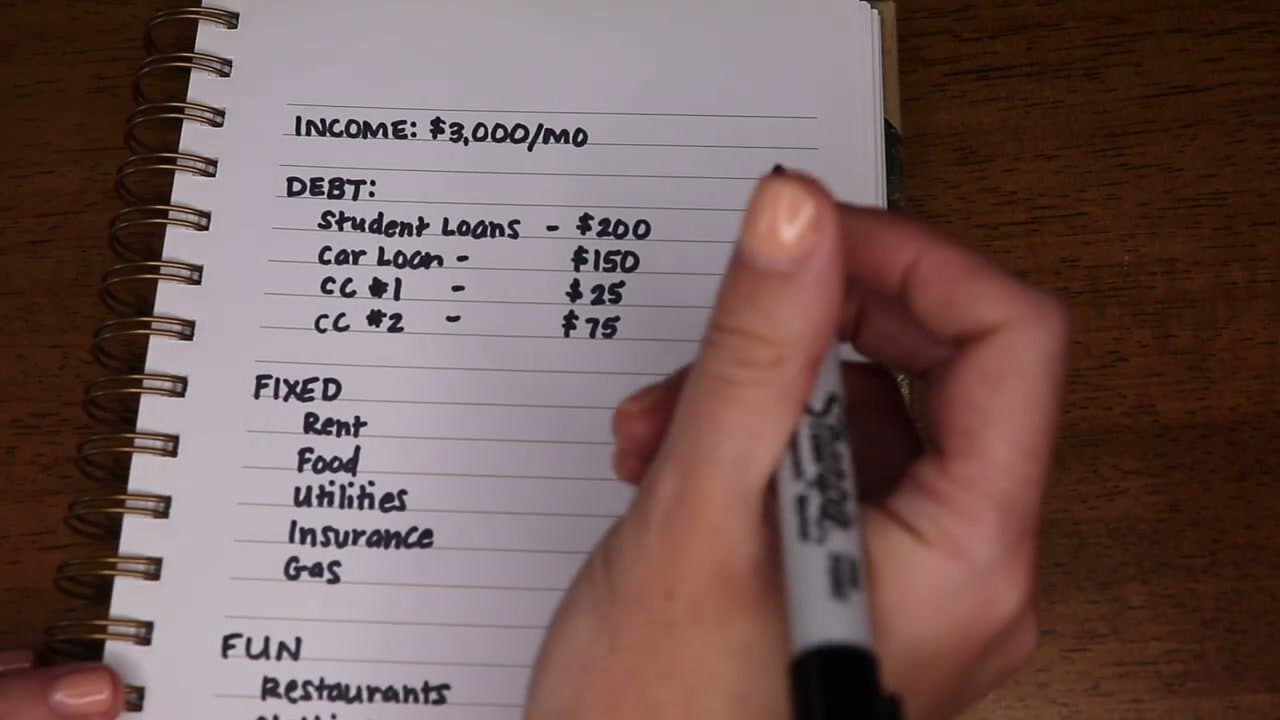
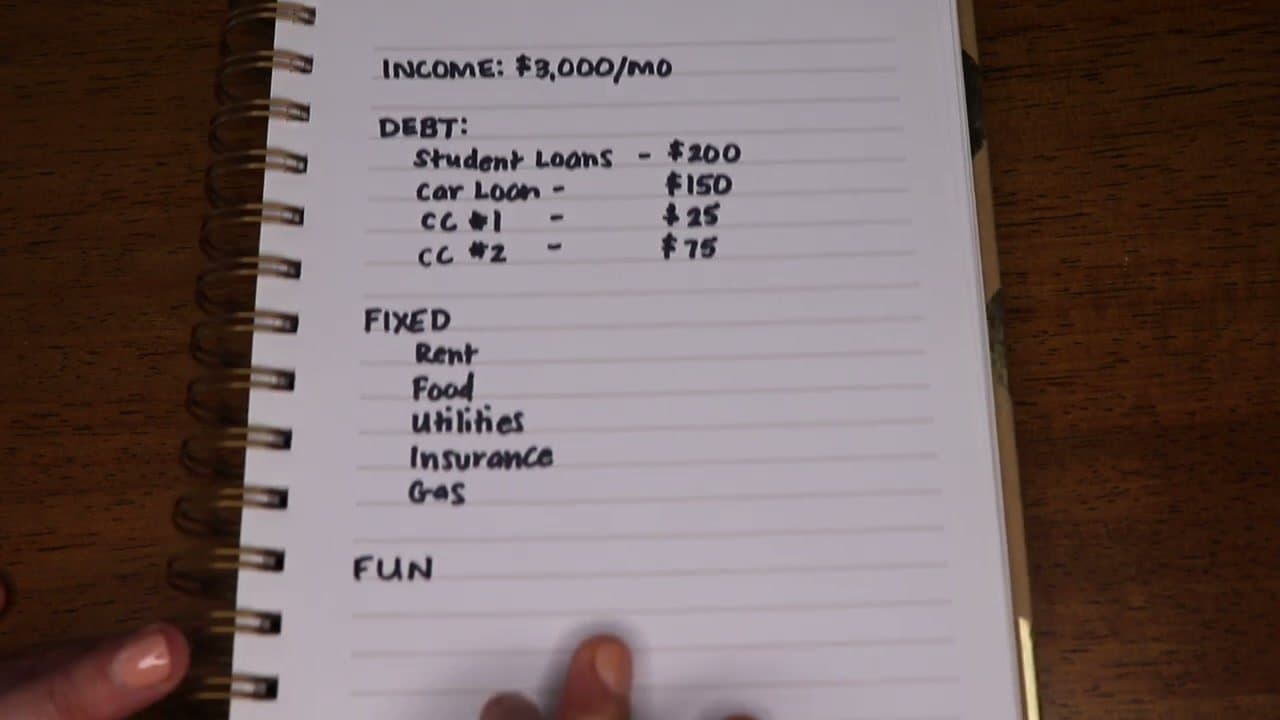
Below your income, write a 'Debt' header and list everything you owe: student loans, credit cards, personal loans, car loans. Next to each one, jot down the minimum monthly payment.

The minimums are non-negotiable - they have to come out of your income every single month no matter what else happens, so they belong on the page first. Once you can see all of them stacked up, the total often hits harder than you expected.

3

Step 3: Add Your Fixed Expenses

3:35
Step 3: Step 3: Add Your Fixed Expenses

Make a 'Fixed' section underneath debt and list the bills that show up every month: rent, groceries, utilities, insurance, gas. Pull the dollar amounts from the last three months of bank or credit card statements and average them.

Groceries belong here because you'll buy them every month no matter what. Restaurants and takeout do not - those go in the next section. If you've never tracked any of this before, take an honest best guess and refine it next month once you start watching what actually goes out.

4

Step 4: Add a Fun Expenses Section

4:19
Step 4: Step 4: Add a Fun Expenses Section

Now make a separate 'Fun' section for the spending that isn't strictly necessary. Restaurants, takeout, clothing, shopping, Netflix, Spotify, Amazon Prime, every other subscription you forget about until the charge hits.

Splitting fun out from fixed is what makes a budget useful. When the math doesn't work, you'll attack this section first - it's where the easy cuts live. Hiding subscriptions inside 'fixed' is how people end up paying $80 a month for streaming services they never watch.

Tip

Pull up your last credit card statement and circle every recurring charge. You'll usually find at least one subscription you forgot you signed up for.

5

Step 5: Total Debt + Fixed + Fun and Compare to Income

4:51
Step 5: Step 5: Total Debt + Fixed + Fun and Compare to Income

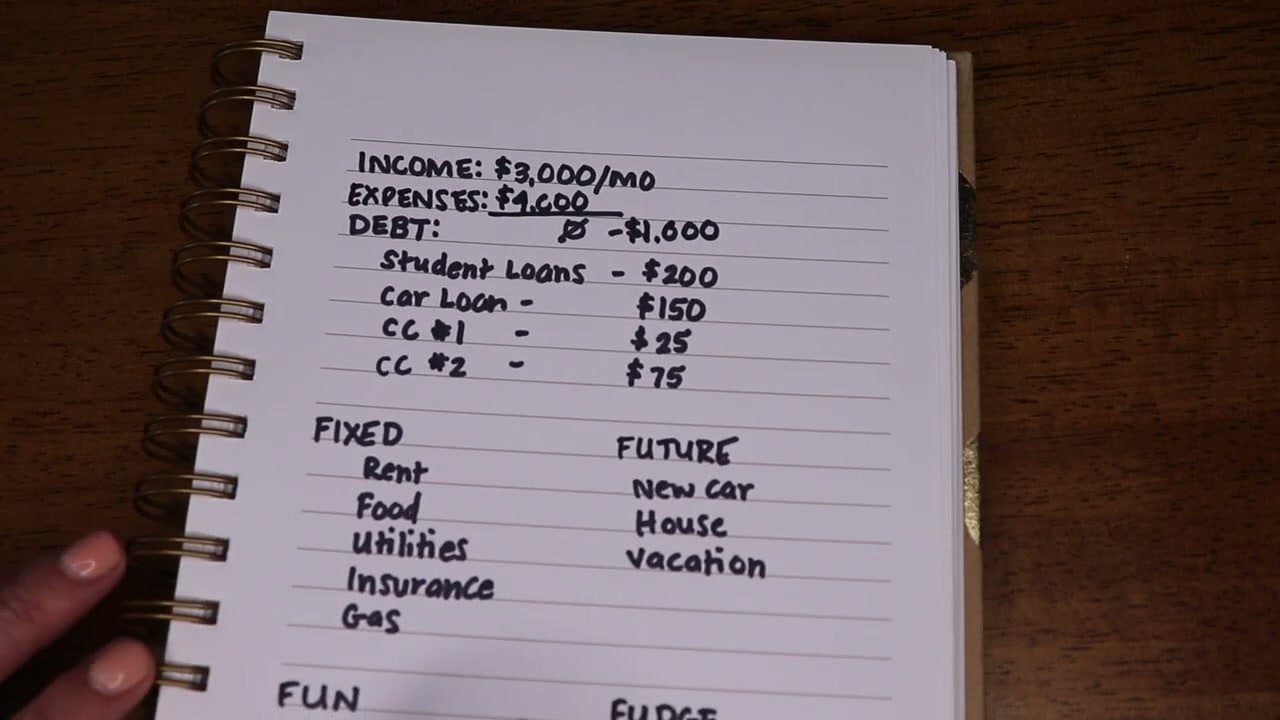
Add up the three sections you've built so far and check that number against your income. If debt plus fixed plus fun is bigger than what you bring in, you're overspending - full stop.

The example in the video shows $4,000 going out on $3,000 of income. That's a $1,000 monthly gap, and it has to be closed before any savings or buffer can fit in. Closing the gap means either earning more or cutting from the fun section first, then renegotiating fixed costs if that isn't enough.

6

Step 6: Add a Future Savings Section

5:25
Step 6: Step 6: Add a Future Savings Section

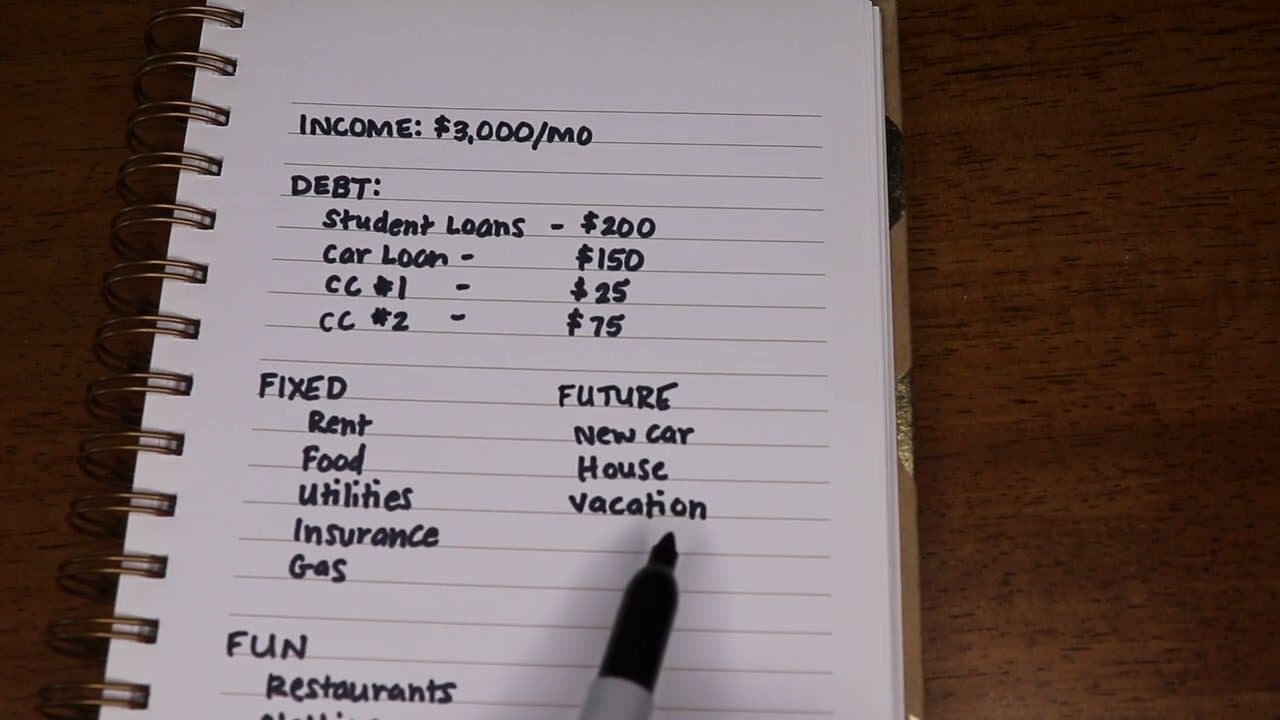
Once your three spending sections fit inside your income, create a 'Future' section for the things you're saving toward. A new car, a down payment on a house, a vacation, an emergency fund - whatever you're building toward goes here with a monthly dollar amount next to it.

Putting savings goals on the same page as your bills is what turns them into real plans instead of vague someday-wishes. Even small monthly contributions add up faster than you'd expect when they have a name and a number attached.

7

Step 7: Add a Fudge Buffer for Surprises

6:05
Step 7: Step 7: Add a Fudge Buffer for Surprises

Build in a small buffer category called 'Fudge' - something like $50 a month - to cover the things you can't plan for. A friend's birthday gift, a parking ticket, a co-pay you didn't see coming, a kid's field trip.

When something falls outside your normal categories, you pull from fudge instead of blowing up the rest of the budget. Without a buffer, every small surprise becomes either a missed savings goal or a credit card swipe.

8

Step 8: Total It Up and Aim for Zero

7:30
Step 8: Step 8: Total It Up and Aim for Zero

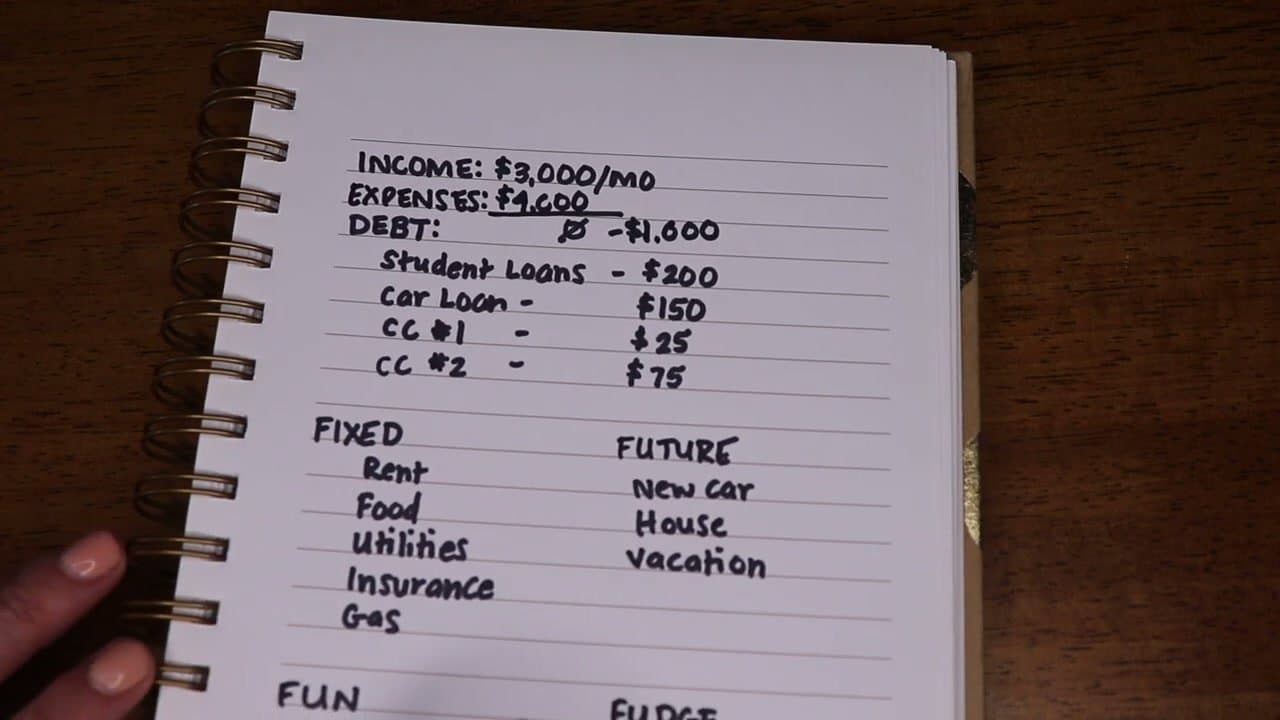
Add every section together: debt minimums plus fixed plus fun plus future savings plus fudge. Subtract that grand total from your income. The goal is zero - every dollar assigned a job before the month starts.

This is what 'zero-based budgeting' means. Money that isn't named on the page tends to disappear into impulse spending, so even if you have a surplus left over, push it into savings or extra debt payments before you're done. If your total comes out negative like the example here, something has to give: trim the fun section, attack a fixed cost, or add income until the math works.

Tip

Re-do this exercise every month for the first three months. Numbers will change as you learn what you actually spend. After about three rounds the budget settles into something you can copy-paste each month with small tweaks.

Your Guide

Debt Free Millennials

As an Amazon Associate we earn from qualifying purchases. Links on this page may be affiliate links - clicking them and buying doesn't change your price, but helps support ShowMeStepByStep.

Tags

Related Tutorials