Debt Snowball vs Avalanche: How to Pick and Apply Either Method

Debt ManagementEasy10:126 steps

Based on a video by Next Level Life.

Debt snowball and debt avalanche are the two most-used payoff strategies. They sound similar but order your debts differently - and the difference can mean thousands of dollars and several months of payments.

This walkthrough from Next Level Life uses a worked example: $55,000 of debt across a credit card, student loan, and car loan, with $1,052/month of extra cash to attack it. By the end you'll know which method fits your psychology and exactly how to apply it.

Step-by-Step Guide

1

Step 1: List Every Debt With Its Balance and Interest Rate

4:00
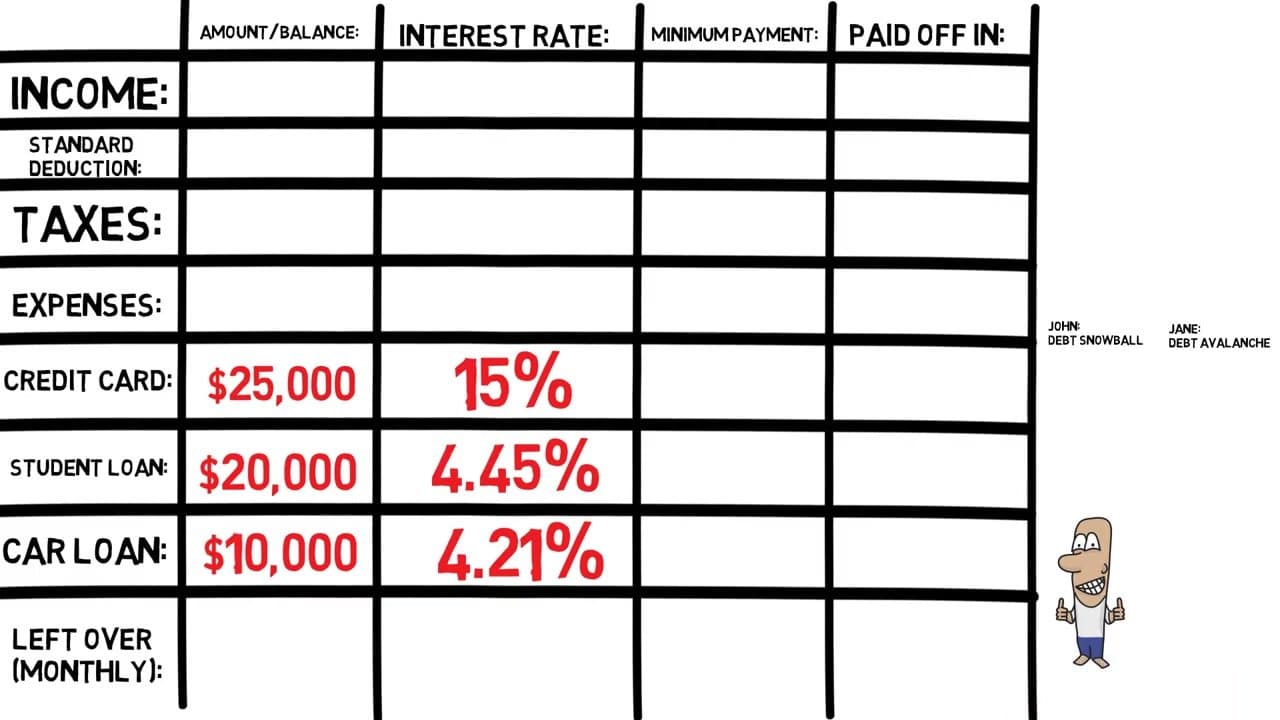
Step 1: Step 1: List Every Debt With Its Balance and Interest Rate

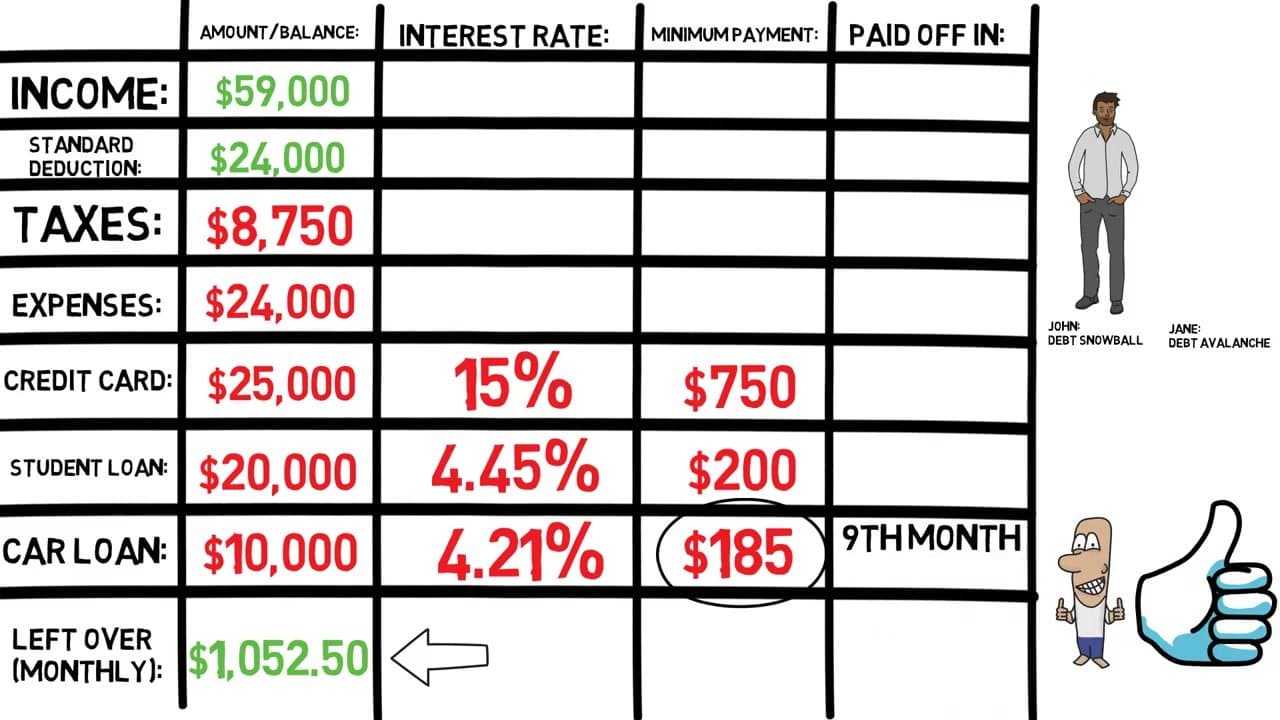
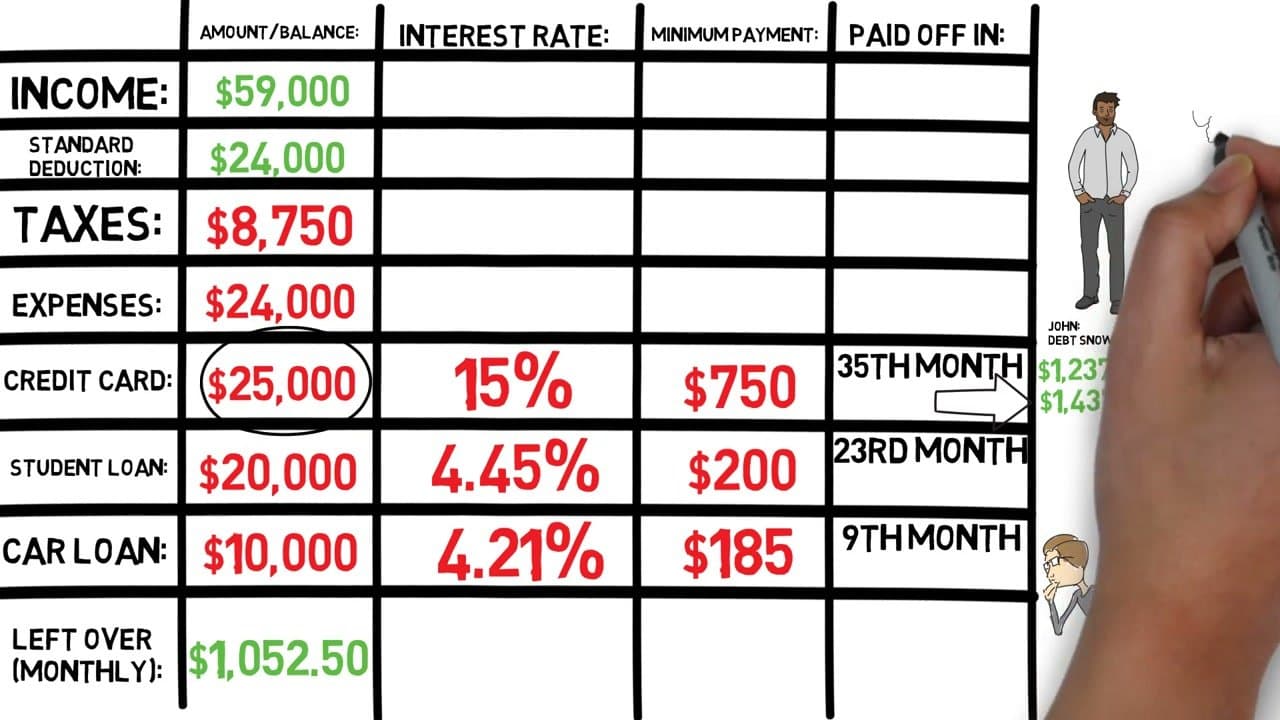
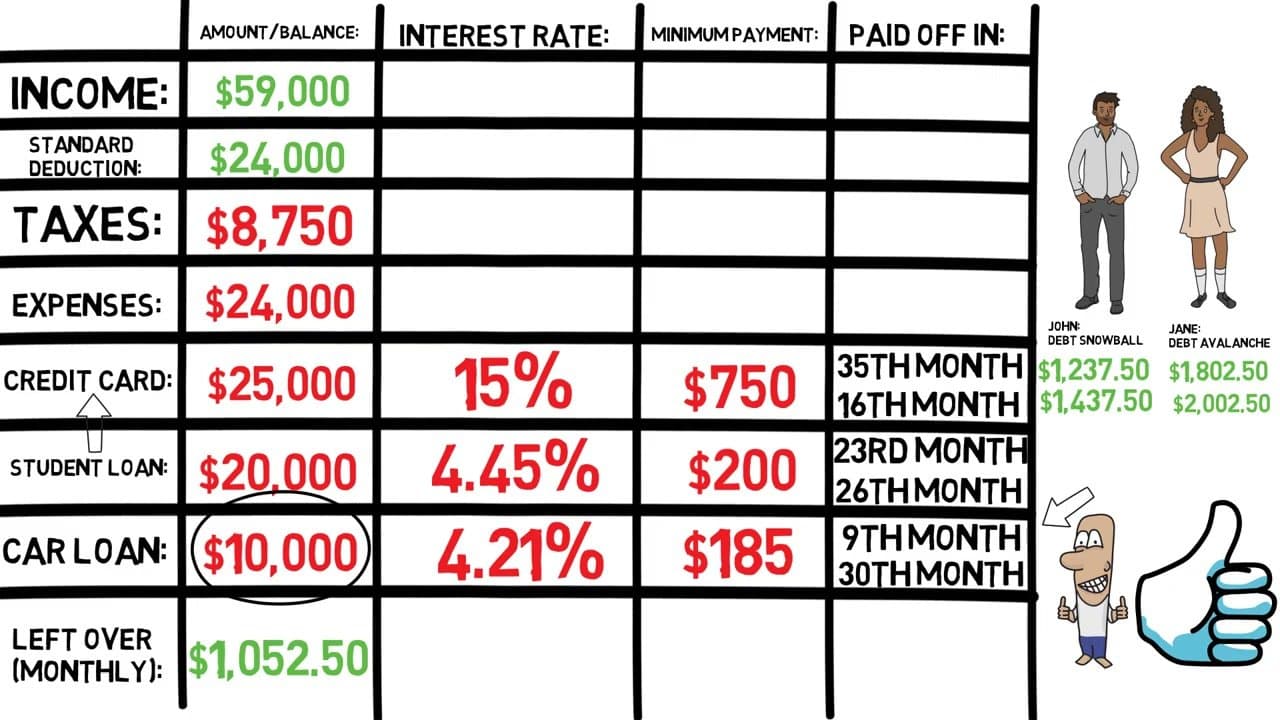
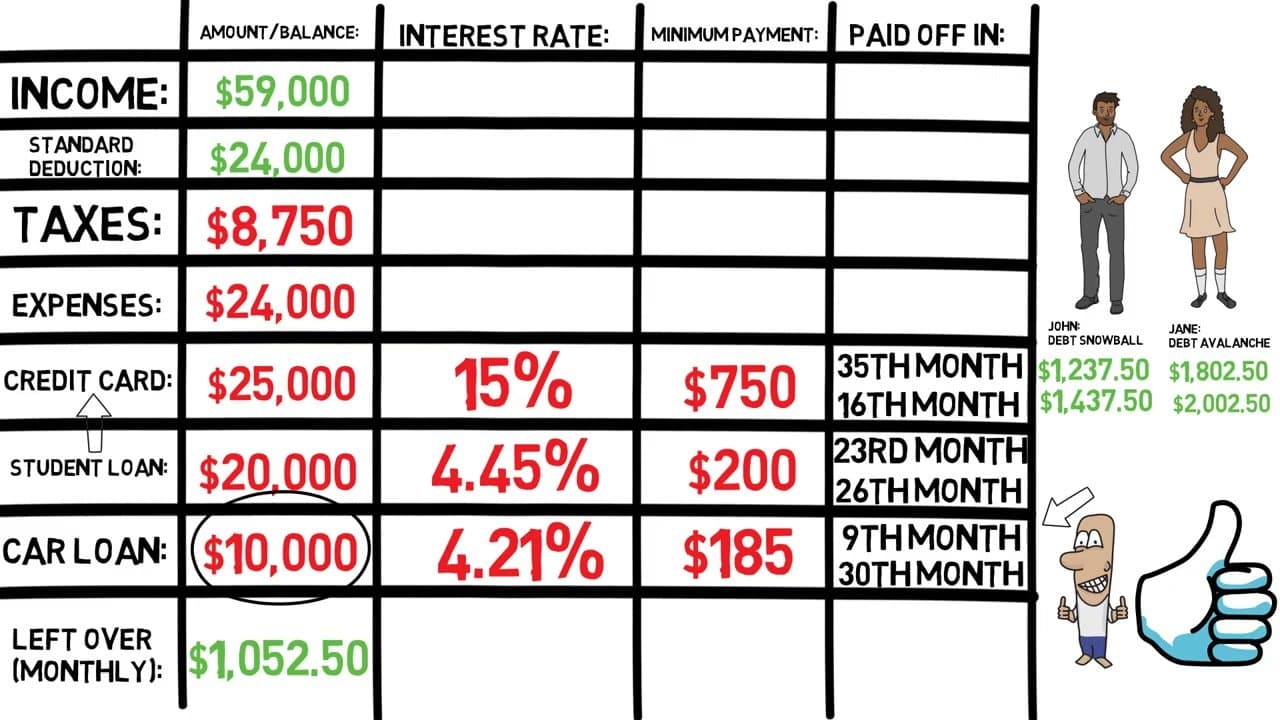
Pull a fresh statement for each debt and write four columns: name, current balance, interest rate, and minimum payment. The example here uses three debts: a $25,000 credit card at 15%, a $20,000 student loan at 4.45%, and a $10,000 car loan at 4.21%.

You can't pick a strategy until everything is on one page. Most people are surprised by how the totals stack up - which is exactly the discomfort that drives the payoff plan.
2

Step 2: Pick Snowball OR Avalanche

1:30
Step 2: Step 2: Pick Snowball OR Avalanche

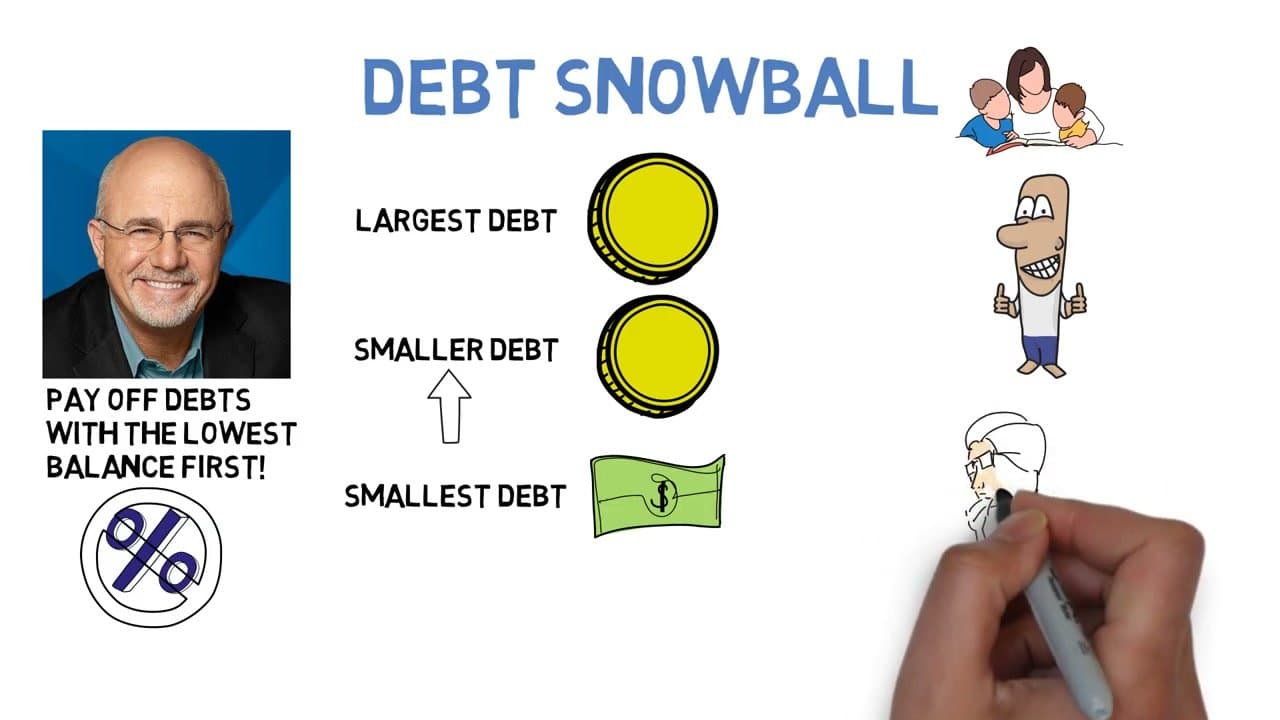
Snowball orders your debts from smallest balance to largest and attacks the smallest first. Quick wins keep you motivated through a long payoff.

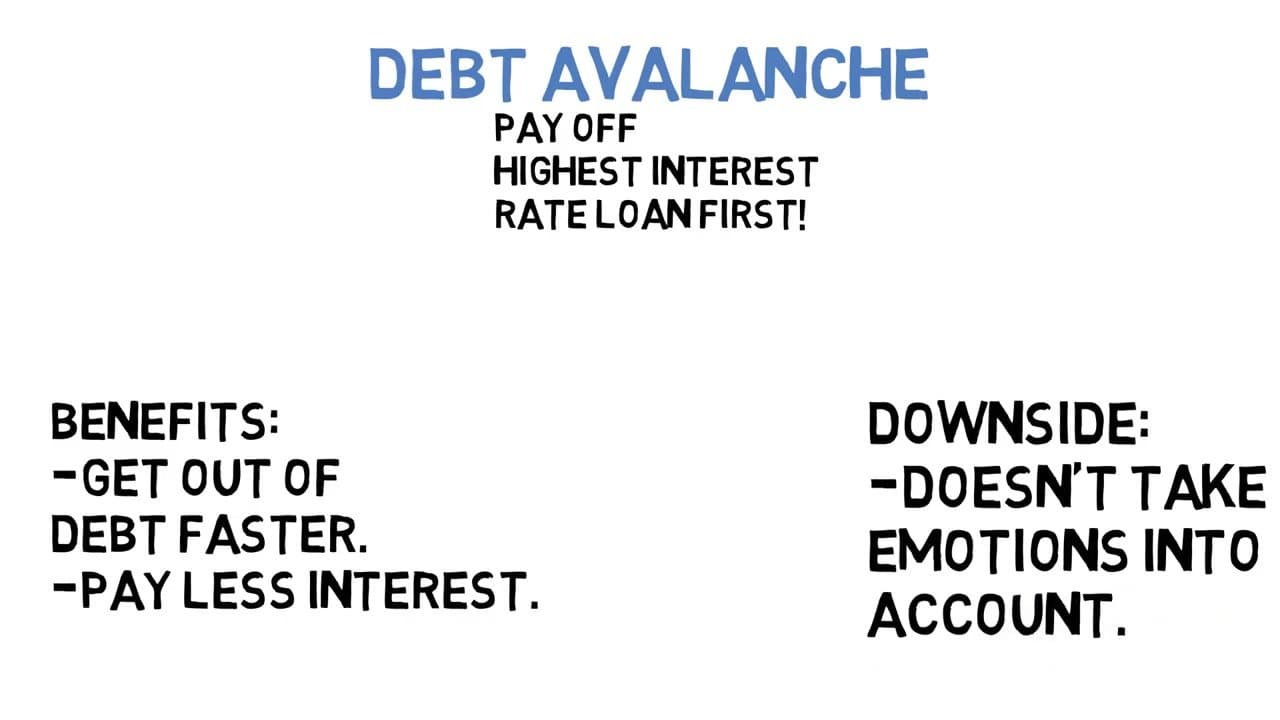
Avalanche orders by highest interest rate first and saves you the most money. The Harvard Business Review found snowball users actually finish more often, but avalanche users pay less interest. Pick the one you'll actually stick to - momentum matters more than math if math drives you to quit.

3

Step 3: Sort Your Debts in Attack Order

3:00
Step 3: Step 3: Sort Your Debts in Attack Order

If snowball: rewrite the list ordered smallest balance to largest. In the example, that's $10,000 car loan, then $20,000 student loan, then $25,000 credit card.

If avalanche: order by highest interest rate first - $25,000 credit card at 15%, then $20,000 student loan at 4.45%, then $10,000 car loan at 4.21%. Whichever you pick, the order locks in - don't second-guess yourself month to month.

4

Step 4: Pay Every Minimum Plus Extra on the Target

5:20
Step 4: Step 4: Pay Every Minimum Plus Extra on the Target

Each month, pay the minimum on every debt - skipping minimums tanks your credit and triggers fees. Then take every leftover dollar from your budget (in the example: $1,052.50/month) and dump it on the debt at the top of your sorted list.

The minimums plus this extra payment combined are sometimes called your snowball or avalanche payment. The total stays the same as debts get cleared - you just redirect where it goes.

5

Step 5: Roll Each Cleared Payment Into the Next Debt

6:40
Step 5: Step 5: Roll Each Cleared Payment Into the Next Debt

When the first debt is paid off, do NOT redirect that money to lifestyle spending. Add the freed-up minimum payment to your existing extra payment and dump the bigger pile on the next debt in your sorted order.

In the example, John finishes the car loan at month 9, freeing up the $185 minimum. His attack payment grows from $1,052 to $1,237, and he starts crushing the student loan with that bigger pile. This rolling-up is what makes either method dramatically faster than just paying minimums on everything.

6

Step 6: Compare the Outcomes for Your Situation

8:20
Step 6: Step 6: Compare the Outcomes for Your Situation

Run the math both ways before you commit. In the worked example, snowball-John clears all three debts in 35 months and pays about $10,000 in interest. Avalanche-Jane finishes in 30 months and pays about $4,700 in interest - $5,300 less.

But Jane sees no progress for the first 16 months while John pays off his first debt at month 9. If 16 months of zero wins would make you quit, snowball wins by default - the cheapest plan is always the one you actually finish.

Tip

Use a free debt-payoff calculator (search 'debt payoff calculator') to plug in your real numbers and see month-by-month projections for both methods side by side.

Your Guide

Next Level Life

As an Amazon Associate we earn from qualifying purchases. Links on this page may be affiliate links - clicking them and buying doesn't change your price, but helps support ShowMeStepByStep.

Tags

Related Tutorials