How to Train Your Puppy to Stop Biting

By ShowMeStepByStepPublished Updated

Based on a video by Zak George’s Dog Training Revolution.

To train a puppy to stop biting: keep a chew toy in your hand at greetings, redirect every bite onto the toy, exercise the puppy in the morning before bite-prone moments, and ask for a sit before any treat. Skip the "ouch and walk away" cue. It addresses the symptom, not why puppies bite in the first place.

  1. Give teething puppies safe chew toys. Frozen rope, rubber bones, and dental sticks satisfy the urge so the puppy isn't gnawing on you to do it.
  2. Desensitize your puppy to firm touching. Run your hand along the back, legs, paws, and ears every day so handling becomes calm, not exciting.
  3. Exercise in the morning and throughout the day. A tired puppy bites less.
  4. Keep a favorite toy ready when you greet your puppy. Greetings are the biggest bite-prone moment. Have the toy in hand before you walk up.
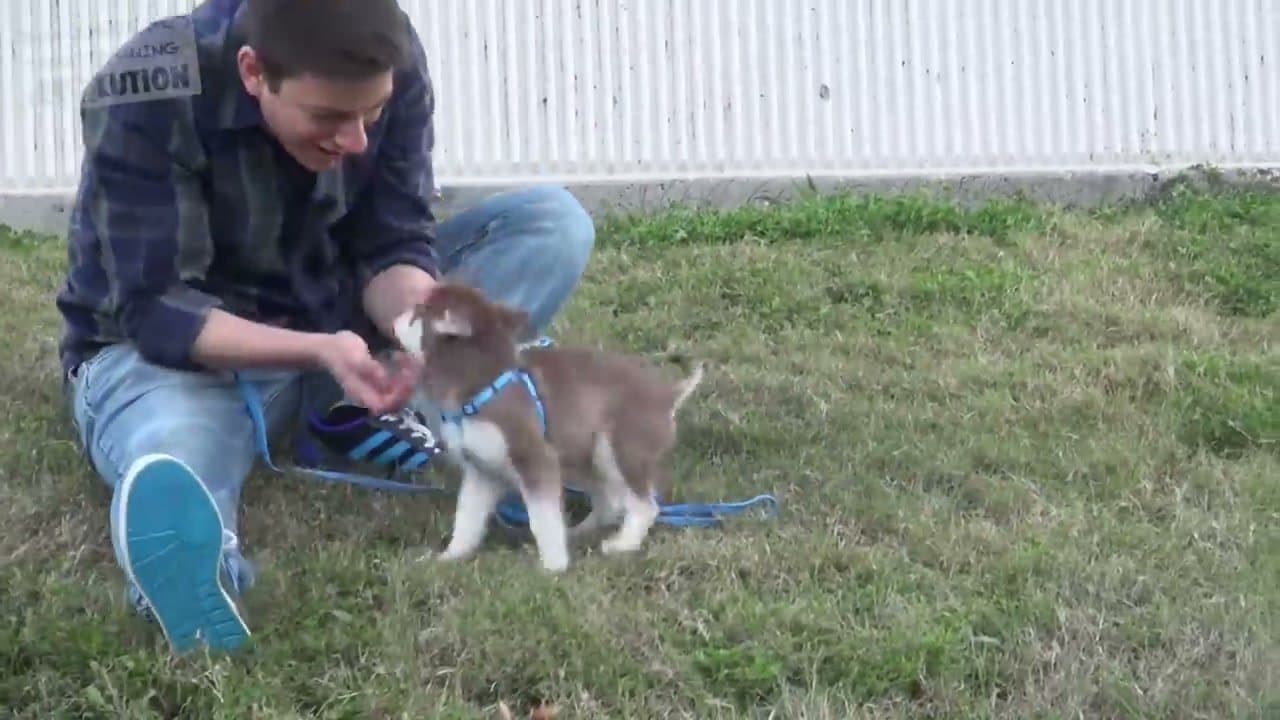
  5. Redirect every bite onto the toy. Move the toy into the puppy's path so they grab the toy instead of skin.
  6. Ask for a sit before any treat. The treat is your biggest training lever. Make it conditional on a calm sit and the biting comes down fast.
  7. Launch a 30-second training session when biting starts. Sit, stay, come, lie down, all rapid-fire. The puppy can't bite and learn at the same time.

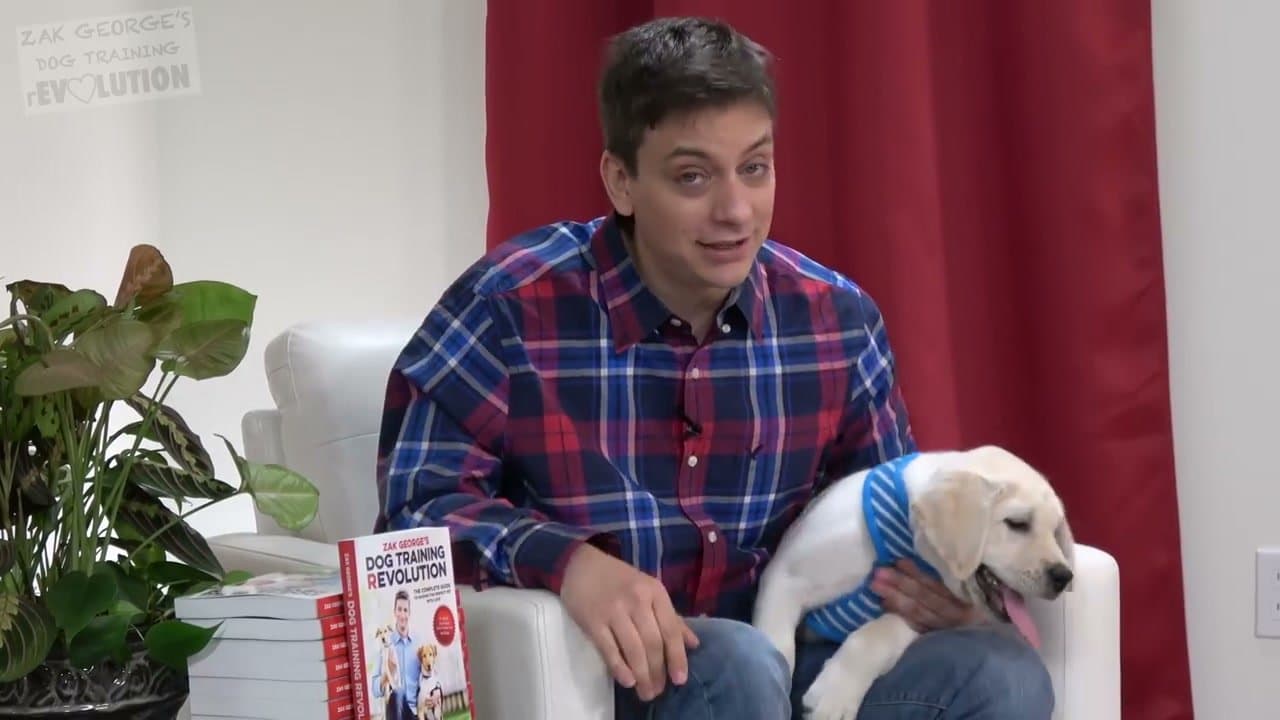
Puppies bite because they're teething or because they're trying to engage with you. Saying "ouch" and walking away addresses the symptom, not the cause. This guide shows you how to get ahead of the biting with chew toys, exercise, and short training sessions that turn every bite-prone moment into a teaching moment.

Credit to Zak George for the source video. Expect the process to take anywhere from a few days to a couple of months depending on your puppy's temperament, but you should see progress in the first week if you're consistent.

Common questions about puppy biting

The questions new puppy owners ask most often: when this stage actually ends, why your puppy bites you when you try to pet them, and what to do when the cues you've read about don't seem to be working.

At what age do puppies stop biting?

Most puppies stop biting hard between 4 and 6 months, when their adult teeth come in and the teething drive ends. Mouthing (gentler nibbles, often during play) usually fades by 7 to 9 months as bite inhibition develops. If biting continues past 9 months at the same intensity as a young puppy, the cause is usually behavioral rather than physical: the dog has learned that biting earns attention, food, or play. At that point a structured 2-week training reset (treats only on a sit, no rough play, no hand-as-toy games) usually resolves it.

Why does my puppy bite me when I pet him?

Three reasons. First, your hand near the face is an invitation to play in puppy language: they bite the hand the way they'd bite a sibling. Second, slow-stroking touch can be over-stimulating for a young puppy whose nervous system is still ramping. Third, you may be petting them when they're already aroused (post-greeting, mid-play, hungry). Try a different approach: offer the back of your hand for them to sniff, scratch the chest or under the chin (places they can't see your hand approach), and pet for 3 to 5 seconds at a time rather than continuously.

What if my puppy doesn't stop biting when I yelp?

The yelping advice works for some puppies and backfires on others. High-energy puppies often interpret a high-pitched yelp as their owner joining the play, and they bite harder. If yelping doesn't slow your puppy down within a week, drop the cue entirely. The reliable substitute: stand up, fold your arms, look away for 10 to 20 seconds, then re-engage with a chew toy in hand. Removing all stimulation (eye contact, voice, motion) is what teaches the puppy that biting ends the fun, not the volume of the sound.

Should I bite my puppy back to teach them?

No. The "bite back" or "alpha roll" advice circulates in old training books and gets recycled online, but every modern certification body (CCPDT, IAABC, Karen Pryor Academy) and the AVSAB position statement on aversive training methods recommend against it. The technique tends to escalate fear-driven aggression, damages the trust that makes everyday handling safe (vet visits, nail trims, tooth brushing), and doesn't outperform reward-based methods on actual outcomes. Redirect with a toy and reward calm behavior. That works.

How do I stop my puppy biting hands and feet?

Hands and feet feel like prey. They move suddenly, they're warm, and they retract when bitten, all of which crank up the chase response. The fix is in two layers. First, never let hands or feet be the toy: no hand-wrestling games, no toe-wiggling under blankets, no kicking off a bite. Second, anytime hands or feet are about to be in motion (cooking, walking through a doorway, getting up from the couch), have a toy ready or redirect the puppy to a chew before the movement starts. Within 7 to 10 days the puppy stops associating hands and feet with chase opportunities.

Step-by-Step Guide

1

Give Teething Puppies Safe Chew Toys

1:40
Step 1: Give Teething Puppies Safe Chew Toys

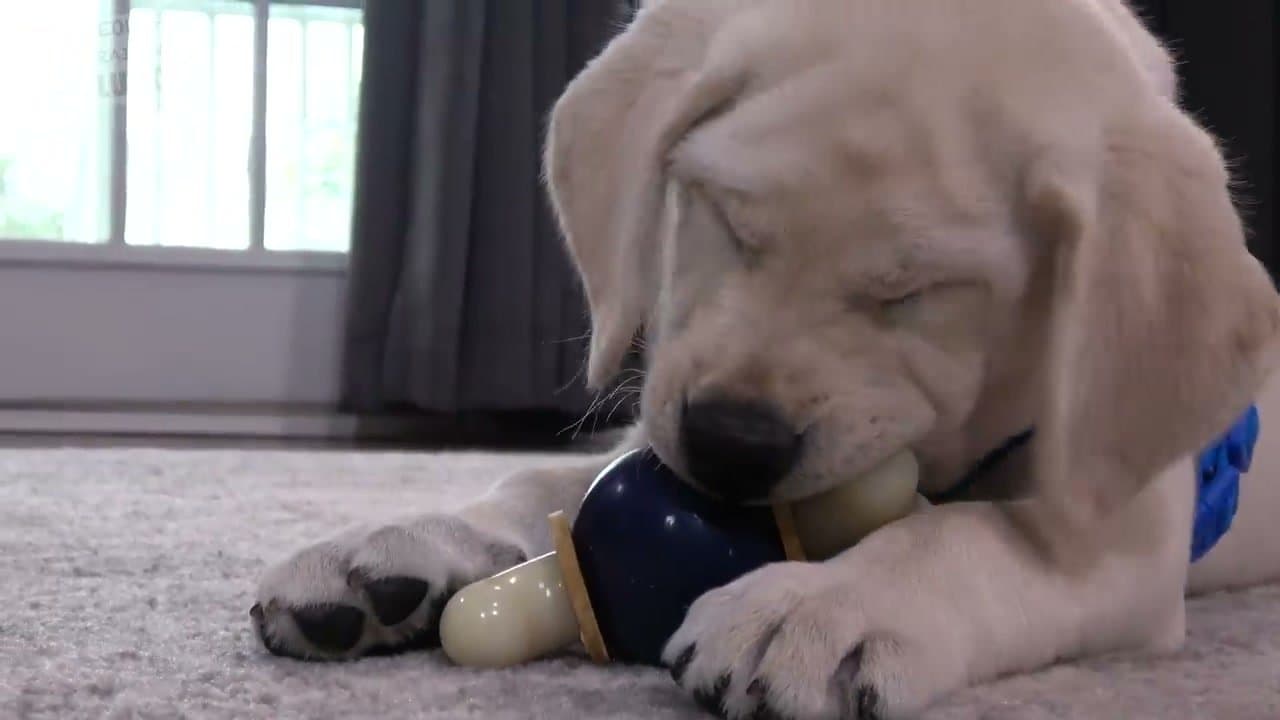
Puppies bite because they're teething or because they're trying to engage with the world. If teething is the driver, a chew toy with the right texture takes care of most of the problem. Keep several on hand with different textures - rubber, rope, canvas - and make sure they're always within reach.

Rotate them every few days so the toys stay interesting. A bored puppy with a forgotten toy will find your hand instead.

Products used in this step

2

Desensitize Your Puppy to Firm Touching

2:16
Step 2: Desensitize Your Puppy to Firm Touching

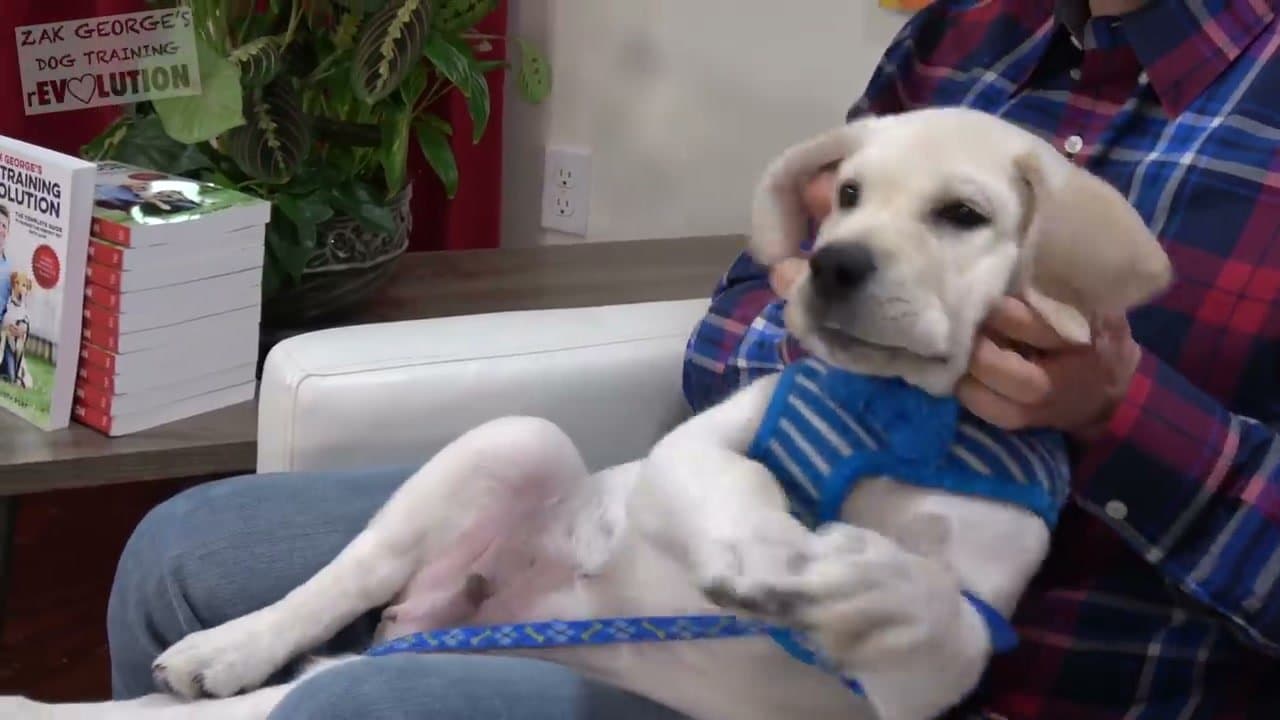
Handle your puppy a lot, and handle them firmly. Run your hand along the back, down the legs, around the paws, over the ears. The more they get used to being touched everywhere, the less they flinch or nip when a vet, groomer, or kid does it later.

Pair it with calm praise or a treat the first few times. You're building the association that firm touch equals something good.

3

Exercise in the Morning and Throughout the Day

2:38
Step 3: Exercise in the Morning and Throughout the Day

A high-energy puppy with pent-up energy bites harder and longer. Build real exercise into the morning before anything else, then top it up a few times during the day. A walk plus five to ten minutes of active play will do more for biting than any correction you can invent.

If your puppy is biting excessively through the afternoon, the real answer is usually more exercise, not more training.

4

Keep a Favorite Toy Ready When You Greet Your Puppy

3:18
Step 4: Keep a Favorite Toy Ready When You Greet Your Puppy

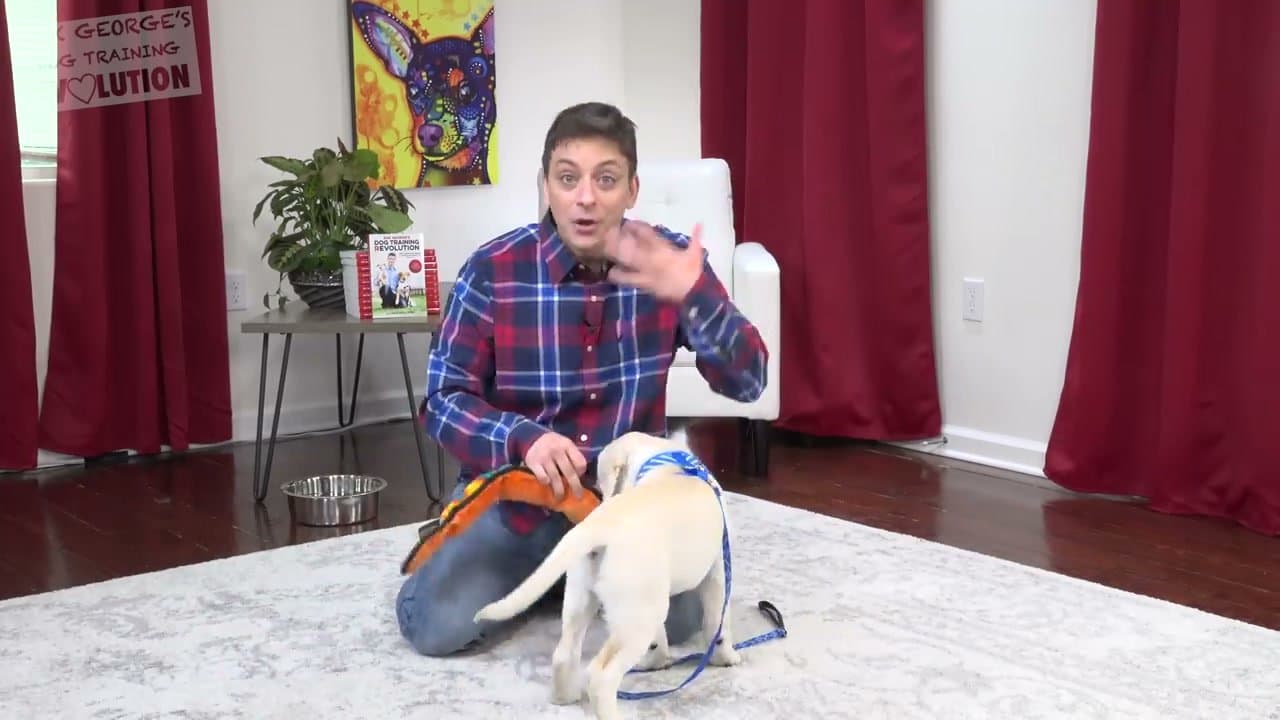
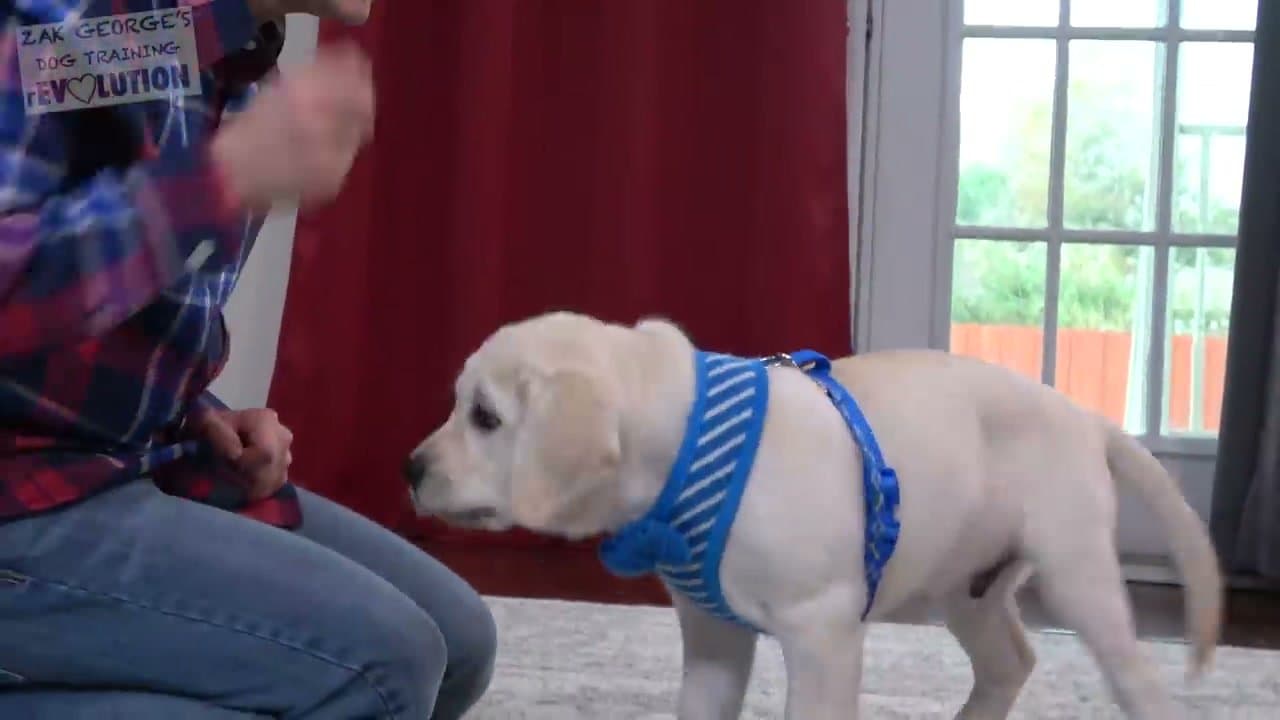
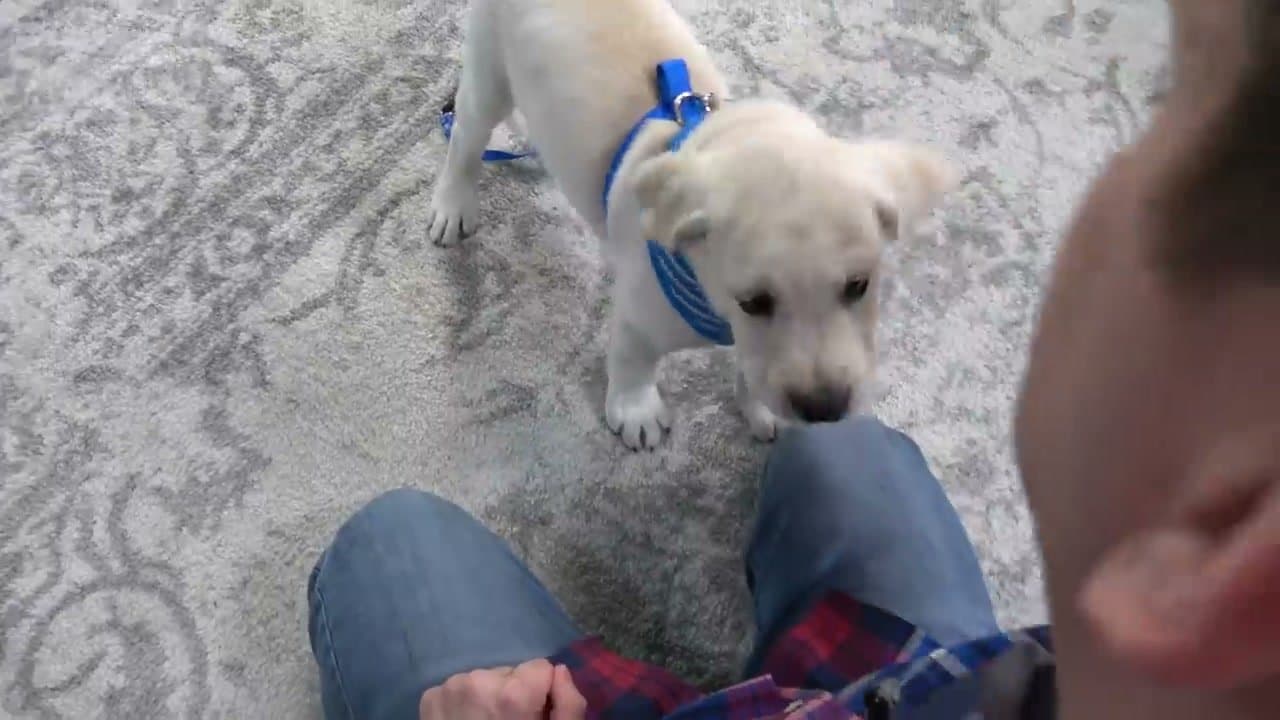
Greetings are the biggest bite-prone moment. Before you walk up to your puppy, pick up a toy they already like. That way the moment they get excited and try to mouth your hand, you have the right answer in your other hand.

One step ahead beats reactive correction every time. This alone will cut biting incidents in half.

Products used in this step

5

Redirect Every Bite onto the Toy

3:28
Step 5: Redirect Every Bite onto the Toy

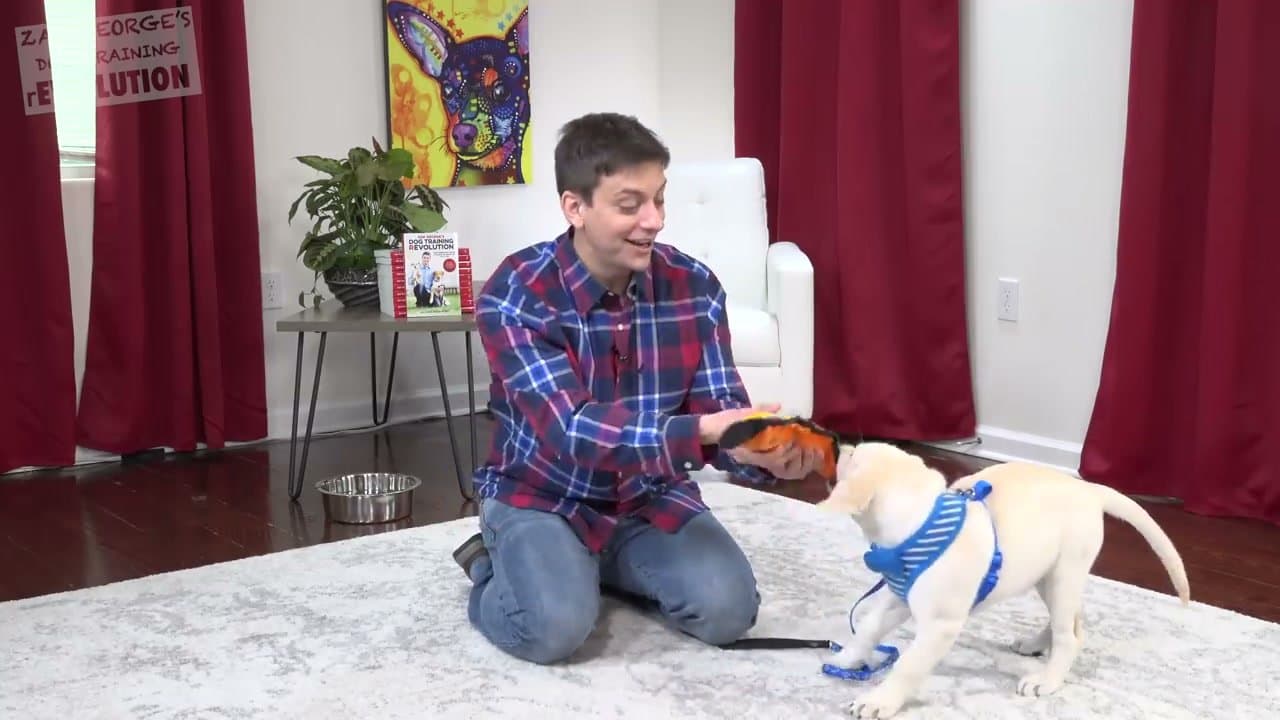
When your puppy reaches for your skin, move the toy into their path. Let them grab and tug the toy instead. Puppies don't know which things they're allowed to bite until you teach them, so every redirect is a lesson.

Don't punish the bite attempt. Redirect, reward the grab on the toy with a little praise, keep playing. Over the next few weeks the puppy starts aiming for the toy on their own.

6

Ask Your Puppy to Sit Before Any Treat

4:59
Step 6: Ask Your Puppy to Sit Before Any Treat

Treats are your biggest lever. Before you hand one over, ask for a sit. If your puppy is too bite-prone to take the treat gently, deliver it open-palm so they can't mouth at your fingers.

This satisfies the puppy's urge to engage with you, but on your terms. A calm sit earns the reward. Biting doesn't.

Tip

Soft, pea-sized training treats work best. You'll go through a lot of them, so buy a bag sized for training.

Products used in this step

7

Launch a Quick Training Session When Biting Starts

6:31
Step 7: Launch a Quick Training Session When Biting Starts

Caught off guard by a biting burst? Immediately start a 30-second to two-minute training session. Sit, stay, come, lie down - run through whatever basics you've worked on. You're swapping the excitement for focused work and rewarding the right thing.

If training doesn't calm them, go to physical exercise. If that fails, place the puppy in a quiet, boring room for a few minutes until they reset. You should start seeing licks where the bites used to be within a couple of weeks.

Products Used

Your Guide

Zak George’s Dog Training Revolution

As an Amazon Associate we earn from qualifying purchases. Links on this page may be affiliate links - clicking them and buying doesn't change your price, but helps support ShowMeStepByStep.

Tags

Test your knowledge

Did the lesson stick? Find out in 2 minutes.

5 quick questions covering what you just read. No signup, no score saved — just a gut check.

Quick reference

Key takeaways from How to Train Your Puppy to Stop Biting

5 questions, answers, and one-line explanations. Tap to expand.

  1. 1.Why is 'ouch and walk away' an incomplete fix?

    Answer: Treats symptom only

    It addresses the symptom, not why puppies bite (teething + engagement). Get ahead with chew toys, exercise, and short training.

  2. 2.Biggest bite-prone moment?

    Answer: Greetings hello

    Greetings spike excitement. Pick up a chew toy BEFORE walking up so you have the right answer in hand the moment they reach for skin.

  3. 3.Most puppies stop hard biting at what age?

    Answer: 4 to 6 months

    Adult teeth come in and the teething drive ends. Gentler mouthing usually fades by 7-9 months as bite inhibition develops.

  4. 4.Should you bite a puppy back to teach them?

    Answer: No, escalates fear

    Every modern certification body recommends against it. Escalates fear-driven aggression and damages trust. Redirect + reward calm.

  5. 5.Yelping doesn't slow your puppy. Reliable substitute?

    Answer: Stand, fold arms, away

    Remove all stimulation (eye contact, voice, motion) for 10-20 seconds, then re-engage with a chew toy. Teaches biting ends the fun.

What's next

Related collections

Curated theme pages that include this tutorial.

Weekly Digest

Liked this pets tutorial?

Pick the categories you want to hear about. Weekly digest of new step-by-step tutorials. No spam, easy unsubscribe.

Send me tutorials about

We only email about new tutorials. Easy unsubscribe anytime.