How to Factory Reset Windows 11 (7 Easy Steps)

The finished result: How to Factory Reset Windows 11 (7 Easy Steps)
Also in:Adulting

By ShowMeStepByStepPublished Updated

Based on a video by SoulOfTech.

A factory reset is the nuclear option for a sluggish Windows 11 machine, and sometimes it is exactly what the doctor ordered. If your PC takes five minutes to boot, crashes for no reason, or you are about to hand it down to a kid or sell it on Marketplace, wiping it back to factory settings clears out years of half-installed apps, bloated startup programs, and corrupted system files in one shot.

Windows 11 makes the whole thing fairly painless. The reset lives right inside Settings, you do not need a recovery USB, and you do not need to call a tech-savvy nephew. The catch: a factory reset is destructive. Anything not backed up goes away when you click that final Reset button. Documents, photos, downloads, saved game progress, browser bookmarks - all of it.

Warning before you start. Back up every file you care about before you touch the Reset button. Copy folders to an external SSD, sync the whole Documents tree to OneDrive or Google Drive, or both. Once the reset starts, there is no undo. Even the Keep my files option preserves your documents but removes every installed app and every custom setting.

How long it takes. Plan on 30 to 90 minutes once you hit Reset, plus another 20 minutes to walk through first-time setup at the end. Plug the laptop into power. The PC will restart itself several times - do not panic when the screen goes black between progress bars.

While you are in tech-cleanup mode, also worth knowing: how to update Windows, how to factory reset a Mac, and how to take a screenshot on Windows.

Keep my files or remove everything

Pick Keep my files if the PC is slow or misbehaving and you are keeping it. Your documents, photos and downloads stay, but every app and every setting is wiped, so you still reinstall Chrome, Office and the rest. Pick Remove everything if you are selling the PC, giving it away, or you want a genuinely clean start. That option erases the whole drive, accounts included.

Whichever you choose, back up first. Keep my files is not a backup: it preserves the standard user folders and nothing else, and a reset that fails halfway can take those with it.

Resetting when you cannot sign in or Windows will not boot

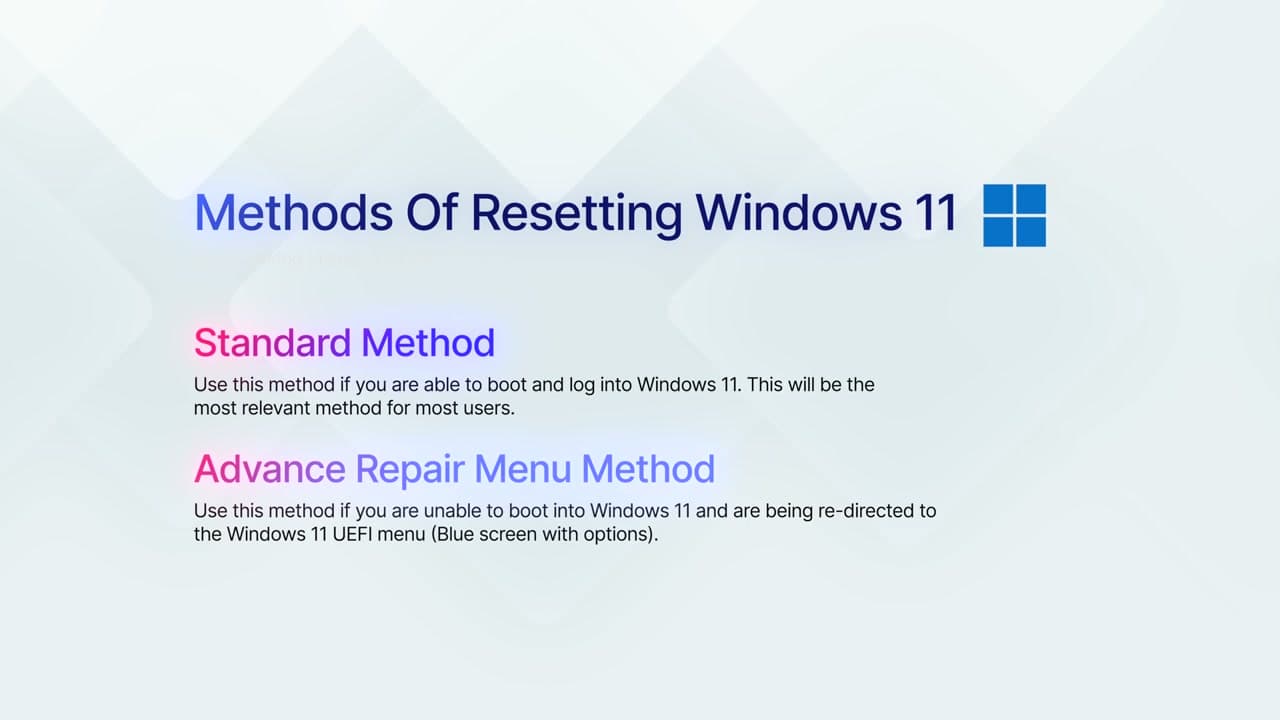
You do not need to be signed in to reset Windows 11. On the sign-in screen, click the power icon in the corner, hold the Shift key and click Restart. The PC boots into the blue recovery menu. Choose Troubleshoot, then Reset this PC, and the same Keep my files or Remove everything choice appears.

If Windows will not load at all, the recovery menu opens on its own after two failed start attempts, or you can force it by holding the power button to cut the PC off during the Windows logo twice in a row. From there the path is identical: Troubleshoot, Reset this PC.

Frequently Asked Questions

Does a factory reset delete everything on Windows 11?

Only if you choose Remove everything. That option wipes files, apps, settings and user accounts. Keep my files leaves your personal folders in place but still removes every installed app and resets every setting to default.

How long does a factory reset take on Windows 11?

Usually 30 to 90 minutes. Local reinstall on a healthy SSD can finish in about 20 minutes, cloud download adds the time to fetch roughly 4 GB, and choosing the full drive clean under Remove everything can push it to several hours on a large hard drive.

Can you factory reset Windows 11 without a password?

Yes. From the sign-in screen, hold Shift and click Restart, then choose Troubleshoot and Reset this PC. You never enter the account password. Removing everything will also remove the account you are locked out of.

Will a factory reset remove viruses?

Almost always, if you choose Remove everything with Cloud download so Windows comes from a fresh copy rather than the recovery files on the drive. The rare exceptions live in firmware or the boot sector, which a reset does not touch.

Do I need a product key to reinstall Windows 11 after a reset?

No. Windows 11 stores a digital license tied to your hardware and your Microsoft account, so it activates itself once the PC is back online. You only need a key if you are moving to a different edition.

What if the reset fails with "There was a problem resetting your PC"?

Try again with Cloud download instead of Local reinstall, since the message usually means the local recovery files are damaged. If it fails a second time, make a Windows 11 install USB with the Media Creation Tool on another PC and boot from that.
What you'll need

Step-by-Step Guide

7 steps · about 6 minutes.Check off each step as you go and your progress saves automatically.

1

Back Up Your Files Before You Touch Anything

1:45
Step 1: Back Up Your Files Before You Touch Anything - How to Factory Reset Windows 11 (7 Easy Steps)

This is the most important step in the entire tutorial. A factory reset wipes everything: documents, photos, downloads, saved passwords in non-cloud browsers, installed apps, and every custom setting. There is no undo button once the reset starts.

Plug in an external SSD or USB drive and drag your important folders over - Documents, Pictures, Videos, Downloads, and your Desktop at minimum. If you use OneDrive, Google Drive, or Dropbox, open the app and confirm every folder you care about shows the green checkmark or 'Up to date' status before you go any further. Cloud sync that has been paused for six months is not a backup.

Also export browser bookmarks (Edge, Chrome, Firefox all have a built-in export to HTML file) and write down any software license keys you will need to reinstall after the reset.

Tip

If you are giving the PC to someone else, sign out of OneDrive, Microsoft account, browsers, Steam, and any other accounts BEFORE you start. The reset removes the data but signing out first is a clean handoff that breaks the device-account link cleanly.

2

Right-Click the Start Button and Open Settings

0:50
Step 2: Right-Click the Start Button and Open Settings - How to Factory Reset Windows 11 (7 Easy Steps)

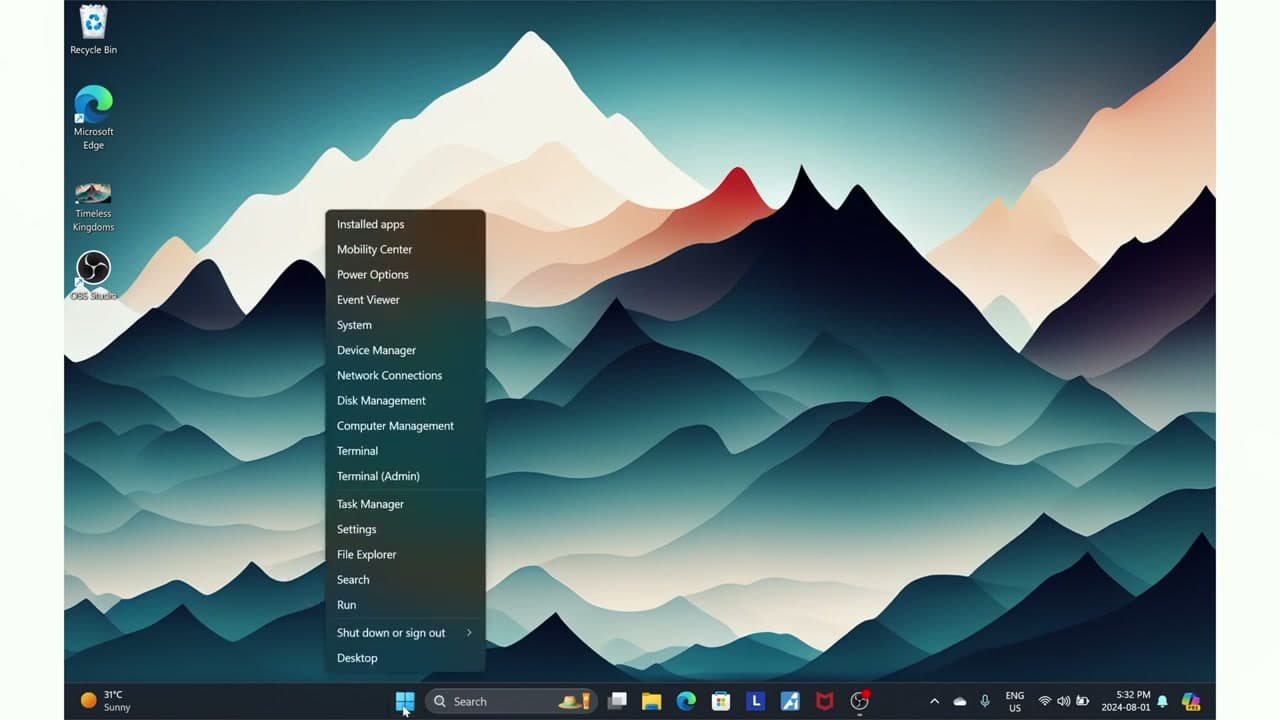
Look at the taskbar at the bottom of your screen and find the Start button - the Windows logo icon. Right-click it (not left-click, which opens the regular Start menu).

A long menu pops up with options like Installed apps, Power Options, Device Manager, and Task Manager. About two thirds of the way down you will see Settings. Click Settings and the Windows 11 Settings window opens in a new window.

Tip

Faster shortcut: press the Windows key and I at the same time (Win + I). That opens Settings instantly, no clicking required. Worth memorizing - you will use it constantly for everything from sound to Bluetooth.

3

Click System, Then Scroll Down to Recovery

1:10
Step 3: Click System, Then Scroll Down to Recovery - How to Factory Reset Windows 11 (7 Easy Steps)

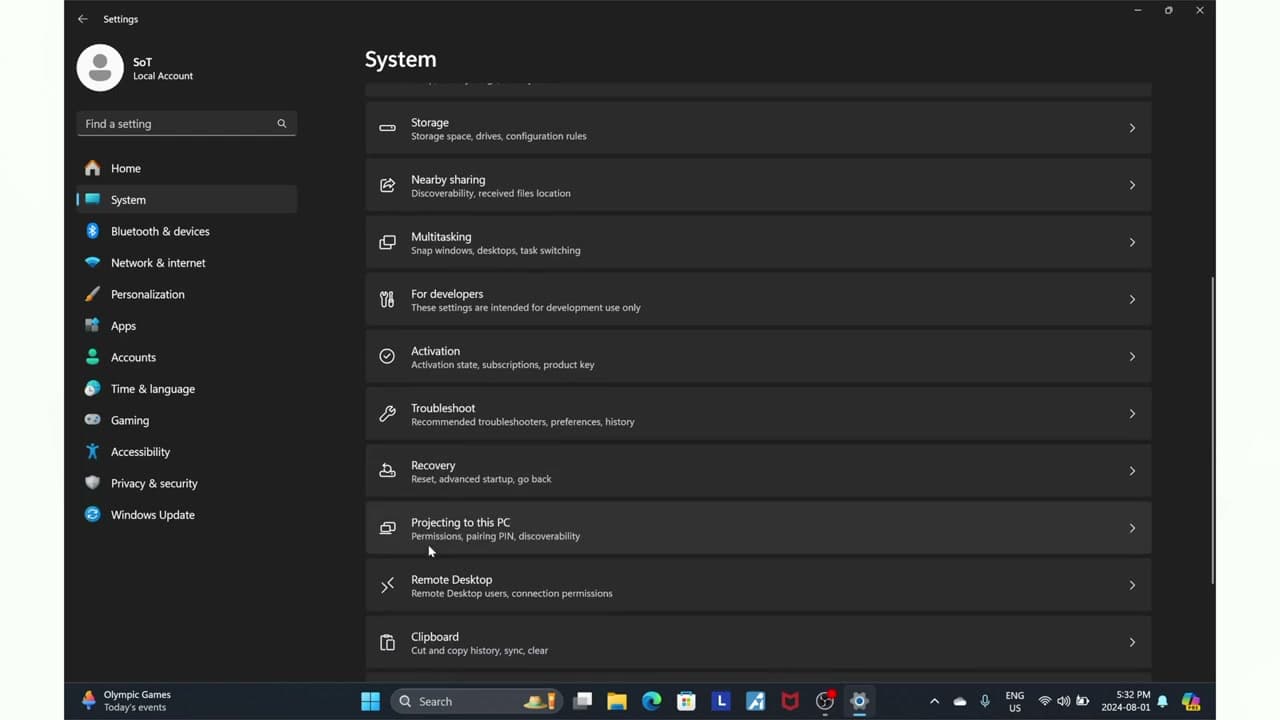
In the Settings window, look at the sidebar on the left. You will see Home at the top, then System, Bluetooth and devices, Network and internet, and so on. Click System (usually the second item from the top).

The right side of the window now shows all the System sub-pages: Display, Sound, Notifications, Power and battery, Storage, and more. Scroll down past Multitasking, For developers, Activation, and Troubleshoot. About two-thirds of the way down you will see Recovery with the description 'Reset, advanced startup, go back.' Click Recovery.

Tip

If you cannot find Recovery, type 'recovery' into the search bar at the top of Settings. It jumps straight there with no scrolling.

4

Click the Reset PC Button

1:35
Step 4: Click the Reset PC Button - How to Factory Reset Windows 11 (7 Easy Steps)

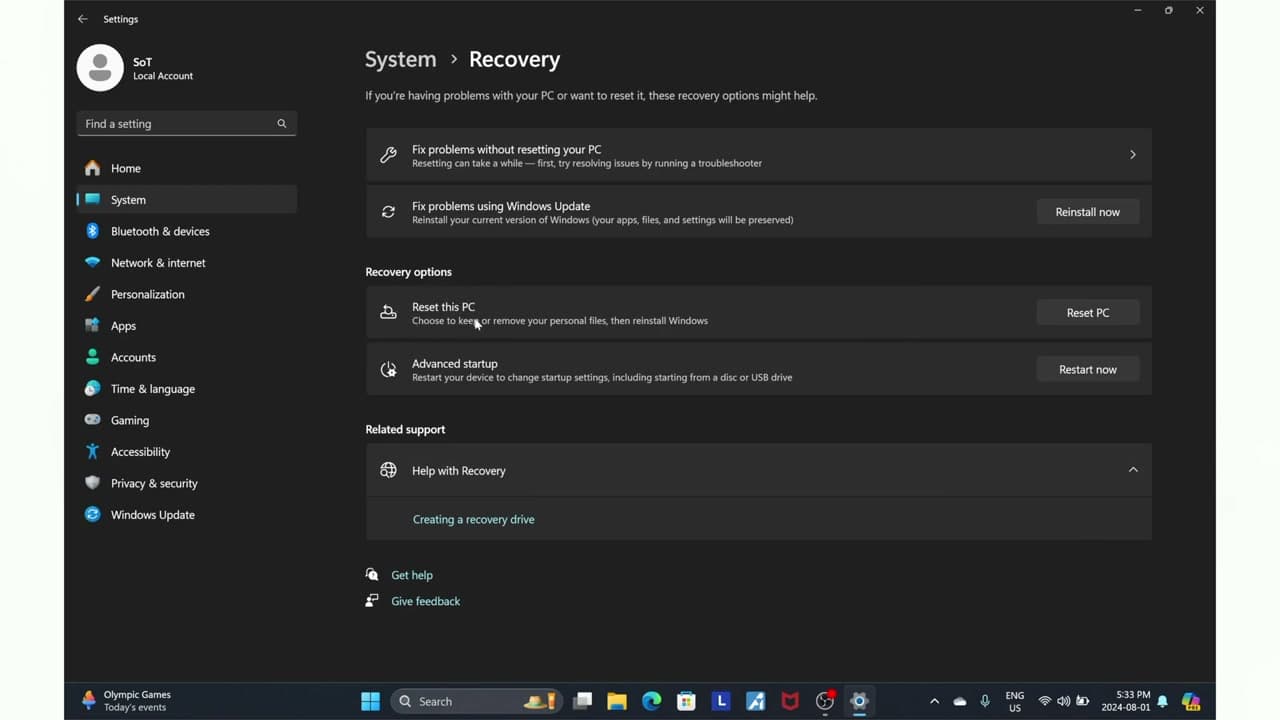
The Recovery page shows a few options. The one you want sits under the Recovery options header and is labeled Reset this PC with the description 'Choose to keep or remove your personal files, then reinstall Windows.' On the right side of that row is a blue or grey Reset PC button.

Click Reset PC. A separate prompt window opens on top of Settings and walks you through the rest of the choices. From here on, you are in the reset wizard.

Tip

Right above Reset this PC you will see 'Fix problems using Windows Update.' If your machine is just acting weird and you have not done a full Windows update lately, try that first. A reset is overkill if a pending update is the real problem.

5

Choose Keep My Files or Remove Everything

1:55
Step 5: Choose Keep My Files or Remove Everything - How to Factory Reset Windows 11 (7 Easy Steps)

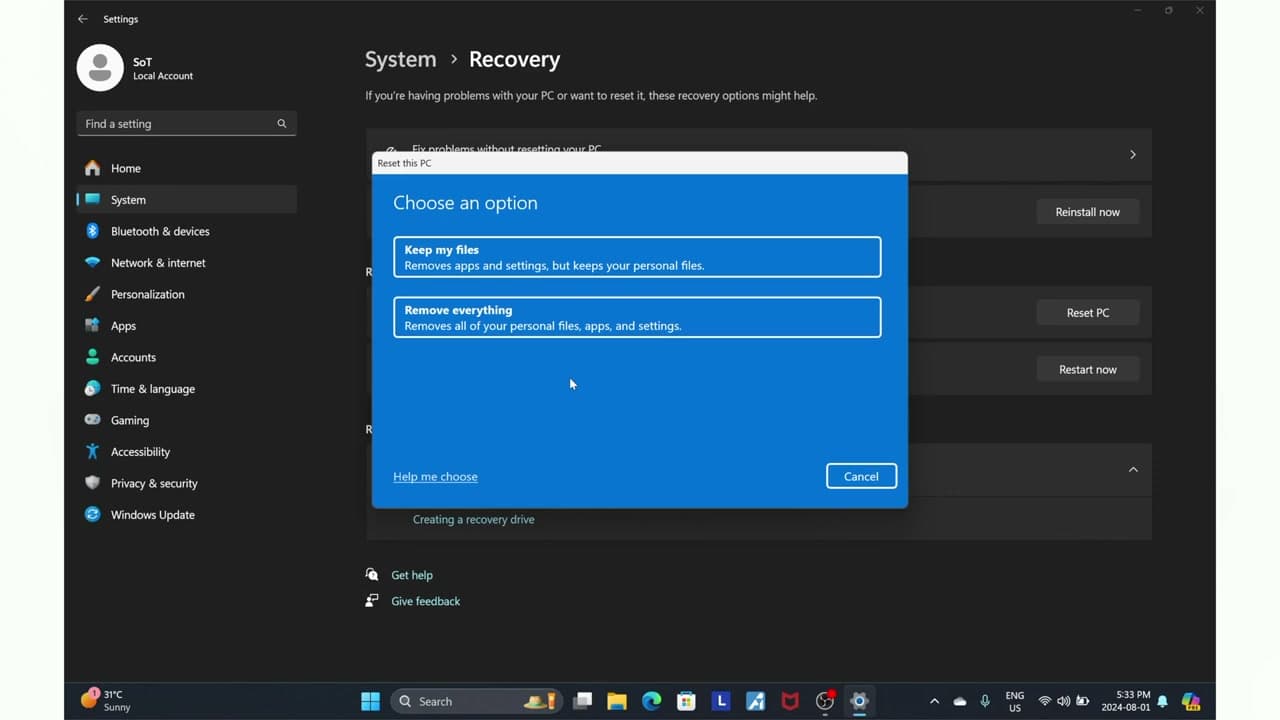
The first reset prompt asks you to Choose an option. Two big buttons appear:

Keep my files - removes apps and settings but preserves your personal files in Documents, Pictures, Videos, and Downloads. Use this if your PC is slow or buggy but you cannot back everything up for some reason. Apps still get wiped, so you will reinstall Chrome, Steam, Office, and the rest from scratch.

Remove everything - wipes the entire drive. Apps, settings, files, accounts - all of it. Use this if you are giving the PC away, selling it, or you want a true clean install for yourself. This is the proper factory reset.

Click whichever fits your situation. The wizard moves to the next screen.

Tip

Even with Keep my files selected, your apps go away. Make a list of the apps you actually use before resetting so you remember what to reinstall - it is easy to forget the small utilities like 7-Zip, Notepad++, or that one PDF viewer until you need them.

6

Pick Cloud Download or Local Reinstall

2:15
Step 6: Pick Cloud Download or Local Reinstall - How to Factory Reset Windows 11 (7 Easy Steps)

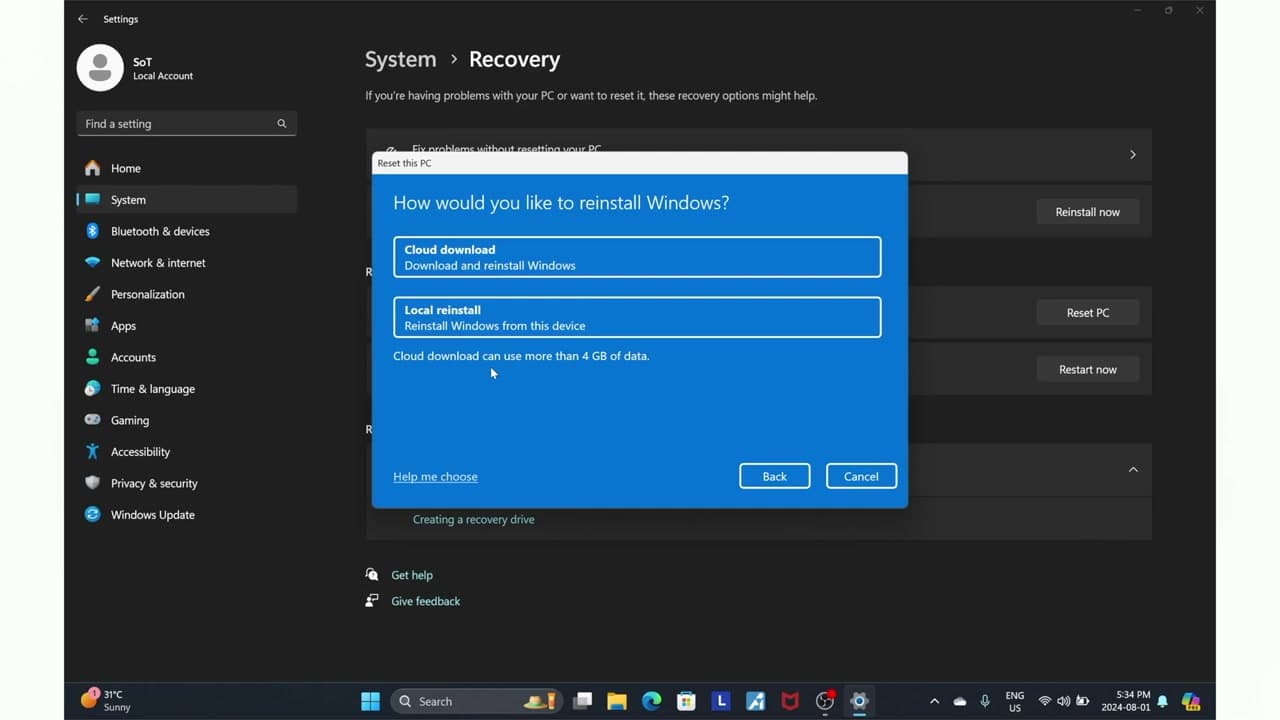
The next prompt is How would you like to reinstall Windows? You get two choices:

Cloud download - downloads a fresh, current copy of Windows 11 from Microsoft's servers. Uses about 4 GB of data and needs a stable internet connection for the whole download. Best choice if your current Windows install is corrupted, full of malware, or just plain broken. The fresh copy is guaranteed clean.

Local reinstall - rebuilds Windows from the recovery files already stored on your PC. Faster (no download), no internet required, and ideal if your PC is mostly healthy and you just want a fresh start. The downside: if those local files are corrupted too, the reinstall inherits the corruption.

If you are unsure, pick Cloud download. Slower, but you get a guaranteed-clean copy.

Tip

If you pick Cloud download, plug into ethernet if you can. Wi-Fi works but a dropped connection mid-download makes the reset fail and you have to start over. An ethernet cable is the cheapest insurance you can buy here.

7

Review the Summary, Hit Reset, Then Wait

2:40
Step 7: Review the Summary, Hit Reset, Then Wait - How to Factory Reset Windows 11 (7 Easy Steps)

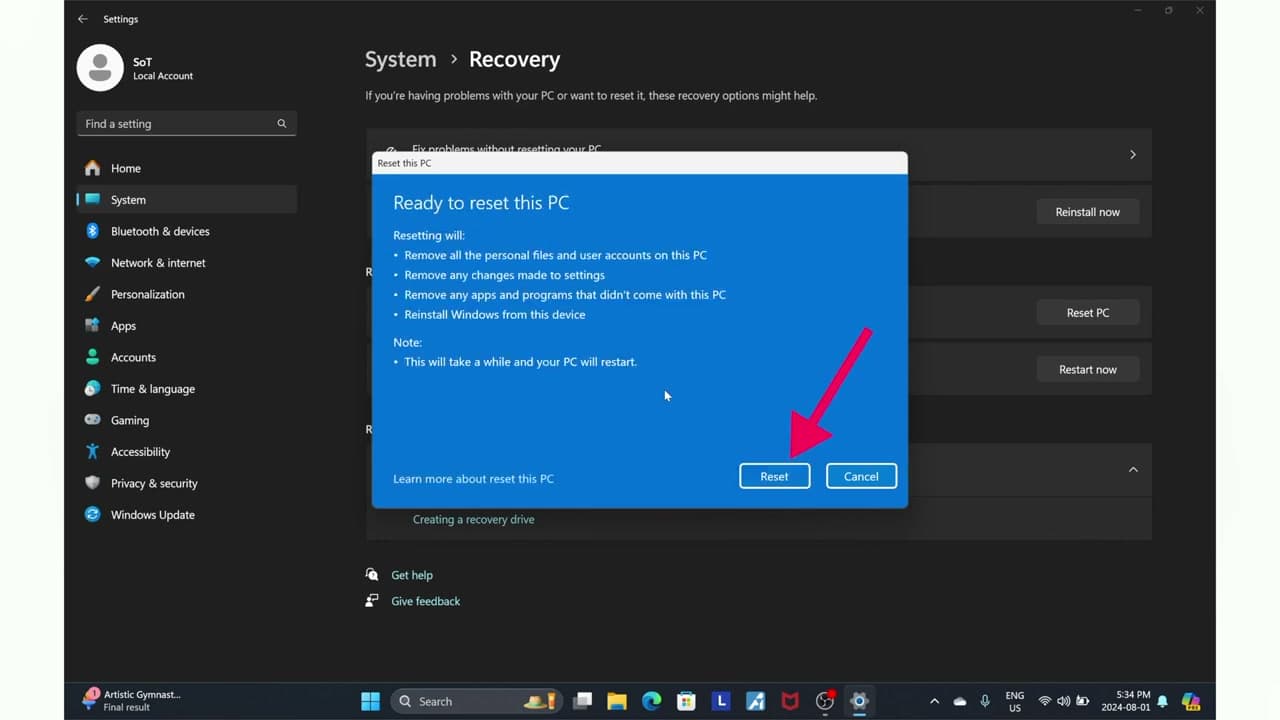
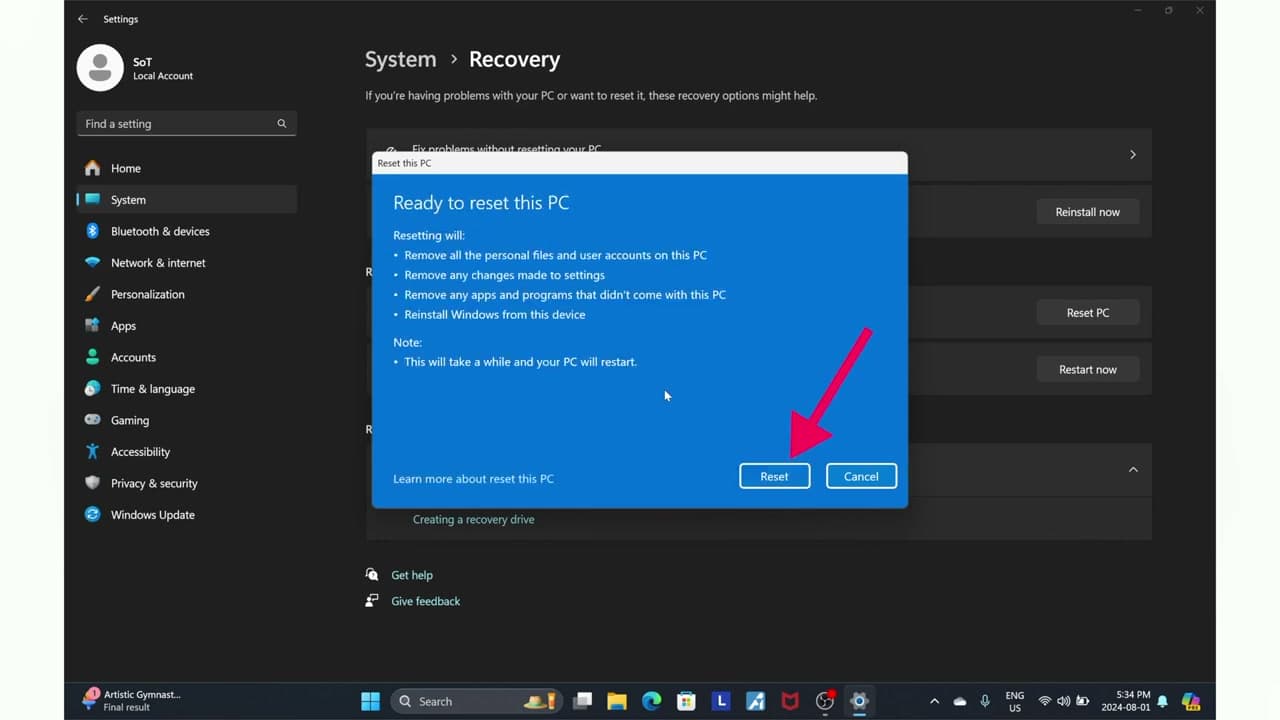
The wizard shows a summary screen titled Ready to reset this PC. It lists exactly what is about to happen: 'Remove all personal files and user accounts on this PC,' 'Remove any changes made to settings,' 'Remove any apps and programs that didn't come with this PC,' and 'Reinstall Windows from this device.' Read it once to make sure it matches what you actually want.

Click Reset to start. From here you are committed - your PC will restart and begin wiping itself. A progress bar appears showing percentage complete. The PC will restart several times on its own. Do not unplug it, do not close the lid, do not turn it off. Plug a laptop into the charger and walk away.

Total time runs 30 to 90 minutes depending on your hardware and which reset options you chose (cloud download adds time, removing everything with full drive clean adds the most). When the reset finishes, you land on the Windows 11 first-time setup screen - the same one a brand new laptop shows out of the box. Pick your region, sign in to your Microsoft account, and reinstall your apps. You are done.

Tip

If the laptop is older or has a weak battery, an unexpected shutdown during the reset can leave Windows in an unbootable state. Plug into wall power BEFORE you click Reset, even if the battery shows 100%. Worth the 30 seconds of cable hunting.

Keep going

How to Turn Off an iPhone (4 Ways, Any Model)

Products Used

The Checklist

How to Factory Reset Windows 11 (7 Easy Steps)

Tools
3
Steps
7
Video
6 min

Your Guide

SoulOfTech

As an Amazon Associate we earn from qualifying purchases. Links on this page may be affiliate links - clicking them and buying doesn't change your price, but helps support ShowMeStepByStep.

Tags

Sunday How-To

New tech tutorials, every Sunday

One short email with the week's best step-by-step guides. Free, no spam, unsubscribe anytime.

Test your knowledge

Did the lesson stick? Start with this one.

5 questions covering what you just read. No signup, no score saved, and you can stop after this one.

Question 1 of 5

What's the MOST important step before starting a factory reset?

Quick reference

Key takeaways from How to Factory Reset Windows 11 (7 Easy Steps)

5 questions, answers, and one-line explanations. Tap to expand.

  1. 1.What's the MOST important step before starting a factory reset?

    Answer: Back up your files - the reset wipes everything with no undo

    There's no undo button once the reset starts. Anything not backed up is gone.

  2. 2.How do you open Settings the fastest from the taskbar?

    Answer: Right-click the Start button and pick Settings from the power-user menu

    Right-click Start opens the power-user menu where Settings sits about two-thirds down.

  3. 3.Where in Settings does 'Reset this PC' live?

    Answer: System > Recovery

    System tab in the left sidebar, scroll down to Recovery in the right pane.

  4. 4.What's the difference between 'Keep my files' and 'Remove everything'?

    Answer: Keep my files preserves Documents/Pictures/Videos/Downloads; Remove everything wipes the entire drive

    Keep my files preserves personal files but still wipes apps and settings; Remove everything is the true factory reset.

  5. 5.When should you pick Cloud download over Local reinstall?

    Answer: When your current Windows is corrupted or malware-infected (cloud copy is guaranteed clean)

    Cloud download = guaranteed-clean fresh copy; Local reinstall uses on-disk recovery files that may share the corruption.

Did this work for you?

What's next

Related collections

Curated theme pages that include this tutorial.

Weekly Digest

Liked this tech tutorial?

Pick the categories you want to hear about. Weekly digest of new step-by-step tutorials. No spam, easy unsubscribe.

Send me tutorials about

We only email about new tutorials. Easy unsubscribe anytime.