How to Update Windows (Install Updates and Upgrade to Windows 11)

TechEasy4:318 stepsBrowse more →
Also in:Adulting

By ShowMeStepByStepPublished

Based on a video by Kevin Stratvert.

When people say 'update Windows', they usually mean one of two different things. The first is running Windows Update - the built-in tool that pulls down security patches, bug fixes, and driver updates from Microsoft every month. That's what you want to do if your PC has been nagging you about restarting, or if you want to make sure your antivirus and Windows itself are current.

The second is the bigger one - upgrading from Windows 10 to Windows 11. That's a full version change, free for any qualifying Windows 10 PC, and it gives you the redesigned Start menu, new taskbar, and Microsoft's current support window. Microsoft ended free mainstream support for Windows 10 in October 2025, so the upgrade isn't just cosmetic anymore.

This tutorial covers both. Steps 1 through 3 walk through installing the regular Windows Updates - the quick version anyone with a Windows PC should do every month. Steps 4 through 8 walk through the bigger one-time upgrade from Windows 10 to Windows 11, based on Kevin Stratvert's well-followed video. By the end, you'll know how to keep your current Windows current, and how to jump up to Windows 11 whether your PC meets Microsoft's official requirements or not.

Step-by-Step Guide

1

Open Settings from the Start Menu

2:48
Step 1: Open Settings from the Start Menu

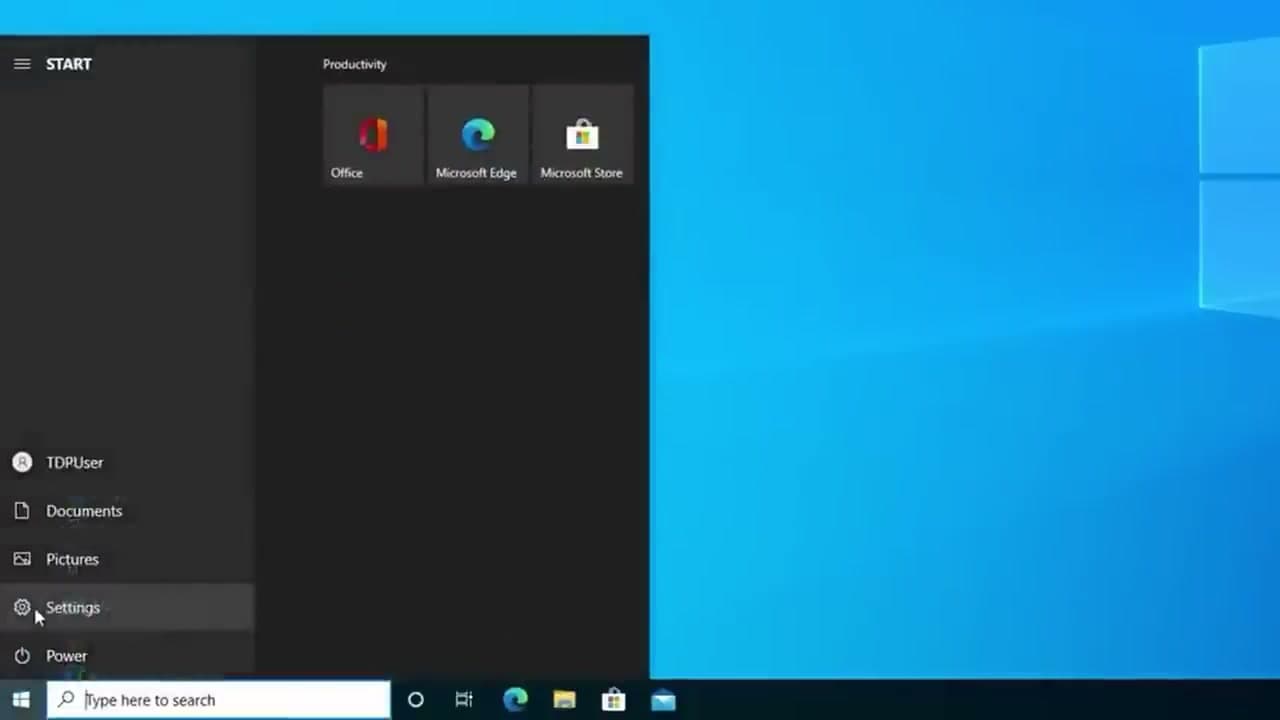
Click the Windows logo in the bottom-left corner of your screen to open the Start menu. On the left edge of the Start panel you'll see a small gear icon labeled Settings. Click it.

This is where Windows hides every option for the operating system itself - your account, your privacy settings, your installed apps, and the one you want now, Windows Update. Settings opens in its own window with a row of big tiles like System, Devices, and Personalization.

Tip

If your taskbar is missing the Start button, press the Windows key on your keyboard. It opens the same Start menu from anywhere.
2

Go to Update & Security, Then Windows Update

2:52
Step 2: Go to Update & Security, Then Windows Update

Inside Settings, scroll to the bottom row and click the tile labeled Update & Security. The next screen shows a sidebar with options like Windows Update, Delivery Optimization, Windows Security, and Backup.

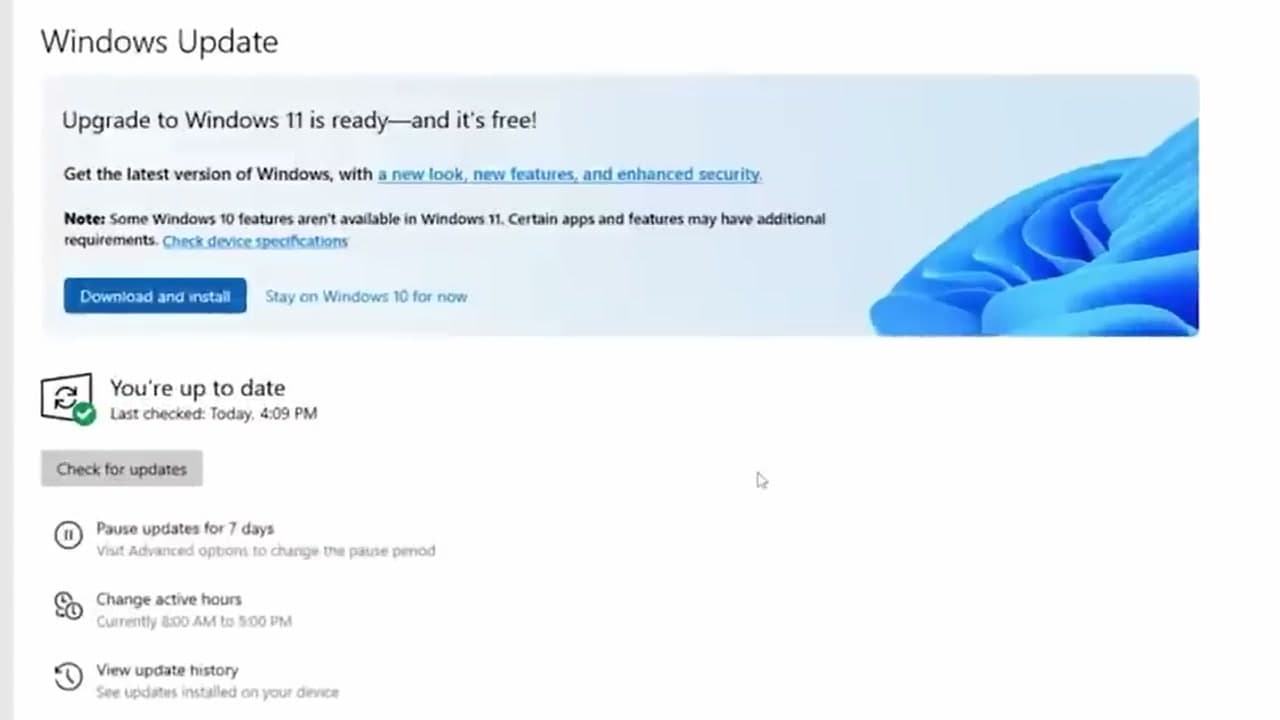
Make sure Windows Update at the top of the sidebar is selected. The main panel now shows whether your PC is up to date, when it last checked, and any pending updates Microsoft has queued up for you.

Tip

If you're on Windows 11 already, the path is slightly different - Settings, then Windows Update on the left sidebar (no 'Update & Security' parent). The rest of the steps work the same.

3

Click Check for Updates and Install What's Available

2:58
Step 3: Click Check for Updates and Install What's Available

Click the Check for updates button. Windows reaches out to Microsoft and lists anything new - security patches, driver updates, the monthly cumulative update. Most updates download and install on their own once you click.

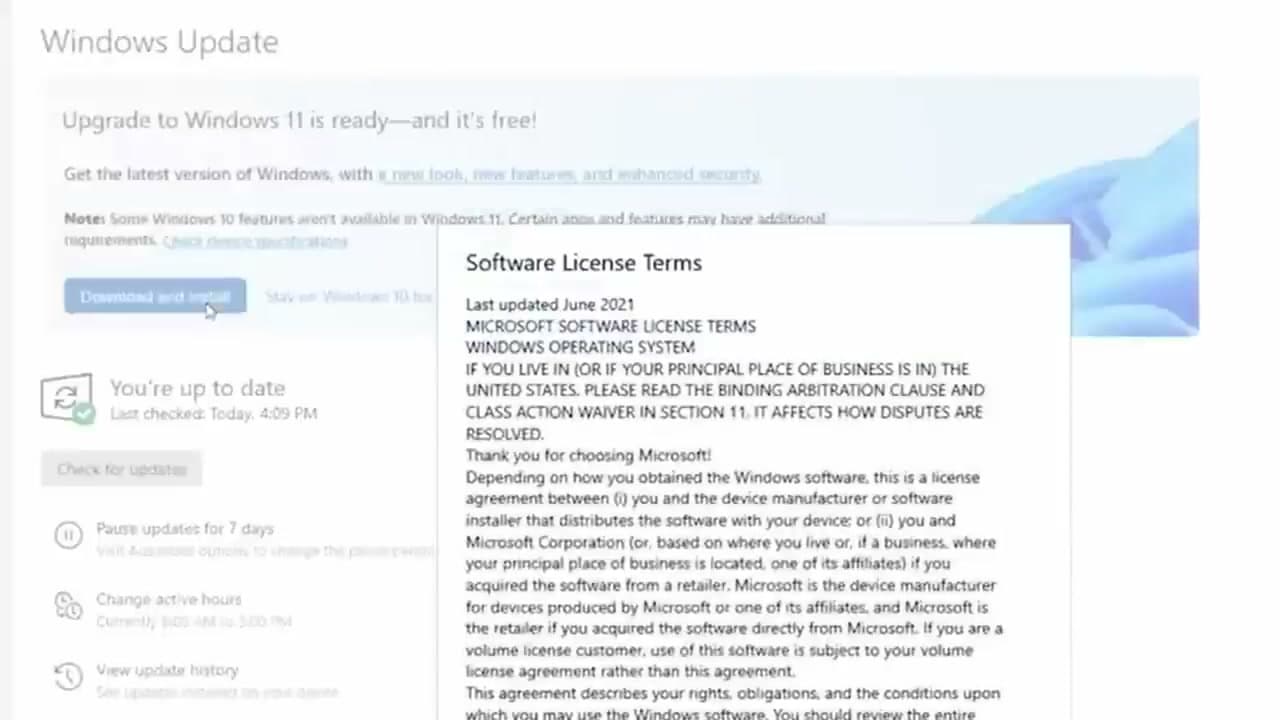
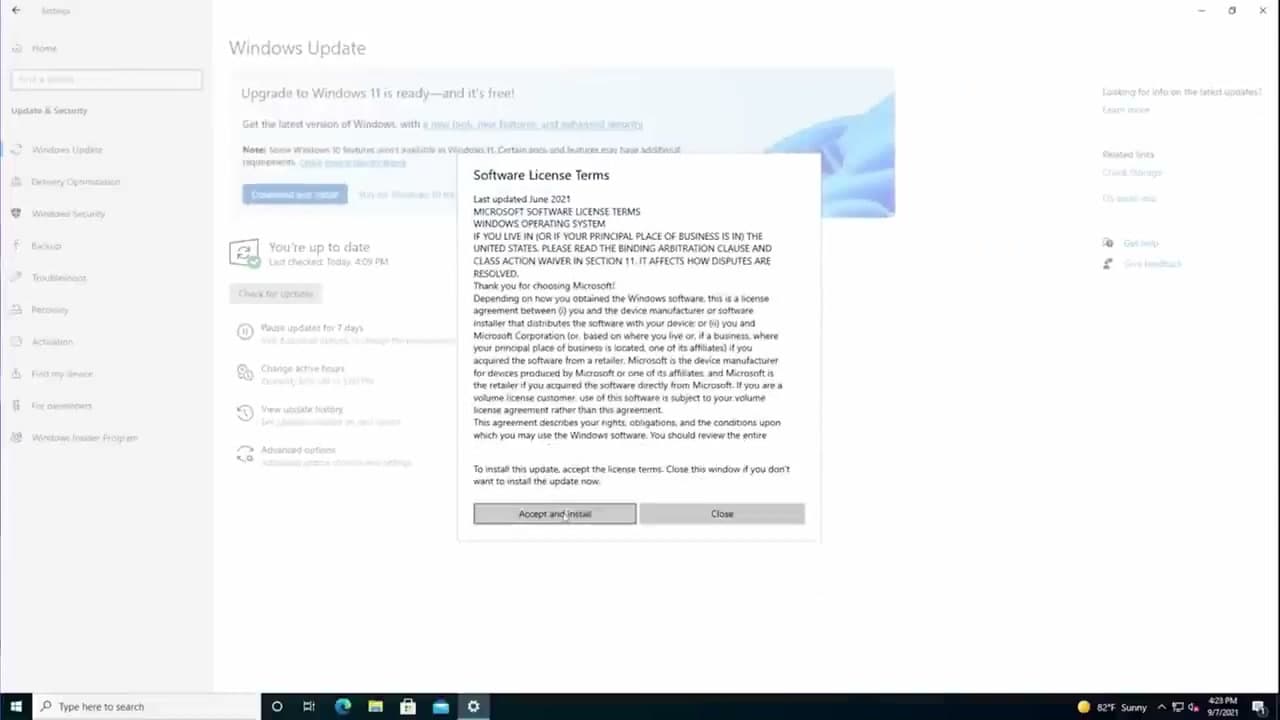
For larger updates, a Software License Terms dialog pops up. Read it (or skim it) and click Accept and install. Windows downloads in the background, and you'll be prompted to restart when it's ready. Your files and open apps stay where they are - the restart just lets Windows swap in the new files.

Tip

Plug your laptop in before a big update. Windows will warn you if the battery is low, but a charger means you can walk away without worrying about it dying mid-install.

4

Check If Your PC Can Run Windows 11

1:05
Step 4: Check If Your PC Can Run Windows 11

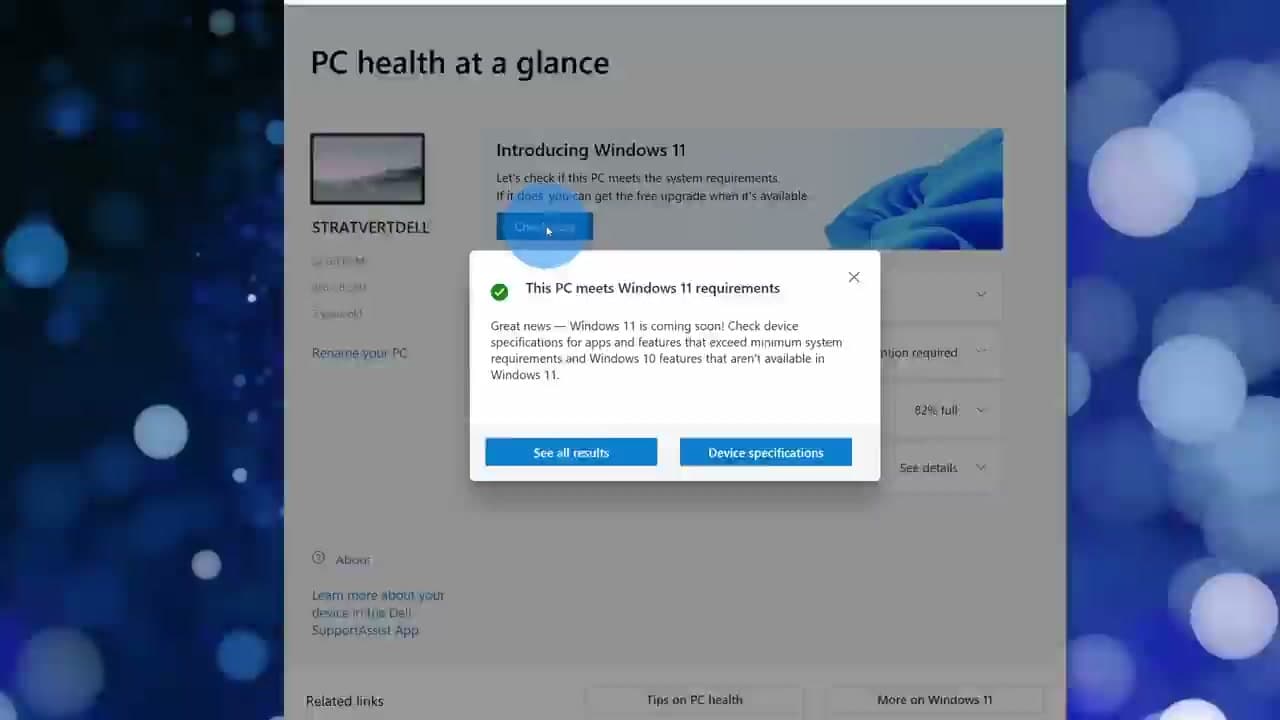
Before you try the bigger upgrade, find out whether your PC officially qualifies. Download Microsoft's free PC Health Check app from microsoft.com/windows/windows-11. Run it, then click the blue Check now button under 'Introducing Windows 11'.

If your PC qualifies, you'll see a green check next to This PC meets Windows 11 requirements. If it doesn't, the app tells you exactly which requirement failed - usually TPM 2.0, Secure Boot, or processor age. Don't panic if you fail. There's a workaround in step 8.

Tip

Most PCs sold from 2018 onward qualify. The most common failure on older hardware is TPM 2.0 - some PCs have it but it's switched off in the BIOS, so check there before giving up.

Products used in this step

5

Back Up Your Files Before Upgrading

2:30
Step 5: Back Up Your Files Before Upgrading

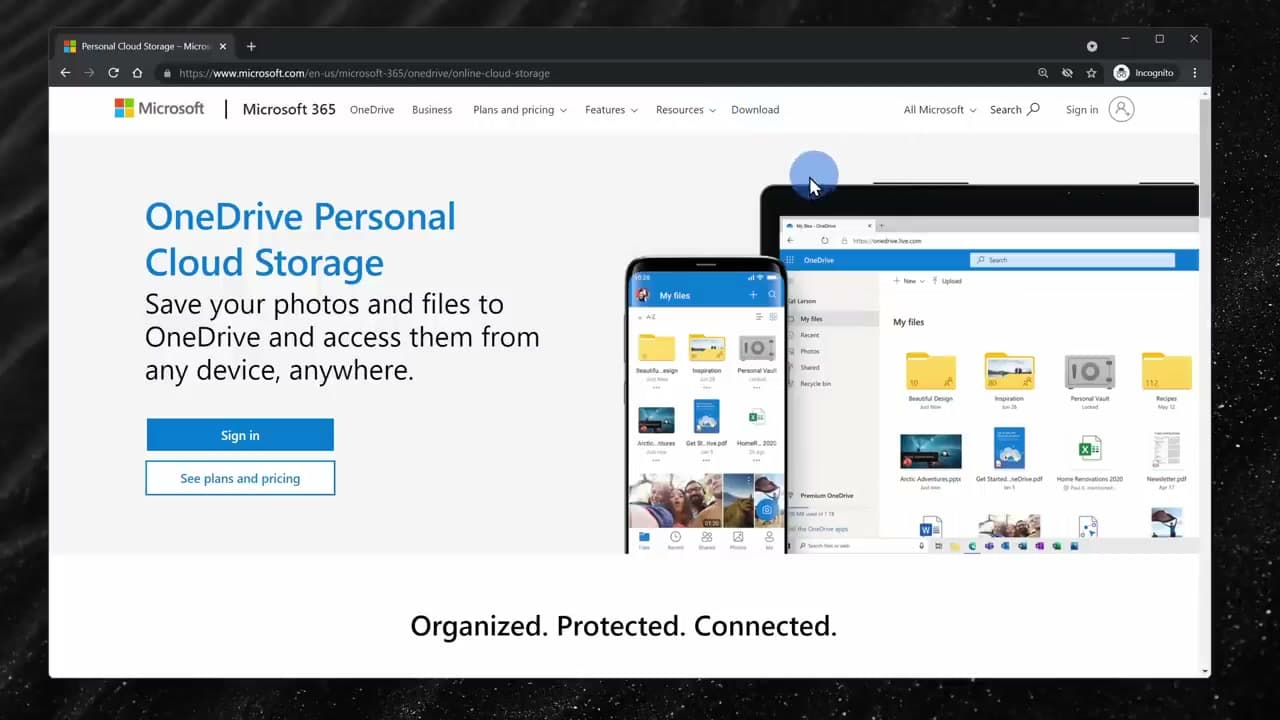
The Windows 11 upgrade keeps your apps and files - in theory. In practice, you want a backup before any operating-system swap. The easiest path is Microsoft OneDrive, which is built into Windows and gives you 5 GB free.

Open OneDrive (it's likely already signed in if you have a Microsoft account), drag your Documents, Pictures, and Desktop folders into it, and let them sync to the cloud. For larger libraries, an external SSD or USB drive works too - copy everything important across, then unplug it.

Tip

If 5 GB of OneDrive isn't enough, Microsoft 365 Personal includes 1 TB of OneDrive storage for about $7/month and bundles Word, Excel, and PowerPoint.

6

Click Download and Install in Windows Update

2:55
Step 6: Click Download and Install in Windows Update

Back in Settings, Update & Security, Windows Update, look at the top of the panel. If your PC qualifies for Windows 11, you'll see a banner reading 'Upgrade to Windows 11 is ready - and it's free!' with a blue Download and install button next to a quieter Stay on Windows 10 for now link.

Click Download and install. Windows starts pulling the upgrade in the background, which takes anywhere from twenty minutes to a couple of hours depending on your connection. When the download finishes, click Restart now and let your PC reboot through the installer. Don't unplug it.

Tip

Don't see the banner even though PC Health Check said your PC qualifies? Microsoft staggers the rollout. Either wait a few weeks, or skip to step 7 and use the Installation Assistant to upgrade right away.

Products used in this step

7

Use the Windows 11 Installation Assistant

3:20
Step 7: Use the Windows 11 Installation Assistant

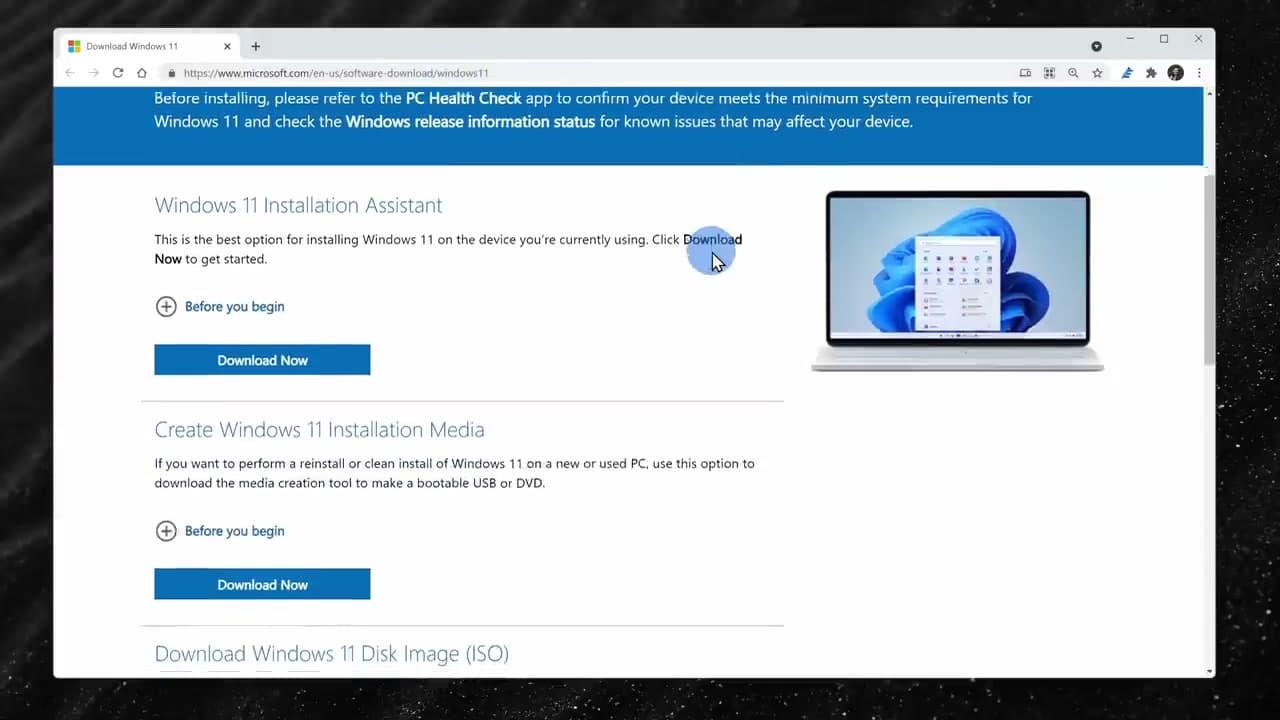
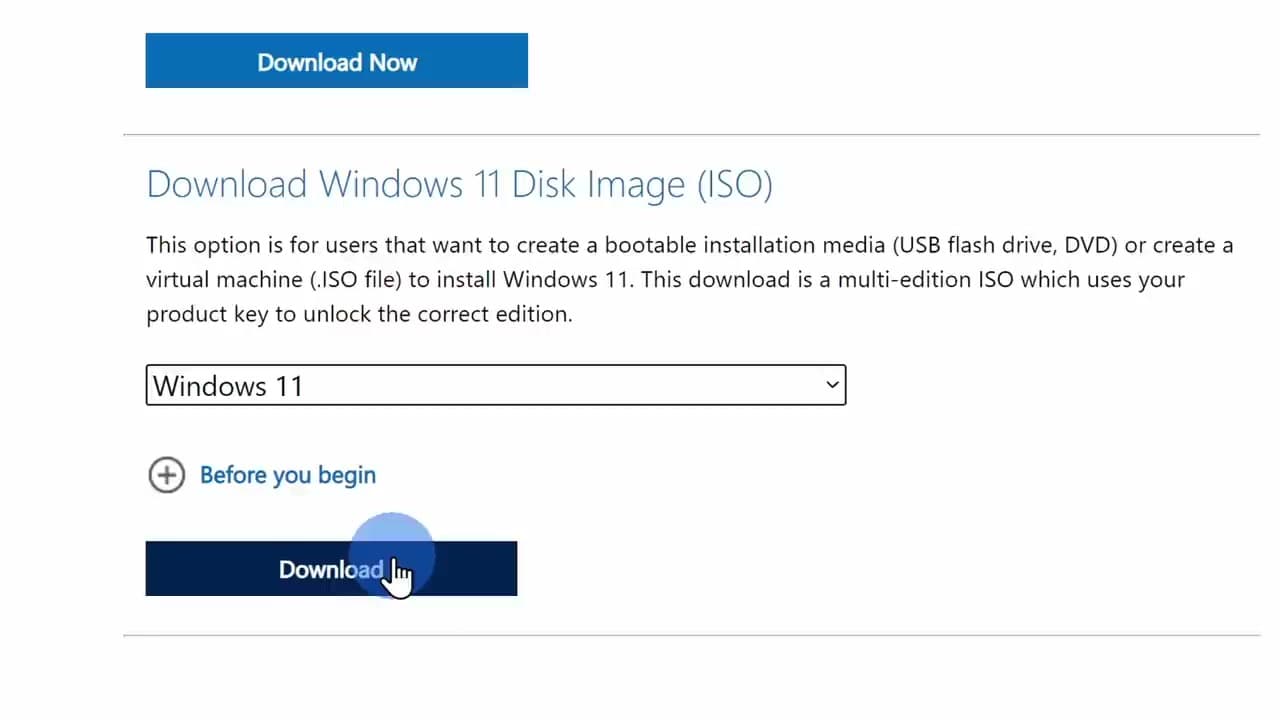
If the Download and install button is missing or you don't want to wait for the rollout, head to microsoft.com/software-download/windows11. The page lists three options - Windows 11 Installation Assistant, Create Installation Media, and the Disk Image (ISO).

The Installation Assistant is the friendliest of the three. Click Download Now under it, run the small installer that downloads, and follow the prompts. It does the same in-place upgrade as step 6 - apps and files stay - just kicked off by you instead of waiting for Microsoft's queue.

Tip

The Installation Assistant only works if your PC officially qualifies. If PC Health Check failed, skip to step 8 - the ISO route bypasses the requirement checks.

Products used in this step

8

Download the Windows 11 ISO for Unsupported PCs or a Clean Install

4:00
Step 8: Download the Windows 11 ISO for Unsupported PCs or a Clean Install

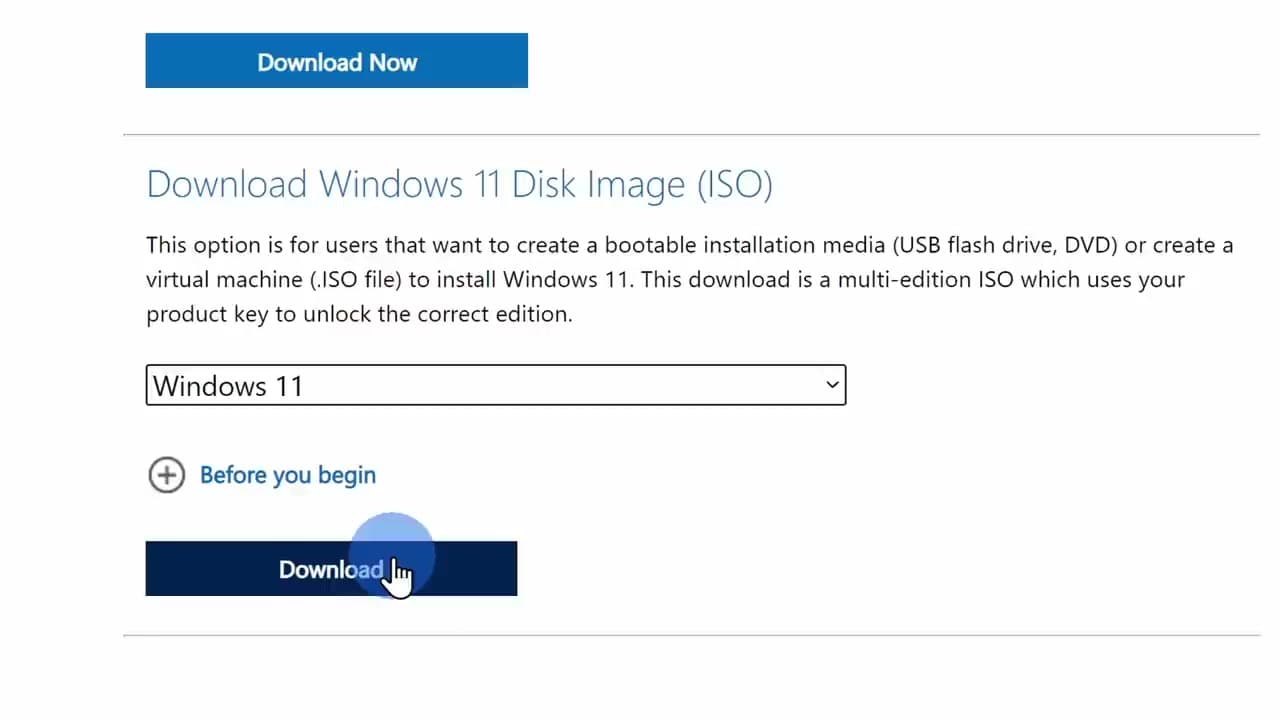
The third option on the same Microsoft download page is Download Windows 11 Disk Image (ISO). Pick Windows 11 from the dropdown, click Download, choose your language, and save the ISO file - it's about 5 GB.

Two reasons to use this one. First, an ISO bypasses the system-requirement check, so you can upgrade an officially unsupported PC (Microsoft warns you may not get future updates, but most users do). Second, you can write the ISO to a USB stick with Rufus or Microsoft's Media Creation Tool to do a clean install on the same PC or a different one - useful if your current Windows is sluggish and you want a fresh start.

Tip

For a clean install, grab a 16 GB or larger USB stick and the free Rufus tool. Microsoft's own Media Creation Tool (the middle option on the same page) builds the USB for you if you'd rather not use third-party software.

Products Used

Your Guide

Kevin Stratvert

As an Amazon Associate we earn from qualifying purchases. Links on this page may be affiliate links - clicking them and buying doesn't change your price, but helps support ShowMeStepByStep.

Tags

What's next

Related collections

Curated theme pages that include this tutorial.

Weekly Digest

Liked this tech tutorial?

Pick the categories you want to hear about. Weekly digest of new step-by-step tutorials. No spam, easy unsubscribe.

Send me tutorials about

We only email about new tutorials. Easy unsubscribe anytime.