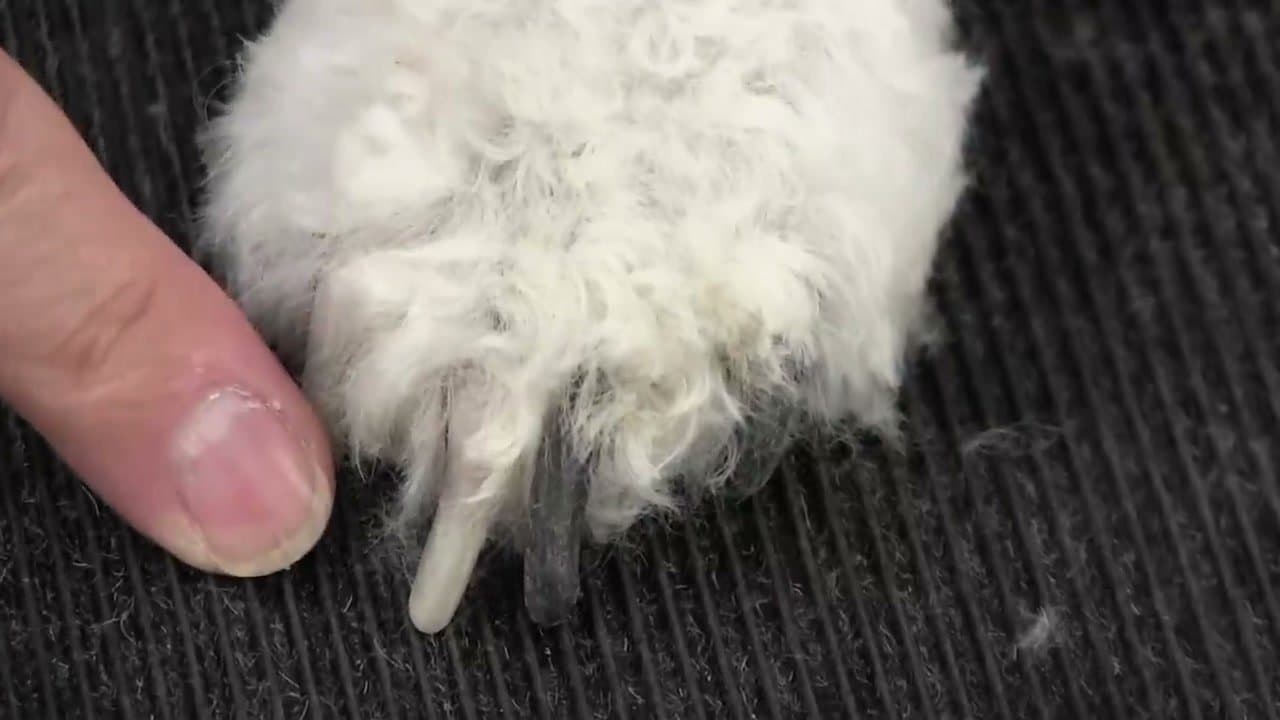
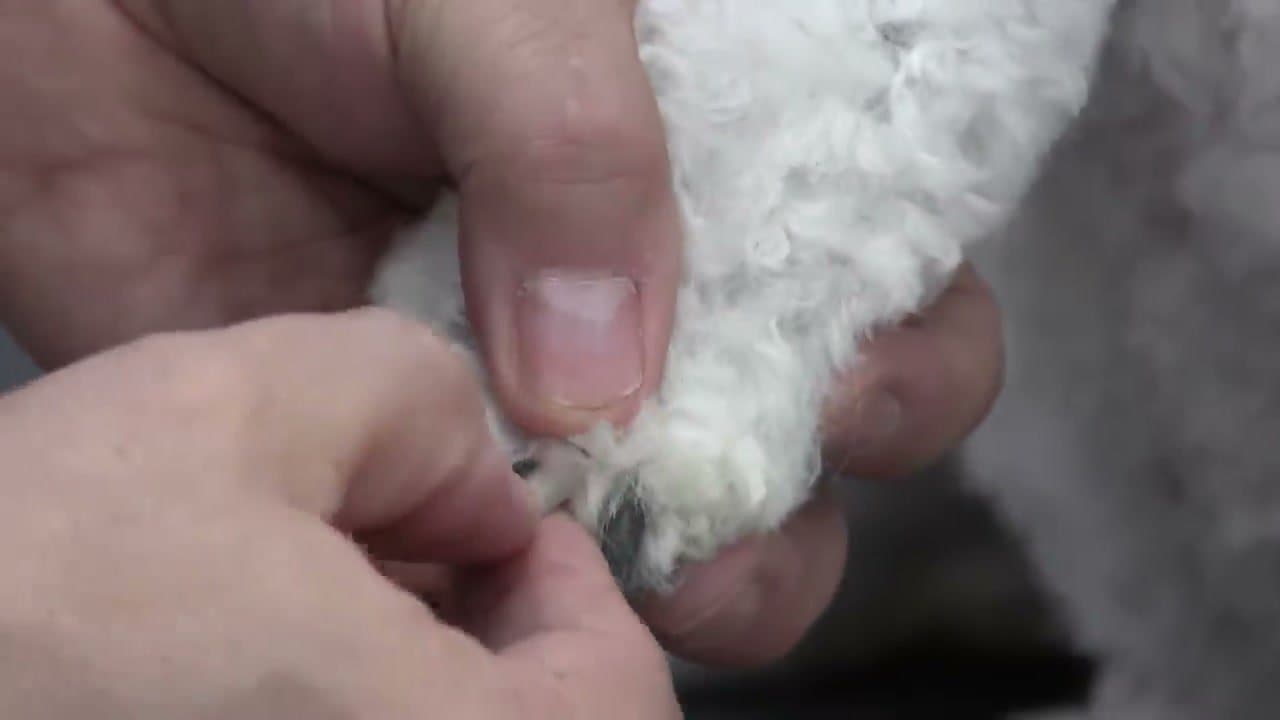
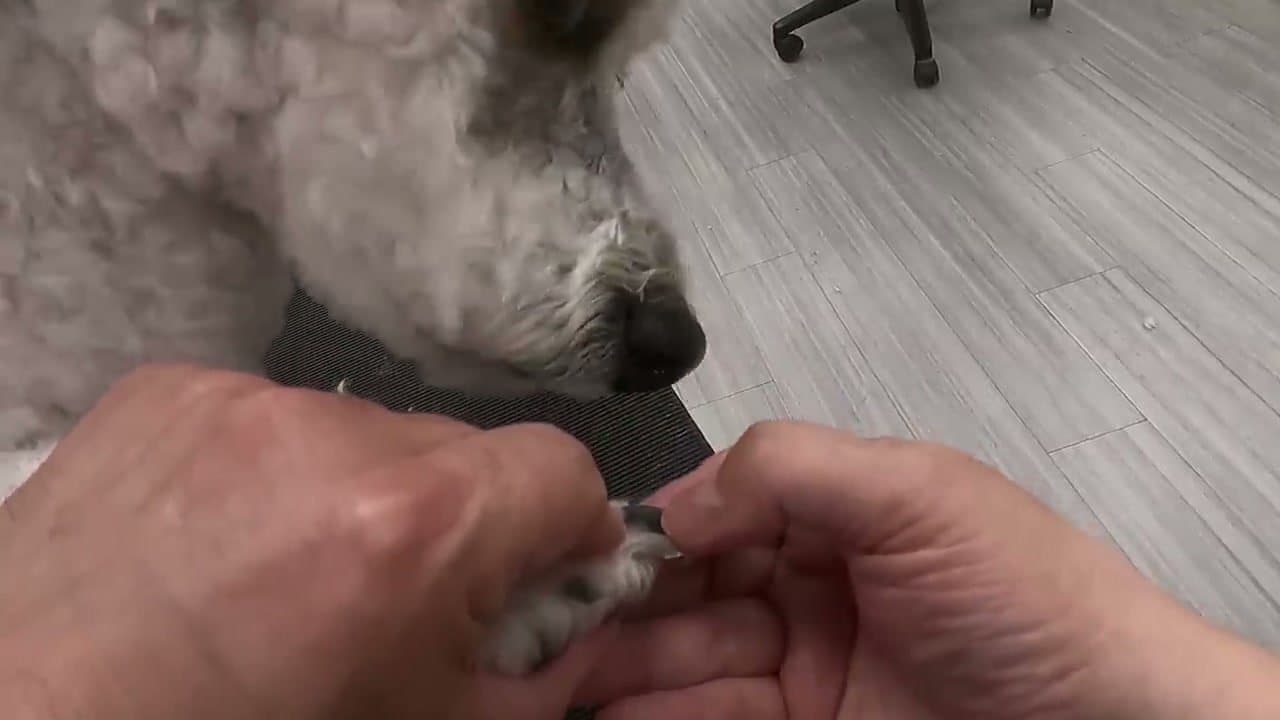
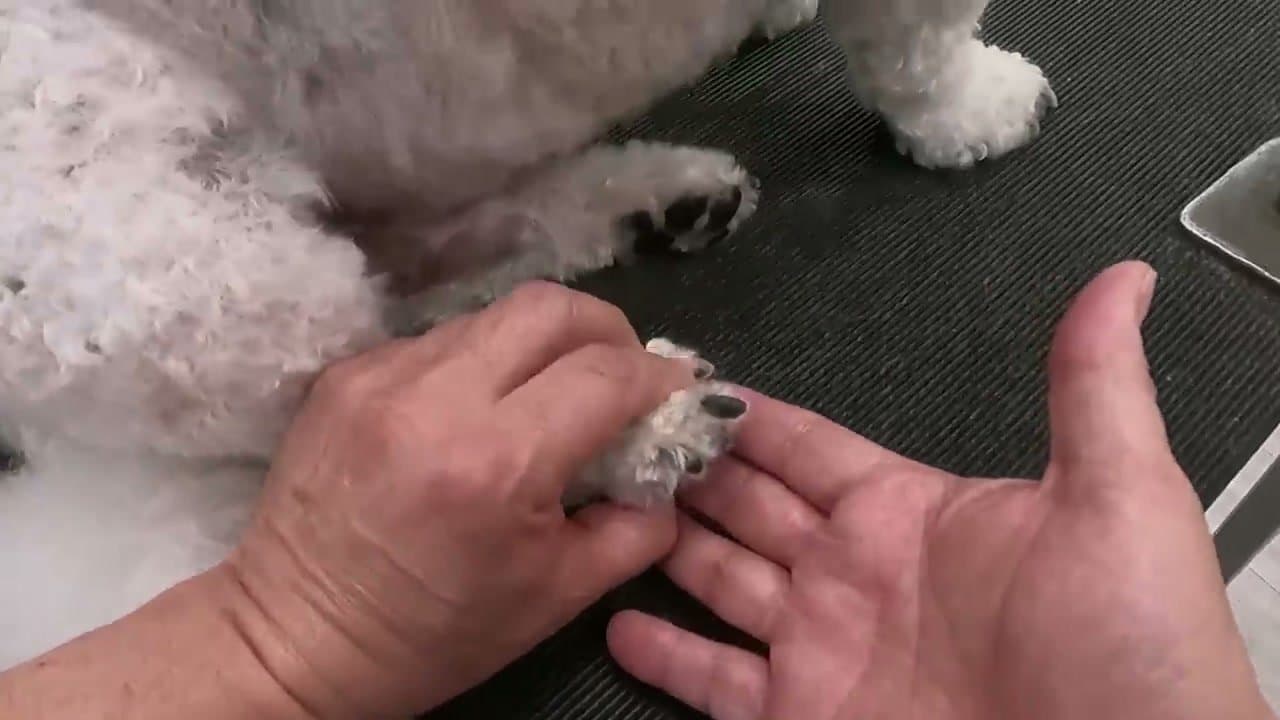
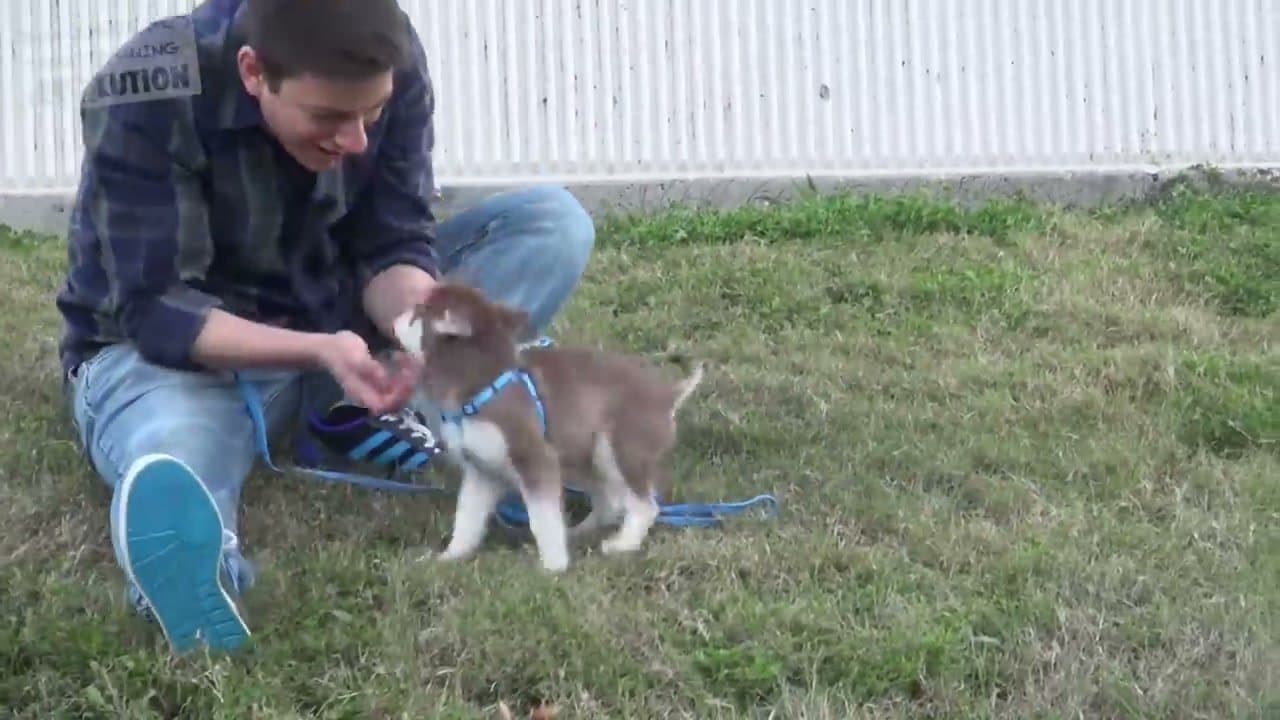
Most dog owners avoid trimming nails at home because they're scared of hitting the vein - especially on black or dark nails where you can't see anything. There's a pro-groomer trick that solves this: most dogs with dark nails have at least one clear nail per paw, and the vein in that clear nail tells you exactly where the vein sits on all the others.
This walkthrough from Bobby at Grooming By Rudy breaks the technique into seven clear steps. The clear-nail trick gives you a precise reference, back nails get treated differently than front nails, and a nail grinder finishes things off without the bleeding risk of a clipper.
How to find the quick on black dog nails
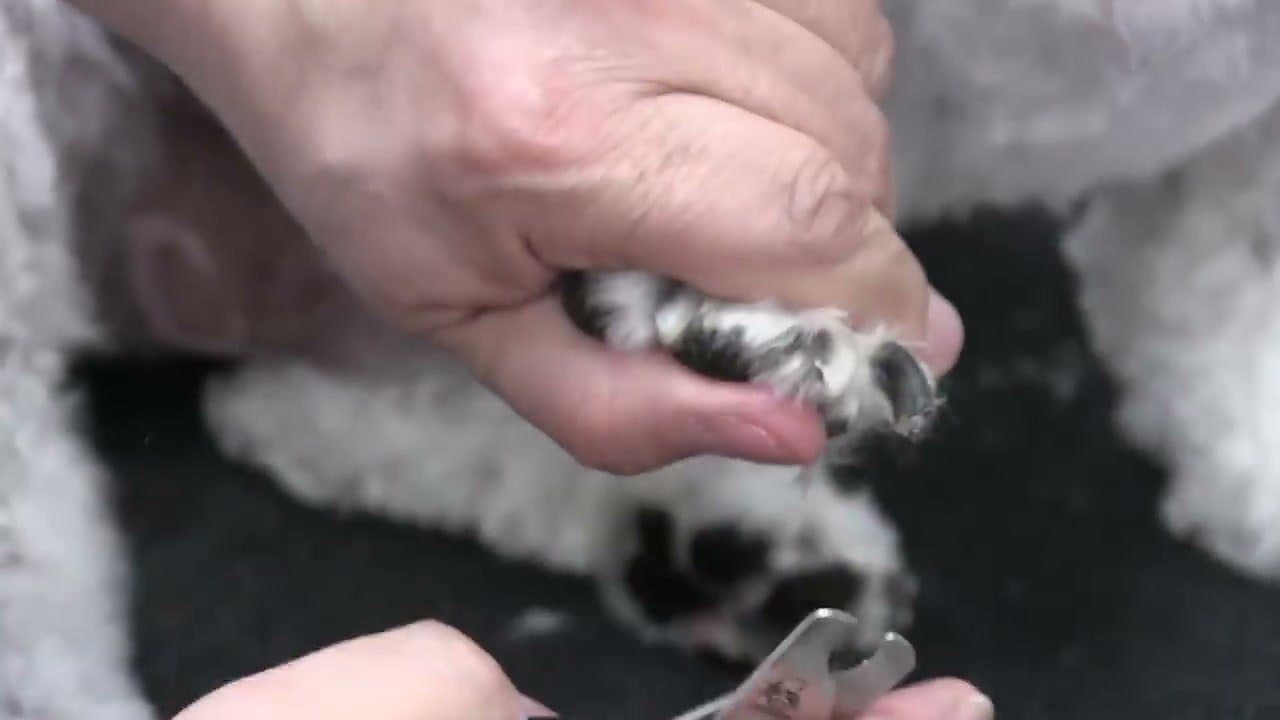
On a black nail you cannot see the quick, so you find it three other ways: borrow the position from a clear nail on the same paw, look for the small notch on the underside where the curve flattens, and watch the cut face as you tip the nail, stopping the moment a dark dot appears in the center. Any one of these works on its own. Together they take most of the guesswork out of it.
The clear-nail trick is the fastest. Most dogs with dark nails have at least one clear nail, often a dewclaw or an inside toe, and the pink quick in it sits in roughly the same place on every nail of that paw. Point at where it ends and carry that position across to the dark nails.
How short to cut, and how often
The nails should not touch the floor when your dog stands square. If you hear clicking on hard floors, they are too long. On a dog whose nails have been left to grow, the quick has grown with them, so you cannot get there in one session. Take the tips off every one to two weeks and the quick recedes a little each time.
For a dog on a normal trim schedule, every three to four weeks is typical. Dogs that walk on pavement wear the front nails down and need less; dogs on grass and carpet need more. Back nails wear faster than fronts, which is why step 4 tips them so lightly.
Frequently Asked Questions
How do you know where the quick is on a black dog nail?
Use a clear nail on the same paw as the reference, since the quick sits in the same position across that paw. Failing that, flip the nail over and find the notch on the underside where the curve flattens, then trim in small slices and stop as soon as a dark or chalky dot shows in the center of the cut surface.
What happens if you cut the quick?
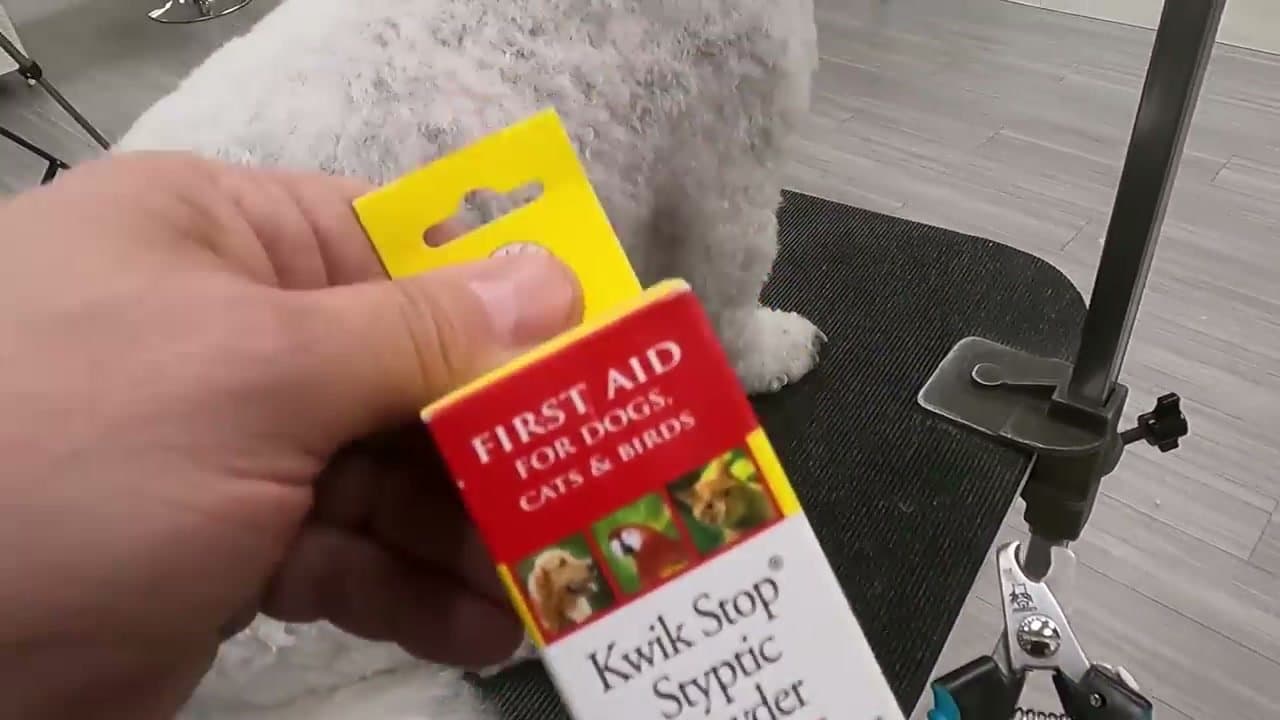
The nail bleeds, and it looks worse than it is. Press the nail into styptic powder and hold it for a few seconds; the bleeding usually stops within a minute. Cornstarch or flour pressed on with a fingertip works if you have no powder. If it is still bleeding after twenty minutes of pressure, call the vet.
How short should a dog's nails be?
Short enough that they clear the floor when the dog stands. A nail that touches the ground pushes the toe up and changes how the dog walks. Aim to stop two to three millimeters before the quick rather than right at it.
How often should you trim a dog's nails?
Every three to four weeks for most dogs, or every one to two weeks if you are trying to shorten overgrown nails and let the quick recede. Dogs that walk on concrete every day may only need the back nails tipped now and then.
Is a nail grinder better than clippers for black nails?
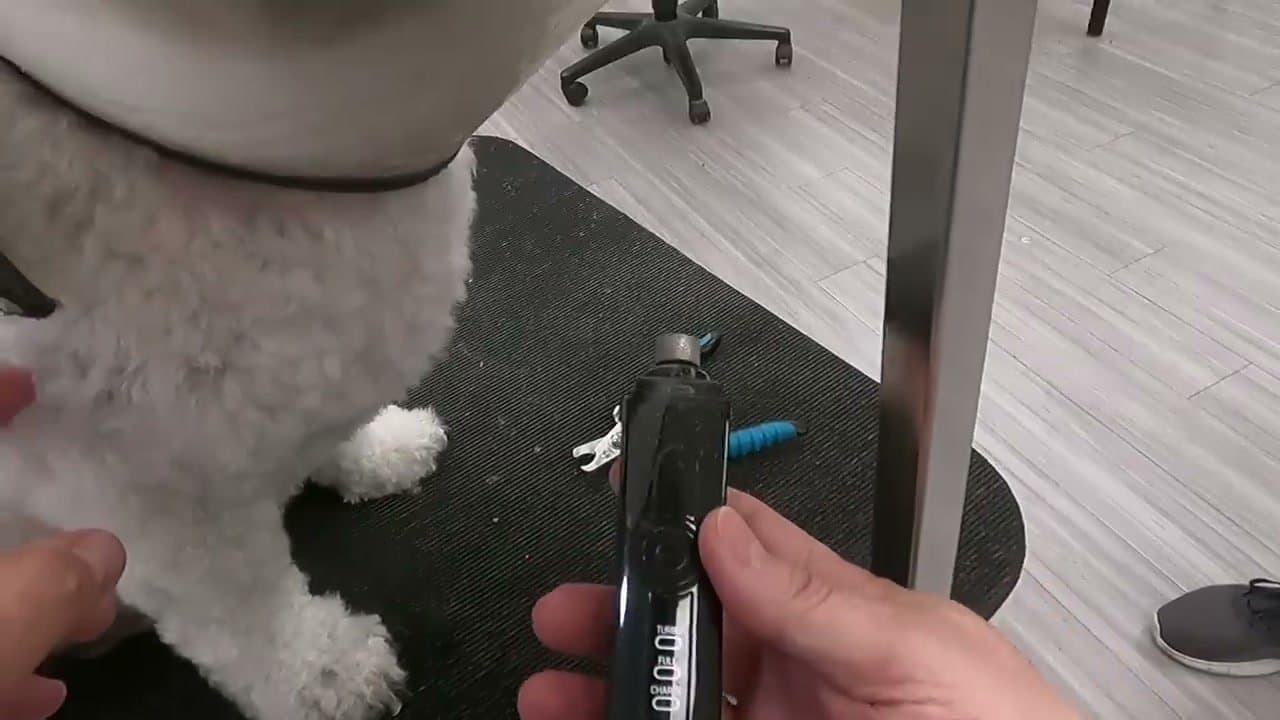
For the final length, yes. A grinder takes the nail down a fraction of a millimeter at a time, so you can watch for the dark center without the risk of one cut going too deep. Clippers are faster for taking the bulk off first, which is why the tutorial uses both.
What if my dog will not let me touch their paws?
Stop trimming and go back a step. Pair the clippers with treats for a few days before they cut anything, do one nail per session, and quit while the dog is still calm. There is a full walkthrough in how to get a dog used to nail trimming.