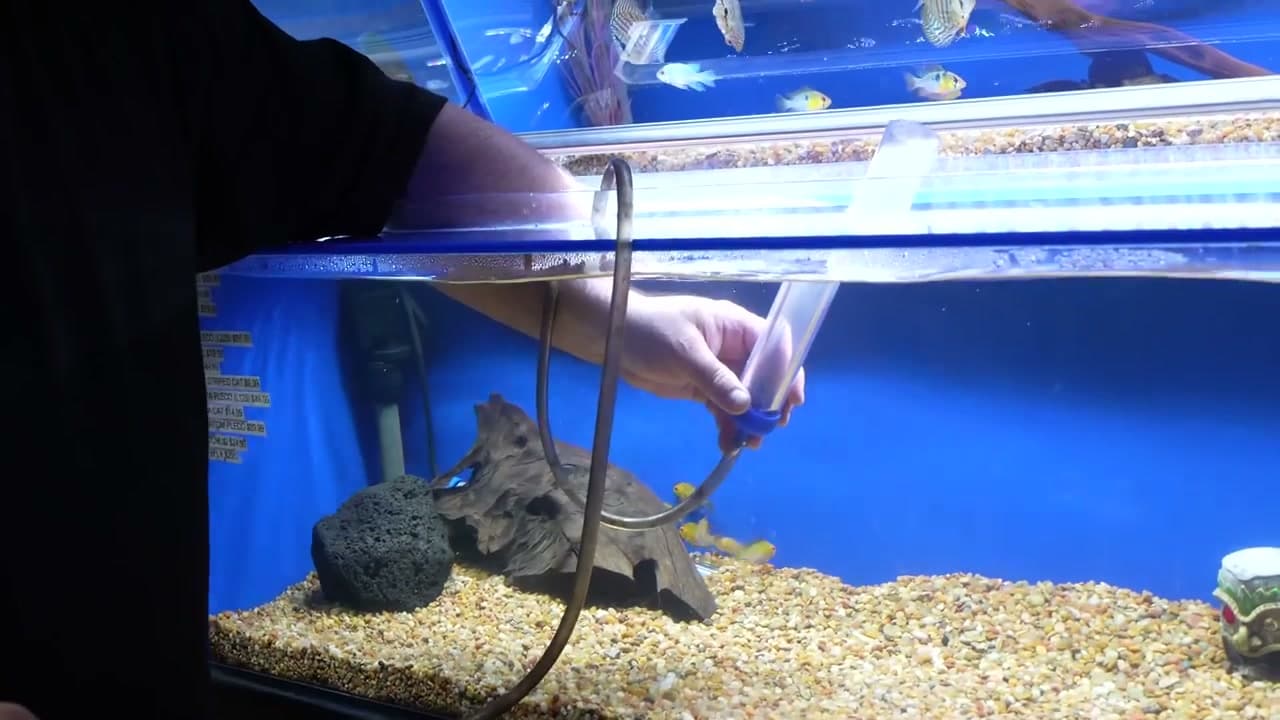
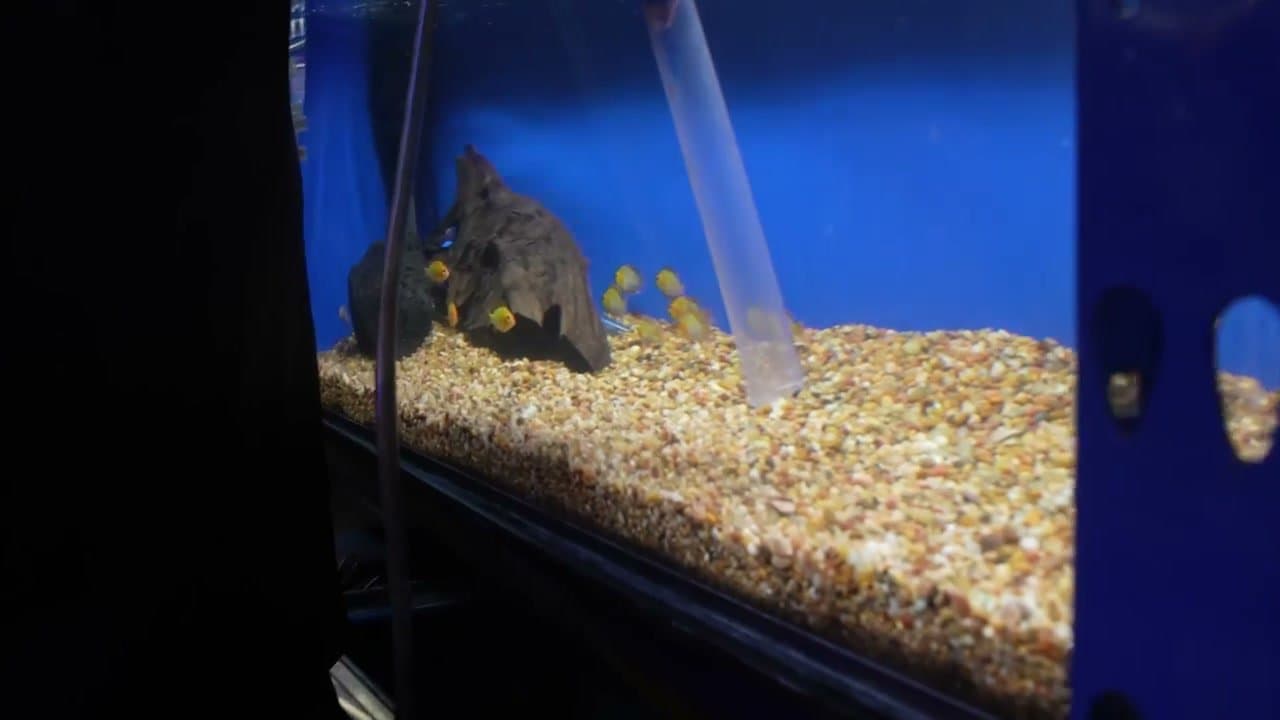
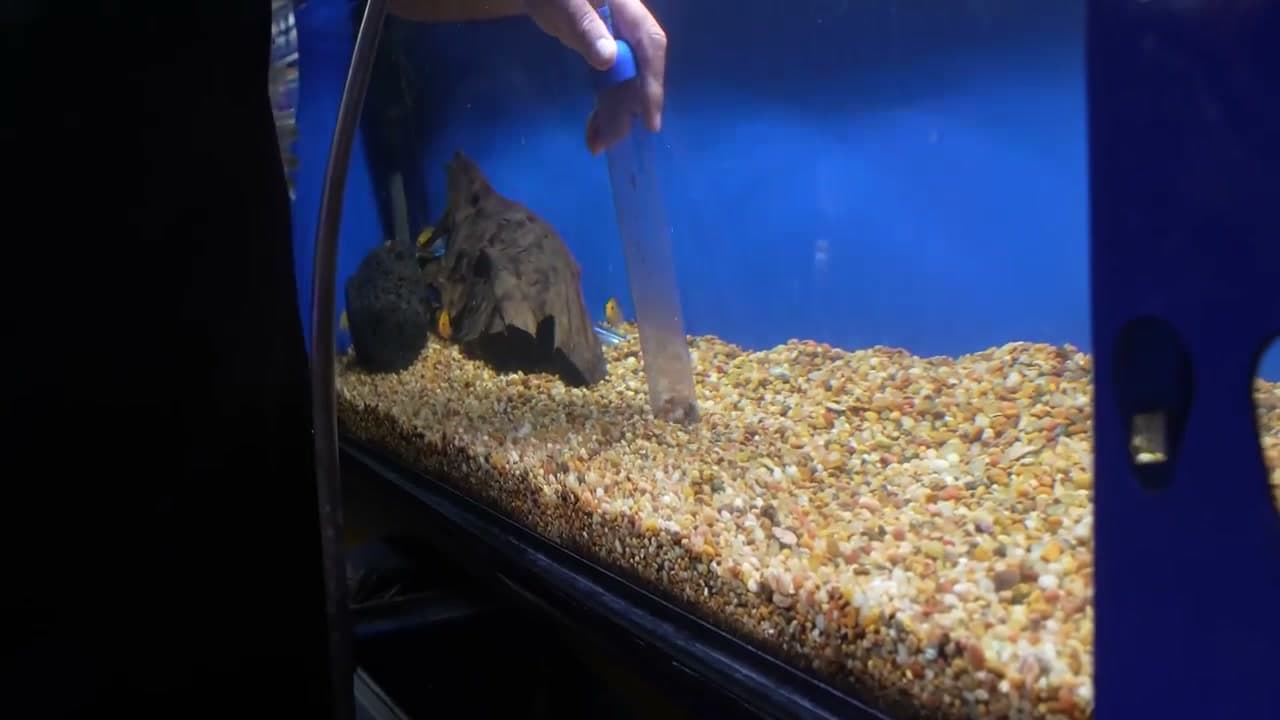
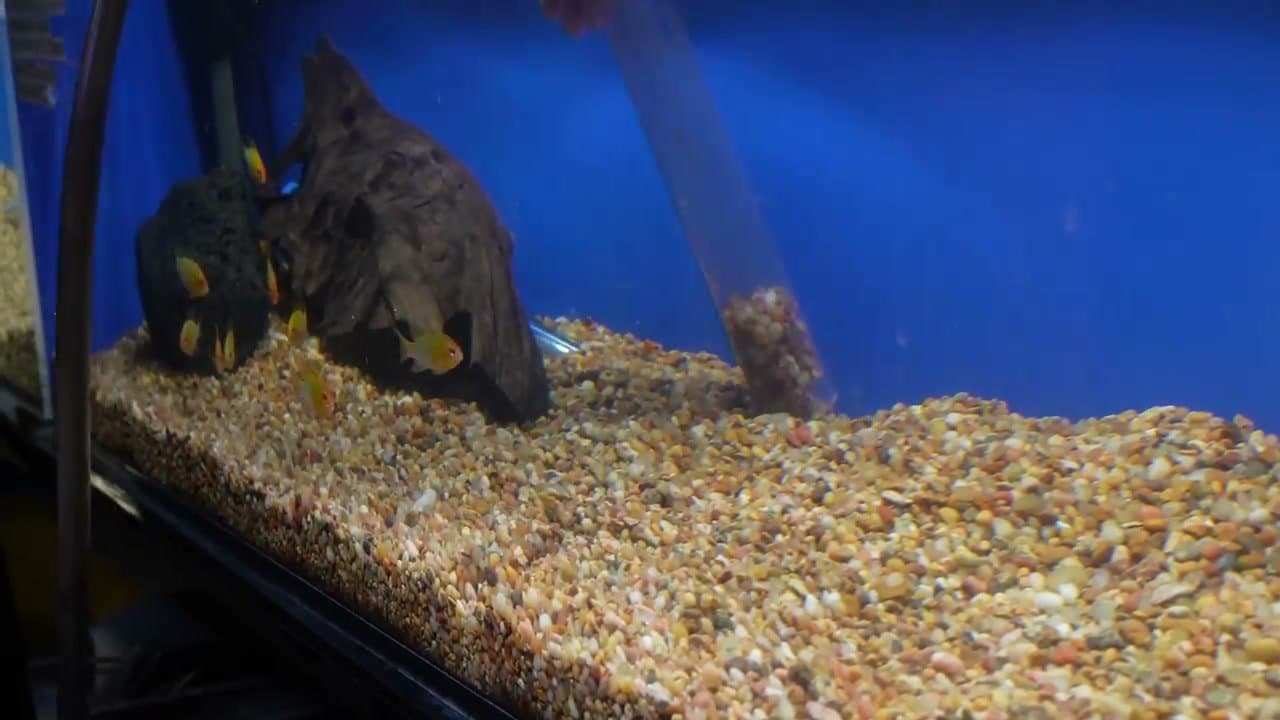
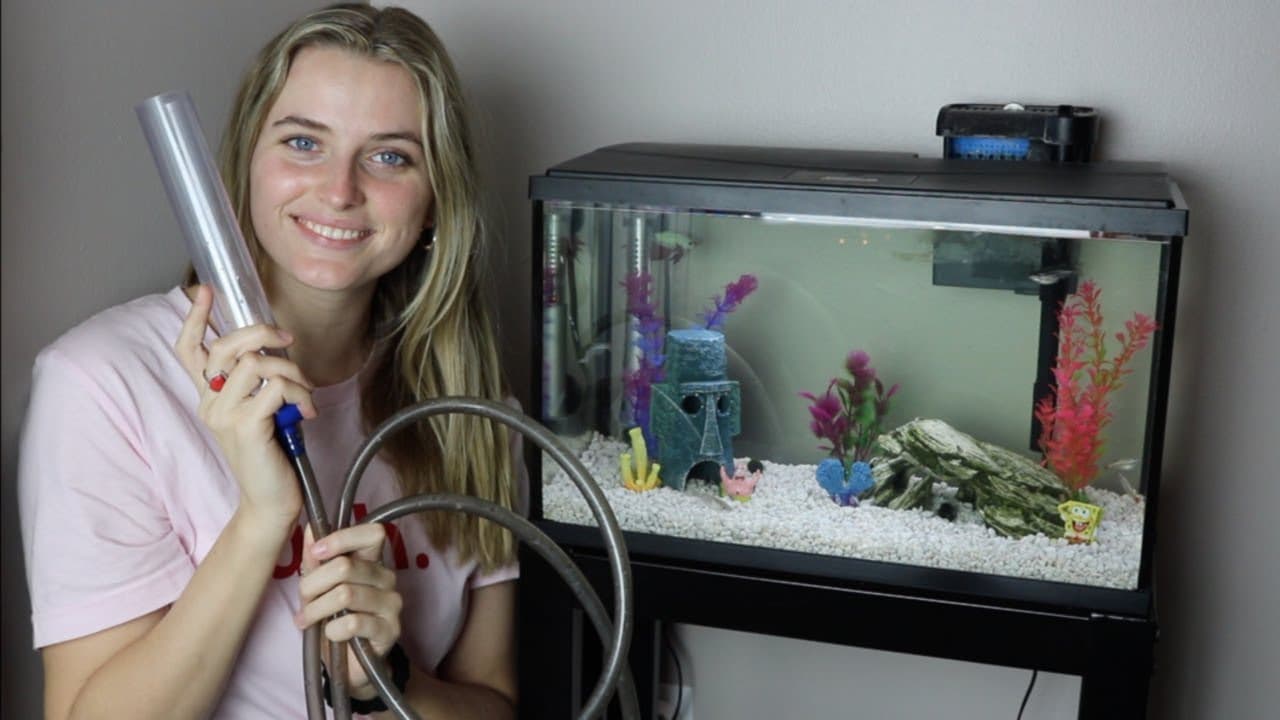
Cleaning aquarium gravel sounds like it should be a major operation - net the fish, dump the tank, scrub everything. It isn't. A siphon vacuum lets you pull all the waste off the bottom of the tank while the fish stay swimming, and the water you remove doubles as a partial water change. Once you've done it once, the whole job takes 10-15 minutes for a typical home tank.
Why it matters for fish health. Uneaten food, fish waste, and decaying plant matter settle into the gravel and slowly break down into ammonia and nitrite. Both are toxic to fish even at low levels. The biological filter handles a steady baseline, but it can't keep up with months of buildup. Cloudy water, algae blooms, sick fish, and that classic "old tank" smell are all symptoms of gravel that needed cleaning weeks ago. A 10-minute gravel vacuum every 2-4 weeks prevents all of it.
How often to clean by tank size. Small tanks (under 20 gallons) concentrate waste faster - vacuum the gravel weekly to every 10 days. Medium tanks (20-55 gallons) can stretch to every 2-3 weeks. Large tanks (75+ gallons) with moderate stocking can go 3-4 weeks. Heavy bioload species like goldfish, cichlids, or plecos shorten the interval no matter what size tank. Lightly stocked planted tanks can stretch longer because plants pull nitrogen out of the water as fertilizer. If you're not sure, test your water - nitrate above 40 ppm means clean now.
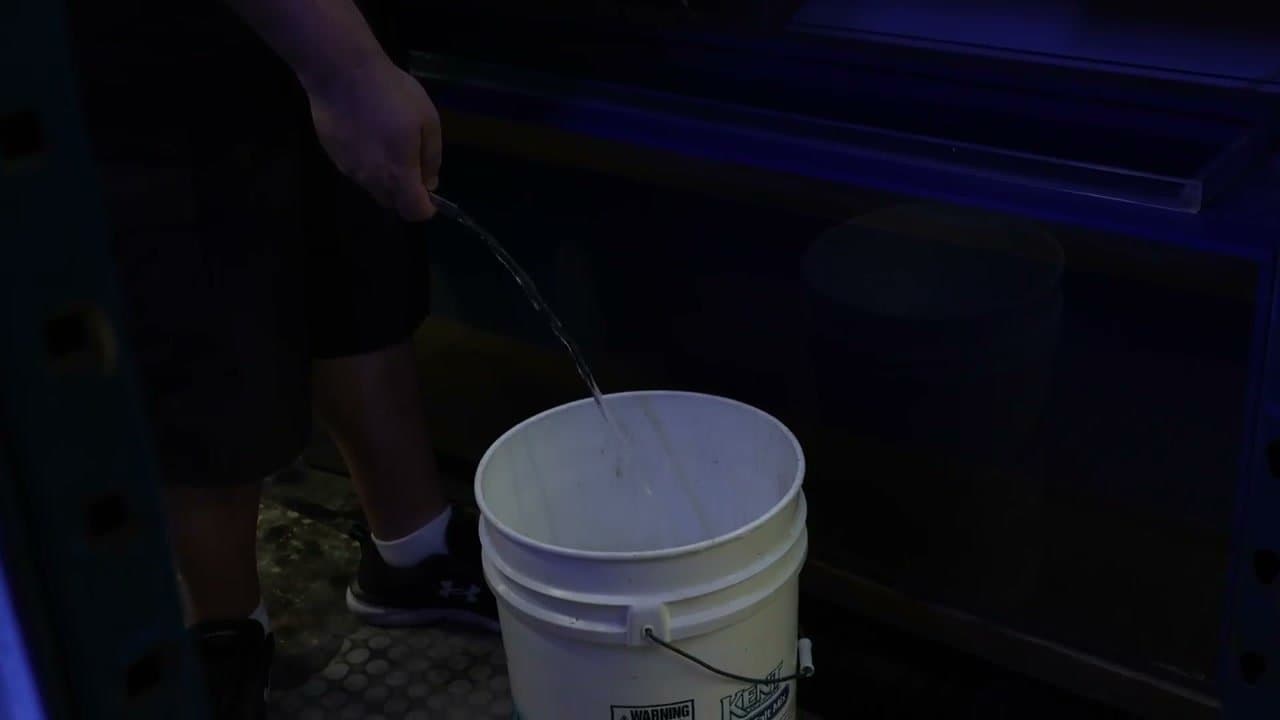
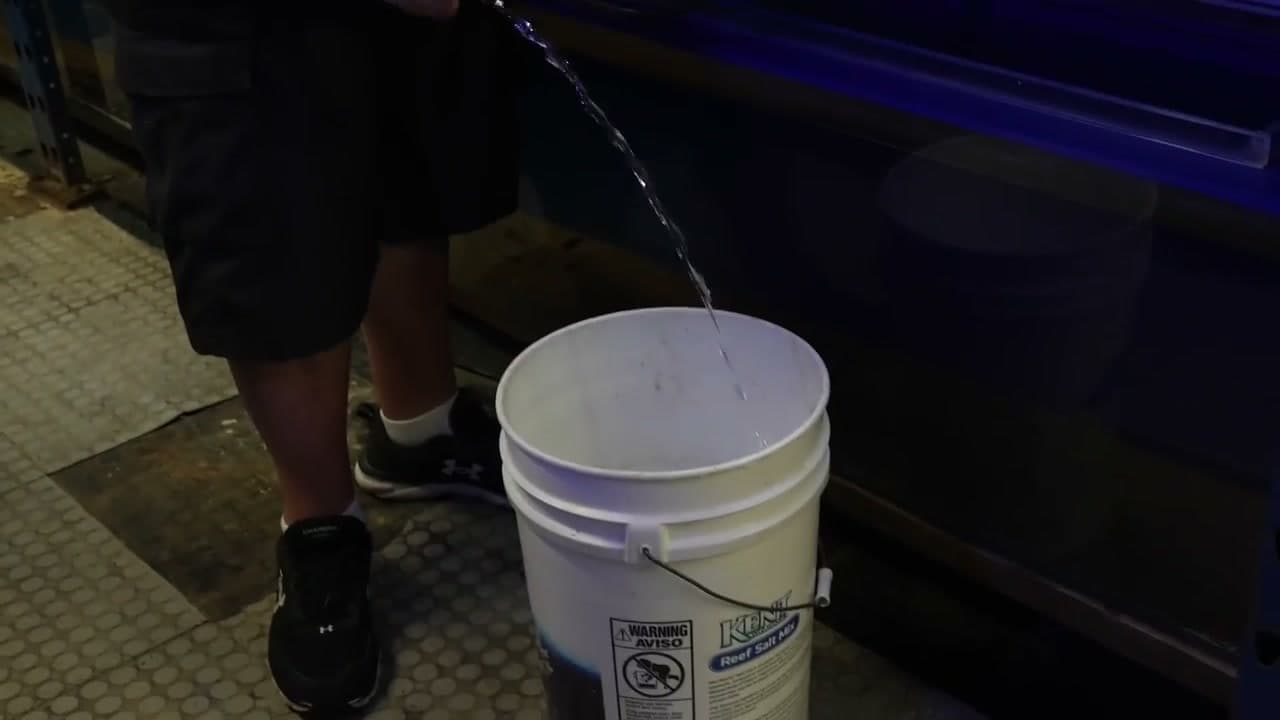
This walkthrough from Chris at The Fish Files breaks the technique into seven simple steps. Once you have the rhythm, the whole job is faster than wiping down a kitchen. If you also need to clean the tank glass, filter media, and decor, see our full how to clean a fish tank tutorial - gravel cleaning is one piece of the larger maintenance routine.
How to Clean Aquarium Gravel (Same Method, Different Words)
Aquarium gravel cleaning and fish tank gravel cleaning are the same job - the words just depend on which corner of the hobby you came up in. Freshwater hobbyists tend to say fish tank; reef and planted-tank folks tend to say aquarium. The siphon-vacuum technique below works identically for both. If you landed here searching for how to clean aquarium gravel, you are in the right place - the seven steps in this tutorial are exactly the routine you want.
One small distinction is worth flagging. Planted aquariums often use nutrient-rich substrate (ADA Aqua Soil, Eco-Complete, Fluval Stratum) instead of plain gravel, and those substrates should never be vacuumed deeply. Hover the gravel vacuum an inch above the surface so it pulls debris off the top without disturbing the nutrient layer or pulling fine substrate up the tube. Pure quartz or river gravel in a non-planted tank has no such restriction - push the tube right down into it.
Best Way to Clean Fish Tank Gravel
The best way to clean fish tank gravel is with a self-priming siphon gravel vacuum during a routine 20-30% water change. That single tool does both jobs at once - it pulls waste out of the gravel and removes the dirty water you would have removed anyway. Anything else (bucket-and-scoop, lift-everything-out, replace-the-gravel) is more work, more stress on the fish, and worse for the biological filter.
Three habits separate a clean job from a sloppy one. Vacuum in straight rows so you do not miss patches. Lift the tube straight up when you move to the next spot - dragging it sideways disturbs gravel and clouds the water. Stop at 20-30% water removed; pulling more disrupts temperature and the bacterial colony in the gravel. Refill with conditioned, temperature-matched water, never tap water straight from the faucet.
How Often to Clean Fish Tank Gravel
The simple rule: every 2-4 weeks for most home tanks. Small tanks (under 20 gallons) need it weekly to every 10 days because waste concentrates fast in a small water volume. Mid-size tanks (20-55 gallons) usually stretch to every 2-3 weeks. Big tanks (75 gallons and up) with moderate stocking can go 3-4 weeks. Heavy-bioload species - goldfish, plecos, oscars, cichlids - shorten the interval no matter what the tank size says.
The honest answer is: test your water. Drop a nitrate test strip in the tank. Below 20 ppm, you can wait. Between 20-40 ppm, vacuum within the week. Above 40 ppm, vacuum today. Nitrate is the slow-accumulating end product of the nitrogen cycle, and it climbs predictably between cleanings - so it is the cleanest signal of when the gravel actually needs attention rather than going by a calendar.
Best Gravel Vacuum for a Fish Tank
The good news is that gravel vacuums are mostly the same. The Python Pro-Clean, Aqueon Siphon Vacuum, and TopFin Gravel Vacuum all do the same job for $10-25. What matters is sizing the tube to the tank: a 1.5-2 inch tube for tanks under 30 gallons, and 2.5-3 inches for anything bigger. Too narrow and you have to vacuum forever; too wide and you cannot reach behind decor.
Pay the extra few dollars for a self-priming hand-pump model. The basic shake-to-start vacuums work, but the awkward up-and-down motion to get the siphon flowing splashes water out of the tank and gets old fast. The hand-pump versions prime in one squeeze. For tanks 55 gallons and up, look at the Python No Spill Clean and Fill - it connects to a faucet adapter so you skip the bucket entirely, draining straight to the sink and refilling the same way. It is overkill for a 10-gallon tank but a real time-saver on a 75.
Avoid battery-powered gravel vacuums for now. They sound convenient but the suction is weaker than a basic siphon and the internal filter clogs in minutes. The simple gravity-fed siphon design has been the standard for 40 years for a reason - it just works.
Troubleshooting: Common Gravel Cleaning Problems
The siphon will not start. The tube is probably not deep enough, or there is air trapped at the top. For a basic siphon, fill the entire tube with tank water by submerging it, cover the bucket-end with your thumb, lower that end below the tank, then release. For a self-priming model, squeeze the bulb 4-5 times in a row rather than once - the first pump often only moves air.
The fish look stressed during the clean. You are probably vacuuming too aggressively or removing too much water at once. Slow the pace, take breaks, and cap the water removal at 25%. Curious fish (especially bettas and tetras) sometimes swim right up to the tube; point it the other way for a minute and they lose interest.
The water clouds up after cleaning. Stirred debris that did not get sucked up is the usual culprit. The filter clears it within 6-12 hours. If the cloudiness lasts days and turns white, the cleaning was too aggressive and disrupted the bacterial colony - run the filter, do not feed for a day, and let the nitrogen cycle re-stabilize.
Gravel keeps getting pulled up the tube. The tube diameter is too narrow or the gravel is too small. A tube that is a hair too small for the gravel grade will lift pebbles straight up; pinching the hose slightly above the bucket end reduces flow enough to let gravel fall back. Long-term fix: get a wider tube.
The tank looks worse a week after cleaning. If algae bloomed or the fish look off, you probably triggered a mini-cycle by vacuuming too deep into the gravel and stripping bacteria. Do not vacuum the deep gravel again for 3-4 weeks. Stick to the top inch on the next round, let the colony rebuild, and re-test the water in 2 weeks.
How to Siphon Fish Tank Gravel Without Removing the Fish
This is the question most people land on after their first failed cleaning. The short answer: you do not need to remove the fish, and you should not. The siphon vacuum is designed to clean a stocked tank. The suction at the wide end of the tube is gentle - fish are too big to get pulled up, and the water column inside the tank stays calm enough that fish swim normally around it.
Three guardrails keep the fish safe. Use the wide plastic tube end, never the narrow hose end, in the tank. Cap the water removed at 25-30% so the temperature and chemistry do not swing. And refill with conditioned, temperature-matched water - cold tap water dumped into a warm tank stresses the fish more than the cleaning itself. With those three rules, you can vacuum gravel every two weeks for the life of the tank and never net a fish.
Fish Tank Gravel Cleaning FAQ
Frequently asked questions
How often should I clean fish tank gravel?
Every 2-4 weeks for most home tanks. Small tanks (under 20 gallons) need it weekly because waste concentrates faster. Tanks with goldfish, cichlids, or any heavy-waste species need it every 2 weeks regardless of size. Lightly stocked planted tanks can stretch to monthly. If the water looks cloudy or smells off, clean it now - those are late symptoms.
What are the signs that my fish tank water needs changing?
Cloudy water (especially a green or yellow tint), visible waste settling on the gravel, algae growth on the glass, fish gasping at the surface, sluggish behavior, and any ammonia or nitrite reading on a test kit. A faint earthy smell is normal; a strong sour or sulfur smell means the gravel is overdue. Trust the test strips before you trust your nose - by the time it smells bad, the fish have been stressed for a while.
Do I need to remove the fish before cleaning the gravel?
No. Leave them in. The siphon vacuum's suction is gentle by the time it reaches the wide opening of the tube - fish are too big to get pulled up, and the water column inside the tank stays calm. Netting fish, moving them to a holding container, and netting them back stresses them far more than a 10-minute vacuum ever will. If a curious fish swims close to the tube, just point it somewhere else for a moment.
What kind of siphon vacuum should I buy?
Any "aquarium gravel vacuum" or "gravel cleaner" sized for your tank. The wide plastic tube is what matters - it should be 1.5-2 inches across for small tanks and 2.5-3 inches for larger ones. Self-priming models with a hand-pump trigger are worth the few extra dollars because you skip the awkward shake-to-start step. Brand barely matters; the design is so simple that the $10 model works as well as the $30 one.
Can I clean the gravel too often?
Yes, technically. The gravel houses beneficial bacteria that convert ammonia to nitrate. Vacuuming aggressively every few days can strip enough bacteria to disrupt the nitrogen cycle and cause an ammonia spike. The 2-4 week rhythm is the sweet spot - frequent enough to keep waste down, infrequent enough to leave the bacterial colony intact. Don't ever scrub or rinse the gravel under tap water; that kills the bacteria outright.
Is tap water safe to refill the tank with?
Only after you treat it with a water conditioner (also called a dechlorinator). Tap water contains chlorine or chloramine that's harmless to humans but toxic to fish and to the beneficial bacteria in the gravel. Pour the dose recommended on the bottle directly into the refill water before adding it to the tank. Match the refill temperature roughly to the tank water - within a few degrees is fine. Cold tap water dumped into a warm tank stresses the fish.
What causes cloudy water after a gravel cleaning?
Two common causes: stirred-up debris that the filter will clear within a few hours, or a bacterial bloom from too-aggressive cleaning. If the water clears in 6-12 hours, it was just debris. If it stays cloudy or white for days, you disrupted the bacterial colony - run the filter, don't feed for a day or two, and let the cycle re-stabilize. Cloudy water that lasts a week usually means the tank needs to re-establish the cycle, which is normal after a deep clean.
Is gravel or sand easier to keep clean?
Gravel is easier for beginners. The siphon vacuum technique works perfectly on gravel - waste pulls up, gravel falls back. Sand requires a different approach because the vacuum will pull the sand right up into the bucket. With sand, hold the tube an inch above the surface so it pulls just the debris layer, or use a finger to swirl the top of the sand and let the lifted waste get sucked up. If you're setting up a new tank, gravel is the lower-effort substrate.
Related Fish-Tank Maintenance Tutorials
Gravel cleaning is one piece of fish tank maintenance. The full routine is small enough to learn in an afternoon and stays the same for the life of the tank. Pair this guide with the rest:
If you're on a cleaning kick, the same patient-and-systematic mindset works for other household maintenance jobs: descaling a Keurig, cleaning an oven, and other recurring tasks live in the adulting category.
Just starting out? Get the tank right from day one with how to set up a fish tank, then keep the gravel clean with the steps above.