How to Curl Hair with a Flat Iron (No Twisting)

By ShowMeStepByStepPublished Updated

Based on a video by Kayley Melissa.

Curling your hair with a flat iron does not have to involve that awkward twist-and-pull motion that leaves you with one weird kink halfway down the strand. The method in this tutorial uses a simpler four-beat rhythm - wrap, pull, clip, slide - and once you have it down, it works on long or short hair and gives you anything from soft beachy waves to tighter polished curls depending on how much you twist at the end.

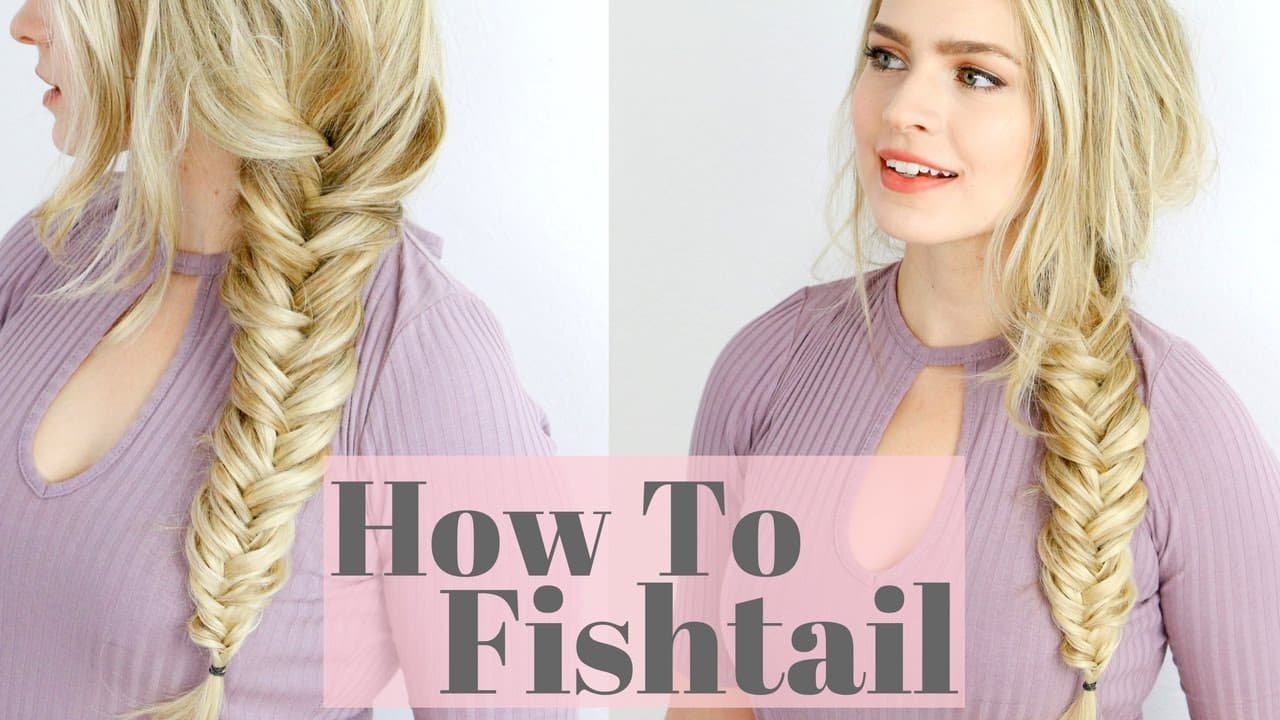
The video comes from Kayley Melissa, a long-running hairstyling channel known for clear, slow demos. She walks through the technique with the iron off first so you can see exactly where each finger goes, then runs through the whole head with the iron on. If you have already worked through our French braid walkthrough or our fishtail braid tutorial, this fits right in as the next styling skill to add. For a no-heat alternative that pairs well with curls, see our low bun guide.

You will need a flat iron, heat protectant spray, sectioning clips, a brush, and a flexible-hold hairspray to set the finished look. The whole process takes about 15 to 20 minutes once you get the rhythm.

Step-by-Step Guide

1

Brush Hair Smooth and Mist Heat Protectant

0:32
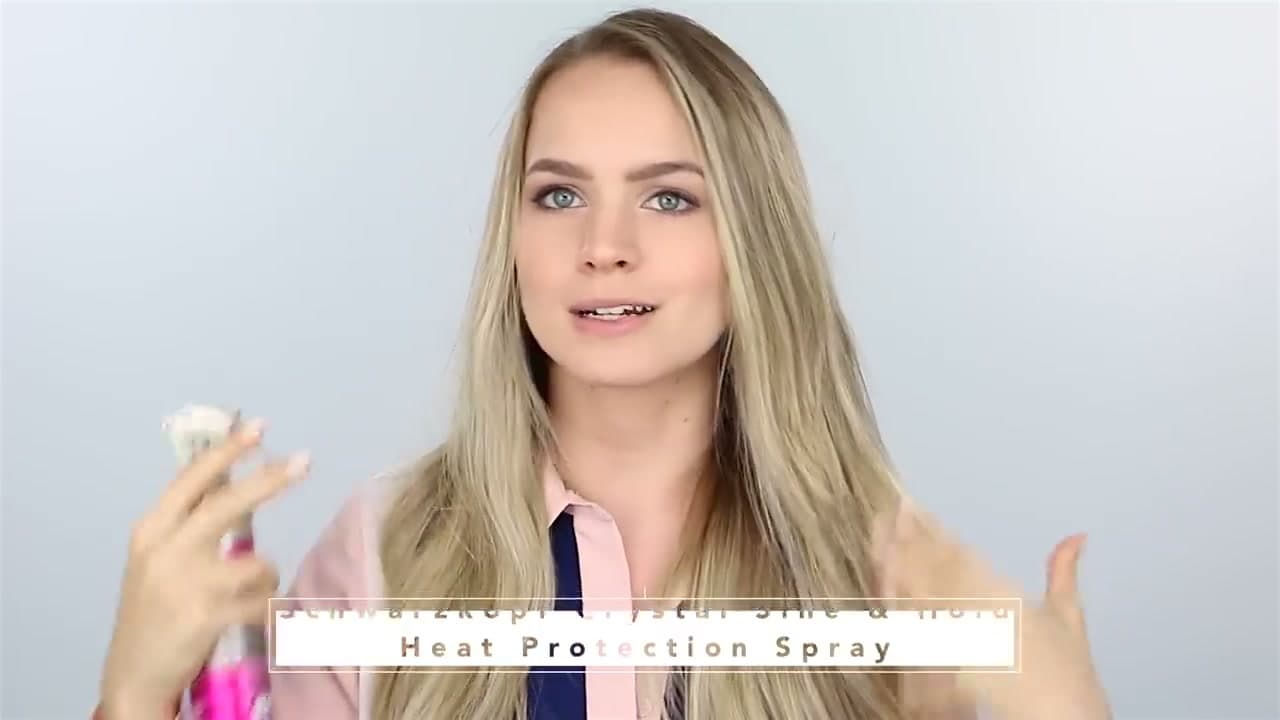
Step 1: Brush Hair Smooth and Mist Heat Protectant

Brush your hair out so there are no tangles. Tangles get baked into the curl shape and look messy. Then mist a heat protectant spray from roots to ends. Kayley uses Schwarzkopf Crystal Shine and Hold because it adds a little hold and a little shine on top of the heat protection - never going to say no to that.

Watch the prep moment at 0:32.

Tip

Spray about 8 to 10 inches away from your head so the product mists evenly instead of pooling in one spot. A heavier coat at the ends where heat damage tends to show up first is a good habit.
2

Heat the Flat Iron to the Right Temp

0:21
Step 2: Heat the Flat Iron to the Right Temp

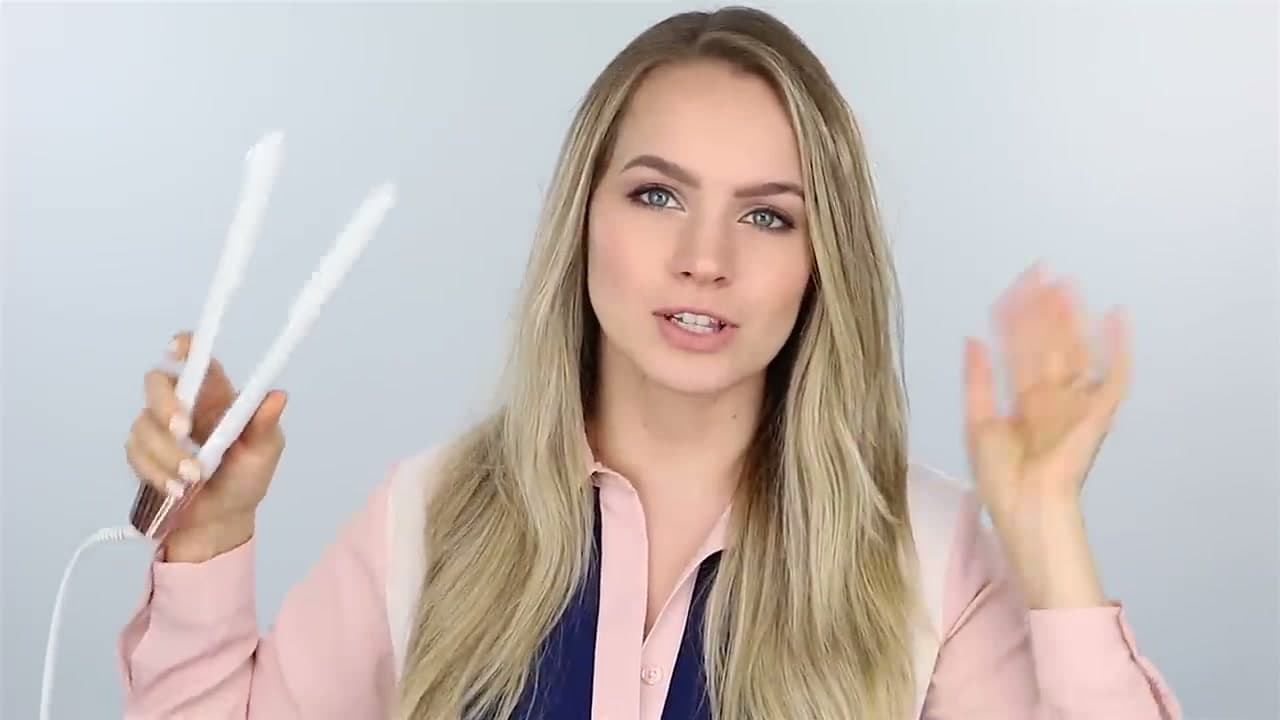
Plug in your flat iron and let it heat all the way up before you start. The temperature you want depends on your hair: 300 to 350F for fine or color-treated hair, 350 to 400F for medium hair, and 400 to 425F for thick or coarse hair. Going hotter than you need does not give you better curls - it just damages the cuticle.

Kayley uses the T3 SinglePass Luxe because its plates are beveled and flexible, so they glide instead of dragging. Any flat iron with ceramic or tourmaline plates will work for this method. See the iron at 0:21.

Products used in this step

3

Section Hair Into Layers

2:04
Step 3: Section Hair Into Layers

Clip the top half of your hair up so you can curl the bottom layer first. Working in layers gives you cleaner curls because the iron is not fighting with hair above it. Take a one-to-two-inch section of hair from the bottom layer to start with.

Smaller sections give tighter, more defined curls. Bigger sections give looser, beachier waves. Pick a section width and stay consistent through the whole head so the finished look reads as a style instead of an accident. See the sectioning at 2:04.

Tip

Two sectioning clips at the crown is usually enough for long hair. For thick hair, split the bottom layer in half too so you only have a manageable amount of hair to work with at any time.

Products used in this step

4

Wrap, Pull, Clip, Slide

1:04
Step 4: Wrap, Pull, Clip, Slide

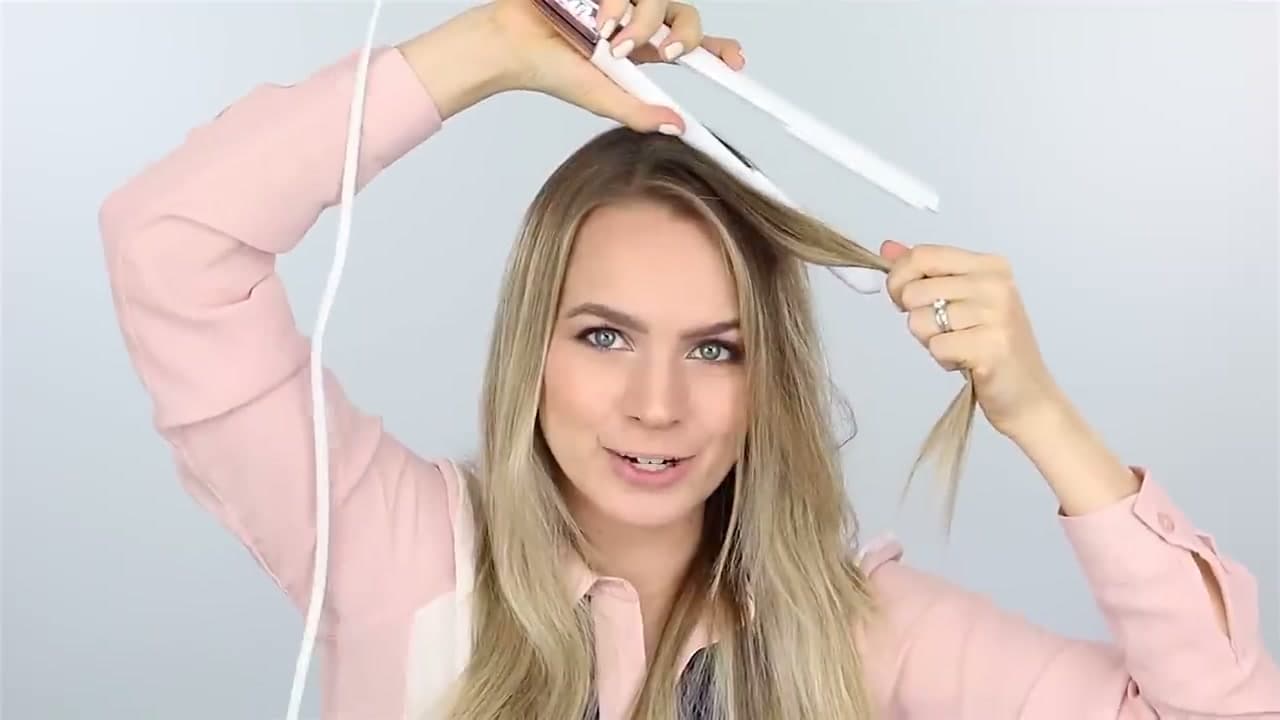
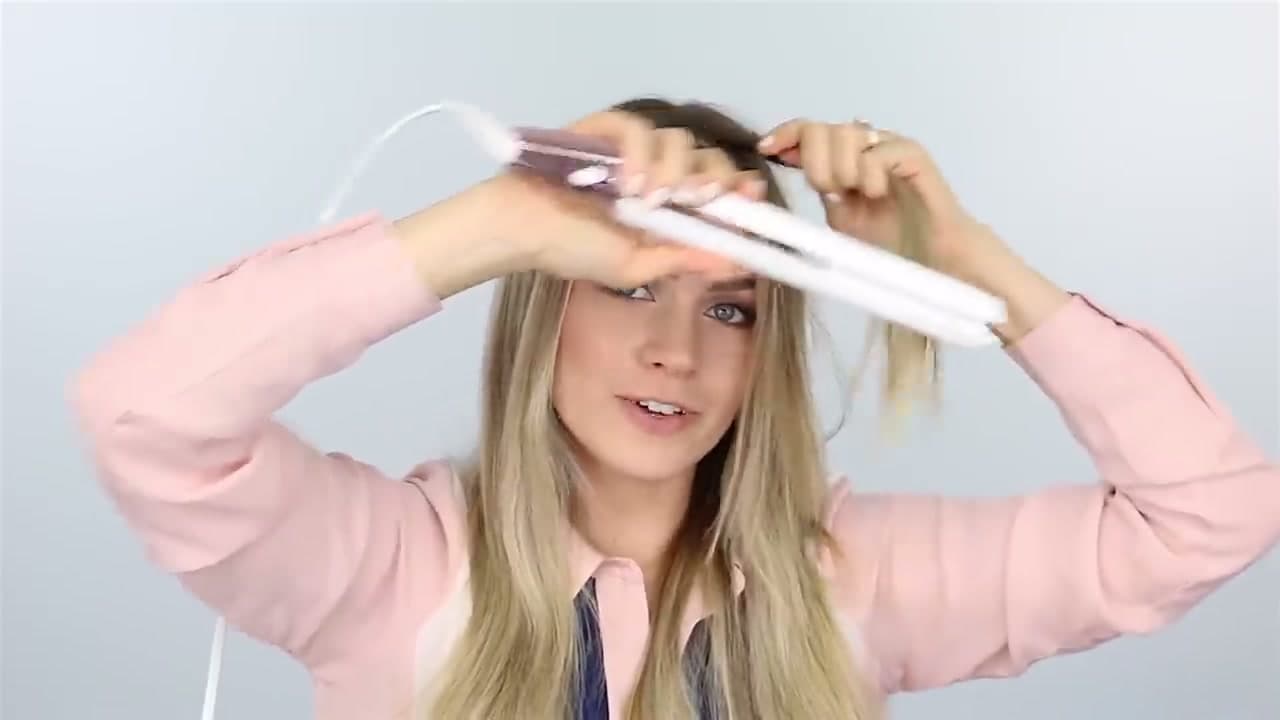
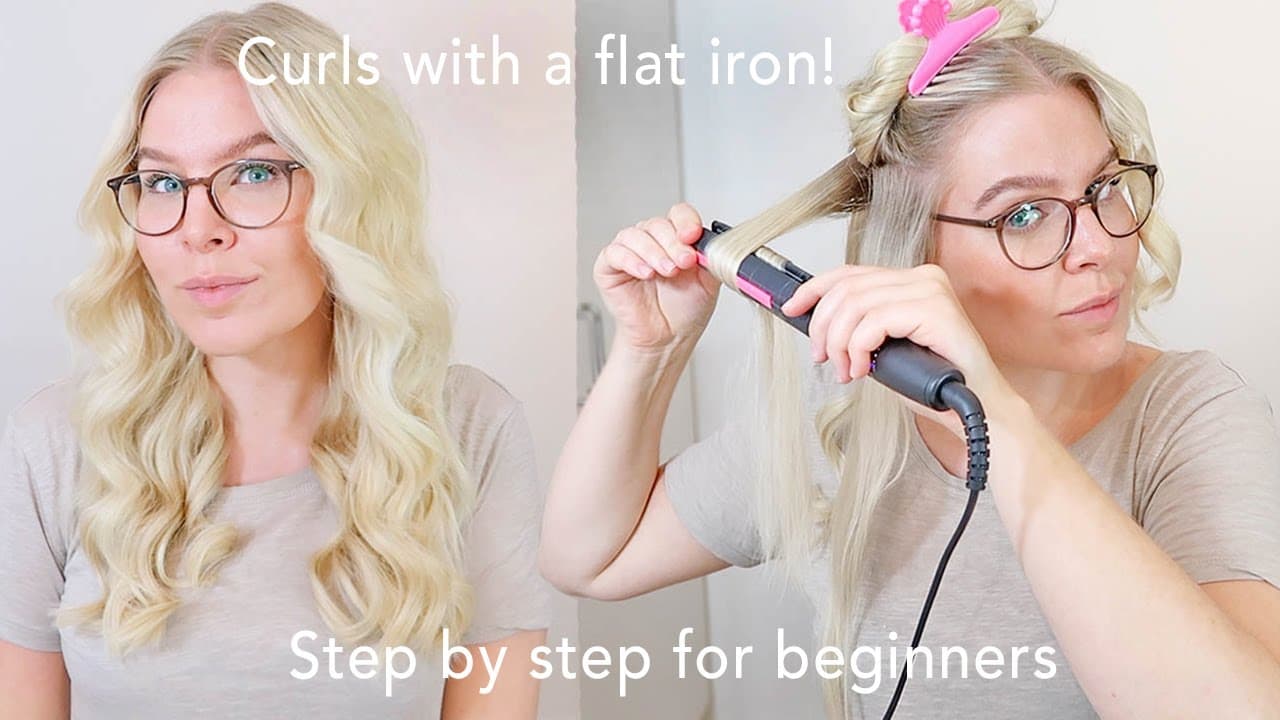
This is the whole method. Place the flat iron at the root of the section with the plates loose - not clamping. Wrap the section around the front of the iron like it is a curling wand. Pull the tail through the plates so the hair is now passing between them. Lightly clip the plates together. Slide the iron down the length of the hair to the ends.

The direction you wrap is the direction the curl goes. Wrap away from your face for an outward bend that opens up the face, or toward your face for a more vintage inward curl. Watch the four-step demo at 1:04.

Tip

Practice the wrap with the iron off first. If your hands fumble the wrap-pull-clip motion cold, they will fumble it with a hot iron near your face too. Five practice runs in front of the mirror saves a lot of burns.

5

Twist for Tight Curls, Slide Straight for Waves

1:29
Step 5: Twist for Tight Curls, Slide Straight for Waves

The variation between beachy waves and polished curls comes from one small choice at the very end. For tighter, more defined curls, give the iron a quick quarter-twist as you slide it off the ends. For loose, beachy waves, just slide straight off without any twist.

The big rule for either version: keep the plates loose throughout the slide. Clamping the plates makes the iron grab onto the hair and stall instead of glide. The heat is still touching the hair either way - clamping does not help the curl, it just makes the move harder. See the finish at 1:29.

6

Drop the Top Half and Alternate Curl Direction

3:04
Step 6: Drop the Top Half and Alternate Curl Direction

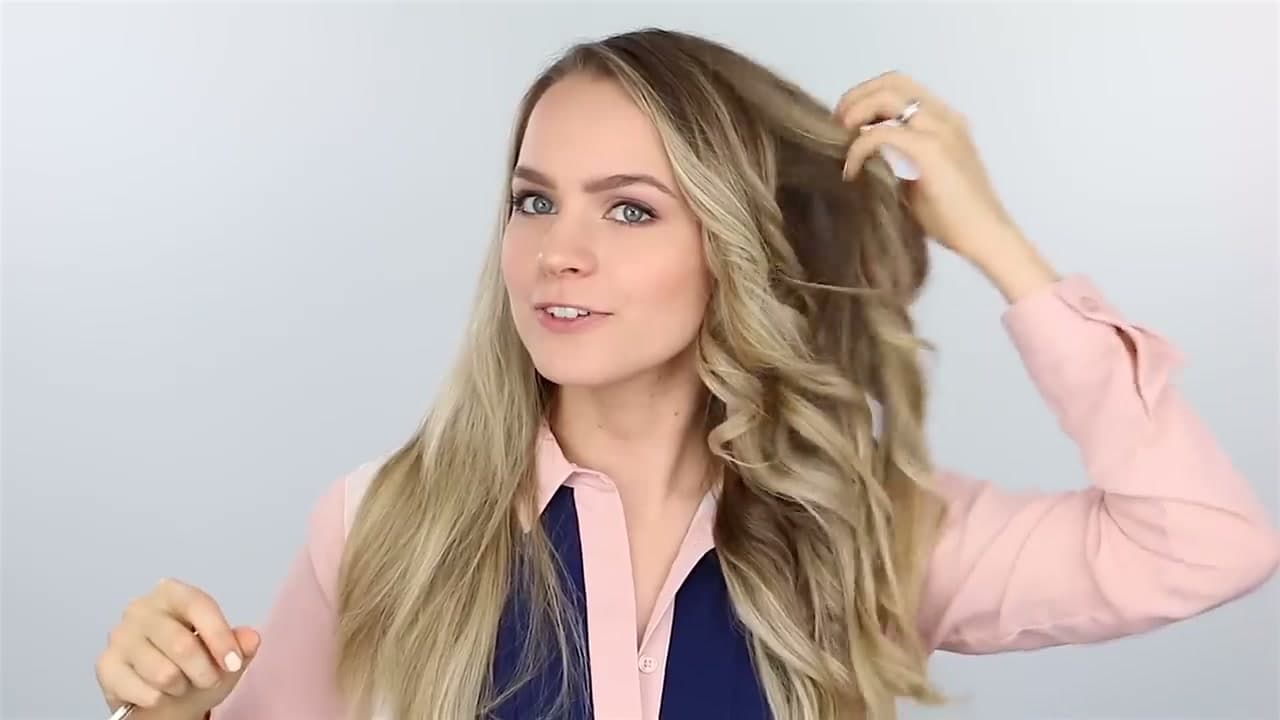
Once the bottom layer is done, unclip the top half and work through the rest of the head the same way. Alternate the curl direction so the whole head does not collapse into one shape - wrap away from your face on most sections, and toward your face on a few near the front. The mix is what gives the finished look that natural, lived-in shape.

Let each curl cool in place for a few seconds before you touch it. That cooling moment is what makes the curl actually hold its shape. Hot hair is soft and willing to drop straight - cooled hair locks in the bend. See the alternating demo at 3:04.

Tip

For really short pieces near the face, this still works - Kayley demonstrates on an ear-length piece. Just use a smaller section and a softer wrap so the iron does not hit your skin.

7

Finger-Comb, Spray, and Finish with Hair Oil

4:40
Step 7: Finger-Comb, Spray, and Finish with Hair Oil

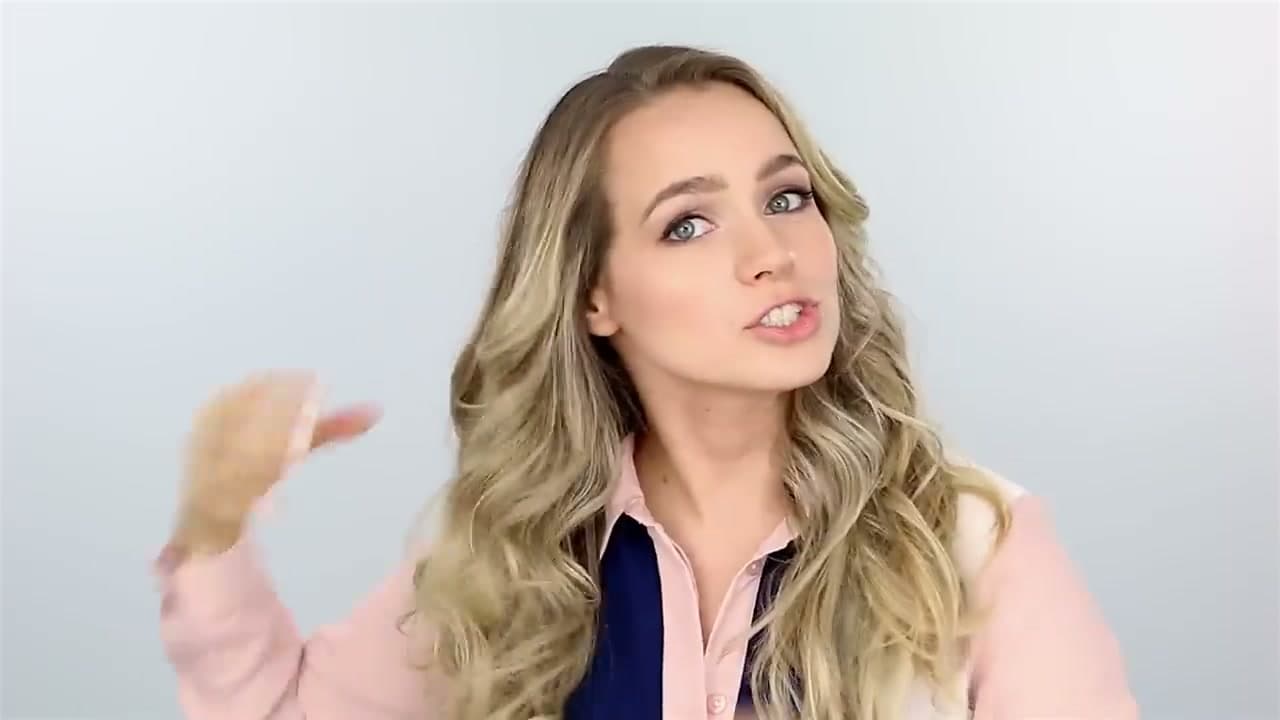
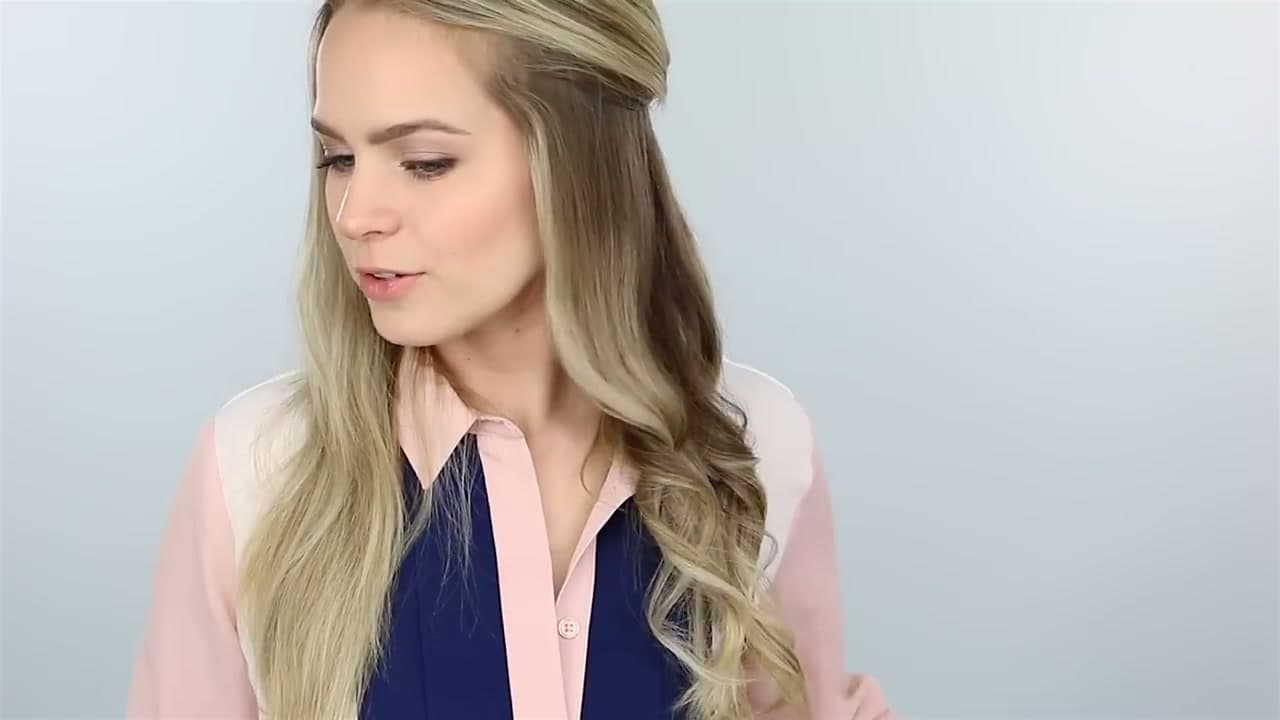
Once everything is curled and cool, run your fingers through to break the tight curls into softer, looser waves. If you want even more separation, give your hair a quick shake from the roots. Mist a texturizing spray at the roots for volume, then a flexible-hold hairspray over the lengths. Scrunch the ends as you spray to set the wave shape.

Finish with a single drop of hair oil rubbed between your palms and smoothed over the ends. This kills any frizz that the heat may have raised and gives the curls a polished, healthy shine. See the finish at 4:40.

Tip

Sleep on a satin pillowcase to keep the curls from flattening overnight. A good set with the right finishing products will hold a full second day if you protect it.

Products Used

☐ The Checklist

How to Curl Hair with a Flat Iron (No Twisting)

Tools
5
Steps
7
Video
6 min

Your Guide

Kayley Melissa

As an Amazon Associate we earn from qualifying purchases. Links on this page may be affiliate links - clicking them and buying doesn't change your price, but helps support ShowMeStepByStep.

Tags

Test your knowledge

Did the lesson stick? Find out in 2 minutes.

5 quick questions covering what you just read. No signup, no score saved — just a gut check.

Quick reference

Key takeaways from How to Curl Hair with a Flat Iron (No Twisting)

5 questions, answers, and one-line explanations. Tap to expand.

  1. 1.Right temperature for fine or color-treated hair?

    Answer: Around 300 to 350 degrees F

    Hotter than needed damages the cuticle without giving better curls. Fine hair caps at 350; thick goes 400-425.

  2. 2.What's the NO-TWIST flat-iron method?

    Answer: Wrap, pull, clip, then slide

    Direction you wrap = direction the curl falls. Loose plates throughout - clamping fights the slide.

  3. 3.Beachy waves vs polished curls comes down to...

    Answer: A quarter-twist at the end

    Twist for tight curls, slide straight off for waves. One end-of-slide move changes the whole shape.

  4. 4.Why alternate curl DIRECTION around the head?

    Answer: Gives a natural lived-in shape

    Mix away-from-face curls with some toward-face. Natural-looking curls aren't all marching the same direction.

  5. 5.Last step that finishes the curl shape?

    Answer: Cool, then finger-comb softly

    Cooling sets the shape. Finger-combing breaks tight curls into softer waves; brushing fluffs them out into nothing.

What's next

Related collections

Curated theme pages that include this tutorial.

Weekly Digest

Liked this lifestyle tutorial?

Pick the categories you want to hear about. Weekly digest of new step-by-step tutorials. No spam, easy unsubscribe.

Send me tutorials about

We only email about new tutorials. Easy unsubscribe anytime.