What Is Medicare Part D

Also in:Adulting

By ShowMeStepByStepPublished

Based on a video by Boomer Benefits - Medicare Expert.

What is Medicare Part D? Short answer: it is the part of Medicare that helps pay for your prescription drugs. If you are turning 65, helping a parent navigate enrollment, or just trying to figure out why your pharmacy bill keeps changing, this is the piece of Medicare that handles your meds.

This walkthrough is built around an explainer from Danielle Kunkle Roberts at Boomer Benefits, a 22,000-review Medicare agency. You will learn how Part D works whether you buy it as a standalone plan or get it built into a Medicare Advantage plan, the three stages every plan moves through during the year, and the two big 2025 changes you need to know: the new $2,000 out-of-pocket cap and the end of the donut hole.

If you are stacking your retirement picture, also read our walkthroughs on how to estimate your Social Security benefit and when you can actually afford to retire. Medicare is one piece of the puzzle. Knowing what Part D costs makes the rest of the math easier.

Disclaimer: This is general educational content, not personal Medicare advice. Plan rules, deductible amounts, and out-of-pocket caps update every year. Before you enroll, check Medicare.gov or talk to a licensed Medicare agent about your specific medications and pharmacies.

Step-by-Step Guide

1

Step 1: Understand What Medicare Part D Actually Covers

0:22

Step 1: Step 1: Understand What Medicare Part D Actually Covers

Medicare Part D is the part of Medicare that pays for your prescription drugs. You can buy it two ways: as a standalone drug plan that sits next to Original Medicare (Parts A and B), or as a built-in drug benefit inside a Medicare Advantage plan. Watch the intro at 0:22. Private insurance companies sell every Part D plan, but each one has to meet a minimum federal standard. The structure works the same way either way. If you take any regular prescription, you almost certainly want Part D - going without it can mean a permanent late-enrollment penalty plus full retail prices at the pharmacy.

Tip

Even if you only take cheap generics today, enrolling at 65 protects you from the late-enrollment penalty later. The penalty is 1% of the national base premium for every month you delay, and it sticks for life.
2

Step 2: Learn the Three Stages Every Part D Plan Uses

0:54
Step 2: Step 2: Learn the Three Stages Every Part D Plan Uses

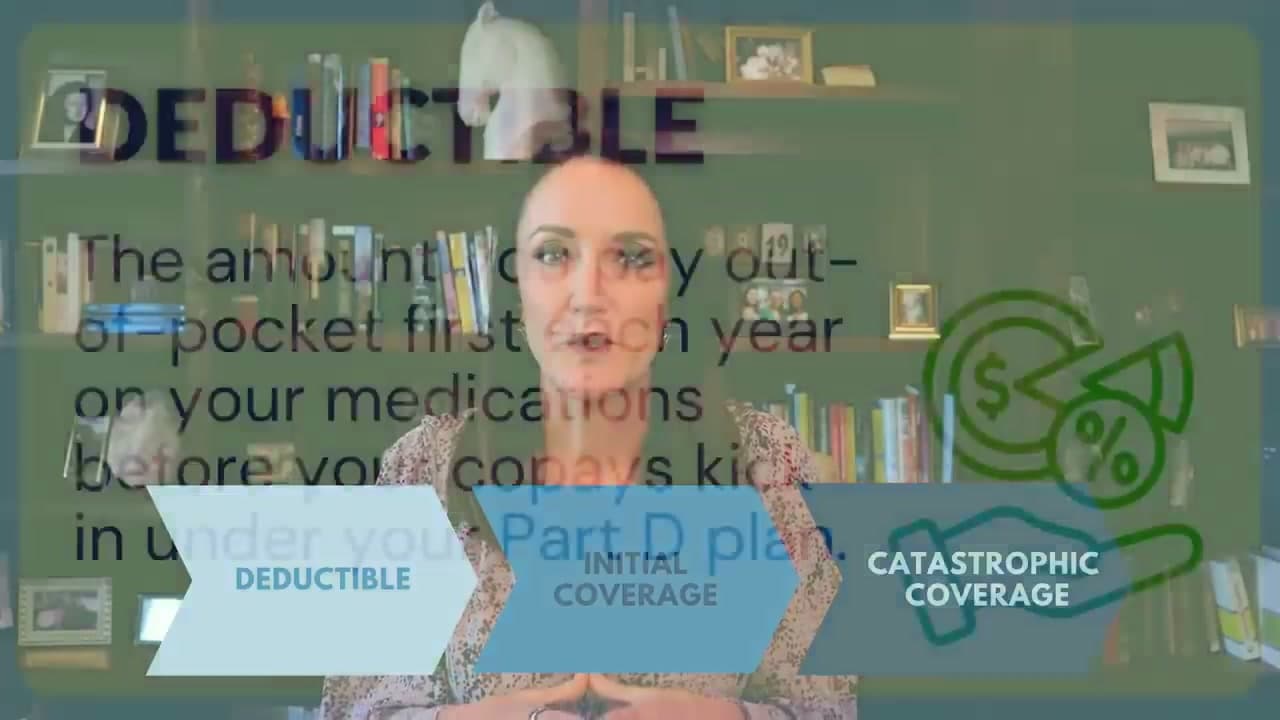
Every Part D plan in 2025 and beyond runs through the same three stages in this order: the deductible, the initial coverage stage, and catastrophic coverage. Watch the breakdown at 0:54. Medicare sets the dollar limits for each stage every year. Insurance companies can offer richer benefits than the federal minimum, but never weaker. Knowing which stage you are in tells you exactly what you will pay at the pharmacy that day. The stages reset every January 1, so your spending counter starts over each year.

Tip

Write the three stage names on a sticky note: Deductible, Initial Coverage, Catastrophic. Every Part D question you have for the rest of the year fits inside one of those three buckets.

3

Step 3: Pay the Deductible First

1:36
Step 3: Step 3: Pay the Deductible First

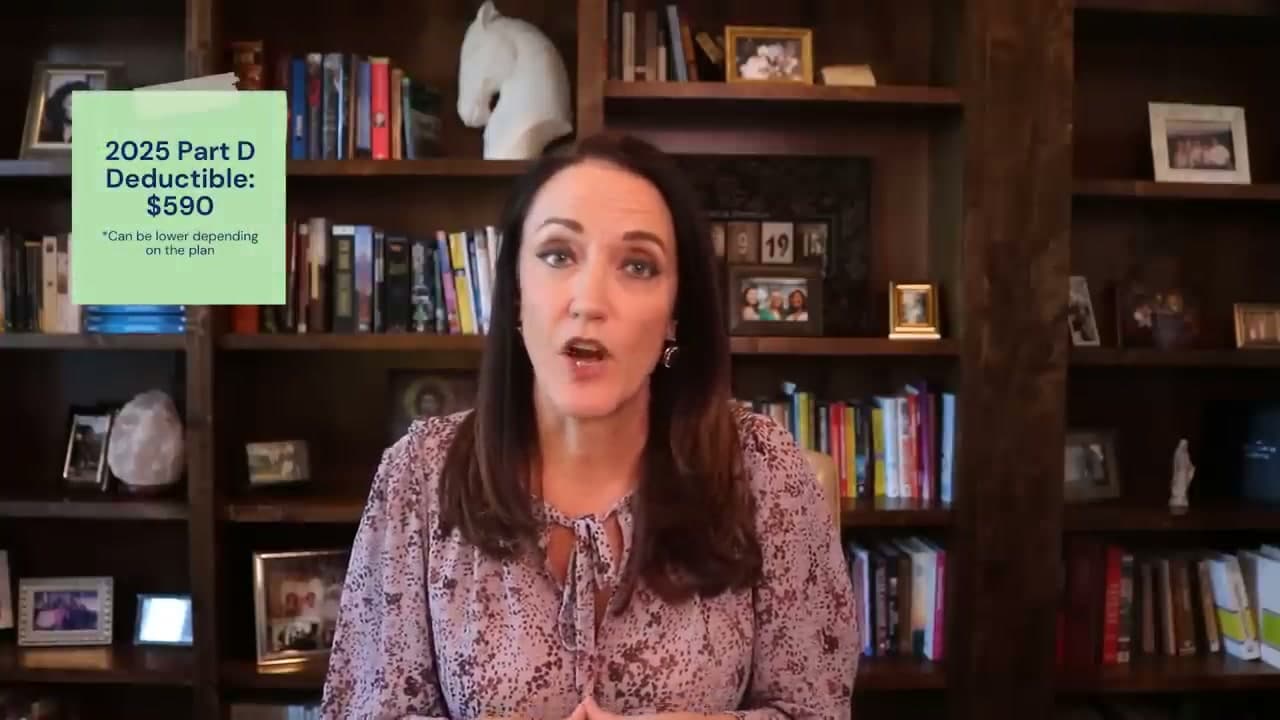
Stage one is the deductible - the amount you pay out of pocket on medications before the plan starts sharing the cost. In 2025 the maximum deductible Medicare allows is $590, and most plans set it at exactly that number. Watch the example at 1:36. Some plans waive the deductible entirely or apply it only to higher drug tiers. A plan with no deductible is not automatically the cheapest option - those plans often charge higher copays or premiums to make up for it. If you mostly take cheap generics, look for a plan that applies the deductible only to tiers 3, 4, and 5. You will get tier 1 and 2 drugs from day one at just the regular copay.

Tip

The deductible only applies to drugs the plan covers. If your prescription is not on the plan's formulary, what you pay does not count toward the $590 and the plan never picks up the cost.

4

Step 4: Move to the Initial Coverage Stage

3:09
Step 4: Step 4: Move to the Initial Coverage Stage

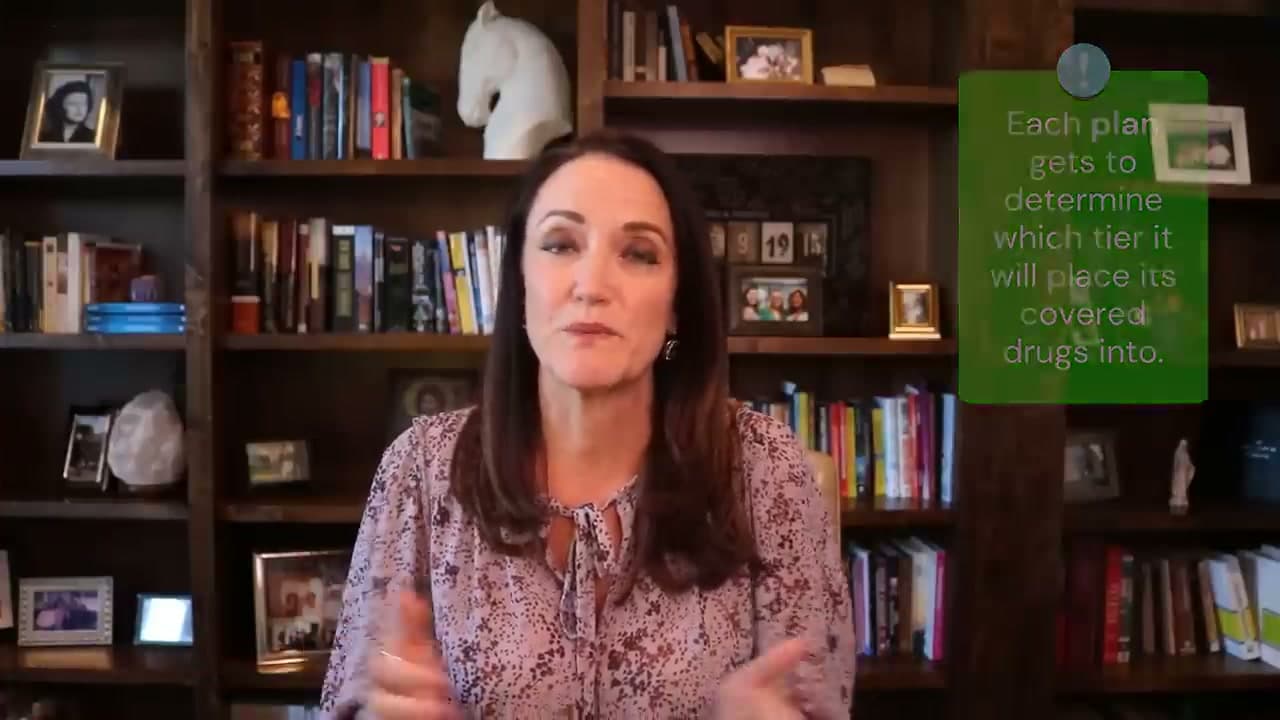
Once you satisfy the deductible, you move to stage two - the initial coverage stage. Here you pay copays or coinsurance for each prescription based on which tier the drug sits in. Watch the tier walkthrough at 3:09. Every plan has a formulary that sorts covered drugs into five (sometimes six) tiers: preferred generic, non-preferred generic, preferred brand, non-preferred brand, and specialty. Insulin is capped at $35 by law, no matter the tier. A typical plan might charge $5 for tier 1 generics, $10 for non-preferred generics, $40 for preferred brand drugs, and a percentage (often 25-33%) of the cost for tier 5 specialty drugs. You stay in this stage until your total drug spending hits the catastrophic threshold.

Tip

Before you commit to a plan, check that every drug you take is on its formulary at a tier you can afford. The Medicare Plan Finder at medicare.gov lets you enter all your prescriptions and see your projected annual cost on each plan side by side.

5

Step 5: Reach Catastrophic Coverage if Your Spending Gets High

4:35
Step 5: Step 5: Reach Catastrophic Coverage if Your Spending Gets High

Stage three kicks in once your total drug spending for the year crosses Medicare's annual limit. Watch this stage at 4:35. From that point on, your Part D carrier pays 100% of your medication costs for the rest of the calendar year. You pay nothing else for covered drugs until January 1. This is the safety net that protects you from a runaway prescription bill, and it is the single best reason to be enrolled in Part D even if you do not take expensive drugs today. One new diagnosis, one new specialty medication, and you would otherwise be on the hook for tens of thousands of dollars a year.

Tip

The pharmacy tracks your spending automatically. You do not have to count it yourself - the system rolls you into catastrophic coverage the moment you hit the threshold.

6

Step 6: Know the New 2025 $2,000 Out-of-Pocket Cap

5:04
Step 6: Step 6: Know the New 2025 $2,000 Out-of-Pocket Cap

In 2025 the limit that triggers catastrophic coverage drops to $2,000 a year. That is a huge change from 2024, when the out-of-pocket threshold was closer to $8,000. Watch the explanation at 5:04. Once you have spent $2,000 of your own money on covered Part D drugs in a calendar year, you pay nothing for those drugs the rest of the year. If you take an expensive specialty drug, this single change could save you thousands of dollars. Medicare also added a new Part D Payment Plan in 2025 that lets you spread that $2,000 out over the year in monthly installments instead of paying it all up front in January and February.

Tip

The Part D Payment Plan is opt-in, not automatic. Call your plan or check your online account during Annual Enrollment to turn it on for the coming year.

7

Step 7: Forget the Donut Hole

5:43
Step 7: Step 7: Forget the Donut Hole

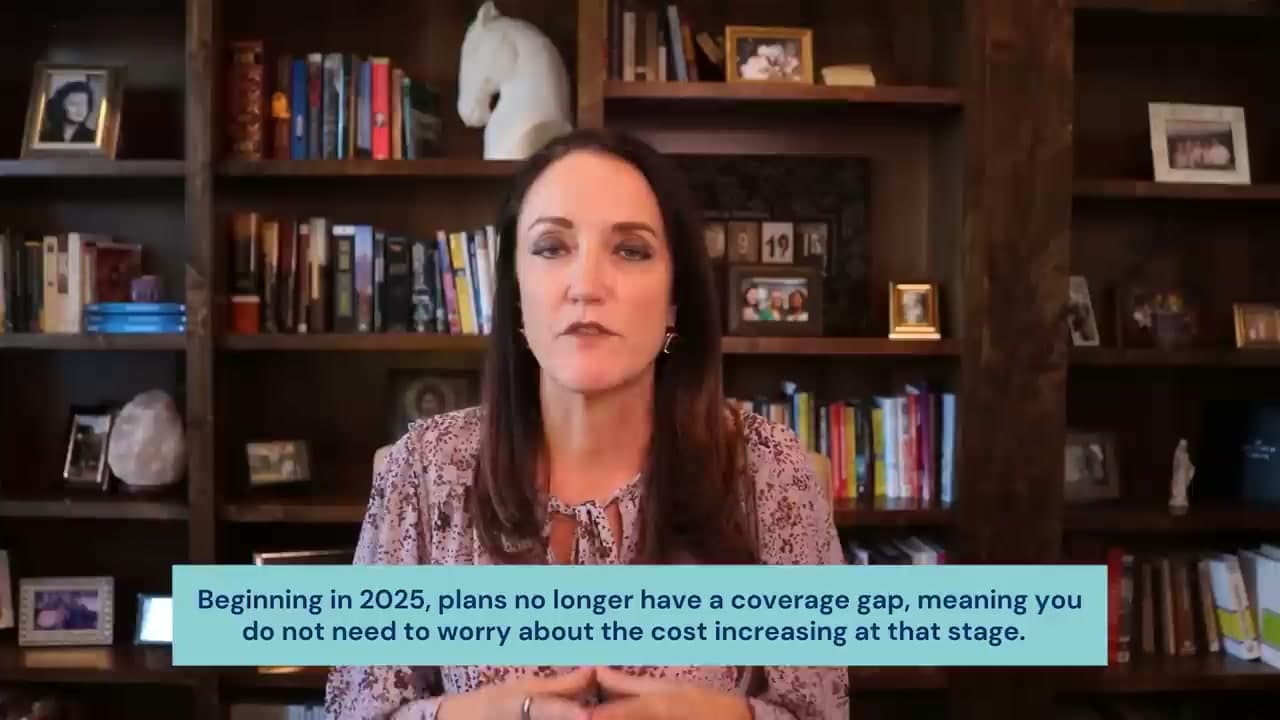
Starting in 2025, the coverage gap (better known as the donut hole) is gone. Watch the wrap-up at 5:43. For years, Part D dropped you into a stretch of higher costs partway through the year, right after you came out of initial coverage and before catastrophic kicked in. You now move from the deductible to the initial coverage stage to catastrophic coverage with no surprise gap in between. If a family member still talks about the donut hole, you can tell them it is officially history. The three-stage structure is now simpler and more predictable than it has been in twenty years.

Tip

The end of the donut hole does not change your premium or deductible. It only removes the middle stage where you used to pay more before catastrophic kicked in.

8

Step 8: Check Your Medicare Advantage Plan's Drug Spending Limit

5:20
Step 8: Step 8: Check Your Medicare Advantage Plan's Drug Spending Limit

If your drug coverage comes through a Medicare Advantage plan instead of a standalone Part D plan, watch the fine print. Watch this part at 5:20. The plan's overall maximum out-of-pocket limit only covers Part A and Part B services - inpatient care, outpatient care, doctor visits. Your Part D drug costs run on a separate tab with their own $2,000 cap. Treat the two limits as two different budgets, not one combined total. If you are choosing between a standalone Part D plan and an MA plan with built-in drug coverage, the three Part D stages and the $2,000 cap work the same way - the difference is whether you pay one premium or two, and whether your medical and drug coverage come from the same insurance company.

Tip

Review your plan every fall during Annual Enrollment (October 15 to December 7). Plans change their formularies and copays every year, and the plan that was best for you last year may not be the cheapest one for this year.

Products Used

Your Guide

Boomer Benefits - Medicare Expert

As an Amazon Associate we earn from qualifying purchases. Links on this page may be affiliate links - clicking them and buying doesn't change your price, but helps support ShowMeStepByStep.

Tags

What's next

Weekly Digest

Liked this investing tutorial?

Pick the categories you want to hear about. Weekly digest of new step-by-step tutorials. No spam, easy unsubscribe.

Send me tutorials about

We only email about new tutorials. Easy unsubscribe anytime.