How to Withdraw from Your 401(k)

InvestingMedium11:168 stepsBrowse more →
Also in:Adulting

By ShowMeStepByStepPublished

Based on a video by Justin Pritchard, CFP® on Retirement Planning.

Step-by-Step Guide

1

Step 1: Check Whether Your 401(k) Plan Even Allows a Withdrawal

0:14
Step 1: Step 1: Check Whether Your 401(k) Plan Even Allows a Withdrawal

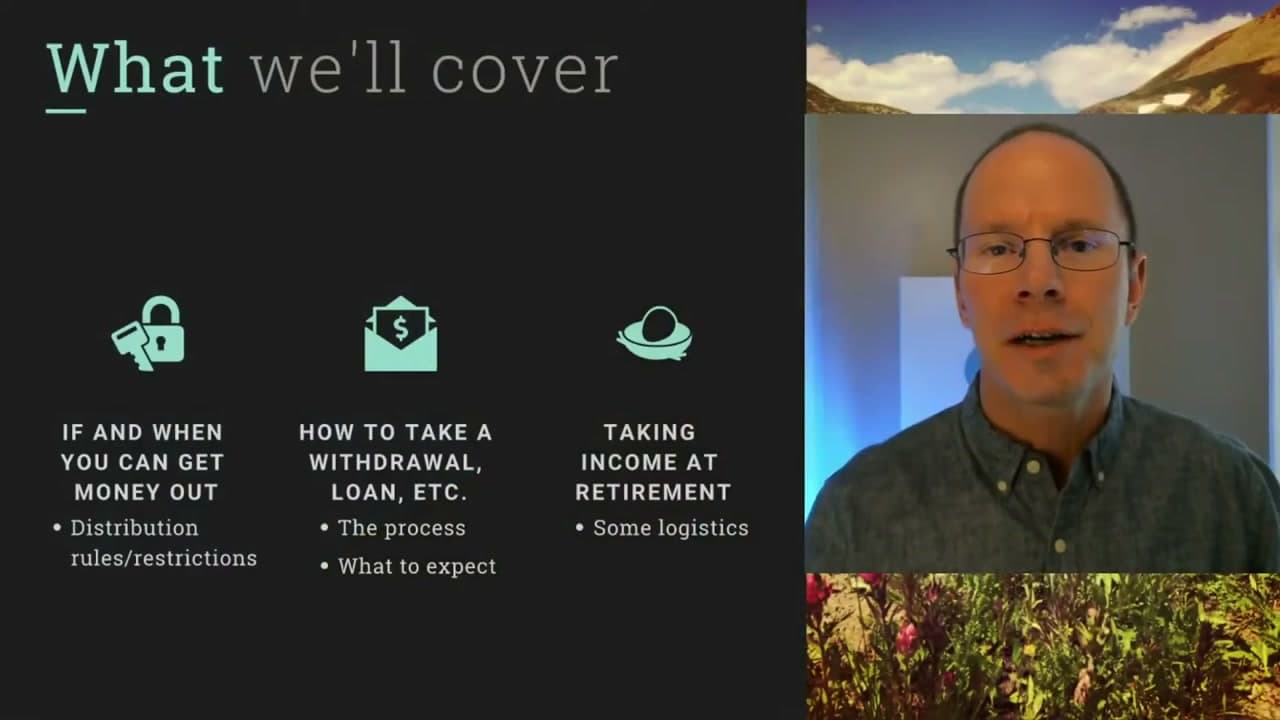
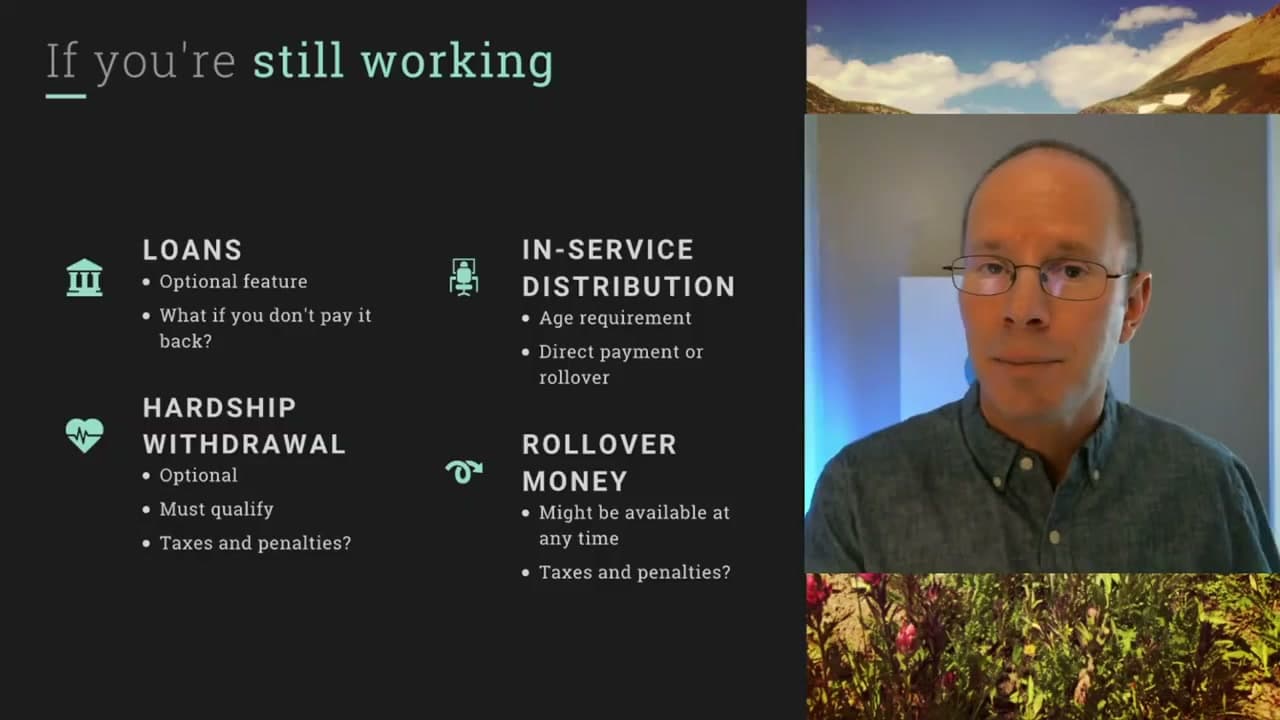
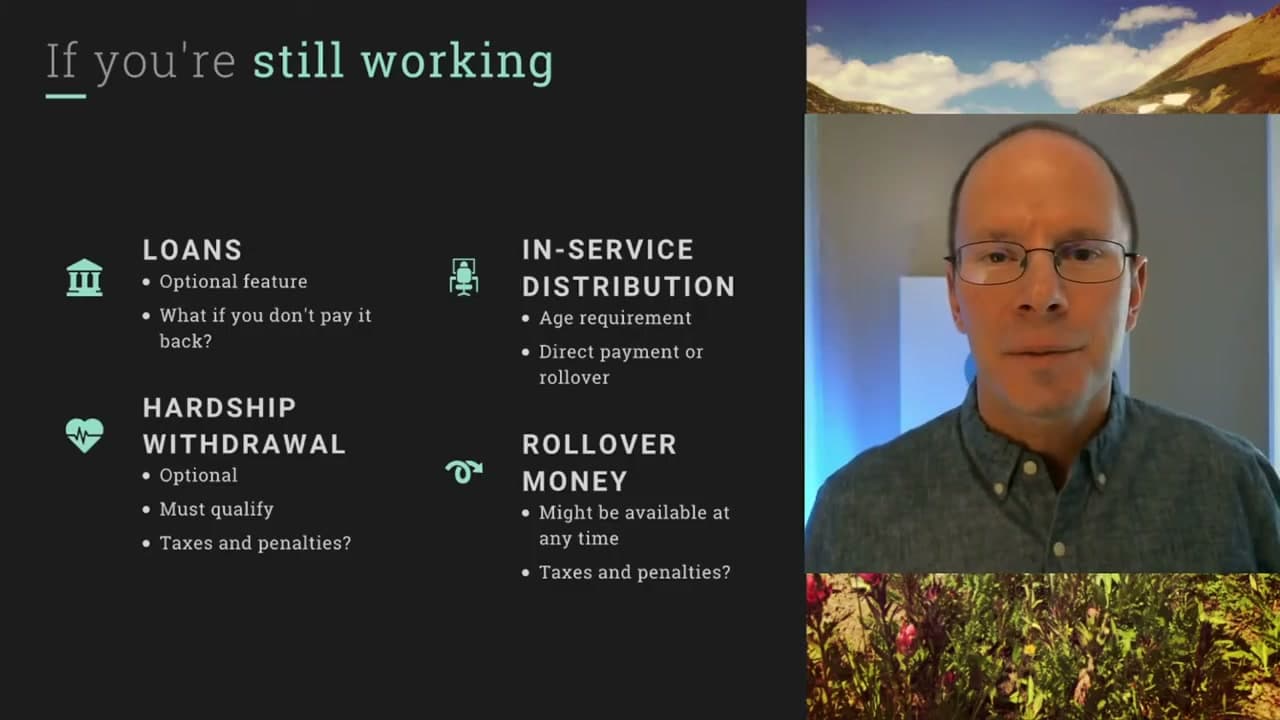
Start here, because the rules depend on your situation. 401(k) plans set limits on when you can pull money out, and the answer splits into two cases: you are still working at the employer that sponsors the plan, or you have already left that job.

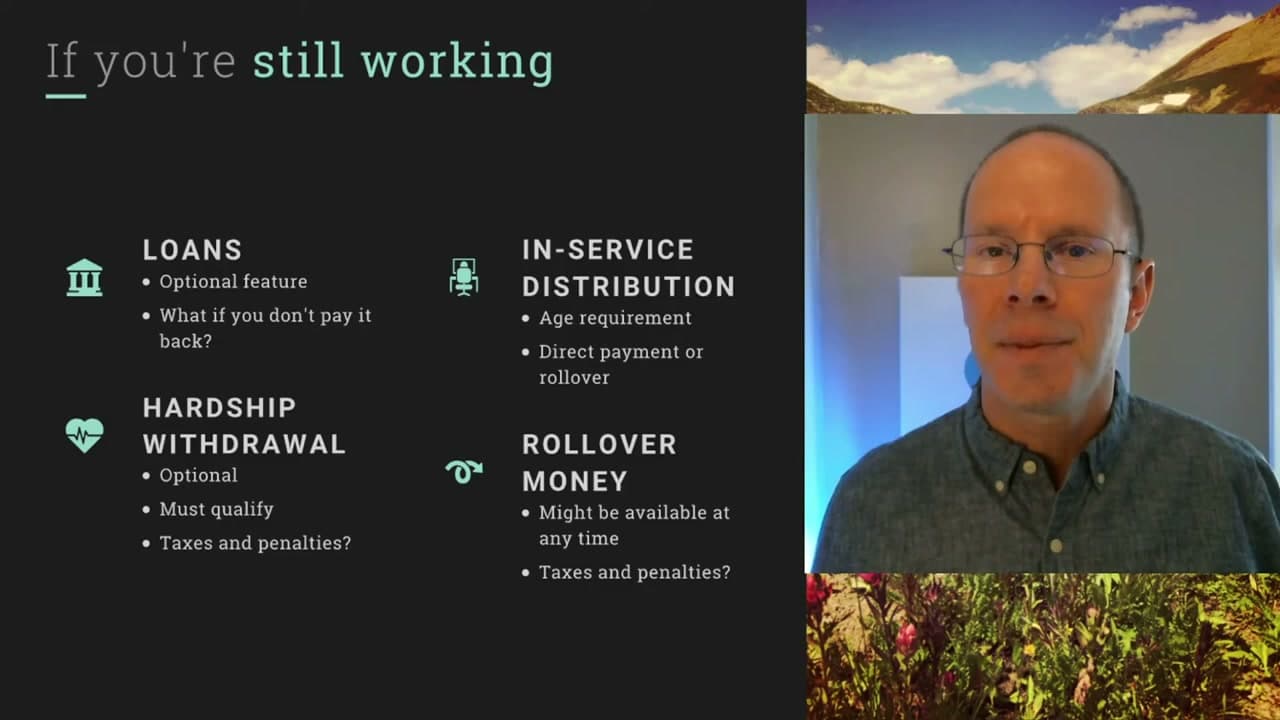
If you have left, withdrawals are usually straightforward. If you are still working, your access is limited to whatever optional features your employer chose to include in the plan. Pull up your Summary Plan Description or call your benefits department and ask what is actually available to you.

Tip

Don't assume every 401(k) plan offers loans, hardship distributions, or in-service withdrawals. Plans differ a lot.

2

Step 2: If You've Left Your Job, Request the Distribution Through Your Plan

1:24
Step 2: Step 2: If You've Left Your Job, Request the Distribution Through Your Plan

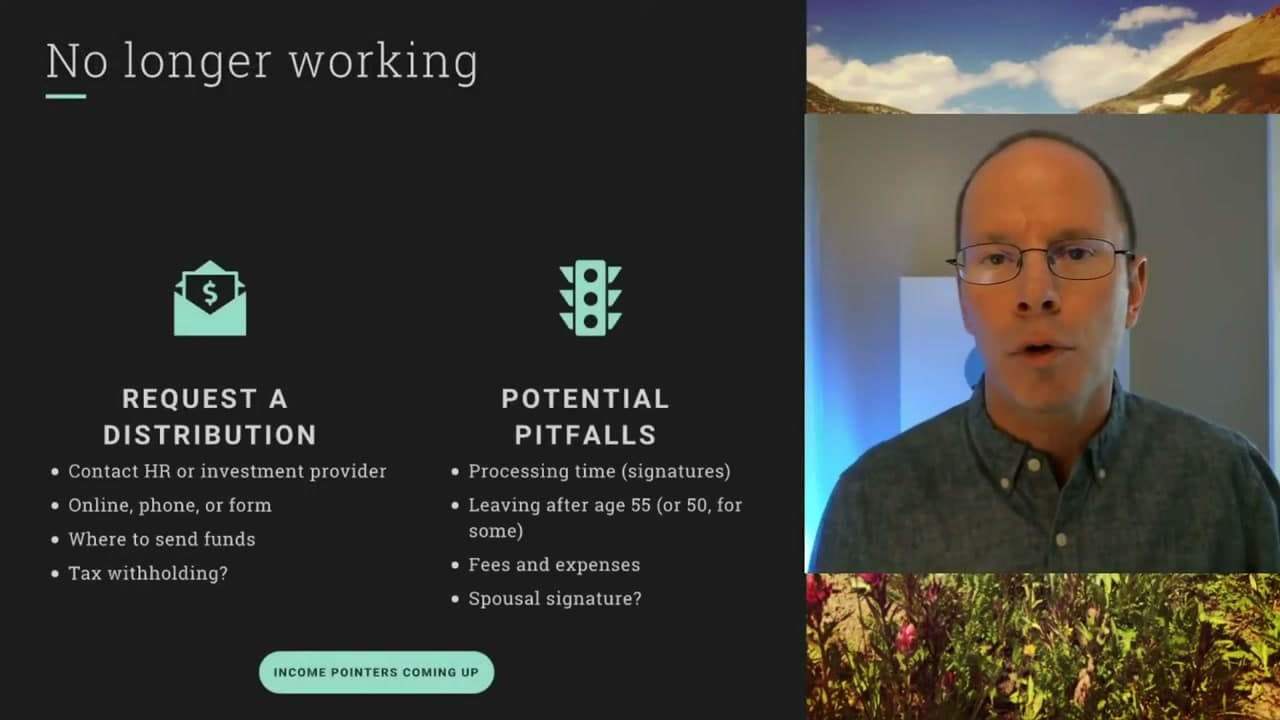
Once you have separated from your employer, retiring or changing jobs both count, you are typically eligible to take money out. You request it through your benefits department, or if you worked for a large organization, through the service provider that handles your statements and account website.

Some plans take the request verbally by phone or through an online form. Others require a paper distribution request form. Expect some back-and-forth, and if you are married, your spouse may need to sign off on the request before it processes.

Tip

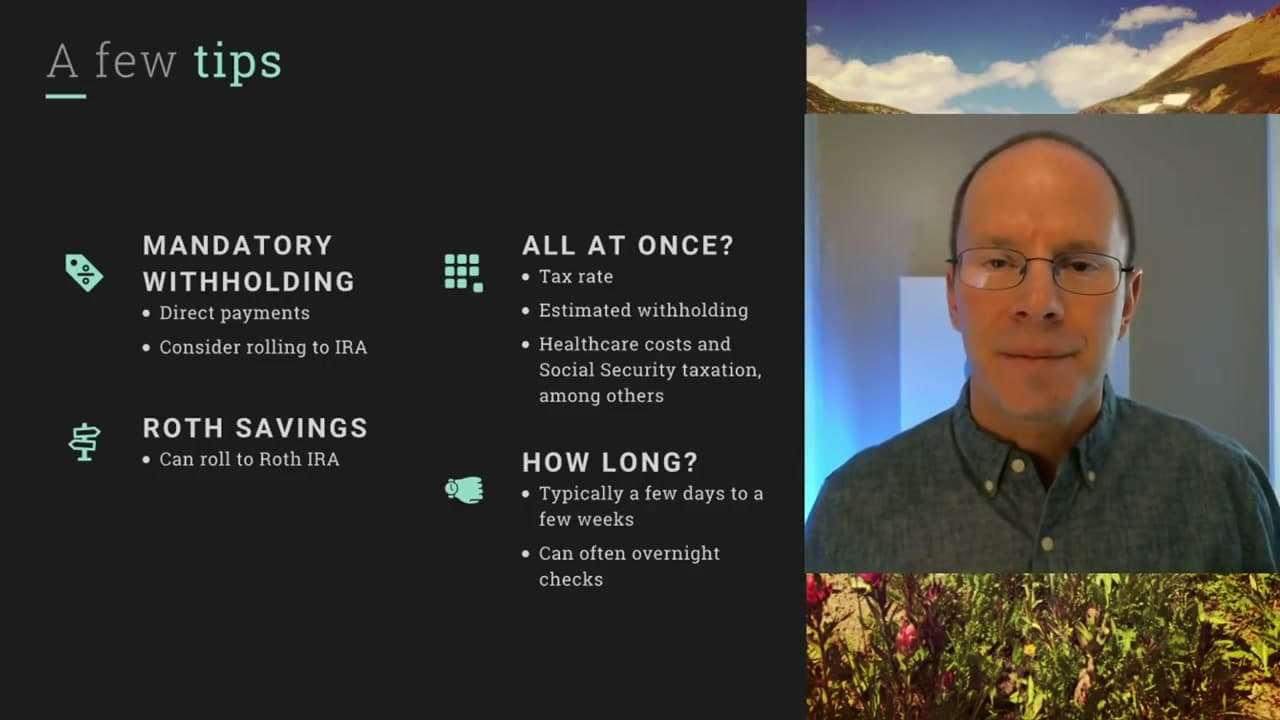
Build in a buffer. The distribution can take days or weeks because the plan administrator has to approve each request.

3

Step 3: While Still Working, Consider a 401(k) Loan

3:12
Step 3: Step 3: While Still Working, Consider a 401(k) Loan

If you are still on the job and need cash, a loan is often the first option to consider, assuming your plan offers one. You can borrow up to $50,000 or 50% of your account balance, whichever is less, and you repay yourself, usually over about five years.

The big advantage: no taxes and no penalty as long as you pay it back. The risk: if you change jobs, get laid off, or quit before the loan is repaid, the IRS may treat the unpaid balance as a distribution. That means income tax plus a possible 10% early-withdrawal penalty.

Tip

Run the numbers before borrowing. Defaulting on a 401(k) loan after a job change is one of the most expensive ways to get cash.

4

Step 4: Apply for a Hardship Distribution If You Qualify

4:18
Step 4: Step 4: Apply for a Hardship Distribution If You Qualify

A hardship distribution is a way to pull money out while still employed, but you have to qualify. You submit a request to your employer that explains your reason: medical expenses, buying a primary residence, preventing eviction, certain education costs, and a few others. Your employer reviews it and decides whether you meet the plan's rules.

Unlike a loan, you do not repay a hardship distribution. It is permanent and taxable as income, and it may carry the 10% early-withdrawal penalty if you are under 59 1/2. Use it as a safety valve, not a first choice.

Tip

Document everything. Receipts, bills, closing statements, whatever supports the hardship reason you are claiming.

5

Step 5: Look for In-Service Distributions and Rollover Money You Can Pull

5:16
Step 5: Step 5: Look for In-Service Distributions and Rollover Money You Can Pull

Once you hit 59 1/2 and you are still working, some plans let you take an in-service distribution. You can either cash it out, taxable as income, or roll it straight to an IRA where you control the investments. This is useful if your 401(k) has high fees or limited options.

Separately, if you ever rolled an old employer's 401(k) into your current plan, that rollover money is often available to withdraw at any age for any reason. Ask the plan whether rollover money is tracked separately and whether it is accessible now.

Tip

An in-service rollover to an IRA is not a withdrawal. The money keeps growing tax-deferred, you just gain more control.

6

Step 6: Understand the Tax Withholding Before You Take a Direct Payment

6:24
Step 6: Step 6: Understand the Tax Withholding Before You Take a Direct Payment

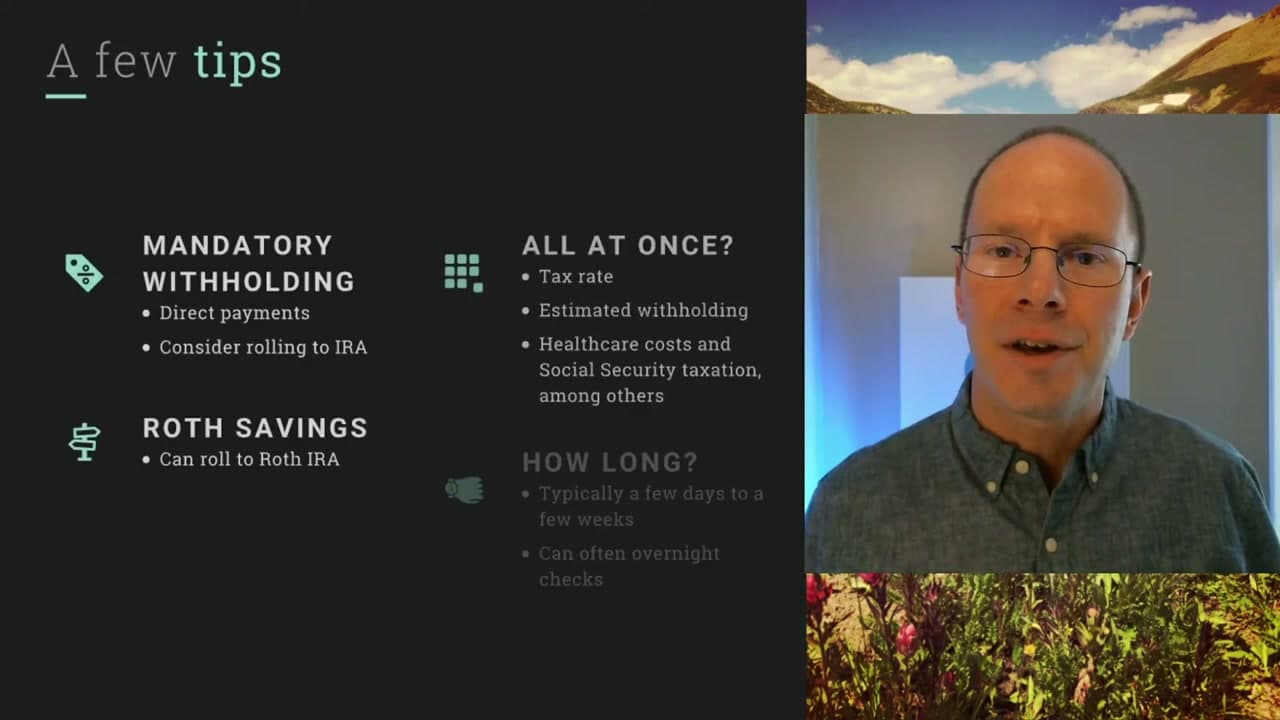
If the plan pays you directly, there is usually 20% mandatory federal tax withholding on the distribution. That happens automatically, and it may be more, or less, than you actually owe.

To avoid the 20% bite, move the money to an IRA first through a direct rollover. From the IRA, you can take out exactly what you need, with whatever withholding you choose. This matters most when you are in a low tax bracket and the 20% withholding would temporarily strand cash you need now.

Tip

Always ask for a direct rollover, not a check made out to you, unless you actually want the cash today.

7

Step 7: Roll Roth 401(k) Money to a Roth IRA

7:17
Step 7: Step 7: Roll Roth 401(k) Money to a Roth IRA

If part of your 401(k) is Roth money, keep it on the Roth side. The standard move is to roll Roth 401(k) savings into a Roth IRA so the tax treatment stays the same: like to like.

As long as you satisfy the IRS rules around how long the money has been in a Roth and your age, qualified withdrawals come out tax-free. Mixing Roth into a pre-tax IRA blows up that tax-free status, so make sure the receiving account is also a Roth.

Tip

If you also have pre-tax 401(k) money, plan a separate direct rollover for each bucket, pre-tax to a traditional IRA, Roth to a Roth IRA.

8

Step 8: If You're Retiring, Set Up Income From an IRA Instead of the 401(k)

8:30
Step 8: Step 8: If You're Retiring, Set Up Income From an IRA Instead of the 401(k)

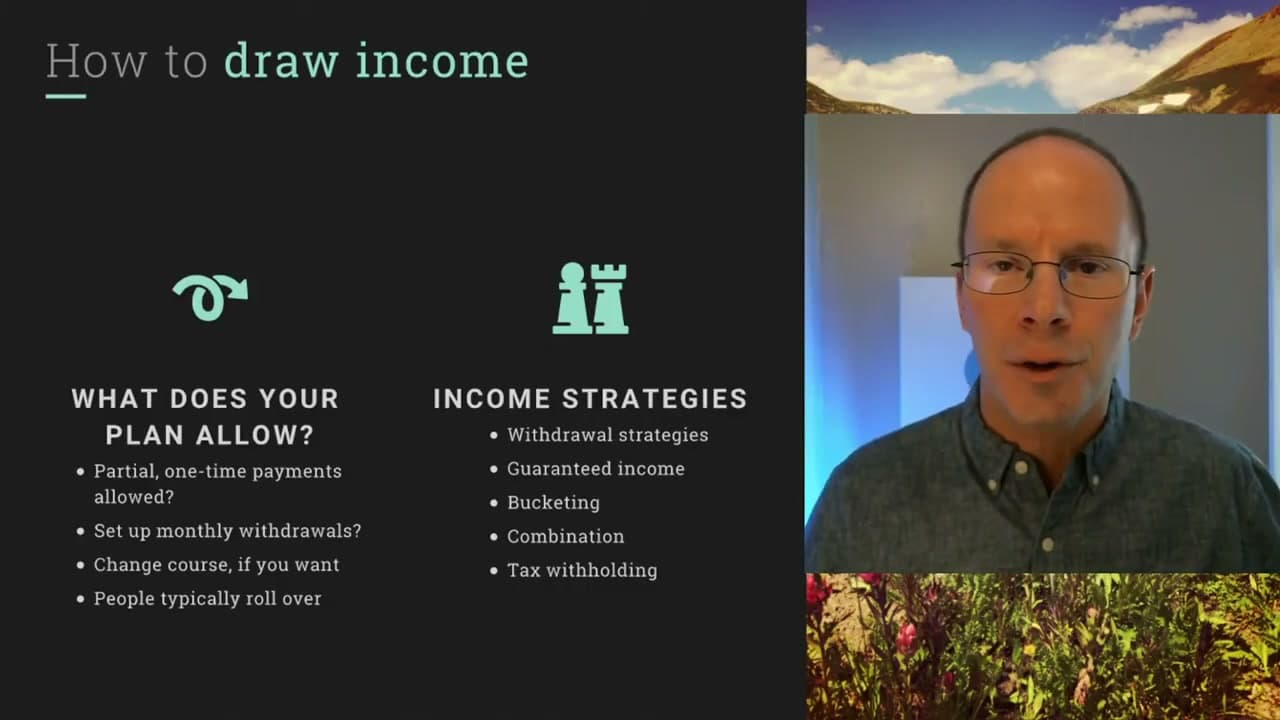
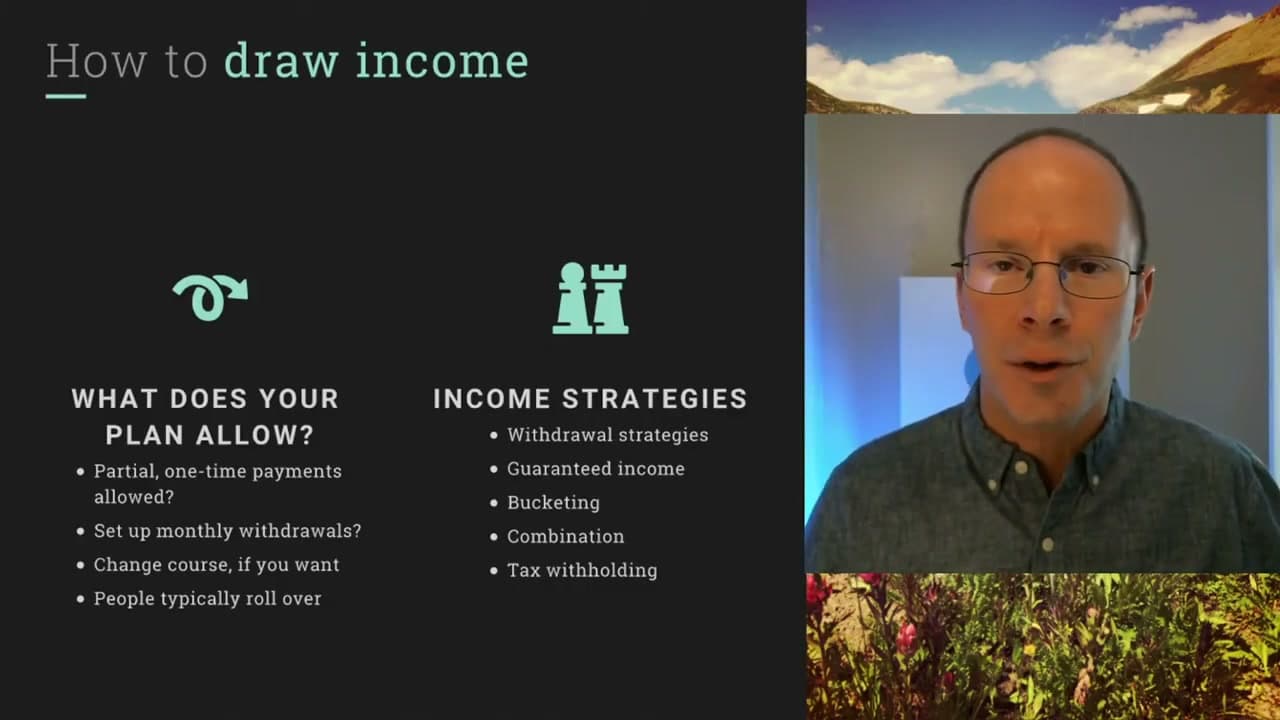
Most retirees move the 401(k) over to an IRA they control. From the IRA, you can set up monthly distributions to mimic a paycheck, or take lump sums when you need them, without going through your old employer's plan every time.

From there, you pick a withdrawal approach: a percentage-based withdrawal strategy like the 4% rule, guaranteed income from an annuity, or a bucket strategy that segments cash, safer investments, and growth investments. Most people end up combining approaches. Stay mindful of taxes, because a big withdrawal can push you into a higher bracket and ripple into Social Security taxation and Medicare premiums.

Tip

Don't take out a huge lump sum in a single tax year if you don't need it. Spread it across years to keep your bracket lower.

Products Used

Your Guide

Justin Pritchard, CFP® on Retirement Planning

As an Amazon Associate we earn from qualifying purchases. Links on this page may be affiliate links - clicking them and buying doesn't change your price, but helps support ShowMeStepByStep.

Tags

What's next

Weekly Digest

Liked this investing tutorial?

Pick the categories you want to hear about. Weekly digest of new step-by-step tutorials. No spam, easy unsubscribe.

Send me tutorials about

We only email about new tutorials. Easy unsubscribe anytime.