How to Use an Inhaler with a Spacer in 6 Steps

Health BasicsEasy4:156 steps

Based on a video by AbrahamThePharmacist.

About 90% of inhaler users don't use them correctly - which means most of the medicine ends up coating their tongue and throat instead of reaching their lungs. The spacer device fixes the timing problem (you don't have to coordinate the spray with your breath) and pulls more medicine deep into the lungs.

This walkthrough from AbrahamThePharmacist covers the technique your pharmacist wishes everyone knew. The whole sequence takes 30 seconds once you've practiced it. Better technique = better disease control = fewer rescue puffs needed.

Step-by-Step Guide

1

Step 1: Remove Caps and Check Inside

1:05
Step 1: Step 1: Remove Caps and Check Inside

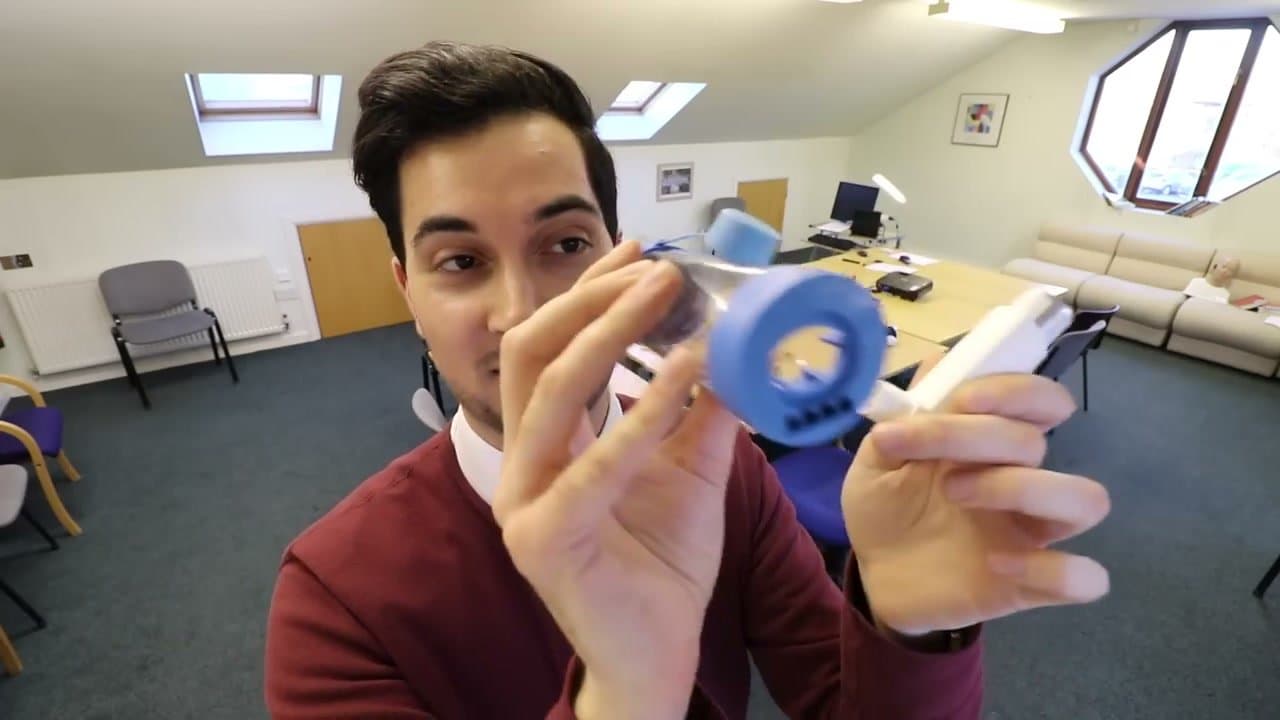
Take the cap off the metered dose inhaler and the cap off the spacer device. Quickly look inside both for any foreign objects - lint, dust, or debris that could get inhaled.

Caps left on = no medicine reaches your lungs. It's the most common reason inhalers seem to 'stop working.' Make this a deliberate check, not a glance.

2

Step 2: Prime the Inhaler if Needed

1:20
Step 2: Step 2: Prime the Inhaler if Needed

If this is your first time using the inhaler, or you haven't used it in a while (usually 2+ weeks), you need to prime it. Spray it twice into the air, away from your face.

Priming clears stale propellant from the metering chamber so the next dose contains the correct amount of medicine. Check the leaflet - some inhalers need 4 priming sprays. Skipping this step means your first puff is mostly air.

3

Step 3: Shake the Inhaler

1:40
Step 3: Step 3: Shake the Inhaler

Shake the inhaler vigorously for 5 seconds before each dose. The medicine is suspended in propellant - if you don't mix them by shaking, you get a puff that's mostly propellant with very little active drug.

Same concept as shaking a deodorant or salad dressing before use. One quick rattle isn't enough; commit to a few full seconds of shaking.

4

Step 4: Insert Inhaler Into Spacer and Get Into Position

1:55
Step 4: Step 4: Insert Inhaler Into Spacer and Get Into Position

Push the inhaler's mouthpiece into the back of the spacer (the universal end cap). Stand or sit upright - slouching reduces lung capacity.

Tilt your head back slightly. Breathe out gently and completely. Wrap your lips around the spacer's mouthpiece without biting down. Hold the inhaler upright (canister pointed up), not sideways - sideways changes the dose.

5

Step 5: Press the Canister and Inhale Slow and Deep

2:15
Step 5: Step 5: Press the Canister and Inhale Slow and Deep

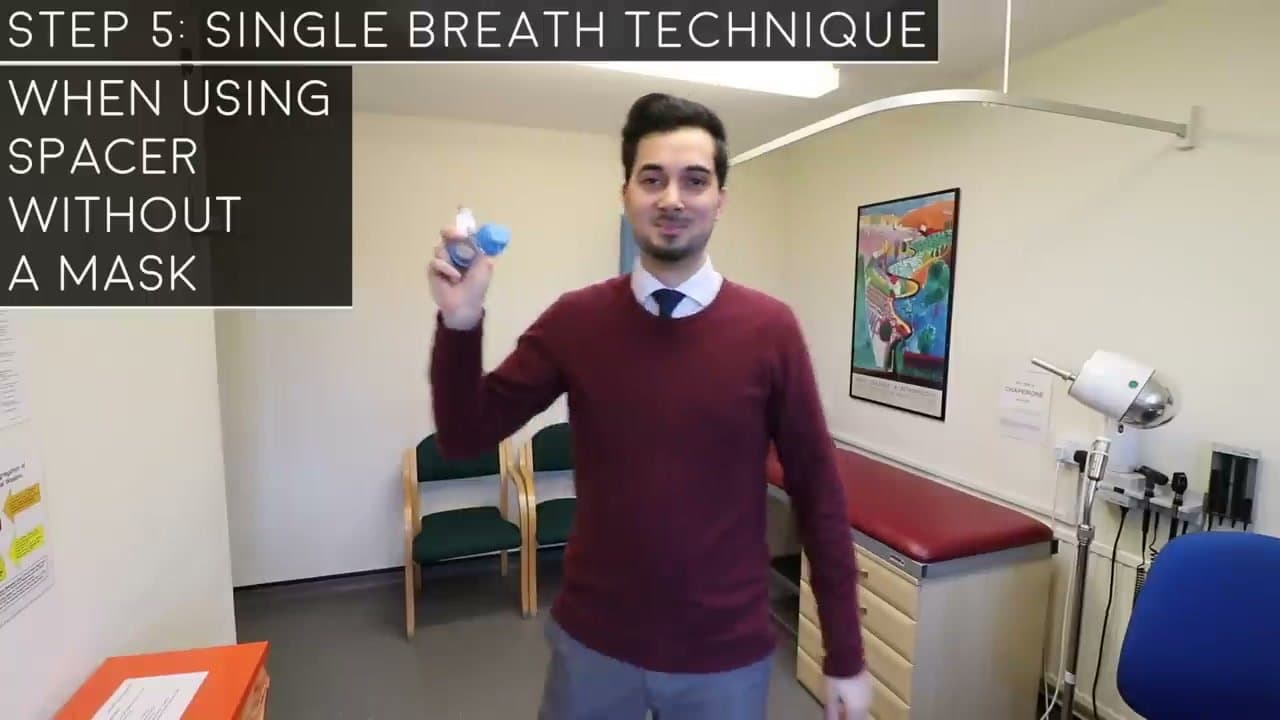
Just as you start to breathe in, press the canister down once. Continue inhaling slowly and deeply through the spacer for as long as you can.

Remove the spacer from your mouth and hold your breath for 10 seconds (or as long as is comfortable). Then breathe out gently. If you hear a whistling sound during inhalation, you're breathing too fast - slow down. The whistle is the spacer telling you the medicine is escaping past your lungs.

Tip

For kids who can't time the inhale, use the 'tidal breathing' technique instead: press the canister, then breathe in and out normally 3 times through the spacer mouthpiece (or 5 times with a mask).

6

Step 6: Repeat for Additional Doses, Then Cap and Clean

2:48
Step 6: Step 6: Repeat for Additional Doses, Then Cap and Clean

If your prescription calls for a second puff, wait 30-60 seconds, then repeat steps 3-5 (shake, position, inhale). Replacing the caps after the last dose keeps the spacer and inhaler clean.

Wash the spacer once a week by soaking 15 minutes in warm water with mild soap, rinse, and air-dry vertically. Don't dry with a towel - rubbing creates static that traps medicine on the chamber walls. Replace the spacer every 6-12 months.

Your Guide

AbrahamThePharmacist

As an Amazon Associate we earn from qualifying purchases. Links on this page may be affiliate links - clicking them and buying doesn't change your price, but helps support ShowMeStepByStep.

Tags

Related Tutorials