How to Perform CPR and Use an AED in 6 Steps

Health BasicsMedium4:246 steps

Based on a video by Action First Aid.

Sudden cardiac arrest kills 350,000+ people in the US every year. The single biggest factor in survival is whether a bystander starts CPR before paramedics arrive - survival rates double when CPR is started immediately. The AED multiplies that effect again.

This refresher from Action First Aid covers the 6 essential steps. It is not a substitute for hands-on certification (Red Cross or American Heart Association courses run a few hours and you'll get muscle memory you can't get from a video). But knowing the sequence cold could be the difference between life and death if you're the only one nearby.

Step-by-Step Guide

1

Step 1: Call 911 and Send Someone for the AED

0:30
Step 1: Step 1: Call 911 and Send Someone for the AED

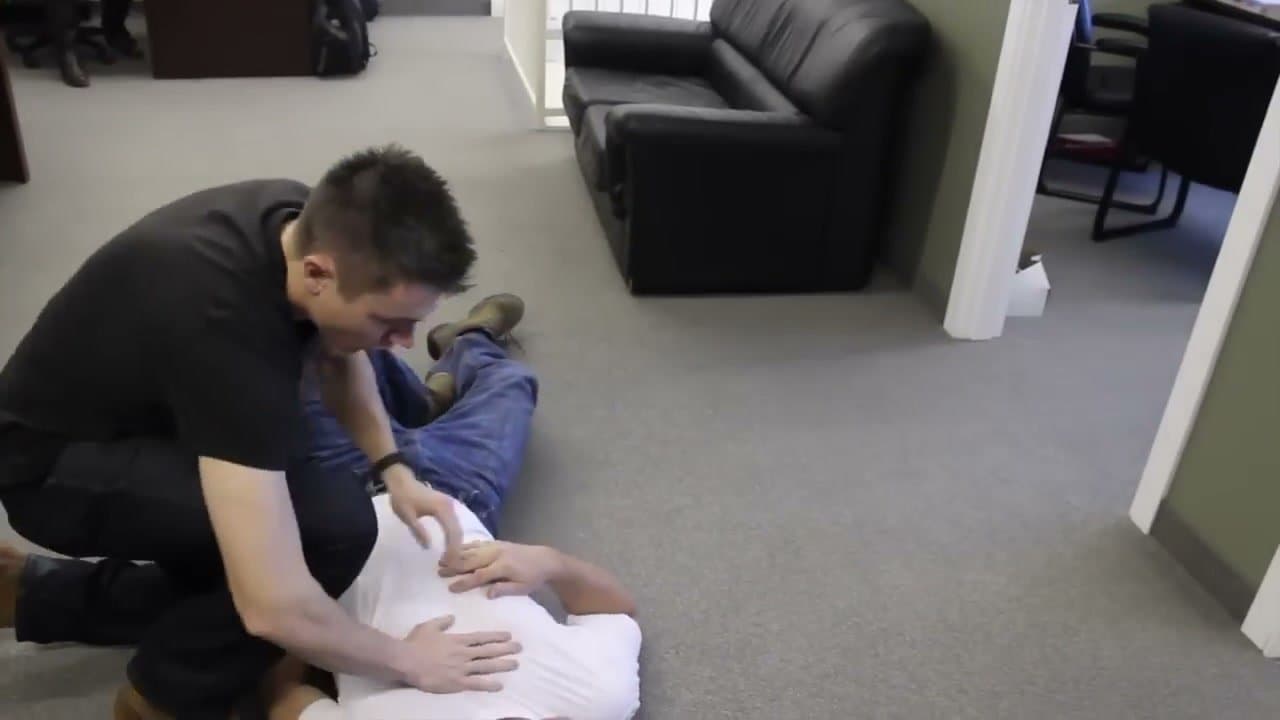
If someone collapses and is unresponsive, your first action is to delegate. Point at one specific person and say 'You - call 911.' Point at another and say 'You - get the AED.'

Naming individuals (rather than yelling 'someone help') prevents bystander paralysis where everyone assumes someone else will act. If you're alone, call 911 yourself on speaker before starting compressions.

2

Step 2: Open the Airway with Head-Tilt, Chin-Lift

3:40
Step 2: Step 2: Open the Airway with Head-Tilt, Chin-Lift

Place one hand on the person's forehead and the other under the bony part of their chin. Gently tilt their head back and lift the chin upward.

This pulls the tongue away from the back of the throat and clears the airway. Don't tilt aggressively - a normal extension is enough. Avoid this maneuver if you suspect a neck injury (use jaw thrust instead).

3

Step 3: Check for Breathing - Look, Listen, Feel

3:55
Step 3: Step 3: Check for Breathing - Look, Listen, Feel

With the airway open, lean down close to their face. Look at the chest for rise and fall. Listen for breath sounds at their mouth. Feel for air on your cheek. Take no more than 10 seconds.

Gasping or irregular breathing does NOT count as normal breathing - that's called 'agonal breathing' and it means the brain is starved of oxygen. Start CPR.

4

Step 4: Start Chest Compressions: Hard and Fast in the Center

1:00
Step 4: Step 4: Start Chest Compressions: Hard and Fast in the Center

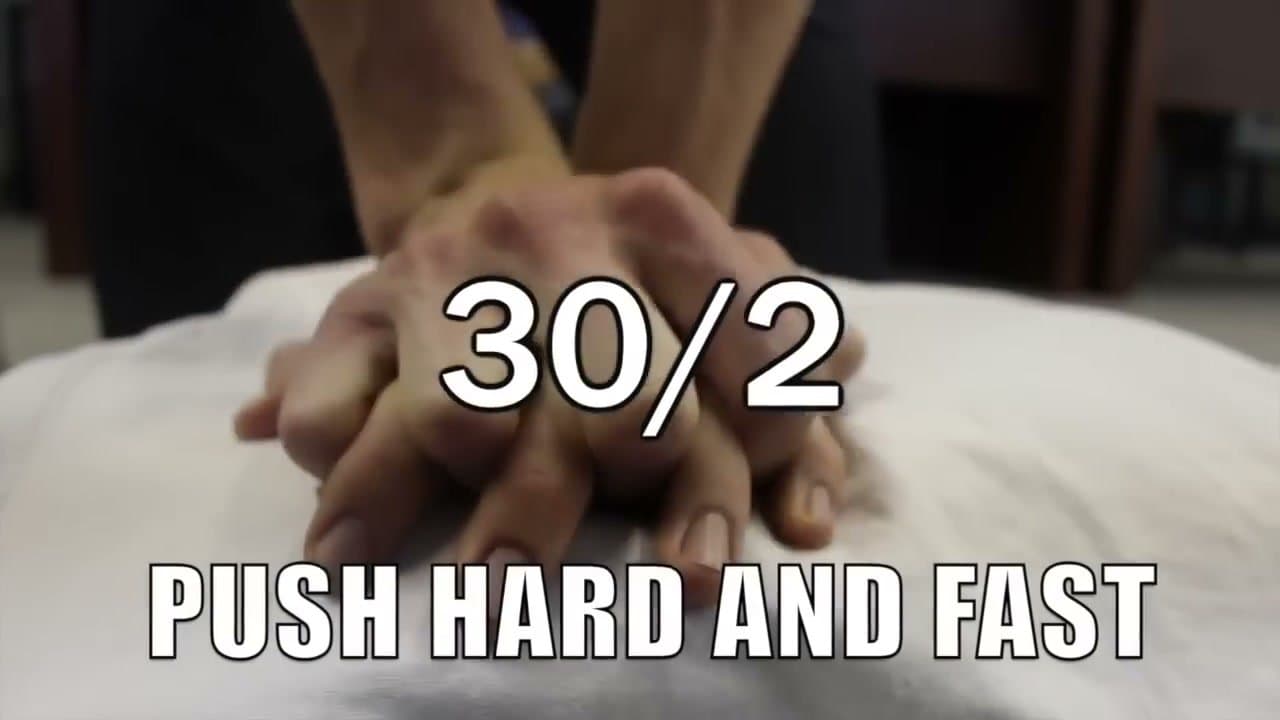
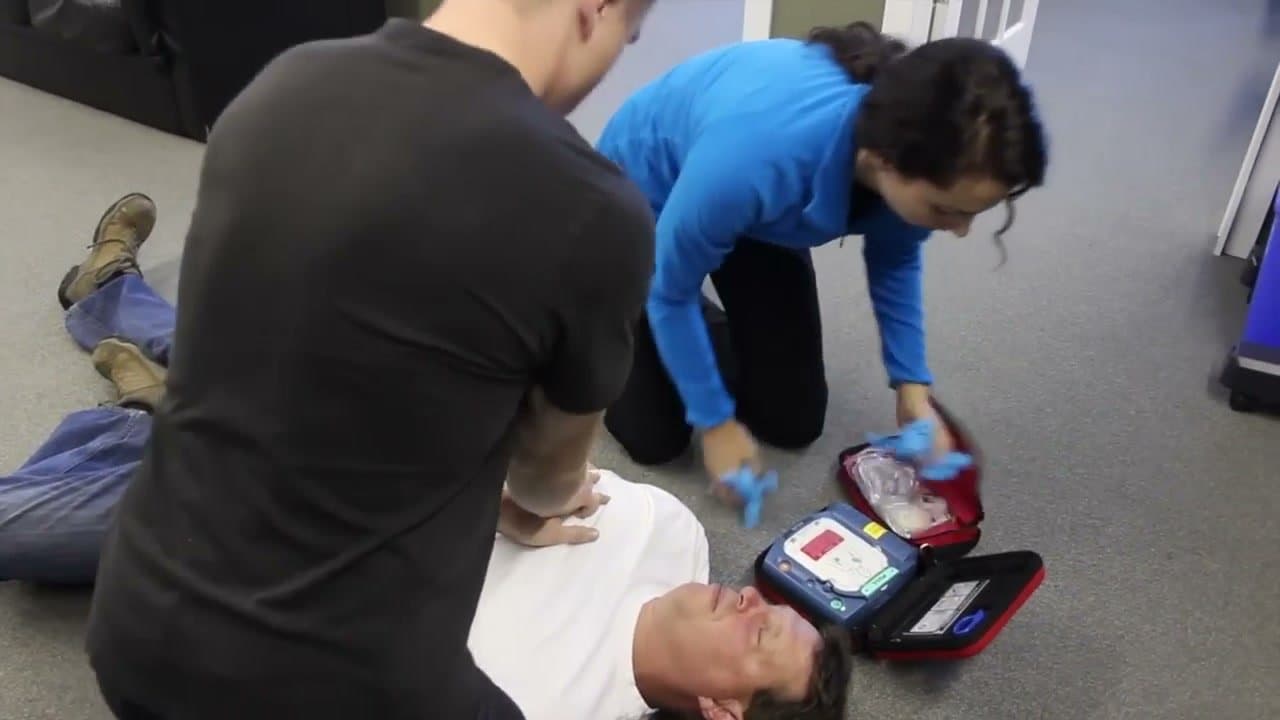
Heel of one hand on the center of the chest (lower half of the breastbone), other hand on top, fingers interlaced. Lock your elbows and use your body weight - not just your arms.

Compress at least 2 inches deep, 100-120 times per minute. The beat of 'Stayin' Alive' or 'Another One Bites the Dust' is exactly the right tempo. Let the chest fully recoil between compressions. Don't stop until the AED is ready or paramedics arrive.

5

Step 5: Place AED Pads on Bare Chest

1:30
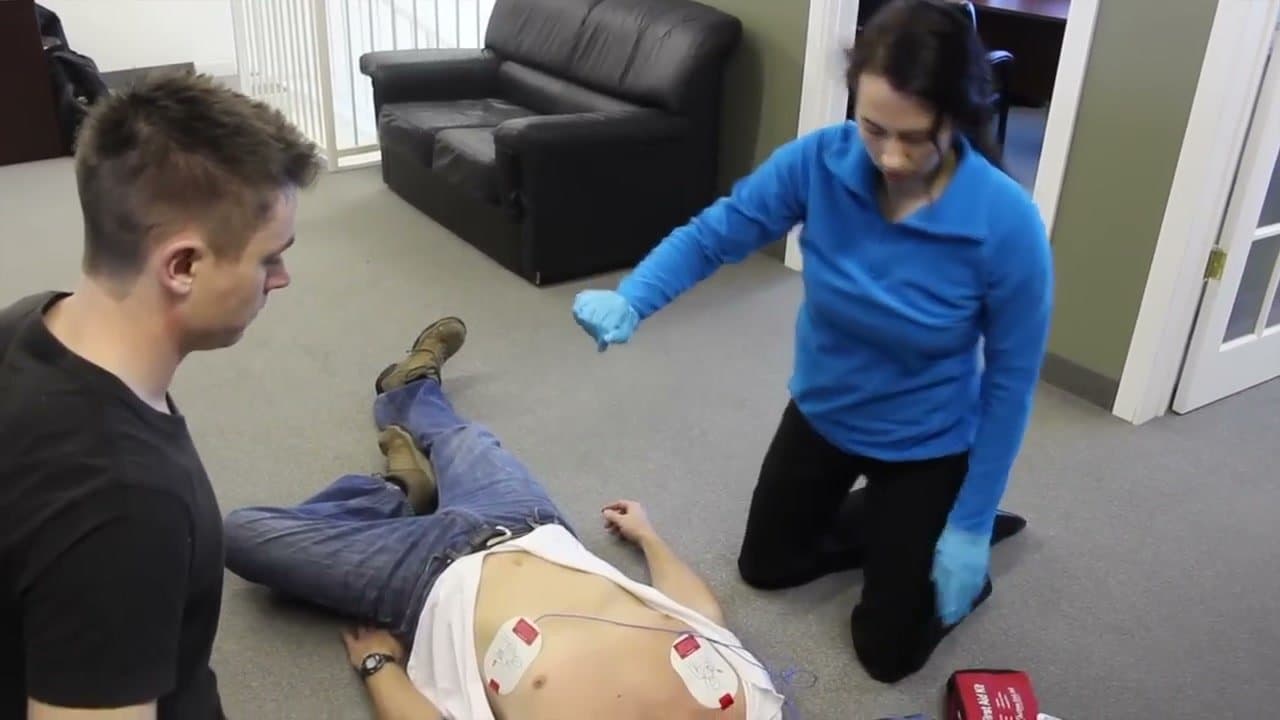
Step 5: Step 5: Place AED Pads on Bare Chest

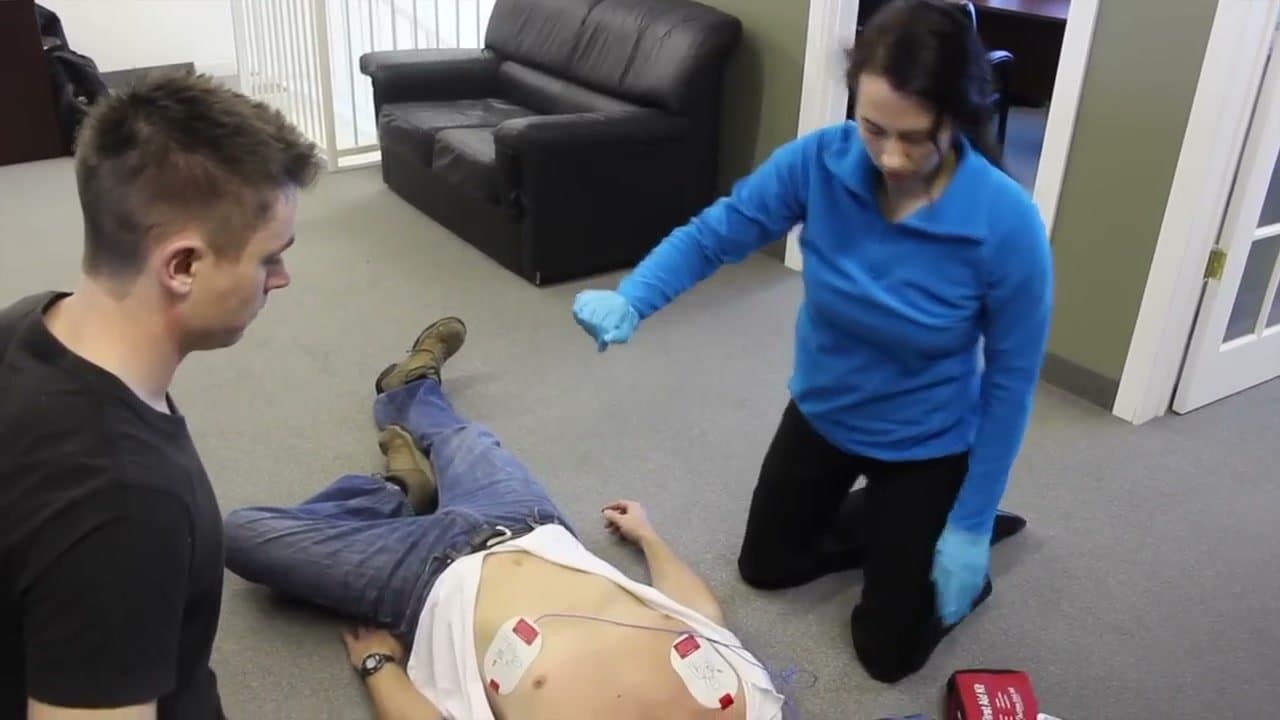
When the AED arrives, turn it on and follow the voice prompts. Remove all clothing from the patient's chest - cut it off if needed. The pads need direct skin contact.

Take the white adhesive pads out of the protective cover. Place each pad exactly as shown in the diagram on the pad itself: one upper-right chest, one lower-left side. Press firmly to bare skin. The AED won't analyze correctly if pads are partially attached.

Tip

If the chest is wet (sweat, water), wipe it dry first or pads won't stick. If chest hair is thick, the AED kit usually includes a small razor for shaving the pad areas.

6

Step 6: Stand Clear While the AED Analyzes and Shocks

2:25
Step 6: Step 6: Stand Clear While the AED Analyzes and Shocks

The AED says 'Analyzing - no one should touch the patient.' Stop compressions and lean back, hands off. If a shock is advised, the AED says 'Stay clear of patient' and an orange button flashes. Press it. The AED delivers the shock automatically.

Resume CPR immediately after the shock - don't wait. The AED tells you when to stop again to re-analyze (every 2 minutes). Keep cycling until paramedics take over.

Your Guide

Action First Aid

As an Amazon Associate we earn from qualifying purchases. Links on this page may be affiliate links - clicking them and buying doesn't change your price, but helps support ShowMeStepByStep.

Tags

Related Tutorials