How to Prune Tomato Plants for Maximum Yield (8-Step Guide)

GardeningEasy13:488 stepsBrowse more →

By ShowMeStepByStepPublished Updated

Based on a video by Epic Gardening.

Pruning tomatoes is one of those gardening topics where every grower seems to have a different opinion. The truth is the right method depends entirely on what type of tomato you planted. Determinate varieties want a light touch. Indeterminate varieties want a strategy.

Kevin from Epic Gardening grows tomatoes in San Diego where the season runs into November, so he has spent years dialing in the cuts that pay off. The core idea is simple. Leaves on the inside of a bushy plant are shaded out and stop pulling their weight. Disease loves still, humid air trapped in dense foliage. Pruning fixes both problems and pushes the plant's energy into fruit instead of unproductive growth.

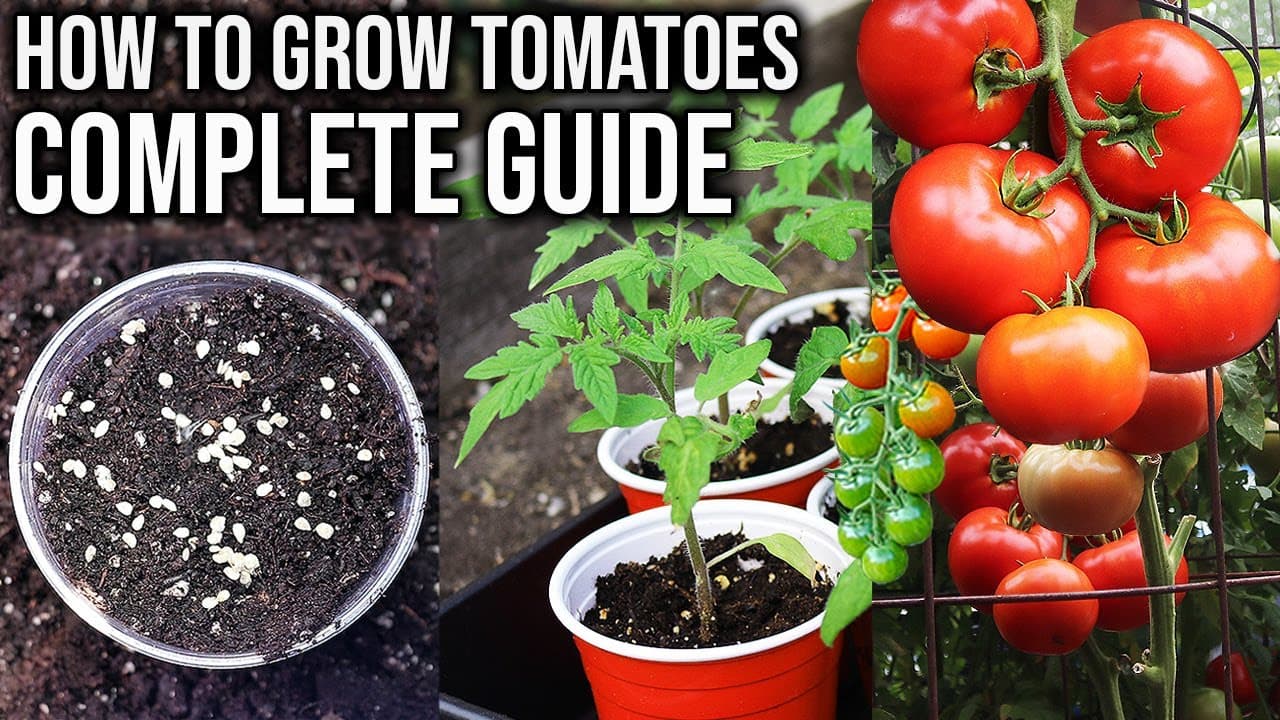
If you have not started your plants yet, start tomatoes from seed first, then come back here once they have hit eighteen inches. Pair this with our guides on planting onion sets and deadheading roses for a productive summer garden.

Step-by-Step Guide

1

Determinate or Indeterminate? Identify Your Plant First

2:38
Step 1: Determinate or Indeterminate? Identify Your Plant First

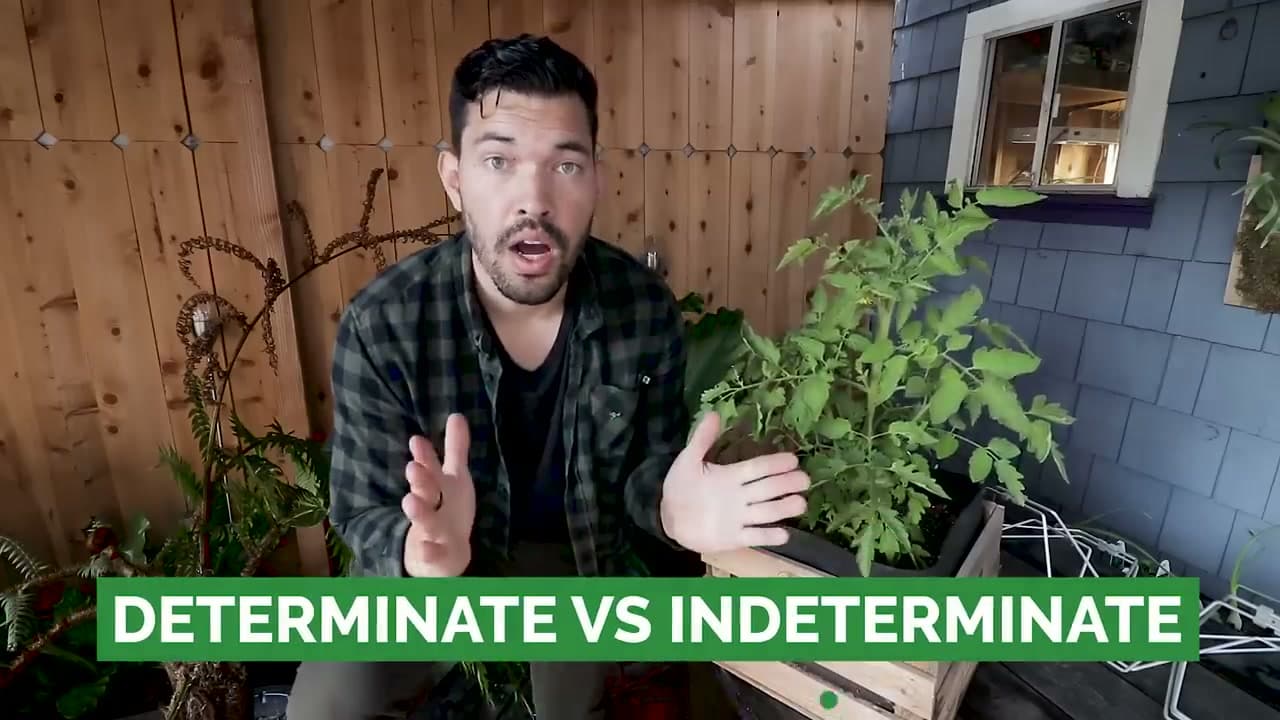
Pruning rules differ by tomato type, so this is the step that has to come before anything else. Determinate varieties grow to a set height, usually four to five feet, and finish with a flower bud at the very tip of the main stem. They fruit all at once over a short window. Indeterminate varieties have no terminal bud and just keep growing until frost knocks them down.

Check the seed packet, the plant tag, or look up the variety name. If the tag is gone and the plant has already topped itself with a cluster of flowers at the highest point, it is determinate. If the central leader keeps reaching upward with no end in sight by midsummer, it is indeterminate.

Tip

Dwarf indeterminate varieties are technically indeterminate but stay compact. Treat them like determinates for pruning - light touch, do not over-cut.

2

Spot a Sucker Without Cutting the Main Stem

4:55
Step 2: Spot a Sucker Without Cutting the Main Stem

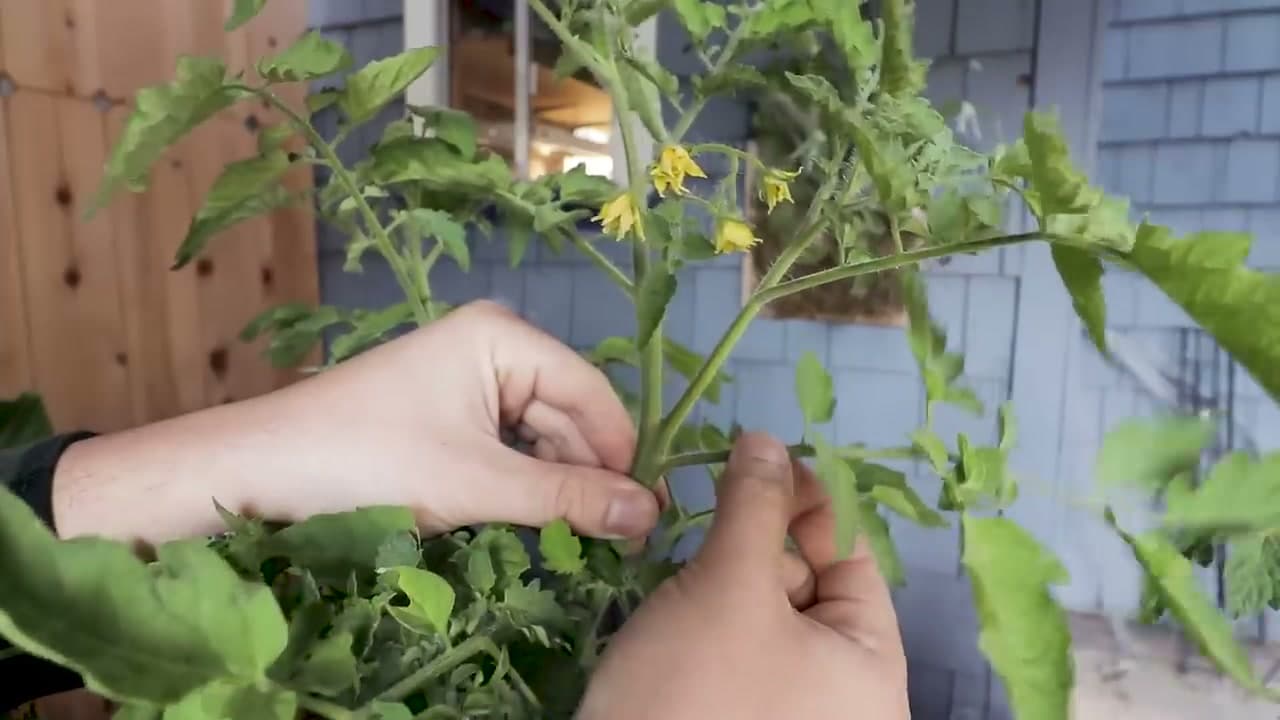
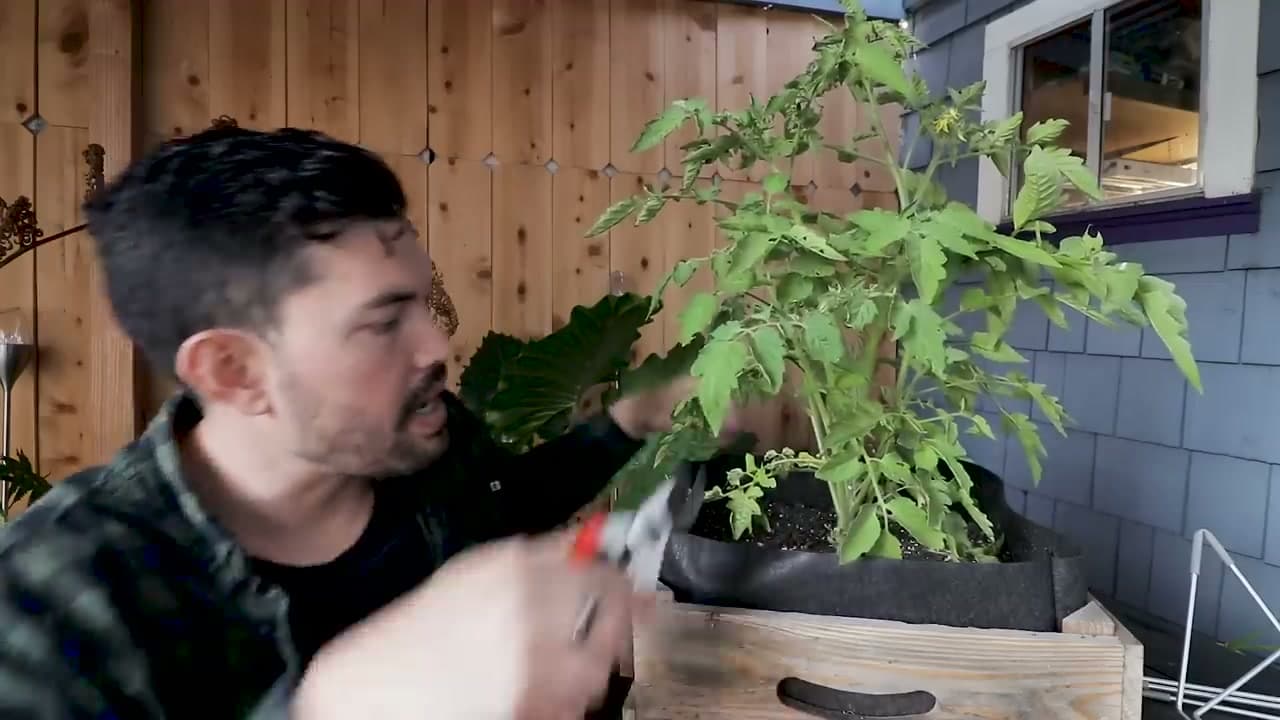
A sucker is a small shoot that grows at a 45-degree angle from the V where a leaf branch meets the main stem. Find one, then look above it on the same main stem. You should see another leaf node, and probably a flower bud forming. That confirms what you are looking at is a sucker and not the main leader itself.

This is the cut that gets people in trouble. Snip the wrong stem and you have decapitated the plant. Take ten seconds to trace the path before every cut, especially on younger plants where the main stem and a strong sucker can look almost identical.

Tip

Young suckers are pale green and softer than the woody main stem. Run your finger up the suspect stem - the main leader gets thicker toward the base, a sucker usually does not.

3

Prune Determinate Tomatoes (Below the First Flower Cluster Only)

6:45
Step 3: Prune Determinate Tomatoes (Below the First Flower Cluster Only)

On a determinate plant, find the first flower bud cluster on the main stem. Remove every sucker and lower leaf below that point. That is it. Anything above the first flower cluster stays - cutting it off just deletes fruit you would have eaten.

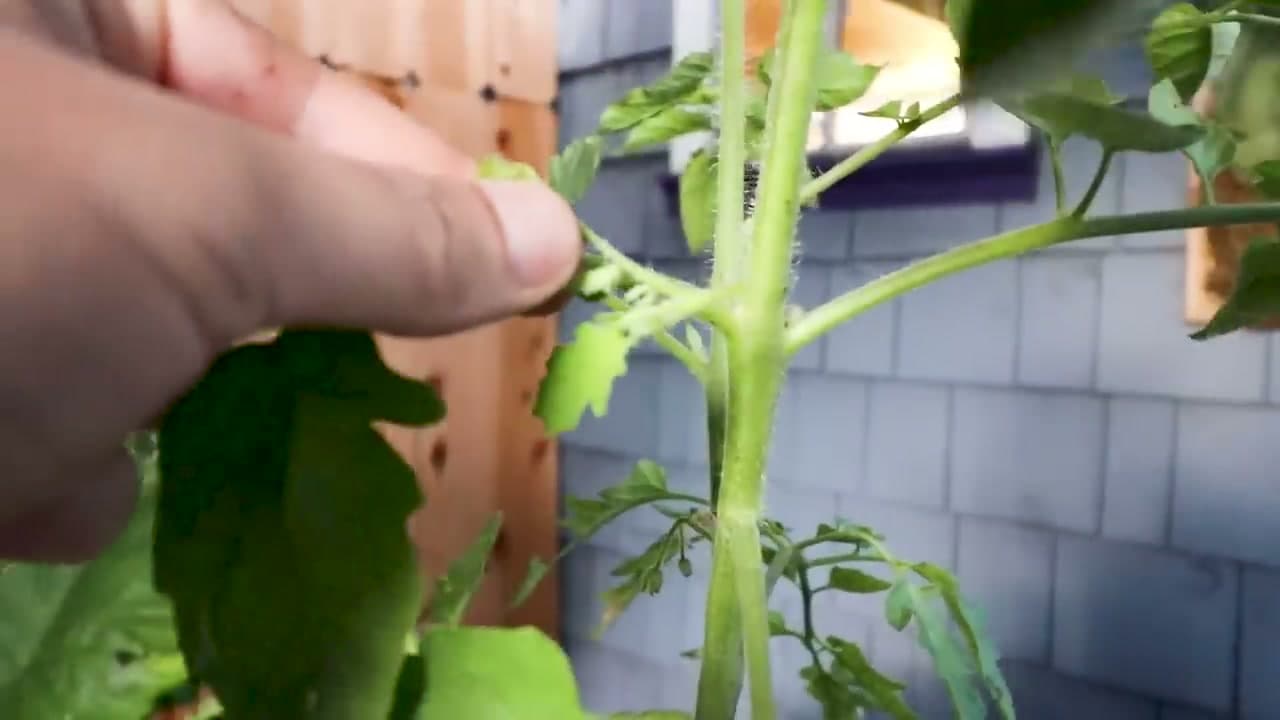
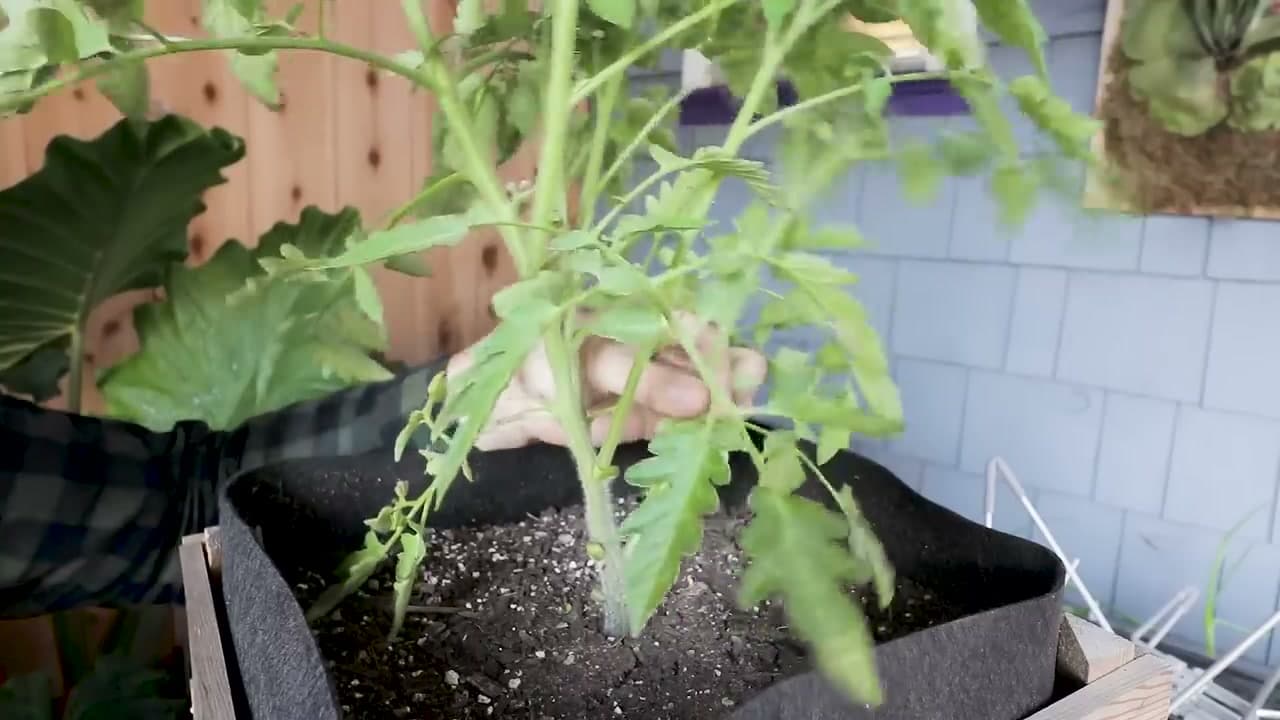
Young suckers like the one in this photo pinch right off between your thumb and forefinger. Older, woody suckers need clean shears. Also strip any leaves that are touching the soil. Leaf-to-soil contact is how soil-borne diseases get a foothold.

Tip

Pinching young suckers causes less damage than cutting them with shears. The wound is smaller and seals faster. Make a habit of walking the garden every few days and pinching them while they are still tiny.

4

Sterilize Your Shears Between Plants

6:55
Step 4: Sterilize Your Shears Between Plants

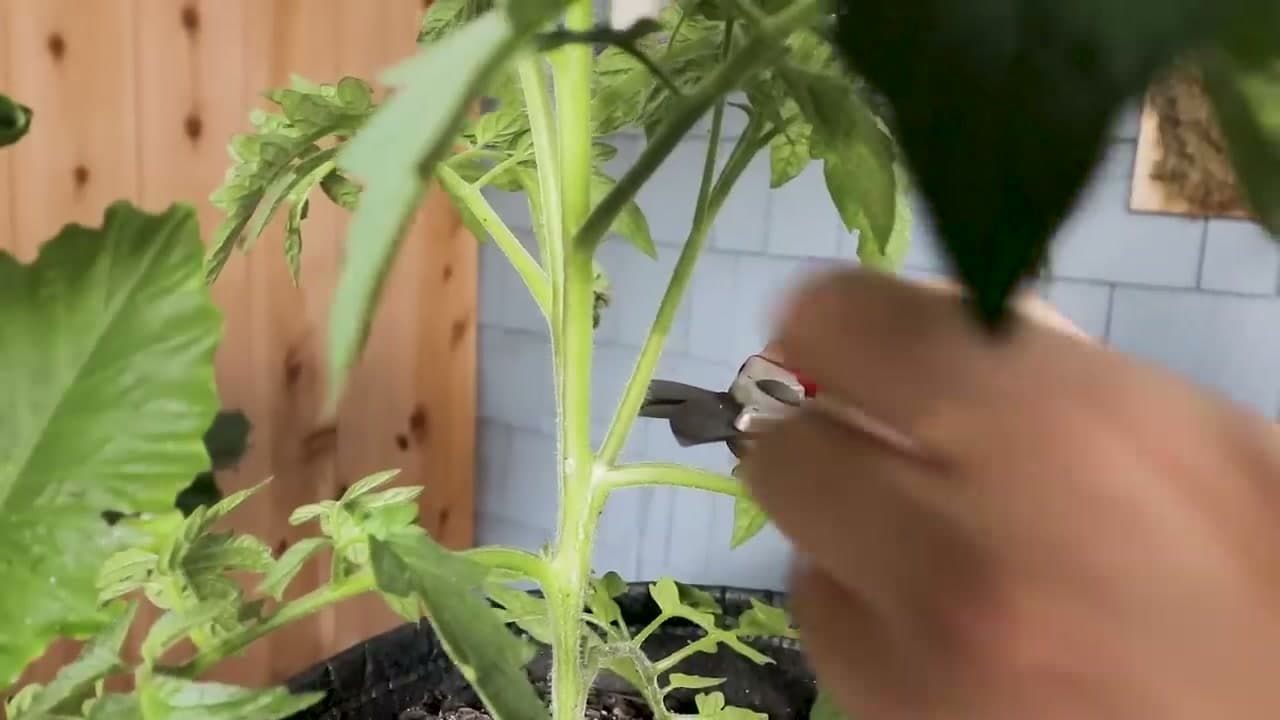
Tomato diseases like early blight, septoria leaf spot, and tobacco mosaic virus ride on the blades of your pruning shears. Cut a diseased plant, then cut a healthy one, and you have spread the infection across the row.

Wipe both blades with a cloth dampened in isopropyl alcohol between every plant. It takes two seconds and saves you from losing the back half of your crop in August. Carry the bottle and the cloth in a back pocket while you work.

Tip

A spray bottle of 70 percent isopropyl works just as well as wiping. Hydrogen peroxide and a quick flame from a lighter both work too. Plain water is not enough - it does not kill viruses.

5

Indeterminate Plants - Start With a Bottom Cleanup

7:50
Step 5: Indeterminate Plants - Start With a Bottom Cleanup

Before you start picking which suckers to keep, do a basic cleanup pass. Remove every leaf and branch in the bottom twelve inches of the plant. Anything touching or splashing onto the soil comes off. Anything that looks yellow, spotted, or chewed comes off.

This opens up airflow at the base where disease loves to take hold, and it gives you space to interplant low growers like basil, lettuce, or marigolds underneath. The plant will not miss those lower leaves - they were getting shaded out anyway.

Tip

If a lower leaf already shows yellow or brown spots, bag it and trash it. Do not compost diseased tomato leaves - the spores survive most home compost piles and will reinfect next year's plants.

6

Choose How Many Leaders to Run

10:05
Step 6: Choose How Many Leaders to Run

Indeterminate plants give you a choice. A single leader means you snip every sucker so the plant runs one strong main stem. A double leader keeps one strong sucker as a second main stem. Triple leader keeps two. Four is the practical limit - past that, you are not really pruning anymore.

For most home growers, double or triple leader is the sweet spot. Single leader gives the cleanest, tallest plant but the lowest total yield. Three leaders gives you more fruit with manageable airflow. Pick now and stay consistent through the season - do not flip back and forth.

Tip

If you are growing in a hot, humid climate, lean toward single or double leader. The reduced foliage cuts disease pressure dramatically. Dry Western gardens can handle three or four leaders without trouble.

7

Stake or Cage the Plant for Support

12:30
Step 7: Stake or Cage the Plant for Support

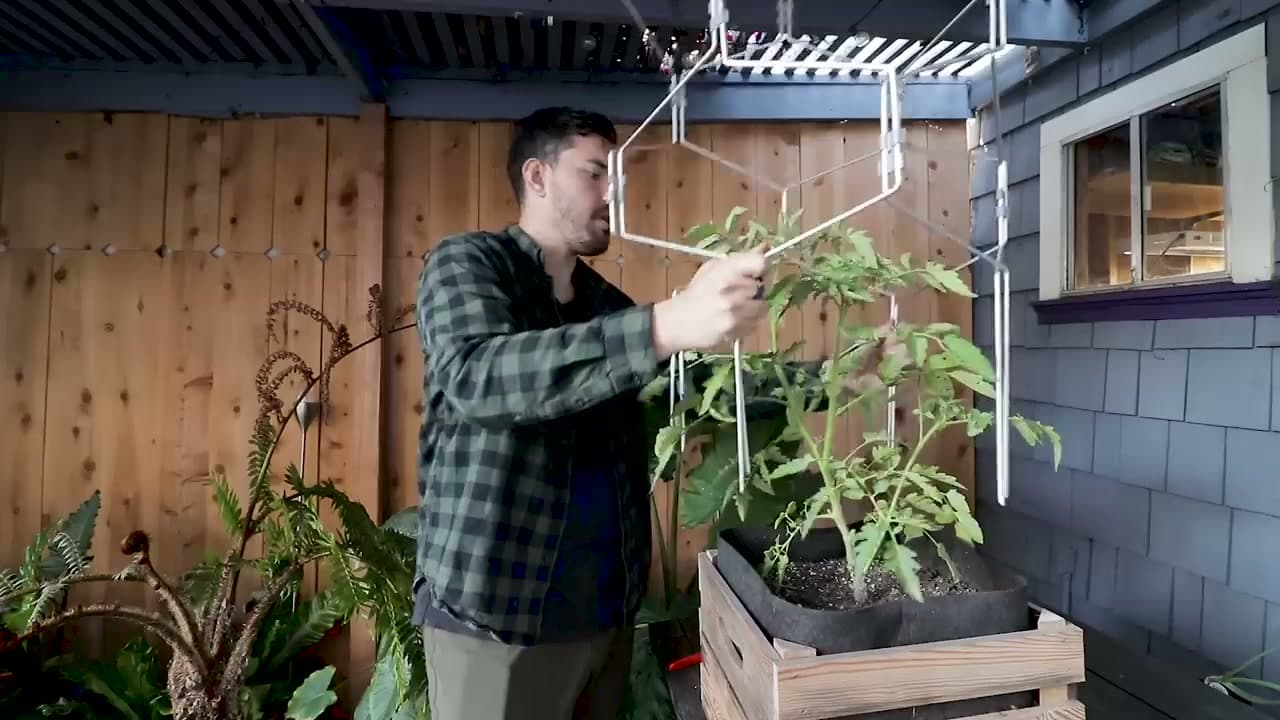
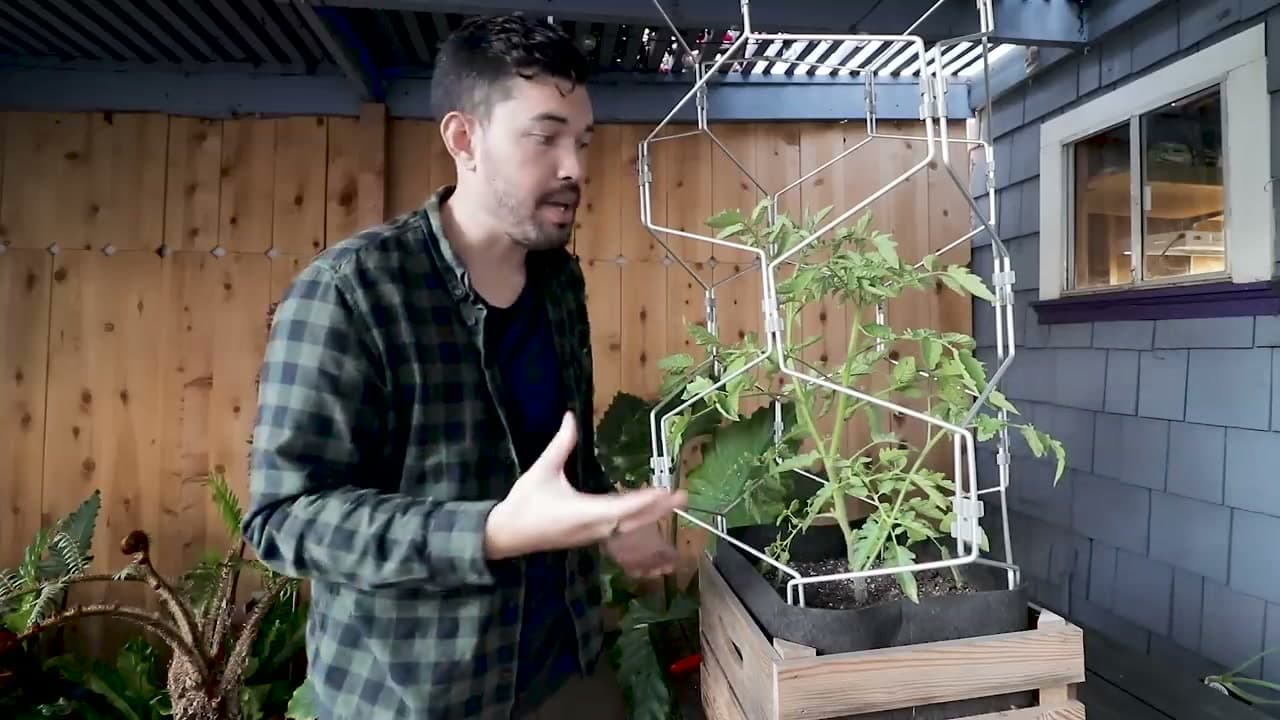
Pruning leaves the stem more exposed and a heavy fruit cluster on a thin leader will snap in a windstorm. Put a cage or stake in place now, while the plant is still small enough to thread through the wires without breaking branches.

If you stake, tie soft cloth strips or stretch tape loosely around the stem and the stake every twelve inches as the plant grows. Loose is the key word - a tight tie cuts into the stem and girdles the plant. The tie should hold the plant upright, not strap it to the post.

Tip

Standard four-foot tomato cages are too short for indeterminate varieties. Buy or build six-foot cages, or stack two standard cages and zip-tie them together.

8

Top Indeterminate Plants Four Weeks Before Frost

13:15
Step 8: Top Indeterminate Plants Four Weeks Before Frost

This is the cut you avoided all season. About four weeks before your average first frost date, cut off the very tip of every leader. The plant gets the signal that the growing season is over and stops putting energy into new leaves and flowers.

All that energy redirects into ripening the green fruit already on the vine. Without topping, you end up with dozens of unripe tomatoes still on the plant when the first freeze hits. With topping, more of them finish.

Tip

Look up the average first frost date for your zip code. Count back four to five weeks and put it on the calendar. Determinate varieties skip this step entirely - they have already topped themselves naturally.

Products Used

☐ The Checklist

How to Prune Tomato Plants for Maximum Yield (8-Step Guide)

Tools
3
Materials
2
Steps
8
Video
14 min

Your Guide

Epic Gardening

As an Amazon Associate we earn from qualifying purchases. Links on this page may be affiliate links - clicking them and buying doesn't change your price, but helps support ShowMeStepByStep.

Tags

What's next

Related collections

Curated theme pages that include this tutorial.

Weekly Digest

Liked this gardening tutorial?

Pick the categories you want to hear about. Weekly digest of new step-by-step tutorials. No spam, easy unsubscribe.

Send me tutorials about

We only email about new tutorials. Easy unsubscribe anytime.