How to Grow Tomatoes From Seed: 7 Step Beginner Guide

GardeningEasy12:417 steps

By ShowMeStepByStepPublished Updated

Based on a video by Next Level Gardening.

The success of your tomato season starts the day you sow the seeds. Crowded roots, shallow containers, or overwatered seedlings all show up months later as weak plants and disappointing harvests. This method gives you a packed, healthy root system before the seedling ever touches the garden.

This walkthrough from Brian at Next Level Gardening breaks the technique into seven clear steps. The same process works for eggplant - just add bottom heat from a seed mat. The 'supercharge' step at the end (filling the cup with more soil to bury the stem) is what separates a strong transplant from an average one.

Step-by-Step Guide

1

Step 1: Pick Tall Containers (Solo Cups Work Great)

3:15
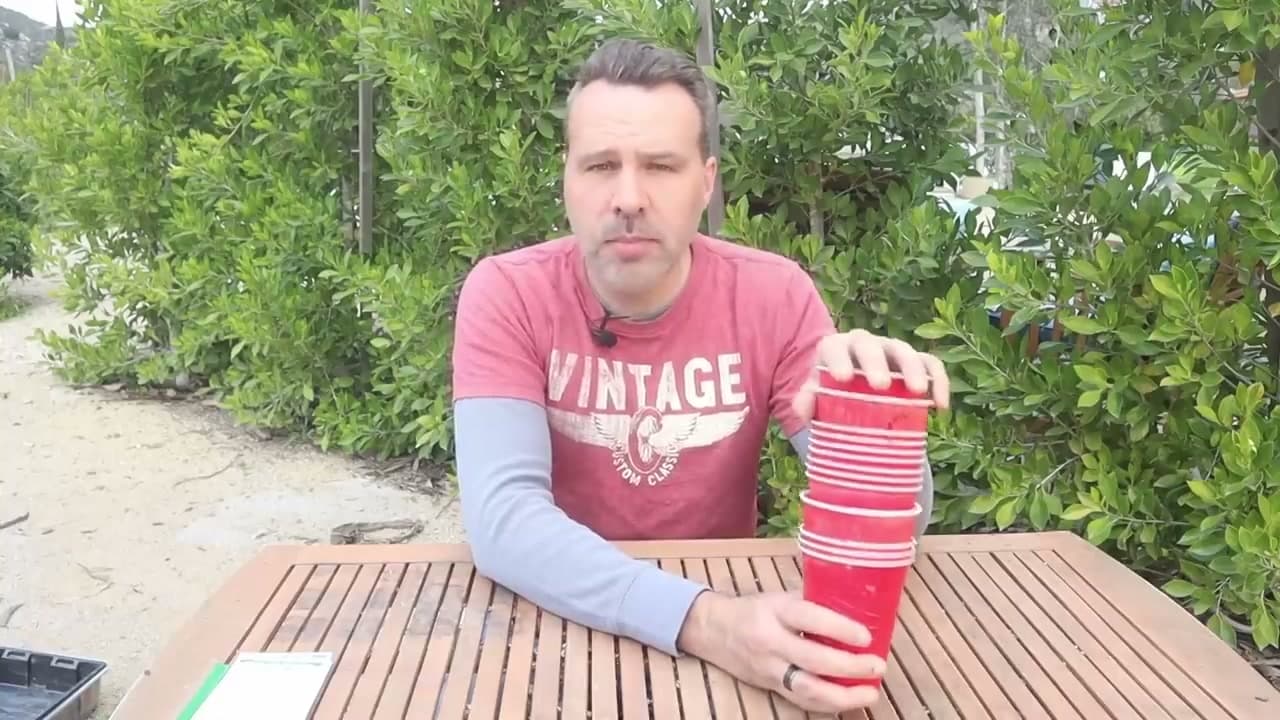
Step 1: Step 1: Pick Tall Containers (Solo Cups Work Great)

Tomato and eggplant seedlings grow extra roots along any part of the stem that's buried in soil. The taller the container, the more stem you can bury, and the more roots you get before transplant.

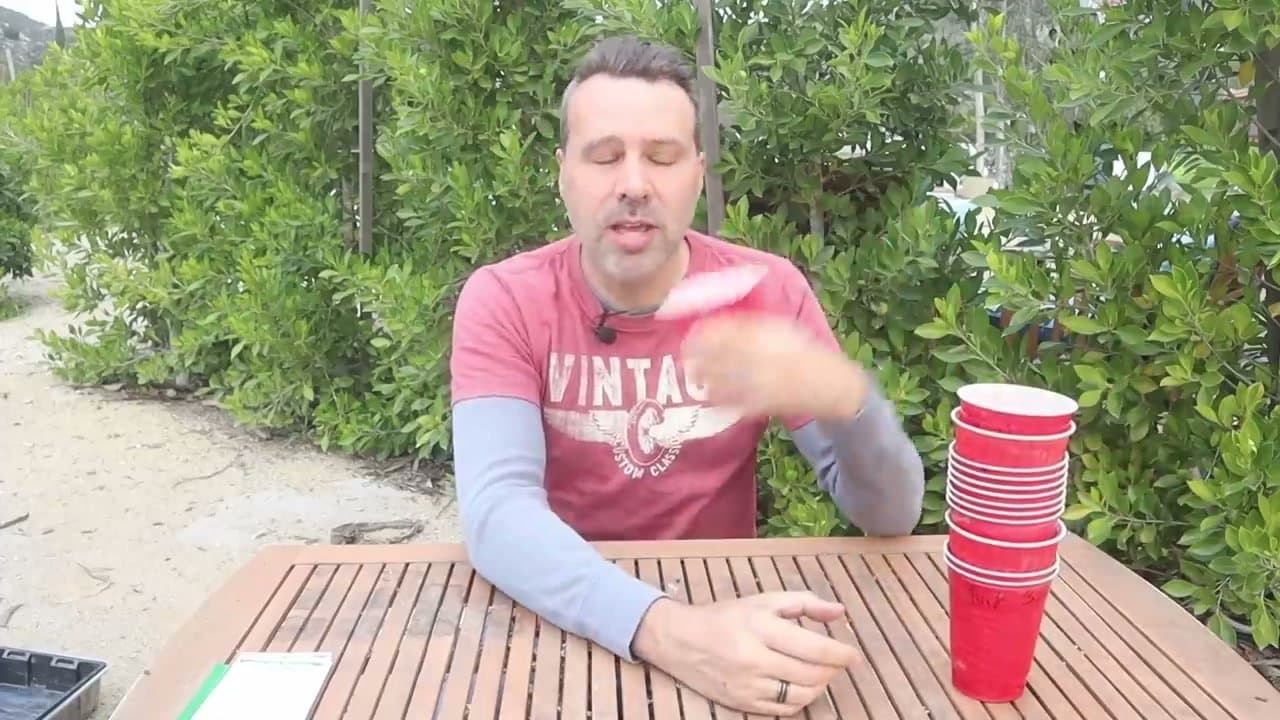
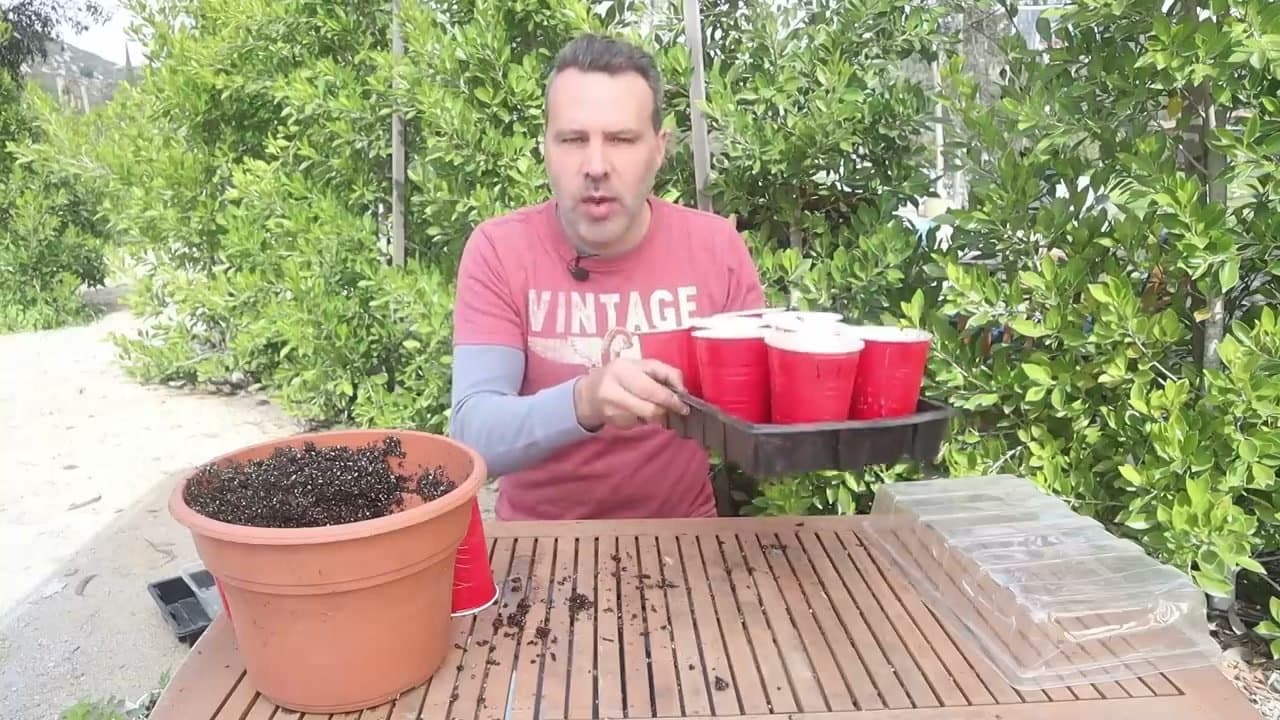
16-ounce red Solo cups are nearly perfect - tall enough for plenty of stem burial, cheap, and you can wash and reuse them for years. The 24-ounce cups work too if you're starting unusually early. Skip the short flat cells most seed-starting kits include.

Products used in this step

2

Step 2: Cut Drainage Holes in the Bottom

4:00
Step 2: Step 2: Cut Drainage Holes in the Bottom

Drill one large center hole or four smaller holes around the bottom edge with scissors. A soldering iron melts holes cleanly but smells bad - do that outdoors if you go that route.

You can stack several cups and drill through all of them at once to save time. Just don't skip the holes entirely - waterlogged soil is the fastest way to kill tomato seedlings before they sprout.

3

Step 3: Fill Cups Less Than Halfway With Mix

6:15
Step 3: Step 3: Fill Cups Less Than Halfway With Mix

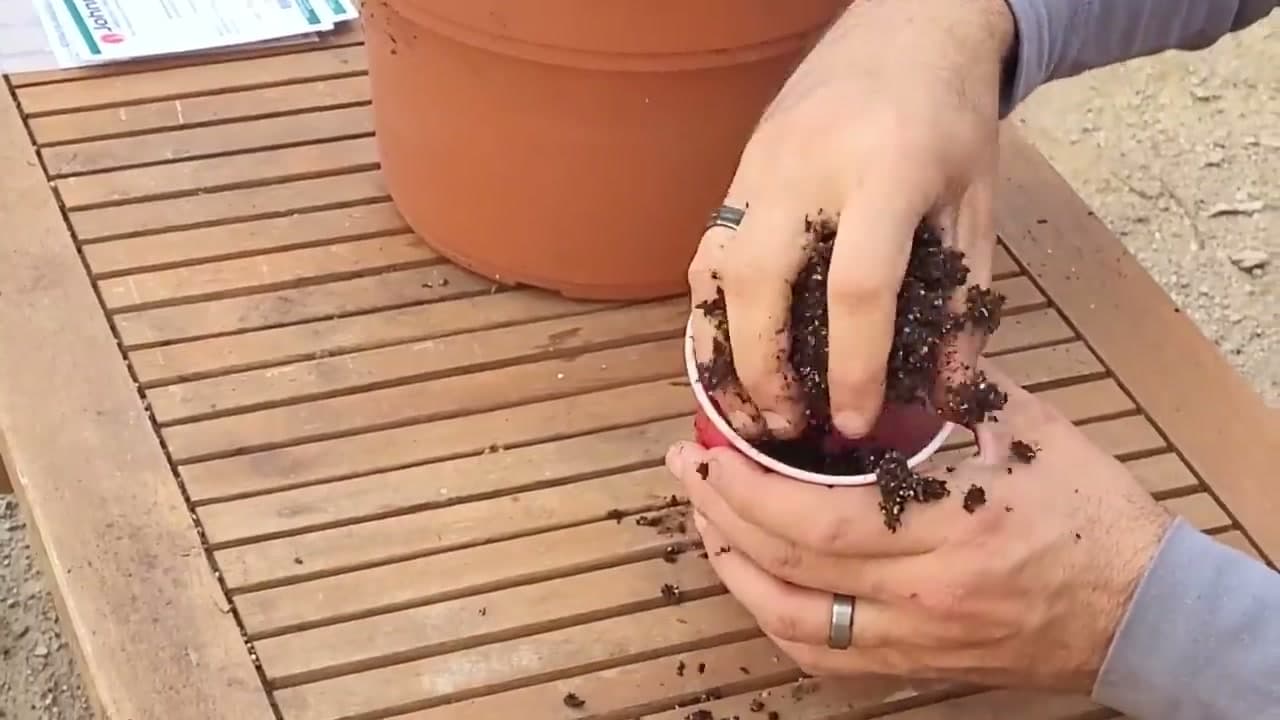
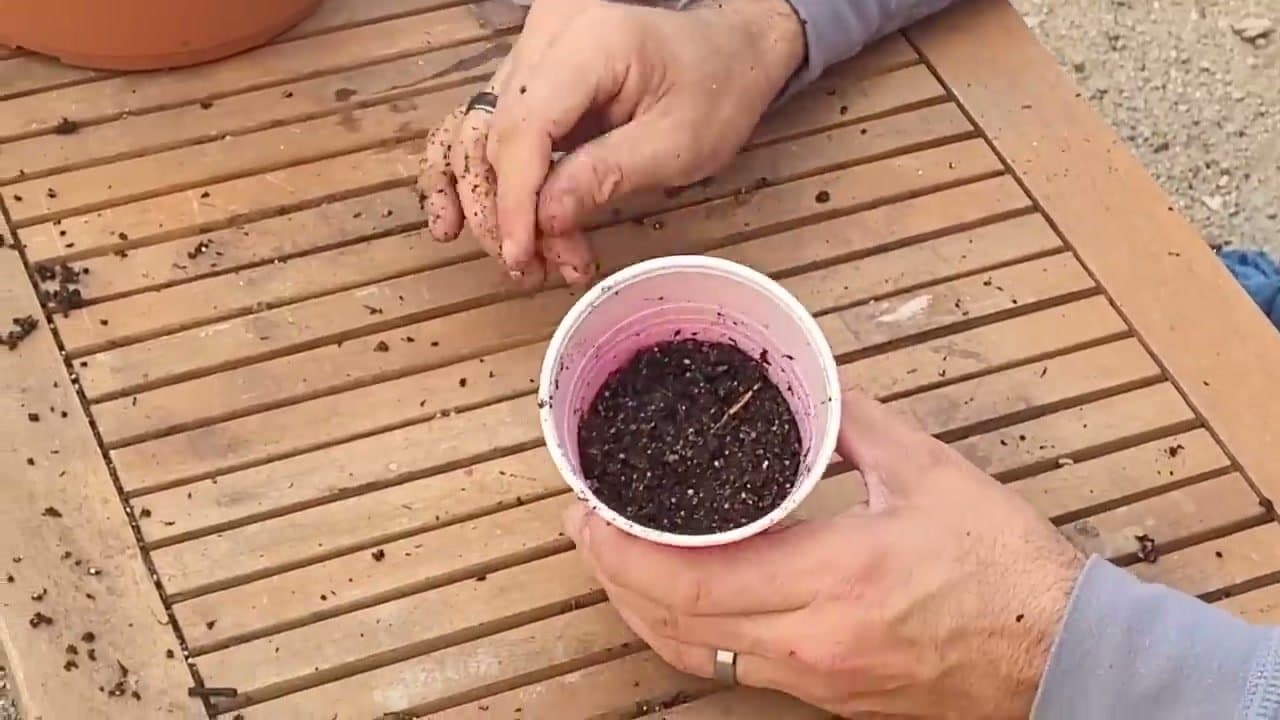
Use a pre-moistened seed starting mix (not regular potting soil - the texture is too coarse). The mix should feel like a wrung-out sponge: moist all the way through but no water dripping when you squeeze.

Critical: only fill each cup to less than halfway. The empty space above is where you'll add more soil later in step 7 to bury the stem. If you fill the cup now, you can't supercharge it later.

Products used in this step

4

Step 4: Plant 2 Seeds Per Cup

6:35
Step 4: Step 4: Plant 2 Seeds Per Cup

Drop two seeds into each cup. Press them down gently and cover with a thin sprinkling of mix - just 1/8 to 1/4 inch deep. Tomato seeds are small; bury them too deep and they'll exhaust themselves before they reach the light.

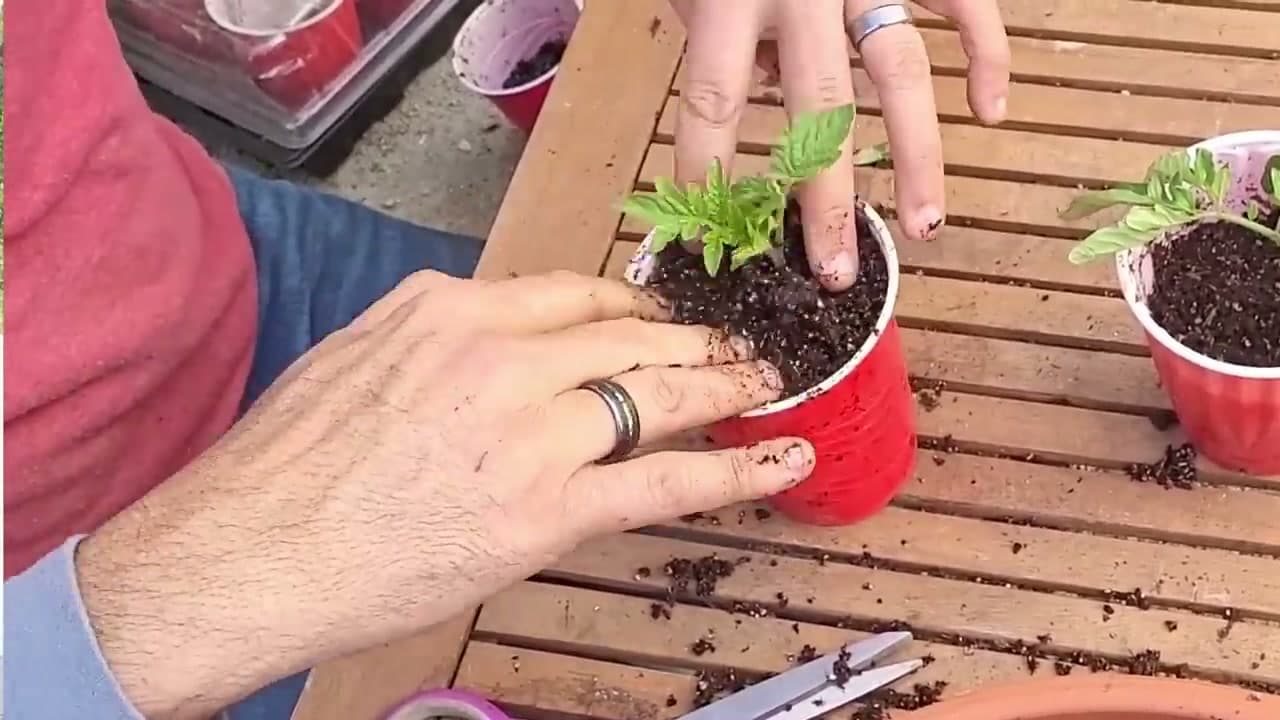
The second seed is insurance. Once both germinate, snip the weaker seedling at the base with scissors (don't pull it out - that disturbs the roots of the keeper).

Products used in this step

5

Step 5: Cover With a Humidity Dome

8:30
Step 5: Step 5: Cover With a Humidity Dome

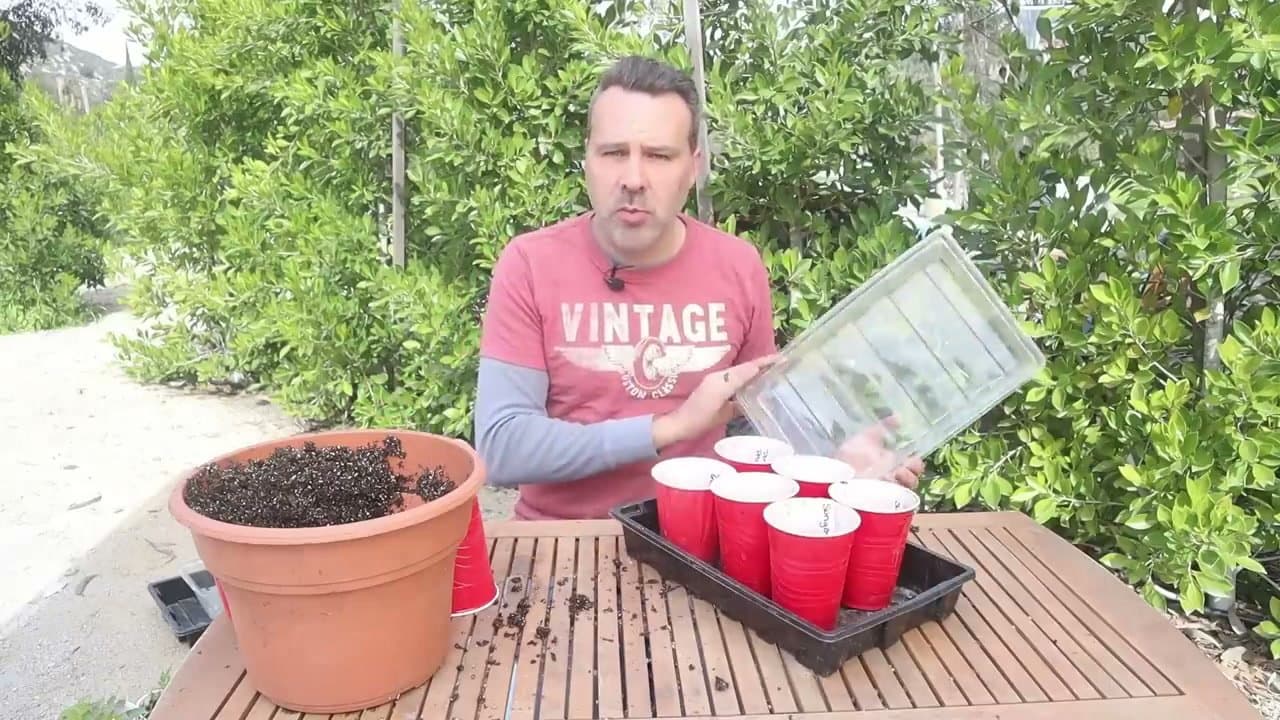
Place the tray of cups inside a humidity dome (clear plastic cover) to lock in moisture. The dome doesn't need to seal completely - just a loose cover keeps the surface from drying out before germination.

Tomatoes germinate in 7-10 days at room temperature. Check the soil every couple of days and mist if it looks dry. The moment you see green sprouts, take the dome off - leaving it on after germination causes damping-off fungus.

6

Step 6: Use a Heat Mat to Speed Germination (Optional)

9:05
Step 6: Step 6: Use a Heat Mat to Speed Germination (Optional)

A seed heat mat under the tray keeps soil temperature around 70°F, which roughly halves germination time for tomatoes. Eggplant pretty much requires it - their seeds barely germinate below 70°F.

Turn the mat off the moment seeds sprout. Continued heat after germination forces leggy weak growth. The dome and mat both come off at the same time.

Products used in this step

7

Step 7: Supercharge by Filling the Cup at Transplant Stage

10:25
Step 7: Step 7: Supercharge by Filling the Cup at Transplant Stage

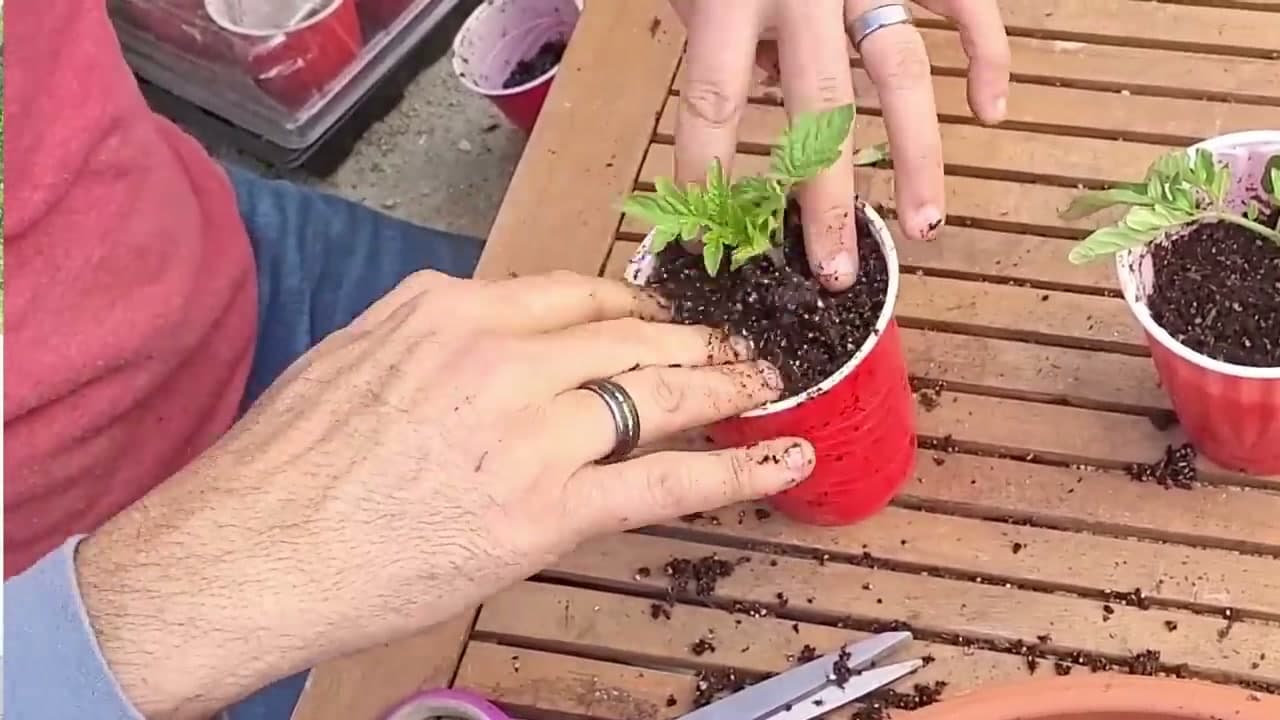
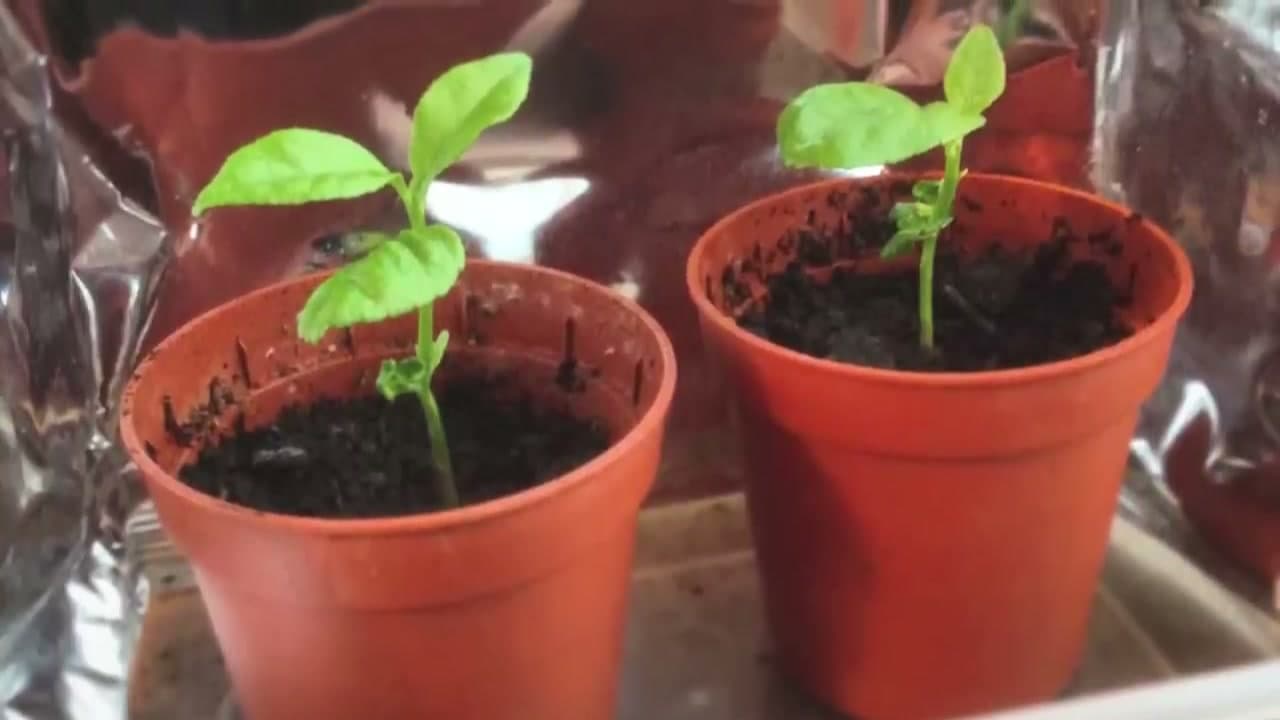
When the seedlings reach the top of the cup, fill the rest of the cup with more pre-moistened mix - right up to the lower set of leaves. The buried stem develops adventitious roots within days.

By the time you transplant into the garden, the entire cup is packed with roots growing off the stem. That root mass shocks less, establishes faster, and produces more fruit than a seedling grown the old way. Skip this step and you've wasted the tall container.

Tip

Once seedlings have their first true leaves (the second pair, not the round seed leaves), start fertilizing every two weeks with half-strength liquid organic fertilizer. Neptune's Harvest fish-and-seaweed formula is a popular choice; any well-balanced liquid organic feed works.

Products Used

☐ The Checklist

How to Grow Tomatoes From Seed: 7 Step Beginner Guide

Tools
4
Materials
3
Steps
7
Video
13 min

Your Guide

Next Level Gardening

As an Amazon Associate we earn from qualifying purchases. Links on this page may be affiliate links - clicking them and buying doesn't change your price, but helps support ShowMeStepByStep.

Tags

Related Tutorials