Rosemary is the easiest herb in the garden to dry. The needles are already low in
moisture, so they hold their oils better than basil or parsley and they do not go brown
on you. A bundle hung in a dry room will be ready to crumble in about two weeks, and a
tray in the oven takes under an hour.
Which method you pick mostly comes down to how much rosemary you cut and how soon you
want it.
Hang drying rosemary in bundles
This is the method most people picture, and it is the one worth doing if you cut more
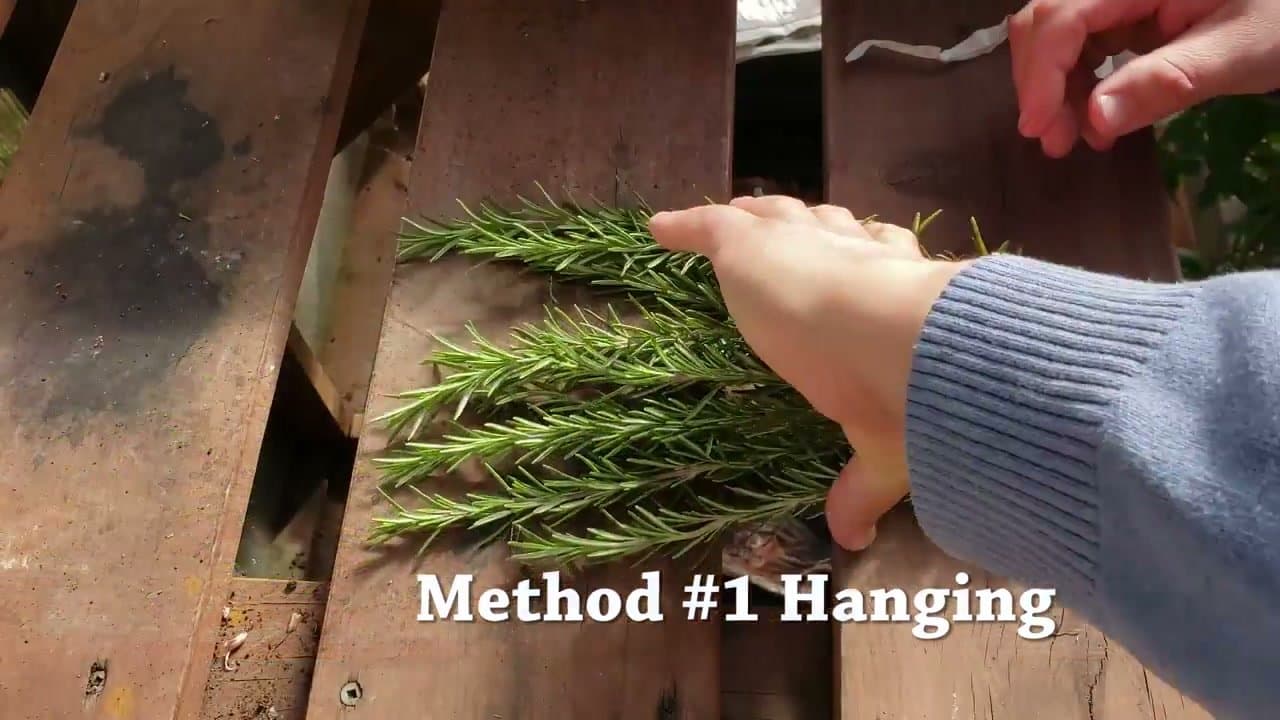
than a handful. Gather 6 to 10 sprigs, wrap a rubber band around the cut ends, and hang
the bundle upside down somewhere warm, dark and moving with air. A pantry, a cupboard with
the door cracked, or a hook on the back of a kitchen door all work.
Use a rubber band rather than string. The stems shrink as they dry and a knot goes
slack, which is how bundles end up on the floor.
Keep the bundles small. A fat bunch traps humidity in the middle and that inner core
turns musty while the outside is already crisp. Two thin bundles beat one thick one every
time.
Hang them out of direct sun. Light bleaches the needles from deep green to grey and
takes some of the aroma with it. Two weeks is typical. Three if your house is humid.
Drying rosemary in the oven
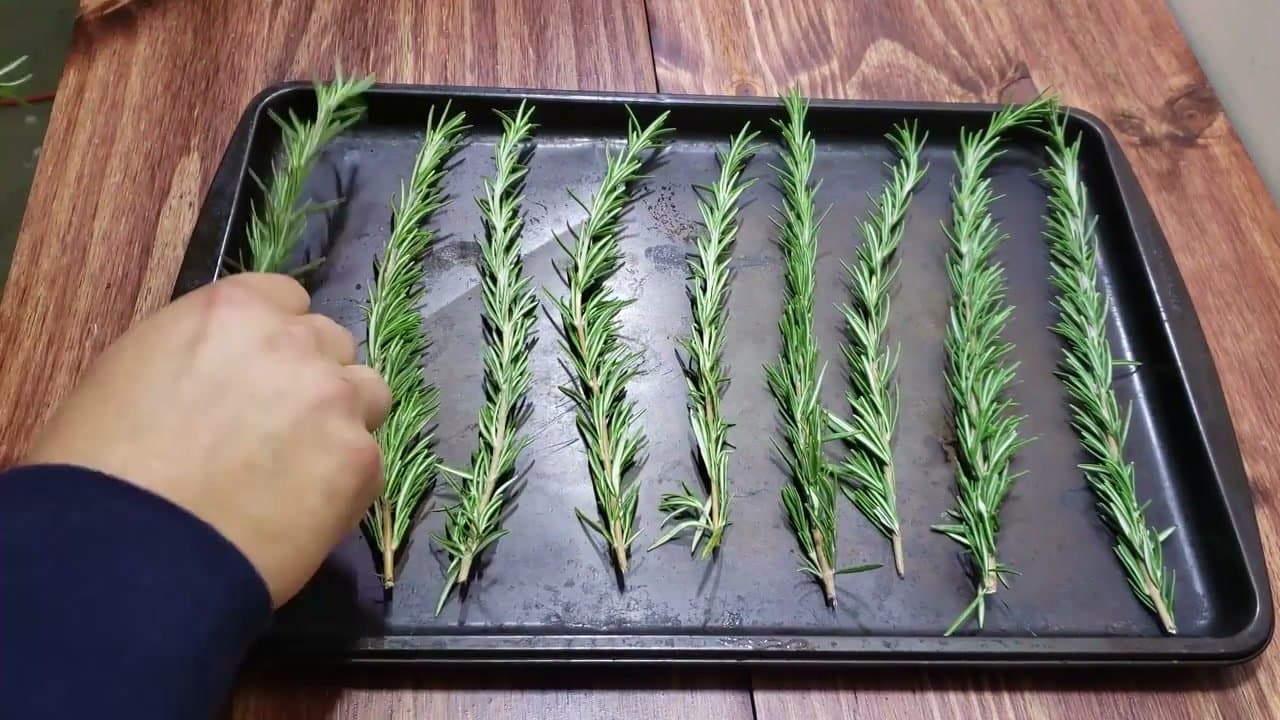
When you want it the same day, the oven is the answer. Strip nothing yet - lay whole
sprigs in a single layer on a baking sheet, no overlapping.
Set the oven as low as it goes, ideally 170°F to 200°F. Prop the door open with a
wooden spoon so moisture escapes instead of steaming the herb. Check at 30 minutes, then
every 15 after that. Most batches are done between 45 minutes and an hour.
The risk here is heat, not time. Above about 200°F the volatile oils cook off and you
are left with green dust that smells like hay. If your oven runs hot or has no setting
below 250°F, hang drying is the safer choice.
Drying rosemary in a dehydrator
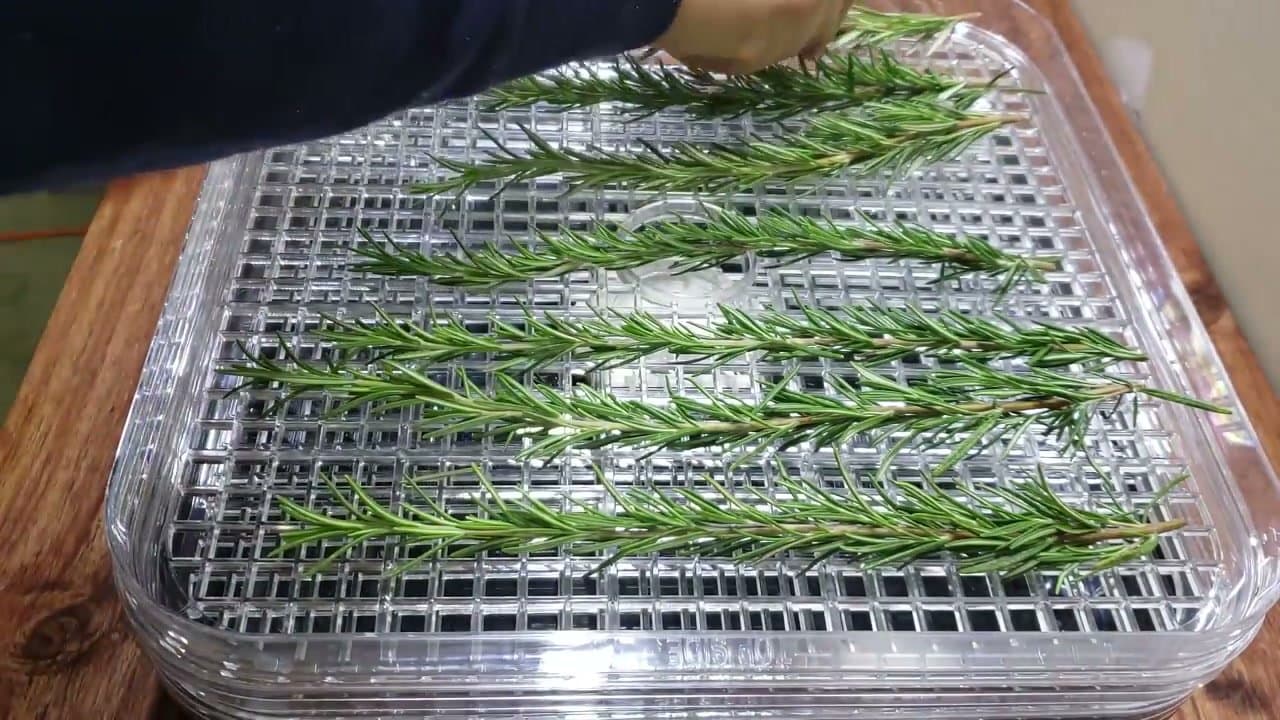
A dehydrator gives you the most control. Lay the sprigs on the trays without crowding,
set it to 95°F to 115°F, and leave it for 2 to 4 hours. Rotate the trays once if
your model does not have a rear fan.
The low temperature is the whole point. You are removing water while leaving the
resinous oils in the needle, which is what keeps dried rosemary tasting like rosemary
instead of tasting like nothing.
How to tell when it is actually dry
Take one needle and bend it. Dry rosemary snaps. If it bends without breaking, there is
still water in there and it will mould in the jar within a month.
The stems are the honest test. Needles crisp up well before the stem does, so check a
stem too - it should break cleanly rather than fold.
Stripping the needles and storing them
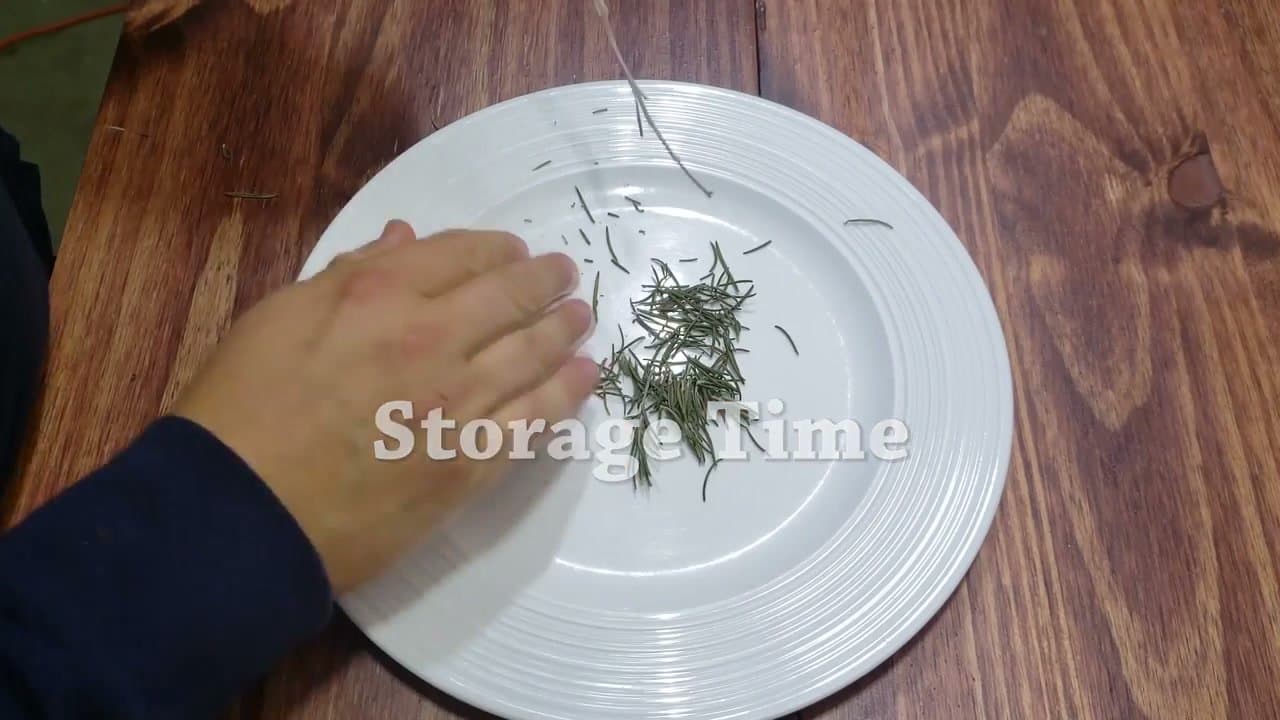
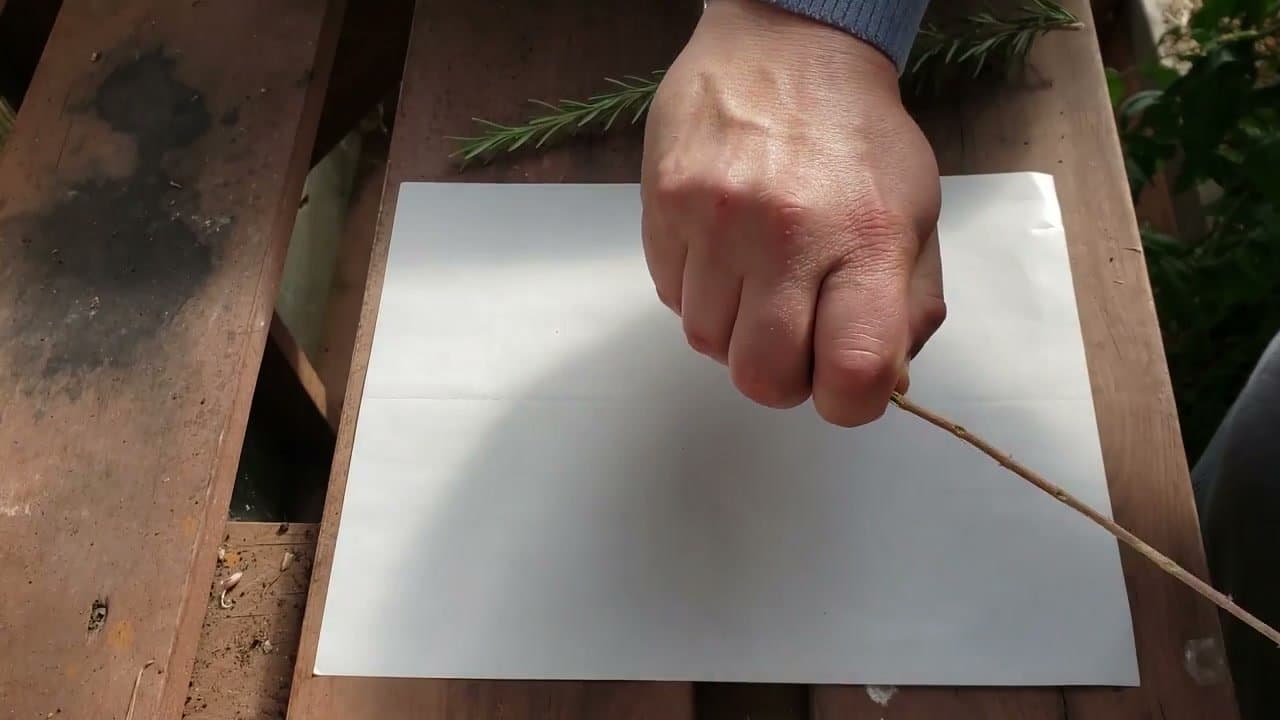
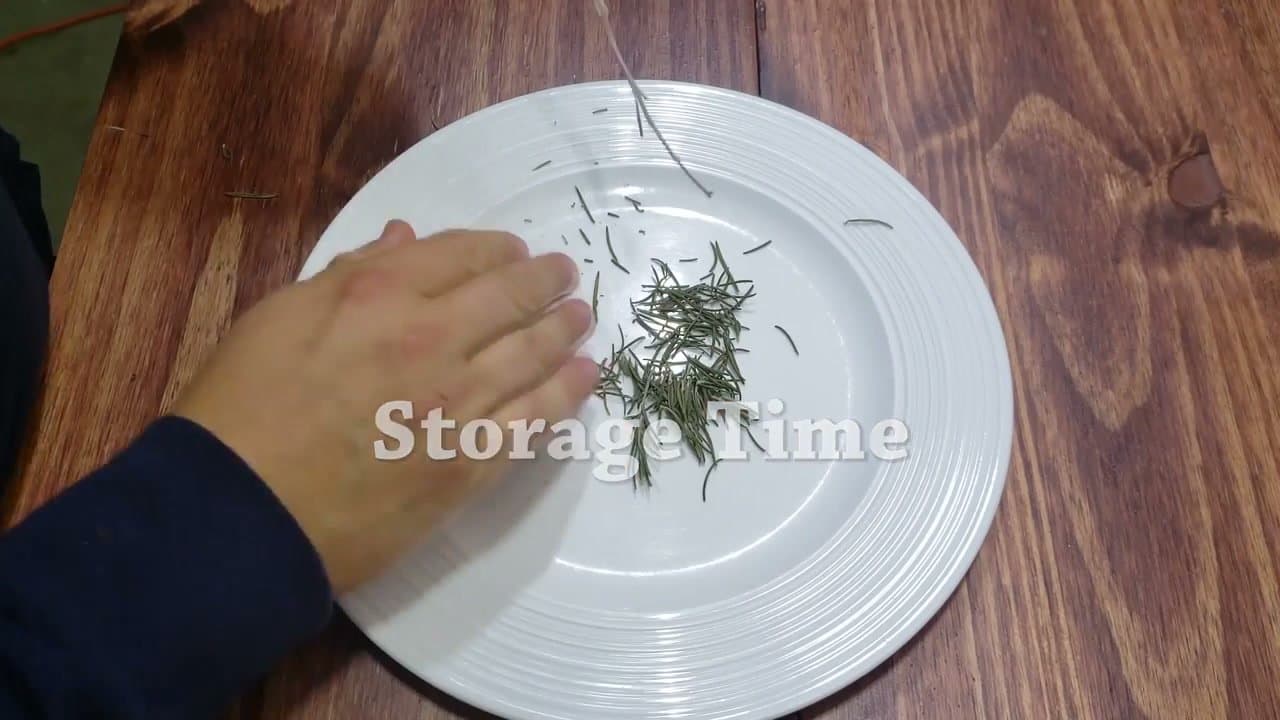
Hold the sprig by the tip and run your fingers down the stem against the grain. The
needles come off in one motion. Do this over a bowl or a sheet of paper, because they
scatter.
Store them whole. Crushing rosemary breaks open the oil glands, and once those are open
the flavour starts leaving. Crumble what you need as you cook, not in advance.
An airtight jar in a dark cupboard keeps whole dried rosemary good for about a year,
though it is at its best in the first six months. Skip the spot above the stove - heat and
steam are what kill stored herbs, not time.
If you see any condensation on the inside of the jar in the first few days, tip
everything back out and dry it longer. That is the only failure mode worth watching for.
A note on when to cut
Cut in the morning after the dew has burned off and before the day heats up, which is
when the oil content in the leaf is highest. Take the top 6 to 8 inches of soft growth and
leave the woody base alone. See
how to harvest rosemary for where to make
the cut so the plant bushes out rather than going leggy.
The same four methods work for most woody herbs. Sage
and lavender dry on almost the same schedule.
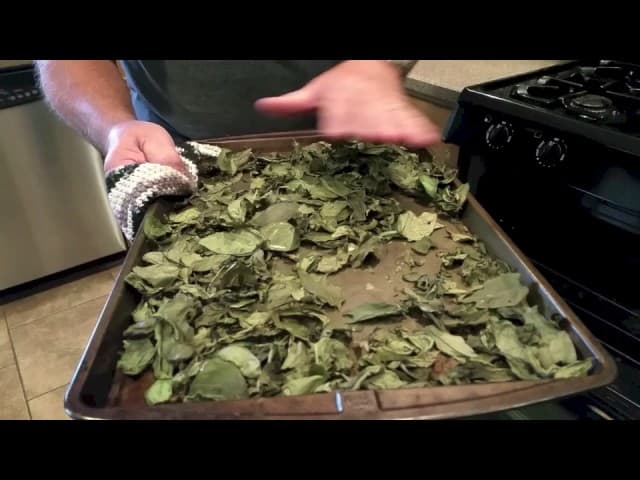
Soft herbs are different - basil and
chives hold much more water and want the oven or
the dehydrator rather than a two-week hang.