How to Dry Sage (Step by Step Guide for Storage)

By ShowMeStepByStepPublished Updated

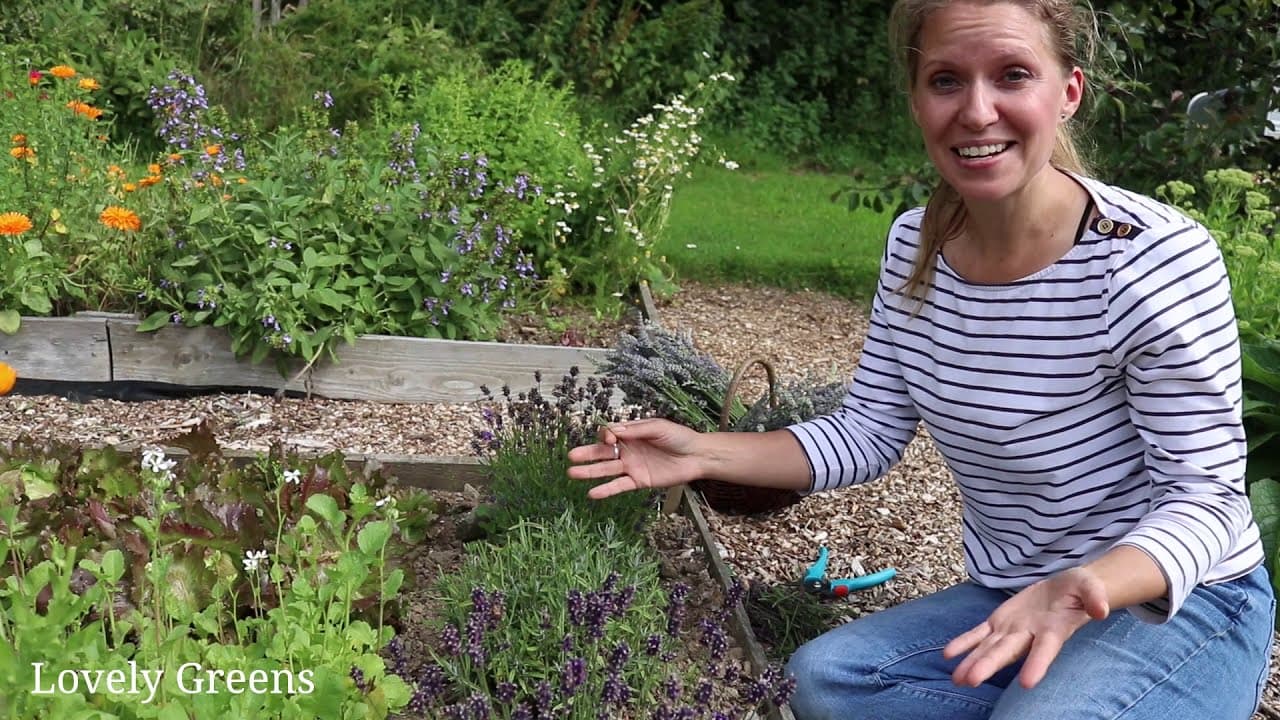
Based on a video by Tomos' Garden.

Step-by-Step Guide

1

Step 1: Gather Your Tools

0:28
Step 1: Step 1: Gather Your Tools

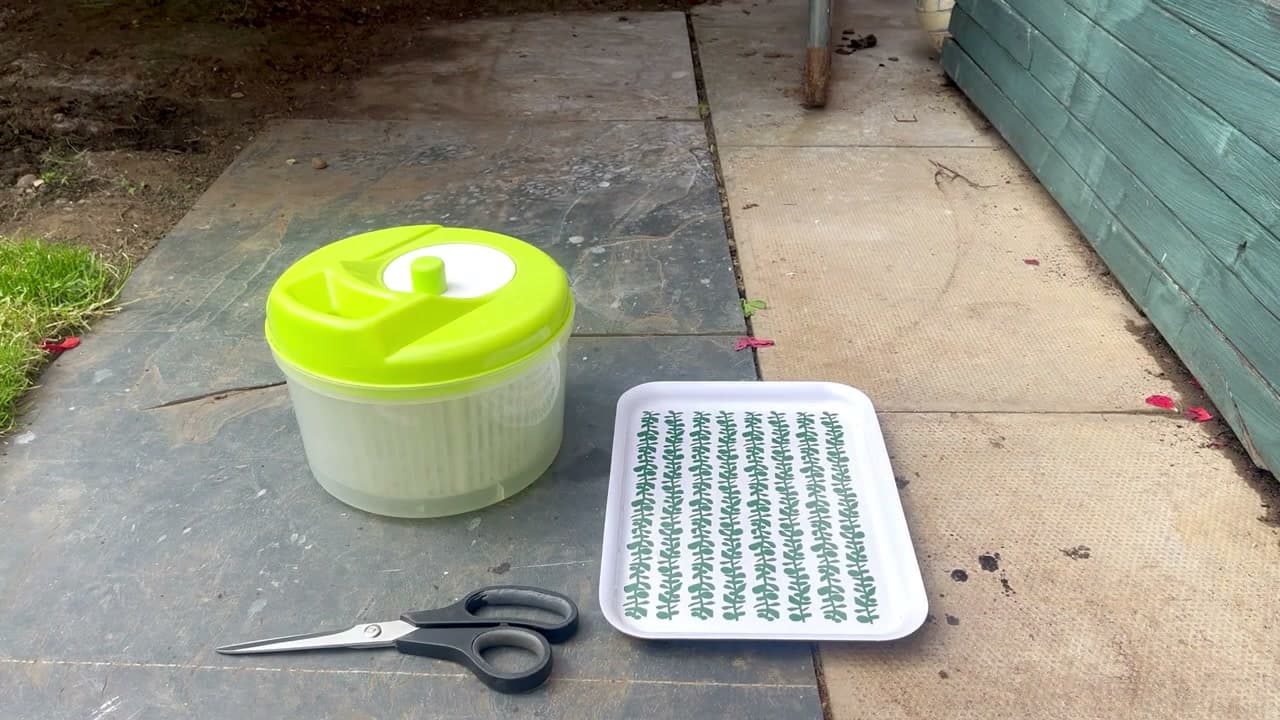
Lay everything out before you start cutting. You want a tray to catch loose leaves, a pair of sharp scissors, and a salad spinner for after the rinse. A clean mason jar with a tight lid is where the dried sage ends up, and a marker lets you date it - useful six months from now when you can't remember which jar is which.

Other methods: the walkthrough below uses passive air drying because it's the most hands-off approach and the flavor result is excellent. If you're in a hurry or you live somewhere humid, sage also dries well at low temperature in the oven (around 170-180F for 2-4 hours with the door cracked) or in a food dehydrator (around 95-115F for 2-4 hours). Same prep through Step 4 - just swap the windowsill for one of those heat sources.

If you don't have a salad spinner, a clean tea towel works for patting the leaves dry. The principle is the same: pull as much surface water off as you can before drying.

For more on preserving garden herbs, see our guides on drying rosemary, drying basil, and drying lavender.

Tip

Sage is forgiving - you don't need fancy gear. A clean kitchen and a windowsill that gets some sun are the only real requirements.
2

Step 2: Cut the Sage From the Plant

1:10
Step 2: Step 2: Cut the Sage From the Plant

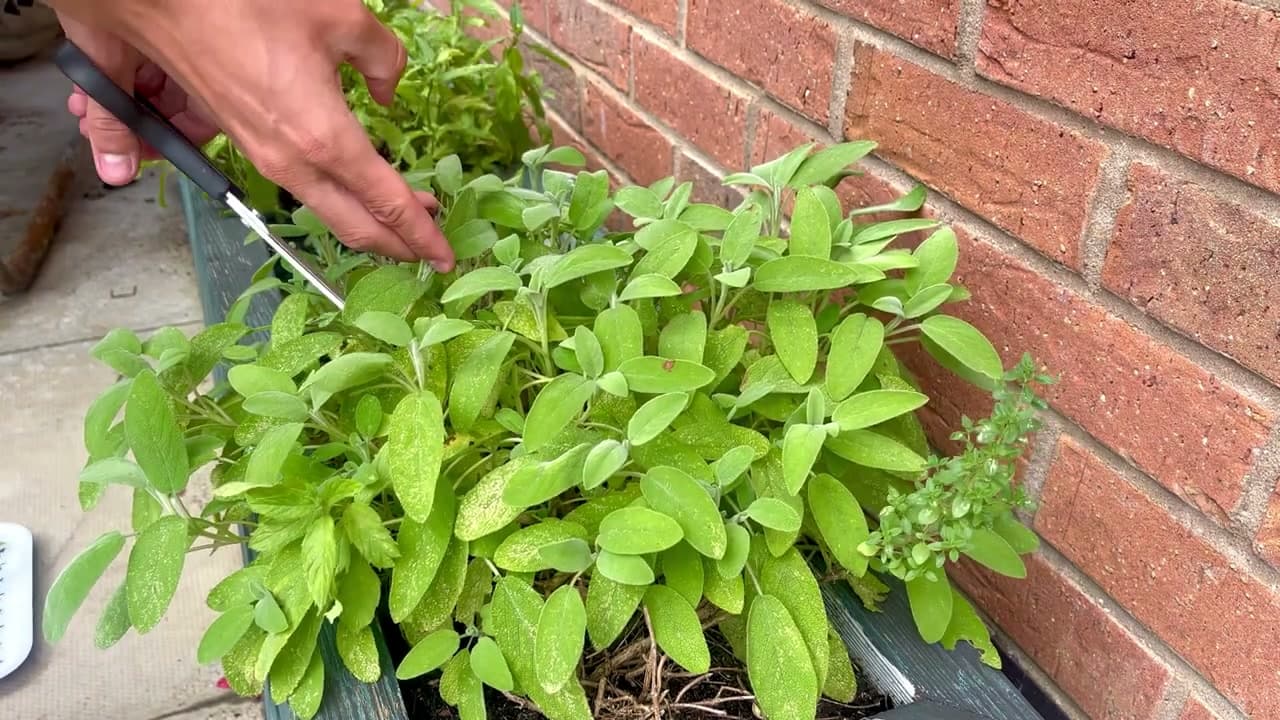
Cut in the morning if you can. The essential oils that give sage its flavor are most concentrated in the leaves before the sun bakes them off, so a morning cut gives you a noticeably more flavorful dried product.

Aim your scissors just above a leaf node - the little bump where leaves branch off the stem. New growth pushes out from that point, so a node-cut plant rebounds quickly and you can come back for another harvest in a few weeks.

Take what you need and leave the rest. A heavy cut every now and then is fine and encourages tender new growth. After cutting, give the bunch a gentle shake to drop any dead or yellowing leaves you don't want in the final jar.

Tip

Younger leaves dry better than woody old ones. If a stem feels stiff and the leaves look pale or spotted, leave it on the plant.

3

Step 3: Wash the Leaves

1:45
Step 3: Step 3: Wash the Leaves

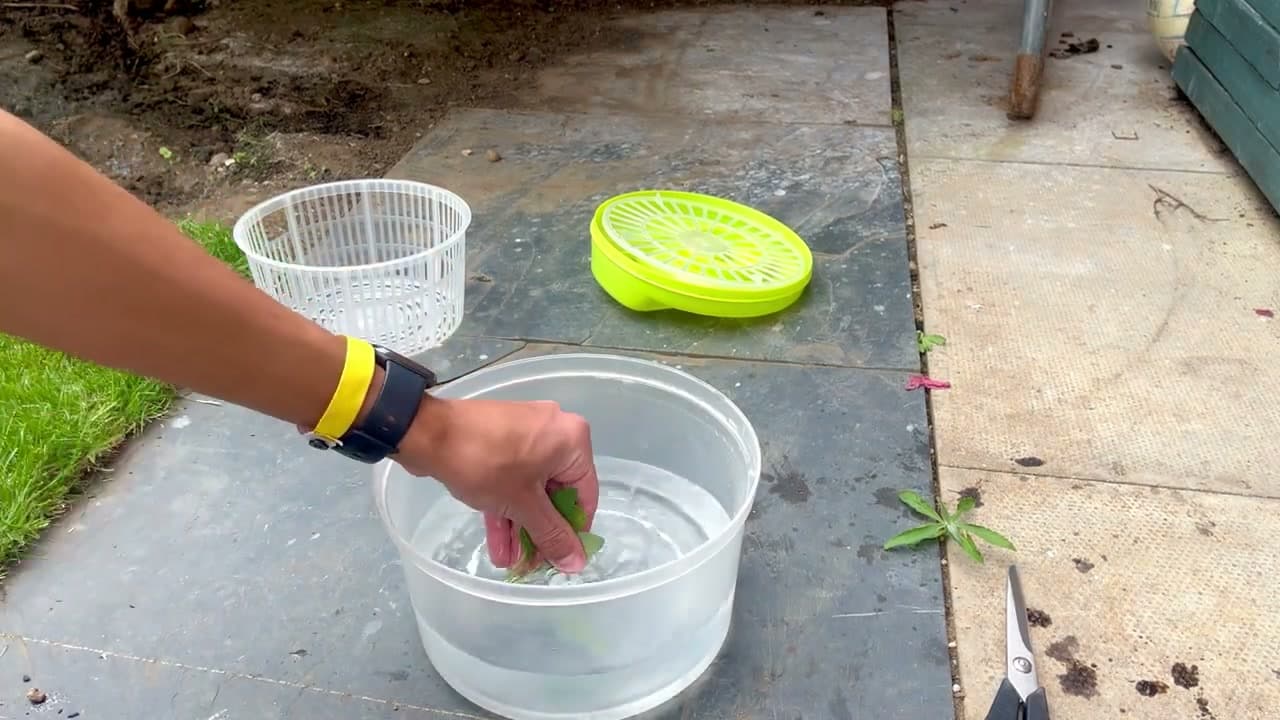
A quick rinse in a bowl of cold water lifts off any garden dust or insect debris. Run your fingers gently across the leaves while they're submerged - sage leaves are fuzzy and trap grit more than smooth herbs like basil, so they actually do benefit from a wash.

If the plant looks visibly clean and lives somewhere sheltered, you can skip this step. There's no harm in either choice.

When you're done, tip the wash water onto a thirsty plant rather than down the drain. Sage water won't hurt anything in the garden.

4

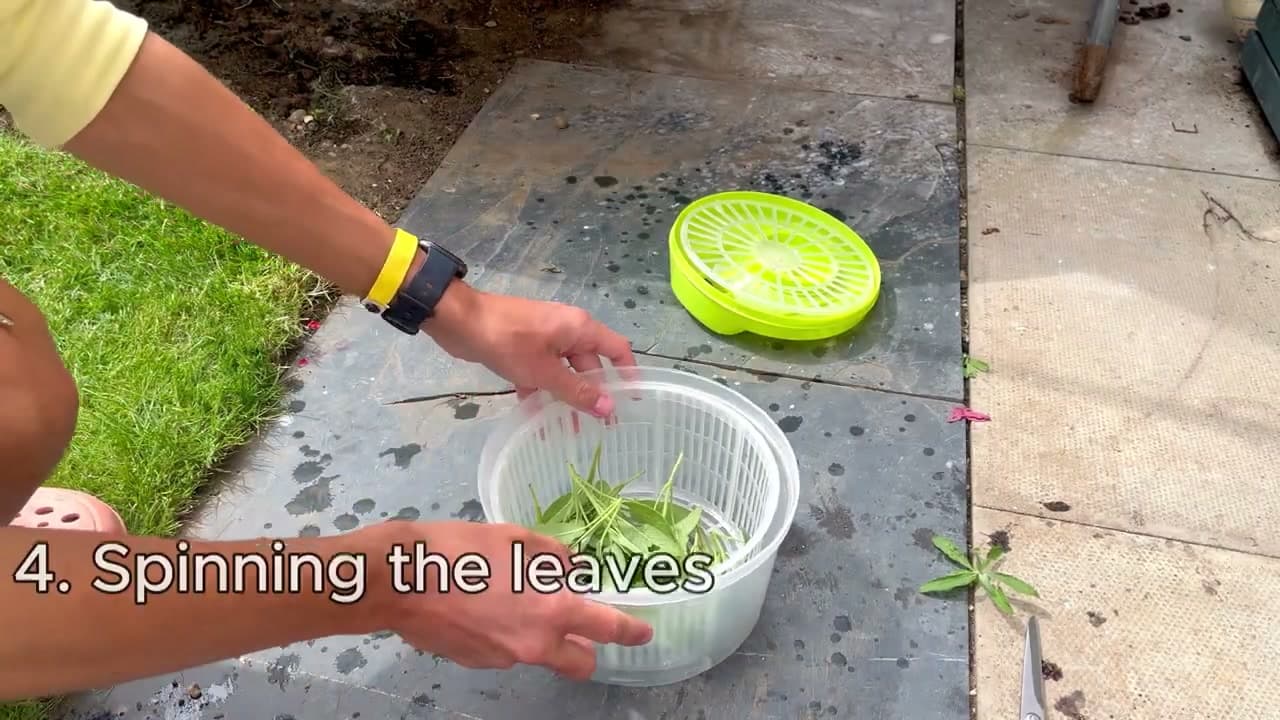
Step 4: Spin or Pat the Leaves Dry

2:05
Step 4: Step 4: Spin or Pat the Leaves Dry

Pull every bit of surface water off before you start drying. A salad spinner does this fast - the centrifugal force flicks water out through the basket without bruising the leaves. Twenty seconds and you're done.

No spinner? Spread the leaves on a clean tea towel or layers of paper towel and pat them down on both sides. It takes longer but the result is the same.

This step matters more than it sounds. Leaves that go into drying with water still clinging to them often turn grey or black instead of holding that silvery-green color. They still work in the kitchen, but the look and the keeping quality suffer.

Tip

If you wash a really big batch, work in two or three loads through the spinner rather than one giant overcrowded one. Crowded leaves don't shed water as well.

5

Step 5: Lay Out or Hang to Dry

3:00
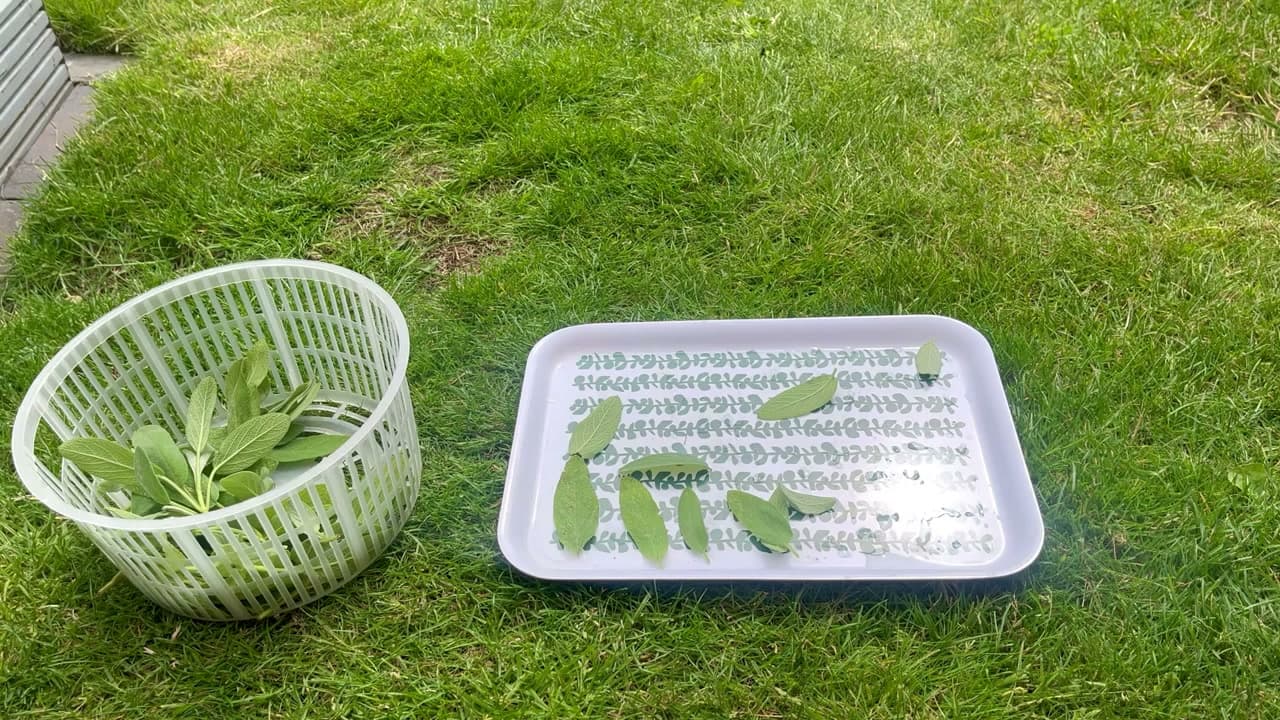
Step 5: Step 5: Lay Out or Hang to Dry

You've got two passive air-drying options and both work well.

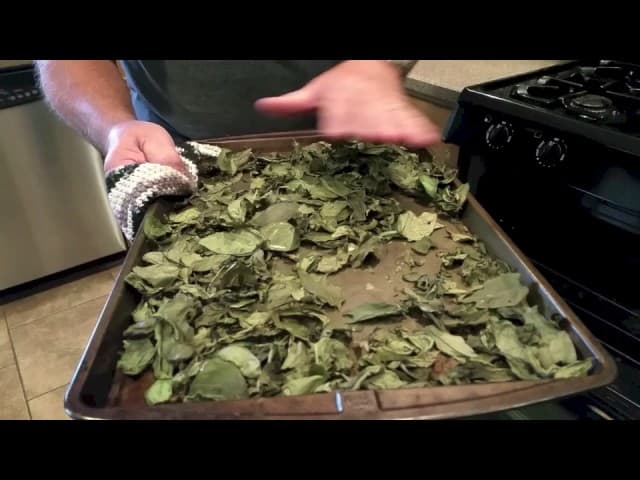
The faster way is to strip the leaves off the stems and spread them in a single layer on a tray. Put the tray on a sunny windowsill and the leaves crisp up in one to two weeks. Toss them gently every few days so the bottom layer gets airflow too.

The traditional way is to bundle short lengths of stem together with twine or a rubber band and hang the bunches upside-down somewhere airy. This takes a little longer - two to three weeks - but the stems shrink as they dry so a rubber band is the more reliable tie.

Either way, air circulation matters more than warmth. Skip direct, intense sun for the windowsill option in midsummer; you want light but not a greenhouse.

Tip

If your house is humid, the tray-on-a-windowsill method is more reliable than hanging. Hanging works beautifully in a dry garage or pantry but can grow mold in a steamy kitchen.

6

Step 6: Check the Leaves Are Crisp

4:10
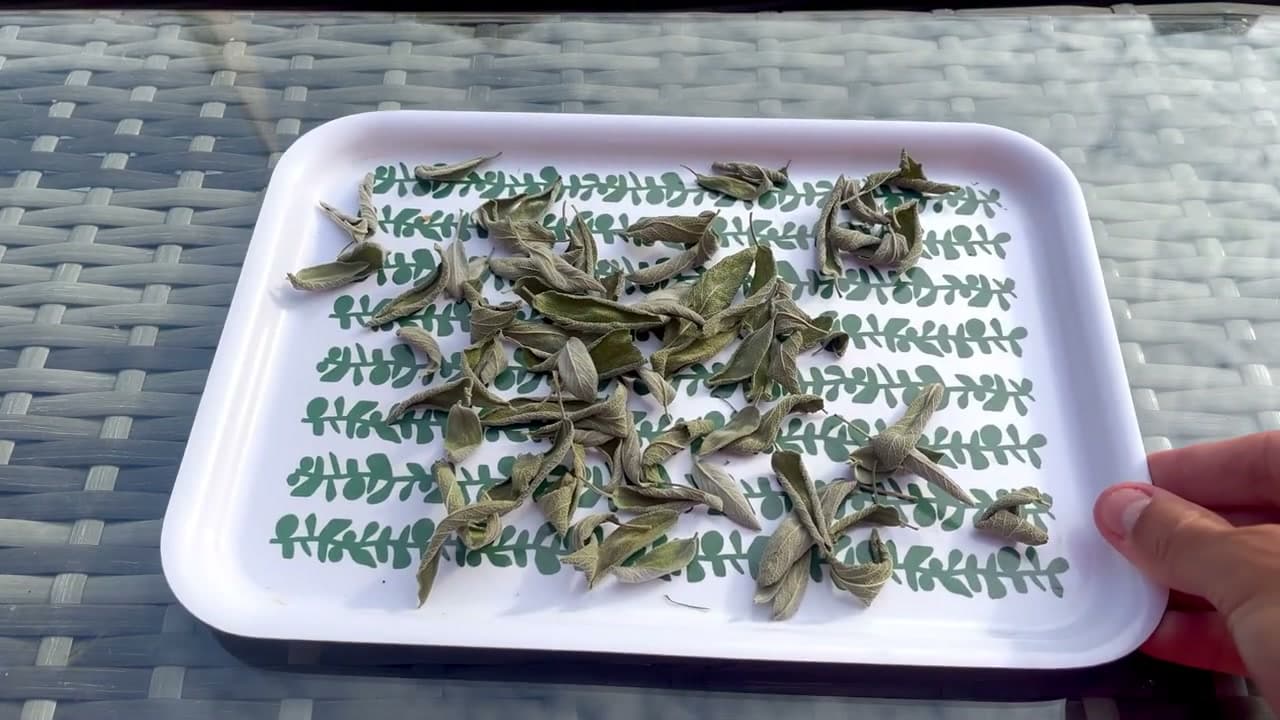
Step 6: Step 6: Check the Leaves Are Crisp

After about a week, do a cracking test. Take a single leaf and snap it between your fingers. If it breaks cleanly with a tiny dry crunch - like a thin crisp - the batch is done. If the leaf bends or feels leathery, give it another few days.

Once the tray leaves are crisp, pull any leaves off the hanging bunches that have dried at the same rate and add them to the tray. That way the whole batch gets to the slicing and jarring stage together.

Color is a useful second check. Properly dried sage stays a muted silvery-green. Leaves that came out grey-brown or black usually picked up too much moisture along the way.

Tip

Err on the side of more time, not less. A leaf that's still slightly soft will hold moisture in the jar and can mold out the whole batch.

7

Step 7: Slice and Jar With the Date

5:30
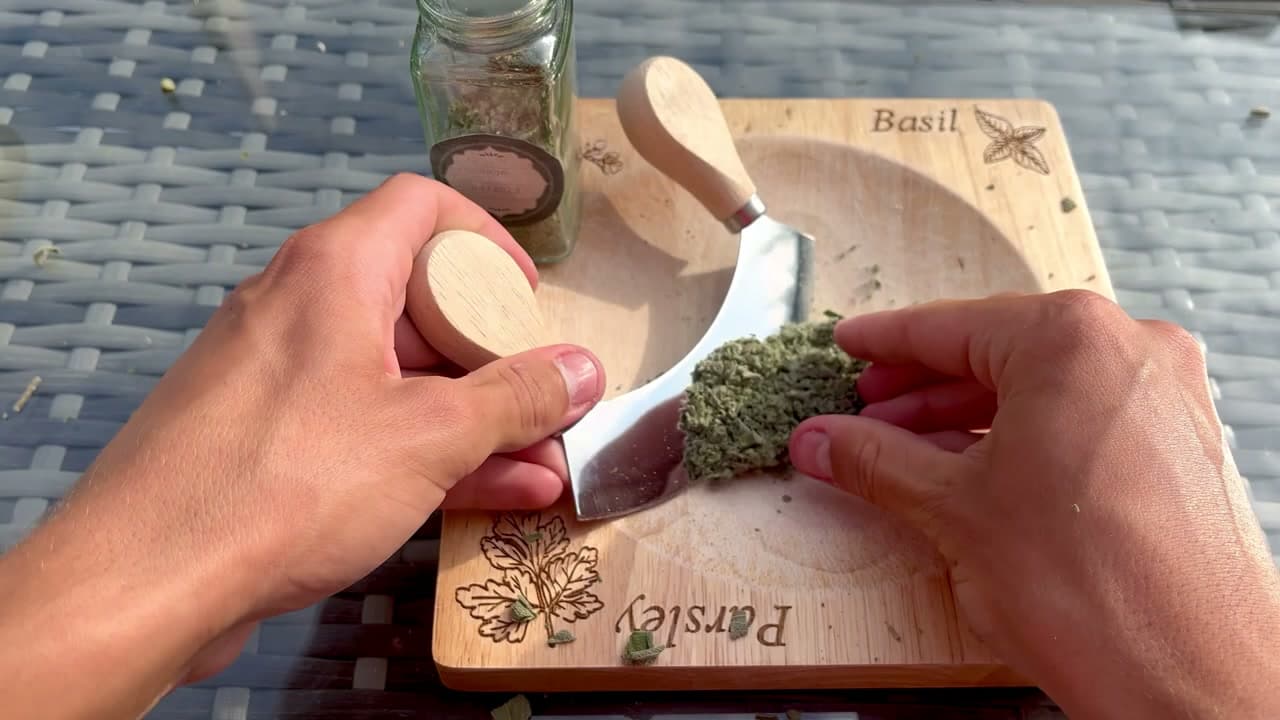
Step 7: Step 7: Slice and Jar With the Date

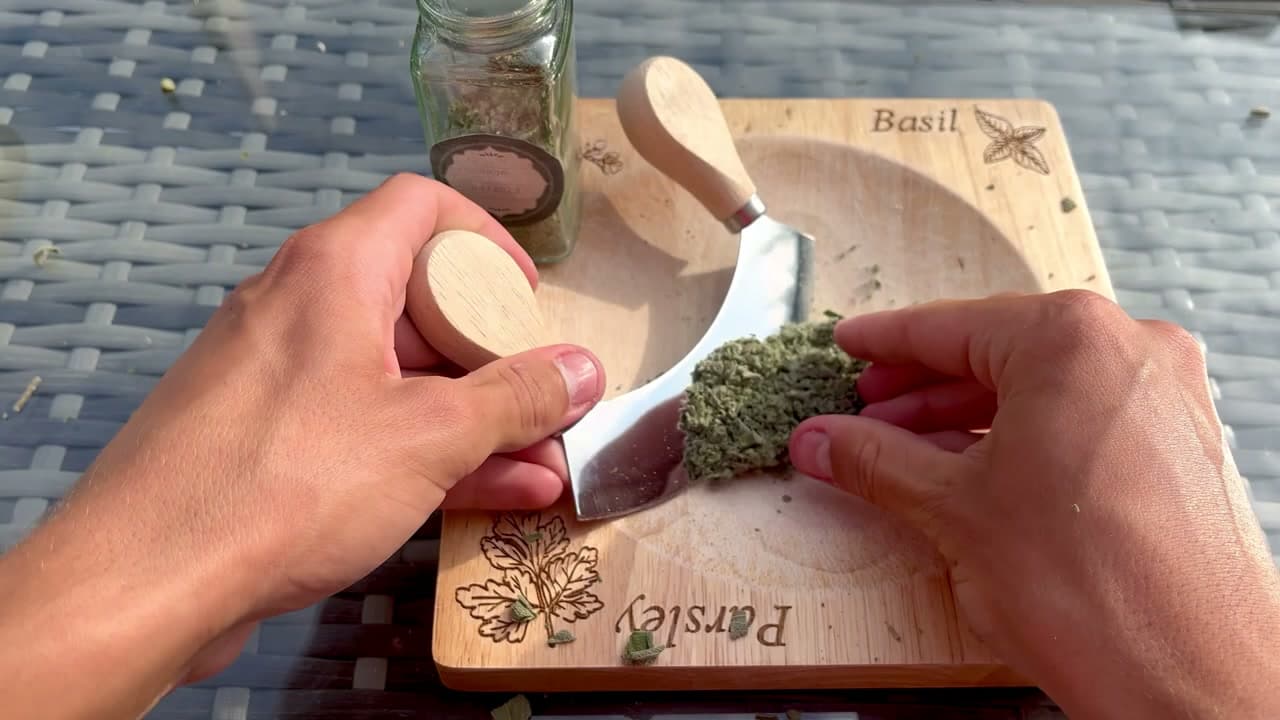
Crumble or slice the dried leaves to the size you actually use in cooking. A mezzaluna herb dicer rocks back and forth over the leaves and breaks them down to flake size in seconds. A chef's knife on a board does the same job - the leaves are brittle now, so a few quick chops finish them.

Funnel the sage into a clean, dry jar. A sterilised mason jar holds the flavor longest - drop the jar into boiling water for ten minutes if you want to be thorough. Then write the date on the lid with a marker. Six months from now you'll know exactly when this batch was made.

Store the jar somewhere cool and dark, away from the stove and out of direct sun. Properly dried and jarred, sage holds its flavor for at least a year and often two.

Tip

Finer flakes pack more into a small jar and dissolve faster into sauces. If you prefer larger pieces for stuffing or roast meats, skip the dicer and crumble the leaves by hand.

Products Used

☐ The Checklist

How to Dry Sage (Step by Step Guide for Storage)

Tools
5
Materials
1
Steps
7
Video
6 min

Your Guide

Tomos' Garden

As an Amazon Associate we earn from qualifying purchases. Links on this page may be affiliate links - clicking them and buying doesn't change your price, but helps support ShowMeStepByStep.

Tags

Test your knowledge

Did the lesson stick? Find out in 2 minutes.

5 quick questions covering what you just read. No signup, no score saved — just a gut check.

Quick reference

Key takeaways from How to Dry Sage (Step by Step Guide for Storage)

5 questions, answers, and one-line explanations. Tap to expand.

  1. 1.Best time of day to cut sage for drying?

    Answer: Early morning

    Essential oils are most concentrated before the sun bakes them off. Morning-cut sage dries with more flavor.

  2. 2.Where on the stem do you snip?

    Answer: Just above a leaf node

    Cutting above a node lets the plant rebound fast - new growth pushes from the node. Mid-stem cuts leave a dead stub.

  3. 3.Why salad-spin sage after washing it?

    Answer: Surface water grows mold

    Trapped surface moisture is the enemy of dried herbs. Spin until dry; pat with a tea towel if no spinner.

  4. 4.How long does sage take to air-dry on a windowsill?

    Answer: About 1-2 weeks

    Strip leaves off stems and lay in a single layer. Toss gently every few days; crisp in 7-14 days.

  5. 5.How do you know dried sage is ready to jar?

    Answer: Leaves snap cleanly

    If a leaf bends or feels leathery, it isn't done. Jarred too soon = mold. The snap test is the only reliable check.

What's next

Related collections

Curated theme pages that include this tutorial.

Weekly Digest

Liked this gardening tutorial?

Pick the categories you want to hear about. Weekly digest of new step-by-step tutorials. No spam, easy unsubscribe.

Send me tutorials about

We only email about new tutorials. Easy unsubscribe anytime.