How to Deadhead Marigolds (For Continuous Summer Blooms)

By ShowMeStepByStepPublished Updated

Based on a video by Sharkey's Greenhouses.

Marigolds are about the easiest summer flower to keep blooming. You do not need shears, you do not need to find a knuckle, you do not need to worry about cutting too far down. The spent head pops off between your thumb and finger like a dandelion, and the plant pushes out fresh buds within a few days. Five minutes a week and a tray of marigolds stays in flower from June through frost.

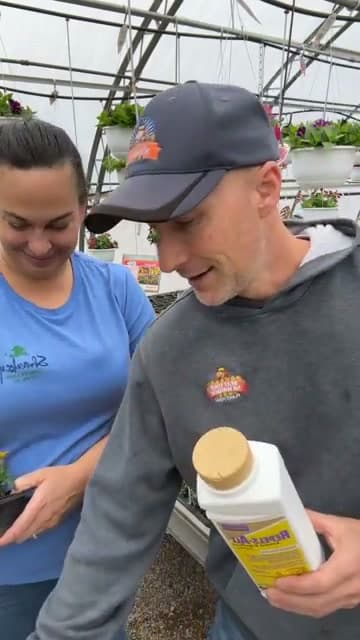
The bonus is what you do with the heads after they come off. Marigolds have a pungent scent that deer, rabbits, and most chewing bugs do not like. Save the spent heads, dry them, and sprinkle them around the bedding plants you actually want the critters to leave alone. Scott and Amy at Sharkey's Greenhouses run a working greenhouse in upstate New York and walk through both halves of the routine - the deadheading and the deterrent - in the video below.

If you are doing the full summer flower rotation, the technique here is different from the snap-at-the-knuckle move used for how to deadhead geraniums, which Scott and Amy also covered in the same series. Roses need yet another cut, so once marigolds are easy, our how to deadhead roses guide rounds out the bedding-bloom care list.

Step-by-Step Guide

1

Spot the Spent Heads Versus the Fresh Buds

3:05

Step 1: Spot the Spent Heads Versus the Fresh Buds

Walk around the marigold plant or tray and look at the flower heads. Spent ones have browned, curled petals or are starting to dry into a pointed seed pod. Fresh buds are smaller, tightly closed, and bright green at the base. The buds are what you want to leave alone - those are the next round of blooms.

Amy points out on the video that you can tell a spent head by feel as much as by sight. A flower that is ready to come off feels papery and slightly loose at the stem. A bud feels firm and slightly sticky. Once you have done a few you stop second-guessing.

Tip

Marigolds come in three sizes - the short French varieties (8 to 10 inches), the taller Inca series (about 14 inches), and the old-school African marigolds that grow waist-high. The technique is the same on all of them. Bigger heads just give your fingers more to grab.

2

Pinch and Pop the Head Off

2:20
Step 2: Pinch and Pop the Head Off

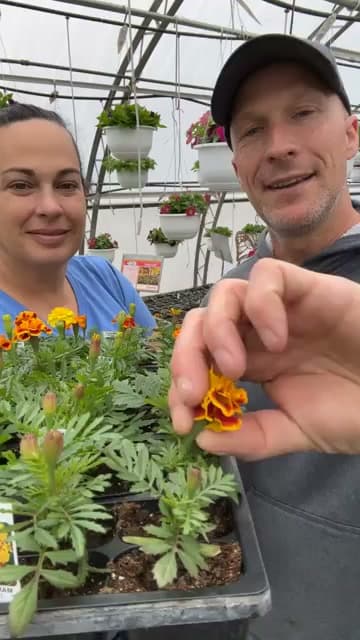
This is the whole move. Pinch the spent head between your thumb and forefinger right where the base of the bloom meets the green stem. Give it a quick sideways pop. The head comes off cleanly with a tiny snap. No scissors, no shears, no measuring.

Unlike geraniums, you do not need to trace the stem down to a knuckle. Scott calls it dandelion-easy and that is the right way to think about it. If the head resists, slide your fingers up another quarter inch toward the bloom and try again - sometimes you grab too low and catch healthy stem with it.

Tip

If the head will not pop with thumb pressure, it is not ready. Leave it for another day or two. A spent head wants to come off - you should feel almost no resistance.

3

Save the Heads in a Bucket

2:38
Step 3: Save the Heads in a Bucket

Here is where marigolds earn their reputation as a pest plant. Each spent head still carries the pungent marigold scent that deer, rabbits, and most chewing bugs avoid. Do not throw the heads in the compost or the yard waste. Drop them in a small bucket, bowl, or paper bag as you go.

Scott holds up a handful in the video and the heads look like little dried pom-poms. That is exactly how they should look - papery, dry, and still smelling faintly of marigold when you crush one between your fingers.

Tip

Set out a labeled jar next to where you store your other garden tools. After every deadheading pass, dump the heads into the jar. By midsummer you will have enough dried marigold heads to scatter through any vegetable bed or under any hosta the rabbits like to chew.

4

Sprinkle the Dried Heads Around Vulnerable Plants

2:50
Step 4: Sprinkle the Dried Heads Around Vulnerable Plants

Take the collected heads, crush them lightly between your hands or with a mortar and pestle, and sprinkle the pieces around the base of the plants you want protected. Hostas, lettuce, beans, and any bedding flowers that deer love are good places to start.

The scent does most of the work for the first week or two. After that, the smell fades and you top up with the next round of deadheaded heads. Scott is honest in the video that this is not foolproof - a determined deer or a really hungry rabbit will eat anything - but for most yards the marigold sprinkle cuts the damage noticeably.

Tip

Lay the heads in a thin ring around the drip line of the plant, not piled at the stem. That puts the scent at the height the deer's nose meets the plant. A ring two to three inches wide is plenty.

5

Clean Up and Feed for the Next Wave

3:20
Step 5: Clean Up and Feed for the Next Wave

While you are at the plant, pick off any yellow leaves or fully spent stems hiding in the foliage. Amy pinches off a few of the tiny early buds in the video too - she explains that the plant is still small enough that the energy is better spent thickening up rather than blooming, so on young plants you can sacrifice the first few buds and the plant fills out faster.

Then feed. Marigolds in pots and trays exhaust the soil fast and a water-soluble flower fertilizer at label rate refills the bank. Apply to soil that is already damp so the salts do not burn the roots.

Tip

On young marigolds in trays or small pots, pinching the early buds for the first two weeks of growth gives you a much bushier plant with more flower-bearing stems. Once the plant is full-size you stop pinching buds and start saving the spent heads instead.

6

Repeat Every Few Days Through Summer

8:20
Step 6: Repeat Every Few Days Through Summer

Marigolds bloom in waves. Within three or four days of a deadheading pass, the next round of buds opens and the plant looks full again. Make the pop-and-save routine a habit - one minute per plant, twice a week, with a coffee in your other hand.

Stay on this rhythm from June through the first hard frost. A row of marigolds that gets deadheaded consistently will bloom for four or five months straight. Stop deadheading and the plant puts its energy into seed production instead of flowers, and the show is over by mid-August.

Tip

Once you have the rhythm down, deadheading a full tray of French marigolds takes about ninety seconds. The collected heads keep paying off as critter deterrent for the rest of the season - it is one of the better return-on-effort jobs in a summer garden.

Products Used

☐ The Checklist

How to Deadhead Marigolds (For Continuous Summer Blooms)

Tools
2
Materials
2
Steps
6
Video
11 min

Your Guide

Sharkey's Greenhouses

As an Amazon Associate we earn from qualifying purchases. Links on this page may be affiliate links - clicking them and buying doesn't change your price, but helps support ShowMeStepByStep.

Tags

Test your knowledge

Did the lesson stick? Find out in 2 minutes.

5 quick questions covering what you just read. No signup, no score saved — just a gut check.

Quick reference

Key takeaways from How to Deadhead Marigolds (For Continuous Summer Blooms)

5 questions, answers, and one-line explanations. Tap to expand.

  1. 1.How do you actually remove a spent marigold head?

    Answer: Pinch the head between thumb and forefinger right where it meets the green stem and give it a quick SIDEWAYS POP - no tools needed

    Pinch-and-pop - 'dandelion easy' per Scott. No tools, no measuring.

  2. 2.How is deadheading marigolds DIFFERENT from deadheading geraniums?

    Answer: Marigolds = pinch right at the bloom base. Geraniums = trace stem down to the knuckle and snap there

    Marigolds are dandelion-easy; geraniums need the knuckle-snap to prevent rot.

  3. 3.Why SAVE the spent marigold heads in a bucket instead of composting?

    Answer: Each spent head still carries the pungent marigold scent that deer, rabbits, and chewing bugs avoid - sprinkle them around vulnerable plants

    Marigold scent = pest deterrent. Save them, crush them, sprinkle around hostas and lettuce.

  4. 4.When fertilizing marigolds in pots, what's the prep step?

    Answer: Apply to soil that is already DAMP so the salts don't burn the roots

    Damp soil first prevents salt burn; same rule for most water-soluble fertilizers.

  5. 5.What happens if you STOP deadheading?

    Answer: Plant redirects energy into SEED production instead of flowers - show is over by mid-August

    Without deadheading the plant signals 'season's over' and stops blooming early.

What's next

Related collections

Curated theme pages that include this tutorial.

Weekly Digest

Liked this gardening tutorial?

Pick the categories you want to hear about. Weekly digest of new step-by-step tutorials. No spam, easy unsubscribe.

Send me tutorials about

We only email about new tutorials. Easy unsubscribe anytime.