How to Take Cornell Notes in 6 Steps

LearningEasy5:276 steps

Based on a video by Jennifer DesRochers.

The Cornell note-taking system was developed at Cornell University in the 1940s and it's still the standard taught in study skills courses today. Why? It bakes active recall into the note-taking process itself - so the same act that captures the lecture also creates the study guide.

This walkthrough from Mrs. DesRochers' biology class shows the 6 steps that turn a blank sheet of paper into a tool you can actually study from. Works for lectures, textbooks, podcasts, and YouTube videos. Total time investment: 5 extra minutes per page versus normal note-taking, in exchange for hours saved at exam time.

Step-by-Step Guide

1

Step 1: Divide Your Paper Into Three Sections

0:35
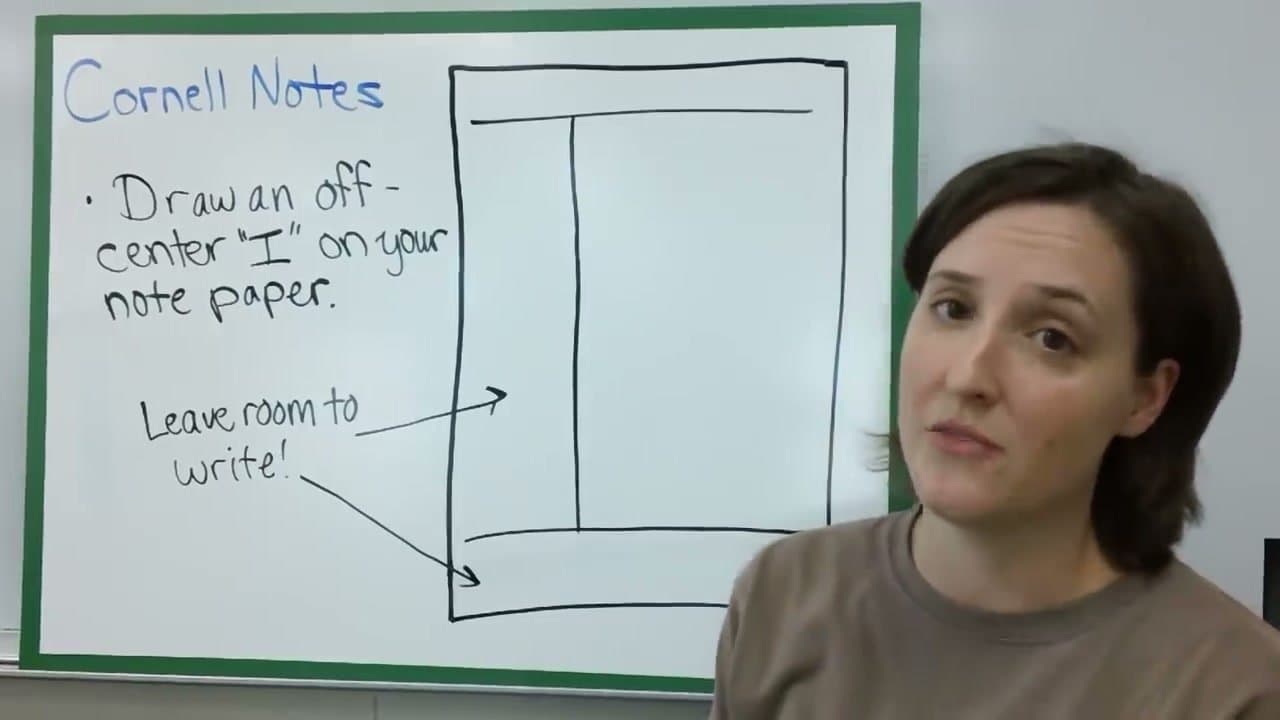
Step 1: Step 1: Divide Your Paper Into Three Sections

Take a blank sheet of notebook paper. Draw a horizontal line about 2 inches from the bottom. Draw a vertical line about 2.5 inches from the left edge, stopping at the horizontal line.

You now have three zones: a narrow left column (cues), a wide right area (notes), and a bottom strip (summary). Leave plenty of space everywhere - cramped paper is hard to read back.
2

Step 2: Label the Top: Topic, Name, and Date

1:00
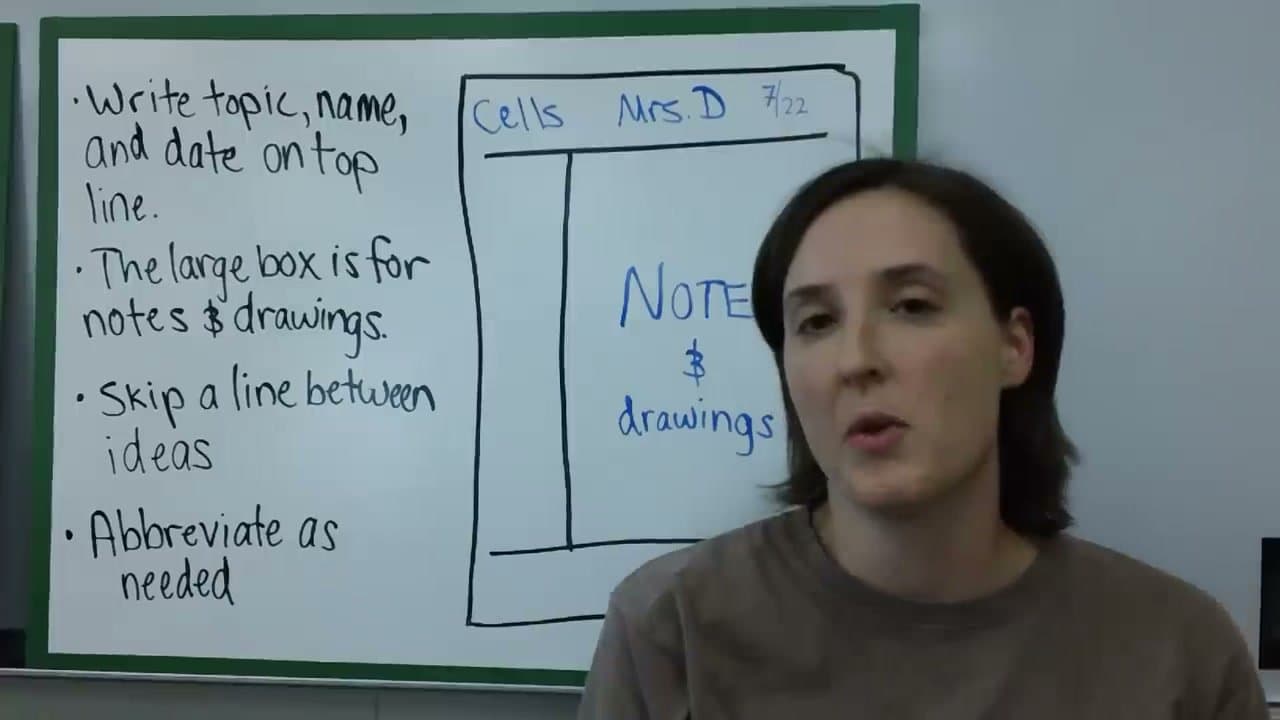
Step 2: Step 2: Label the Top: Topic, Name, and Date

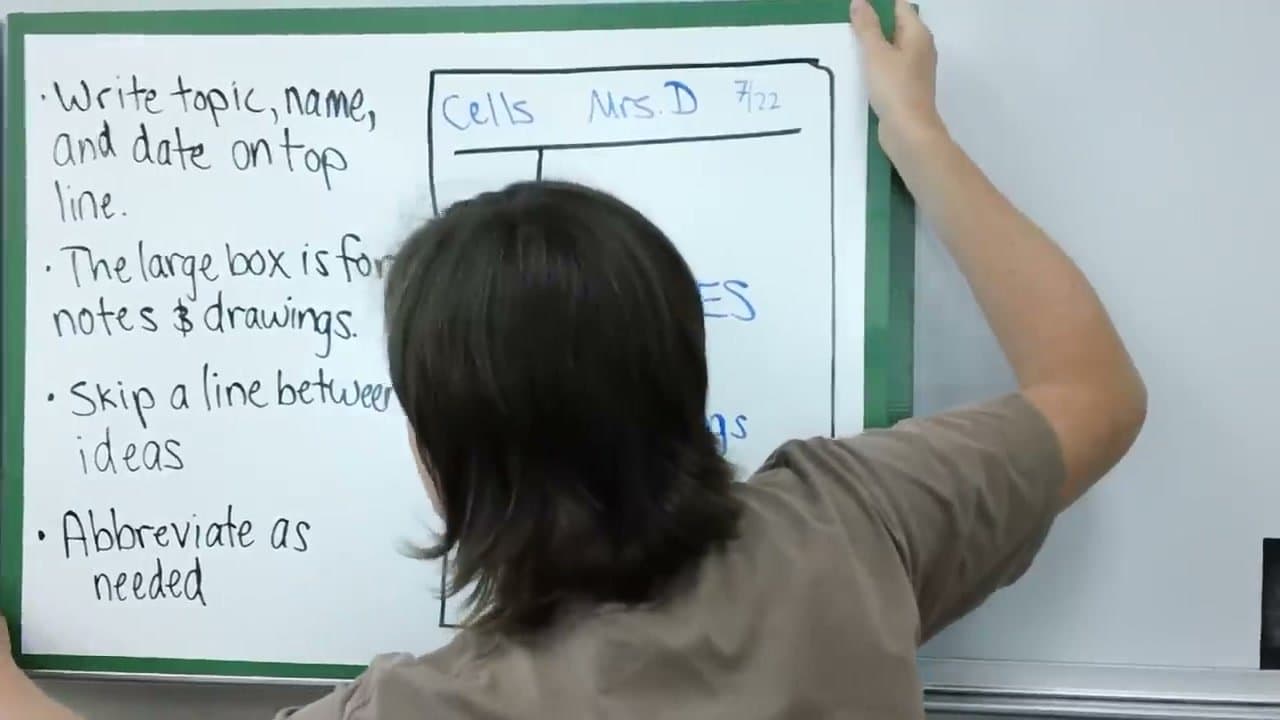
On the very top line, write the topic of the lecture, video, or chapter. Under it, write your name (in case the page gets lost) and today's date.

The date is what helps you place the notes in context months later when you're studying for a final. Without it, you'll have a stack of pages you can't sequence.

3

Step 3: Take Notes in the Right Column - Skip Lines Between Ideas

2:10
Step 3: Step 3: Take Notes in the Right Column - Skip Lines Between Ideas

As you watch, listen, or read, take notes in the wide right column. Skip 2-3 lines between distinct ideas - tightly packed notes are unreadable later.

Abbreviate freely (w/ for with, b/c for because, → for leads to) but only use abbreviations you'll remember. Sketches and diagrams in this section are encouraged - the brain remembers visuals better than blocks of text.

4

Step 4: Pull Out Key Ideas Into the Left Column

3:15
Step 4: Step 4: Pull Out Key Ideas Into the Left Column

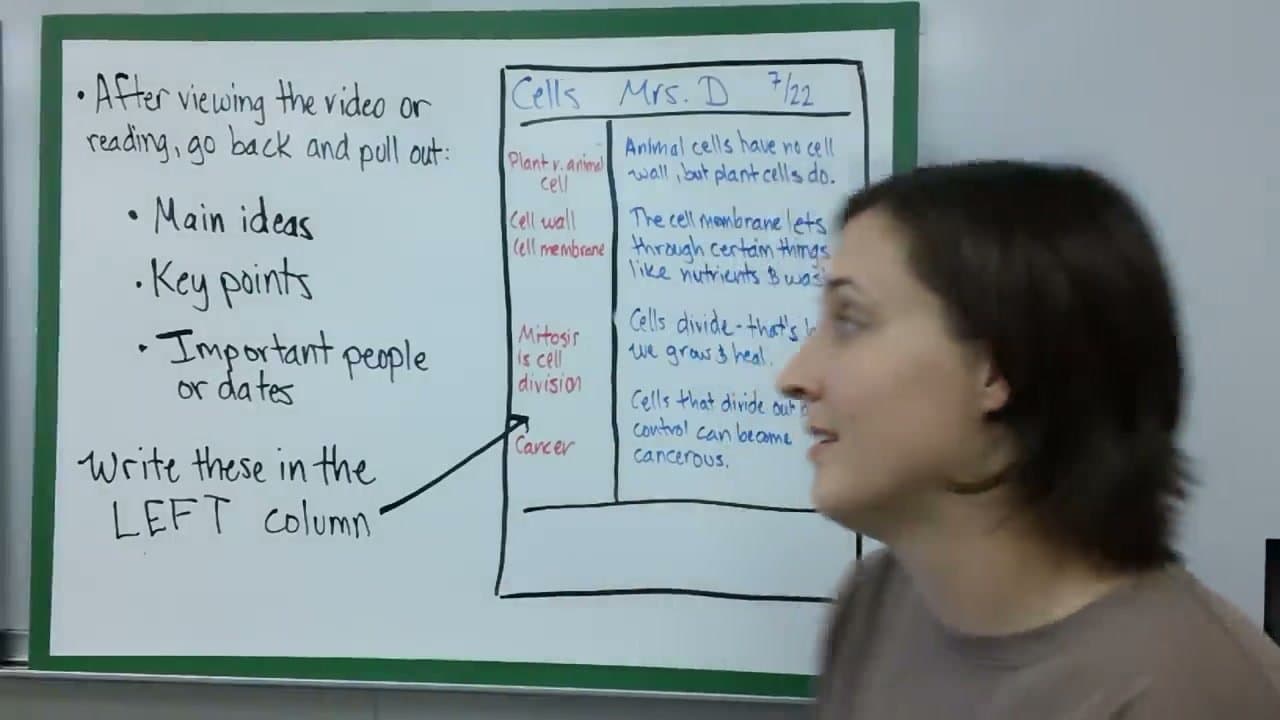
After the lecture or reading is over, go back through your right-column notes and pull out the main ideas, key terms, important people, or dates. Write these as short cues in the LEFT column, lined up next to the notes they correspond to.

The left column becomes your study guide - test questions usually map to these cues. This step is what most note-takers skip and it's the magic of the system.

5

Step 5: Write a Summary in the Bottom Section

4:00
Step 5: Step 5: Write a Summary in the Bottom Section

In the bottom strip, write 2-4 sentences summarizing the whole page. Ask yourself: 'If I had to explain this to someone who never learned it, what would I say?'

Forcing yourself to summarize in your own words is what locks the material into memory - it's the difference between recognition (familiar but can't recall) and retrieval (you actually know it).

Tip

Do the summary the same day, not at exam time. Concepts feel obvious right after the lecture and confusing two weeks later - capture the clarity while you have it.

6

Step 6: Study by Reviewing Cues, Not Notes

4:50
Step 6: Step 6: Study by Reviewing Cues, Not Notes

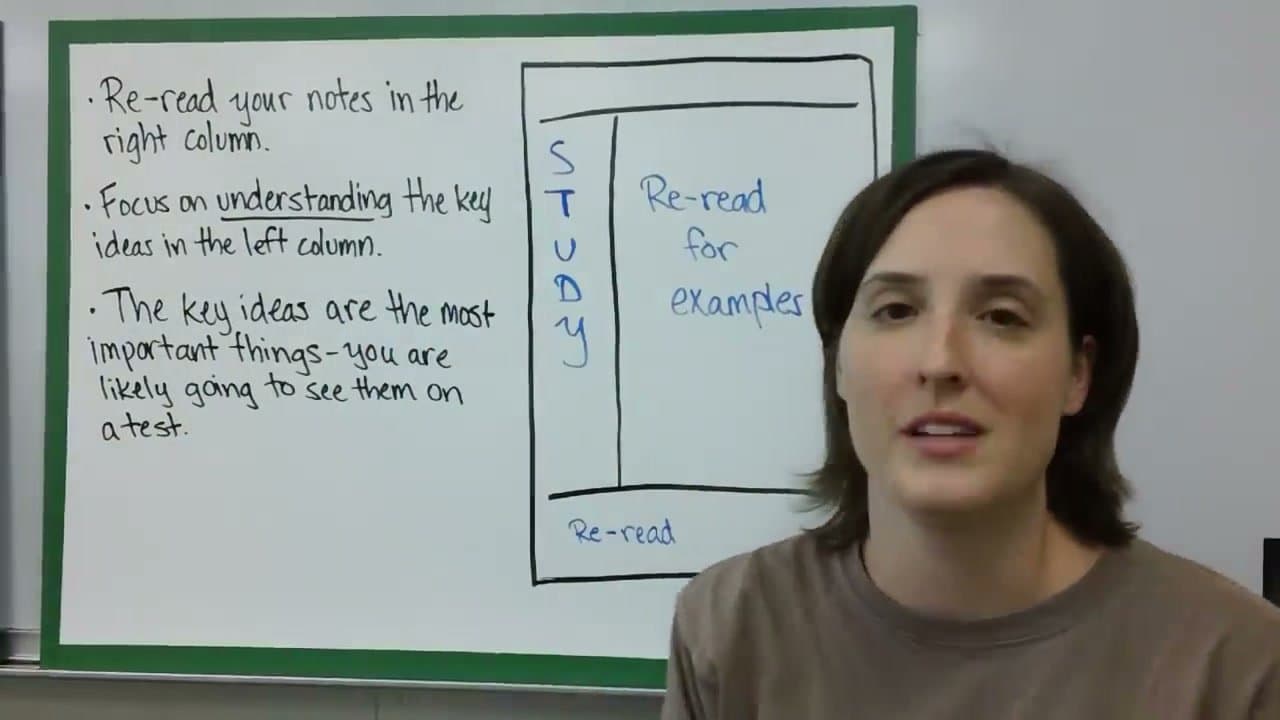
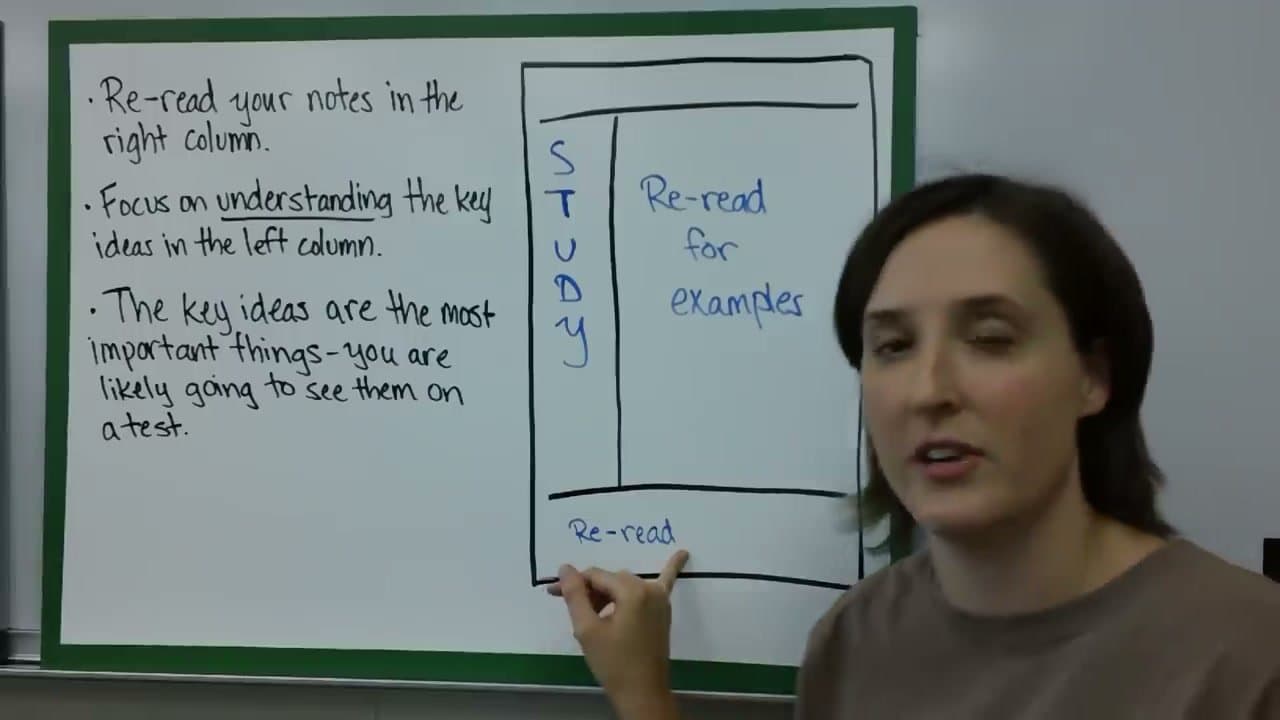
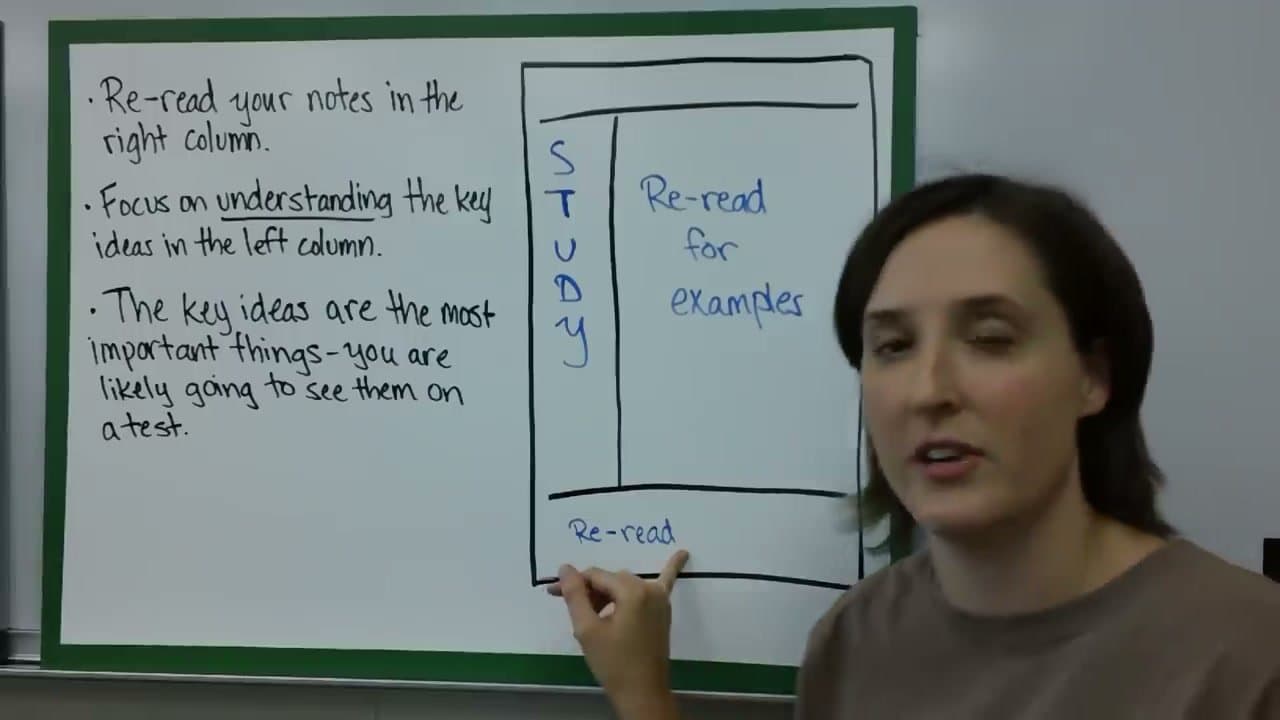
Before a test, cover the right column with a piece of paper. Read each cue in the left column and try to recall the matching notes from memory. Check yourself by uncovering the right side.

This is active recall - the most efficient study method we know of. Re-read the bottom summary last to lock in the big picture. Repeat 2-3 times across multiple days for spaced repetition.

Your Guide

Jennifer DesRochers

As an Amazon Associate we earn from qualifying purchases. Links on this page may be affiliate links - clicking them and buying doesn't change your price, but helps support ShowMeStepByStep.

Tags

Related Tutorials